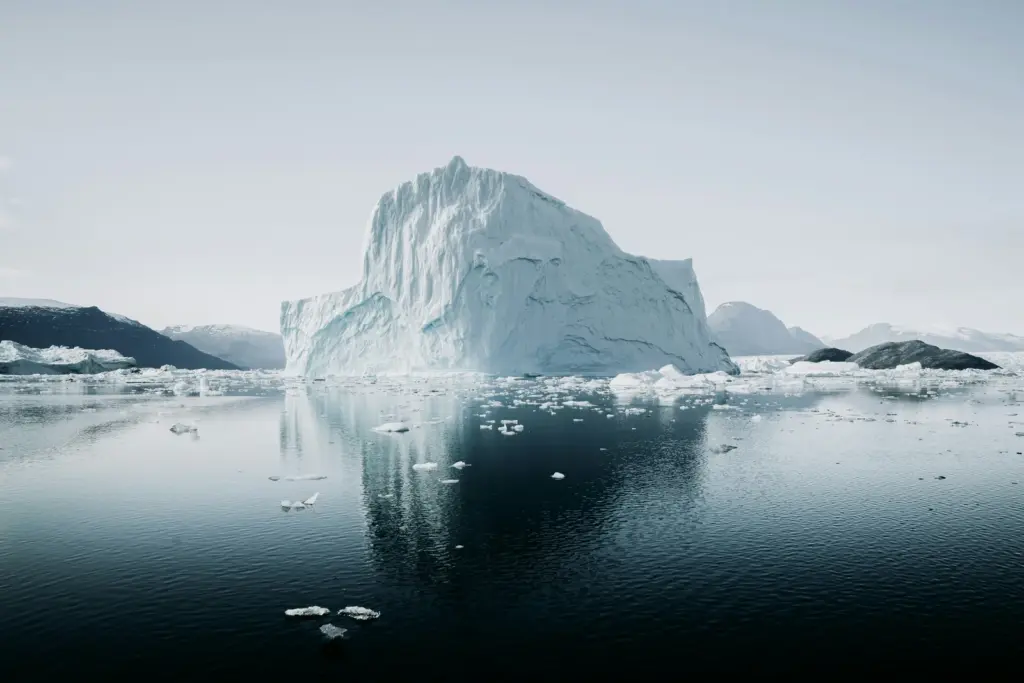
Melting Arctic sea ice does not raise sea level. It is already floating, and floating ice displaces its own weight. What raises sea level is the Greenland Ice Sheet, which sits on land. Getting that distinction right is the starting point for understanding the Arctic melting problem, and a great deal of casual analysis fails at exactly this step.
The Arctic matters to India not because of ice but because of circulation. What happens to the polar jet stream happens to the monsoon.
The Global Feedbacks
Albedo effect and Arctic amplification. Loss of reflective sea ice exposes darker ocean water, which absorbs solar radiation instead of reflecting it. More absorption means more melting, which exposes more water. This is why the Arctic warms faster than the global average.
Sea level rise. Accelerated melting of the Greenland Ice Sheet contributes significantly to global sea-level rise, adding water that was not previously in the ocean.
Ocean circulation. Freshwater influx reduces seawater salinity and density, weakening the Atlantic Meridional Overturning Circulation and disrupting global heat transport.
Weather extremes. Arctic warming alters atmospheric circulation, producing prolonged heatwaves, cold spells, droughts and intense rainfall.
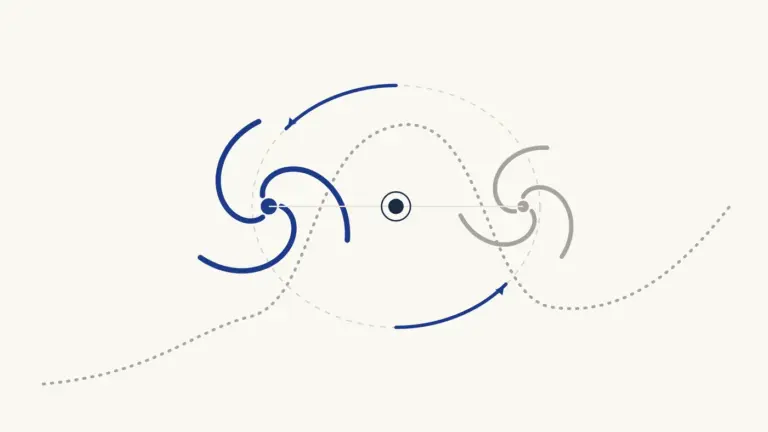
Jet stream instability. Reduced temperature contrast between the Arctic and mid-latitudes weakens the polar jet stream, making it meander more and weather systems more persistent.
Permafrost thaw. Thawing releases methane and carbon dioxide from long-frozen organic carbon, a second positive feedback.
Marine biodiversity. Sea ice loss threatens polar bears, walruses, seals and ice-dependent plankton, altering Arctic food webs from the base up.
Ocean acidification. Colder Arctic waters absorb more carbon dioxide, accelerating acidification and affecting shell-forming organisms and fisheries.
Species migration. Warming lets temperate species move northward, raising competition, invasive species pressure and disease transmission.
Wildfires. Warmer, drier conditions have increased boreal forest and tundra fire frequency, releasing stored carbon.
Two of these, albedo and permafrost, are self-reinforcing. That is what makes Arctic change qualitatively different from linear warming elsewhere: past certain thresholds, the system continues without further external forcing.
What It Means for India
Monsoon variability. Arctic warming influences Rossby waves and jet streams, producing erratic monsoon onset, uneven rainfall distribution and more extreme precipitation events. The consequence is variability rather than a simple increase or decrease, which is harder to plan for than either.
Extreme weather. Changes in atmospheric circulation increase the persistence and intensity of heatwaves, cold waves and cloudbursts over the subcontinent.
Himalayan cryosphere. Rising temperatures accelerate glacier retreat, affecting perennial river systems.
Water security. In the short term, glacier melt increases river discharge. In the long term, glacier shrinkage threatens dry-season availability in the Indus, Ganga and Brahmaputra basins. The trap here is that the near-term signal is reassuring and the long-term signal is not.
Sea-level rise. Densely populated coasts including Mumbai, Kolkata, Chennai and the Sundarbans face erosion and inundation.
Biodiversity. Shifting species distribution in the Himalayas, Western Ghats and coastal ecosystems raises extinction risk.
Agriculture. Erratic rainfall and temperature extremes cut crop yields and threaten food security and farm livelihoods.
Marine fisheries. Ocean warming alters fish migration and marine productivity in the Arabian Sea and Bay of Bengal.
Disaster risk. Higher frequency of floods, cyclones, landslides and glacial lake outburst floods.
The Transmission Chain Worth Memorising
The causal path from Arctic ice to an Indian farmer runs like this: sea ice loss to Arctic amplification, to a weakened temperature gradient, to a slower and more meandering jet stream, to persistent blocking patterns, to erratic monsoon onset and stalled rainfall systems, to crop failure or flood.
Setting it out as a chain is more useful in an answer than listing impacts, because it explains why a polar phenomenon reaches a tropical monsoon rather than merely asserting that it does.
The Honest Uncertainty
Attribution at this level is genuinely difficult. The Arctic-monsoon link is well established in direction and poorly constrained in magnitude, and climate models disagree on how much of observed monsoon variability is Arctic-driven versus driven by Indian Ocean warming, aerosols or land-use change.
That uncertainty argues for adaptation investment rather than for delay, because the range of plausible outcomes is bounded below by significant disruption.
The Way Forward
- Treat monsoon variability, not average rainfall, as the planning variable for irrigation and cropping.
- Invest in Himalayan cryosphere monitoring, where India’s observational network remains thin.
- Build glacial lake outburst flood early-warning capacity in the Himalayan states.
- Fund coastal protection for the Sundarbans, Mumbai and Kolkata on long-horizon sea-level scenarios.
- Sustain Arctic scientific presence through the Himadri station, since research participation is what earns a voice in Arctic governance.
Frequently Asked Questions
What is Arctic amplification?
The phenomenon by which the Arctic warms faster than the global average. Loss of reflective sea ice exposes darker ocean water, which absorbs more solar radiation instead of reflecting it. That extra absorption melts more ice, which exposes more water, creating a positive feedback loop known as the albedo effect.
Does melting sea ice raise sea level?
No. Sea ice is already floating and displaces its own weight, so its melting does not raise sea level. What does raise sea level is the accelerated melting of land-based ice, particularly the Greenland Ice Sheet, which adds water that was not previously in the ocean.
What is AMOC and why does Arctic melting affect it?
The Atlantic Meridional Overturning Circulation, the system that transports heat through the Atlantic. Freshwater influx from melting ice reduces seawater salinity and density, which weakens the sinking that drives the circulation, disrupting global heat transport and climate regulation.
How does Arctic warming affect the jet stream?
The polar jet stream is driven by the temperature contrast between the Arctic and mid-latitudes. As the Arctic warms faster, that contrast weakens, the jet stream slows and meanders more, and weather systems become more persistent. A stalled system means a heatwave, cold spell or rainfall event lasts longer in the same place.
Why is permafrost thaw a concern?
Permafrost stores large quantities of organic carbon frozen for millennia. Thawing releases methane and carbon dioxide, adding to atmospheric greenhouse gases and creating a second positive feedback alongside the albedo effect.
How does Arctic melting affect the Indian monsoon?
Arctic warming influences Rossby waves and jet stream behaviour, which in turn affect monsoon onset, rainfall distribution and the frequency of extreme precipitation. The result is greater monsoon variability rather than a simple increase or decrease in rainfall.
What are the consequences for India’s water security?
Rising temperatures accelerate Himalayan glacier retreat. In the short term, glacier melt increases river discharge. In the long term, glacier shrinkage threatens dry-season water availability in the Indus, Ganga and Brahmaputra basins, which is when that water is most needed.
Which Indian coastal areas are most exposed to sea-level rise?
Densely populated coastal zones including Mumbai, Kolkata, Chennai and the Sundarbans face erosion and inundation risk. The Sundarbans face the compound problem of sea-level rise, salinity ingress and loss of the mangrove buffer that protects the coast.
Practice Questions
Prelims MCQs
- The albedo effect in the Arctic refers to
(a) Increased cloud cover reflecting sunlight
(b) Loss of reflective sea ice exposing darker ocean that absorbs more radiation
(c) Methane release from permafrost
(d) Freshwater dilution of ocean salinity
Answer: (b) Darker open water absorbs radiation that white ice would have reflected, creating a warming feedback known as Arctic amplification. - Which of the following contributes directly to global sea-level rise?
(a) Melting of Arctic sea ice
(b) Melting of the Greenland Ice Sheet
(c) Both equally
(d) Neither
Answer: (b) Floating sea ice displaces its own weight, so its melting does not raise sea level; land-based ice does. - Weakening of the AMOC is caused primarily by
(a) Increased salinity in the North Atlantic
(b) Freshwater influx reducing seawater salinity and density
(c) Stronger trade winds
(d) Ocean acidification
Answer: (b) Freshwater from melting ice lowers density, weakening the sinking that drives the overturning circulation. - A slower, more meandering polar jet stream results in
(a) Shorter-lived weather systems
(b) More persistent weather systems
(c) Reduced monsoon variability
(d) Uniform global temperatures
Answer: (b) Reduced Arctic to mid-latitude temperature contrast slows the jet, so systems stall and events last longer. - Permafrost thaw contributes to climate change mainly by releasing
(a) Sulphur dioxide and nitrogen oxides
(b) Methane and carbon dioxide
(c) Chlorofluorocarbons
(d) Black carbon
Answer: (b) Long-frozen organic carbon decomposes on thawing, releasing methane and carbon dioxide.
Mains Questions
- Arctic melting is a global climate problem with specific consequences for the Indian subcontinent. Examine the transmission mechanisms. (250 words)
- Explain the positive feedback loops operating in the Arctic and their significance for climate projections. (150 words)
- Himalayan glacier retreat presents India with a short-term surplus and a long-term deficit in water availability. Discuss. (250 words)
- Discuss the ecological consequences of Arctic warming for marine biodiversity and fisheries. (150 words)
- Should India expand its Arctic scientific and diplomatic engagement? Give reasons. (250 words)
Tell Google you want more of this.
Add Anantam IAS as a preferred sourceOne tap, and this site shows up more often in your own Top Stories, AI Overviews and AI Mode. Remove it any time.