The forts of India are easiest to learn as a few families, not as a list of names. Rajput states raised hill forts across Rajasthan, the Marathas held a chain of hill and sea forts along the Sahyadri and the Konkan coast while the Deccan sultans and the Mughals built walled citadels for their capitals. After them, European trading companies fortified the coast. UNESCO has listed forts four times, in 1983, 2007, 2013 and 2025. Those four listings, and the families behind them, are where most questions on Indian forts begin.
Most readers carry two wrong ideas into this topic. The first is that the famous forts are the UNESCO forts. Mehrangarh, Golconda, Gwalior and Janjira are all famous, and none of them is a World Heritage Site. The second is that a fort’s “type” depends on who built it. A fort’s type depends on the ground it stands on. This note settles both, with one table of 27 forts that the site covers in detail.
Forts of India at a Glance
The table below covers every fort with its own study note on the site. Each row gives the state, the main builder or dynasty, the period as the sources give it, the type of ground and the UNESCO status. For the six Rajasthan forts listed together in 2013, the separate Hill Forts of Rajasthan note explains the series as a whole.
| Fort | State | Main builder or dynasty | Period | Type | UNESCO status |
|---|---|---|---|---|---|
| Agra Fort | Uttar Pradesh | Akbar; Shah Jahan’s marble palaces | Rebuilt 1565 to 1573 | Riverside land fort | World Heritage Site, 1983 |
| Red Fort | Delhi | Shah Jahan | 1638 to 1648 | Riverside land fort (palace fort) | World Heritage Site, 2007 (Red Fort Complex) |
| Purana Qila | Delhi | Humayun, then Sher Shah Suri | 1533; rebuilt 1540 to 1545 | Land fort on the old Yamuna bank | Not listed |
| Chittorgarh Fort | Rajasthan | Mori line, then the Guhilas and Sisodias of Mewar | 8th to 16th century | Hill fort on a plateau | World Heritage Site, 2013 |
| Kumbhalgarh Fort | Rajasthan | Rana Kumbha of Mewar, with the architect Mandan | 1443 to 1458 | Hill fort | World Heritage Site, 2013 |
| Ranthambore Fort | Rajasthan | Chauhans (Chahamanas) | Fortifications on record from the 12th century | Forest hill fort | World Heritage Site, 2013 |
| Amer Fort | Rajasthan | Kachwahas: Raja Man Singh I, Mirza Raja Jai Singh I | From 1592; 17th-century additions | Hill palace-fortress | World Heritage Site, 2013 (as Amber) |
| Jaisalmer Fort | Rajasthan | Rawal Jaisal of the Bhati Rajputs | Founded 1156 (1155 in the ASI’s account) | Hill fort in desert terrain | World Heritage Site, 2013 |
| Mehrangarh Fort | Rajasthan | Rao Jodha of the Rathores | About 1459 | Hill fort | Not listed |
| Junagarh Fort | Rajasthan | Raja Rai Singh of Bikaner | 1589 to 1594 (gazetteers: 1588 to 1593) | Land fort on flat desert ground, with a moat | Not listed |
| Gwalior Fort | Madhya Pradesh | Many holders; the Tomars built Man Mandir | Record from about 525 CE; Tomar rule 1398 to 1518 | Hill fort on a plateau | Tentative List, 2024 |
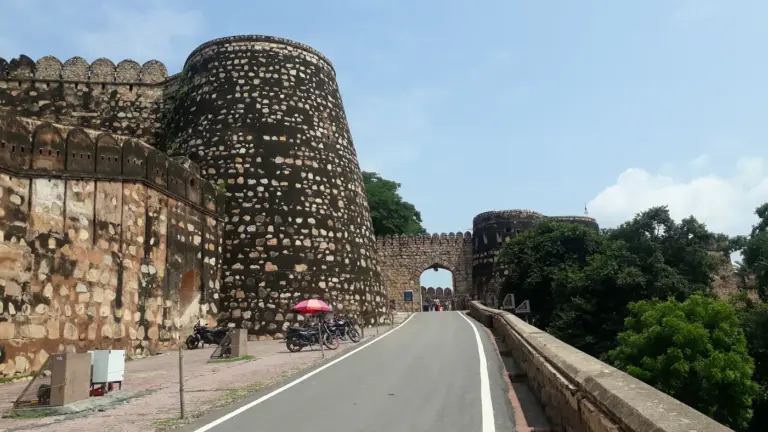
| Jhansi Fort | Uttar Pradesh | Bir Singh Deo of Orchha (Bundela) | 1613 | Hill fort on a granite rock | Tentative List, 2025 (Bundela serial) |
| Golconda Fort | Telangana | Kakatiyas, then the Qutb Shahis | 13th century; Qutb Shahi rule 1518 to 1687 | Hill citadel above a walled town | Tentative List, 2010 and 2014 |
| Daulatabad Fort | Maharashtra | Yadavas (Devagiri), later Tughlaq, the Bahmanis, the Nizam Shahis and the Mughals | About 1187; renamed 1327; Mughal capture 1633 | Hill fort on a scarped cone | Not listed |
| Shivneri Fort | Maharashtra | Probably the Yadavas; later the Nizam Shahis | Pre-Sultanate; Shivaji born here in 1630 | Hill fort | World Heritage Site, 2025 |
| Rajgad Fort | Maharashtra | Shivaji | About 1646 to 1648 | Hill fort | World Heritage Site, 2025 |
| Raigad Fort | Maharashtra | Shivaji, rebuilt under Hiroji Indulkar | Taken 1656; rebuilt about 1662; coronation 1674 | Hill fort | World Heritage Site, 2025 |
| Pratapgad Fort | Maharashtra | Shivaji, through Moropant Trimbak Pingle | 1656 | Hill-forest fort | World Heritage Site, 2025 |
| Lohagad Fort | Maharashtra | Nizam Shahis, then the Marathas | A fort by 1489; Shivaji took it in 1648 | Hill fort | World Heritage Site, 2025 |
| Salher Fort | Maharashtra | Rathod chiefs of Baglan, the Mughals, then the Marathas | Maratha capture about 1671; battle 1672 | Hill fort | World Heritage Site, 2025 |
| Panhala Fort | Maharashtra | Shilaharas, Bijapur, then Shivaji | On record 1191-92; Shivaji took it in 1659 | Hill-plateau fort | World Heritage Site, 2025 |
| Sindhudurg Fort | Maharashtra | Shivaji | 1664 to 1667 | Island fort | World Heritage Site, 2025 |
| Vijaydurg Fort | Maharashtra | Shilahara Bhoja II (believed), Shivaji, then the Angres | About 1192 to 1205; Shivaji about 1653 | Coastal headland fort | World Heritage Site, 2025 |
| Janjira Fort | Maharashtra | The Siddis | Present walls 1694 to 1707 | Island sea fort | Tentative List, 2024 (Konkan coastal serial) |
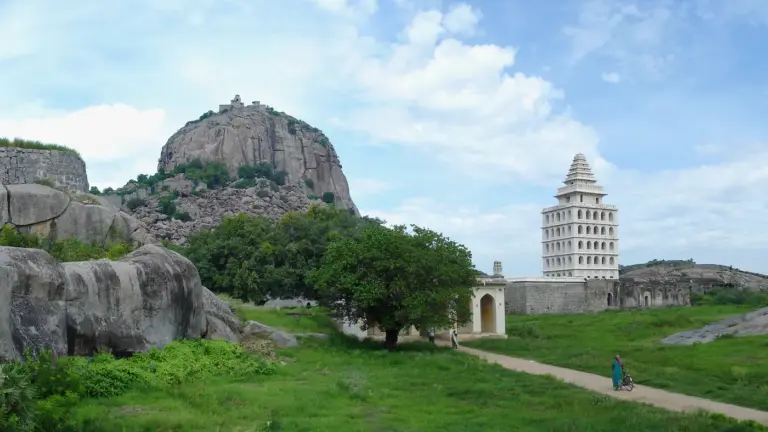
| Gingee Fort | Tamil Nadu | Nayaks of Gingee, under Vijayanagara | 16th and early 17th centuries | Hill fort on three hills | World Heritage Site, 2025 |
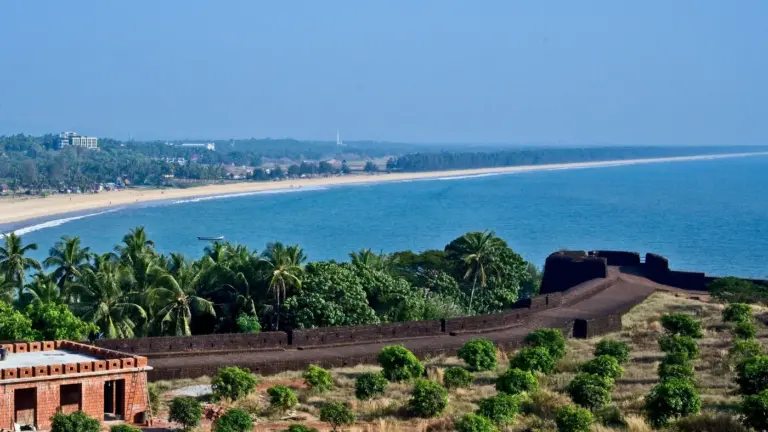
| Bekal Fort | Kerala | Shivappa Nayaka of the Keladi Nayakas | Mid-17th century | Sea fort on a headland | Not listed |
| Fort William | West Bengal | The East India Company, on lines traced by Robert Clive | Begun 1757-58; finished about 1773 to 1781 | River-bank bastioned land fort | Not listed |
Read the last column down and a pattern shows. Seventeen of the 27 are World Heritage components, four sit on India’s Tentative List and six have no UNESCO status at all. Three components of the listed series have no note of their own yet: Gagron in Rajasthan and Khanderi and Suvarnadurg on the Konkan coast.
Types of Forts in India
The oldest Indian way to sort forts is by ground, and it comes from the Arthashastra, the treatise on statecraft attributed to Kautilya. Book II tells a king to build fortifications on the ground best suited to defense, and it names four kinds:
- Audaka, the water fort: an island in a river, or a plain ringed by low ground.
- Parvata, the mountain fort: a rocky tract or a cave.
- Dhanvana, the desert fort: a wild tract without water.
- Vanadurga, the forest fort: ground full of water and thickets.
The text then ranks them. Water and mountain forts, it says, suit populous centers, while desert and forest forts are habitations in the wilderness. That one line explains a lot of Indian history. Capitals sat behind rivers and on hills; desert and forest forts were refuges and frontier posts.
The scheme isn’t only ancient theory. India’s nomination for the Hill Forts of Rajasthan used the same four categories, and UNESCO’s evaluators note that the six forts were picked to cover them: Gagron as the river fort, Ranthambore as the forest fort, Jaisalmer as the desert fort and the other three as hill forts.
Mapped onto the 27 forts in the table, the four classes become four working types that modern textbooks use:
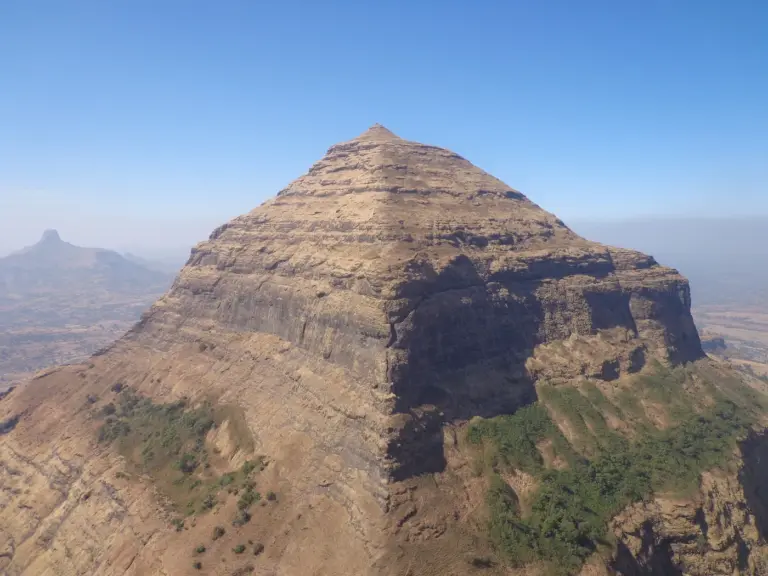
- Hill forts: the largest group, from Chittorgarh and Kumbhalgarh to Raigad, Golconda, Gwalior and Gingee. A cliff is a wall nobody had to build, so builders spent stone only where the rock left a gap.
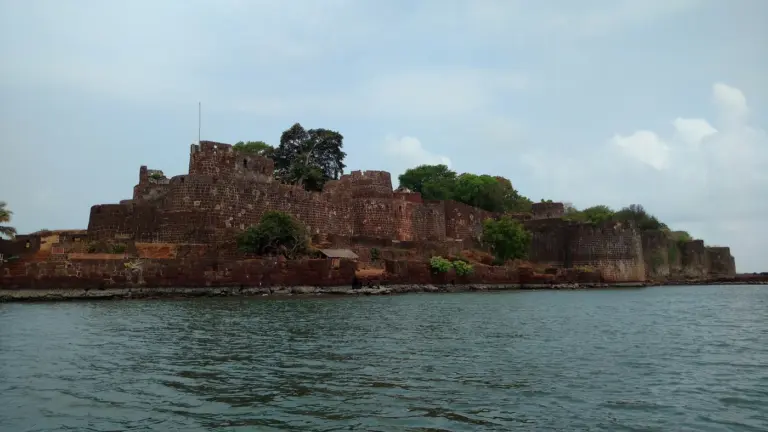
- Sea and island forts: Sindhudurg and Janjira stand on islands, while Vijaydurg and Bekal hold headlands. The Arthashastra’s island-in-a-river is the nearest classical category, but these forts face the open sea, which the text doesn’t discuss, so the fit is loose.
- Land forts on the plains: Agra, the Red Fort, Purana Qila, Junagarh and Fort William. With no cliff to use, they relied on high walls, bastions and moats; Junagarh is a desert fort in Kautilya’s sense, but it stands on flat sand.
- River and confluence forts: Gagron sits where the Ahu meets the Kali Sindh, with water on three sides. Agra, the Red Fort and Fort William also put a river on one flank, which makes them part water fort.
The Maratha series adds finer labels. The Ministry of Culture’s classification, reported by PIB in July 2025, calls six of its twelve forts hill forts, Pratapgad a hill-forest fort, Panhala a hill-plateau fort, Vijaydurg a coastal fort and Khanderi, Suvarnadurg and Sindhudurg island forts. Those labels are the Arthashastra’s ideas mixed and sharpened, not a new system.
One caution keeps the scheme honest. The categories describe the ground a fort uses, not a building style. Jaisalmer is both a hill fort and a desert fort, and Ranthambore is both a hill fort and a forest fort, so one fort can carry two labels.
Famous Forts of India by Builder
The families behind the forts matter as much as the ground under them, because each one built for a different threat. Four groups cover almost every fort an aspirant meets.
Rajput hill forts
Rajput states built and rebuilt their forts between the 8th and 18th centuries, and they built them to withstand pressure from Delhi, the regional sultanates and the Mughals. Chittorgarh was Mewar’s capital and faced sieges in 1303, 1534-35 and 1567-68. Kumbhalgarh was planned in one campaign under Rana Kumbha, and Jaisalmer holds a town that has been lived in since its founding.
These forts were courts as well as garrisons. UNESCO’s evaluators called the six listed forts “in effect fortified towns”, with palaces, temples and water systems inside the walls. Two famous Rajput forts sit outside that series. Mehrangarh at Jodhpur belongs to the former ruling family and is run by a museum trust, and Junagarh at Bikaner is a land fort on level ground, not a hill fort at all.
Maratha hill and sea forts
The Maratha forts form a network rather than a set of capitals. UNESCO describes twelve forts that the Marathas built, adapted or expanded between the late 17th and early 19th centuries, placed on coast and mountain to control territory and protect trade.
Shivaji used both kinds of ground:
- Hill forts carried the state inland. Rajgad was his first seat of government, and Raigad, where he was crowned on 6 June 1674, was the second.
- Sea forts carried it to the coast. Sindhudurg, built from 1664 to 1667, was meant as a naval base and a check on the Siddis of Janjira, the English and the Portuguese.
The word “adapted” in UNESCO’s description matters, because many of these forts are older than the Marathas:
- Panhala is on record under the Shilaharas in 1191-92.
- Lohagad was already a fort by 1489.
- Gingee in Tamil Nadu was a Nayak stronghold before the Marathas took it in 1677.
Janjira is the famous exception. The Siddis held it against every Maratha siege, and it isn’t in the series.
Deccan sultanate and Mughal citadels
The sultanates and the Mughals built citadels for capitals, and their forts show it: a palace-city inside walls, laid out for a court.
In the Deccan, Daulatabad was the Yadava capital Devagiri before Muhammad bin Tughlaq renamed it in 1327 and moved his court there. Its scarped cliff and dark spiral passage made it a fort that fell to blockade in 1633, not to storm. Golconda grew from a Kakatiya mud fort into the Qutb Shahi capital, which held until the Mughal siege of 1687.
In the north, the Mughal pattern runs from Delhi to Agra and back:
- Purana Qila: Humayun’s Dinpanah of 1533, rebuilt by Sher Shah Suri between 1540 and 1545.
- Agra Fort: Akbar’s red sandstone rebuild of 1565 to 1573, with Shah Jahan’s white marble palaces inside.
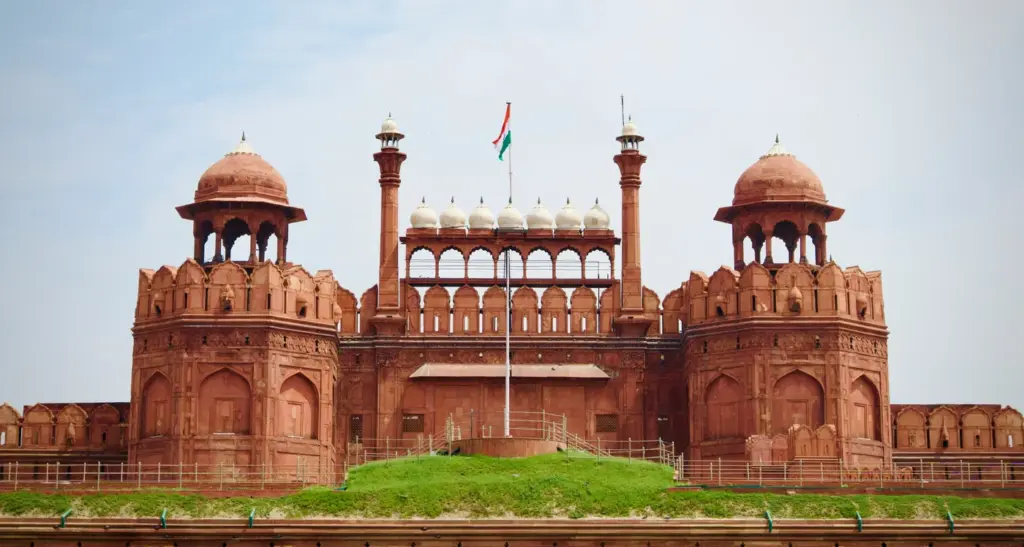
- Red Fort: Shah Jahan’s palace fort for Shahjahanabad, from 1638 to 1648, next to the older Salimgarh, which Islam Shah Suri built in 1546.
UNESCO’s statement on the Red Fort calls it the high point of a Mughal building tradition that began in 1526, mixing Islamic, Persian, Timurid and Hindu traditions. The Rajput forts didn’t stay outside that tradition. Amer’s courtyards follow a Mughal plan inside a Rajput hill fort, which is why the two groups are best studied side by side.
European and other coastal forts
The coast has its own history of forts, and European trading companies wrote only part of it. The Portuguese came first. Diu Fort was built in 1535 under an alliance with Bahadur Shah of Gujarat and rebuilt in 1546, according to the Diu district administration.
The English followed with fortified trading posts:
- Fort St George, Madras (now Chennai), built in 1644, now houses the state’s legislative and administrative offices.
- Fort William, Kolkata, rebuilt after 1757 as an eight-sided bastioned citadel on the Hooghly; the Army renamed it Vijay Durg in December 2024.
Indian powers held the same coast. The Siddis of Janjira, the Keladi Nayakas at Bekal and the Maratha navy under the Angres at Vijaydurg all fortified it too, and India’s 2024 Tentative List entry for the Konkan coast traces control of that shore through the Portuguese, the Siddis, the Dutch, the British and the Marathas. The contest for the western coast involved many powers, not only Europeans against Indians.
UNESCO Forts in India
India has four World Heritage properties that are forts, inscribed between 1983 and 2025. The first two are single Mughal citadels; the last two are serial properties, one listing made of several separate sites that make full sense only together.
| Property | Inscribed | Components | Criteria | Builders |
|---|---|---|---|---|
| Agra Fort | 1983, 7th session, Florence | 1 | (iii) | Mughals |
| Red Fort Complex | 2007, 31st session, Christchurch | 1 (the Red Fort with Salimgarh) | (ii), (iii) and (vi) | Suris and Mughals, with later British additions |
| Hill Forts of Rajasthan | 21 June 2013, 37th session, Phnom Penh | 6 | (ii) and (iii) | Rajput states |
| Maratha Military Landscapes of India | 11 July 2025, 47th session, Paris | 12 | (iv) and (vi) | Marathas, on older forts as well as new ones |
The components are worth fixing exactly, because the lists are what gets tested:
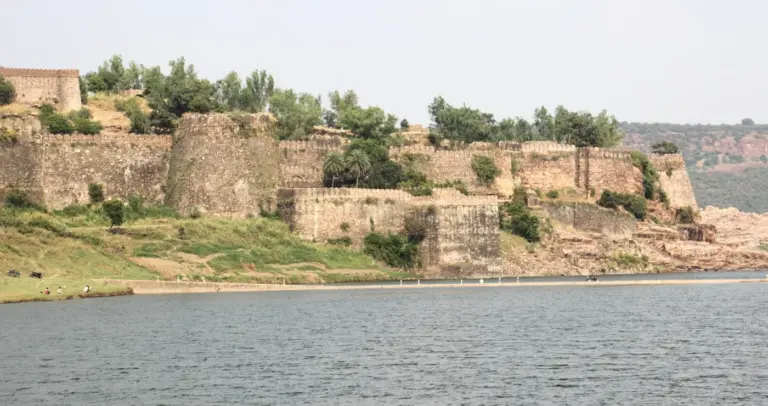
- Hill Forts of Rajasthan: Chittorgarh, Kumbhalgarh, Ranthambore, Gagron, Amber and Jaisalmer.
- Maratha Military Landscapes of India: Salher, Shivneri, Lohagad, Khanderi, Raigad, Rajgad, Pratapgad, Suvarnadurg, Panhala, Vijaydurg and Sindhudurg in Maharashtra, with Gingee in Tamil Nadu. PIB records it as India’s 44th World Heritage property.
The criteria are easier to keep apart in plain words:
- Criterion (ii): an important exchange of ideas.
- Criterion (iii): exceptional evidence of a civilization or tradition.
- Criterion (iv): an outstanding example of a type of building or landscape.
- Criterion (vi): a direct link to events or ideas of universal importance.
The Red Fort carries (vi) because it saw the change to British rule and is where India’s independence is still celebrated.
India’s Tentative List, the shortlist from which future nominations are drawn, carries six more fort entries:
- 2010: The Qutb Shahi Monuments of Hyderabad, including Golconda Fort.
- 2014: Monuments and Forts of the Deccan Sultanate, with components at Gulbarga, Bidar, Bijapur and Hyderabad.
- 2014: Thembang Fortified Village in West Kameng, Arunachal Pradesh.
- 3 January 2024: Coastal Fortifications along the Konkan Coast, nine forts from Arnala and Vasai to Janjira and the Dutch factory fort at Vengurla.
- 8 February 2024: Gwalior Fort, Madhya Pradesh.
- 11 February 2025: The Palace-Fortresses of the Bundelas, six sites including Jhansi Fort.
One overlap trips people up. Vijaydurg and Suvarnadurg appear in the Konkan Tentative List entry of 2024 and were inscribed in 2025 as part of the Maratha series. A Tentative List entry is only a proposal, so a fort can sit in one while it is listed through another.
Forts of India Today: Protection and Recent Developments
Most major forts are protected by the Union, some by the states and a few remain with private trusts or the Army. The Archaeological Survey of India (ASI) maintains monuments declared of national importance under the Ancient Monuments and Archaeological Sites and Remains Act, 1958; PIB put their number at 3,697 on 2 December 2024.
The split shows up in the forts above:
- ASI (central): Agra Fort, the Red Fort, Purana Qila, Golconda, Gwalior, Daulatabad, Jhansi, Bekal, Janjira and eight of the twelve Maratha components, among them Raigad, Shivneri and Gingee.
- State departments: Maharashtra’s Directorate of Archaeology and Museums protects Salher, Rajgad, Khanderi and Pratapgad, and Rajasthan protects Gagron and Amber under its own monuments law.
- Private trusts: Mehrangarh and Junagarh are not centrally protected; trusts of the former ruling families of Jodhpur and Bikaner run them as museums.
- The Army: Fort William is a working headquarters, and part of Agra Fort is still in Army use.
UNESCO status adds a second layer of duties. A listed property reports on its state of conservation, and the Hill Forts of Rajasthan have been reviewed several times since 2013, over mining near Chittorgarh and management at Jaisalmer, among other issues.
The dated developments from 2024 to 2026 are:
- 3 January 2024: the Konkan coastal forts enter the Tentative List.
- 8 February 2024: Gwalior Fort enters the Tentative List.
- December 2024: the Army renames Fort William in Kolkata as Vijay Durg.
- 11 February 2025: the Bundela palace-fortresses, with Jhansi Fort, enter the Tentative List.
- 11 July 2025: the Maratha Military Landscapes of India are inscribed at the 47th session in Paris; PIB reports that 18 of 20 States Parties supported the nomination.
How to Study Forts of India for Exams
Forts sit in three parts of the syllabus:
- Art and culture (GS Paper I): fort and palace architecture, from Rajput hill forts to Mughal citadels.
- Medieval and early modern history: the sieges and capitals that tie a fort to a ruler, from Alauddin Khalji to Aurangzeb and Shivaji.
- Heritage and conservation: UNESCO criteria, serial properties and the split between ASI and state protection.
The theme is tested through heritage and through the politics behind the walls. Mains 2018 GS Paper I asked: “Safeguarding the Indian art heritage is the need of the moment. Discuss.” The protection split and the Tentative List are ready material for that answer. History Optional 2020 Paper I asked candidates to comment on the claim that “Amuktamalyada dwells much upon the relationship of fort, Brahmanas and dispersed tribal groups”, which shows that forts are examined as tools of state power, not only as buildings. On the Prelims side, 94 of the 1,403 questions from 2013 to 2026 in the site’s Prelims question bank are tagged Art and Culture.
Revise these until they’re automatic:
- Four UNESCO fort properties: Agra Fort (1983), the Red Fort Complex (2007), the Hill Forts of Rajasthan (2013) and the Maratha Military Landscapes of India (2025).
- Components: 6 in Rajasthan and 12 in the Maratha series, 11 of them in Maharashtra and one, Gingee, in Tamil Nadu.
- Criteria: Agra (iii); Red Fort (ii), (iii) and (vi); Rajasthan (ii) and (iii); Maratha (iv) and (vi).
- Arthashastra types: audaka (water), parvata (mountain), dhanvana (desert) and vanadurga (forest).
- Maratha labels: Pratapgad is hill-forest, Panhala hill-plateau and Vijaydurg coastal; Khanderi, Suvarnadurg and Sindhudurg are island forts.
- Tentative List forts: Golconda (2010 and 2014), Gwalior (2024), the Konkan coastal forts (2024) and the Bundela forts with Jhansi (2025).
- Protection law: the AMASR Act, 1958, with 3,697 national monuments as of December 2024.
Five confusions cost marks:
- Famous and listed: Mehrangarh, Golconda, Gwalior, Janjira and Daulatabad are not World Heritage Sites.
- Amer and Amber: one fort; UNESCO writes Amber.
- Vijay Durg and Vijaydurg: the first is the Army’s new name for Fort William in Kolkata, the second is the Maratha sea fort in Sindhudurg district.
- Janjira and Sindhudurg: both are island forts, but only Sindhudurg is in the 2025 series; Janjira was held by the Siddis against the Marathas.
- Red Fort and Agra Fort: UNESCO also calls Agra Fort “the Red Fort of Agra”, so read the city before the name.
The two serial listings are the pair to compare:
| Feature | Hill Forts of Rajasthan | Maratha Military Landscapes of India |
|---|---|---|
| Inscribed | 2013, Phnom Penh | 2025, Paris |
| Components | 6 | 12 |
| States | Rajasthan | Maharashtra (11) and Tamil Nadu (1) |
| Criteria | (ii) and (iii) | (iv) and (vi) |
| Ground covered | Hill, river, forest and desert | Hill, hill-forest, hill-plateau, coastal and island |
| Protection | 4 ASI, 2 state | 8 ASI, 4 state |
Forts of India reward the aspirant who sorts before memorizing. Once each fort sits in a family by builder and in a class by ground, a new name in a question becomes a fort you can place, and one answer on heritage, Rajput politics or Maratha power can draw on the whole series.
Frequently Asked Questions
How many forts in India are UNESCO World Heritage Sites?
Four World Heritage properties in India are forts: Agra Fort (1983), the Red Fort Complex (2007), the Hill Forts of Rajasthan (2013) and the Maratha Military Landscapes of India (2025). The last two are serial listings with 6 and 12 forts, so 20 fort sites are covered in all, counting the Red Fort and the adjoining Salimgarh as one complex.
What are the types of forts in India?
The Arthashastra names four types by ground: water forts, mountain forts, desert forts and forest forts. Modern accounts group India’s forts as hill forts, sea and island forts, land forts on the plains and river forts, and the Maratha listing adds labels such as hill-forest and hill-plateau fort.
Which forts of India are on UNESCO’s Tentative List?
The Tentative List includes Golconda Fort, through the Qutb Shahi entry of 2010 and the Deccan Sultanate entry of 2014, and Gwalior Fort, added in February 2024. It also includes the Konkan coastal forts of 2024 with Janjira, the Bundela palace-fortresses of 2025 with Jhansi Fort and Thembang Fortified Village in Arunachal Pradesh.
Which Maratha forts are World Heritage Sites?
Twelve forts make up the Maratha Military Landscapes of India: Salher, Shivneri, Lohagad, Khanderi, Raigad, Rajgad, Pratapgad, Suvarnadurg, Panhala, Vijaydurg and Sindhudurg in Maharashtra, and Gingee in Tamil Nadu. They were inscribed on 11 July 2025 at the 47th session of the World Heritage Committee in Paris.
Is Golconda Fort a UNESCO World Heritage Site?
No. Golconda Fort is on India’s Tentative List, the shortlist of future nominations, but it has not been inscribed. It is centrally protected by the Archaeological Survey of India.
Who protects the forts of India?
The Archaeological Survey of India protects forts declared of national importance under the AMASR Act, 1958, such as Agra Fort, the Red Fort and Golconda. State archaeology departments protect others, such as Pratapgad and Rajgad in Maharashtra, while a few, such as Mehrangarh and Junagarh, are run by trusts of the former ruling families.
Which of the Hill Forts of Rajasthan is the forest fort?
Ranthambore is the forest fort of the Hill Forts of Rajasthan. It stands on a hill inside what is now Ranthambore National Park, and the dense jungle around it was part of its defense.
What is the difference between a hill fort and a sea fort?
A hill fort uses a height, such as a cliff, ridge or plateau, as its main defense, and adds walls only where the rock leaves a gap. A sea fort uses water, standing on an island like Sindhudurg or a headland like Vijaydurg, so that attackers must come by boat or across a narrow neck of land.
Practice Questions
Prelims
1. Consider the following statements about UNESCO fort listings in India: 1. Agra Fort was inscribed on the World Heritage List before the Red Fort Complex. 2. Janjira Fort is a component of the Maratha Military Landscapes of India. 3. Gingee Fort in Tamil Nadu is a component of the Maratha Military Landscapes of India. Which of the statements given above is/are correct?
- (a) 1 and 2 only
- (b) 1 and 3 only
- (c) 2 and 3 only
- (d) 1, 2 and 3
Answer: (b) Agra Fort was inscribed in 1983 and the Red Fort Complex in 2007; Gingee is component 12 of the Maratha series, while Janjira is not a component.
2. Consider the following pairs of Arthashastra fort type and its meaning: 1. Audaka : water fort 2. Parvata : mountain fort 3. Dhanvana : forest fort. How many of the pairs given above are correctly matched?
- (a) Only one
- (b) Only two
- (c) All three
- (d) None
Answer: (b) Dhanvana is the desert fort; the forest fort is vanadurga.
3. Which one of the following forts is on India’s Tentative List but has not been inscribed on the World Heritage List?
- (a) Kumbhalgarh Fort
- (b) Raigad Fort
- (c) Gwalior Fort
- (d) Agra Fort
Answer: (c) Gwalior Fort entered the Tentative List in February 2024; the other three are components of inscribed properties.
4. Consider the following statements: 1. Mehrangarh Fort is a component of the Hill Forts of Rajasthan. 2. Salimgarh Fort forms part of the Red Fort Complex World Heritage property. Which of the statements given above is/are correct?
- (a) 1 only
- (b) 2 only
- (c) Both 1 and 2
- (d) Neither 1 nor 2
Answer: (b) Mehrangarh is outside the Rajasthan series, while Salimgarh, built by Islam Shah Suri in 1546, is part of the Red Fort Complex.
5. Which one of the following is classified as a hill-forest fort among the components of the Maratha Military Landscapes of India?
- (a) Panhala
- (b) Pratapgad
- (c) Vijaydurg
- (d) Salher
Answer: (b) Pratapgad is the hill-forest fort; Panhala is the hill-plateau fort, Vijaydurg the coastal fort and Salher a hill fort.
Mains
- The Arthashastra classified forts by the ground they used. Examine how this idea helps explain the distribution of forts across India. (15 marks, 250 words)
- Compare the Hill Forts of Rajasthan and the Maratha Military Landscapes of India as serial World Heritage properties. (15 marks, 250 words)
- Mughal forts were built as palace-cities rather than purely military works. Discuss with reference to Agra Fort and the Red Fort. (10 marks, 150 words)
- The western coast of India was fortified by many powers between the 16th and 18th centuries. Discuss the role of sea forts in this contest. (15 marks, 250 words)
- Protection of India’s forts is divided between the Union, the states and private owners. Examine the challenges this division creates for conservation. (10 marks, 150 words)
Tell Google you want more of this.
Add Anantam IAS as a preferred sourceOne tap, and this site shows up more often in your own Top Stories, AI Overviews and AI Mode. Remove it any time.