The battery is no longer a humble box. It is the load-bearing wall of the energy transition. Almost every story about electric vehicles, solar power, grid stability, off-grid villages and the future of the smartphone runs through some chemistry of charged ions moving between two electrodes. The competition between battery technologies, between lithium-ion and its challengers, between liquid electrolytes and solid ones, between batteries and hydrogen fuel cells, is reshaping how electricity is produced, stored and used.
For India, the question is not abstract. The country imports almost all its lithium-ion cells today, mostly from China, Japan and South Korea. It also has the world’s third-largest electricity system and one of the most ambitious renewable-energy build-outs anywhere. The Production-Linked Incentive scheme for advanced chemistry cells, announced in 2021 with an outlay of Rs 18,100 crore, is the central instrument by which India is trying to move from importer to manufacturer. Behind that scheme sit deeper choices about which chemistries to bet on, where to source critical minerals, and how to manage the safety, recyclability and end-of-life of millions of battery packs.
For UPSC, battery technologies appear in GS-III science and technology, in GS-III economy, environment and infrastructure, and in cross-cutting questions on energy security, climate policy and mineral diplomacy.
Quick Facts: Battery Technologies at a Glance
- Dominant chemistry: Lithium-ion, deployed in EVs, phones, laptops and grid storage
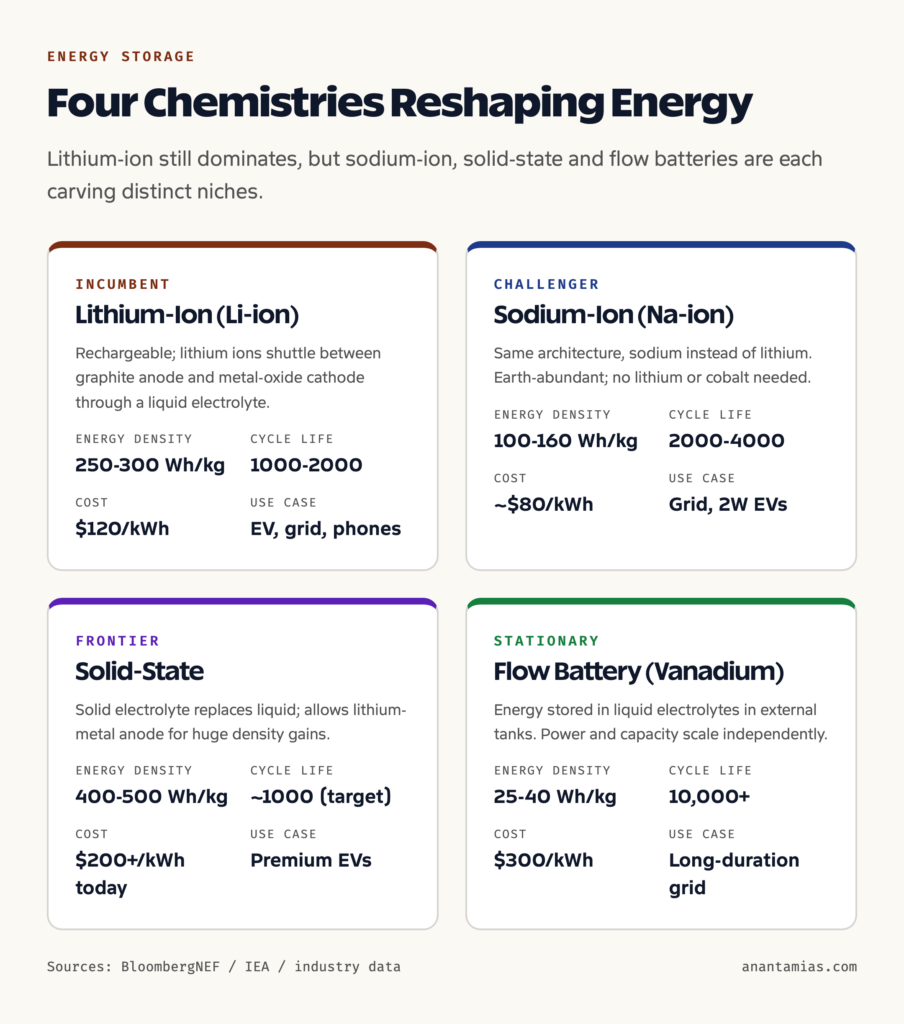
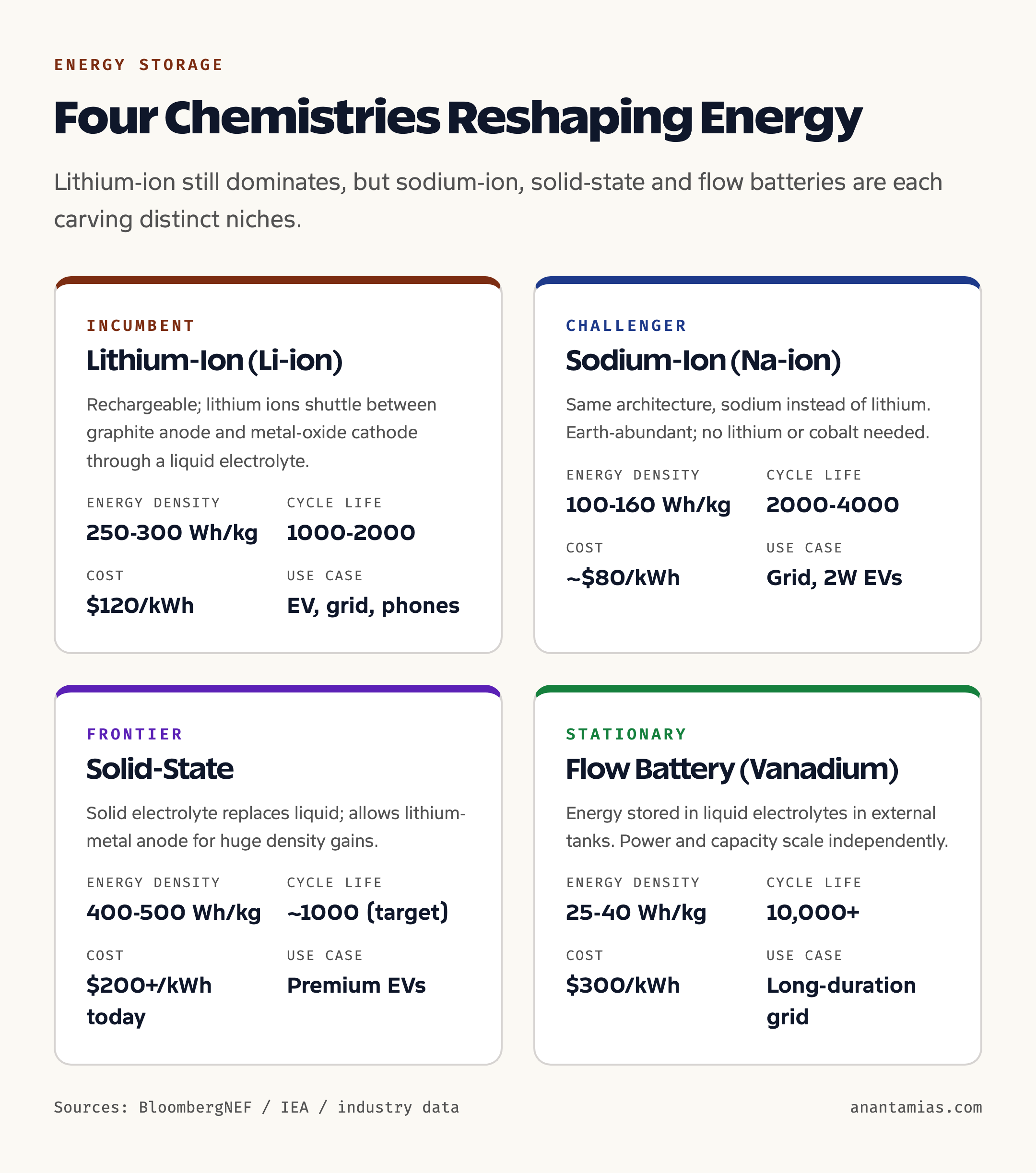
- Lithium-ion energy density: Roughly 250 to 300 Wh/kg in current cells
- Sodium-ion energy density: Around 100 to 160 Wh/kg, lower but cheaper
- Solid-state battery promise: 2 to 3 times the energy density of conventional Li-ion, with much higher safety
- Hydrogen fuel cell byproduct: Water and heat, with zero direct CO2 emissions
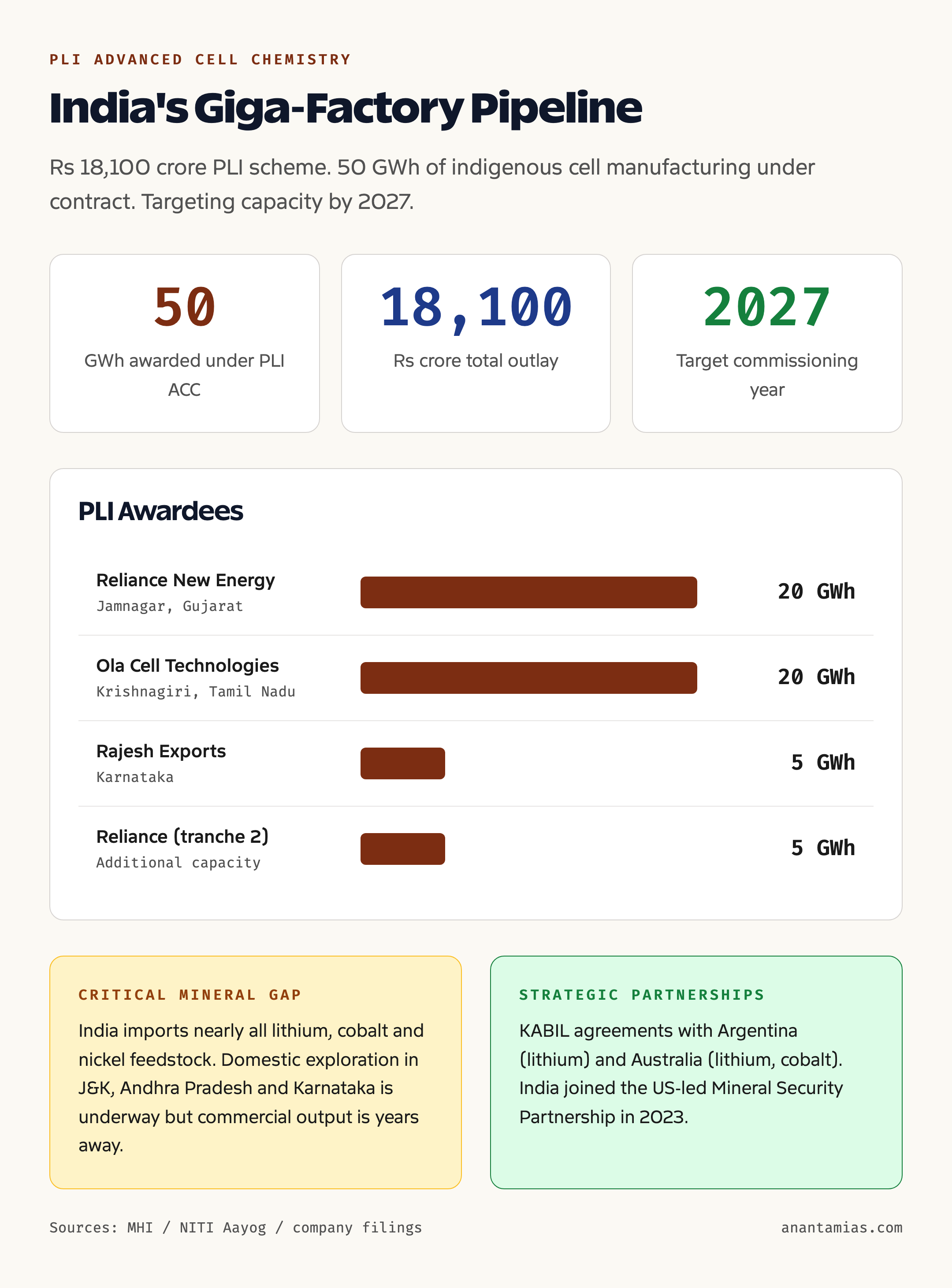
- PLI for ACC: Rs 18,100 crore scheme for 50 GWh of advanced cell manufacturing in India
- Lithium reserves found in India: Salal-Haimana area in Reasi district, Jammu and Kashmir, announced 2023
- India battery storage target: Multi-gigawatt-scale BESS deployment to support renewable integration
- Solid-state battery commercialisation: Pilot scale by mid-2020s, mass-market expected post-2027
What Are the Main Battery Technologies?
A battery is an electrochemical device that converts chemical energy into electrical energy by means of two electrodes, an electrolyte and an external circuit. Different chemistries use different ions, different electrode materials and different electrolytes, and these choices determine cost, energy density, power density, safety, lifetime and operating temperature. The battery technologies most relevant to today’s policy debates are lithium-ion, sodium-ion, solid-state and hydrogen fuel cells, with several niche chemistries such as flow batteries also playing roles in specific applications.
Lithium-ion is the incumbent. It dominates in portable electronics, in electric vehicles and increasingly in stationary grid storage. Sodium-ion is the most credible near-term challenger, especially for stationary applications and for cost-sensitive EV segments. Solid-state batteries are the long-promised next leap in lithium chemistry, replacing the flammable liquid electrolyte with a solid one. Hydrogen fuel cells are not strictly batteries because they are continuously fed with fuel rather than charged, but they compete in the same overall mobility and stationary-power market and are often discussed together with batteries.
Each of these technologies has a distinct profile. The choice between them depends on the use case. A passenger car wants high energy density to maximise range. A grid storage installation wants the lowest cost per cycle, since weight and volume matter little. A heavy truck or a long-distance bus may prefer hydrogen for fast refuelling. A smartphone wants the safest possible chemistry inside the customer’s pocket. The “best” battery is the one that fits the application.
Background and Historical Context
The lithium-ion battery as we know it was the product of a long convergence of materials science research that crossed three continents. The basic insight, that lithium ions could shuttle reversibly between layered electrode materials, was developed in the 1970s by Stanley Whittingham at Exxon. Through the 1980s, John Goodenough at Oxford and later Texas identified lithium cobalt oxide as a workable cathode. Akira Yoshino at the Asahi Kasei Corporation in Japan developed a safer carbon-based anode in 1985, producing the first commercially viable lithium-ion cell. Sony commercialised it in 1991. Whittingham, Goodenough and Yoshino shared the 2019 Nobel Prize in Chemistry for this work.
Through the 1990s and 2000s, lithium-ion conquered consumer electronics. The transition from nickel-cadmium and nickel-metal-hydride to lithium-ion in laptops and phones was rapid and decisive. Electric vehicles, however, took longer. Tesla’s first Roadster in 2008, using thousands of small lithium-ion cells, was a turning point because it showed that EVs could match conventional cars on range and acceleration. The 2010s saw a steep cost-decline curve for lithium-ion, with the average pack-level cost falling from above $1000 per kWh in 2010 to around $130 per kWh by the early 2020s.
Sodium-ion chemistry has a longer research history than commercial story. It was studied alongside lithium-ion from the 1970s but was set aside because lithium offered higher energy density. Interest revived in the 2010s as lithium prices became volatile and as China’s CATL announced a sodium-ion battery line in 2021. Solid-state batteries have been promised for decades, with Toyota and Samsung among the most prominent developers, but mass-market commercialisation has consistently slipped, with many announcements now targeting 2027 to 2030. For broader context on India’s energy and mobility transitions, see our pieces on lithium-ion batteries, electric mobility and the battery swapping policy.
Lithium-Ion Batteries (Li-ion)
A lithium-ion battery uses lithium ions that move between a graphite anode and a lithium-metal-oxide cathode through a liquid electrolyte. During discharge, lithium ions travel from the anode to the cathode through the electrolyte, while electrons travel from anode to cathode through the external circuit, doing work along the way. During charging, an external power source forces the ions back to the anode and the electrons back through the external circuit, storing the energy.
The cathode chemistry is what most distinguishes one Li-ion variant from another. Lithium Cobalt Oxide (LCO) is used in phones and laptops because of its high energy density. Lithium Nickel Manganese Cobalt Oxide (NMC) and Lithium Nickel Cobalt Aluminum Oxide (NCA) are used in most EVs because they balance density, power and cost. Lithium Iron Phosphate (LFP) gives up some energy density but offers better safety, longer cycle life and no cobalt, which has made it the fastest-growing Li-ion variant and a favourite for stationary storage and entry-level EVs.
Li-ion’s strengths are clear: high energy density, mature manufacturing, long cycle life and a global supply chain. Its limits are equally clear. The liquid electrolyte is flammable and can lead to thermal runaway in damaged or defective cells. Several of the cathode metals, especially cobalt, are concentrated in geologically and politically risky regions. Performance degrades with age and with extreme temperatures. End-of-life recycling, while technically feasible, is still operating at limited scale globally and almost negligibly in India.
Sodium-Ion Batteries (Na-ion)
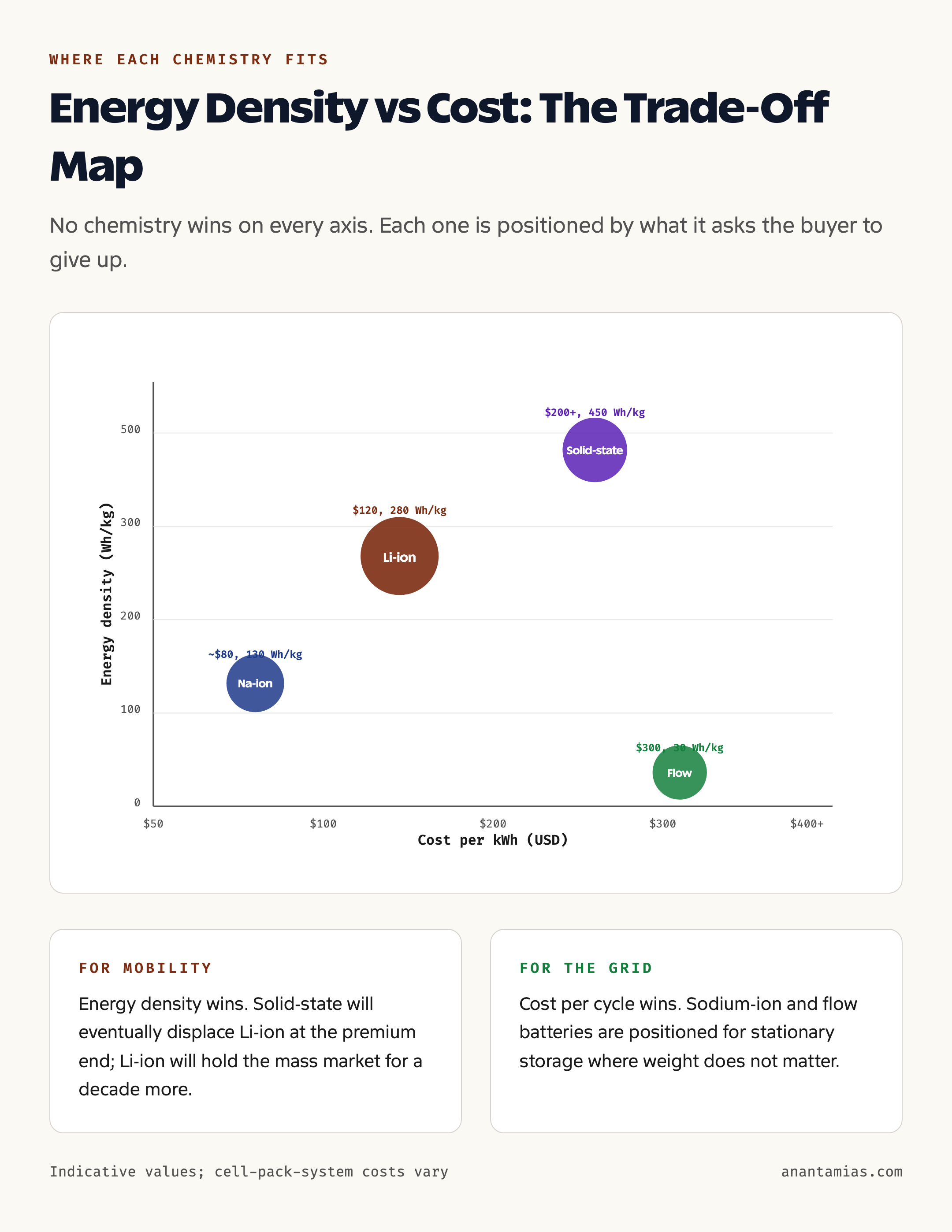
Sodium-ion batteries work on the same principle as lithium-ion, but they use sodium ions instead of lithium ions. Sodium is far more abundant and far more evenly distributed across the planet than lithium. It can be extracted from common salt and from sea water. The cathode in a typical Na-ion cell uses Prussian-blue analogues or layered transition-metal oxides; the anode uses hard carbon rather than graphite, since sodium ions do not intercalate well into graphite.
The two big advantages of sodium-ion are cost and supply security. The raw materials are roughly 30 to 40 percent cheaper than lithium-ion equivalents at the cell level, with greater potential cost reduction at scale. The chemistry tolerates lower temperatures better than lithium-ion, which makes it well suited for cold-climate applications and for outdoor grid storage installations. Safety is also generally better, because sodium-ion cells can be discharged completely to zero volts for transport without damage.
The trade-off is energy density. Sodium-ion cells today deliver 100 to 160 Wh/kg, well below lithium-ion’s 250 to 300 Wh/kg. This makes Na-ion less competitive for premium passenger EVs, where range matters most. It is highly competitive for stationary storage, where weight and volume are not constraints, and for two-wheelers and three-wheelers, where the cost difference can outweigh the range disadvantage. China’s BYD and CATL, India’s Reliance through its 2022 acquisition of UK-based Faradion, and several other firms are bringing Na-ion to market in this decade. The case for India’s interest in Na-ion has been laid out in policy commentary on sodium-ion technology.
Solid-State Batteries
A solid-state battery replaces the flammable liquid electrolyte of a conventional Li-ion cell with a solid electrolyte made of a ceramic, glass or polymer material. The basic chemistry can still be lithium-based, but the change in electrolyte unlocks several major advantages. Safety is the biggest. A solid electrolyte cannot leak, cannot catch fire and is not affected by the dendrite growth that can short-circuit conventional cells. Energy density is the next benefit. Because solid electrolytes are mechanically more stable, they allow the use of pure lithium-metal anodes, which can store far more energy per unit volume than graphite, raising practical energy densities by a factor of two or three.
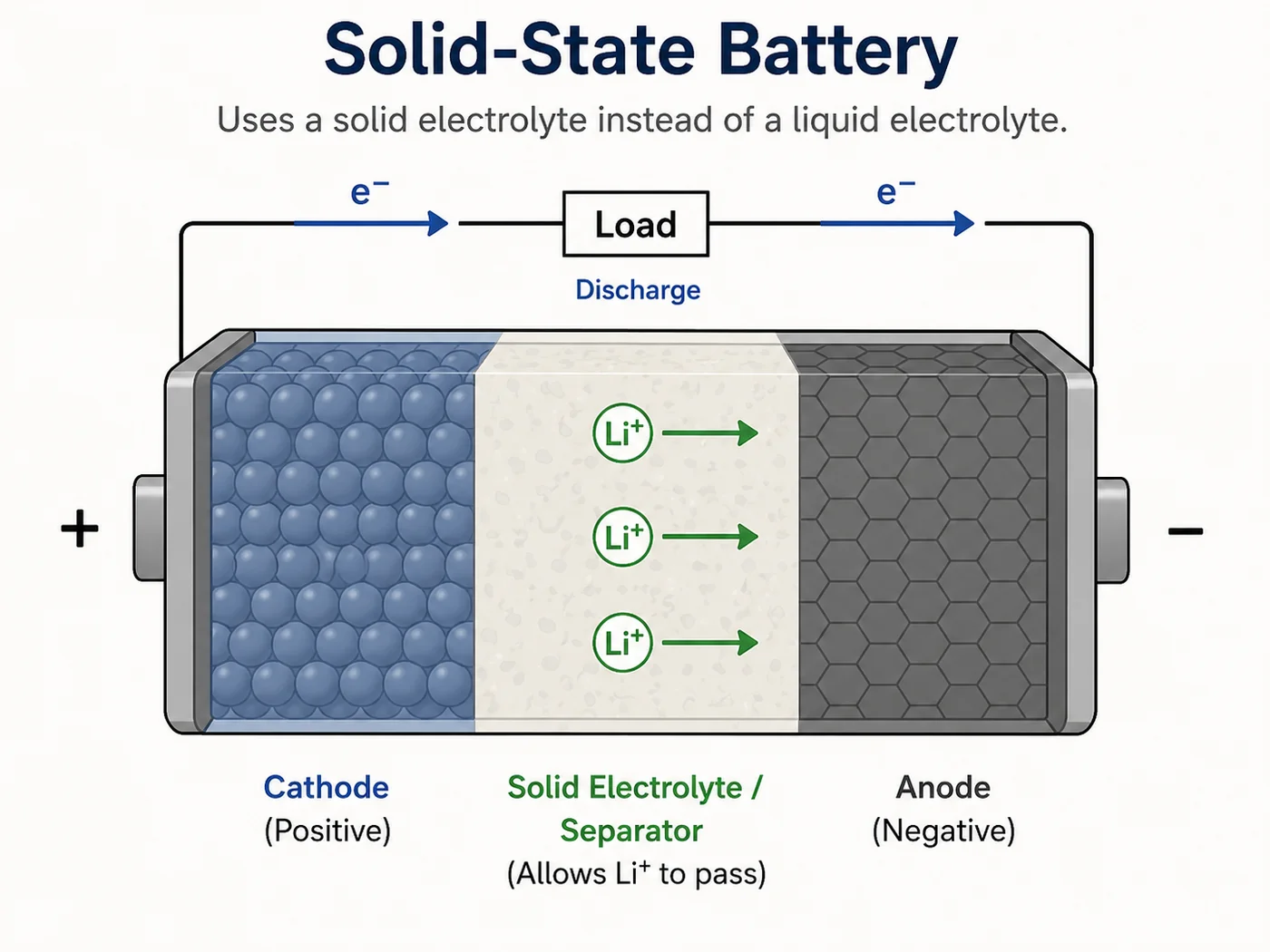
Charging speed is another benefit. Solid-state cells, in laboratory demonstrations, have achieved full charge in 10 to 15 minutes, which would transform the EV experience. Lifetime is also better, with cycle life potentially exceeding that of conventional Li-ion by a wide margin. The trade-offs are manufacturing maturity and cost. Producing solid electrolytes at scale, with the required interfacial contact between solid layers, is far harder than making liquid-electrolyte cells. Yields have historically been low, and capital costs are high.
Toyota, Samsung SDI, QuantumScape, Solid Power and several other companies are developing solid-state cells. Pilot lines are running. Mass-market commercialisation has been promised by 2027 to 2030 by several of the leading developers. India does not yet have a domestic solid-state programme at scale, although research is under way at IITs and at industrial laboratories. India-specific commentary is gathered in our coverage of solid-state batteries.
Hydrogen Fuel Cells
A hydrogen fuel cell is not, strictly, a battery. It is an electrochemical device that converts the chemical energy of hydrogen and oxygen directly into electricity, with water and heat as the only byproducts. Hydrogen is fed to the anode, where it splits into protons and electrons. The protons pass through an electrolyte, typically a polymer membrane in proton-exchange-membrane (PEM) fuel cells, to the cathode. The electrons take the longer route through an external circuit, doing work along the way. At the cathode, protons, electrons and oxygen combine to form water.
The big advantages of hydrogen fuel cells are energy density at the system level and refuelling speed. A hydrogen tank can store far more usable energy per kilogram than a lithium-ion pack, which makes fuel cells attractive for trucks, buses, trains and potentially aircraft, where range and refuelling time matter most. Refuelling a hydrogen tank takes minutes, comparable to a diesel fill-up, rather than the hours a battery EV typically needs.
The challenges are storage and infrastructure. Hydrogen must be stored at very high pressures or at very low temperatures to be useful, both of which require specialised tanks and handling. The refuelling network in most countries, including India, is in its infancy. The energy efficiency of the full cycle from electricity to hydrogen to electricity is also lower than for batteries, which adds to operating cost unless the hydrogen comes from very cheap renewable electricity. India’s National Green Hydrogen Mission, with a layout of Rs 19,744 crore, is the principal vehicle for building out the supply side of this technology.
Comparative Snapshot: Four Chemistries
| Parameter | Lithium-Ion | Sodium-Ion | Solid-State | Hydrogen Fuel Cell |
|---|---|---|---|---|
| Energy density (Wh/kg) | 250 to 300 | 100 to 160 | 400 to 600 (target) | Very high system level |
| Cost per kWh | Moderate, falling | Lower, projected | High initially | High infrastructure cost |
| Safety | Liquid electrolyte risk | Better | Best | Hydrogen handling risk |
| Refuelling/recharge time | 30 min to several hours | Similar to Li-ion | 10 to 15 min target | Minutes |
| Cycle life | 2,000 to 5,000 | 3,000 to 6,000 | 5,000+ target | Cell-stack lifetime |
| Best use cases | Cars, phones, laptops, BESS | Stationary storage, two-wheelers | Premium EVs, aviation (future) | Trucks, buses, trains |
| Critical minerals dependence | Lithium, cobalt, nickel | Sodium, abundant | Lithium, but less | Platinum-group metals for catalyst |
| Maturity | Mature | Early commercial | Pilot to early commercial | Commercial in niche markets |
Why It Matters: India’s Battery Strategy
India’s battery strategy has three pillars. The first is manufacturing scale. The Production-Linked Incentive scheme for advanced chemistry cells, with Rs 18,100 crore in outlay and a target of 50 GWh of cell manufacturing capacity, is the centrepiece. Awards have gone to Reliance, Ola Electric, Rajesh Exports and others, with subsequent rounds being conducted as projects move from announcement to construction. Cell manufacturing is a capital-intensive, long-payback business, so the PLI is structured to defray initial investment risk and to anchor a domestic supply chain in cathode active materials, anode active materials, separators and electrolytes.
The second is mineral security. The 2023 announcement of inferred lithium resources at Salal-Haimana in Jammu and Kashmir’s Reasi district was a milestone, although the deposit has yet to be proven and developed. India is also pursuing overseas critical-mineral acquisitions through Khanij Bidesh India Limited (KABIL) and bilateral arrangements with Argentina, Australia and other resource-rich countries. The Critical Minerals list released by the Ministry of Mines in 2023 named thirty minerals essential to the energy transition, with lithium, cobalt, nickel, graphite and rare earths among the most prominent.
The third is end-of-life management. India’s Battery Waste Management Rules, 2022, set extended producer responsibility obligations on battery producers. Battery recycling is a high-value circular-economy opportunity, since recovered lithium, cobalt and nickel can substantially reduce the import bill. Indigenous recycling capacity is small today but is growing through both PLI-aligned investments and standalone recyclers. Together with the PLI for semiconductors and domestic IPR architecture, the battery strategy is part of the broader push for technological self-reliance.
Challenges and Constraints
The first constraint is the geopolitics of critical minerals. Cobalt is concentrated in the Democratic Republic of Congo. Lithium is concentrated in the lithium triangle of Argentina, Bolivia and Chile, and in Australia. Refining is dominated by China. India does not yet control any meaningful share of either upstream extraction or midstream refining. Bilateral and multilateral arrangements are necessary but slow.
The second is fire safety. Several high-profile fires in two-wheeler EVs in India in 2022 and 2023 highlighted the need for stricter cell-level testing standards, better battery management systems and improved thermal design. The Bureau of Indian Standards has tightened relevant standards, and the Ministry of Road Transport and Highways has introduced more demanding type-approval rules.
The third is grid integration. Battery storage at grid scale is expanding rapidly, with several states procuring battery energy storage systems (BESS) of hundreds of megawatts. The technical challenges include matching storage profiles to renewable generation, ensuring rapid response to frequency events, and managing degradation over decadal timescales. Regulatory clarity on tariff design for BESS, on dispatch protocols and on grid services is still evolving.
The fourth is workforce. A 50 GWh cell manufacturing capacity will require tens of thousands of skilled workers in process chemistry, electrochemistry, materials science and advanced manufacturing. The Skill India and ITI ecosystems will need to add specialised tracks to keep up with demand from the new giga-factories.
Prelims Pointers
- Lithium-ion batteries use lithium ions moving between a graphite anode and a lithium-metal-oxide cathode through a liquid electrolyte.
- Akira Yoshino, John Goodenough and Stanley Whittingham shared the 2019 Nobel Prize in Chemistry for the development of Li-ion.
- LFP (Lithium Iron Phosphate), NMC (Nickel-Manganese-Cobalt) and NCA (Nickel-Cobalt-Aluminum) are the main Li-ion cathode chemistries.
- Sodium-ion batteries use abundant sodium and offer lower cost and better cold-weather performance, at lower energy density.
- Solid-state batteries replace the liquid electrolyte with a solid one, improving safety and energy density.
- Hydrogen fuel cells produce electricity from hydrogen and oxygen, with water as the only byproduct.
- India’s PLI for advanced chemistry cells has an outlay of Rs 18,100 crore for 50 GWh of capacity.
- The Salal-Haimana lithium deposit in Reasi district, Jammu and Kashmir, was announced in 2023.
- The National Green Hydrogen Mission has an outlay of Rs 19,744 crore.
- The Battery Waste Management Rules, 2022, set extended producer responsibility for battery makers.
Mains Practice Questions
- Compare and contrast lithium-ion, sodium-ion and solid-state batteries on the dimensions of energy density, cost, safety and supply-chain security. Which technologies should India prioritise and why? (250 words, GS-III)
- Discuss the role of the Production-Linked Incentive scheme for advanced chemistry cells in shaping India’s battery manufacturing landscape. What are its likely successes and limitations? (250 words, GS-III)
- Examine the prospects of hydrogen fuel cells in India’s heavy-duty transport sector. Compare with battery-electric alternatives on cost, infrastructure and emissions. (150 words, GS-III)
- “Critical-mineral diplomacy is the new currency of the energy transition.” Comment, with reference to India’s recent overseas mineral arrangements and domestic discoveries. (150 words, GS-II/III)
Way Forward
A serious battery strategy for India needs to do four things at once. First, it needs to keep accelerating the PLI for advanced chemistry cells, including diversifying across chemistries so that India is not locked into a single technology trajectory. The second-round PLI calls have explicitly opened space for sodium-ion alongside lithium-ion, which is the right direction.
Second, it needs to accelerate mineral security through a mix of domestic exploration, overseas acquisitions and strategic stockpiling. The Khanij Bidesh India Limited (KABIL) joint venture and the bilateral arrangements with Argentina and Australia are useful starts. They need to be backed by faster regulatory clearances and by a serious commitment to refining capacity, which is where most of the value-add lies.
Third, it needs to ramp up battery recycling. India will be a major source of end-of-life batteries within the decade as early EV cohorts age out. Capturing the lithium, cobalt and nickel from those packs reduces import dependence and creates jobs. The Battery Waste Management Rules, 2022 set the framework, but enforcement and the build-out of organised recyclers need to be accelerated.
Fourth, it needs to settle on a clear architecture for stationary storage. India’s renewable energy ambitions, including the 500 GW non-fossil capacity target, require gigawatt-scale battery storage to manage diurnal and seasonal variability. Tariff design, dispatch protocols and procurement rules for BESS need to be standardised and made bankable. Sodium-ion and flow batteries will play a much larger role in this segment than they will in passenger mobility.
For UPSC, battery technologies are best understood as a layered topic. There is the chemistry layer, where each technology has its own physics and materials science. There is the engineering layer, where the cell becomes a pack and the pack becomes a vehicle or a grid asset. There is the policy layer, where PLI, mineral security, EPR rules and tariff design intersect. And there is the geopolitical layer, where China’s dominance, the lithium triangle, the cobalt belt and the rare-earth question shape India’s choices. A good answer connects at least three of these layers.
Frequently Asked Questions
What is the main difference between lithium-ion and sodium-ion batteries?
Both work on the same principle of ions shuttling between two electrodes. Lithium-ion uses lithium ions and offers higher energy density. Sodium-ion uses sodium ions and offers lower cost and better cold-weather performance, at the price of lower energy density. Lithium-ion is dominant in passenger EVs and consumer electronics; sodium-ion is most competitive in stationary storage and cost-sensitive two-wheeler and three-wheeler applications.
Are solid-state batteries already in commercial use?
Solid-state batteries are in pilot and early-commercial stages. Several companies, including Toyota, Samsung SDI, QuantumScape and Solid Power, have demonstrated working cells, and a few have announced production schedules in the late 2020s. Mass-market commercialisation of full solid-state batteries for EVs is generally expected between 2027 and 2030, with semi-solid intermediate designs reaching market sooner.
Why are EV fires associated mostly with lithium-ion batteries?
Lithium-ion cells contain a flammable liquid electrolyte. If a cell is damaged, defective or overheated, the electrolyte can ignite and trigger a chain reaction called thermal runaway. Robust battery management systems, well-designed cooling, proper cell quality control and stricter safety standards substantially reduce the risk. Solid-state batteries eliminate the flammable electrolyte and are intrinsically safer, which is one of the main reasons they are being pursued.
What is the PLI scheme for advanced chemistry cells?
The Production-Linked Incentive scheme for Advanced Chemistry Cell Battery Storage was approved in 2021 with an outlay of Rs 18,100 crore. It targets 50 GWh of cell manufacturing capacity in India through five-year incentives based on incremental sales of indigenously made cells. Awards have gone to companies including Reliance, Ola Electric and Rajesh Exports, with subsequent rounds aimed at expanding chemistry diversity, including sodium-ion.
Where can India source lithium domestically?
The Geological Survey of India announced inferred lithium resources at Salal-Haimana in Reasi district, Jammu and Kashmir, in 2023. The deposit has yet to be proven, fully assessed and developed, which typically takes several years. Other potential sources include brine deposits in Rajasthan and isolated occurrences in Karnataka and elsewhere. In parallel, India is pursuing overseas mineral acquisitions through KABIL and bilateral arrangements with Argentina, Australia and other resource-rich countries.
How does a hydrogen fuel cell differ from a battery?
A battery stores chemical energy in its own electrodes and electrolyte. It is recharged by reversing the chemical reactions inside it. A hydrogen fuel cell, by contrast, is a continuous-flow device. It is fed with hydrogen and oxygen from external tanks and produces electricity for as long as the fuel is supplied. Refuelling a fuel cell vehicle takes minutes, similar to a diesel fill-up, while charging a battery EV takes much longer.
Are batteries recyclable?
Yes. Lithium-ion batteries can be recycled to recover lithium, cobalt, nickel, manganese and other valuable materials. Recycling is technically demanding and economically marginal at small scale, but it becomes viable at industrial scale. India’s Battery Waste Management Rules, 2022, place extended producer responsibility on battery makers to ensure collection and recycling. Indigenous recycling capacity is small today but is growing.
What are critical minerals for batteries?
The critical minerals most relevant to current battery technologies include lithium, cobalt, nickel, manganese, graphite and certain rare earth elements. The Ministry of Mines released a list of thirty critical minerals in 2023, of which a substantial fraction relate directly to the energy transition. The geopolitics of these minerals is a central theme of contemporary energy security debates.
How do flow batteries differ from lithium-ion and sodium-ion?
A flow battery stores its energy in liquid electrolytes contained in external tanks rather than in the electrodes themselves. This separates power capacity from energy capacity and makes flow batteries well suited to long-duration grid storage. Vanadium redox is the most established flow chemistry. Flow batteries are not currently competitive with lithium-ion for mobility applications because of their low energy density, but they can be very attractive for stationary storage with multi-hour discharge requirements.
Will solid-state batteries make lithium-ion obsolete?
Solid-state batteries will likely complement rather than replace lithium-ion for the foreseeable future. Lithium-ion will continue to dominate consumer electronics and many EV segments because of its mature manufacturing base and falling cost. Solid-state batteries will start in premium EVs, in aviation and in high-stakes industrial applications where their energy density and safety advantages justify the higher initial cost. Over a decade or more, the cost gap is expected to narrow.
Tell Google you want more of this.
Add Anantam IAS as a preferred sourceOne tap, and this site shows up more often in your own Top Stories, AI Overviews and AI Mode. Remove it any time.