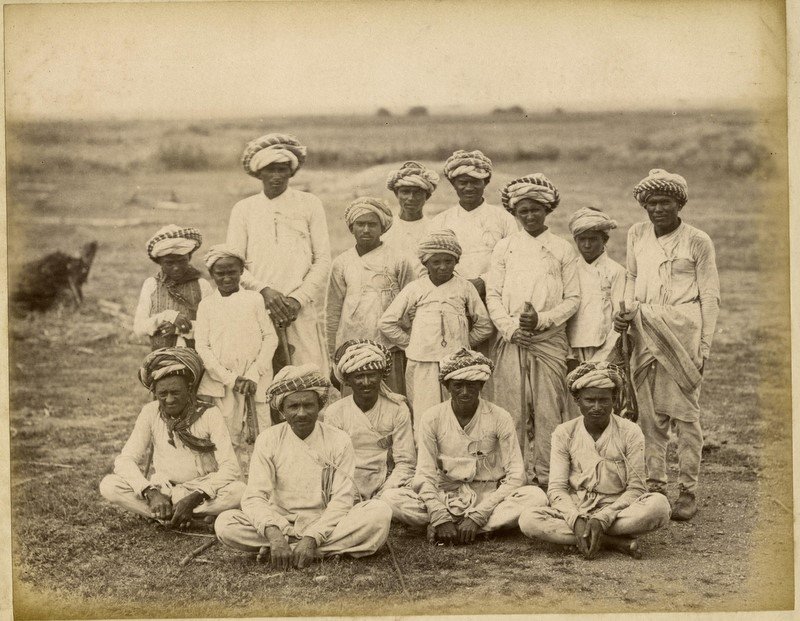
The Bhil tribe is the third-largest Adivasi community in India, after the Santhals and Gonds, with a population of around 17 million spread across Rajasthan, Madhya Pradesh, Gujarat, and Maharashtra. The community has historically been associated with the Aravalli, Vindhya, and Satpura hill systems, and its name has become a near-synonym in Indian languages for forest-dwelling archers. The Mahabharata’s Eklavya, who taught himself archery in the forest and offered his thumb as guru-dakshina to Drona, is identified in many Bhil oral traditions and modern scholarship as a Bhil prince.
For UPSC, the Bhil tribe story matters for three reasons. First, it provides a counterpoint to the Santhal-and-Gond-heavy understanding of eastern and central Indian tribes by foregrounding western India. Second, the Bhil tribe figures in important and often forgotten chapters of the freedom struggle, particularly the 1913 Mangad Hill massacre under Govind Guru’s Bhagat movement, sometimes called the Jallianwala Bagh of Adivasis. Third, the community’s Pithora painting tradition, its Bhilala and Tadvi sub-groups in Madhya Pradesh and Gujarat, and its electoral weight in Vagad and the Aravallis make it central to tribal policy in western India.
This article works through the Bhil tribe in detail, from clan structure and language to the 1913 massacre and contemporary development indicators.
Who Are the Bhils?
The Bhil tribe is the third-largest Scheduled Tribe in India. The 2011 Census recorded around 12.6 million Bhils; community and tribal welfare estimates now place the number near 17 million, taking sub-groups into account. The name “Bhil” is thought to derive from the Dravidian word billu or villu, meaning “bow,” a reference to the community’s long-standing reputation as expert archers.
The Bhil tribe is internally diverse. The major sub-groups recognised in state ST lists include:
- Bhil: The core population across Rajasthan, Madhya Pradesh, Gujarat, and Maharashtra.
- Bhilala: A Bhil-Rajput composite community of the Malwa-Nimar region of Madhya Pradesh and parts of Maharashtra.
- Tadvi Bhil: Largely Muslim Bhils of Gujarat (Bharuch, Narmada) and Madhya Pradesh.
- Pavra (Pawra): Of the Satpura range in Maharashtra (Nandurbar) and Madhya Pradesh (Khargone, Khandwa).
- Rathwa: Of central Gujarat (Chhota Udepur), famous for Pithora painting.
- Bhagalia, Bhilkata, Mavchi, Vasava, and Dholi Bhil: Smaller sub-groups in Gujarat, Maharashtra, and Madhya Pradesh.
The Bhil tribe speaks a cluster of Indo-Aryan languages collectively called Bhili, with major dialects including Wagdi, Mewari, Garasiya Bhili, and Tadvi Bhili. Bhili is not in the Eighth Schedule and faces severe transmission loss in cities and along plains.
Geography: The Bhil Belt
The Bhil tribe lives in a continuous belt along the Aravalli, Vindhya, and Satpura ranges. Main concentrations include:
- Rajasthan: Banswara, Dungarpur, Udaipur, Pratapgarh, Chittorgarh, Sirohi, Pali. The Vagad region of Banswara-Dungarpur is the Bhil heartland.
- Madhya Pradesh: Jhabua, Alirajpur, Dhar, Barwani, Khargone, Khandwa, Ratlam (Malwa-Nimar belt).
- Gujarat: Dahod, Panchmahal, Chhota Udepur, Sabarkantha, Banaskantha, Aravalli, Narmada, Tapi.
- Maharashtra: Nandurbar, Dhule, Jalgaon, Nashik.
- Tripura and Karnataka: Smaller migrant populations.
The Bhil belt overlaps with several Fifth Schedule areas, governed by PESA, 1996, and most Bhil villages today have individual forest rights titles under the Forest Rights Act, 2006, though community forest rights coverage remains uneven.
Bhils in the Mahabharata: The Eklavya Question
The Mahabharata’s Eklavya, son of the Nishadha chief Hiranyadhanus, taught himself archery before a clay statue of Drona, then offered his right thumb as guru-dakshina when the latter demanded it. Eklavya is identified in many traditions, including modern Bhil community memory and tribal historiography, as a Bhil prince. The Eklavya legend has been incorporated into the modern Bhil tribe political vocabulary as a symbol of self-taught skill and unjust extraction by the upper-caste teacher.
The Government of India’s residential schools for tribal children, the Eklavya Model Residential Schools (EMRS), established under the Ministry of Tribal Affairs, take their name from this same Bhil cultural memory. As of 2026, more than 400 EMRS schools operate across India, many in Bhil-majority blocks of Madhya Pradesh, Gujarat, and Rajasthan.
Religion, Clans, and the Bhagwan Mahadev Tradition
The Bhil tribe follows a clan-based religion that combines worship of major Hindu deities, particularly Mahadev (Shiva), with the worship of clan and household deities, sacred groves, and ancestor spirits. The major village deity for many Bhils is Babadev or Bababoram. Tadvi Bhils are largely Muslim; Bhilalas combine Bhil and Rajput practices.
Bhil society is organised into patrilineal exogamous clans (gotras or atak) such as Damor, Ninama, Charpota, Katara, Vasava, Paliwal, Tadvi, Solanki, and Parmar. Marriage within the clan is prohibited and is conducted with the bride-price (dapa) rather than dowry, a feature that distinguishes Bhils from many caste-Hindu neighbours.
Pithora Painting and Bhil Art
The most celebrated visual tradition of the Bhil tribe and its Rathwa sub-group is Pithora painting. Pithora is a votive wall painting commissioned by households in fulfilment of a vow, executed by Lakhara painters under the spiritual guidance of a Badva priest. The paintings typically cover the central wall of a house, depict Pithora Baba on horseback, the sun and moon, and a long procession of gods, ancestors, and animals.
The Rathwa Pithora tradition is centred in Chhota Udepur district of Gujarat and adjoining parts of Madhya Pradesh. It is now recognised in Indian tribal art exhibitions and museum collections. Within the wider Bhil belt, modern Bhil artists like Bhuri Bai of Jhabua, a Padma Shri awardee (2021), have built a new contemporary Bhil school that mirrors the dot-and-line vocabulary of the Pradhan Gond style with figurative narratives.
Bhili oral epics, especially the long Bhil Ramayana and the Bhil cycles around Pabuji and Tejaji in Rajasthan, are performed by Bhopa-Bhopi bards in front of painted phads. The Pabuji ki Phad of the Bhopa community is now studied internationally as a unique scroll-painting performance form.
Govind Guru and the Bhagat Movement
The most important Bhil socio-religious reform movement was led by Govind Guru Bania (1858–1931) in the Vagad region of southern Rajasthan and the adjoining Sabarkantha-Banaskantha belt of Gujarat. From 1883 onwards, Govind Guru organised the Sampa Sabha and the Bhagat Panth, a reform movement that asked Bhils to give up alcohol, meat, and gambling, build dhuni-fire shrines, and unite politically against the local rulers and the colonial state.
Through the early 1900s, the Bhagat Sabha grew into a mass movement across Banswara, Dungarpur, Sirohi, and the Mewar princely states. By 1913, the Sampa Sabha was demanding tax relief from the Banswara and Dungarpur Maharawals, abolition of forced labour (begar), and a new social code for the Bhils.
The Mangad Hill Massacre, 17 November 1913
On 17 November 1913, around 1,500 Bhil Bhagats had gathered on Mangad (Mangarh) Hill on the Rajasthan-Gujarat border to celebrate Govind Guru’s annual meeting and to press their demands. A combined force of British political agents and the Mewar Bhil Corps surrounded the hill, called on the gathering to disperse, and then opened fire with machine guns and rifles.
Estimates of the dead vary from 1,000 to 1,500 Bhils, including women and children. Govind Guru was captured, sentenced to life imprisonment, and released in 1923. The massacre, which predates Jallianwala Bagh by six years, was largely erased from mainstream Indian historiography. The community memory was kept alive in Bhil song and oral history.
In November 2022, Prime Minister Narendra Modi formally inaugurated the Mangarh Dham Pradhan Karyalaya as a national memorial, and the Government of India announced its intention to develop Mangarh Dham as a National Monument under the Ancient Monuments and Archaeological Sites and Remains Act. The Mangad massacre is now part of the national tribal history syllabus and is increasingly tested in UPSC and state PSC exams.
Economy and Development Indicators
The Bhil tribe is overwhelmingly agrarian. Maize, wheat, and pulses are the main rabi-kharif crops, with mahua, tendu, and bamboo as the major forest produce. The Bhil belt has a long history of seasonal labour migration to Gujarat’s diamond units, brick kilns, BT cotton fields, and urban construction; Bhil women in particular form the backbone of cotton-picking workforces in Saurashtra and Vidarbha.
Socio-economic indicators show steady but uneven improvement.
- Literacy among Bhils stood at around 39% in the 2011 Census, with female literacy at about 28%, well below the all-India tribal average.
- Infant mortality in Bhil-majority districts of Jhabua, Alirajpur, and Dahod has been among the highest in India for two decades, despite repeated state focus.
- Maternal mortality and stunting are significantly above tribal national averages.
- Out-migration is acute: Alirajpur and Jhabua are among the top out-migration districts of Madhya Pradesh, with families spending six to eight months a year outside the village.
State-level Bhil-focused programmes include the Halma initiative of the Shivganga movement in Jhabua, the Maa Vatsalya scheme of Madhya Pradesh, and Banswara-Dungarpur-focused tribal development plans of Rajasthan.
Political Voice and Contemporary Demands
The Bhil tribe is politically organised. The Bhil Pradesh demand, originally raised in the 1940s, asks for a separate tribal-majority state carved out of contiguous Bhil-majority districts of Rajasthan, Madhya Pradesh, Gujarat, and Maharashtra. The Bharatiya Tribal Party (BTP) in Gujarat-Rajasthan and the Bhil Adivasi Pradesh campaign have kept this demand on the table.
Recent demands include:
- Inclusion of Bhili in the Eighth Schedule.
- Bhil Pradesh as a separate state for tribal Adivasis of Vagad-Malwa-Vindhya belt.
- Implementation of community forest rights in Banswara, Dungarpur, Jhabua, and Alirajpur districts.
- Recognition of the Mangarh massacre as a national event and inclusion in NCERT textbooks.
- Restoration of customary land rights lost during the post-independence forest department classification.
The Bhil tribe is a recurring presence in tribal movements discussions, from Govind Guru’s 1913 Bhagat uprising to the Narmada Bachao Andolan, which mobilised large Bhilala and Pavra populations of Madhya Pradesh and Gujarat in the 1990s and 2000s.
A Closing Note
The Bhil tribe is the largest tribal community of western India, with a written history of resistance, an internationally recognised painting tradition, and a political identity that has remained surprisingly coherent despite straddling four state boundaries. The community has produced freedom fighters, Padma Shri artists, and elected legislators, but its development indicators remain among the weakest in India. The Mangad massacre memorial is one signal that the Indian state is beginning to recognise Bhil history; the next test is whether that recognition translates into land, language, and livelihood.
Frequently Asked Questions
Who are the Bhil tribe of India?
The Bhil tribe is the third-largest Scheduled Tribe of India, with a population of around 17 million spread across Rajasthan, Madhya Pradesh, Gujarat, and Maharashtra. The community speaks Bhili languages, lives mainly in the Aravalli, Vindhya, and Satpura ranges, and is historically famous for archery and forest expertise.
What is Pithora painting?
Pithora painting is a votive wall painting tradition of the Rathwa Bhil community of Chhota Udepur in Gujarat and adjoining Madhya Pradesh. It is commissioned by households to fulfil vows, depicts Pithora Baba on horseback alongside the sun, moon, and ancestor figures, and is executed by Lakhara painters under the guidance of a Badva priest.
Who was Govind Guru of the Bhils?
Govind Guru (1858–1931) was a Bhil socio-religious reformer who founded the Bhagat Sabha in 1883 in the Vagad region of southern Rajasthan. He urged Bhils to give up alcohol, meat, and gambling, and built a mass political-religious movement across Banswara, Dungarpur, Sirohi, and Mewar that culminated in the November 1913 Mangad gathering.
What was the Mangad Hill massacre of 1913?
On 17 November 1913, around 1,500 Bhil Bhagats gathered on Mangad Hill on the Rajasthan-Gujarat border under Govind Guru’s leadership were fired upon by British forces and the Mewar Bhil Corps. Estimates of the dead range from 1,000 to 1,500. The Mangad massacre predates Jallianwala Bagh by six years and is now memorialised at Mangarh Dham, inaugurated as a national memorial in November 2022.
What is the difference between Bhil, Bhilala, and Tadvi?
Bhils are the core community across the Aravalli-Vindhya belt. Bhilalas are a Bhil-Rajput composite community of the Malwa-Nimar region of Madhya Pradesh and Maharashtra. Tadvi Bhils are a largely Muslim sub-group of Gujarat and Madhya Pradesh. All three are listed as Scheduled Tribes but with separate identities and customs.
Was Eklavya from the Bhil tribe?
The Mahabharata describes Eklavya as a Nishadha prince, the son of Hiranyadhanus. Many modern Bhil community traditions, scholarly histories, and government tribal-affairs publications identify him as a Bhil prince. The Government of India’s Eklavya Model Residential Schools for tribal children are named after this same legend.
What is the Bhil Pradesh demand?
The Bhil Pradesh demand, raised since the 1940s, seeks the creation of a separate tribal-majority state carved out of contiguous Bhil-majority districts of Rajasthan (Banswara, Dungarpur), Madhya Pradesh (Jhabua, Alirajpur), Gujarat (Dahod, Panchmahal), and Maharashtra (Nandurbar). It is a long-pending political demand and remains active in regional party platforms.
Where do most Bhils live in India?
Most Bhils live in the contiguous tribal belt of southern Rajasthan (Banswara, Dungarpur, Udaipur), western Madhya Pradesh (Jhabua, Alirajpur, Dhar, Barwani, Khargone), eastern Gujarat (Dahod, Panchmahal, Chhota Udepur, Sabarkantha), and northwestern Maharashtra (Nandurbar, Dhule). The Vagad region of Banswara-Dungarpur is considered the Bhil heartland.
Tell Google you want more of this.
Add Anantam IAS as a preferred sourceOne tap, and this site shows up more often in your own Top Stories, AI Overviews and AI Mode. Remove it any time.