The BOT model confuses aspirants because the acronym hides the only thing that matters: who carries the risk. Build-Operate-Transfer, Engineering-Procurement-Construction, Hybrid Annuity Model, the exam loves to line these up and ask you to tell them apart, and most candidates memorise the full forms without grasping the single question that separates them. That question is not “who builds the road.” A private company builds the road in almost every model. The real question is who pays if the traffic never shows up, who arranges the loan, and who owns the asset while the debt is being repaid. Get that lens right and the whole family of public-private partnership models arranges itself cleanly. Miss it, and you will keep mixing up BOT and HAM for the rest of your preparation.
What the BOT model actually is
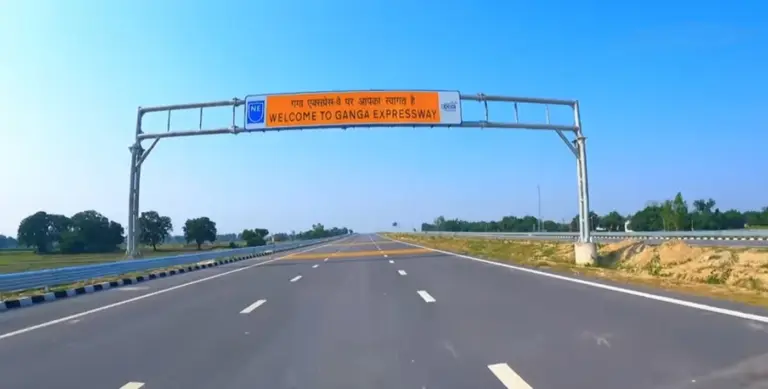
Build-Operate-Transfer (BOT) is a form of public-private partnership (PPP) in which a private company finances and builds a public asset, operates it for a fixed period to earn back its money plus a profit, and then hands it back to the government. Picture a highway. The government owns the land and grants a concession. A private developer, the concessionaire, raises the capital, builds the road, runs and maintains it for a concession period of typically 20 to 30 years, collects revenue during that window, and at the end transfers the road back to the state at no further cost. The government gets infrastructure without spending scarce budget money upfront. The private party gets a long revenue stream. That trade is the whole idea.
The word to hold onto is concession. The government is not selling the asset; it is granting the right to build and earn from it for a defined term, under a contract called the Model Concession Agreement. Ownership reverts. This is what makes BOT different from privatisation, where the asset changes hands for good. In BOT the state stays the ultimate owner and the private role is time-bound.
BOT sits inside the wider PPP toolkit that India has used to build highways, ports, airports, and urban services. When you read about road projects under the Bharatmala Pariyojana or port projects under Sagarmala, you are reading about assets awarded through one of these PPP or contracting models. BOT was, for a long stretch, the flagship among them.
BOT toll versus BOT annuity: the fork that decides everything
BOT splits into two versions, and the split turns entirely on how the concessionaire gets paid. This is the most testable distinction in the whole topic, so learn it as a fork, not a list.
In BOT (Toll), the concessionaire recovers its investment by collecting user charges directly, the toll you pay at the plaza. The private party takes the full traffic risk: if vehicles come in the numbers projected, it profits; if traffic disappoints, it loses money and may not recover its loan. This is the purest form of risk transfer to the private sector. The developer is betting on the traffic forecast.
In BOT (Annuity), the concessionaire does not collect toll at all. It builds and finances the road, and the government pays it a fixed, pre-agreed annuity, usually a semi-annual payment, over the concession period, regardless of how much traffic uses the road. The government keeps whatever toll is collected. Here the private party carries construction and financing risk but is shielded from traffic risk, because its payment is guaranteed by the state. Annuity is used precisely where traffic is uncertain or a road is socially necessary but not commercially attractive, a remote or low-density stretch where no sensible developer would gamble on toll revenue.
The one-line contrast to memorise: toll means the private party bets on traffic; annuity means the government guarantees payment and keeps the toll. Everything else about the two models follows from that single difference in who holds the revenue risk.
BOT versus EPC versus HAM: the comparison that gets tested
The clean way to hold the three dominant Indian highway models together is to line them up by who funds construction, who takes traffic risk, and who owns and operates the asset. This is the table an examiner is effectively asking you to reproduce.
| Feature | EPC | BOT (Toll) | HAM |
|---|---|---|---|
| Full form | Engineering, Procurement, Construction | Build-Operate-Transfer (toll) | Hybrid Annuity Model |
| Who finances construction | Government funds 100% | Private funds ~100% | Government ~40%, private ~60% |
| Who takes traffic / revenue risk | Government | Private concessionaire | Government (it collects toll) |
| Who collects toll | Government | Private concessionaire | Government (NHAI) |
| Private party’s role | Only builds, for a fee | Build, finance, operate, transfer | Build, part-finance, maintain |
| Risk to private sector | Lowest | Highest | Moderate, shared |
Read the table as a spectrum of risk transfer. EPC (Engineering, Procurement, Construction) sits at one end: the government pays the entire cost, the private firm is a pure contractor that designs and builds the road for a fixed fee and then walks away, and the state bears all financing and traffic risk. There is no private capital and no concession. It is the simplest model and the one governments fall back on when private appetite is weak.
BOT (Toll) sits at the other end: maximum private capital, maximum private risk, the concessionaire finances everything and lives or dies by the toll booth. HAM (Hybrid Annuity Model), introduced by the National Highways Authority of India in 2016, deliberately sits in the middle. Under HAM the government funds about 40% of the project cost during construction, released in five instalments tied to physical progress, while the private developer arranges the remaining 60%. The government then repays that private share as annuities with interest over the operations period, and crucially the government, not the developer, collects the toll and so carries the traffic risk. HAM is literally a hybrid: the 40% government grant behaves like EPC, and the 60% repaid-over-time portion behaves like annuity. That is why the name says “hybrid.”
If you can state that EPC transfers no traffic risk, BOT-toll transfers all of it, and HAM shares it with a 40:60 funding split, you have the core of the topic. Most other details hang off this skeleton.
BOOT, DBFOT and the family of PPP acronyms
Beyond the big three, a cluster of related acronyms describes finer variations, and they are worth a paragraph each because the exam occasionally reaches for them.
BOOT (Build-Own-Operate-Transfer) adds an explicit ownership stage: the private party owns the asset during the concession period, not merely operates it, and transfers ownership to the government only at the end. The difference from plain BOT is subtle and often academic, but the “Own” makes clear that the concessionaire holds title while the debt is live. A close cousin, BOO (Build-Own-Operate), drops the transfer entirely, the private party keeps the asset permanently, which is really privatisation and is used for things like some power plants rather than public roads.
DBFOT (Design-Build-Finance-Operate-Transfer) is the full, formal description of what a standard BOT highway concession involves: the private party designs, builds, finances, operates, and finally transfers. In practice, India’s Model Concession Agreement for BOT-toll roads is a DBFOT contract; the two terms are often used interchangeably in official documents. When you see DBFOT, read “BOT with the design and finance stages spelled out.”
BOT and its variants are not confined to roads. The same structure built India’s early private airports, where a concessionaire designs, finances, builds, and runs a terminal for decades before transfer, and it underlies many private port terminals awarded under the port-led growth push. Urban services under the Smart Cities Mission, from parking to water supply, have used PPP structures of this kind through special purpose vehicles. Reading BOT only as a highways tool understates its reach; it is the generic template for drawing private capital into any long-lived public asset that earns a revenue stream.
A separate and increasingly important model is Toll-Operate-Transfer (TOT), which is not for building new roads at all. Under TOT, an already-built and operating public highway is handed to a private operator, who pays the government a large upfront amount for the right to collect toll and maintain the road for a period, then returns it. TOT is a monetisation tool, a way for the government to recycle capital locked in finished assets, and it links directly to the National Monetisation Pipeline and to vehicles like the National Land Monetisation Corporation. Do not confuse TOT (recycling old assets) with BOT (financing new ones).
Where the risk actually sits
The entire logic of PPP is risk allocation, and the guiding principle, stated in every serious policy document, is that each risk should sit with the party best able to manage it. Break a highway project into its risks and you can read any model by who holds each one.
There is construction risk, the danger that the road costs more or takes longer to build than planned. Private developers are usually better at controlling this, so most PPP models push it onto the concessionaire. There is financing risk, the cost and availability of the loans, which in BOT and HAM the private party arranges and in EPC the government carries. There is traffic or revenue risk, the great unknown, whether enough vehicles will actually use the road and pay. This is the risk that BOT-toll dumps entirely on the private sector, that annuity and EPC keep with the government, and that HAM keeps with the government while still drawing in private capital. And there is operation and maintenance risk, the cost of keeping the asset running well, usually the concessionaire’s job.
The reason traffic risk deserves special attention is that it is the risk everyone gets wrong. Traffic forecasts made a decade before a road opens are notoriously unreliable, and when developers bid aggressively on rosy forecasts and the traffic underperformed, projects went bad. The whole Indian PPP story of the last fifteen years is, at bottom, a story about mispriced traffic risk. That is the analytical thread to carry into an answer.
Why BOT collapsed in India, and HAM took over
For a serious answer you need the recent history, not just the definitions. In the boom years around 2010 to 2012, BOT-toll was the default model for national highways, and developers bid fiercely, often on optimistic traffic assumptions and heavy bank borrowing. Then the cycle turned. Traffic underperformed, land acquisition and clearances dragged, interest costs mounted, and many highly leveraged developers ran into trouble. Banks, sitting on stressed road loans, stopped lending to the sector. Fresh BOT bidding dried up. By the middle of the decade, projects were stalling and the pipeline of new highways was at risk.
The government’s response is a textbook case of adjusting risk allocation to revive investment. First it leaned on EPC, funding roads directly from the budget to keep construction moving when private capital had fled, though this put the whole burden back on public finances. Then, in 2016, it introduced HAM as the middle path: by putting in 40% of the cost itself and taking traffic risk onto the government while still drawing 60% private finance, HAM made road projects bankable again. Developers no longer had to swallow traffic risk, and banks were willing to lend against government-backed annuities. HAM went on to account for a large share of new national highway awards, sitting alongside EPC, while pure BOT-toll shrank to a small niche reserved for high-traffic, commercially confident stretches. The Kelkar Committee report of 2015 on revisiting and revitalising PPP reinforced this direction, arguing for fairer risk-sharing, unbundling of risks, and better dispute resolution rather than dumping everything on the private party.
The lesson worth stating in an answer is that there is no single “best” model. The right model depends on how much traffic risk is real, how bankable a project is, and how much fiscal space the government has. India did not abandon BOT because it was wrong; it rebalanced toward HAM and EPC because unshared traffic risk had broken the market. This connects to the broader infrastructure-financing debate you meet in schemes like PM Gati Shakti and asset-monetisation programmes, where the same tension between private capital and public risk keeps recurring.
Viability Gap Funding, and reading the pros and cons
One more instrument completes the picture. Viability Gap Funding (VGF) is a capital grant the government gives to a PPP project that is economically justified but not financially viable on its own, a road society needs but no developer can profit from at a bearable toll. Under the central VGF scheme, run by the Department of Economic Affairs, the grant can cover up to 40% of the total project cost, split between the central government and the sponsoring authority. VGF is how the state nudges private players into socially valuable but commercially thin projects without funding them entirely. It is the bridge between a pure market model and a pure budget model, and it belongs in any discussion of how BOT-style projects are made to work.
Now weigh the model honestly. The advantages of BOT are real: it brings private capital and off-budget financing, transfers construction and operation to parties who often manage them more efficiently, and shifts traffic risk away from the taxpayer in the toll version. The disadvantages are equally real: traffic risk is easy to misprice, aggressive bidding leads to stressed projects and stalled roads, tolls can burden users, concession agreements invite renegotiation and disputes, and long contracts lock the state into terms for decades. A balanced answer names both sides and then makes the judgement that the model suits high-traffic, bankable projects and fails on uncertain-traffic ones, which is exactly why India moved the marginal project from BOT to HAM.
How to study this for the exam
Prepare BOT in two layers. For Prelims, fix the acronyms cold: BOT (both toll and annuity variants), EPC, HAM with its 40:60 split, BOOT, DBFOT, TOT, and VGF with its 40% cap. Expect a matching question or a “which of the following correctly describes HAM” statement. The two facts most likely to trip you are that in HAM the government (not the developer) collects toll and takes traffic risk, and that TOT is for monetising existing roads, not building new ones. Rehearse those until they are automatic.
For Mains and interviews, the value is in the risk-allocation argument. Structure any answer around the three risks, construction, financing, and traffic, and use the Indian history, the 2010-12 BOT boom, the mid-decade stress, and the 2016 shift to HAM, as your evidence. Bring in the Kelkar Committee, VGF, and the link to wider infrastructure financing. If a question asks you to compare models, do not just define them; rank them by risk transfer and say which project type each suits. That is the difference between describing the models and understanding them, and it is the whole secret to this topic: the acronyms are trivia, but the risk logic is analysis.
Frequently Asked Questions
What is the BOT model in simple terms?
BOT stands for Build-Operate-Transfer. A private company finances and builds a public asset such as a highway, operates it for a fixed concession period of usually 20 to 30 years to recover its investment plus profit, and then transfers it back to the government. The state remains the ultimate owner throughout.
What is the difference between BOT toll and BOT annuity?
In BOT (Toll), the private concessionaire collects the toll directly and bears the full traffic risk. In BOT (Annuity), the government pays the concessionaire a fixed periodic annuity regardless of traffic and itself keeps the toll, so the private party is shielded from traffic risk.
How is BOT different from EPC?
Under EPC (Engineering, Procurement, Construction), the government funds the entire cost and the private firm only designs and builds the road for a fee, taking no financing or traffic risk. Under BOT, the private party finances, builds, operates, and takes on far more risk, including traffic risk in the toll version.
What is the Hybrid Annuity Model (HAM), and how does it relate to BOT?
HAM, introduced by NHAI in 2016, is a middle path between EPC and BOT. The government funds about 40% of construction cost and the private party arranges 60%, which the government repays as annuities with interest. The government collects toll and takes traffic risk, so HAM shares risk rather than dumping it on the developer.
What do BOOT and DBFOT mean?
BOOT (Build-Own-Operate-Transfer) is like BOT but explicitly gives the private party ownership during the concession period. DBFOT (Design-Build-Finance-Operate-Transfer) is the full formal description of a standard BOT highway concession, spelling out the design and finance stages.
Why did the BOT model decline in India?
Around 2010 to 2012, developers over-bid on optimistic traffic forecasts using heavy bank loans. When traffic underperformed and projects stalled, developers and banks were left with stressed assets and stopped funding new roads. The government shifted to EPC and then HAM, which shares traffic risk, to revive investment.
What is Viability Gap Funding?
Viability Gap Funding (VGF) is a government capital grant, up to 40% of project cost, given to PPP projects that are economically justified but not financially viable on their own. It is administered by the Department of Economic Affairs and is used to attract private players to socially valuable but commercially thin projects.
What is Toll-Operate-Transfer (TOT)?
TOT is a model for monetising existing, already-built highways. A private operator pays the government a large upfront sum for the right to collect toll and maintain the road for a set period, then transfers it back. Unlike BOT, TOT does not build new roads; it recycles capital from finished assets.
Practice Questions
1. Under the BOT (Annuity) model of highway development, which of the following is correct?
a) The private concessionaire collects toll and bears traffic risk
b) The government pays the concessionaire a fixed annuity and keeps the toll
c) The government funds the entire construction cost
d) The asset is permanently owned by the private party
Answer: b) The government pays the concessionaire a fixed annuity and keeps the toll
2. In the Hybrid Annuity Model (HAM) for national highways, the government’s share of construction cost is approximately:
a) 20%
b) 40%
c) 60%
d) 100%
Answer: b) 40%
3. Which model involves the government funding 100% of the project cost with the private firm acting only as a contractor?
a) BOT (Toll)
b) BOOT
c) EPC
d) DBFOT
Answer: c) EPC
4. Toll-Operate-Transfer (TOT) is best described as a model for:
a) Building new greenfield highways with private finance
b) Monetising existing, operational highways
c) Funding rural roads entirely from the budget
d) Transferring ownership of ports to private firms
Answer: b) Monetising existing, operational highways
5. Viability Gap Funding (VGF) can cover up to what share of total project cost?
a) 10%
b) 20%
c) 40%
d) 60%
Answer: c) 40%
Mains-style questions
- “In public-private partnerships, every risk should sit with the party best able to manage it.” Examine this principle with reference to the BOT, EPC, and HAM models in Indian highway development.
- Analyse the reasons for the decline of the BOT (Toll) model in India after 2012 and evaluate the Hybrid Annuity Model as a corrective.
- Distinguish between BOT, BOOT, DBFOT, and TOT, and discuss the role each plays in financing and monetising infrastructure.
- Discuss how instruments such as Viability Gap Funding help reconcile commercial viability with social need in infrastructure projects.
- “The choice of PPP model is ultimately a choice about who carries traffic risk.” Critically evaluate this statement in the context of India’s infrastructure financing.
The BOT model is not a definition to memorise but a lens to apply, and the lens is risk. Once you can look at any project and ask who finances it, who owns it while the debt runs, and above all who loses when the traffic falls short, the acronyms stop being an alphabet soup and become a rational menu, each option suited to a different balance of certainty and ambition. That is what separates a candidate who has learned the full forms from one who actually understands why India kept inventing new ones.
Tell Google you want more of this.
Add Anantam IAS as a preferred sourceOne tap, and this site shows up more often in your own Top Stories, AI Overviews and AI Mode. Remove it any time.