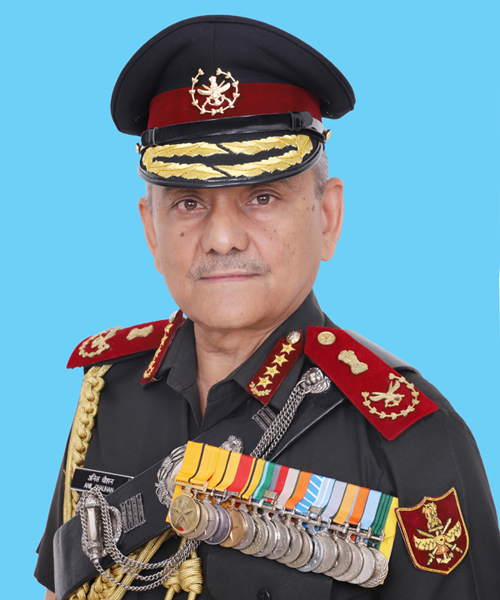
The Chief of Defence Staff is India’s senior-most uniformed officer and the principal military adviser to the Defence Minister on all tri-service matters. The post was created in December 2019, six months after Prime Minister Narendra Modi announced it from the Red Fort on Independence Day, and it represents the most significant reform of India’s higher defence organisation since 1947. The Chief of Defence Staff also heads the newly created Department of Military Affairs (DMA) inside the Ministry of Defence, which gives the office both military and bureaucratic authority that no Indian officer previously held.
For UPSC GS-III aspirants studying internal security, the Chief of Defence Staff post is a recurring high-yield topic. It cuts across civil-military relations, defence reforms, theaterisation, jointness, and the long debate about whether India’s three services should fight independently or as a single integrated force. The Chief of Defence Staff is also a four-star general (Army, Navy, or Air Force equivalent), which makes the officer first among equals rather than a superior to the three service chiefs.
This article walks through the origin of the Chief of Defence Staff post, the powers and responsibilities assigned to it, the controversies around theaterisation, and where the office stands in 2026 under General Anil Chauhan.
Why the Chief of Defence Staff Post Was Created
India debated a single-point military adviser for almost five decades before acting on it. The trigger came from the Kargil War of 1999 and the Kargil Review Committee headed by K. Subrahmanyam, which submitted its report in February 2000. The committee identified serious gaps in intelligence coordination, joint planning, and inter-service communication during the conflict.
The Kargil Review Committee and the Group of Ministers
The Kargil Review Committee recommended a thorough review of the national security system. The Group of Ministers (GoM), set up by the NDA government, examined the recommendations across four task forces. The task force on management of defence, chaired by Arun Singh, proposed creating a Chief of Defence Staff to provide single-point military advice, ensure jointness, and prepare the armed forces for integrated warfare.
The GoM accepted the recommendation in 2001. But political consensus eluded successive governments. Concerns ranged from inter-service rivalry to fears about a “general on horseback,” and the proposal stayed on paper for nearly two decades.
The Balakot Trigger and the 2019 Decision
The Balakot airstrike of February 2019 and the subsequent Indo-Pakistan aerial engagement exposed coordination gaps that the Kargil Review Committee had flagged in 2000. On 15 August 2019, Prime Minister Modi announced the Chief of Defence Staff post from the Red Fort. The Cabinet Committee on Security formally approved the creation on 24 December 2019.
The Department of Military Affairs (DMA) was simultaneously carved out of the Ministry of Defence to be headed by the Chief of Defence Staff. This was the bureaucratic innovation that made the post substantive rather than ceremonial.
Powers and Responsibilities of the Chief of Defence Staff
The Chief of Defence Staff wears two hats. As a military officer, the Chief of Defence Staff is the Permanent Chairman of the Chiefs of Staff Committee (COSC), giving the office institutional primacy over the three service chiefs in joint matters. As Secretary of the DMA, the Chief of Defence Staff is the only military officer to hold civilian secretary rank inside the Ministry of Defence.
Military Functions
The Chief of Defence Staff serves as the principal military adviser to the Defence Minister on all tri-service matters. The three service chiefs continue to advise on matters specific to their respective services. Other military functions include:
- Heading the Department of Military Affairs (DMA)
- Functioning as Permanent Chairman of the Chiefs of Staff Committee (COSC)
- Administering tri-service organisations, agencies, and commands
- Acting as the Military Adviser to the Nuclear Command Authority
- Bringing about jointness in operations, logistics, transport, training, support services, communications, repairs, and maintenance
Theaterisation Mandate
The Chief of Defence Staff was specifically tasked with facilitating the restructuring of military commands for optimal utilisation of resources by bringing about jointness through the establishment of joint/theatre commands. This is the most consequential mandate of the office, and theaterisation has become the single biggest reform challenge for the Chief of Defence Staff. We cover the details in the dedicated piece on theaterisation of the Indian military.
Procurement and Capability Development
The Chief of Defence Staff is mandated to ensure optimal utilisation of infrastructure and rationalise it through jointness among the services. The office also evaluates plans for “out-of-area contingencies” and other contingencies as may be considered necessary by the Nuclear Command Authority, including for the strategic nuclear arsenal.
Department of Military Affairs (DMA): The Bureaucratic Arm
The Department of Military Affairs is the fifth department within the Ministry of Defence (the other four being Defence, Defence Production, Defence Research & Development, and Ex-Servicemen Welfare). It is the first department headed by a serving military officer who functions as Secretary to the Government of India.
Mandate of the DMA
The DMA was created on 24 December 2019 with a specific mandate that includes:
- Armed Forces of the Union: Army, Navy, and Air Force
- Integrated Headquarters of MoD comprising Army Headquarters, Naval Headquarters, Air Headquarters, and Defence Staff Headquarters
- The Territorial Army
- Works relating to the three services
- Procurement exclusive to the services (excluding capital acquisitions)
- Promoting jointness in procurement, training, and staffing
- Facilitating restructuring of military commands for optimal utilisation through joint/theatre commands
- Promoting use of indigenous equipment
Distinction from Department of Defence
The Department of Defence, headed by the Defence Secretary, continues to handle capital acquisitions, policy on the borders, the coast guard, Border Roads Organisation, and overall defence policy. This division between the DMA and the Department of Defence has occasionally produced turf issues, particularly on capital procurement.
India’s First Chief of Defence Staff: General Bipin Rawat
General Bipin Rawat assumed charge as India’s first Chief of Defence Staff on 1 January 2020. He had retired as the 27th Chief of Army Staff just a day earlier, on 31 December 2019. Rawat was a strong votary of theaterisation and pushed hard for the creation of an Air Defence Command, a Maritime Theatre Command, and integrated land theatres on the northern and western fronts.
Achievements During Rawat’s Tenure
In his two-year tenure as Chief of Defence Staff, General Rawat set up the framework for theaterisation, completed the integration of the Andaman & Nicobar Command’s joint structure, oversaw the response to the Galwan Valley clash with Chinese forces in June 2020, and pushed for indigenisation through the negative import lists. He was also the public face of military modernisation and made integration his signature reform.
The Coonoor Helicopter Crash
General Rawat, his wife Madhulika Rawat, and 11 others died in a tragic Mi-17V5 helicopter crash near Coonoor in Tamil Nadu on 8 December 2021. The Court of Inquiry attributed the crash to controlled flight into terrain (CFIT) in poor weather. The post of Chief of Defence Staff remained vacant for nearly nine months after his death, prompting concerns about institutional continuity.
General Anil Chauhan: The Second Chief of Defence Staff
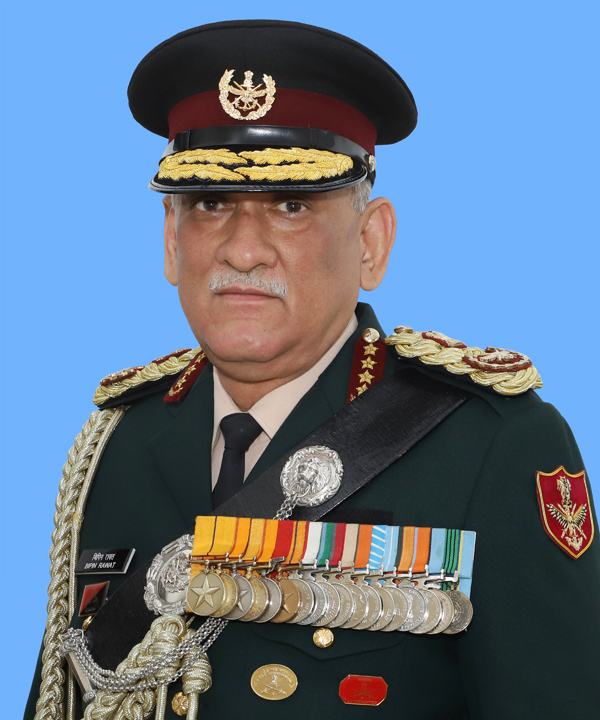
General Anil Chauhan assumed office as the second Chief of Defence Staff on 30 September 2022. He was a retired Lieutenant General who had served as Director General of Military Operations and General Officer Commanding-in-Chief of the Eastern Command. The government amended the recruitment rules in June 2022 to allow retired three-star and four-star officers up to the age of 62 to be eligible for the post, which made his appointment possible.
Chauhan’s Approach to Theaterisation
General Chauhan has taken a more consultative approach to theaterisation than his predecessor. He has emphasised building consensus across the three services rather than pushing through structural changes by decree. Under his watch, the Inter-Services Organisations (Command, Control and Discipline) Act, 2023 was enacted by Parliament, which empowers commanders of joint inter-service organisations to exercise disciplinary control over service personnel from other services. This is the legal precondition for functional theatres.
Recent Operations
Under General Chauhan’s stewardship, the armed forces conducted Exercise Tarang Shakti 2024, the largest multinational air exercise hosted by India, and have continued the disengagement and de-escalation talks with China along the LAC. The Chief of Defence Staff has also pushed for capability development in the cyber, space, and special operations domains through the integrated Defence Cyber Agency, Defence Space Agency, and Armed Forces Special Operations Division.
The Chief of Defence Staff and India’s Strategic Capabilities
The Chief of Defence Staff is the institutional bridge between operational warfighting and strategic deterrence. The office plays a central role in coordinating capability development across platforms like the Agni missile series for land-based deterrence, the BrahMos missile for conventional strike, indigenous platforms like INS Vikrant for blue-water naval projection, and engine programmes like the Kaveri engine by DRDO for aerospace self-reliance. The Chief of Defence Staff is also tracking India’s growing arms imports and exports, the latest figures of which are captured in the SIPRI 2025 data on India’s defence trade.
The office is also the focal point for force modernisation through schemes like the Agnipath recruitment model, which is fundamentally reshaping the personnel pyramid of the three services.
Challenges Facing the Chief of Defence Staff
The Chief of Defence Staff faces structural challenges that go beyond personality or tenure. Inter-service rivalry, particularly between the Indian Air Force and the Indian Army on theaterisation, remains a persistent obstacle. The Air Force has historically been protective of its limited squadrons and centralised command philosophy, while the Army has favoured integrated land theatres.
Resource constraints are equally significant. India’s defence budget remains under 2 percent of GDP, capital procurement faces delays, and the gap between sanctioned and held strength in technical branches has widened. The Chief of Defence Staff must drive jointness without commensurate budgetary headroom, which makes hard choices unavoidable.
Civil-military coordination is also evolving. The placement of a serving officer at secretary-level inside MoD has reshaped the equation with the civilian bureaucracy. Working out the protocol between the Chief of Defence Staff, the Defence Secretary, and the National Security Adviser remains a work in progress.
Frequently Asked Questions
Who was the first Chief of Defence Staff of India?
General Bipin Rawat was the first Chief of Defence Staff of India. He assumed office on 1 January 2020 and served until his death in a helicopter crash near Coonoor on 8 December 2021. Before becoming Chief of Defence Staff, he served as the 27th Chief of Army Staff.
Who is the current Chief of Defence Staff?
General Anil Chauhan is the current Chief of Defence Staff. He took charge on 30 September 2022 after the government amended the rules to allow retired three-star and four-star officers up to 62 years of age to be appointed. He had earlier served as Director General of Military Operations and Eastern Army Commander.
What is the difference between the Chief of Defence Staff and the Chairman of the Chiefs of Staff Committee?
Before 2019, the Chairman of the Chiefs of Staff Committee was the senior-most among the three service chiefs and held the post on rotation. The Chief of Defence Staff is now the Permanent Chairman of the COSC, in addition to heading the Department of Military Affairs. The Chief of Defence Staff is a single-point military adviser, while the older arrangement was inherently rotational and collegial.
Is the Chief of Defence Staff superior to the three service chiefs?
The Chief of Defence Staff is first among equals. The office does not exercise operational command over the Army, Navy, or Air Force, all of which continue to be commanded by their respective service chiefs. The Chief of Defence Staff coordinates joint matters, theaterisation, and provides single-point advice, but does not override the service chiefs in their service-specific roles.
What is the Department of Military Affairs?
The Department of Military Affairs is the fifth department within the Ministry of Defence, created on 24 December 2019. It is the only MoD department headed by a serving military officer (the Chief of Defence Staff), and it handles matters relating to the three services, jointness, and theaterisation. Capital acquisitions remain with the Department of Defence.
What is theaterisation under the Chief of Defence Staff?
Theaterisation is the reorganisation of India’s 17 existing single-service commands into 4-5 joint theatre commands, where each theatre would have integrated assets from all three services under a single commander. The Chief of Defence Staff has been mandated to drive this reform, which is the most consequential structural change in the Indian military since Independence.
Why was the Chief of Defence Staff post vacant for nine months in 2022?
The post was vacant from 8 December 2021 (death of General Bipin Rawat) to 30 September 2022 (appointment of General Anil Chauhan). The government took time to amend the eligibility rules to expand the pool of candidates beyond serving service chiefs to include retired three-star and four-star officers up to 62 years of age. This widened the selection pool and signalled a deliberate, consultative appointment process.
What is the tenure of the Chief of Defence Staff?
The Chief of Defence Staff serves until the age of 65, which is higher than the 62-year retirement age of the three service chiefs. This longer tenure was specifically designed to give the office institutional continuity and to allow incumbents enough time to drive structural reforms like theaterisation.
Tell Google you want more of this.
Add Anantam IAS as a preferred sourceOne tap, and this site shows up more often in your own Top Stories, AI Overviews and AI Mode. Remove it any time.