Theaterisation means reorganising the armed forces so that Army, Navy and Air Force assets in a given region fight together under one theatre commander, instead of through the three services’ separate command chains. For India, it is the plan to fold the existing 17 single-service commands into a handful of integrated theatre commands, each responsible for a defined geographical or functional area.
The theaterisation of the Indian military is the most ambitious structural reform of India’s higher defence organisation since Independence. It seeks to reorganise the existing 17 single-service commands (7 of the Army, 3 of the Navy, 7 of the Air Force, plus 2 joint commands and 2 service-specific tri-service institutions) into roughly 4 to 5 integrated theatre commands, where assets from the Army, Navy, and Air Force operate under a single theatre commander for a defined geographical or functional responsibility.
For UPSC GS-III aspirants studying internal security, the theaterisation of the Indian military is one of the highest-yield current affairs and reform topics in the syllabus. It cuts across civil-military relations, defence reforms, jointness, fiscal sustainability of the defence sector, inter-service equities, and the operational lessons drawn from contemporary conflicts, including the Russia-Ukraine war and the 2024 Israel-Iran exchange.
This article walks through the rationale for the theaterisation of the Indian military, the committee history that led to it, the proposed structure, the inter-service debates, the legal foundations enacted in 2023, and where the reform stands in 2026 under the second Chief of Defence Staff.
Why Theaterisation Is Needed
The Indian armed forces today fight as three largely separate services, each with its own command-and-control architecture. Modern multi-domain warfare requires synchronised land, air, sea, cyber, space, and electronic warfare operations under a single commander. The theaterisation of the Indian military is the institutional response to this operational reality.
The Current Command Structure
India operates with 17 commands, with very limited overlap between them:
- Army (7): Northern, Western, South Western, Southern, Central, Eastern, and the Army Training Command at Shimla
- Navy (3): Western Naval Command (Mumbai), Eastern Naval Command (Visakhapatnam), Southern Naval Command (Kochi)
- Air Force (7): Western, South Western, Central, Eastern, Southern, Training, and Maintenance Commands
- Joint (2): Andaman & Nicobar Command (the only existing tri-service operational command, established 2001) and the Strategic Forces Command (which controls nuclear assets)
A theatre commander in this system has limited authority over assets that do not belong to the parent service. Coordination relies on liaison officers, joint planning cells, and conferences rather than integrated chain of command.
Operational Lessons
The 1999 Kargil War, the 2019 Balakot operation, the 2020 Galwan clash, and the Russia-Ukraine war (2022 onward) have each underscored the need for integrated joint warfighting. The Russia-Ukraine experience in particular has been studied for the way ground manoeuvre, air defence, drone warfare, electronic warfare, and cyber operations need to be synchronised at the theatre level.
Committee History of the Theaterisation Push
The idea of integrated theatre commands has been examined by multiple committees since the Kargil Review Committee in 2000.
Kargil Review Committee (2000) and Group of Ministers (2001)
The Kargil Review Committee under K. Subrahmanyam recommended a thorough review of the higher defence organisation. The follow-up Group of Ministers (2001) recommended the creation of a Chief of Defence Staff and laid the foundation for integrated planning. The recommendations on integrated theatre commands did not move at the time because of inter-service resistance and political reluctance.
Naresh Chandra Task Force (2011)
The Naresh Chandra Task Force on national security recommended renewed focus on integrated theatre commands and the creation of a permanent Chairman of the Chiefs of Staff Committee as a precursor to the Chief of Defence Staff post.
Shekatkar Committee (2016)
The Lt Gen DB Shekatkar (retd) Committee, set up in 2015 and submitting its report in 2016, made 99 recommendations on enhancing combat capability and rebalancing the defence budget. The Shekatkar Committee specifically recommended the creation of three integrated theatre commands and an Air Defence Command. Many of its 99 recommendations have been progressively accepted by the government; the theaterisation recommendation is at the implementation phase.
The CDS-Led Push (2020 onward)
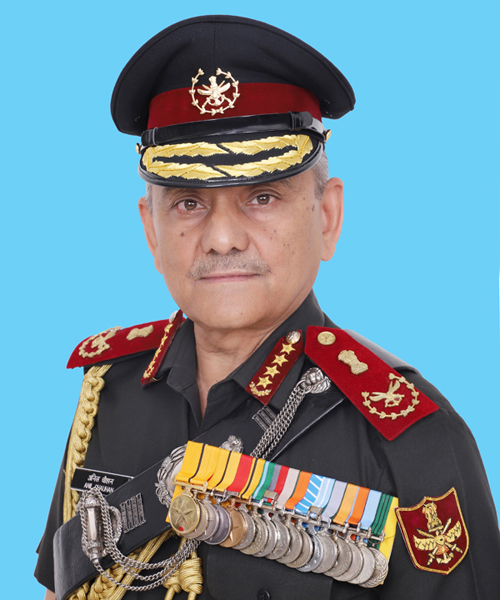
The creation of the Chief of Defence Staff post in December 2019 institutionalised theaterisation as a formal mandate. General Bipin Rawat, the first Chief of Defence Staff, drove the early studies for an Air Defence Command and a Maritime Theatre Command. General Anil Chauhan, the second Chief of Defence Staff, has continued the push with a more consultative approach, focused on consensus across the three services.
The Proposed Structure
The theaterisation of the Indian military, in the version that has been most widely reported and discussed, envisages 4 to 5 integrated theatre commands:
Geographical Theatres
- Northern Theatre Command: Responsible for the China front, covering the entire Line of Actual Control (LAC) from Ladakh to Arunachal Pradesh. Headquarters likely at Lucknow.
- Western Theatre Command: Responsible for the Pakistan front, covering the entire Line of Control and the international boundary. Headquarters likely at Jaipur.
- Maritime Theatre Command: Responsible for the entire maritime domain including the western and eastern seaboards and the Indian Ocean Region. Headquarters likely at Karwar or Visakhapatnam.
Functional Theatres
- Air Defence Command: Responsible for the integrated air defence of Indian airspace, drawing assets from the Air Force, Army Air Defence, and Naval Air Defence. Headquarters likely at Allahabad/Prayagraj.
- Logistics Command: Responsible for the integrated logistics, sustainment, and base support across the three services.
Some versions of the plan have proposed only 3 theatres (two geographical and one maritime) plus the Air Defence Command. The final structure is expected to be announced after the ongoing inter-service deliberations conclude.
Inter-Service Debates
The theaterisation of the Indian military has produced an intense inter-service debate, particularly between the Indian Army and the Indian Air Force.
The Air Force Position
The Indian Air Force has historically been the most cautious about theaterisation. The Air Force argues that air power is inherently a centralised, theatre-agnostic instrument that needs to be allocated dynamically across theatres rather than being permanently parcelled out to land-centric or maritime-centric commands. With only 31-32 squadrons against an authorised 42 squadrons, the Air Force is also wary of dilution of its limited assets. The Air Force has emphasised that a separate Air Defence Command makes sense but that fighter and strike assets should remain under a centralised air component commander.
The Army Position
The Indian Army has been the strongest votary of theaterisation. The Army argues that land warfare requires permanent allocation of air and naval support in each theatre, and that the lack of integrated command was a coordination challenge during Kargil, Galwan, and other contingencies. The Army has also argued that the absence of a unified theatre commander on the China front creates real risks in a contingency.
The Navy Position
The Indian Navy has supported a Maritime Theatre Command and broadly supported the larger theaterisation roadmap. The Navy’s main concern has been the structure of the Maritime Theatre Command, particularly whether it should include the existing Andaman & Nicobar Command and the Strategic Forces Command‘s maritime nuclear leg.
Inter-Services Organisations Act, 2023
The Inter-Services Organisations (Command, Control and Discipline) Act, 2023 was the critical legal foundation enacted to make theaterisation operationally workable. Before this Act, a commander of a joint inter-service organisation did not have disciplinary authority over service personnel from another service. The Act now empowers the commander of an inter-service organisation, including a future theatre commander, to exercise disciplinary control over service personnel from all three services placed under that command.
The Act was passed by Parliament in August 2023 and came into force in May 2024. It is the indispensable legal precondition for functional theatre commands.
Recent Developments in 2024 and 2026
The push for theaterisation has accelerated under General Anil Chauhan’s tenure as the Chief of Defence Staff. Several developments since 2024 are worth noting:
- The Triservice Manoeuvre and Joint Logistics Nodes have been operationalised at Mumbai, Guwahati, and Port Blair, providing the practical scaffolding for joint operations even before formal theatres are created.
- The Defence Cyber Agency, the Defence Space Agency, and the Armed Forces Special Operations Division have been progressively strengthened as tri-service integrated agencies.
- Exercise Tarang Shakti 2024, the largest multinational air exercise hosted by India, tested joint air operations including with partner air forces.
- The Andaman & Nicobar Command has been used as a continuing pilot for tri-service integration and a template for future theatre commands.
The government’s expectation, as articulated in 2024 and 2026 statements, is that the first integrated theatre command will be operationalised in the second half of this decade, with full theaterisation rolled out incrementally.
Theaterisation and Capability Programmes
The theaterisation of the Indian military will reshape how India fields and operates its capability programmes. The Agni missile series is under the Strategic Forces Command and will continue under unified strategic control. The BrahMos missile is fielded across the three services and will be available to theatre commanders as a multi-role conventional strike asset. Naval platforms like INS Vikrant will be the cornerstone of the Maritime Theatre Command’s blue-water projection. Aerospace programmes like the Kaveri engine by DRDO are integral to the Air Force’s ability to field indigenous fighters under any theatre construct.
Personnel reform is also linked. The Agnipath Scheme is shaping the personnel pyramid that will man the future theatre commands. And India’s overall defence trade and acquisition picture, as captured by the SIPRI 2025 data on India’s defence trade, is shaping the capability mix available to theatre commanders.
Challenges Ahead
Several challenges remain in the theaterisation of the Indian military.
The first challenge is doctrinal. India does not yet have a publicly articulated joint warfighting doctrine that ties the theatre construct to a specific theory of victory across the Pakistan and China fronts. Doctrinal clarity must precede structural reorganisation.
The second challenge is inter-service consensus, particularly on the Air Defence Command and on whether the Air Force will accept permanent allocation of squadrons to theatres. This is being addressed through the Chief of Defence Staff’s consultative approach, but full convergence has not yet been achieved.
The third challenge is technological. Theatre commands depend on robust integrated communications, common operational pictures, and shared intelligence feeds. The Defence Communication Network and the Tri-Service Common Operational Picture are works in progress.
The fourth challenge is fiscal. Theatre commands will require new headquarters, supporting infrastructure, joint logistics nodes, and IT backbone. With the defence budget hovering around 2 percent of GDP, the capital required for structural reorganisation competes directly with capital procurement for capability programmes.
Frequently Asked Questions
What is the theaterisation of the Indian military?
The theaterisation of the Indian military is the proposed reorganisation of India’s 17 single-service commands into 4 to 5 integrated theatre commands. Each theatre would have assets from the Army, Navy, and Air Force under a single commander for a defined geographical or functional responsibility, replacing the current single-service command structure.
How many theatre commands are proposed?
The most widely reported plan envisages 4 to 5 theatres: a Northern Theatre Command (China front), a Western Theatre Command (Pakistan front), a Maritime Theatre Command (Indian Ocean Region), an Air Defence Command, and a Logistics Command. The final structure will be announced after inter-service deliberations conclude.
Which committee recommended integrated theatre commands?
The Lt Gen DB Shekatkar (retd) Committee, which submitted its report in 2016, made detailed recommendations including the creation of three integrated theatre commands and an Air Defence Command. Earlier committees (the Kargil Review Committee in 2000 and the Naresh Chandra Task Force in 2011) had also recommended movement toward jointness and a Chief of Defence Staff post that would drive theaterisation.
What is the Inter-Services Organisations Act, 2023?
The Inter-Services Organisations (Command, Control and Discipline) Act, 2023 empowers the commander of a joint inter-service organisation to exercise disciplinary control over service personnel from all three services placed under that command. It is the legal precondition for functional theatre commands and was enacted in August 2023, coming into force in May 2024.
Why does the Air Force resist theaterisation?
The Indian Air Force argues that air power is inherently a centralised, theatre-agnostic instrument that needs to be dynamically allocated across theatres rather than parcelled out permanently. With only 31-32 squadrons against an authorised 42, the Air Force is also wary of dilution. The Air Force has supported a separate Air Defence Command but has been cautious about subordinating fighter assets to theatre commanders.
What is the role of the Chief of Defence Staff in theaterisation?
The Chief of Defence Staff is specifically mandated to facilitate the restructuring of military commands for optimal utilisation of resources by establishing joint and theatre commands. The Chief of Defence Staff is the institutional driver of theaterisation through the Department of Military Affairs.
Which is the only existing joint command in India?
The Andaman & Nicobar Command, headquartered at Port Blair and established in 2001, is the only existing operational tri-service command in India. It is widely viewed as the pilot for the larger theaterisation reform. The Strategic Forces Command is the other joint command but it is a functional command for nuclear assets, not a geographical theatre.
When will theaterisation be implemented?
The government’s stated expectation, as articulated in 2024 and 2026, is that the first integrated theatre command will be operationalised in the second half of this decade, with full theaterisation rolled out incrementally. The legal foundation through the 2023 Act is now in place; doctrinal, technological, and inter-service convergence work is ongoing.
Tell Google you want more of this.
Add Anantam IAS as a preferred sourceOne tap, and this site shows up more often in your own Top Stories, AI Overviews and AI Mode. Remove it any time.