6 current affairs published on Saturday, 16 August 2025
16 August 2025 Current Affairs for UPSC — every
Why-in-News article AnantamIAS published on Saturday, 16 August 2025, broken down with
Why in News?, the exact GS paper it feeds, sub-topic mapping, MCQ-ready facts and a
UPSC-style practice question. 6 articles in total, covering Polity, Economy, Environment, S&T, IR, Geography, History, Society and Internal
Security — the same Why-in-News + GS-paper-mapping + practice-question format the Compass uses across
every daily digest on the site.
Daily current affairs for UPSC is where new material enters your prep stream. Read this
16 August 2025 digest end-to-end in 25–35 minutes, attempt the practice question
at the foot of each article (it's MCQ for some, 10/15-marker for others), then bookmark the entries
that fall inside your active revision window. Everything stays cross-linked: tap any subject pill to jump
to that subject's hub, or use the table of contents above to skip straight to a specific story.
Use this page three ways. Read sequentially for a one-sitting scan of everything that
mattered on 16 August 2025. Download the
16 August 2025 PDF below for offline study or print revision. Or use
the August 2025 Current Affairs compilation
to see this day in the month's full context. For the previous day's reading, see
15 August 2025 Current Affairs;
the next day's is 17 August 2025 Current Affairs.
Why we publish daily current affairs separately from the monthly compilation: daily is learning,
monthly is revision. Use the daily page to add fresh material to your notes the day it breaks;
come back to the August 2025 compilation 60 days before Prelims when the
noise has settled and only the lasting takeaway is worth re-reading.
Context: Meghalaya Health Minister suggested following Goa in exploring mandatory HIV/AIDS testing before marriage. It goes beyond health—it involves human rights, stigma, consent, and free will.
UPSC Relevance:
Examination has tested our knowledge with respect to critical and emrging disease frequetly in Prelims as can be seen by the following tqo questions:
Prelims 2013
Which of the following diseases can be transmitted from one person to another through tattooing?
Chikungunya
Hepatitis B
NW-AIDS
Select the correct answer using the codes given below.
A 1 only
B 2 and 3 only
C 1 and 3 only
D 1, 2 and 3
Arguments Against Mandatory Testing (N. Kumarasamy)
Alternative: Encourage voluntary, confidential, and consent-based testing with counselling, and link positives to ART centres.
Legal Barrier: The HIV/AIDS (Prevention and Control) Act, 2017 requires counselling, consent, and confidentiality; mandatory testing violates this.
Scientific Basis: With antiretroviral therapy (ART), viral load becomes undetectable (U=U: Undetectable = Untransmittable). Hence, HIV-positive individuals on ART can marry and live healthy lives without risk of transmission.
Concerns: Mandatory tests increase stigma, discourage voluntary testing, and may give a false sense of security due to window periods.
In the early 1980s, the emergence of HIV/AIDS was met with fear, stigma, and discrimination. Despite the approval of the first antiretroviral drug, AZT, by the US FDA in March 1987 and subsequent drug developments, access to these life-saving medications remained limited, especially in low- and middle-income countries.
Arguments for Mandatory Testing (Jahnabi Goswami)
Ground Reality: In practice, doctors already often test without consent. Better to regulate and make it official with counselling safeguards.
Protection for Spouses & Families: Many cases of hidden HIV status, especially in the north-east, where drug use (responsible for ~64% of cases) leads to infections being concealed until after marriage.
Prevention: Mandatory tests can protect women, children, and families from infection.
Social Analogy: If horoscopes are matched before marriage, why not HIV tests for health compatibility?
On Women’s Empowerment
Kumarasamy highlights empowerment through awareness, voluntary testing, and treatment, not coercion.
Goswami stresses mandatory testing safeguards women, who are often victims of concealed HIV infections due to drug use or societal pressures.
On Stigma
Government and communities must jointly destigmatize HIV like other chronic illnesses (e.g., diabetes, cancer).
Root Cause: Stigma arises from association with sex work or drug use, not from the disease itself.
Way Forward:
Promote U=U awareness (treatment makes HIV non-transmissible).
Use HIV-positive people as role models to normalize disclosure.
Improve quality of counselling to reduce fear and misinformation.
What is ART?
The treatment for HIV is called antiretroviral therapy (ART). ART involves taking a combination of HIV medicines (called an HIV treatment regimen) every day.·
ART cannot cure HIV, but HIV medicines help people with HIV live longer, healthier lives. ART also reduces the risk of HIV transmission.
How does HIV medicines work?·
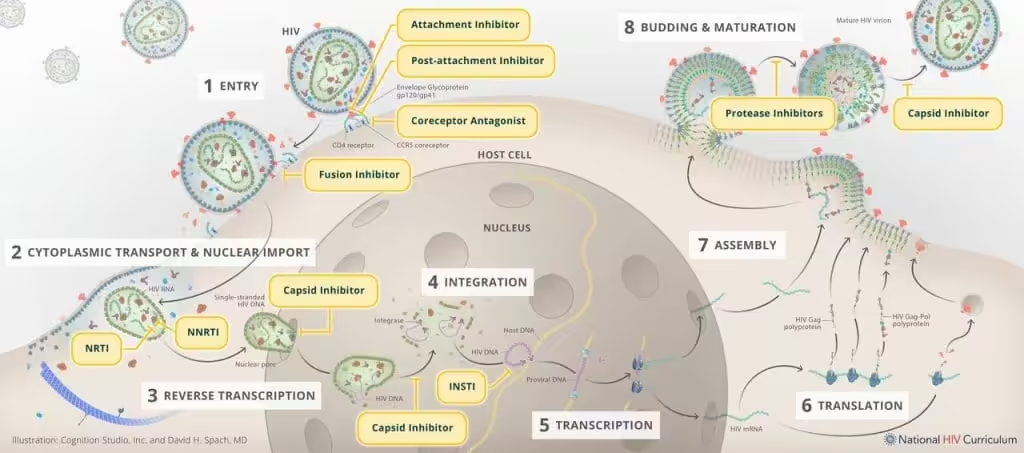
HIV attacks and destroys the infection-fighting CD4 cells (CD4 T lymphocyte) of the immune system. Loss of CD4 cells makes it hard for the body to fight off infections and certain HIV-related cancers.
HIV medicines prevent HIV from multiplying (making copies of itself), which reduces the amount of HIV in the body (called the viral load). Having less HIV in the body gives the immune system a chance to recover and produce more CD4 cells.
Even though there is still some HIV in the body, the immune system is strong enough to fight off infections and certain HIV-related cancers.
By reducing the amount of HIV in the body, HIV medicines also reduce the risk of HIV transmission. A main goal of HIV treatment is to reduce a person’s viral load to an undetectable level. An undetectable viral load means that the level of HIV in the blood is too low to be detected by a viral load test. People with HIV who maintain an undetectable viral load have effectively no risk of transmitting HIV to their HIV-negative partners through sex.
The Journey to Free ART in India
With an estimated 5.1 million PLHIV in 2004, India faced a daunting challenge. Only a handful of patients had access to ART due to the prohibitive costs and geographical barriers.
Recognizing the urgent need for intervention, the Indian government decided to provide ART free of charge, not only changing the course for adults but extending the program to children by November 2006.
Significance of free ART in India
The impact has been nothing short of remarkable:
ART is not merely about starting a person living with HIV on treatment. It is equally important to keep the viral load down and suppressed to ensure that the transmission of diseases is also halted.
The impact has been that in 2023, the prevalence of HIV in 15-49 years has come down to 0.20 (confidence interval 0.17%-0.25%) and the burden of disease in terms of estimated PLHIV has been coming down to 2.4 million.
India’s share in PLHIV globally had come down to 6.3% (from around 10% two decades ago).
As of the end of 2023, of all PLHIV, an estimated 82% knew their HIV status, 72% were on ART and 68% were virally suppressed.
The annual new HIV infections in India have declined by 48% against the global average of 31% (the baseline year of 2010).
The annual AIDS-related mortalities have declined by 82% against the global average of 47% (the baseline year of 2010). These are significant achievements consideringthat many of the other government-run public health programmes in India have failed to achieve or sustain good coverage.
Role of complementary programmes
The success in combating HIV in India is not solely due to the provision of free Antiretroviral Therapy (ART). It’s a combination of initiatives including free diagnostic services, prevention of mother-to-child transmission, management of opportunistic infections and tuberculosis co-infections, and a policy evolution towards early ART initiation.
India’s National AIDS Control Programme (NACP) Phase 5 aims to dramatically reduce new HIV infections and AIDS-related deaths by 2025, and eliminate vertical transmission of HIV and syphilis. It seeks to achieve the ambitious ’95-95-95′ targets set by UNAIDS, ensuring widespread knowledge of HIV status, ART receipt, and viral suppression among those on treatment.
Key Challenges and Suggestions in HIV/AIDS Treatment in India
Delayed ART Enrolment: A significant issue is the late presentation of patients at ART centres, with nearly a third having a CD4 count below 200, delaying effective treatment.
Non-Adherence to Treatment: Patients often discontinue or inconsistently follow their ART regimen once they start feeling better, risking their health and fostering drug resistance. Addressing this ‘loss to follow-up’ is essential for the success of the treatment program.
ART Supply and Accessibility: Ensuring a steady and accessible supply of ART medications across all regions, especially in remote and challenging terrains, is essential.
Private Sector Engagement: There’s a need to enhance the involvement of the private sector in the care and treatment of HIV/AIDS patients to broaden access and support.
Continuous Training for Healthcare Staff: Ongoing, hands-on training for medical personnel is crucial to keep up with the evolving science and improve treatment outcomes.
Integration with Other Health Programs: Integrating HIV/AIDS programs with other health initiatives targeting hepatitis, non-communicable diseases, and mental health is critical for comprehensive care.
Reducing Preventable Mortality: Focused efforts on reducing preventable deaths through systematic reviews and advanced diagnostics are vital for improving patient survival rates.
Conclusion:
The free ART initiative in India demonstrates how government support, adequate funding, and community involvement can effectively combat public health challenges, notably turning the tide against HIV/AIDS. This success story provides a blueprint for launching similar initiatives, such as a nationwide free hepatitis C treatment program, leveraging two decades of experience to advance towards eliminating hepatitis C in India.
Context: Indian law is based on the fundamental divide between criminal law and civil law. Recent Supreme Court (SC) interventions (August 2025) identify the abuse of criminal process in virtually civil litigation.
This poses fundamental questions of legal clarity, judicial discipline, pendency of cases, and dispensation of justice, all of extremely high importance for UPSC GS-II (Polity & Governance) and GS-III (Internal Security, Law & Order).
UPSC relevance
Prelims examination has started testing our understanding of criminal laws lately. For instance:
Prelims 2021
With reference to India, consider the following statements:
When a prisoner makes out a sufficient case, parole cannot be denied to such prisoner because it becomes a matter of his/her right.
State Governments have their own Prisoners Release on Parole Rules.
Which of the statements given above is/are correct?
A 1 only
B 2 only
C Both 1 and 2
D Neither 1 nor 2
Supreme Court Involvement
Case 1 (Rajasthan, plywood consignment): HC denied pre-arrest bail in payment dispute. SC reversed order: “There is no question of criminal breach of trust once there is a sale transaction.”
Case 2 (Allahabad, unpaid transaction): HC allowed criminal proceedings in a civil commercial case. SC reprimanded HC for “mockery of justice” and originally removed the judge from his criminal list (later withdrawn). Judicial overreach exemplified by dilution of criminal law.
What are Criminal and Civil laws?
Law in any society evolves with changing norms, values, and governance needs. The distinction between civil law and criminal law forms the bedrock of the Indian legal system. Recent Supreme Court interventions (Aug 2025) highlight how blurring this boundary can result in a “mockery of justice”.
Criminal Law – Purpose and Scope
Definition: Criminal law deals with actions considered harmful to society at large.
Purpose: Punish wrongdoers, deter future crimes, and protect social order.
Parties: State (Prosecutor) vs. Accused.
Burden of Proof: Beyond reasonable doubt – a much higher standard due to potential loss of liberty/life.
Consequences: Imprisonment, fines, death penalty, probation, etc.
Examples of Criminal Cases:
Domestic violence (criminalised under PWDVA, 2005).
Theft, murder, sexual assault.
Cheating, forgery, breach of trust.
Civil Law – Purpose and Scope
Definition: Civil law regulates disputes between individuals, groups, or institutions. It aims at remedies rather than punishment.
Purpose: Protect rights, enforce duties, and ensure fair redressal.
Parties: Plaintiff (complainant) vs. Defendant (respondent).
Burden of Proof: Preponderance of probabilities – whichever side’s version seems more likely is accepted.
Remedies:
Damages (monetary compensation)
Injunctions (ordering a party to act or refrain)
Specific Performance (fulfil contractual obligations)
Examples of Civil Cases:
Recovery of money.
Contract disputes (e.g., unpaid business transactions).
Property and tenancy disputes.
Family law: divorce, child custody, inheritance.
Table for the clarity
Aspect
Civil Law
Criminal Law
Purpose
Resolve disputes between individuals/entities
Punish offences against state/society
Parties
Plaintiff vs. Defendant
State (Prosecutor) vs. Accused
Outcome
Compensation, injunction, enforcement of rights
Punishment: fines, imprisonment, death penalty
Burden of Proof
Preponderance of probabilities
Beyond reasonable doubt
Examples
Property disputes, contract breach, family law
Theft, cheating, assault, murder
Evolution of Law: How the Same Offence Transforms with Society
Law as a Reflection of Society
As society evolves, legal classification of an act may shift: from crime → civil wrong → decriminalisation, or vice versa.
The same act may be seen as moral wrong, civil wrong, or criminal offence depending on:
Prevailing social norms (e.g., marriage, sexuality, gender roles).
The state’s interest in regulating behaviour.
Judicial interpretation and constitutional values.
Offence/Practice
Earlier Status
Present Status
Key Case / Law
Societal Shift
Adultery
Crime under Sec. 497 IPC (colonial, patriarchal)
Decriminalised; only civil ground for divorce
Joseph Shine v. Union of India (2018)
Gender equality & autonomy
Homosexuality
Criminal offence under Sec. 377 IPC
Decriminalised; rights-based discourse on marriage/adoption continues
Navtej Johar v. Union of India (2018)
LGBTQ+ rights, privacy, dignity
Domestic Violence
Treated as private/civil matter
Criminalised + civil remedies under DV Act, 2005 & IPC 498A
Protection of Women from DV Act (2005)
Women’s rights & dignity
Sati
Socially sanctioned ritual in some communities
Heinous crime under Commission of Sati (Prevention) Act, 1987
Act of 1987
Constitutional morality over custom
Gambling/Alcohol/Live-in
Generally stigmatised/prohibited
Partly regulated, legal in some contexts; live-in protected by courts
Self-Reliance: Concept, Evolution in India, and Resurgence in a Globalized World
1. GS Paper III – Economy, Science & Tech, Environment, Security
Indian Economy and issues relating to planning, mobilization of resources, growth, development and employment.
Effects of liberalization on the economy, changes in industrial policy and their effects on growth.
Science and Technology – developments and their applications and effects in everyday life.
Indigenization of technology and developing new technology.
Context: Prime Minister Narendra Modi made a strong pitch for self-reliance in his Independence Day address, with policy prescriptions for economic- and security-related reforms. For any nation, even today, the yardstick of aatma samman (self-respect) remains aatmanirbharta (self-reliance), he said, also using the speech to warn of a conspiracy to change the country’s demographic make-up.
What is Self-Reliance?
Definition: Self-reliance means that a country is able to meet its needs (economic, security, technology, etc.) independently and from its own resources, avoiding essential dependence on others. It means building capability at home so that imports or foreign assistance are reduced to the minimum.
Dependence on others, according to Prime Minister Narendra Modi, tends to deprive the country of its true independence, so a country should build the ability to be independent on its own feet. In practical life, self-reliance has a relationship with national self-respect and freedom of choice.
Not Isolationism: Most importantly, self-reliance is not autarky or isolation from global trade. It is about establishing domestic strengths and competitiveness. Indian policymakers clarify that Atmanirbhar Bharat (Self-Reliant India) is not a move toward 1970s-style protectionism – rather, it is an attempt to make India a bigger and bigger share in the world economy by developing indigenous capacities. Strong, healthy domestic production is thought to be the foundation for negotiating with the world on better terms, not isolating from it.
Early Post-Independence: The Pursuit of Self-Reliance
Why Self-Reliance?
At Independence (1947), India’s economy was weak after colonial exploitation. Leaders like Jawaharlal Nehru believed political freedom must be accompanied by economic self-sufficiency. There was a fear that continued import-dependence could lead to “neo-colonial” subjugation. Nehru famously argued that if India did not develop its own industries, it would have to import essentials like steel, machinery, even defense needs – which would make Indians “slaves of foreign countries”. Thus, self-reliance was both an economic goal and a means to preserve sovereignty.
Policy Strategy: In practice, this translated into a state-led, import-substitution development model. The government heavily regulated the economy to promote domestic industries. Key elements included:
Establishing large Public Sector Undertakings (PSUs) in heavy industries (steel, machinery, energy, etc.) – Nehru’s 2nd Five-Year Plan in 1956 prioritized basic and capital goods (“machines that make machines”) as the first step. The logic was to build upstream capability so that India wouldn’t need to import heavy industrial inputs.
Import Substitution Industrialization (ISI): High tariffs and strict import licensing protected nascent industries from foreign competition. The idea was to produce domestically everything from consumer goods to capital equipment over time. A infamous “license raj” system tightly controlled private sector growth – firms needed licenses even to expand capacity or change product lines. This was meant to align the private sector with national plans and avoid excessive import dependence.
Five-Year Plans Goals: Self-reliance was an explicit objective in planning. For instance, the Fourth Five-Year Plan (1969–74) under Indira Gandhi stressed “progressive achievement of self-reliance” along with growth. India sought to reduce foreign aid and imports by boosting domestic production in agriculture, manufacturing and defense.
Agriculture Focus: Although early plans underinvested in agriculture initially, the mid-1960s food crisis (when drought and war led to US grain imports) made clear that food self-sufficiency was vital. This spurred the Green Revolution (late 1960s), with high-yield seeds, fertilizers, and irrigation to attain self-reliance in food grains. (More on achievements below.)
Achievements by the 1970s:India’s self-reliance drive did build a foundation in many sectors:
Industrial Base: The country established capability in steel (e.g. Bhilai, Bokaro steel plants), heavy machinery (BHEL for power equipment), petroleum refining, etc. By 1960, India was producing thousands of tons of its own steel – a colonial British official who scoffed that Indians could never make steel would have had to “eat his words” (literally 6,300 tons of it by 1960). Landmark projects like Bhakra-Nangal dam (for power) and IITs (for technical education) were also steps toward self-reliant infrastructure and human capital.
Defense and Space: India set up organizations like DRDO (1958) and ISRO (1969) aiming for self-reliance in defense technology and space exploration. By 1974, India had conducted its own nuclear test (Pokhran-I) without external help. ISRO developed indigenous satellite launch vehicles by the 1980s after initial reliance on foreign rockets, reflecting an ethos of technological self-reliance.
Food Security: The Green Revolution turned India from a ship-to-mouth grain importer in the 1960s to self-sufficiency in cereals by the 1970s.Food grain output jumped from ~50 million tonnes in 1950-51 to over 314 million tonnes in 2021-22, a six-fold increase. India recorded all-time high grain harvests by the 1980s, eliminating the specter of famine that haunted the early years. Similarly, Operation Flood (White Revolution) made India the world’s largest milk producer by 1998, overtaking the USA– within decades India went from milk scarcity to producing over 22% of global milk supply. These are shining case studies of self-reliance improving livelihoods and food self-sufficiency.
Shortcomings of Self Reliance 1.0
Low Growth & Inefficiency: The economy grew only ~3–3.5% annually from 1950s through 1970s – often derisively called the “Hindu rate of growth.”In per-capita terms, growth was under 1% for long stretches, barely denting poverty. Industries protected by high import barriers tended to become inefficient monopolies with little innovation. By the late 1960s and 1970s, Indian consumers faced poor-quality, expensive products – there was even an 8-year waiting list to buy a scooter at one point. Foreign goods (though largely unavailable) became synonymous with quality, highlighting the failure to compete globally.
License Raj and Corruption:The intricate licensing system bred corruption and stifled entrepreneurship. Bureaucrats, not markets, decided which firms could produce what – leading to allocation inefficiencies and rent-seeking. The system often rewarded political connections over performance, undermining the self-reliance goal with chronic under-productivity(e.g. some public factories ran for years with staff on payroll but produced almost nothing due to mismanagement).
Fiscal Strains:Heavy state investment in industries (and subsidies) led to budget deficits. The government resorted to printing money in the 1960s-70s, causing high inflation. Price controls and further intervention followed, often with counterproductive results (black markets, etc.) – illustrating that insulating the economy came with macroeconomic costs.
External Crises: Ironically, the bid for self-reliance sometimes failed to prevent external vulnerability. In 1965-67, India still had to import millions of tons of grain under US PL-480 program when drought hit, as agriculture had been neglected early on. In 1990-91, India faced a severe foreign exchange crisis – partly a result of years of import-substitution policies making exports uncompetitive and borrowing unsustainable. By mid-1991, forex reserves had dwindled to the point that India could barely finance 2 weeks of imports, pushing the country to the brink of default. This crisis underscored that the old model was not delivering the economic strength envisioned.
1991 Onwards: Liberalization and Shelving of the Old Model
Reforms and Opening Up: The 1991 economic reforms marked a strategic U-turn from Nehruvian socialist independence to integration with the global economy. Under pressure from the IMF (and driven by new economic thinking), India dismantled the License Raj “almost overnight,” slashed import tariffs, devalued the rupee to boost exports, removed quotas, and opened doors to foreign investment. The public sector monopoly in many areas was curtailed and private enterprise unleashed. In short, India shifted from an economy of controls to one of competition.
Why the Change?
By 1991, there was a broad realization that three decades of inward-focused policies had delivered neither rapid growth nor social upliftment. The collapse of the Soviet Union also discredited the socialist model globally, and East Asian countries like South Korea and Taiwan had raced ahead by export-led growth (producing the very consumer goods India shunned). India’s leadership recognized that to eradicate poverty and be competitive, it could no longer remain economically isolated. Thus, self-reliance as self-sufficiency was de-emphasized, and globalization was embraced as the new pathway to prosperity.
Development Gains: The results of liberalization were striking:
GDP growth accelerated to ~6–8% per year in the 1990s and 2000s,double the previous rate. By the mid-2000s, India was one of the fastest-growing economies. This higher growth was accompanied by a faster decline in poverty – e.g. the population below the poverty line dropped from about 50% in early 1990s to ~34% by 2009, the steepest fall in any comparable period.
India’s engagement with world trade deepened. The country’s share of global trade (which had stagnated below 0.5% in the 1980s) quadrupled – from just 0.4% in 1990 to about 1.5% by 2006 – as exports surged.
Foreign capital flowed in, and foreign exchange reserves swelled from near-zero to over $300 billion by 2007, giving India a far stronger external position than before. Shortages of consumer goods became a thing of the past – by the 2000s, India had a booming consumer market with abundant choices (for example, a telecom revolution occurred: from only 5 million landlines in 1991 with years-long waitlists, to millions of new mobile connections added every month by 2004).
Indian firms became globally competitive in sectors like IT, pharma, and auto. Rather than importing everything, India started exporting services and goods worldwide (from software to small cars), integrating itself into global supply chains.
The Flip Side – New Dependencies:
Economic liberalization did improve efficiency and growth, but it also created new import dependencies as India’s consumption outpaced certain domestic capacities:
For instance, with rising incomes, India’s demand for electronics and machinery soared, but domestic manufacturing in those high-tech areas lagged – leading to heavy imports (China became a major source). By late 2010s, India was importing ~$75 billion worth of goods from China annually, including critical items like pharma ingredients and electronics, raising strategic concerns.
In defense, despite efforts, India remained the world’s largest arms importer (accounting for ~10% of global arms imports in recent years)– a stark dependence on foreign suppliers for military equipment.
In energy, India’s rapid growth made it the third-largest oil consumer, but with only 1% of global oil reserves, it imports over 85% of its crude needs. This high reliance on foreign oil has been a long-term vulnerability (exposed during oil price shocks).
Thus, while globalization brought prosperity, events like the 2008 financial crisis, geopolitical shifts, and supply chain disruptions also showed that being overly dependent on global markets could pose risks. By the 2020s, there was a strategic rethink: how to balance global integration with sufficient self-reliance in critical areas?
The Resurgence of Self-Reliance in a Globalized Era
In the 2020s, the idea of self-reliance has made a strong comeback in Indian policy discourse (and indeed globally, with concepts like “strategic autonomy” and “de-risking” supply chains). Several factors explain why:
Global Supply Chain Shocks: The COVID-19 pandemic (2020) was a wake-up call. It revealed how dependent many countries were on foreign supply networks for essential goods. India, for example, imported a large share of its Active Pharmaceutical Ingredients (APIs) from China.
When China’s factories shut during COVID, Indian pharma faced potential shortages. Similarly, India initially lacked capacity to produce enough PPE kits and medical equipment. The crisis forced rapid self-reliance moves – remarkably, India’s PPE production went from almost zero to 450,000 kits per day by July 2020, making it the world’s second largest PPE producer in just 3 months. This proved that leveraging domestic industry in an emergency can achieve swift results, and it underscored the importance of local manufacturing for resilience.
Geopolitical Tensions: Heightened tensions with China (e.g. the Galwan Valley border clash in 2020) and changing global power equations have pushed India to reduce reliance on potential adversaries. After Galwan, there were loud calls in India to boycott Chinese products. The government accelerated bans/restrictions on Chinese tech (like apps, 5G participation) and emphasized indigenous alternatives. More broadly, great-power rivalry (US-China trade war, Russia-West sanctions etc.) has made supply lines political weapons. India wants to insulate itself from such external pressures by securing critical supply chains at home or with trusted partners.
Economic Strategy for Growth: There is also a positive development angle – India sees an opportunity to boost domestic manufacturing and innovation under the banner of self-reliance. The global companies looking to “China+1” diversification present a chance for India to attract investment and become a manufacturing hub. Self-reliance initiatives dovetail with goals of job creation and making India a $5 trillion economy by leveraging its huge domestic market. In other words, Atmanirbhar Bharat is as much about unleashing India’s export potential as it is about curbing imports. As the Economist Intelligence Unit noted, India’s policies aim to restrict imports in the domestic market while increasing India’s exports globally. This two-pronged approach can help reduce trade imbalances and make the economy more self-sustaining.
Atmanirbhar Bharat (Self-Reliant India Mission): In May 2020, PM Modi launched the Atmanirbhar Bharat Abhiyan, coupling a COVID stimulus package with a broader vision of self-reliant growth.
The mission rests on five pillars– Economy, Infrastructure, Technology-driven systems, Demography, and Demand – to make India a self-generating and self-sustaining economy. Rather than blanket protectionism, the focus is on targeted support and incentives for domestic capacity in key sectors. For example:
Production-Linked Incentives (PLI): The government introduced PLI schemes in about 14 sectors, offering firms direct incentives to manufacture in India. Sectors include electronics, pharmaceuticals, solar PV, semiconductors, automobiles, etc. This has already started reducing import reliance in, say, electronics (discussed below).
Policy Reforms: Steps like raising FDI limits in defense, corporatizing the Ordnance factories, reforming labor laws, and ease of doing business are being undertaken so that domestic and global companies find it viable to produce in India. The aim is a virtuous cycle – strong domestic base feeding into exports, which in turn sustain that base.
Vocal for Local: A campaign to encourage consumers to buy indigenous products, thereby boosting local industry. This echoes Mahatma Gandhi’s Swadeshi principle from the freedom movement, but updated for the modern economy. Even as India participates in global trade, there’s an effort to cultivate domestic brands and reduce the cultural preference for “imported” goods that emerged in the old license-raj era.
In summary, the narrative of self-reliance today is more sophisticated: it’s about reducing critical vulnerabilities (be it in defense, health, or supply chains) and enhancing India’s role in the world economy by leveraging its scale and skills. The next section looks at how this renewed self-reliance drive is playing out across various dimensions, with supporting data and case studies.
Context: The Securities and Exchange Board of India (SEBI) recently banned U.S.-based investment firm Jane Street from Indian securities markets for manipulating stock index and unlawfully earning ₹4,843 crore. This has revived concerns about India’s derivatives market.
UPSC Relevance:
UPSC has asked questions on key economic terms and concepts
Prelims 2024
With reference to the Indian economy, “Collateral Borrowing and Lending Obligations” are the instruments of
a) Bond market
b) Forex market
c) Money market
d) Stock market
Prelims 2023
Consider the following markets:
1. Government Bond Market
2. Call Money Market
3. Treasury Bill Market
4. Stock Market
How many of the above are included in capital markets?
a) Only one
b) Only two
c) Only three
d) All four
What are derivatives?
A derivative is a financial instrument whose value is ‘derived’ from another underlying security or a basket of securities.
It is a contract between two parties. The value of this contract is derived from the value of some assets. This other asset is referred to as the underlying. Derivatives could be based on any of the following assets:
Commodities
Agricultural commodities like wheat, coffee, pulses, sugar, cotton, etc.
Metals like gold, silver, copper, etc.
Energy resources like crude oil, coal, natural gas, etc.
Financial assets like stocks and bonds.
Intangibles and Market Indices
Interest rates
Foreign exchange rates
Price volatility
Credit risk
Each derivative contract has a date on which it expires known as the expiration date. These contracts are to be settled (in most cases) at a future date at a per-determined price.
The difference between the current price and the future price is the compensation payable by one party to the other.
SEBIregulates derivatives trading through the Securities Contracts (Regulation) Act, 1956 (SCRA), and the SEBI (Derivatives) Regulations, 2000.
Uses of derivatives
They are believed to have originated for the purposes of hedging the risk of future uncertainties.
For example, when a farmer sows a crop, he is not sure how much the crop will fetch in the future or even whether it will fail for some reason. In such a case, the farmer may enter into a contract with a merchant, in which case both parties agree to settle the contract at a particular future date at a particular price. Thus, if the farmer is able to deliver the crop, he is assured of the price. The risk of price uncertainty is hedged.
However, these days, derivatives are extensively used for two other purposes.
Speculation – When one wants to make a speculation on the direction of the price of some underlying asset, one can simply buy a derivative rather than buying the underlyingasset, as lower amounts are involved.
Arbitrage – There is often a difference between the prices of (i) the underlying in the regular market (called the cash market) and (ii) the price of the futures contract on the same underlying. In such a case, buying in one market and selling simultaneously in another can yield some profits, though mostly small ones.
Various types of derivatives
Feature
Futures
Options
Forwards
Swaps
Definition
Agreement to buy/sell asset at a set price on a future date
Contract granting the right (not obligation) to buy/sell asset
Customized contract to buy/sell asset at a future date
Contract to exchange cash flows or financial instruments
Obligation
Both parties obligated to fulfill contract
Buyer has right but not obligation; seller obligated if exercised
Both parties obligated, customized terms
Parties obligated to exchange agreed cash flows
Risk
High exposure to market risk
Buyer’s risk limited to premium; seller’s risk can be unlimited
Counterparty risk; market risk
Counterparty risk; market risk
Upfront Cost
Margin requirements with daily settlement
Buyer pays premium upfront
Usually no upfront cost, but collateral may be required
Typically no upfront cost, but collateral/margin possible
Settlement
Marked to market daily, final settlement on expiry
The amount paid for a derivative is small relative to the underlying’s price. This can multiply both profits and losses.
Incorrect speculation can lead to the loss of an investor’s entire net worth.
Warren Buffett has reportedly called them “financial weapons of mass destruction.”
Zero-Sum Game
Unlike other investments (stocks, debentures), derivatives are a zero-sum game. One party’s profit is the other party’s loss.
Less knowledgeable investors face a high risk of being on the losing side.
Counterparty Risk
There is a risk that the other party in the contract will not fulfill their commitment.
In India, this risk is eliminated for exchange-traded contracts due to the presence of a clearing house.
Recent Trends and Concerns in Investment
The number of registered Indian investors increased significantly from 38.5 lakh in 2019-2020 to 2.09 crore in 2024-2025. This represents a five-fold increase, often attributed to “financial inclusion” and “economic democratisation.”
India has the world’s largest derivatives market.
A SEBI report from September 2024 revealed that the total losses in the derivatives market from 2022 to 2024 amounted to ₹1.8 lakh crore. Despite these losses, more than 75% of those who lost money continued trading in futures and options (F&Os).
Allegations Against Jane Street
In July 2025, the Securities and Exchange Board of India (SEBI) alleged that the U.S.-based firm Jane Street manipulated the derivatives market.
SEBI halted the firm’s operations and demanded they pay ₹4,843.7 crore, which was the alleged profit from the manipulation.
SEBI claims Jane Street used a “pump and dump” strategy: They would buy Bank Nifty stocks in the morning to artificially inflate the price, prompting other traders to buy as well. Simultaneously, they would secretly buy “put options” (which profit when prices fall). Towards the end of the day, Jane Street would “dump” their stocks, causing the price to fall and profiting from their put options.
Feature
Call Option
Put Option
Definition
Gives the buyer the right (not obligation) to buy an asset at a strike price before expiration.
Gives the buyer the right (not obligation) to sell an asset at a strike price before expiration.
Market Outlook
Used when expecting the asset price to rise (bullish).
Used when expecting the asset price to fall (bearish).
Profit Potential
Unlimited profit potential as price rises above strike price.
Profit potential rises as price falls below strike price, limited to zero.
Loss Potential
Limited to the premium paid for the option.
Limited to the premium paid for the option.
Obligation to Exercise
No obligation to buy the asset; buyer may let option expire.
No obligation to sell the asset; buyer may let option expire.
In-the-money Condition
Strike price is below the current market price.
Strike price is above the current market price.
Out-of-the-money Condition
Strike price is above the current market price.
Strike price is below the current market price.
Seller’s Break-even Price
Strike price + premium received
Strike price – premium received
Example
Buy a call option to purchase shares of Company A at ₹120 before expiry because you expect share price to rise above ₹120.
Buy a put option to sell shares of Company A at ₹120 before expiry because you anticipate the share price falling below ₹120.In the case of Jane Street this put option was purchased at predetermined prices and prices were made to fall deliberately so that the company could sell the options at pre determined higher prices and thus earn profit.
SEBI’s Regulatory Actions
In April 2024, SEBI asked the National Stock Exchange to monitor Jane Street’s trading strategies.
Following the incident, SEBI announced several policy steps to address issues in the derivatives market, including overtrading in index options on expiry days.
SEBI has also taken measures to curb speculation, such as ending weekly expiries for most derivative contracts. This requires traders to hold contracts for longer periods.
A SEBI study found that 91% of individual traders continued to lose money even after these reforms, a minor improvement from the 93% who lost money before the Jane Street incident.
Context: President’s At Home invites for 15 August highlight cultural heritage from Bihar, Bengal, Odisha, and Jharkhand like Sikki grass, Madhubani, Tikuli paintings and so on.
UPSC Relevance:
Art forms have been asked in UPSC Prelims multiple times.
PYQ:
Prelims 2018
Consider the following pairs:
Craft : Heritage of
1. Puthukkuli Shawls : Tamil Nadu
2. Sujni Embroidery : Maharashtra
3. Uppada Jamdani Saris : Karnataka
Which of the pairs given above is/are correct?
a) 1 only
b) 1 and 2
c) 3 only
d) 2 and 3
The well-known painting “Bani Thani” belongs to the:
a) Bundi School
b) Jaipur School
c) Kangra School
d) Kishangarh School
The Invitation
The invitation for Rashtrapati Bhavan’s Independence Day ‘At Home’ event is a cloth bag containing a hand-painted Madhubani tag and a sikki grass woven box from Bihar.
The sikki grass box reflects the delicate rural craft tradition of Bihar women.
The bamboo frame by artisans from Jharkhand, representing a door, symbolizes the welcoming spirit of Rashtrapati Bhavan and is reusable as a photo frame.
Paintings inside the frame represent diverse folk styles: Tikuli art from Bihar, Pattachitra from Bengal, Talapatra Chitra from Odisha, and Paitkar painting from Jharkhand.
The tri-colour tussar silk stole is block-printed and designed with motifs inspired by regional folk paintings, symbolizing nature, life cycles, and time.
SIKKI GRASS CRAFT – Bihar – GI TAG
Sikki is a golden-colored grass found in wet and marshy areas of Bihar, especially in districts like Madhubani, Darbhanga, and Sitamarhi in Mithila region . It grows wild and is harvested mainly during the monsoon season.
Sikki grass is split, soaked, and sometimes dyed with natural colors, then woven or coiled tightly to create durable waterproof items.
The skill is historically ancient, with legends attributing its origin to Goddess Sita in exile using the grass to weave mats and baskets, inspiring local communities.
The craft is traditionally practiced by women, often as a leisure activity or part of household custom. Brides-to-be learn to make Sikki items from a young age and carry these handmade objects with them as part of theirdowry during marriage.
Sikki products include baskets, boxes, trays, coasters, and decorative figurines such as elephants, birds, horses, and peacocks. These items serve both utilitarian and ornamental purposes.
MADHUBANI – Bihar – GI TAG
Madhubani painting, also known as Mithila art, originated in the Mithila region of Bihar, India, especially in the Madhubani district.
This folk art tradition is believed to date back to at least the 8th century BCE, when King Janak of Mithila commissioned artworks for the wedding of his daughter Sita to Prince Rama, as narrated in the Ramayana.
Traditionally practiced by women, the paintings were done on freshly plastered mud wallsand floors of village homes during festivals, ceremonies, and special occasions.
The paintings use natural dyes and pigments sourced from plants, minerals, and other natural materials. Common pigments include ochre, lampblack, turmeric, and indigo.
Madhubani paintings are characterized by intricate geometric patterns, vibrant colors, and symbolic motifs depicting Hindu mythology like Ram and Sita, nature, animals, and religious themes.
There are five distinctive styles of Madhubani painting: Bharni, Katchni, Tantrik, Godna, and Kohbar, each with unique techniques such as shading or line work.
The art form was traditionally passed down through generations within families and is closely linked to the cultural identity of Maithili women.
Initially confined to walls and floors, Madhubani painting has expanded to paper, cloth, and canvas, becoming an important source of livelihood for artisans.
The art form received national recognition after the 1934 discovery by British officer William G. Archer and has also gained Geographical Indication (GI) status, preserving its authenticity.
TIKULI ART – Bihar
Tikuli art originated over 800 years ago in Patna, Bihar, and is closely linked to the traditional ornamental bindi (known locally as tikuli) worn by women on the forehead. The art uses these intricate dot patterns.
The art form flourished under Mughal patronage and was once a thriving craft where tikulis (decorated bindis) were made from glass with colorful paint and gold foil embellishments.
Around the 17th century, artisans expanded the form to create miniature paintings and decorative art pieces using the same motifs and techniques as the tikulis.
Tikuli art features bright enamel paints in colors like crimson, yellow, blue, and green applied on dark backgrounds, often depicting gods, goddesses, mythological themes, festivals, and village life.
The craft declined during British rule due to industrialization but saw revival efforts in the mid-20th century, notably led by artists Upendra Maharathi and Ashok Kumar Biswas.
PATTACHITRA – Odisha and Bengal – GI TAG
Pattachitra is a traditional form of cloth-based scroll painting that originated primarily in Odisha and West Bengal, India. It is not originally from Bihar but is practiced in some areas bordering Odisha and Bengal.
The term “Pattachitra” comes from the Sanskrit words “patta” (cloth) and “chitra” (picture), meaning “painting on cloth.”
This art dates back several centuries, with origins around the 5th century AD in Odisha, where it was closely associated with temple rituals and religious offerings, especially at the Jagannath Temple in Puri.
Pattachitra paintings depict stories from Hindu mythology, including tales from the Ramayana, Mahabharata, and Puranas, along with scenes of Lord Krishna, Jagannath, and other deities.
The paintings are made using natural pigments derived from minerals, shells, and plants, applied with fine brushes made from animal hair. The colors are vibrant and long-lasting.
The technique involves painting on specially prepared canvas or cloth, coated with a mixture of chalk and gum to create a durable surface.
Artists, traditionally called Chitrakars, belong to a hereditary community of skilled painters serving the temples and preserving the art form through generations.
Pattachitra paintings are characterized by intricate detailing, stylized figures with elongated eyes, and ornate borders.
UNESCO has recognized Pattachitra, along with Raja Rani Temple murals, as Intangible Cultural Heritage, emphasizing its importance and the need to preserve it.
TALAPATRA CHITRA- Odisha
Talapatra Chitra is a sacred and ancient form of palm leaf painting originating from Odisha, India. It is closely related to Pattachitra but specifically uses palm leaves as the canvas.
The term “Talapatra” means “palm leaf” in Sanskrit, and “Chitra” means “painting.
Dates back to as early as the 8th century AD.
Talapatra Chitra artists often used fine engraving tools to inscribe detailed images and texts onto the palm leaves.
PAITKAR Painting- Jharkhand
Paitkar painting originates from Amadubi village in the eastern part of Jharkhand, near the borders of Bihar, Odisha, and West Bengal.
It is a traditional tribal scroll painting art closely related to the Patachitra style of West Bengal.
The art form is mainly practiced by male artists from the Bengali-origin Chitrakar community, known as picture makers.
Natural colors are used in Paitkar art, derived from leaves, stones, minerals, and other organic sources, mixed with natural binders like fruit gum and neem resin.
The style features bold outlines, elongated eyes of figures, and flat areas of color, reflecting classical Indian painting influences.
Traditionally painted on palm leaves, now also done on paper and cloth to suit contemporary demands.
The art form is dynamic and integral to tribal cultural practices, including rituals such as Karam Puja and Baha.
Context : A flash flood triggered by a cloud-burst hit Chositi, a remote village in Kishtwar in the Chenab Valley of the Jammu division Chositi falls on the route of Machail Yatra and is 8.5 km away from the shrine. The pilgrimage has become popular over the last few years without more people coming for yatra than before.
UPSC Relevance:
Festivals, Pilgrimages have been asked in UPSC Prelims multiple times.
PYQ:
2017 Prelims
Consider the following pairs:
Traditions : Communities
1. Chaliha Sahib Festival : Sindhis
2. Nanda Raj Jaat Yatra : Gonds
3. Wari-Warkari : Santhals
Which of the pairs given above is/are correctly matched?
a) 1 only
b) 2 &3 only
c) 1 & 3 only
d) None of the above
Machail Mata Yatra
Machail Mata Yatra is an annual pilgrimage to the high-altitude Himalayan shrine of Mata Chandi, a manifestation of Goddess Durga, located in the village Machail in Paddar, Kishtwardistrict of Jammu region, India.
The Yatra is considered the 2nd most famous pilgrimage in the Jammu division after Vaishno Devi.
The pilgrimage has a close association with the local communities including the Bhot and Thakur communities of the region.
The Yatra period typically lasts for 43 days, usually starting on July 25 and concluding on September 5.
Thousands of devotees from all over the country participate, trekking a challenging route of approximately 30 to 32 kilometers from the base camp at Gulabgarh to Machail Mata temple.
The temple and the surrounding Paddar valley are known for their natural beauty, including hills, glaciers, tributaries of the Chenab River, forests of pine, deodar, oak, medicinal herbs, and a scenic landscape.
The shrine has deep historical and mythological significance. According to legend, Goddess Chandi appeared in Machail in the form of a shila (stone) after coming from her ancient abode in Mindhal Battas, Himachal Pradesh, to bless the local people.
The Yatra carries social messages from the Goddess encouraging devotees to renouncesocial evils like smoking, drinking, and abuse for overall welfare.
The Yatra was reportedly popularized in its current form in 1987 by Thakur Kulveer Singh of Bhaderwah, who initiated the ‘Chhadi Yatra’ procession from Chinote, Bhaderwah to Machail.
The pilgrimage is inaccessible during winter months (December to February) due to snowfall.