India today produces more milk than any other country in the world — over 230 million tonnes annually. But in the 1950s, India was a milk-deficient country. Small farmers with one or two buffaloes or cows had no market access, sold to exploitative middlemen, and earned almost nothing from dairy. The White Revolution changed this completely. Through a cooperative model pioneered in Anand, Gujarat, and scaled nationally through Operation Flood, India transformed its dairy sector in three decades. It’s one of the most successful rural development programmes anywhere in the world — and for UPSC, it’s a model answer waiting to happen in questions on cooperative economics, rural livelihoods, and food security.
The Origins: Anand and the AMUL Experiment
The story starts in Anand, Gujarat, in 1946 — two years before independence. Farmers in the Kaira district were supplying milk to the Polson Dairy Company, which held a monopoly on the Bombay Milk Scheme. The company exploited farmers, paying them exploitatively low prices. When farmers went on strike in 1946, they were organised by Tribhuvandas Patel under Sardar Vallabhbhai Patel‘s guidance.
The result was the Kaira District Co-operative Milk Producers' Union — established in 1946. Farmers pooled their milk, processed it collectively, and sold directly to the Bombay market, cutting out the middleman. This cooperative became the model for everything that followed.
The cooperative's brand name? AMUL — Anand Milk Union Limited — registered in 1946, producing butter by 1948.
Verghese Kurien: The Man Behind the Miracle
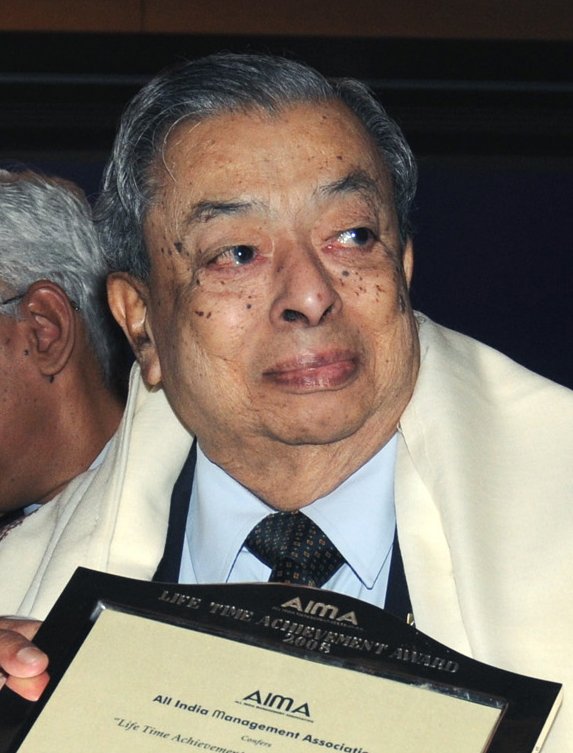
Verghese Kurien (1921-2012) is called the "Father of the White Revolution" in India and the "Milkman of India."
Kurien was a young engineer trained in Michigan who returned to India in 1949, originally intending to leave soon for a better opportunity abroad. Instead, he was asked to stay in Anand to help manage the dairy cooperative's new pasteurisation plant. He stayed — for the rest of his life.
Kurien's transformations at AMUL:
- 1955: Developed technology to make milk powder and condensed milk from buffalo milk — the first time in history. (Previously, only cow's milk was considered suitable for powder. India's dairy herds were predominantly buffalo.) This was a technical breakthrough that made industrial-scale processing of Indian milk viable.
- 1966: Launched Amul Butter with the iconic "Utterly Butterly" campaign
- 1973: Became founding Chairman of the National Dairy Development Board (NDDB)
- Spearheaded Operation Flood — the replication of the Anand model nationally
Kurien received the Ramon Magsaysay Award (1963), Padma Vibhushan (1999), and the World Food Prize (1989). He firmly believed that India's rural poor could manage complex enterprises if given the right cooperative structure, training, and market access.
Operation Flood: Three Phases of Transformation
Operation Flood was launched in 1970 by the NDDB (National Dairy Development Board) under Verghese Kurien's leadership, funded initially by the World Food Programme (WFP) and the European Economic Community (EEC) — which provided butter oil and skimmed milk powder (surplus European dairy). These were sold in urban markets; proceeds funded rural dairy infrastructure.
Operation Flood I (1970-1981)
Objective: Link rural milk producers to urban consumers through a replicable cooperative chain.
Model: The three-tier structure
- Village Dairy Cooperative Society (VDCS) — primary tier; farmers bring milk twice daily; fat is tested; payment is fair and transparent
- District Milk Union — secondary tier; collects milk from village cooperatives; processes and pasteurises
- State Dairy Federation — apex tier; markets the product under a common brand
Coverage: Pilot with 10 cities and 18 milk sheds (milk-producing rural areas linked to urban markets)
Technology transfer: NDDB provided chilling equipment, veterinary services, artificial insemination, animal feed, and training
Operation Flood II (1981-1985)
Expanded to 136 milk sheds; covered 290+ urban markets across India. Focused on strengthening the infrastructure — milk processing plants, cold chains, veterinary services.
Operation Flood III (1985-1996)
Consolidated and deepened. By the end:
- Over 73,000 village dairy cooperative societies
- Over 9 million farmer-members
- 170+ cities covered
- Milk processing capacity of 21 million litres per day
- India had become self-sufficient in milk
By 1998, India had overtaken the United States to become the world's largest milk producer — a position it still holds.
The Anand Pattern / AMUL Model: Why It Worked
The cooperative model is studied globally as a development success. Here's why it worked:
| Feature | How It Works |
|---|---|
| Farmer ownership | Cooperatives are owned and controlled by producers, not traders or corporations |
| Fair price | Fat testing at collection point; payment directly linked to quality and quantity |
| Transparency | No middleman; farmer knows exactly what price is received and why |
| Shared infrastructure | Processing plants, cold chains are too expensive for individual farmers — shared through cooperative |
| Professional management | AMUL's professional managers (hired, not elected) run operations; elected farmer representatives govern |
| Scale with local roots | Village-level societies remain small and accountable; scale comes from federation |
| Retained surplus | Profits flow back to farmer-members (dividends, better prices) rather than to external shareholders |
The separation of ownership (elected farmer representatives) and management (professional managers) was Kurien's key institutional innovation. It avoided the governance failures common in purely political cooperatives.
NDDB: The National Dairy Development Board
The National Dairy Development Board (NDDB) was established in 1965 by the Government of India in Anand, Gujarat, under Verghese Kurien's chairmanship. It became a statutory body in 1987 under the NDDB Act, 1987.
NDDB's mandate: To replicate the Anand cooperative model across India; develop dairy cooperatives; build processing infrastructure; introduce technical inputs (AI, feed, veterinary services).
NDDB today: Continues to support dairy cooperative development, runs the Mother Dairy brand (Delhi and other cities), provides technical assistance internationally, and works on cattle breed improvement through the National Programme for Bovine Breeding and Dairy Development.
India's Dairy Sector Today: The Numbers
| Indicator | Data |
|---|---|
| Milk production (2022-23) | ~230 million tonnes |
| India's global share | ~24% — world's largest producer |
| Growth rate | ~6% per year over past decade |
| Dairy cooperative members | ~17 million+ farmer-members (as of recent data) |
| AMUL turnover (FY24) | ~₹72,000 crore — India's largest food brand |
| Contribution to agriculture GDP | ~5% |
India's dairy sector is the largest agricultural commodity sector — larger than wheat or rice in value terms.
Criticisms and Challenges
Geographic inequality: The White Revolution concentrated in western India (Gujarat, Maharashtra, Rajasthan) and parts of Punjab. Eastern India — with the largest cattle population — has weak cooperative infrastructure.
Breed quality: India's cattle productivity is low by global standards — average milk yield per animal is far below European or American levels. Improving genetics through AI is slow.
Fodder crisis: Climate change and land degradation are making quality fodder increasingly scarce, raising input costs for dairy farmers.
Private sector competition: With liberalisation, large private dairy companies (Nestle, Heritage, Parag Milk) compete with cooperatives. Private companies often pay higher procurement prices in the short term, potentially weakening cooperative loyalty.
Adulteration: Milk adulteration (water, synthetic milk, added chemicals) remains a food safety challenge in unorganised segments.
FAQ: White Revolution in India
1. Who is called the Father of the White Revolution in India? Verghese Kurien is called the Father of the White Revolution in India. He led the AMUL cooperative, spearheaded Operation Flood (1970-1996), and established the NDDB. He developed the technology to make milk powder from buffalo milk — a global first — making India's large buffalo population industrially useful.
2. What is Operation Flood? Operation Flood (1970-1996) was India's national dairy development programme launched by the NDDB. It replicated the Anand cooperative model across India in three phases, linking rural milk producers to urban markets through village dairy cooperatives, district milk unions, and state dairy federations. It transformed India from a milk-deficient country to the world's largest milk producer.
3. What is the Anand Pattern / AMUL model? The Anand Pattern is a three-tier dairy cooperative structure: village dairy cooperative society (primary) → district milk union (secondary) → state dairy federation (apex). Farmers own the cooperative; professional managers run it. Fair pricing, direct payment, and shared processing infrastructure make it work. It's been replicated in 30+ countries.
4. When did India become the world's largest milk producer? India overtook the United States to become the world's largest milk producer around 1998. India today produces approximately 230 million tonnes annually — about 24% of global milk production.
5. What is NDDB? The National Dairy Development Board is a statutory body established in 1965 (statutory status from 1987) at Anand, Gujarat. It implements dairy development programmes, manages Mother Dairy, provides technical assistance for cooperative development, and promotes cattle breed improvement. It was founded under Verghese Kurien.
Related: Green Revolution in India: Impact & Legacy Related: Poverty in India: Measurement, Data & Government Efforts Related: MGNREGA: Objectives, Provisions & UPSC Notes
Tell Google you want more of this.
Add Anantam IAS as a preferred sourceOne tap, and this site shows up more often in your own Top Stories, AI Overviews and AI Mode. Remove it any time.