Opens in a new tab
Join Anantam IAS Channel on Telegram

Daily Digest · Saturday

4 April 2026 Current Affairs for UPSC

5 current affairs published on Saturday, 4 April 2026

4 April 2026 Current Affairs for UPSC — every Why-in-News article AnantamIAS published on Saturday, 4 April 2026, broken down with Why in News?, the exact GS paper it feeds, sub-topic mapping, MCQ-ready facts and a UPSC-style practice question. 5 articles in total, covering Polity, Economy, Environment, S&T, IR, Geography, History, Society and Internal Security — the same Why-in-News + GS-paper-mapping + practice-question format the Compass uses across every daily digest on the site.

Daily current affairs for UPSC is where new material enters your prep stream. Read this 4 April 2026 digest end-to-end in 25–35 minutes, attempt the practice question at the foot of each article (it's MCQ for some, 10/15-marker for others), then bookmark the entries that fall inside your active revision window. Everything stays cross-linked: tap any subject pill to jump to that subject's hub, or use the table of contents above to skip straight to a specific story.

Use this page three ways. Read sequentially for a one-sitting scan of everything that mattered on 4 April 2026. Download the 4 April 2026 PDF below for offline study or print revision. Or use the April 2026 Current Affairs compilation to see this day in the month's full context. For the previous day's reading, see 3 April 2026 Current Affairs; the next day's is 5 April 2026 Current Affairs.

Why we publish daily current affairs separately from the monthly compilation: daily is learning, monthly is revision. Use the daily page to add fresh material to your notes the day it breaks; come back to the April 2026 compilation 60 days before Prelims when the noise has settled and only the lasting takeaway is worth re-reading.

Euthanasia: Legal Framework & Ethical Considerations

Open article →Download PDF

Why in News?

The Supreme Court’s recent judgment in the Harish Rana v. Union of India (2026) case reaffirms the right to die with dignity under Article 21, allowing withdrawal of life support and emphasising patient autonomy. 

UPSC Relevance: GS-2 Polity and Governance: Fundamental Rights; GS-4 Ethics: Ethics in human actions.

Mains: Right to Life (Dynamism in the interpretation); Euthanasia: Ethical considerations 
image 14

Right to Die with Dignity: 

  • Article 21 of the Indian Constitution guarantees every citizen a fundamental Right to life with Dignity. The Right to Die with Dignity is recognised as a fundamental right under Article 21, interpreting it as part of the Right to Life. 
  • India’s legal framework allows passive euthanasia (withdrawing life support) for terminally ill patients or those in a permanent vegetative state.

India’s legal framework on Euthanasia: 

  • Euthanasia: Euthanasia is the act of deliberately ending a person’s life to relieve suffering. In voluntary euthanasia, consent is given by a patient. In non-voluntary euthanasia, a patient cannot consent, e.g., in a coma.
  • Legal status in India:
    • Active Euthanasia: killing a patient by active means, e.g., injecting a patient with a lethal dose of a drug. Active Euthanasia is illegal in India.
    • Passive Euthanasia: refusal of treatment, or withdrawal of life support, to allow a patient to die. Legal in India.

Developments regarding the ‘Right to Die with Dignity’:

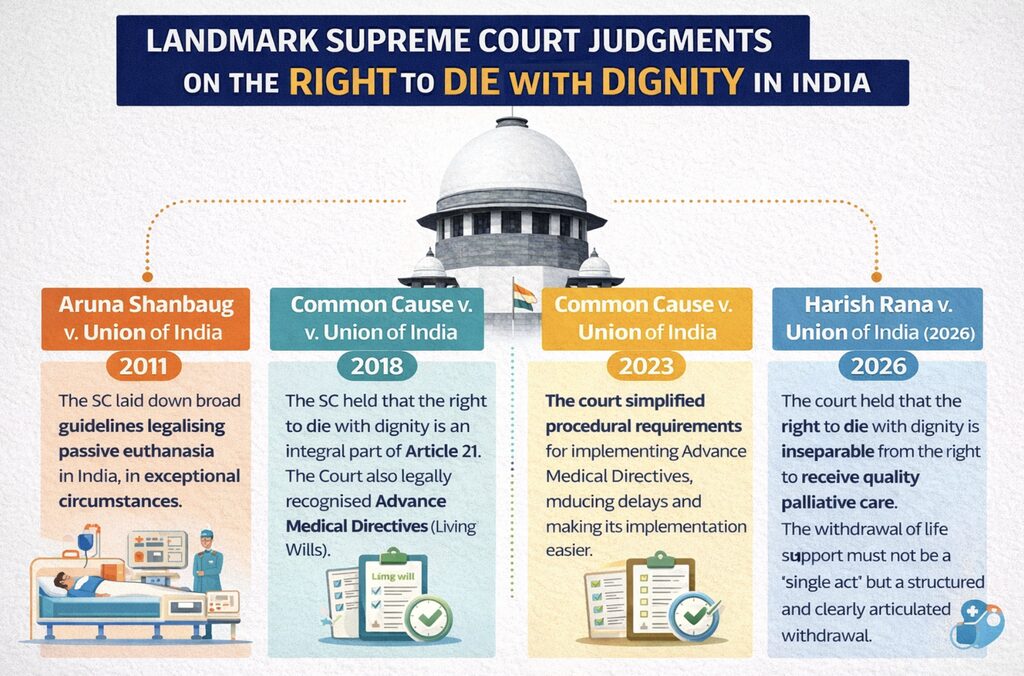
  • Aruna Shanbaug v. Union of India (2011): The SC laid down broad guidelines legalising passive euthanasia in India, in exceptional circumstances. It allowed withdrawal of life-sustaining treatment from patients in a permanent vegetative state.
  • Common Cause v. Union of India (2018): The SC held that the right to die with dignity is an integral part of Article 21. The Court also legally recognised Advance Medical Directives (Living Wills).
  • Common Cause v. Union of India (2023):  The court simplified procedural requirements for implementing Advance Medical Directives, reducing delays and making its implementation easier. 
  • Harish Rana v. Union of India (2026): The court held that the right to die with dignity is inseparable from the right to receive quality palliative care. The withdrawal of life support must not be a ‘single act’ but a structured and clearly articulated withdrawal. 
Passive Euthanasia
Harish Rana v. Union of India (2026) case:

Case: The SC upheld the right to die with dignity of 32-year-old Harish Rana (in a persistent vegetative state for nearly 13 years) by allowing the withdrawal of the applicant’s Clinically Assisted Nutrition and Hydration (CANH). This was the first time the SC had implemented its own 2018 Constitution Bench guidelines for what it had then called ‘passive euthanasia’.

The SC ruled that:
• Euthanasia will refer strictly to active euthanasia, which remains impermissible.’

• Passive Euthanasia (an obsolete term) will be replaced by ‘Withdrawing or Withholding of Medical Treatment.’ 

• Withholding of life-sustaining interventions should not be a “single act” nor an “act of abandonment” of unconscious or incompetent patients in a persistent vegetative state (PVS). The process of withdrawal of CANH must be part of a well-structured, tailored, robust and articulated palliative care plan for a PVS patient. 

• The right to die with dignity is inseparable from the right to receive quality palliative and End-of-Life (EOL) care. It is imperative to ensure that the withdrawal process is not marred by pain, agony, or suffering.

The SC urged the Centre to initiate specific legislation detailing the procedure for life support withdrawal. 

Euthanasia- Ethical and Social Implications: 

ImplicationsArguments against Passive EuthanasiaArguments supporting Passive Euthanasia
Sanctity of LifeBirth and death are natural processes; hence, nature should decide when a person dies and how the body responds to illness.  Any interference with the rules of nature may be considered unethical.

Religious traditions often emphasise the preservation of life. 
Life is the period between birth and death, and it is spent in a society where dignity is of utmost importance. Both the birth and the death should be dignified. 

Right to die with dignity assumes greater significance.
Economic ImplicationsRisk of Slippery Slope: Possible misuse, especially vulnerable people (elderly, disabled and poor) may face coercion. The decision may be driven by financial constraints, social neglect, and family pressure. Hence, it would amount to disguised abandonment.Relief for Families: Long-term life-support treatment without any hope of recovery would put the family under severe economic stress, especially in the middle- and lower-income groups. In this context, the right to die with dignity appears to be justified.
Medical EthicsPotential for Misdiagnosis: Medical science is not infallible; a diagnosis of a terminal condition could be incorrect, or a sudden medical breakthrough could offer a cure.

Contradicts core Hippocratic Oath: Do no harm. 
Alleviation of Suffering: It allows terminally ill patients to end prolonged, excruciating pain when medical treatment only offers a “lingering death”. 

Aligns with physicians’ duty to relieve suffering. 

Ethical Aspects of Euthanasia: 

The ethical principles enshrined in granting passive euthanasia: 

  • Principle of Autonomy: It grants the patient, or, in cases of terminal illness, their next of kin, the right to make decisions. E.g., Living wills grant individuals autonomy to refuse life-prolonging treatment.
  • Principle of Beneficence: Doctors must act in the patient’s best interest. Prolonging suffering without hope of recovery is not beneficial.
  • Principle of Non-Maleficence: Avoid unnecessary suffering caused by prolonged artificial life support. Also, the decision to allow passive euthanasia should not cause harm.
  • Principle of Justice: must be protected to ensure that no injustice is done to the patient.
  • Theory of Double Effect (proposed by St. Thomas Aquinas): According to this theory, every action creates two effects, and the one that is less harmful or beneficial should be considered ethical.
    • In the case of passive euthanasia, the action (withdrawal of life support, or CANH in the Harish Rana case) leads to two effects: (i) death of the patient, and (ii) relief from suffering. 
    • If the decision is taken without malice, the act can be considered ethical as the patient was relieved of his pain.
What is a living will?
• A living will (or Advance Medical Directive) is a legal document that allows individuals to specify their preferences for medical treatment in situations where they may become incapacitated, vegetative state, or unable to communicate their decisions. 

• This directive ensures that a person’s wishes regarding life-sustaining treatments are respected, even when they cannot express them due to medical conditions.

• The SC legally recognised advance directives in the Common Cause vs. Union of India (2018) case. 

Practice Question

Q. “Right to life under Article 21 includes the right to die with dignity, especially in cases of terminal illness.” Discuss the ethical justification for allowing withdrawal of life-sustaining treatment in terminally ill patients. (GS-4)

UPSC Mains PYQ 2023

Q. “The Constitution of India is a living instrument with capabilities of enormous dynamism. It is a constitution made for a progressive society.” Illustrate with special reference to the expanding horizons of the right to life and personal liberty. 
Govt. exempts Customs Duty for 40 petrochemical products

Open article →Download PDF

Why in News?

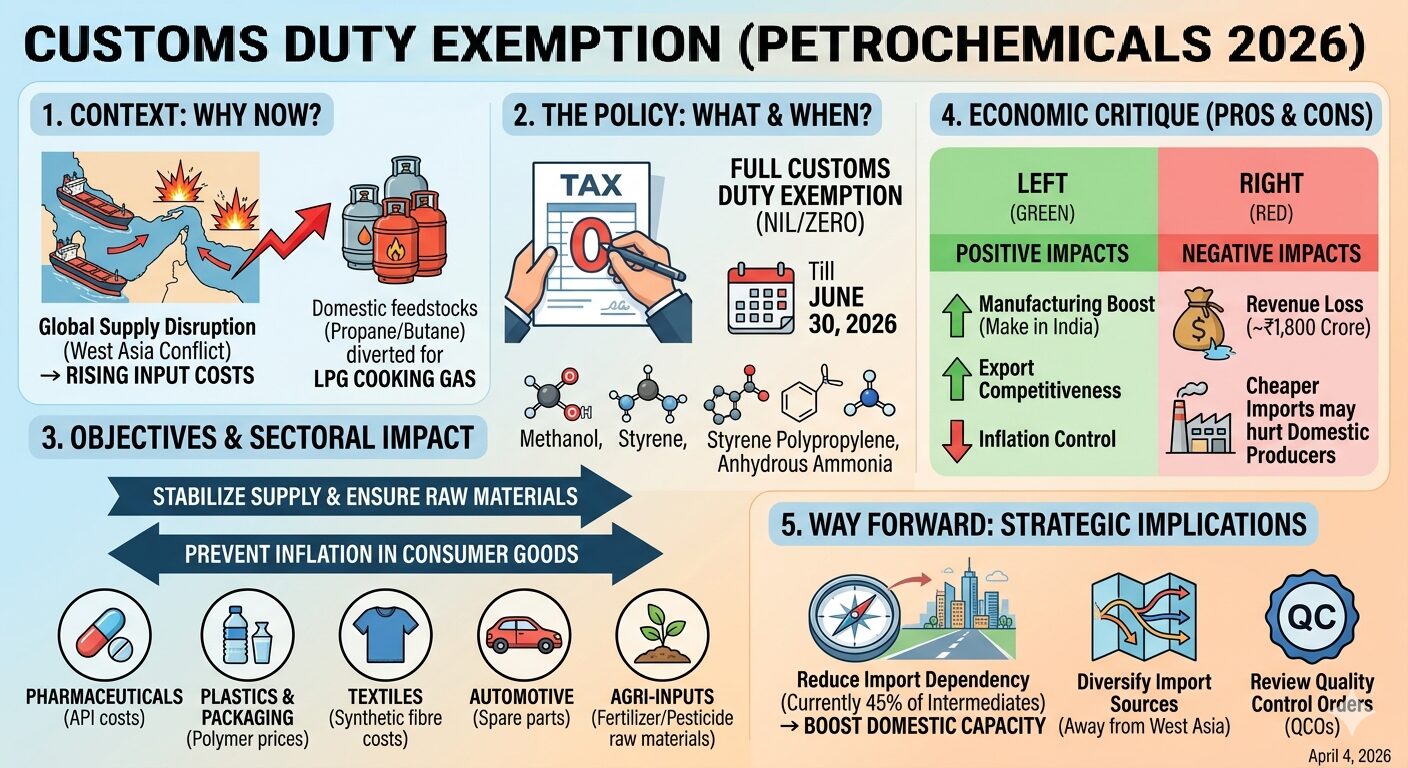
  • Government of India granted full customs duty exemption on around 40 critical petrochemical products till June 30, 2026.
  • The decision was taken due to global supply disruptions caused by the West Asia (Iran) conflict.

UPSC Relevance

Prelims: Customs duty, petrochemicals, LPG, feedstocks

GS-III: Economy- Inflation management, Supply chain resilience, Energy security, Industrial policy

What are Petrochemicals?

  • Petrochemicals are chemical products derived from petroleum or natural gas.

Types

  1. Basic Petrochemicals → Ethylene, Propylene, Butadiene
  2. Intermediates → Methanol, Styrene, Vinyl Chloride
  3. End Products → Plastics, synthetic fibres, rubber

Key Feedstocks

  • Naphtha
  • Natural Gas
  • LPG (Propane, Butane)

What is Customs Duty?

  • Customs duty is a tax imposed on imports and exports.
  • Objectives:
    • Protect domestic industries
    • Generate revenue
    • Regulate trade

When Customs Duty reduced to zero (nil) → imports become cheaper.

Key Features of the Policy

Scope

  • Around 40 petrochemical products exempted till June 30, 2026
  • Examples:
    • Methanol, Toluene, Styrene, Polypropylene, PVC, Anhydrous ammonia

Nature of Policy

  • Short-term, targeted relief measure
  • Aimed at stabilizing supply and reducing costs

Why was this Decision Taken?

1. Global Supply Disruptions

  • Conflict in West Asia disrupted oil & petrochemical supply chains.
  • Key routes like Strait of Hormuz affected → rising prices.

2. Domestic Diversion to LPG

  • India diverted petrochemical feedstocks (propane, butane) to produce LPG for cooking.
  • This reduced availability for industrial use.

3. Rising Input Costs

  • Industries faced:
    • Shortage of raw materials
    • Increased production costs

4. Inflationary Pressure

  • Petrochemicals are used in:
    • Plastics
    • Medicines
    • Textiles

Cost increase leads to inflation in daily-use goods.

What are the Objectives of the Policy?

  • Ensure continuous availability of raw materials
  • Reduce cost pressure on industries
  • Stabilize supply chains
  • Prevent inflation in consumer goods
  • Support export competitiveness

What Sectors Benefited from this decision?

  • Pharmaceuticals: Duty relief on key solvents and chemicals used in the manufacturing of Active Pharmaceutical Ingredients (APIs) and formulations will help curb price escalations and ensure the availability of affordable medicines.
  • Plastics & Packaging: With almost 25% of raw materials for the plastic industry being imported, the 8.5% duty exemption on polymers is crucial. Raw material prices had surged by 65% post-conflict, so this relief aims to stabilize the sector.
  • Textiles: The synthetic fibre industry, which relies on PTA and MEG, faced a 43% price surge. The waiver will help stabilize input costs and maintain export competitiveness.
  • Automotive & Consumer Goods: Lower input costs for plastics, polymers, and other components will help contain cost pressures, reduce disruption risks, and ensure a steady supply of spare parts.
Gemini Generated Image nbi8tcnbi8tcnbi8

Economic Impact

Positive Impacts

1. Lower Input Costs: Cheaper imports reduce production costs.

2. Boost to Manufacturing: Helps Make in India by ensuring raw material supply.

3. Inflation Control: Prices of goods like plastics, medicines may reduce.

4. Export Competitiveness: Lower costs → better global competitiveness.

Negative Impacts

1. Revenue Loss: Estimated loss: ~₹1,800 crore.

2. Impact on Domestic Producers: Cheaper imports may hurt local petrochemical industries.

3. Temporary Nature: Does not solve structural issues in supply chains.

Way Forward & Strategic Implications

  • Short-Term Fix, Not a Long-Term Solution: This is a temporary measure to manage an acute crisis. Sustaining this would lead to significant revenue loss and undermine domestic industry.
  • Reducing Import Dependency: India imports about 45% of its petrochemical intermediates. The crisis highlights the urgent need to boost domestic capacity.
  • Aatmanirbharta: Move from being a “Refining Hub” to a “Petrochemical Hub” to reduce import dependency.
  • Strategic Reserves: Similar to Strategic Petroleum Reserves (SPR), India needs a buffer for critical chemical feedstocks.
  • Diversification of Import Sources: The government needs to explore alternative supply chains to reduce over-reliance on any single volatile region. Reducing reliance on the volatile Strait of Hormuz by exploring Central Asian or American suppliers.
  • Long-Term Vision: The Ministry of Chemicals and Fertilizers has discussed creating a robust, holistic plan for the sector’s growth. This includes reviewing Quality Control Orders (QCOs) and promoting investment in domestic production capacity

Practice Questions

Q. Consider the following statements:

  1. Petrochemicals are derived from petroleum and natural gas.
  2. Customs duty exemption increases cost of imports.
  3. Petrochemicals are used in pharmaceuticals and textiles.

Which are correct?
(a) 1 and 3
(b) 2 and 3
(c) 1 and 2
(d) 1, 2 and 3

Answer: (a)

Mains Questions

Q1. Discuss the role of customs duty as a tool of economic policy. Examine the recent exemption on petrochemical products. (250 words)

Q2. “Global geopolitical conflicts expose supply chain vulnerabilities in India.” Analyse with reference to petrochemical sector. (250 words)

 Form 6 Controversy: Electoral Rolls & Allegations (2026)

Open article →Download PDF

Why in News?

  • The All India Trinamool Congress alleged that voters from Bihar and Uttar Pradesh were being added to electoral rolls in West Bengal using Form 6 ahead of Assembly elections.
  • Raises concerns about electoral integrity and voter eligibility.

UPSC Relevance:

GS-II: Free and fair elections, Electoral reforms, Role of Election Commission, SIR, Form 6

What is Form 6?

  • Form 6 is the official application form used to enroll a new voter in the electoral roll.
  • It is governed by:
    • Registration of Electors Rules, 1960
    • Representation of the People Act, 1950

Who Processes It?

  • The Electoral Registration Officer (ERO):
    • Maintains electoral rolls
    • Accepts additions/deletions
    • Conducts hearings on objections
  • Works under the supervision of the Election Commission of India.

Eligibility Conditions for Voter Registration

As per Article 326:

  • Must be:
    • An Indian citizen
    • 18 years or above
    • Ordinarily resident in the constituency
  • Addressed to: Electoral Registration Officer (ERO) of the Assembly/Parliamentary constituency.
  • Documents Required: Self-attested copies of:
    • Date of proof: Birth certificate, Aadhaar, PAN, driving license, Class X/XII certificate, passport.
    • Address proof (at least 1 year old): Utility bill, Aadhaar, bank passbook, passport, land records, rent/sale deed.
  • No proof of citizenship is asked – only a self-declaration of being an Indian citizen. False declaration can lead to fine/imprisonment (up to 1 year).
  • Mode of filing: Online (ECINET portal) or offline with ERO (typically Sub-Divisional Magistrate).
  • Form 6 requires only self-declaration of citizenship, not strict documentary proof → potential loophole.

Process of Adding a Voter (Form 6 Workflow)

  1. Application submitted online/offline.
  2. Booth Level Officer (BLO) verifies details on the ground.
  3. ERO checks:
    • Age
    • Residence
    • Citizenship (based on declaration)
  4. If satisfied → name added to electoral roll.

Types of Electoral Roll Updates

Two types of addition:

  • Annual Special Summary Revision (SSR) – periodic updation.
  • Continuous updation – throughout the year, except between last nomination date and declaration of results.

Once nomination deadline passes, rolls are usually frozen.

Safeguard Mechanism

  • Public notice is displayed.
  • 7 days given for objections.
  • Any citizen can challenge inclusion.

What is the Controversy?

What Did the TMC Allege?

  1. Mass submission: Thousands of Form 6s submitted at CEO office, Kolkata – bypassing EROs.
  2. Rule violation: As per EC rules, Booth Level Agents can submit max 50 forms/day. TMC alleged bulk submission (30,000 in 6-7 hours).
  3. Duplicate enrolment: Many applicants already enrolled in Bihar/UP – violation of Representation of the People Act, 1950 (no person can be enrolled in more than one constituency).
  4. Last-minute manipulation: Filing after the deadline for normal processing, hoping to exploit ongoing Special Intensive Revision (supervised by judicial officers on SC orders).

Legal Concern

  • Under law:
    • A person cannot be registered in more than one constituency.
    • False declaration → punishable offence.

Election Commission’s Position

  • The Election Commission of India clarified:
    • CEO cannot directly add voters.
    • Only ERO has authority after verification.
  • Ensures a decentralized and layered verification system.

Key Issues Highlighted

1. Electoral Integrity: Risk of fake or duplicate voters undermines free and fair elections.

2. Loophole in Citizenship Verification: Reliance on self-declaration instead of strict proof.

3. Timing of Additions: Last-minute additions raise suspicion of electoral manipulation.

4. Administrative Capacity: Handling large volumes of applications quickly may lead to errors.

5. Political Contestation: Electoral rolls often become a political battleground.

Legal & Constitutional Framework

  • Article 324 → EC’s superintendence of elections
  • Article 326 → Adult suffrage
  • Representation of the People Act, 1950 → Electoral rolls

Significance for Democracy

  • Electoral rolls are the foundation of free and fair elections.
  • Errors in rolls can lead to:
    • Disenfranchisement
    • Electoral fraud
  • Trust in democracy depends on accuracy of voter lists.

Way Forward

  • Introduce robust verification of citizenship (without exclusion errors).
  • Use technology + database integration (Aadhaar, NPR, etc.) cautiously.
  • Strengthen BLO verification mechanisms.
  • Ensure transparency in additions/deletions.
  • Increase public awareness for self-verification of voter status.

Practice Questions

Q. Consider the following statements:

  1. Form 6 is used for deletion of names from electoral rolls.
  2. A person can be registered in more than one constituency if they have multiple residences.
  3. Electoral Registration Officer is responsible for maintaining electoral rolls.

Which are correct?
(a) 1 and 2
(b) 2 and 3
(c) 3 only
(d) 1, 2 and 3

Answer: (c)

Mains Question

Q. “Accurate electoral rolls are the backbone of free and fair elections.” Discuss in the context of recent controversies related to Form 6. (250 words)

A year after Operation Sindoor tensions, India and Azerbaijan decide to reset ties

Open article →Download PDF

Why in News?

  • India and Azerbaijan are trying to reset strained bilateral ties after recent tensions.
    • A high-level meeting took place in Baku
  • Both sides agreed to start a Confidence Building Mechanism (CBM).

UPSC Relevance:

GS-II: India Azerbaijan relations, Confidence Building Measures (CBM), Energy Security, Multi-alignment diplomacy

Why were relations strained? (Cause of tension)

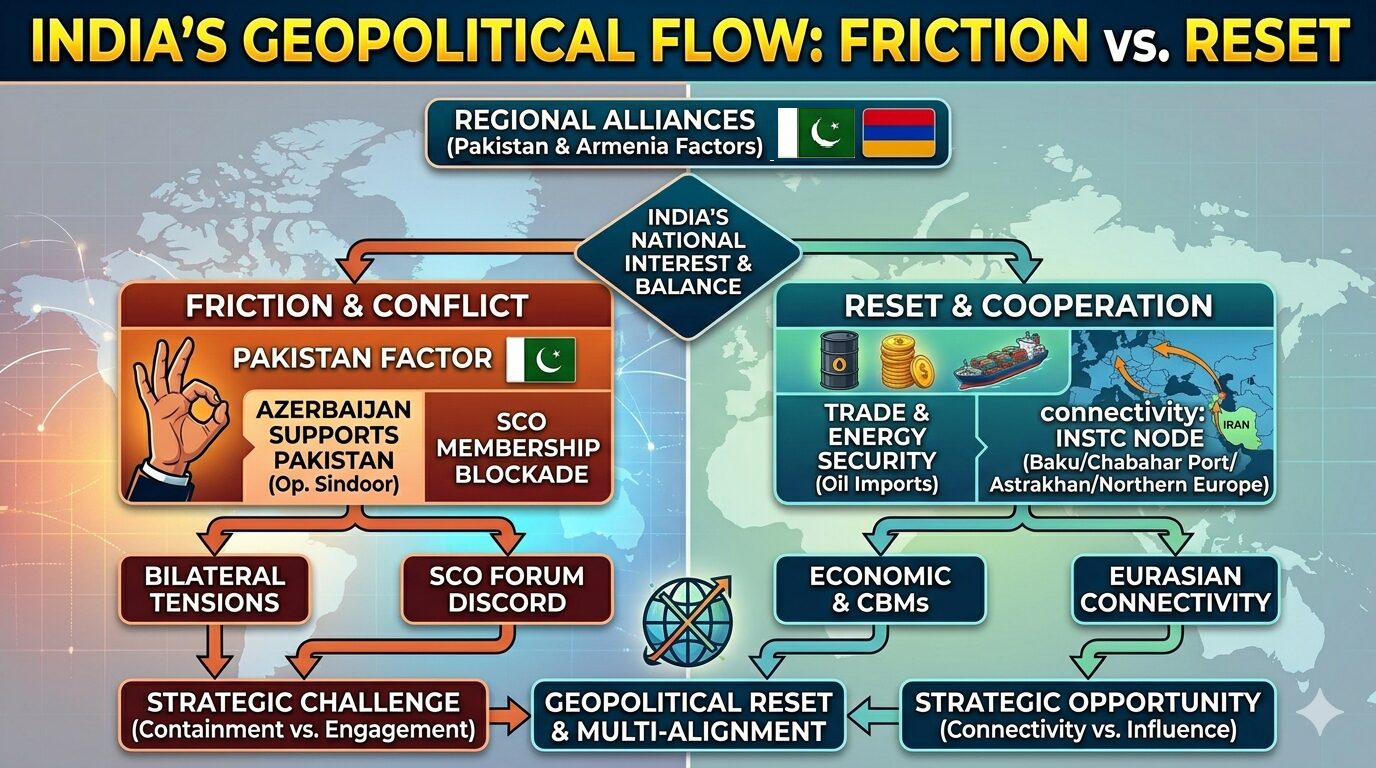
1. Pakistan Factor

  • Azerbaijan supported Pakistan during India’s Operation Sindoor (2025)
  • This created diplomatic friction between India and Azerbaijan
  • This shows how third-country alignments affect bilateral relations

2. Political vs Economic Gap

  • Political ties were weak
  • BUT economic ties (trade, investment) were still growing

3. Multilateral Fallout:

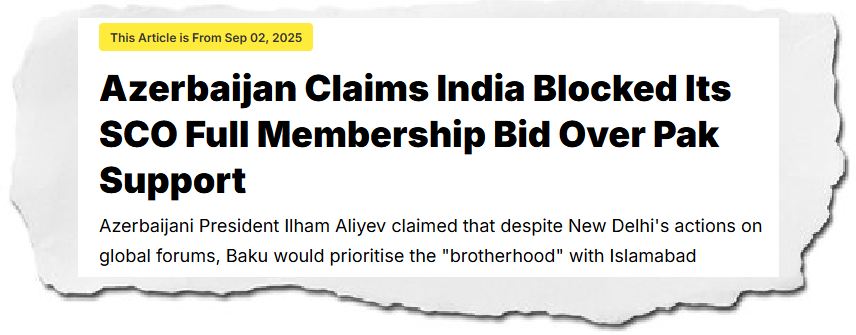
The discord spilled into international forums, most notably when India blocked Azerbaijan’s bid for full membership in the SCO in September 2025, a move Azerbaijan’s president publicly attributed to his country’s ties with Pakistan

image 18

What does “Reset of ties” mean?

Key steps taken:

  • High-level diplomatic talks resumed
  • Launch of Confidence Building Measures (CBMs)
  • Focus on:
    • Trade
    • Energy cooperation
    • Regional security

Aim: Move from conflict → cooperation

Areas of Cooperation

1. Energy Security

  • Azerbaijan is an oil & gas rich country
  • India imports crude oil from Azerbaijan (earlier disrupted, now improving)

Energy diversification is key for India

2. Trade & Investment

  • India increasing investments despite political issues

3. Strategic Location

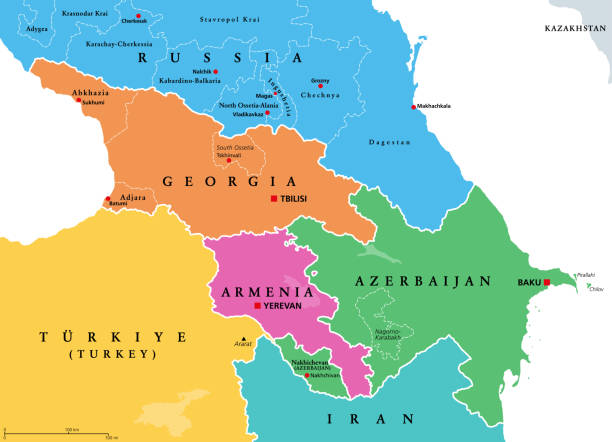
  • Azerbaijan lies in:
    • Caucasus region
    • Between Europe & Asia

Important for Connectivity corridors and access to Central Asia

image 17

4. Crisis Cooperation

  • Azerbaijan helped India evacuate citizens from Iran recently
  • It shows even during tensions, functional cooperation continues

Broader Geopolitical Significance

1. India’s Balanced Diplomacy

  • India is engaging even with countries that support Pakistan
  • It shows Issue-based alignment, not bloc politics

2. Armenia-Azerbaijan Conflict:

India must balance its “strategic partnership” with Armenia with its “pragmatic engagement” with Azerbaijan.

3. Energy + Connectivity Strategy

  • Important for International North-South Transport Corridor (INSTC) and Access to Eurasia
  •  Azerbaijan is a key node on the INSTC, a 7,200 km multi-modal network connecting India to Russia, Central Asia, and Europe via Iran. Stable ties with Baku are crucial for the corridor’s success

4. Cultural & Historical Links

  • Ateshgah (Fire Temple): Located near Baku, this 18th-century temple features inscriptions in Sanskrit and Punjabi, proving ancient trade links with Indian merchants (Multanis and Khatris).
  • Nizami Ganjavi: The 12th-century Azerbaijani poet who influenced Indian literature, including the works of Amir Khusrau
Gemini Generated Image r7mg63r7mg63r7mg

Conclusion:

The 2026 reset is a pragmatic, interest-driven move, not an end to geopolitical rivalry. Its success will depend on whether both sides can compartmentalize their differences (Pakistan-Armenia) and focus on tangible economic and connectivity benefits. This approach aligns with India’s doctrine of “strategic autonomy” and “multi-alignment”—pursuing ties with all major players based on national interest. In an era of “Multi-alignment,” India is demonstrating that it can maintain robust ties with Armenia while simultaneously resetting relations with Azerbaijan to secure its energy and connectivity interests in Eurasia.

BrahMos-Armed INS Taragiri Marks Major Leap In India’s Naval Strength And Self-Reliance

Open article →Download PDF

Why in News?

  • India commissioned the indigenous stealth frigate INS Taragiri (F41) on 3 April 2026.
  • It is part of Project 17A (Nilgiri-class) warships.
  • Built by Mazagon Dock Shipbuilders Limited (MDL) with ~75% indigenous content.
  • Equipped with advanced weapons including BrahMos missiles.

UPSC Relevance:

GS-III: Science & Technology, Indigenous Capability, Internal Security and GS-II: International Relations

What is INS Taragiri?

  • A guided-missile stealth frigate of the Indian Navy
  • Part of Nilgiri-class (Project 17A)
  • Designed for multi-role operations:
    • Surface warfare, Anti-air warfare, Anti-submarine warfare

Key Features

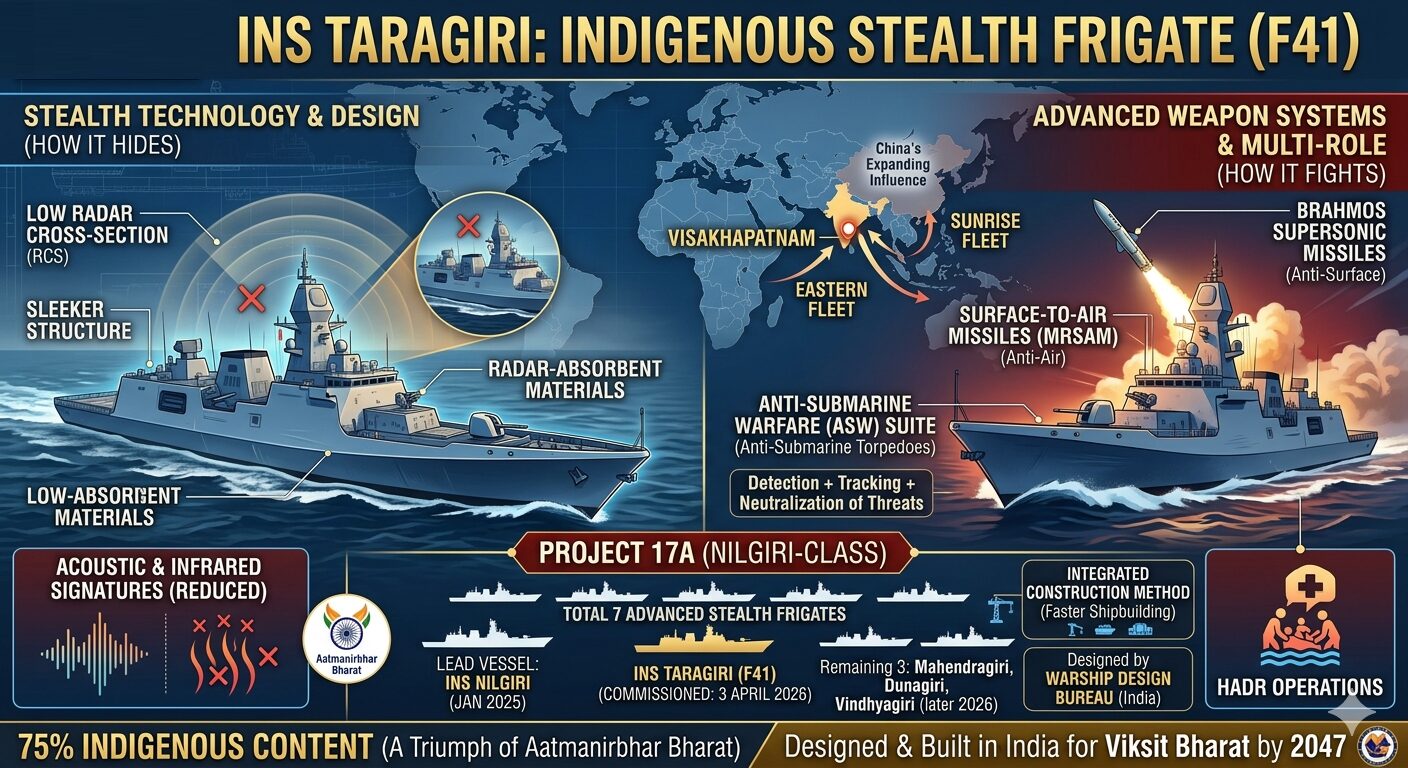
1. Stealth Technology

  • Reduced radar cross-section → difficult to detect
  • Low acoustic & infrared signatures

A stealth frigate is a warship designed to avoid detection (radar, sonar, IR) while carrying advanced weapons.

2. Advanced Weapon Systems

  • BrahMos supersonic cruise missiles
  • Surface-to-air missiles (MRSAM)
  • Anti-submarine torpedoes

3. Sensors & Systems

  • Modern radar (MF-STAR)
  • Sonar systems
  • Combat Management System

Enables: Detection + tracking + neutralization of threats

4. Indigenous Capability

  • ~75% indigenous components
  • Designed by Warship Design Bureau (India)

Reflects: Aatmanirbhar Bharat in defence

What is Project 17A?

  • Project 17A is a programme of the Indian Navy to build a total of seven advanced stealth frigates. The ships are an upgraded version of the earlier Shivalik-class frigates (Project 17). Four are being built by MDL in Mumbai and three by Garden Reach Shipbuilders and Engineers (GRSE) in Kolkata. The lead vessel, INS Nilgiri, was commissioned in January 2025. The remaining three ships—Mahendragiri, Dunagiri, and Vindhyagiri—are expected to be commissioned later in 2026

Key innovations:

  • Integrated construction method → faster shipbuilding
  • Better:
    • Stealth
    • Automation
    • Survivability

Strategic Significance

  • A Leap in Stealth Technology: Its advanced design features a ‘sleeker structure’ and a significantly reduced Radar Cross-Section (RCS), making it very difficult for enemy radars to detect. This ‘low radar visibility’ allows it to approach targets undetected and enhances its survivability in contested maritime environments. It is considered a “generational leap” over earlier frigate designs.
  • Formidable Firepower and Multi-Role Capability: As a true ‘multi-role’ vessel, it is equipped to handle a wide array of missions. The integration of the supersonic BrahMos missile, MRSAMs, and an advanced anti-submarine warfare (ASW) suite gives it a formidable edge in anti-surface, anti-air, and anti-submarine warfare. Beyond combat, it is also designed for humanitarian assistance and disaster relief (HADR) operations.
  • A Triumph of ‘Aatmanirbhar Bharat’ in Defence: The ship is a shining example of India’s growing self-reliance in defence manufacturing. With over 75% indigenous content, it showcases the maturity of the domestic defence industrial ecosystem. The project involved over 200 Micro, Small, and Medium Enterprises (MSMEs), supporting thousands of jobs. It is the embodiment of the ‘Make in India‘ spirit.
  • Strengthening the Eastern Fleet and the ‘Sunrise Fleet’: Commissioned into the Eastern Fleet, which is based in Visakhapatnam and is often called the ‘Sunrise Fleet’, INS Taragiri will significantly bolster India’s naval presence along its eastern seaboard. This is crucial given China’s expanding influence in the Bay of Bengal and Southeast Asia.

Challenges / Concerns

  • High cost of indigenous warships
  • Dependence on some foreign components
  • Need for faster production timelines
Gemini Generated Image igvamligvamligva

Conclusion:


The commissioning of INS Taragiri is not merely the addition of a warship but a demonstration of India’s growing technological prowess and strategic resolve. It strengthens the Navy’s ability to protect national interests, secure global trade, and project power in the Indian Ocean Region. As India works towards a ‘Viksit Bharat’ by 2047, the modernisation and indigenisation of its naval fleet are fundamental pillars for ensuring its security and prosperity

Practice MCQs:

Consider the following statements regarding INS Taragiri:

  1. It is a nuclear-powered submarine.
  2. It is part of Project 17A frigates.
  3. It is equipped with BrahMos missiles.

Which of the statements given above is/are correct?

A) 1 only
B) 2 and 3 only
C) 1 and 3 only
D) 1, 2 and 3

Answer: B

Which of the following features is/are associated with stealth warships?

  1. Reduced radar cross-section
  2. Low acoustic signature
  3. High visibility to enemy radar

Select the correct answer:

A) 1 and 2 only
B) 2 and 3 only
C) 1 and 3 only
D) 1, 2 and 3

Answer: A