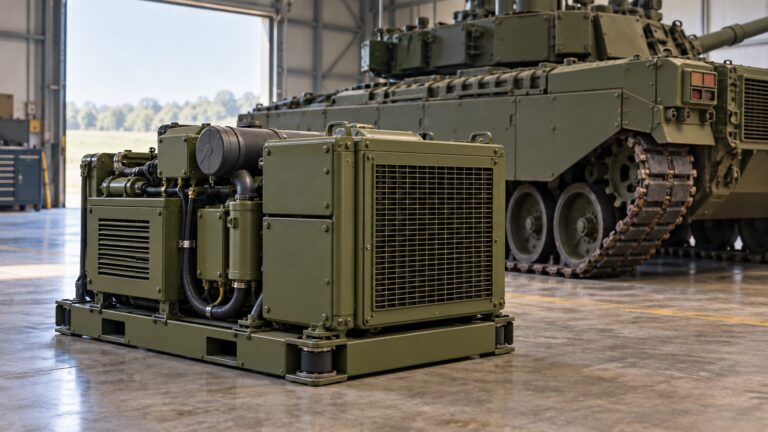
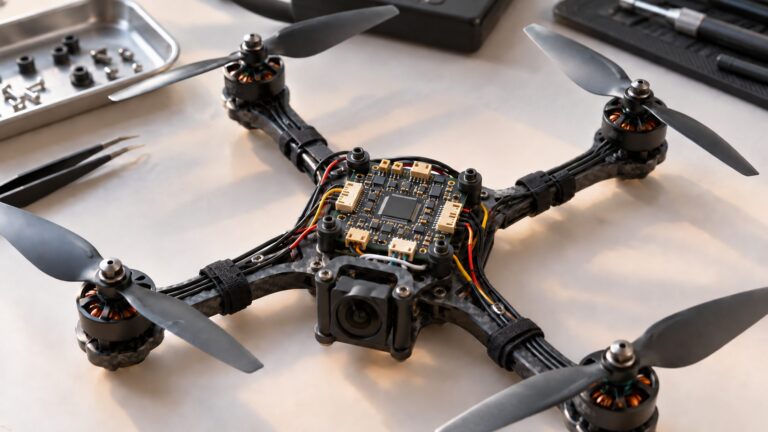
The defining weapon of the next decade probably won’t be a stealth fighter or a hypersonic missile. It’ll be a swarm of cheap drones, each one disposable on its own, devastating in coordinated formation. China’s recent demonstration of the Atlas Drone Swarm pushes that future closer. A single operator, nearly 100 autonomous UAVs, real-time coordination across a mesh network, and decision-making that runs at machine speed. For India, sitting between two militarized neighbors and managing a 3,488-kilometer disputed border with China alone, the Atlas Drone Swarm story is less a technology curiosity and more a planning input.
Swarm warfare changes the math of air defense. Traditional surface-to-air systems are built to engage a few high-value targets at once. They don’t scale gracefully when 100 cheap quadcopters arrive together, each capable of independent target selection. India’s defense ecosystem, including DRDO, the Indian Army, the Indian Air Force, and a growing cluster of private drone companies, is responding through a layered counter-drone push. The Bharat Drone Shakti exercise series and the operationalization of the DRDO Anti-Drone System are visible parts of that response.
This piece walks through what Atlas actually is, why swarms break old defense assumptions, where India stands, and what the realistic paths forward look like.
Quick Facts at a Glance
- System name: Atlas Drone Swarm (reported designation; specifics tied to Chinese defense industry releases in April 2026)
- Operator load: One human operator controlling up to ~100 drones
- Architecture: Decentralized mesh networking with shared situational awareness
- Autonomy level: Onboard AI for navigation, target classification, and engagement
- Indian counterparts: DRDO Anti-Drone System (D4), Smash 2000, Indrajaal, Akashteer
- Key Indian exercise: Bharat Drone Shakti, joint exercise demonstrating offensive and defensive UAV capabilities
- Strategic backdrop: LAC tensions, drone use in Russia-Ukraine and Israel-Hamas conflicts, rising borderless drone threat from non-state actors
Why in News: A New Threshold for Drone Warfare
Footage and technical claims around the Atlas Drone Swarm circulated in late April 2026, showing coordinated flight of nearly 100 drones executing reconnaissance, target identification, and simulated strike profiles. The claim that one operator can manage that many autonomous platforms isn’t entirely new in concept. The US Defense Advanced Research Projects Agency (DARPA) demonstrated swarm prototypes years ago, and the Israeli, Russian, and Turkish industries have all moved versions into the field. What’s notable about Atlas is the integration depth, the operational packaging, and the explicit positioning toward export.
Coming on the heels of intensive drone use in the Russia-Ukraine war and the 2023-2025 Israel-Hamas conflict, where small, cheap UAVs disabled multi-million-dollar armor, the Atlas reveal pushes Indian defense planners to ask a hard question. Are existing air defense systems, even modern ones, designed for the war that’s now arriving?
Background and Historical Context
Drone warfare didn’t start with quadcopters. Reconnaissance UAVs go back to the Vietnam War. Israel pioneered tactical drones in the 1980s, and the US Predator and Reaper programs through the 2000s normalized armed drones in counter-terrorism operations. India operated Israeli-origin Searcher and Heron platforms for ISR (intelligence, surveillance, reconnaissance) for years.
The shift in the last five years has been from a few expensive drones in the hands of major militaries to many cheap drones in the hands of almost everyone. Commercial DJI quadcopters retrofitted with grenades changed Ukrainian battlefield economics. Iranian Shahed loitering munitions, costing tens of thousands of dollars each, threaten infrastructure designed against million-dollar missiles. Houthi drones from Yemen have hit Saudi oil facilities and Red Sea shipping.
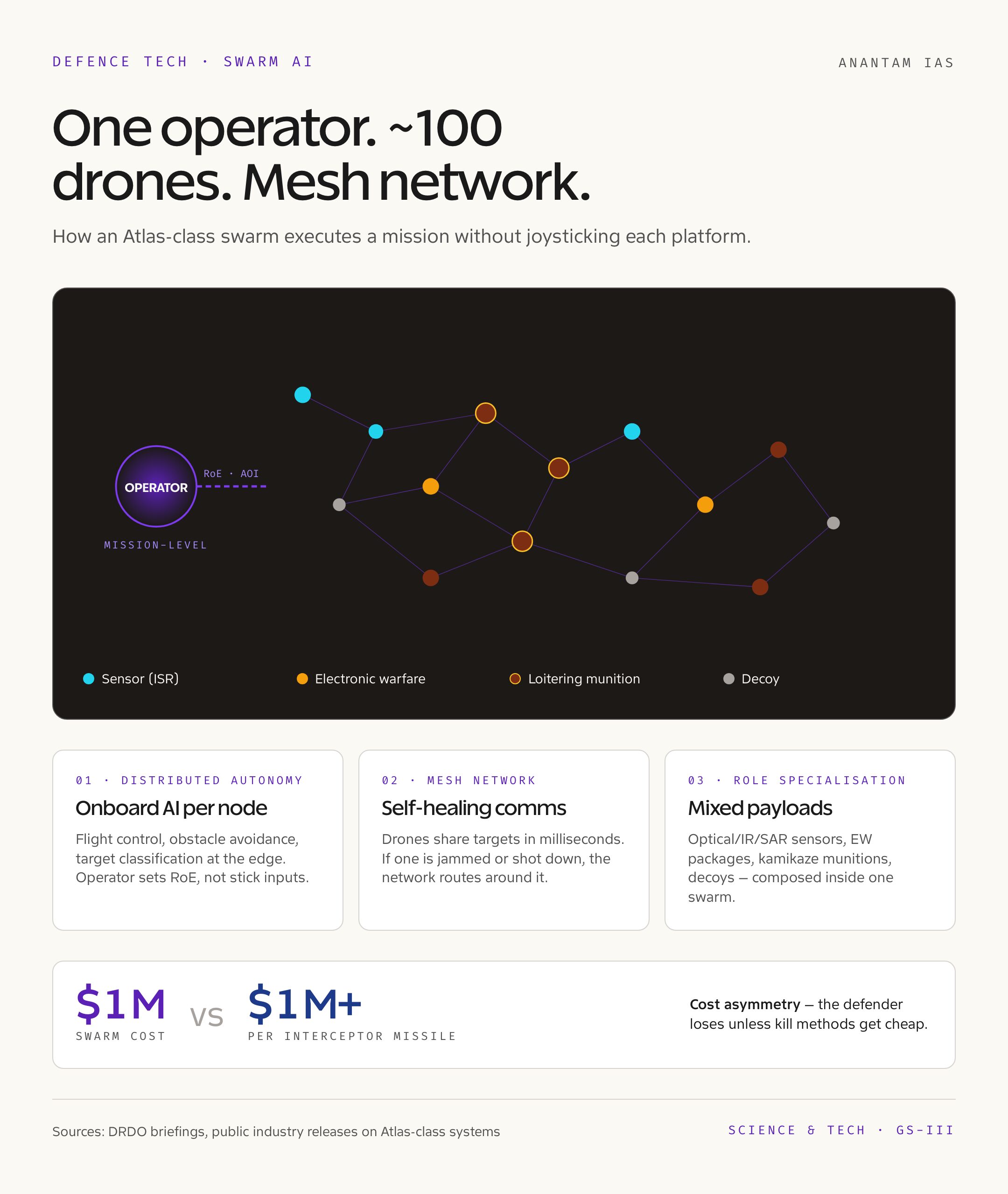
Swarm theory pushes this further. Instead of single-platform engagement, the swarm distributes capability. Some drones become sensors. Others become decoys. Others carry payloads. The mesh network shares targeting data, and onboard AI lets the swarm continue functioning even if individual nodes are destroyed. The defense problem becomes geometric, not linear.
For India, this isn’t abstract. The 2025-26 LAC standoffs included reported drone incursions on multiple sectors. Western border flashpoints have seen drone-based smuggling and weapons drops. Kashmir has logged drone-borne IEDs. Our earlier explainer on the unmanned aerial vehicle lays out the broader UAV landscape that this Atlas story sits inside.
How It Works: Anatomy of a Swarm
Three pieces define a swarm system, and Atlas integrates all three at high maturity.
One, distributed autonomy. Each drone runs onboard AI that handles low-level flight control, obstacle avoidance, and target classification. The operator doesn’t joystick each platform. The operator sets mission parameters, area of interest, target priorities, rules of engagement, and the swarm executes.
Two, mesh networking. The drones talk to each other, not just to the operator. If one drone spots a target, the information propagates across the swarm in milliseconds. If one drone is shot down or jammed, the network heals around the gap. This makes the swarm resilient to losses and to electronic warfare.
Three, role specialization. Inside a single swarm, drones can carry different payloads. Some are pure sensors with optical, infrared, and SAR (synthetic aperture radar) cameras. Some carry electronic warfare packages to jam enemy communications. Some are loitering munitions, kamikaze drones that fly until they find a target. Some are simply decoys, drawing defensive fire away from the strike platforms.
The operator’s job is to manage the swarm at mission level. Modern swarm interfaces look more like real-time strategy game dashboards than traditional radar consoles. The cognitive load is on understanding the situation, not on flying individual aircraft.
Why It Matters: Five Reasons This Changes Indian Defense Planning
One, cost asymmetry. A swarm of 100 drones at $10,000 each costs $1 million. The interceptor missiles needed to engage them individually can cost more than that per missile. The defender always loses the cost trade unless the defense itself shifts to cheap, scalable kill methods.
Two, attribution ambiguity. Swarms can be launched from civilian platforms, trucks, ships, even commercial drones modified in basements. Attributing an attack to a state actor becomes harder, which lowers the threshold for use.
Threee, force multiplication for smaller adversaries. Pakistan, even China at certain points along the LAC, can punch above their weight if swarm technology reaches them at scale. Non-state actors operating from across borders gain serious leverage.
Four, infrastructure vulnerability. Civilian targets, oil refineries, power substations, ports, airports, weren’t designed against drone attack. India’s infrastructure security planning has to catch up, and that’s a Ministry of Home Affairs and state-level problem as much as a Ministry of Defence one.
Five, AI governance. Lethal autonomous weapons sit at the heart of an unresolved global ethical and legal debate. India’s position in the Group of Governmental Experts at the UN matters, and so does its domestic doctrine on human-in-the-loop versus human-on-the-loop targeting.
Detailed Analysis
India’s Counter-Drone Stack
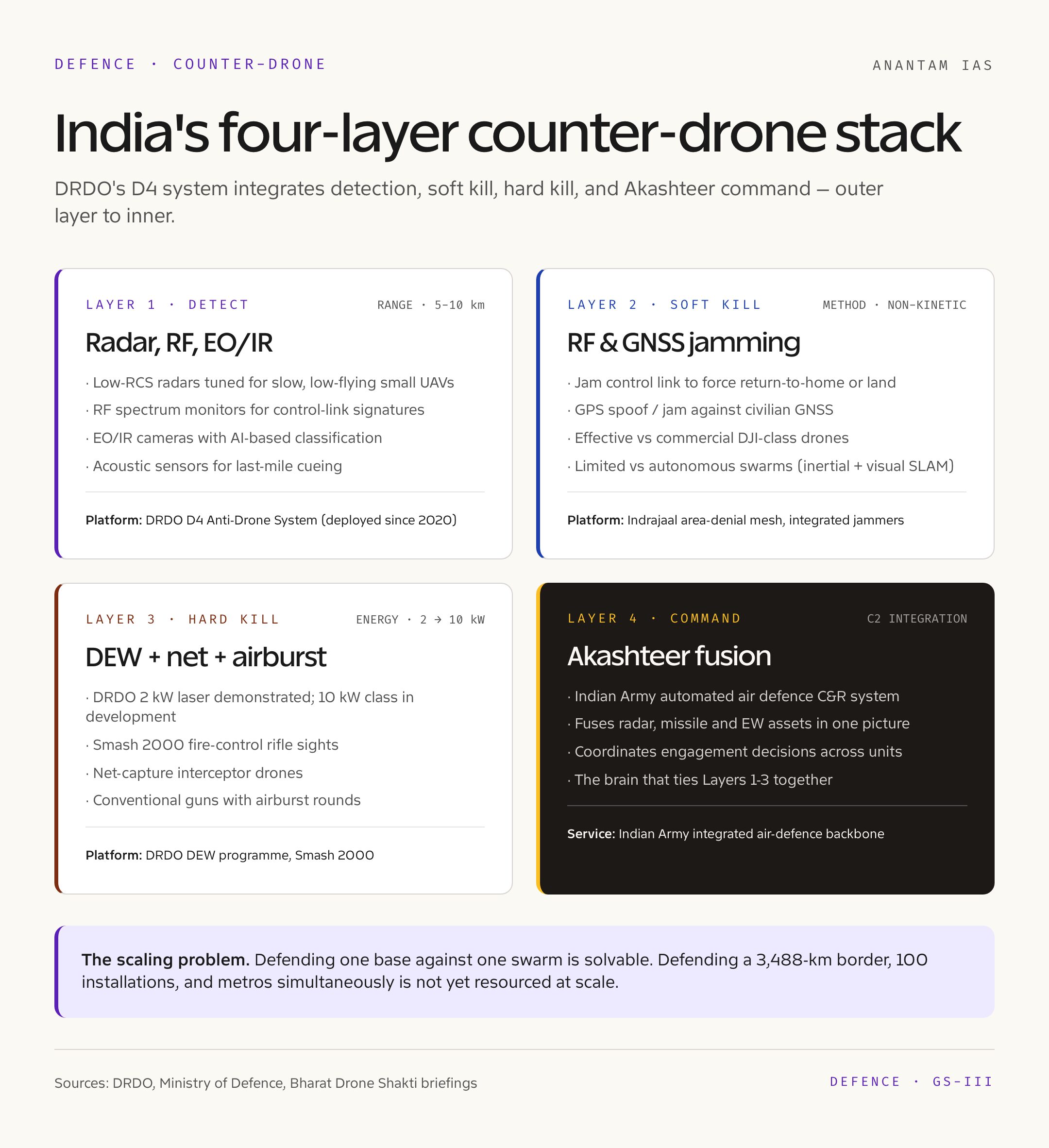
India’s counter-drone response operates across four layers.
Detection. Radars optimized for small, slow, low-flying targets. Acoustic sensors. Optical and IR cameras with AI-based classification. RF spectrum monitors that pick up drone control links. The DRDO Anti-Drone System (D4) integrates several of these into a unified picture.
Soft kill. RF jamming targeting the command-and-control link or the GPS/GNSS signal the drone uses for navigation. Effective against commercial drones that rely on civilian GPS. Less effective against autonomous swarms that use inertial navigation and visual SLAM.
Hard kill. Directed energy weapons (high-power laser systems) that physically destroy drones. DRDO has demonstrated 2 kW class systems and is working on 10 kW class platforms. Net-capture drones that physically grab smaller UAVs. Conventional gun systems with airburst rounds.
Layered air defense integration. Akashteer, the Indian Army’s air defense control and reporting system, ties radar, missile, and electronic warfare assets together for coordinated response.
DRDO and Indian Industry
DRDO’s portfolio includes the D4 Anti-Drone System, the Rustom and TAPAS UAV programs, and ongoing swarm drone development. Indian industry is pushing fast. NewSpace Research, ideaForge, Garuda Aerospace, Asteria, Botlab, Veda Defence, and others are building both offensive UAVs and counter-drone systems. The 2026 procurement environment, with Defence Acquisition Council clearances under iDEX (Innovations for Defence Excellence) and Make-in-India guidelines, is finally moving capability into deployable form.
For deeper context on the broader tech-industrial push, our coverage of the semiconductor fab story is useful, since drone capability ultimately depends on indigenous chip and sensor supply.
Bharat Drone Shakti
Bharat Drone Shakti is a periodic exercise series organized by the Indian Air Force in coordination with the Drone Federation of India. Editions have featured live demonstrations of swarm drones, anti-drone systems, drone-launched missiles, autonomous logistics drones, and integrated battlefield management. The exercise functions as both a capability showcase and a procurement signal for industry. It’s the closest Indian analogue to large-scale Western drone demonstrations like the US Air Force’s various Skyborg and Replicator initiatives.
Comparative Perspective
| System | Country | Type | Notable Feature |
|---|---|---|---|
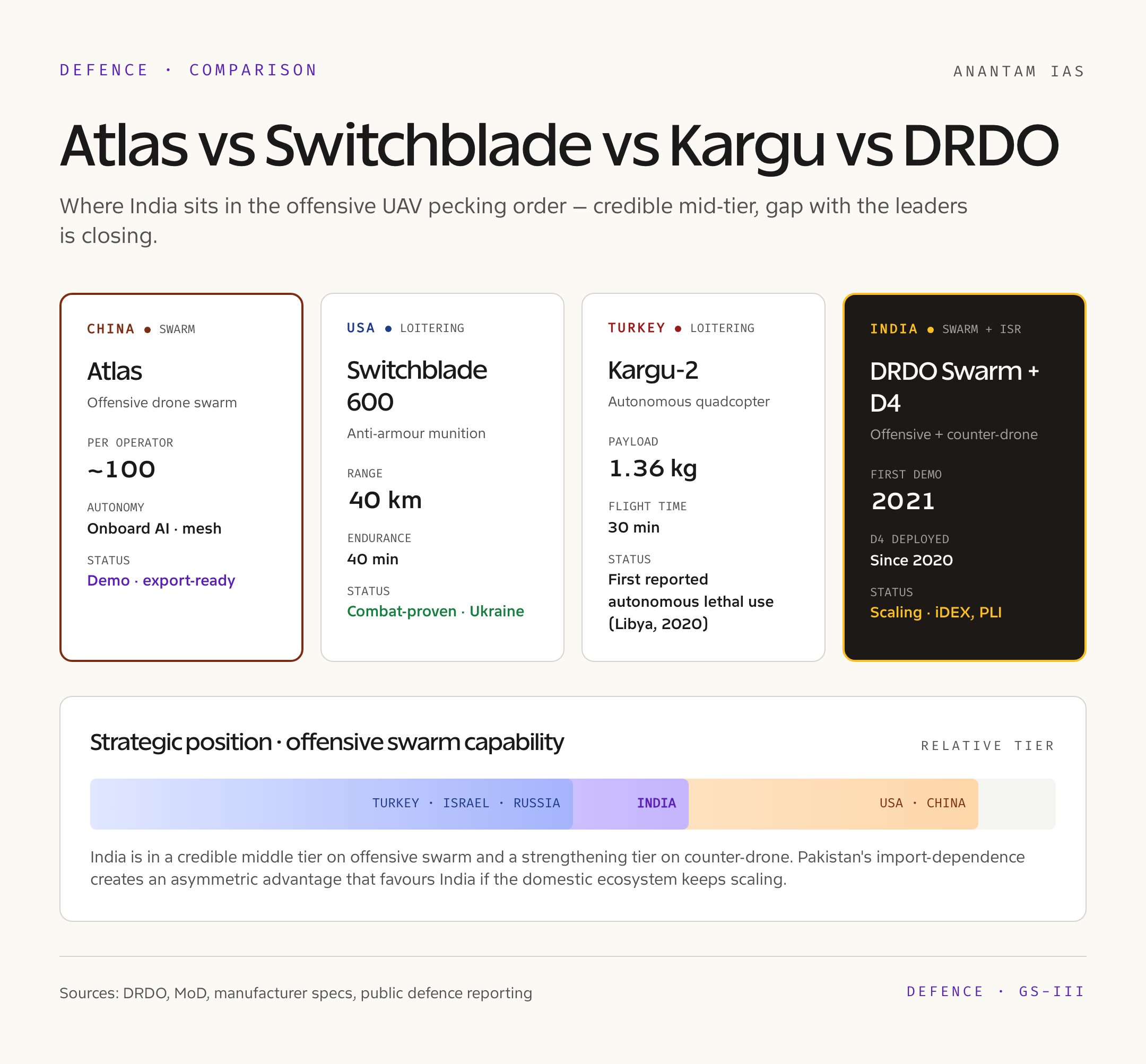
| Atlas Drone Swarm | China | Offensive swarm | Up to ~100 drones per operator |
| Replicator Initiative | USA | Distributed swarm | Thousands of attritable autonomous systems |
| Kargu-2 | Turkey | Loitering munition | First reported autonomous lethal use (Libya) |
| Switchblade 300/600 | USA | Loitering munition | Used extensively in Ukraine |
| Lancet | Russia | Loitering munition | Anti-armor, used in Ukraine |
| Shahed-136 | Iran | Long-range loitering munition | Used by Russia, Houthis |
| DRDO Swarm Drones | India | Offensive swarm | Demonstrated in Army Day 2021 onward |
| D4 Anti-Drone System | India | Counter-drone | Detection, jamming, laser hard-kill |
India is in a credible middle tier on offensive swarm technology and a strengthening tier on counter-drone. The gap with the top tier (US, China) is real but closing, and the import-dependence of countries like Pakistan creates an asymmetric advantage that favors India if domestic ecosystem development continues.
Challenges and Critiques
Honest assessment requires naming the gaps.
Chip dependence. Indian drones still rely heavily on imported components, processors, sensors, batteries, motors. The semiconductor mission and the Production Linked Incentive scheme are addressing this, but the timeline is years, not months.
Procurement velocity. Defence procurement in India remains slow compared to the operational tempo at which drone tech is evolving. iDEX has helped, but scaling from prototype to mass deployment is still uneven.
Ethical and legal ambiguity. India’s doctrine on autonomous lethal targeting, fully autonomous decision to fire versus human authorization, is not publicly articulated in detail. The country needs a clearer position before crisis use forces an ad hoc one.
Civilian airspace integration. Drone proliferation needs UTM (unmanned traffic management). The Digital Sky platform is in operation, but enforcement against rogue drones in civilian airspace is patchy.
Counter-swarm scaling. Defending one base against one swarm is solvable. Defending a 3,000-kilometer border, a hundred installations, multiple metros, and key infrastructure simultaneously is a different problem and not yet resourced at scale.
UPSC Prelims Pointers
- DRDO is the primary Indian defense R&D organization, headquartered in New Delhi
- The DRDO Anti-Drone System (D4) was first reported deployed in 2020 and includes radar detection, RF jamming, and laser-based kill
- Bharat Drone Shakti is a joint exercise involving the Indian Air Force and the Drone Federation of India
- iDEX (Innovations for Defence Excellence) is the platform under the Ministry of Defence for engaging startups and MSMEs
- The Akashteer system is the Indian Army’s automated air defense control and reporting platform
- Lethal autonomous weapons systems (LAWS) are debated under the UN Convention on Certain Conventional Weapons (CCW)
- The Drone Federation of India is the apex industry body for the Indian drone sector
- Civilian drone operations in India are governed by the Drone Rules, 2021
Mains Practice Questions
- GS Paper III: Discuss the strategic implications of drone swarm technology like the Atlas Drone Swarm for India’s national security. Outline the layered counter-drone capability India needs to build. (250 words)
- GS Paper III: “The future of warfare belongs to autonomous systems and swarm intelligence.” Examine India’s preparedness in this domain with reference to DRDO programs and indigenous industry. (250 words)
- GS Paper II: What is India’s position on lethal autonomous weapons systems in international forums like the UN CCW? Should India support a binding treaty? Discuss. (150 words)
- GS Paper III: Analyze the role of dual-use technologies, including commercial drones, in modern asymmetric warfare. How should India balance innovation with regulation? (250 words)
Way Forward
India needs to move on five tracks at once. First, accelerate indigenous swarm offensive capability through DRDO and private industry, with clear Air Force and Army doctrine for employment. Second, scale counter-drone deployment beyond major bases to forward areas, critical infrastructure, and key urban centers. Third, harden chip and sensor supply chains so the drone fleet doesn’t carry strategic dependencies into a crisis. Fourth, articulate a clear doctrine on autonomous lethal targeting and engage seriously in international LAWS negotiations. Fifth, build the regulatory and UTM framework needed for civilian drone integration without leaving security gaps.
The Atlas Drone Swarm reveal isn’t a one-off shock. It’s a marker of a transition that’s already happening across every modern military. India can either ride the curve, with capability matched to threat, or absorb the cost of catching up later. The choice is being made now, in budget allocations, procurement decisions, and exercises like Bharat Drone Shakti.
Frequently Asked Questions
What is the Atlas Drone Swarm system?
Atlas is a Chinese drone swarm system reportedly enabling a single operator to control nearly 100 autonomous UAVs through onboard AI and mesh networking, designed for coordinated reconnaissance and strike missions.
How does a drone swarm differ from regular drone operations?
A swarm uses distributed autonomy and inter-drone communication so that one operator manages a mission rather than flying each drone. The swarm continues to function and adapt even if individual drones are lost.
What is India’s counter-drone capability?
India operates a layered counter-drone stack including the DRDO Anti-Drone System, RF jammers, directed energy weapons under development, and integrated air defense via Akashteer. Counter-drone capability is being deployed at major bases and key infrastructure.
What is Bharat Drone Shakti?
Bharat Drone Shakti is a joint exercise organized by the Indian Air Force and the Drone Federation of India to demonstrate offensive and defensive UAV capabilities and accelerate domestic industry adoption.
Why does swarm technology change the cost equation?
Each drone in a swarm can cost a few thousand dollars, while interceptor missiles can cost millions. The defender loses the cost trade unless cheap, scalable kill methods like directed energy or interceptor drones are deployed.
Are autonomous drones legal under international law?
Lethal autonomous weapons systems are debated at the UN Convention on Certain Conventional Weapons. There’s no binding treaty yet, and state positions vary on whether human authorization should be mandatory for any lethal engagement.
How is India’s drone industry evolving?
Indian companies like ideaForge, NewSpace Research, Garuda Aerospace, and others are scaling production of both offensive UAVs and counter-drone systems, supported by iDEX, PLI schemes, and Make-in-India procurement preferences.
What’s the Indian doctrine on drone warfare?
India’s drone doctrine has been evolving rapidly since 2020, with operational lessons from the LAC standoffs, Operation Sindoor and other ground operations, and observation of Russia-Ukraine and West Asian conflicts feeding into joint service planning.
Tell Google you want more of this.
Add Anantam IAS as a preferred sourceOne tap, and this site shows up more often in your own Top Stories, AI Overviews and AI Mode. Remove it any time.