Context:
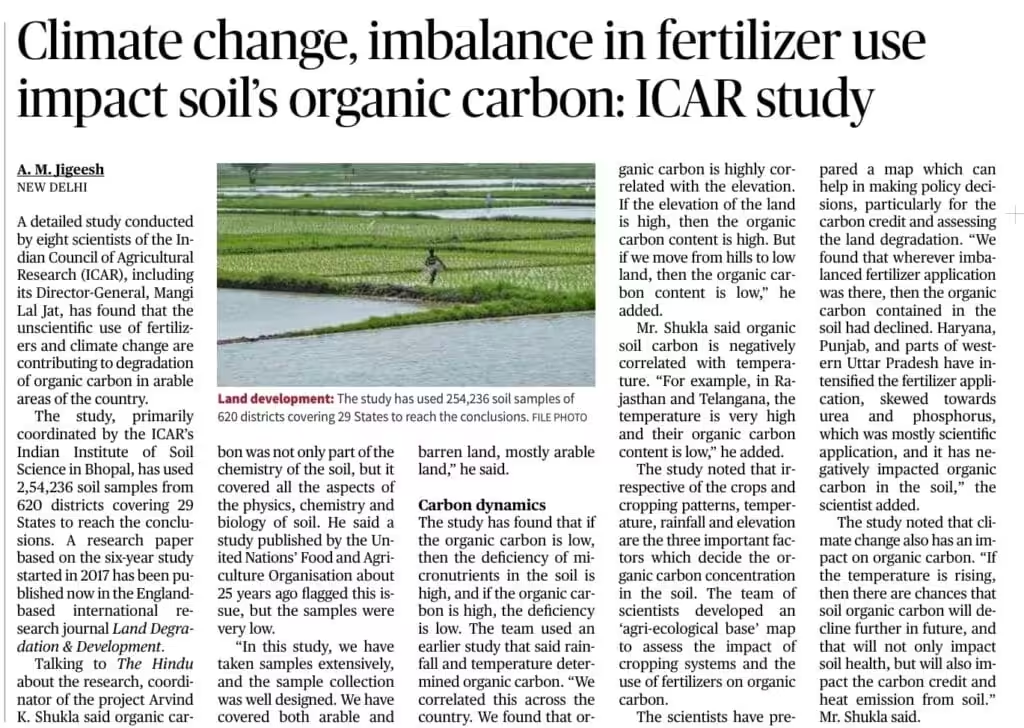
A comprehensive study by the Indian Council of Agricultural Research (ICAR) has revealed that climate change and imbalanced fertilizer use are causing a sharp decline in soil organic carbon (SOC) across India’s arable lands — posing a long-term threat to soil fertility, crop productivity, and carbon sequestration goals.
UPSC Relevance:
Environment
UPSC PYQ:
Q. Which of the following adds/add carbon dioxide to the carbon cycle on the planet Earth?
- Volcanic action
- Respiration
- Photosynthesis
- Decay of organic matter
Select the correct answer using the code given below.
a) 1 and 3 only
b) 2 only
c) 1, 2 and 4 only
d) 1, 2, 3 and 4
Key Findings of the Study:
- The study was conducted by ICAR–Indian Institute of Soil Science, Bhopal, covering
254,236 soil samples from 620 districts across 29 states — one of the most extensive soil studies in India. - Published in the international journal Land Degradation & Development.
- Findings highlight that unscientific fertilizer use, especially excess nitrogenous fertilizers (urea), and rising temperatures are leading to degradation of soil health.
Main Observations:
Decline in Soil Organic Carbon (SOC):
- SOC levels are negatively correlated with temperature — higher temperatures (as in Rajasthan & Telangana) reduce SOC.
- SOC is positively correlated with elevation — hill soils have higher organic content than lowland soils.
Impact of Fertilizer Imbalance:
- Overuse of urea and phosphorous, especially in Punjab, Haryana, and Western UP, has led to reduced SOC.
- Balanced use of organic manures and biofertilizers can mitigate this decline.
Climate Link:
- Climate change, by increasing surface temperatures, further accelerates organic carbon loss, affecting carbon credit and heat emission balance.
Soil Health Implications:
- Low SOC causes micronutrient deficiency and poor soil structure, reducing water retention and productivit
Soil Carbon:
The ideal percentage of soil organic matter and carbon contained in soil compounds is not known. Estimates have shown that 2 to 5% of the soil organic matter is microbial biomass. Some studies have found that about 50 to 90% of the organic matter in the soil is mineral-associated organic matter that will remain in the soil for a long period of time.
Carbon is Crucial?
- It’s captured in plants’ photosynthetic process by using sunlight and air to release oxygen.
- It’s nature’s free energy source for soil microbial processes and to other animals as feed.
- It’s our free energy source provided through the plants and animals we consume as food.
- It leaks from plant roots as food for soil microorganisms that bring nutrients to the plants.
- It’s contained in plant roots that provide foods for soil microorganisms.
- It provides structure in regenerating soils to help resist against soil erosion.
- It increases the cycling of plant nutrients back to newly growing plants.
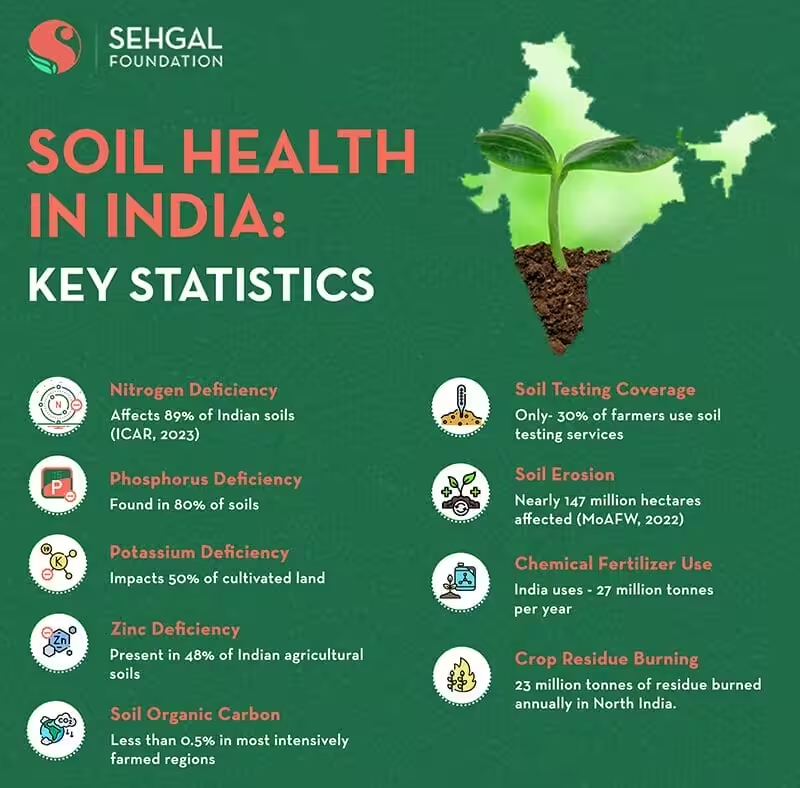
Soil Health in India:
Impacts of Soil Degradation:
- Desertification:
- Desertification can be characterized by the droughts and arid conditions the landscape endures as a result of human exploitation of fragile ecosystems. Effects include land degradation, soil erosion and sterility, and a loss of biodiversity, with huge economic costs for nations where deserts are growing.
- Loss of arable land
- Arable land is any land that can be used to grow crops. Many of the practices used in growing those crops can lead to the loss of topsoil and destruction of soil characteristics that make agriculture possible.
- Clogged and polluted waterways
- Soil eroded from the land, along with pesticides and fertilizers applied to fields, washes into streams and waterways. This sedimentation and pollution can damage freshwater and marine habitats and the local communities that depend on them.
- Increased flooding
- Land is often transformed from a forest or other natural landscape, such as floodplains and wetlands, into a crop field or pasture. The converted land is less able to soak up water, making flooding more common. There are methods to improve soil water holding capacity as well as restoration and maintenance of wetlands.
Soil Conservation:
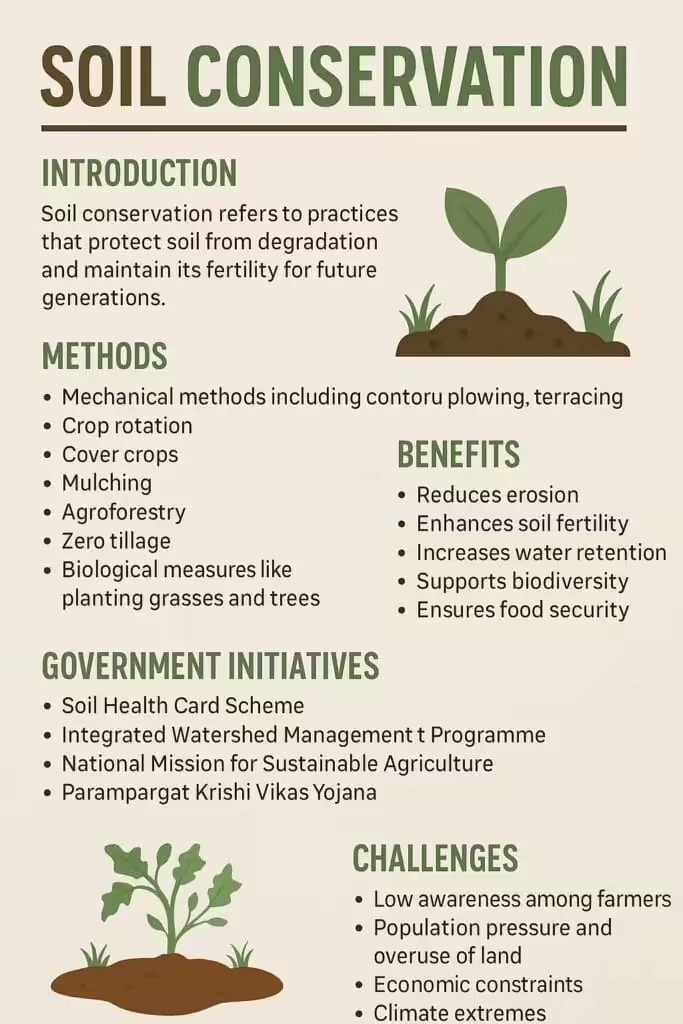
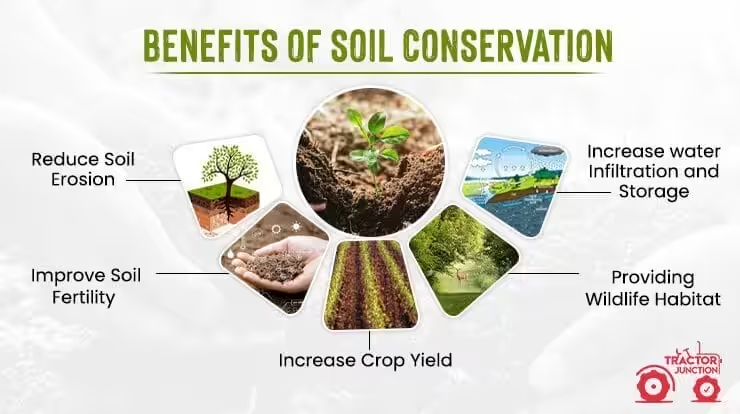
Major schemes for soil protection:
- National Mission on Natural Farming (NMNF): Aims to improve soil health and restore ecosystems through natural farming practices, as a restructured form of the earlier Bharatiya Prakritik Krishi Paddhati (BPKP).
- Watershed Development Component of PMKSY-WDC: A part of the Pradhan Mantri Krishi Sinchayee Yojana, this program focuses on restoring degraded land and promoting sustainable land use.
- National Mission for Sustainable Agriculture (NMSA): This is an umbrella program that includes a specific focus on Soil Health Management (SHM) to make agriculture more productive, sustainable, and climate-resilient.
- Rashtriya Krishi Vigyan Yojana (RKVY): Aims to protect topsoil, improve soil fertility, and enhance crop production and productivity in watershed areas.
- Paramparagat Krishi Vikas Yojana (PKVY): Promotes organic farming to improve soil health and the organic matter content of the soil.
- National Afforestation Program and Green India Mission: These programs contribute to the goal of restoring degraded land and enhancing forest cover, which indirectly helps in soil conservation.
- Soil Health Card Scheme: Soil health card provides information to farmers on nutrient status of their soil along with recommendation on appropriate dosage of nutrients to be applied for improving soil health and its fertility.
Tell Google you want more of this.
Add Anantam IAS as a preferred sourceOne tap, and this site shows up more often in your own Top Stories, AI Overviews and AI Mode. Remove it any time.