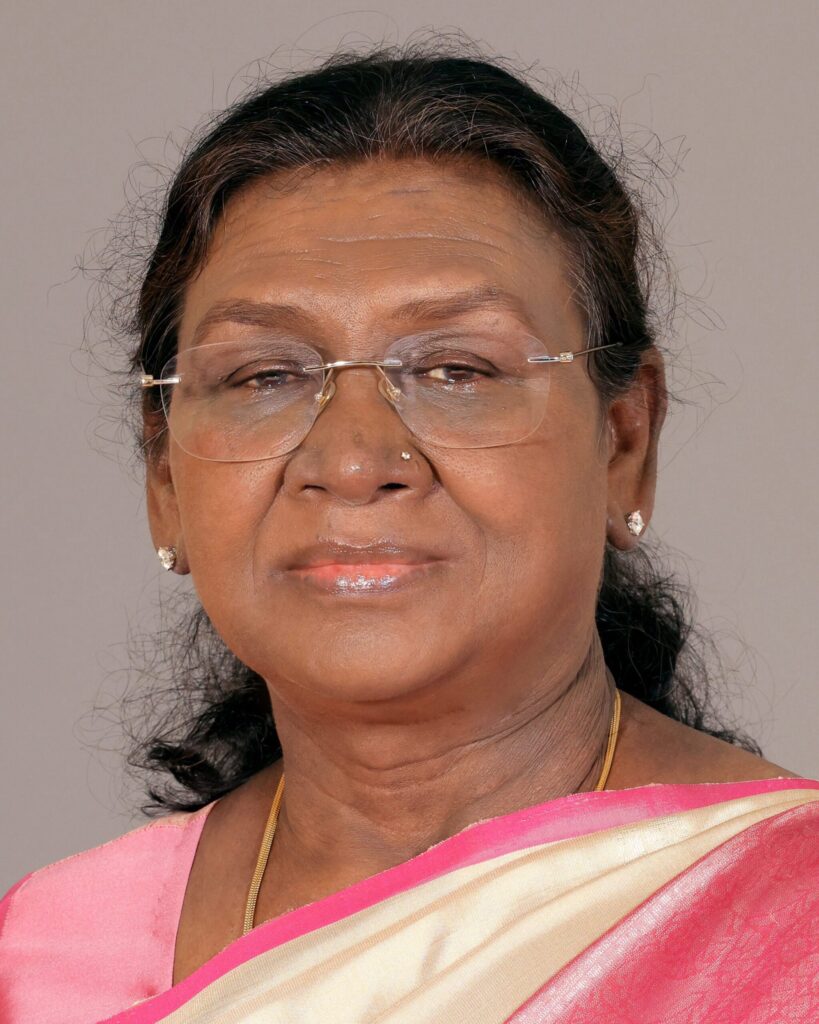
Droupadi Murmu is the 15th President of India and the first person from a tribal community to hold the country’s highest constitutional office. She was sworn in on 25 July 2022 by Chief Justice N. V. Ramana in the Central Hall of Parliament, succeeding Ram Nath Kovind. She is also only the second woman President after Pratibha Patil, and at 64 she became the youngest person to assume the office at the time of taking oath.
Droupadi Murmu’s election carried unusual symbolic weight. She belongs to the Santhal community — one of the largest Adivasi groups in eastern India — and was born in a small village in Mayurbhanj district of Odisha. Her rise from a schoolteacher and clerk to Raisina Hill represents both the deepening of Adivasi political representation and the BJP’s deliberate widening of its social coalition. For UPSC aspirants, her biography intersects three syllabus zones: Indian polity (presidential office and electoral college), modern political history (tribal participation after 1947), and the Society paper of GS-I (status of Scheduled Tribes).
This explainer covers Droupadi Murmu’s early life, her career in Odisha politics, her tenure as Governor of Jharkhand, the 2022 presidential election, and the early years of her presidency.
Early Life and Education
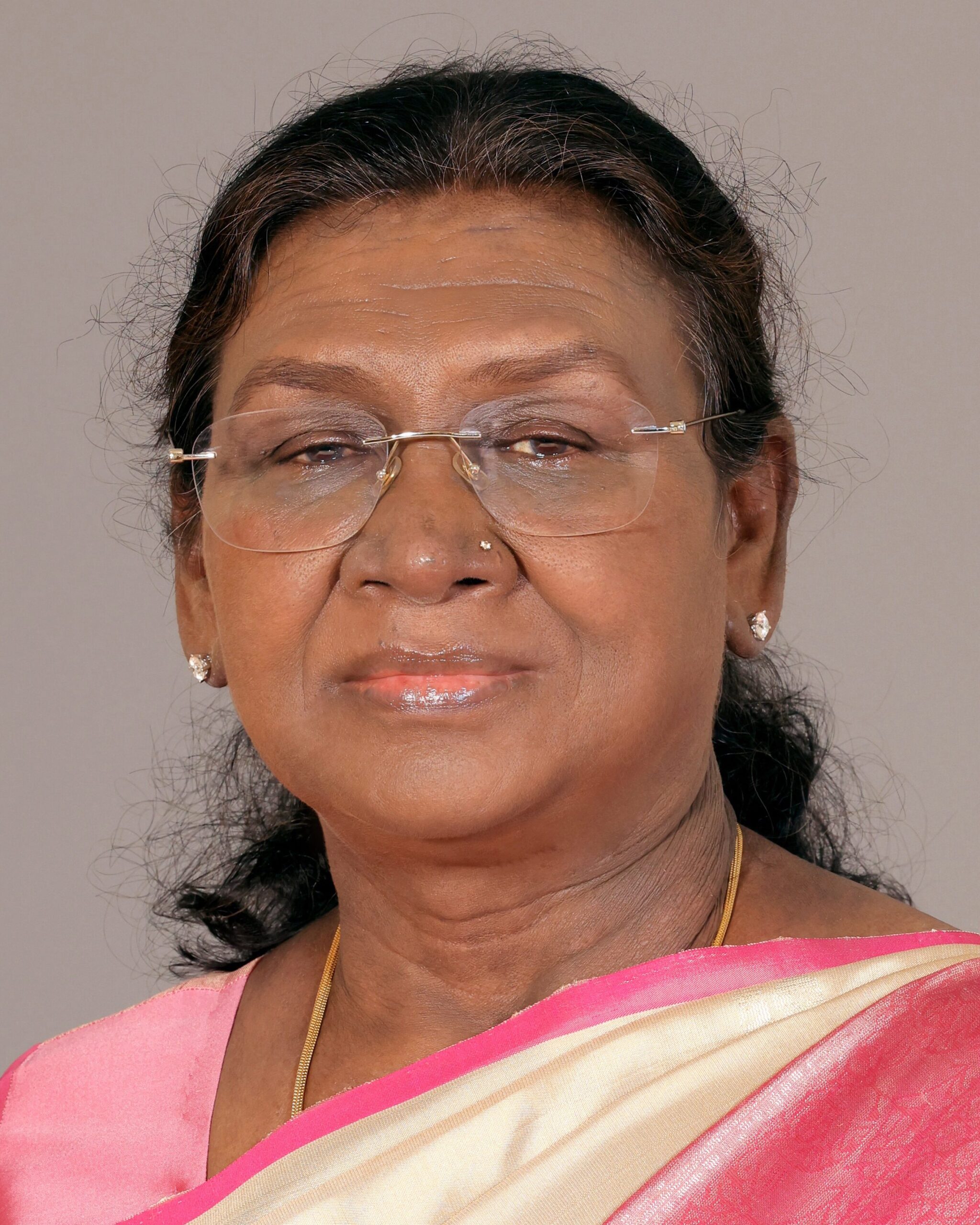
Droupadi Murmu was born on 20 June 1958 in Uparbeda village in Mayurbhanj district of Odisha, into a Santhal family. Her birth name was Puti Tudu — Murmu is her marital surname, and “Droupadi” was given to her by a schoolteacher who found Puti hard to pronounce. Her father, Biranchi Narayan Tudu, and her grandfather both served as the village headman under the traditional Santhal panchayat system.
Schooling and college
She attended the local primary school in Uparbeda and, after finishing her early schooling, was sent to Bhubaneswar on a scholarship from the Odisha government for tribal girls. She completed her secondary education at the Unit-II Girls High School in Bhubaneswar and then enrolled at Rama Devi Women’s College, where she earned a Bachelor of Arts degree. She became the first woman in her village to complete college.
Early jobs
She began her career as a junior assistant in the irrigation and power department of the Odisha government in 1979 and later worked as an honorary teacher at the Shri Aurobindo Integral Education and Research Centre in Rairangpur. The combination of village roots, schoolteaching and clerical work shaped the unshowy, plain-spoken public manner that voters in Mayurbhanj would associate with her decades later.
Political Career in Odisha
Droupadi Murmu entered electoral politics in 1997 when she was elected councillor of the Rairangpur Nagar Panchayat, and the same year she became the Bharatiya Janata Party’s national vice-president of the Scheduled Tribes Morcha.
MLA from Rairangpur
She was elected to the Odisha Legislative Assembly twice from the Rairangpur constituency, in 2000 and 2009, on a BJP ticket. During the BJP-Biju Janata Dal coalition government in Odisha (2000-2009), she served as a minister handling several portfolios — transport, commerce, fisheries and animal resources development — between 2000 and 2004.
Recognition in Odisha
The Odisha Legislative Assembly named her Best MLA of the year in 2007 (Nilkantha Award), recognising her record in a state where tribal women in legislatures remain rare. She also held organisational posts inside the BJP, including president of the party’s ST Morcha in Odisha and member of its national executive.
Governor of Jharkhand
Droupadi Murmu was appointed Governor of Jharkhand on 18 May 2015 — the first woman to hold the post in the tribal-majority state — and served until 12 July 2021. Her six-year, two-month tenure made her the longest-serving Governor of Jharkhand. Jharkhand has the highest concentration of Scheduled Tribes in any Indian state outside the North-East, and having a Santhal woman as Governor was treated as politically significant by both the BJP and Adivasi civil-society groups.
CNT-SPT Act episode
Her most-cited moment as Governor came in 2017, when she refused to give assent to amendments to the Chhotanagpur Tenancy Act, 1908 and the Santhal Pargana Tenancy Act, 1949 passed by the Raghubar Das-led BJP state government. The amendments would have allowed the commercial use of tribal land. Adivasi groups across Jharkhand had protested the move, and Murmu returned the bills citing tribal opposition — a rare instance of a Governor of the same party as the state government holding the line on a tribal-rights question.
The 2022 Presidential Election
In June 2022, the BJP-led National Democratic Alliance announced Droupadi Murmu as its candidate for President of India. The Opposition fielded former Union minister Yashwant Sinha. The election was held on 18 July 2022 and the result was declared on 21 July 2022.
Result and electoral college
She secured 64.03% of the valid vote in the electoral college — comfortably above the threshold — with cross-voting in her favour reported from several Opposition-ruled states, particularly among MLAs belonging to Adivasi constituencies. She received 6,76,803 votes against Sinha’s 3,80,177.
Why the election mattered
Three points are worth noting for UPSC essays. First, she was the first President from a Scheduled Tribe community, and only the second woman in the office. Second, her election widened the social base of the presidency, which until 1997 had never been held by a Dalit (K. R. Narayanan was the first) and had never been held by an Adivasi. Third, her relatively short national political profile underlined the BJP’s preference for nominees with strong symbolic identity over established Delhi figures.
Tenure as President
Droupadi Murmu took oath as the 15th President of India on 25 July 2022. The early years of her presidency have been marked by an emphasis on tribal welfare, women’s empowerment and outreach to remote regions.
Notable acts and addresses
She delivered her first Address to a Joint Sitting of Parliament on 31 January 2023, becoming the first tribal woman to do so. She has used the constitutional courtesies of the office — speeches at the Republic Day eve, addresses to NCC cadets, convocations at central universities — to consistently foreground Adivasi heritage, the Forest Rights Act regime, and PESA (the Panchayats Extension to Scheduled Areas Act).
State visits
Her foreign visits have included Suriname and Serbia in 2023, and the United Kingdom for King Charles III’s coronation. Within India, she has prioritised travel to PVTG (Particularly Vulnerable Tribal Group) areas, including Niyamgiri in Odisha and tribal districts of Chhattisgarh, signalling that the Rashtrapati Bhavan’s symbolism would be carried back to the constituencies she came from.
Symbolism and Significance
For UPSC, three takeaways are worth committing to memory.
Droupadi Murmu’s election expanded the social map of Raisina Hill. The office of President had been held by Brahmins, OBC leaders, Muslims, Sikhs, a Dalit (K. R. Narayanan) and a woman (Pratibha Patil) before her — but never by an Adivasi. Her presidency completes a long arc of representation.
She represents the constitutional vision of Article 46, which directs the State to promote with special care the educational and economic interests of the Scheduled Castes and Scheduled Tribes. Her trajectory — from a village in Mayurbhanj to the Constituent Assembly’s reserved seats for tribal women, and now to the Rashtrapati Bhavan — is the kind of intergenerational mobility the framers wrote into the Constitution.
Her tenure also runs alongside a wider conversation about tribal autonomy, the implementation of PESA, and the Forest Rights Act. Aspirants who can read her presidency against women leaders such as Sucheta Kripalani — India’s first woman Chief Minister — and against pre-Independence women warriors like Rani Laxmibai will have a stronger essay framework on women in Indian public life.
She is often discussed alongside contemporaries such as boxer Mary Kom and shuttler P. V. Sindhu as part of a wider story of women breaking ceilings in different spheres — sport, science, politics — at roughly the same moment in independent India, with astronaut Kalpana Chawla representing the same generational shift in the diaspora.
Frequently Asked Questions
Who is Droupadi Murmu?
Droupadi Murmu is the 15th President of India. She took oath on 25 July 2022, and is the first person from a Scheduled Tribe community and only the second woman to hold the office.
When was Droupadi Murmu born?
She was born on 20 June 1958 in Uparbeda village, Mayurbhanj district, Odisha, into a Santhal family.
What community does Droupadi Murmu belong to?
She belongs to the Santhal community, one of the largest Adivasi groups in India, found primarily in Odisha, Jharkhand, West Bengal and Bihar.
Which post did Droupadi Murmu hold before becoming President?
She served as Governor of Jharkhand from 18 May 2015 to 12 July 2021 — the first woman to hold the post and the longest-serving Governor of the state.
How did Droupadi Murmu win the 2022 presidential election?
She was the NDA candidate and defeated Opposition candidate Yashwant Sinha, securing 64.03% of the valid electoral-college vote. Cross-voting in her favour was reported from Opposition-ruled states with significant tribal MLAs.
What was Droupadi Murmu’s role in the CNT-SPT Act controversy?
As Governor of Jharkhand in 2017, she refused assent to amendments to the Chhotanagpur Tenancy Act and Santhal Pargana Tenancy Act that would have permitted commercial use of tribal land, returning the bills citing tribal opposition.
Why is Droupadi Murmu’s presidency significant for UPSC?
Her presidency is significant for representation of Scheduled Tribes in the highest constitutional office, the operation of the presidential electoral college, the relationship between Governors and state legislatures, and tribal rights under Article 46, PESA and the Forest Rights Act.
Tell Google you want more of this.
Add Anantam IAS as a preferred sourceOne tap, and this site shows up more often in your own Top Stories, AI Overviews and AI Mode. Remove it any time.