The list of viceroys of India is really four lists joined end to end, covering 1774 to 1950. It opens with the Governors-General of Bengal and becomes the Governors-General of India in 1834. From 1858, when the British Crown took over from the East India Company, the holders were Viceroys and Governors-General, and the line closes with two Governors-General of the Dominion of India, the last of whom left office on 26 January 1950. Each change of title marks a change in whom the office answered to.
Most readers carry one wrong picture: that a Governor-General and a Viceroy were two different jobs. They were one office under a lengthening name. That is why Lord Canning appears twice, as the last Governor-General under the Company and the first Viceroy, and why Lord Mountbatten appears twice, as the last Viceroy and the first Governor-General of independent India. This note gives the full list, acting holders included, and settles which “first” and which “last” a question is really after.
Who Were the Governors-General and Viceroys of India?
The Governors-General and Viceroys of India were the heads of British government in India from 1774 to 1947, and of the Dominion of India until 1950. Warren Hastings held the office first. Lord Mountbatten was the last Viceroy, and C. Rajagopalachari closed the line as its only Indian holder.
| Fact | Detail |
|---|---|
| First Governor-General of Bengal | Warren Hastings, named in the Regulating Act, 1773; took charge in 1774 |
| First Governor-General of India | Lord William Bentinck, from 22 April 1834 under the Charter Act, 1833 |
| First Viceroy | Lord Canning, appointed “first Viceroy and Governor-General” by the Queen’s Proclamation of 1 November 1858 |
| Last Viceroy | Lord Mountbatten, March to 15 August 1947 |
| First Governor-General of independent India | Lord Mountbatten, 15 August 1947 to June 1948 |
| Last Governor-General, and the only Indian | C. Rajagopalachari, June 1948 to 26 January 1950 |
| Seat of the office | Government House, Calcutta, until the capital moved to Delhi in 1912; Viceroy’s House, New Delhi, from April 1929 |
| Office ended | 26 January 1950, when the Constitution came into force and the President became head of state |
How the Title Changed from 1773 to 1950
The title changed four times, and every change tracks a change of master. Before 1858 the Governor-General served the East India Company; from 1858 to 1947 he served the British Crown. The table puts the four titles side by side, and the sections under it explain each switch.
| Title | Created by | In use | First holder | Last holder |
|---|---|---|---|---|
| Governor-General of the Presidency of Fort William in Bengal | Regulating Act, 1773 | 1774-1834 | Warren Hastings | Lord William Bentinck |
| Governor-General of India | Charter Act, 1833 | 1834-1858 | Lord William Bentinck | Lord Canning |
| Viceroy and Governor-General of India | Government of India Act, 1858, with the Queen’s Proclamation | 1858-1947 | Lord Canning | Lord Mountbatten |
| Governor-General of the Dominion of India | Indian Independence Act, 1947 | 1947-1950 | Lord Mountbatten | C. Rajagopalachari |
Governor-General of Bengal, 1774 to 1834
The Regulating Act, 1773 created a Governor-General of the Presidency of Fort William in Bengal, sitting with four members of Council. It also gave that government superintending power over Madras and Bombay, which could no longer start a war or sign a treaty with an Indian ruler without Calcutta’s consent. The Act went further than creating a post: its tenth section named the first holder. Warren Hastings, already Governor of Bengal for over two years, took the new title in 1774.
The full title matters. Hastings governed Bengal and supervised the other two presidencies; he wasn’t yet governor of all British India. Every holder down to 1834, from Cornwallis to Bentinck, carried the same Bengal title, even as Company territory spread across the subcontinent.
Governor-General of India, 1834 to 1858
The Charter Act of 1833 vested “the superintendence, direction, and control of the whole civil and military Government” of the Company’s Indian territories in a Governor-General and Council, to be styled the Governor-General of India in Council. The same Act ended the Company’s trade and told it to close its commercial business, which left it an administrative body.
Its section 41 then did the job the 1773 Act had done for Hastings. Whoever was Governor-General of Fort William on 22 April 1834 would become the first Governor-General of India. That man was Lord William Bentinck, in office in Calcutta since 1828. So the first Governor-General of India is Bentinck, and the strictly correct year is 1834, even though the Act is remembered by 1833.
Viceroy and Governor-General, 1858 to 1947
After the Revolt of 1857, the Government of India Act, 1858 took the government of India away from the Company and vested it in the Crown. The powers of the Company’s directors passed to a Secretary of State for India in London. The Act’s own text keeps the old statutory name, the Governor-General of India. The word Viceroy came through Queen Victoria’s Proclamation of 1 November 1858, which appointed Canning “to be our first Viceroy and Governor-General”.
The distinction is small but useful. Governor-General stayed the legal post; Viceroy was the title the same man carried as the monarch’s personal representative. Most textbooks credit the 1858 Act with the new title, and for a one-line answer that is fine, provided you remember the title was proclaimed rather than enacted.
Governor-General of the Dominion, 1947 to 1950
Independence on 15 August 1947 ended the viceroyalty but not the office. Under the Indian Independence Act, 1947, the new Dominion of India had a Governor-General representing the Crown, and Mountbatten stayed on in that role until June 1948. C. Rajagopalachari followed him. The post ended on 26 January 1950, when the Constitution came into force and the President of India became head of state.
Complete List of Viceroys and Governors-General of India
Every holder appears below in order and grouped by title. Acting holders are marked as such. An acting holder filled the gap between one Governor-General’s departure and the next one’s arrival, or covered a Viceroy’s absence. Most numbered lists leave them out, which is why this table carries no numbers.
The years follow the dates of taking charge in the official list kept by Lok Bhavan, Kolkata, the old Government House from which the Governors-General ruled until 1912. That list runs from 1798 to 1910 and records the acting holders. Years outside that span come from Britannica and the Dictionary of National Biography, cross-checked against the list of Viceroys kept at the old Viceregal Lodge in Shimla.
| Holder | Tenure | Landmark event |
|---|---|---|
| Governors-General of Bengal, 1774-1834 | ||
| Warren Hastings | 1774-1785 | First Anglo-Maratha War ends with the Treaty of Salbai (1782); impeached in Britain after he left, and acquitted |
| Sir John Macpherson (acting) | 1785-1786 | Senior member of Council; took over when Hastings resigned in February 1785 |
| Lord Cornwallis | 1786-1793 | Permanent Settlement of Bengal (1793) |
| Sir John Shore | 1793-1798 | Non-intervention: stood aside while the Marathas defeated the Nizam (1795) |
| Sir Alured Clarke (acting) | 1798 | Senior member of Council until Wellesley took charge in May 1798 |
| Lord Wellesley | 1798-1805 | Subsidiary alliance; Tipu Sultan’s rule ends (1799); Awadh forced to give up half its territory (1801) |
| Lord Cornwallis (second term) | 1805 | Died at Ghazipur in October 1805, soon after arriving |
| Sir George Barlow (acting) | 1805-1807 | Senior member of Council; kept to the Company directors’ line of avoiding war |
| Lord Minto | 1807-1813 | Treaty of Amritsar with Ranjit Singh (1809), negotiated by Charles Metcalfe, extends British power to the Sutlej |
| Marquess of Hastings | 1813-1823 | Gurkhas of Nepal defeated (1816); Third Anglo-Maratha War (1817-19) removes the Peshwa; policy of paramountcy |
| John Adam (acting) | 1823 | Held charge from January to August 1823 |
| Lord Amherst | 1823-1828 | First Anglo-Burmese War (1824-26); Assam, Arakan and Tenasserim annexed (1826) |
| William Butterworth Bayley (acting) | 1828 | Held charge in 1828 between Amherst and Bentinck |
| Lord William Bentinck | 1828-1834 | Sati banned (1829); thuggee suppressed; became the first Governor-General of India on 22 April 1834 |
| Governors-General of India, 1834-1858 | ||
| Lord William Bentinck | 1834-1835 | English Education Act (1835), after Macaulay’s Minute |
| Sir Charles Metcalfe (acting) | 1835-1836 | Act of 15 September 1835 lifts the curbs on the Indian press |
| Lord Auckland | 1836-1842 | First Anglo-Afghan War (from 1838) |
| Lord Ellenborough | 1842-1844 | Sind annexed (1843); legal status of slavery abolished (1843) |
| William Wilberforce Bird (acting) | 1844 | Held charge in June and July 1844 |
| Lord Hardinge | 1844-1848 | First Anglo-Sikh War (1845-46) |
| Lord Dalhousie | 1848-1856 | Doctrine of Lapse; Punjab annexed (1849); Awadh annexed (1856); railways and telegraph begun |
| Lord Canning | 1856-1858 | Revolt of 1857 |
| Viceroys and Governors-General of India, 1858-1947 | ||
| Lord Canning | 1858-1862 | Queen’s Proclamation (1 November 1858); Indian Councils Act (1861) |
| Lord Elgin | 1862-1863 | Died in office at Dharamshala (November 1863) |
| Sir Robert Napier (acting) | 1863 | Held charge for under two weeks after Elgin’s death |
| Sir William Denison (acting) | 1863-1864 | Held charge until Lawrence took over in January 1864 |
| Sir John Lawrence | 1864-1869 | Shimla declared the summer capital (1864) |
| Lord Mayo | 1869-1872 | First census; financial decentralization; assassinated at Port Blair (February 1872) |
| Sir John Strachey (acting) | 1872 | Held charge after Mayo’s death |
| Lord Napier of Merchistoun (acting) | 1872 | Held charge until Northbrook arrived in May 1872 |
| Lord Northbrook | 1872-1876 | Famine relief works in Bengal (1874); resigned after policy clashes with London (1876) |
| Lord Lytton | 1876-1880 | Vernacular Press Act and Arms Act (1878) |
| Lord Ripon | 1880-1884 | Vernacular Press Act repealed (1882); Ilbert Bill controversy (1883) |
| Lord Dufferin | 1884-1888 | Indian National Congress founded (December 1885) |
| Lord Lansdowne | 1888-1894 | Indian Councils Act (1892); Durand Line (1893) |
| Lord Elgin (son of the earlier Elgin) | 1894-1899 | Economic strain, unrest and frontier wars |
| Lord Curzon | 1899-1905 | Partition of Bengal (1905); term broken from April to December 1904 |
| Lord Ampthill (acting) | 1904 | Held charge between Curzon’s two spells |
| Lord Minto | 1905-1910 | Muslim League founded (1906); separate electorates conceded (1909) |
| Lord Hardinge of Penshurst | 1910-1916 | Imperial capital moved from Calcutta to Delhi (1912) |
| Lord Chelmsford | 1916-1921 | Montagu-Chelmsford Report (1918); Rowlatt Act and Jallianwala Bagh (1919) |
| Lord Reading | 1921-1926 | Chauri Chaura (February 1922) ends the Non-Cooperation Movement |
| Earl of Lytton, Governor of Bengal (acting) | 1925 | Appointed to act as Viceroy while Reading was away |
| Lord Irwin | 1926-1931 | Simon Commission (1927); Salt March (1930); Gandhi-Irwin Pact (1931) |
| Lord Goschen, Governor of Madras (acting) | 1929 | Acted while Irwin was in England |
| Lord Willingdon | 1931-1936 | Second Round Table Conference (1931); Government of India Act (1935) |
| Lord Linlithgow | 1936-1943 | Cripps Mission and Quit India Movement (1942) |
| Lord Brabourne, Governor of Bengal (acting) | 1938 | Appointed to act as Viceroy |
| Lord Wavell | 1943-1947 | Simla Conference (1945); Cabinet Mission (1946) |
| Lord Mountbatten | March-August 1947 | Plan to free and divide British India; power transferred at midnight on 14-15 August 1947 |
| Governors-General of the Dominion of India, 1947-1950 | ||
| Lord Mountbatten | August 1947-June 1948 | Helped persuade the princely states to join India or Pakistan |
| C. Rajagopalachari | June 1948-January 1950 | Only Indian holder; sworn in at the old Throne Room of Viceroy’s House |
Lists disagree only at the edges, and by days rather than years. The Lok Bhavan table, for instance, swaps the 1828 dates of Bayley and Bentinck, and it gives 16 June 1834 as the day Bentinck took the new title, although the Charter Act fixed 22 April 1834. When two sources clash on a date, the year and the order of holders are what carry meaning.
The First-and-Last Traps, Settled
Almost every mistake on this topic comes from mixing up titles, not people. Ask which title a question names, and the answer follows.
| Question | Answer | Why people slip |
|---|---|---|
| First Governor-General of Bengal | Warren Hastings, 1774 | Confused with the first Governor-General of India |
| First Governor-General of India | Lord William Bentinck, 1834 | Hastings is the usual wrong answer |
| First Viceroy | Lord Canning, 1858 | He was already Governor-General; only the title changed |
| Last Viceroy | Lord Mountbatten, 1947 | Often given as the last Governor-General too |
| Last Governor-General | C. Rajagopalachari, 1950 | The office outlived the viceroyalty by about two and a half years |
| First and only Indian Governor-General | C. Rajagopalachari, 1948 | The first Indian and the last holder are the same man |
The Bengal-versus-India pair trips up almost everyone. Hastings was the first to hold the title at all, but his writ ran over Bengal, with a veto on the wars and treaties of Madras and Bombay. Bentinck was the first whose title covered British India as a whole. The note on the first Governor-General of India walks through both Acts side by side.
Canning is the second trap. He didn’t arrive as Viceroy. He took charge as Governor-General on 29 February 1856 and became Viceroy on 1 November 1858 without leaving his desk, which is why he is both the last Company Governor-General and the first Viceroy of India.
The third trap sits at the end of the line. Mountbatten was the last Viceroy and the first Governor-General of the Dominion. Rajagopalachari, sworn in during June 1948, was the last Governor-General and the only Indian ever to hold the post; the note on the last Governor-General of India covers his term and the handover to the President.
The names repeat, which adds a second layer of confusion:
- Warren Hastings (1774-1785) and the Marquess of Hastings (1813-1823) were different men.
- The two Lord Elgins (1862-1863 and 1894-1899) were father and son.
- The two Lord Mintos (1807-1813 and 1905-1910) were different men, and so were Lord Hardinge (1844-1848) and Lord Hardinge of Penshurst (1910-1916).
- Lord Lytton of the Vernacular Press Act (1876-1880) is not the Earl of Lytton who acted as Viceroy in 1925.
- Cornwallis served twice, and Ampthill’s acting spell in 1904 split Curzon’s term in two.
When a name repeats, it is wise to anchor it to its decade before anything else.
What the Viceroys Changed: Five Turning Points
Five stretches of the list carry most of the history. In each one, a holder is tied to a change in how Britain ruled India.
- Expansion by treaty, 1798-1823. Wellesley’s subsidiary alliance made Indian rulers give up their own armies and pay for Company troops, and territory was taken when they failed to pay, as Awadh found in 1801. The Marquess of Hastings finished the Maratha wars in 1817-19 and claimed that Company authority was paramount across India.
- Reform from above, 1828-1835. Bentinck is the Governor-General most tied to social reform by law. Sati was banned in 1829 and thuggee was put down. The English Education Act of 1835 then made English the medium of higher education.
- Annexation and revolt, 1848-1858. Dalhousie’s Doctrine of Lapse let the Company take over a state whose ruler died without a male heir, and he annexed Punjab in 1849 and Awadh in 1856. The revolt broke out the following year, and in 1858 the Company lost India to the Crown.
- The press and the Congress, 1876-1885. Lytton’s Vernacular Press Act of 1878 let the government seize the presses of newspapers it judged objectionable, and Ripon repealed it in 1882. The Ilbert Bill row of 1883 showed white opposition blocking equality between British and Indian judges, and the Indian National Congress first met at Bombay in December 1885.
- Partition and the reform ladder, 1905-1947. Curzon’s partition of Bengal in 1905 turned an administrative map into a mass grievance. Reform then came in steps, from separate electorates in 1909 to the Government of India Act of 1935, before the last three Viceroys presided over the endgame from 1942 to 1947.
Read this way, the list works as an outline of modern Indian history, with a holder’s name attached to each turn.
Where the Office Stands Today
The office itself has been gone since 26 January 1950, when the Constitution came into force and the President of India replaced the Governor-General as head of state. A Press Information Bureau backgrounder of 25 January 2026 still dates the Republic from that day. What survives is the architecture of the office, and its buildings have been renamed in stages:
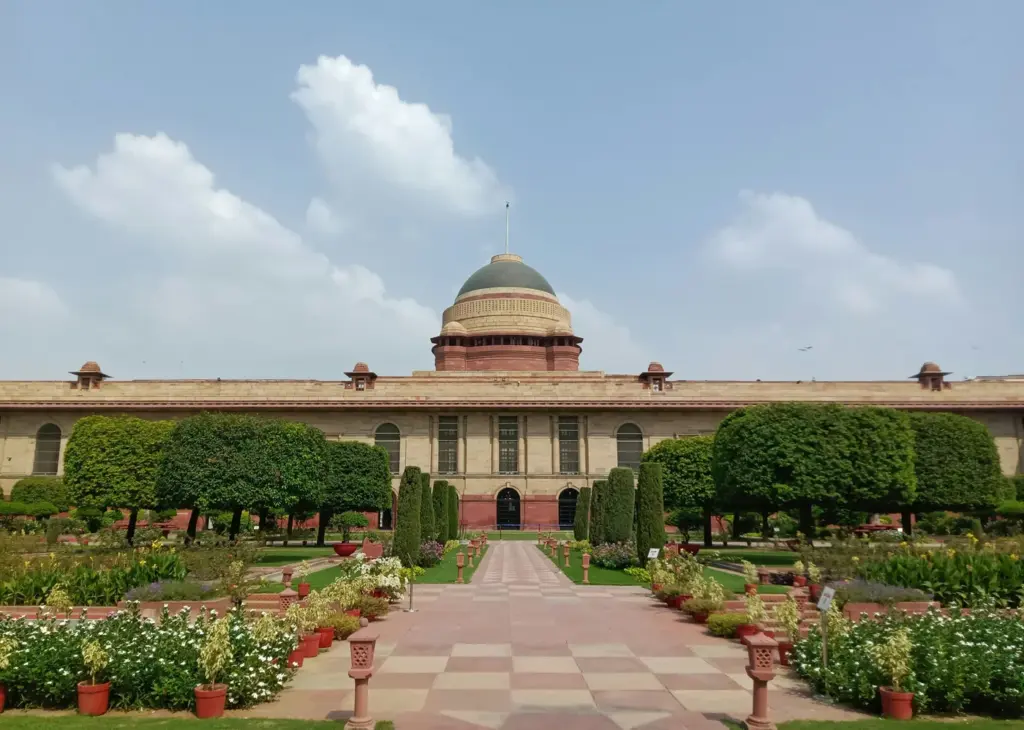
- Viceroy’s House, New Delhi, is now Rashtrapati Bhavan. Irwin became its first occupant in April 1929. Its old Throne Room, where Rajagopalachari took the oath as Governor-General in 1948, later became Durbar Hall and was renamed Ganatantra Mandap on 25 July 2024, because the word durbar had lost relevance once India became a republic.
- The Viceregal Lodge, Shimla, the summer seat from 1888, is now Rashtrapati Nivas and houses the Indian Institute of Advanced Study. It hosted the Simla Conference from 25 June to 14 July 1945 and the Cabinet Mission’s three-party talks in May 1946.
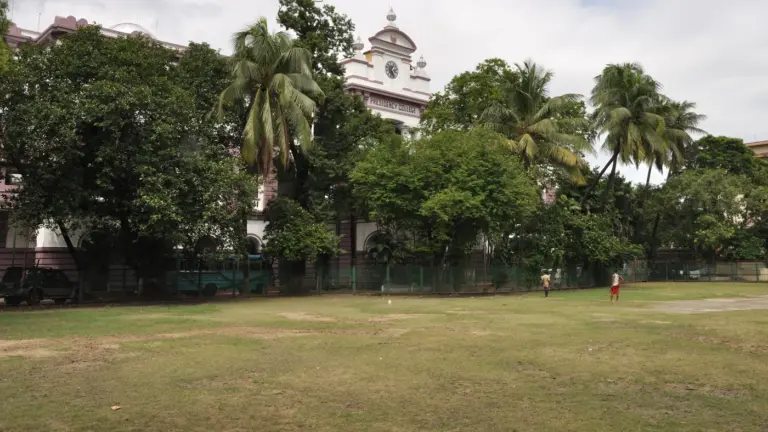
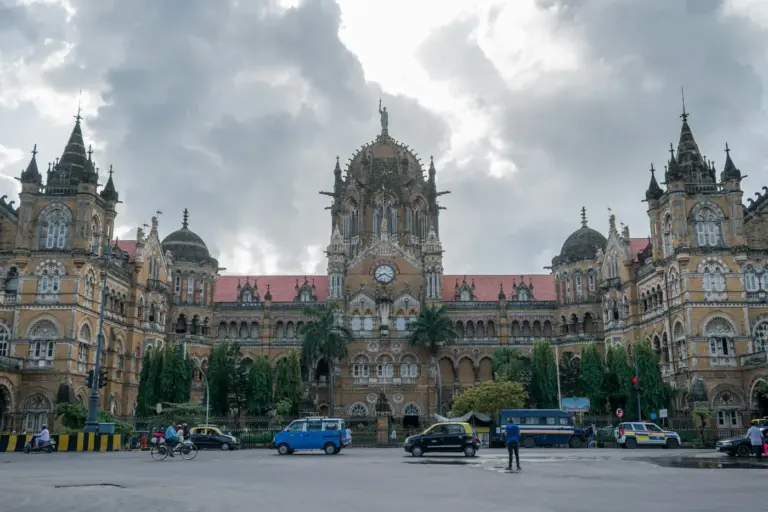
- Government House, Kolkata, the seat of the Governors-General until 1912, is the West Bengal Governor’s residence. After the Union government announced on 2 December 2025 that Raj Bhavans would be renamed, it calls itself Lok Bhavan, and it still keeps the official list of past holders used above.
The history also returns through anniversaries. The current-affairs note on the Mountbatten Plan at 79 revisits the 3 June 1947 plan for partition and the transfer of power, the last big decision taken from the Viceroy’s chair.
How to study Governors-General and Viceroys for exams
The topic sits in modern Indian history, and it turns up in three places:
- GS Paper I in Mains, usually as an evaluation of one holder’s policies;
- Prelims, mostly as firsts and lasts or as Viceroy-and-event pairs;
- Paper II of the History optional, which covers British rule in depth.
History accounts for 184 of the 1,403 questions in the Prelims previous year question bank. Mains 2020 GS Paper I asked “Evaluate the policies of Lord Curzon and their long term implications on the national movement.” The History optional’s Paper II in 2016 asked “How far is it correct to say that if Clive was the founder of the British Empire in India, Warren Hastings was its administrative organiser?” Both reward the same skill: judging a holder’s record against what came after, not reciting his dates.
Revise these facts until they’re automatic:
- 1773-1774: the Regulating Act names Warren Hastings, the first Governor-General of Bengal.
- 22 April 1834: the Charter Act, 1833 takes effect and Bentinck becomes the first Governor-General of India.
- 1 November 1858: the Queen’s Proclamation makes Canning the first Viceroy.
- 1912: the capital moves from Calcutta to Delhi under Hardinge of Penshurst.
- 15 August 1947: Mountbatten goes from last Viceroy to first Governor-General of the Dominion.
- June 1948: C. Rajagopalachari, the only Indian Governor-General, takes over.
- 26 January 1950: the Constitution comes into force and the office ends.
Keep three pairs apart. The title with Bengal in it belongs to 1774-1834, and the title with India in it runs from 1834. Governor-General and Viceroy are one office, and the Viceroy title belongs only to 1858-1947. The last Viceroy and the last Governor-General are two different men, Mountbatten and Rajagopalachari, about two and a half years apart. When a question names a first or a last, pin down the title and its law first; the right name follows.
The office is easier to place beside its neighbors in the chain of command:
| Office | Period | Answered to | Seat |
|---|---|---|---|
| Governor-General under the Company | 1774-1858 | Company directors, with key political decisions under British government oversight from 1784 | Calcutta |
| Viceroy and Governor-General | 1858-1947 | Secretary of State for India in London | Calcutta, then Delhi from 1912 |
| Governor-General of the Dominion | 1947-1950 | Represented the Crown as head of the Dominion | New Delhi |
| President of India | Since 26 January 1950 | Constitution of India | Rashtrapati Bhavan, New Delhi |
This is a small topic with a long reach. Learn the four titles and their laws once, and the list of viceroys of India becomes a map of how British power in India grew and then ended, which is the frame any Mains answer on a Viceroy needs. The acting holders can stay in the table; the titles and the turning points deserve your memory.
Frequently Asked Questions
Who was the first Viceroy of India?
Lord Canning was the first Viceroy of India. He had been Governor-General since February 1856, and Queen Victoria’s Proclamation of 1 November 1858 appointed him the first Viceroy and Governor-General after the Crown took over from the East India Company. He held office until March 1862.
Who was the last Viceroy of India?
Lord Mountbatten was the last Viceroy of India, holding office from March to 15 August 1947. He oversaw partition and the transfer of power, and then stayed on as the first Governor-General of independent India until June 1948.
Who was the first Governor-General of India?
Lord William Bentinck was the first Governor-General of India. The Charter Act of 1833 made whoever was Governor-General of Bengal on 22 April 1834 the first Governor-General of India, and that was Bentinck. Warren Hastings, often given as the answer, was the first Governor-General of Bengal from 1774.
What is the difference between a Governor-General and a Viceroy?
They were the same office. Governor-General was the legal title from 1774 to 1950, while Viceroy was the added title used from 1858 to 1947, when the holder represented the British monarch directly. Before 1858 the Governor-General served the East India Company; after it, he served the Crown.
Who was the last Governor-General of India?
C. Rajagopalachari was the last Governor-General of India, serving from June 1948 until 26 January 1950. The office ended when the Constitution came into force and the President became head of state. He was also the only Indian ever to hold the post.
Who was the first Indian Governor-General of India?
C. Rajagopalachari, popularly known as Rajaji, was the first and only Indian Governor-General. He succeeded Lord Mountbatten in June 1948 and took the oath in the old Throne Room of Viceroy’s House, now the Ganatantra Mandap of Rashtrapati Bhavan.
Which Viceroy moved the capital from Calcutta to Delhi?
The move happened under Lord Hardinge of Penshurst, Viceroy from 1910 to 1916. The imperial capital shifted from Calcutta to Delhi in 1912, and the Viceroy’s House on Raisina Hill was first occupied by Lord Irwin in April 1929.
Were acting Viceroys counted in the official list?
Yes, the official list of dates kept at the old Government House in Kolkata records acting holders alongside the regular ones. Sir Charles Metcalfe, for example, held full charge for almost a year in 1835 and 1836, though most numbered lists leave such holders out.
Practice Questions
Prelims
1. Consider the following statements: 1. The Regulating Act, 1773 named Warren Hastings as the first Governor-General. 2. The Charter Act, 1833 made the Governor-General of Bengal the Governor-General of India. Which of the statements given above is/are correct?
- (a) 1 only
- (b) 2 only
- (c) Both 1 and 2
- (d) Neither 1 nor 2
Answer: (c) Section 10 of the 1773 Act named Hastings, and section 41 of the 1833 Act made the sitting Governor-General of Bengal the first Governor-General of India from 22 April 1834.
2. Who was the first to hold the title of Viceroy and Governor-General of India?
- (a) Lord Dalhousie
- (b) Lord Canning
- (c) Lord Elgin
- (d) Sir John Lawrence
Answer: (b) Queen Victoria’s Proclamation of 1 November 1858 appointed Canning the first Viceroy and Governor-General.
3. Consider the following statements: 1. Lord Mountbatten was the last Viceroy of India. 2. Lord Mountbatten was the last Governor-General of India. 3. C. Rajagopalachari was the only Indian to serve as Governor-General. Which of the statements given above are correct?
- (a) 1 and 2 only
- (b) 1 and 3 only
- (c) 2 and 3 only
- (d) 1, 2 and 3
Answer: (b) Mountbatten was the last Viceroy but not the last Governor-General; Rajagopalachari, the only Indian holder, closed the office in 1950.
4. Consider the following pairs: 1. Lord Lytton : Vernacular Press Act 2. Lord Ripon : Ilbert Bill controversy 3. Lord Dufferin : Partition of Bengal. How many of the pairs given above are correctly matched?
- (a) Only one
- (b) Only two
- (c) All three
- (d) None
Answer: (b) The Partition of Bengal came in 1905 under Curzon; Dufferin’s tenure saw the founding of the Indian National Congress in 1885.
5. Arrange the following Governors-General in the chronological order of their tenure: 1. Lord Dalhousie 2. Marquess of Hastings 3. Lord Wellesley 4. Lord William Bentinck. Select the correct answer using the code given below.
- (a) 3-2-4-1
- (b) 2-3-4-1
- (c) 3-4-2-1
- (d) 2-3-1-4
Answer: (a) Wellesley took charge in 1798, the Marquess of Hastings in 1813, Bentinck in 1828 and Dalhousie in 1848.
Mains
- “In many ways, Lord Dalhousie was the founder of modern India.” Elaborate. (10 marks, 200 words) Previous year: Mains 2013, GS Paper I.
- The change of title from Governor-General to Viceroy in 1858 changed the office’s master more than its powers. Discuss. (15 marks, 250 words)
- Trace how the Regulating Act, 1773, the Charter Act, 1833 and the Government of India Act, 1858 steadily centralized authority in the office of the Governor-General. (15 marks, 250 words)
- Compare the reform records of Lord William Bentinck and Lord Ripon. Why was Ripon more acceptable to Indian opinion than most Viceroys? (10 marks, 150 words)
- Assess the part played by Linlithgow, Wavell and Mountbatten in the transfer of power between 1942 and 1947. (15 marks, 250 words)
Tell Google you want more of this.
Add Anantam IAS as a preferred sourceOne tap, and this site shows up more often in your own Top Stories, AI Overviews and AI Mode. Remove it any time.