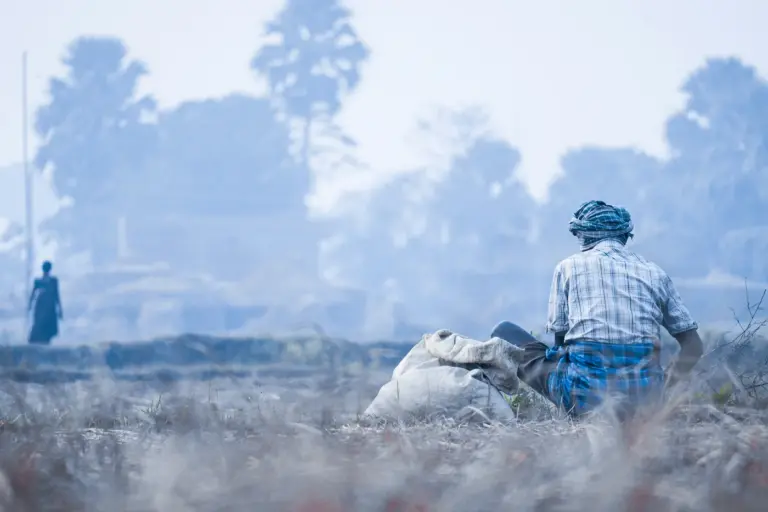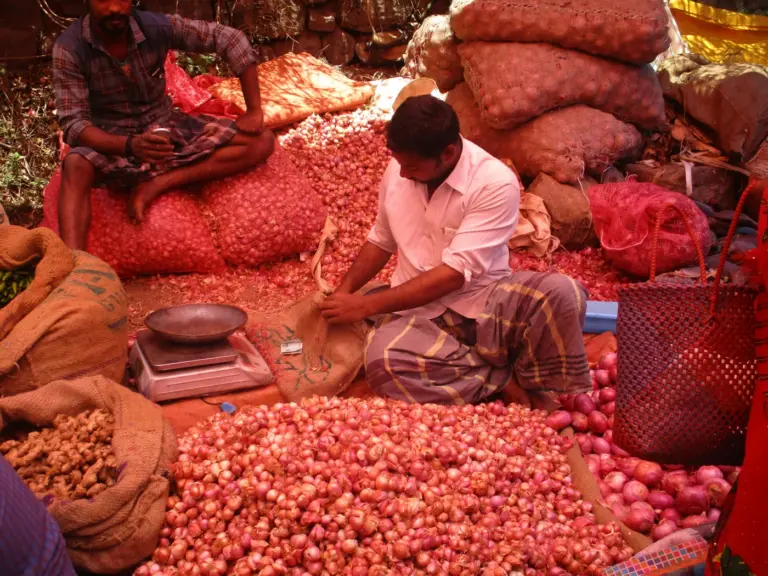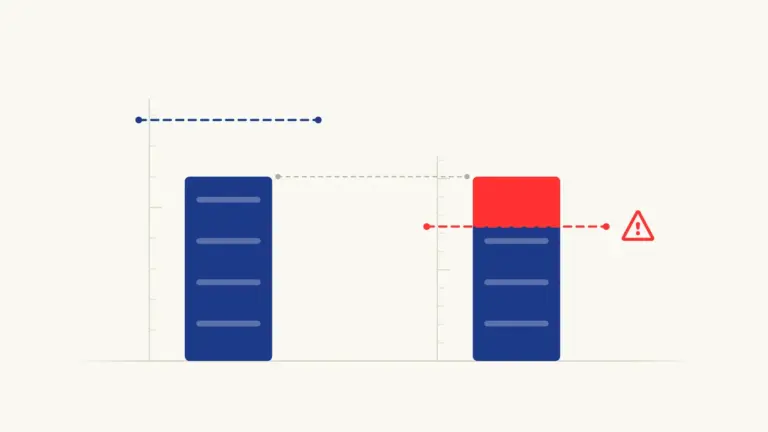
The Green Revolution of the late 1960s and 1970s made India self-sufficient in foodgrains and lifted millions out of hunger. Fifty years later, the very states that drove it — Punjab and Haryana — are at the centre of an agrarian crisis marked by falling real incomes, water-table collapse, stubble burning, and farm distress. For UPSC aspirants, this is one of the most tested areas in GS-III Agriculture, combining cropping patterns, water resources, subsidies, MSP, and ecological sustainability.
What the Green Revolution Delivered
Initiated under C. Subramaniam as Agriculture Minister and powered by M.S. Swaminathan's scientific leadership, the Green Revolution combined High-Yielding Variety (HYV) seeds, assured irrigation, chemical fertilisers, mechanisation, and Minimum Support Price (MSP) procurement. Between 1965 and 1985, wheat production tripled and rice doubled. Punjab, Haryana, and western Uttar Pradesh became the country's granary — even though they represent just a fraction of India's cultivable land.
The Second-Generation Crisis
Unsustainable rice-wheat monoculture: More than 80% of the cropped area in Punjab and Haryana is locked into rice-wheat rotation. Neither crop is native to the agro-climatic zone — both require enormous water and chemical inputs.
Declining income growth: Annual growth in farm income has fallen below 1% in Punjab, compared to a national average of about 3%. Per-hectare agricultural income in Punjab is roughly Rs 1.5 lakh, lower than Andhra Pradesh and Tamil Nadu (Rs 2.25 lakh), despite Punjab's superior infrastructure.
Three drivers of the decline:
- Rising input costs — fertilisers, diesel, and labour costs outpace revenue gains.
- Stagnant productivity — wheat and paddy yields have plateaued; Punjab's yields are now below those of several smaller countries.
- Price pressure — MSP increases have not kept up with input-cost inflation.
Ecological damage:
- Groundwater tables in Punjab are falling by 30-70 cm per year; about 80% of blocks are over-exploited (Central Ground Water Board).
- Soil micronutrient deficiency — zinc, boron, iron, sulphur deficits reported across both states.
- Stubble burning post-paddy harvest causes severe air pollution in the Indo-Gangetic plain every winter.
- Fertiliser imbalance — NPK ratio has skewed from the ideal 4:2:1 to worse than 6:2:1 in Punjab due to urea subsidy distortion.
Strengths That Can Power a Recovery
Despite the crisis, Punjab and Haryana retain structural advantages:
- Irrigation coverage above 90% of net sown area.
- Higher average operational holding size (around 3.6 ha) than the national average of 1.08 ha.
- Fertiliser consumption of over 200 kg/ha — the question is using it better, not using more.
- Strong rural infrastructure — roads, mandis, cold storage.
- High literacy among farmers and easy access to credit.
Montek Singh Ahluwalia Committee Recommendations
The Punjab Government-appointed committee under Montek Singh Ahluwalia proposed a concrete plan to move beyond paddy-wheat dependence:
- Reduce area under paddy and diversify to high-value crops — fruits, vegetables, pulses, oilseeds. The Dalwai Panel found that a 1-hectare shift to diversified cultivation can raise farm income by about Rs 1 lakh.
- Special compensation package from the Centre to cover transition losses.
- Focus on secondary agriculture — food processing, value addition, and forward-backward linkages to absorb rural labour and cut post-harvest losses.
- Guaranteed procurement of pulses and oilseeds under PM-AASHA to give farmers income certainty when shifting away from rice.
- Rationalise subsidies — especially free power and urea — and redirect savings to diversification, cold-chain infrastructure, and farmer extension.
Government Initiatives to Address the Crisis
- Sub-Mission on Agroforestry and Per Drop More Crop component of PMKSY for water-use efficiency.
- Crop Residue Management Scheme — financial support for Happy Seeders, Super SMS, and balers to end stubble burning.
- National Food Security Mission — Pulses to encourage pulses cultivation in Punjab-Haryana.
- Paramparagat Krishi Vikas Yojana (PKVY) for organic farming clusters.
- Bhoomi Health Card Scheme and Soil Health Management component of PKVY for balanced fertiliser use.
Towards a Rainbow Revolution
The long-term solution is to replace the narrow Green Revolution with a broader Rainbow Revolution — combining:
- Yellow Revolution (oilseeds)
- White Revolution 2.0 (dairy)
- Golden Revolution (horticulture)
- Blue Revolution (fisheries, including inland aquaculture)
- Pink Revolution (meat and poultry)
- Silver Revolution (eggs)
This diversified mix reduces water demand, improves nutrition, and raises farm incomes. Punjab's strong infrastructure is ideally suited for high-value dairy, floriculture, and export-oriented vegetables.
Latest developments (2024-26)
- Budget 2024-25 introduced a Mission for Aatmanirbharta in Oilseeds targeting mustard, groundnut, and sunflower — a direct opportunity for Punjab-Haryana to diversify out of paddy.
- Budget 2025-26 announced a six-year Mission for Aatmanirbharta in Pulses with a focus on tur, urad, and masur. PM-AASHA was extended in September 2024 with enhanced Price Deficiency Payment coverage.
- 16th Finance Commission (constituted December 2023) is examining how central transfers can better support state-level agri-diversification.
- Punjab continued its Kharif Crop Diversification Scheme offering up to Rs 17,500 per hectare for switching from paddy to maize, cotton, and pulses.
- Groundwater conservation — Punjab extended the Preservation of Subsoil Water Act, 2009 with mandatory delayed sowing of paddy to reduce evaporative losses.
- Crop Residue Management subsidy was hiked in 2024 for Happy Seeders and balers; however, stubble burning incidents still contribute to Delhi-NCR air quality crises in October-November each year.
- The Swaminathan C2+50% formula for MSP remains a political demand; Ahluwalia panel argued that price support alone cannot fix the structural crisis.
UPSC Relevance
GS-III Mapping
- Major crops, cropping patterns, irrigation systems — the classic syllabus match.
- Issues of buffer stocks and food security — Punjab-Haryana procure disproportionately into FCI stocks.
- Farm subsidies and MSP — the role of procurement distortion is directly tested.
- Environment–agriculture linkage — groundwater, soil health, air pollution.
Prelims Pointers
- Dalwai Committee — Doubling Farmers' Income, 2018.
- M.S. Swaminathan — architect of Green Revolution; MSP = C2 + 50% formula.
- PM-AASHA components: PSS (Price Support Scheme), PDPS (Price Deficiency Payment), PPPS (Private Procurement and Stockist Scheme).
- Operation Barga (West Bengal) and Green Revolution (Punjab-Haryana) contrasts.
- NPK ratio ideal = 4:2:1.
Mains Angles
- "The Green Revolution delivered food security at the cost of ecological sustainability. Critically examine." (GS-III)
- "Diversification from rice-wheat to high-value crops is the answer to Punjab's agrarian crisis. Discuss with reference to the Ahluwalia Committee."
- "Evaluate the role of MSP and free power subsidies in the agrarian distress of Punjab and Haryana."
- "How does stubble burning illustrate the cost of mono-cropping? Suggest policy reforms."
The Green Revolution gave India food sovereignty; the next half-century demands a Rainbow Revolution that protects both farmers and natural resources. For UPSC preparation, mastering the Ahluwalia recommendations, Dalwai numbers, and the 2024-26 diversification budgets will let you answer any angle — factual, analytical, or reformist.
Tell Google you want more of this.
Add Anantam IAS as a preferred sourceOne tap, and this site shows up more often in your own Top Stories, AI Overviews and AI Mode. Remove it any time.