ज़्यादातर aspirants किसी dead Harappan city का नाम living city से जल्दी बता देते हैं। Dholavira, Mohenjo-daro, Lothal, सभी abandoned और sand के नीचे ruins की तरह excavated। Vadnagar इसका उलटा site है और इसी वजह से लोगों को फँसाता है। North Gujarat का यह छोटा, busy town आज भी लोगों का cooking, trade और prayer वाला शहर है। इसकी streets के नीचे 2,500 साल से अधिक का human occupation बिना टूटे layers में है। Archaeologists अब इसे India में किसी एक fortification के भीतर मिली सबसे पुरानी living city कहते हैं। यह बहुत specific claim है, इसलिए इसे सटीक रूप से सीखें।
Vadnagar पढ़ने लायक इसलिए नहीं है कि यह pyramid की तरह spectacular है। इसकी value यह है कि town एक vertical timeline है। सीधा नीचे खोदें तो क्रम से Mauryan world, Indo-Greeks, Shaka satraps, Solanki temple-builders, Sultanate और Mughals और अंत में Gaekwads तथा British मिलते हैं। एक mound, सात cultures और कोई gap नहीं। यही continuity उस बहस में hard evidence देती है जो अक्सर guesswork पर चलती है: Harappans के बाद Indian urban life सच में collapse हो गई थी या quietly चलती रही?
Vadnagar कहाँ है और location ने इसे जीवित कैसे रखा
Vadnagar Gujarat के Mehsana district में, पुराने overland routes पर बैठा है। ये routes Gujarat coast के ports को Gangetic plains और northwest के trading centres से जोड़ते थे। इसकी longevity समझाने वाला सबसे बड़ा fact यही है। Busy road पर बसा town आसानी से नहीं मरता। एक dynasty गिरती है तो भी traffic चलता रहता है और कोई न कोई उसी profitable spot पर फिर निर्माण कर देता है।
Town इतना पुराना है कि इसके कई नाम जमा हो गए। Early texts में यह Anartapura, ancient region Anarta की capital, के रूप में आता है। बाद में Buddhist record में Anandapura नाम से मिलता है। Locals इसे Chamatkarpur और Nagar भी कहते थे। आखिरी नाम Nagar Brahmins के community name में बचा है, यानी उस priestly caste में जो अपना origin इसी town से जोड़ती है और इसका नाम पूरे India में ले गई। कोई “Nagar” surname मिले तो उसका trail कई बार यहीं तक आता है।
Physically Vadnagar Sharmishtha lake के आसपास बसा fortified town है। यह बड़ा tank एक लंबे inlet canal से पानी पाता है। Old walled settlement और gateways आज भी street plan में पहचाने जा सकते हैं। Record-breaking claim में fortification important है। Archaeologists जिस continuity की बात करते हैं, वह उसी single defended enclosure के भीतर की है, कोई ऐसा town नहीं जो centuries में landscape पर इधर-उधर घूमता रहा हो। लोग generation after generation उन्हीं walls के अंदर रहते रहे। यह settlement Indian ancient history में first cities से classical empires तक जिस broad sweep का हिस्सा है, उसी कहानी को एक continuously occupied site में compress कर देता है। इसे Indian ancient history के साथ पढ़ें।
2,500 साल की layer cake: excavations में क्या मिला
Vadnagar की headline finding continuity है। Archaeological Survey of India और उसके research partners ने town की soil में सात successive cultural periods document किए हैं। इनके बीच abandonment layer नहीं है। यह लगभग पिछले 2,500 वर्षों में फैला है और संभवतः 800 BCE तक पीछे जाता है। Exam में लिखने लायक sentence यही है।
सात periods को ladder की तरह याद करें। नीचे से ऊपर pre-Mauryan/Mauryan phase, Indo-Greek phase, Shaka-Kshatrapa यानी Indo-Scythian phase, Hindu-Solanki phase, Sultanate-Mughal phase और Gaekwad-British colonial phase आते हैं। Early historic settlement के नीचे इससे पुरानी material भी है। हर period ने ground पर अपनी signature छोड़ी: pottery styles, coins, seals, beads, shell और ivory work, iron tools और successive buildings की foundations, जो पिछली building के rubble पर उठीं। Radiocarbon और optically stimulated luminescence यानी OSL dating से 2024 में हुई recent multi-institution study ने popular “oldest living city” claim के नीचे firm chronology रखी। उसने town के ups and downs को summer monsoon की strength से भी जोड़ा। Dry और unstable centuries में settlement पतला हुआ, लेकिन पूरी तरह deserted कभी नहीं हुआ।
| Vadnagar का cultural period | लगभग किससे मेल खाता है |
|---|---|
| Pre-Mauryan / Mauryan | Mahajanapadas से Mauryan empire तक |
| Indo-Greek | Post-Mauryan northwest contacts |
| Shaka-Kshatrapa | Western Kshatrapa यानी Indo-Scythian rule |
| Hindu-Solanki | Chaulukya/Solanki Gujarat, temple age |
| Sultanate-Mughal | Medieval Islamic Gujarat |
| Gaekwad-British | Maratha और colonial period |
Unbroken stack इतना महत्वपूर्ण क्यों है? यह archaeologists को आम gaps के बिना change पढ़ने देता है। ज़्यादातर sites में एक culture, फिर break और फिर अलग culture मिलता है। बीच में क्या हुआ, इसके लिए बहस करनी पड़ती है। Vadnagar में film continuous है। आप town को Mauryas के fall से बचते, foreign rulers को absorb करते, Buddhist से brahmanical और फिर Islamic patronage की ओर बदलते और आगे चलते देख सकते हैं। इसी वजह से यह post-Harappan continuity की बहस के centre में है। इसे post-Mauryan period और layered cultures के साथ रखें।
Buddhist chapter: monastery और Chinese pilgrim
Vadnagar की सबसे surprising layer Buddhist है और specific answer में सबसे अधिक काम आती है। Excavators को fortified town के भीतर Buddhist monastery मिली। यह first या second century CE के आसपास बनी और लगभग seventh या eighth century CE तक इस्तेमाल होती रही। Monastic cells, votive stupas, sealings और terracotta भी मिले। करीब छह centuries तक यह stray shrine नहीं, working monastic life का centre था।
Literary confirmation इसे exam-worthy बनाती है। Chinese monk-pilgrim Xuanzang यानी Hiuen Tsang 640 CE में यहाँ से गुज़रे। उन्होंने town को Anandapura नाम से लिखा और एक flourishing place बताया, जहाँ करीब दस Buddhist monasteries और लगभग एक हजार monks थे। Excavated monastery और यह eyewitness account एक ही spot पर text और dig को एक-दूसरे की पुष्टि करते हैं। Western India में Buddhism के spread या Chinese travellers’ accounts की value पर answer में यह साफ़, high-value point है। इसे Buddhism in India और Buddha के बाद की institutional life से जोड़ें।
Buddhist phase Vadnagar को अपने समय की wider world में भी रखता है। Trade route पर इतने बड़े monastery का होना उस familiar pattern से मेल खाता है जिसमें merchants और monasteries साथ बढ़ते हैं। Caravans monks को fund करते थे और monasteries roads पर rest, credit और legitimacy देते थे। Seventh या eighth century के बाद Buddhist life फीकी पड़ी तो site खाली नहीं हुई। India के कई हिस्सों की तरह यह brahmanical और बाद में Islamic worlds की ओर shift हुआ, जिनके monuments आज ground के ऊपर खड़े हैं।
Toranas और Hatkeshwar Temple: मिट्टी के ऊपर Vadnagar
Vadnagar में सब कुछ buried नहीं है। दो standing monuments town की medieval और later identity संभालते हैं। दोनों Solanki और post-Solanki periods को art and culture से जोड़ते हैं।
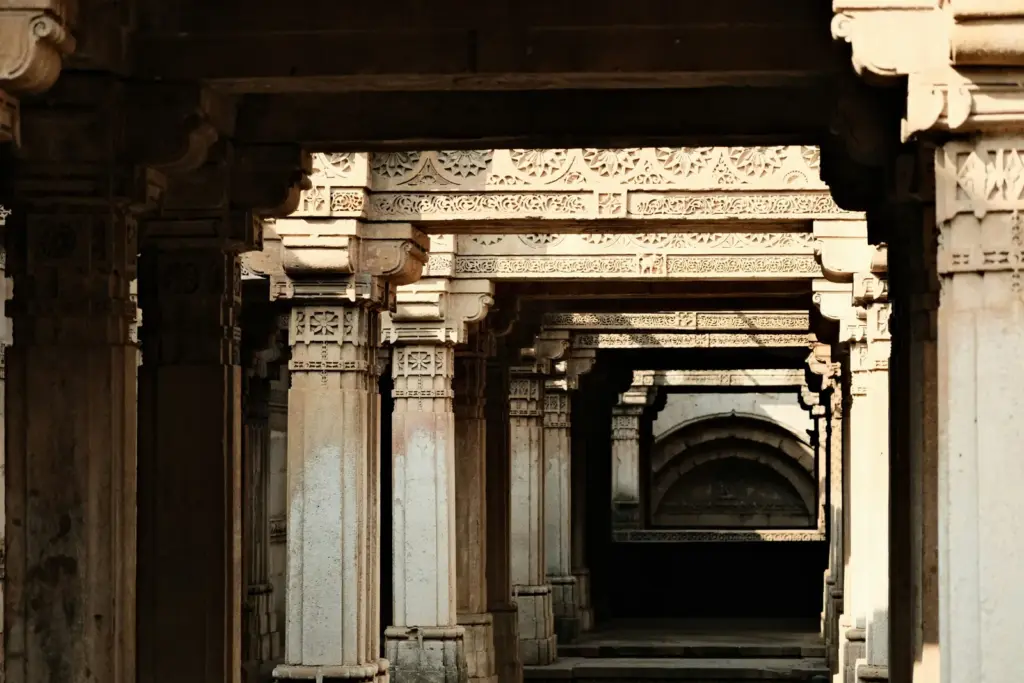
पहली जोड़ी Kirti Toranas है। ये Solanki यानी Chaulukya period के twin ceremonial arch-gateways हैं, करीब 12वीं century के माने जाते हैं और red तथा yellow sandstone से बने हैं। इनकी ऊँचाई लगभग 40 feet है। Torana एक free-standing decorated gateway होता है। Sanchi के approach पर भी ऐसा gateway मिलता है। Vadnagar की surviving pair Gujarat के finest medieval examples में है। Figures और floral bands की rich carving है। ये town का visual symbol हैं और Gujarat tourism branding में भी आते हैं। इन्हें Mauryan art and architecture और बाद की carved-stone traditions वाले इस संदर्भ के साथ रखें।
Town का living religious heart Hatkeshwar Mahadev temple है। यह Shiva को समर्पित richly carved Nagara-style temple है और present structure करीब 17वीं century का है। Hatkeshwar Nagar Brahmins के family deity यानी kuldevta हैं। इसी वजह से यह community पूरे देश से यहाँ आती है और temple केवल monument नहीं है। यही वह कारण है जिसकी वजह से एक specific caste आज भी इस town को अपना home कहती है। Exterior पर deities और epics के scenes वाले sculpted panels हैं। Mature Nagara temple decoration का compact lesson है। Toranas और temple से Vadnagar की above-ground story दो lines में कही जा सकती है: Solanki-era gateway town जो brahmanical pilgrimage centre बना और अब भी है।
Streets के नीचे trade town: coins, seals और daily life
Famous monuments और Buddhist headline हटाएँ तो Vadnagar मूल रूप से ordinary working town की archaeology है। इसी वजह से इसकी finds उपयोगी हैं। Excavations से दो हजार साल के urban life का everyday debris निकला: अलग rulers के coins, coin-casting mould, shell bangles और ivory objects, semi-precious stone beads, iron implements और pottery के heaps। Western India के early historic centuries को चिह्नित करने वाला fine Red Polished Ware भी है। कोई एक find glamorous नहीं है, लेकिन साथ मिलकर बताते हैं कि town long-distance exchange से जुड़ा था। यह subsistence farming पर निर्भर जगह नहीं थी।
Coins खास analytical work करते हैं। Kshatrapas, बाद की Hindu dynasties और Islamic rulers का पैसा एक ही site से मिलना ऐसा numismatic timeline है जिसे receipt roll की तरह पढ़ सकते हैं। Coin mould यह भी बताता है कि coins यहाँ circulate ही नहीं, बनाए या copy किए जाते थे। Early historic town की economy पर answer में यह distinction महत्वपूर्ण है। Mint town urban hierarchy में market town से ऊपर होता है। Bead-drilling और shell-working जैसे craft residues भी यही दिखाते हैं कि specialised artisans wider region के लिए उत्पादन करते थे।
एक find उसकी memorability के लिए याद रखें। Excavators ने seated, meditative posture में preserved human skeleton report किया। यह rare burial type उस Hindu और Jain tradition की याद दिलाता है जिसमें ascetic को cremation के बजाय samadhi में inter किया जाता है। Details Mains answer को texture देती हैं। Town abstraction नहीं रहता, एक specific life और death की जगह बन जाता है। पूरा assemblage साथ पढ़ें तो Vadnagar periods की list नहीं रहता। यह mint, market town, monastery town और pilgrimage centre, सब एक ही कुछ hectares पर layered place था।
Continuity debate में Vadnagar क्यों मायने रखता है
Vadnagar का real intellectual payload उस argument में है जिसे यह settle, या कम-से-कम strongly inform करता है: Harappan civilization के decline के बाद के so-called Dark Age का सवाल। पुरानी textbook story कहती थी कि mature Indian urban life करीब 1900 BCE में Harappans के साथ collapse हुई और Ganga की second urbanisation के साथ millennium बाद लौटी। Vadnagar अकेले timeline नहीं पलटता, लेकिन एक stubborn data point देता है: fortified town once established हो जाए तो उन centuries में भी चलता रहा जब instability मानी जाती थी।
Site इसलिए powerful है कि climate और human resilience को physical evidence से जोड़ती है। 2024 dating study ने town के history में Indian summer monsoon की strength reconstruct की। Prosperity के phases अच्छे monsoon centuries के साथ चले और lean तथा unstable phases droughts से मिले। फिर भी worst dry spells में decline हुआ, desertion नहीं। यह subtle conclusion है: environment ने town की fortunes shape कीं, लेकिन उसे मिटाया नहीं। Climate और civilisation या Indian urban traditions की durability पर Mains answer में abandoned Harappan cities से यह sharper example है, क्योंकि ground पर collapse नहीं, survival दिखता है।
Heritage angle भी सीधा है। Vadnagar India की UNESCO tentative list में multi-layered historic town के रूप में है। यही वह continuity value है जिसे formal recognition मिलता है। Archaeological Experiential Museum 16 January 2025 को inaugurate हुआ और 1 February 2025 से public के लिए खुला। यह site की stratigraphy को वहीं display करने के लिए बनाया गया है। Heritage nominations revise करते समय इसे India के UNESCO World Heritage Sites और World Heritage Day के पास रखें। ध्यान रहे, Vadnagar अभी tentative-list candidate है, inscribed site नहीं।
Exam के लिए Vadnagar को कैसे पढ़ें
Vadnagar high-yield है क्योंकि यह कई syllabus zones को एक साथ जोड़ता है। इसे lone factsheet नहीं, bridge की तरह सीखें।
पहले चार hard facts anchor करें: यह Gujarat के Mehsana district में है; single fortification के भीतर सात cultural periods में 2,500 साल से अधिक की continuous habitation दिखाता है और India की oldest such living city claim से जुड़ा है; यहाँ excavated Buddhist monastery है जिसे Xuanzang के 640 CE Anandapura account से match किया जा सकता है; और ऊपर दिखाई देने वाले monuments 12वीं century के Solanki Kirti Toranas तथा Hatkeshwar temple हैं। Seven-period ladder को structural spine की तरह याद करें। Sequence तुरंत बोल पाना दिखाता है कि आपने headline नहीं, site समझी है।
Mains में Vadnagar को topic नहीं, evidence की तरह deploy करें। यह post-Harappan urban continuity और Dark Age debate, एक जगह Buddhist, brahmanical और Islamic patronage का coexistence तथा succession, climate-settlement relationship और archaeology के against पढ़े गए Xuanzang जैसे foreign traveller accounts पर answers में काम आता है। Hard chronology के लिए Archaeological Survey of India और peer-reviewed dating study पर lean करें। Toranas और temple के लिए standard art-and-culture material लें। Pottery typologies रटने की ज़रूरत नहीं। Continuity claim, seven periods, Buddhist pairing और two monuments ही marks लाते हैं। इन्हीं से Vadnagar को Gupta empire-era heartland की dead cities और Indus Valley Civilization के abandoned mounds से compare कर सकते हैं।
सामान्य प्रश्न
Vadnagar कहाँ स्थित है?
Vadnagar Gujarat के Mehsana district में fortified town है। यह Sharmishtha lake के आसपास बना है और पुराने trade routes पर है जो Gujarat coast को interior से जोड़ते थे। इसी location ने इसे इतने लंबे समय तक लगातार बचाए रखा।
Vadnagar को India की oldest living city क्यों कहा जाता है?
Archaeological Survey of India और research partners को 2,500 साल से अधिक की continuous human habitation मिली है। सात successive cultural periods के बीच abandonment layer नहीं है और यह सब single fortified enclosure के भीतर है। एक ही walls के अंदर इतनी लंबी unbroken continuity इस description की वजह है।
Vadnagar में मिले सात cultural periods कौन-से हैं?
पुराने से नए की ओर pre-Mauryan/Mauryan, Indo-Greek, Shaka-Kshatrapa यानी Indo-Scythian, Hindu-Solanki, Sultanate-Mughal और Gaekwad-British colonial periods आते हैं। इनके नीचे still earlier early-historic material भी है।
Vadnagar और Buddhism का क्या connection है?
Town के भीतर first या second century CE के आसपास बनी Buddhist monastery मिली है, जो roughly seventh या eighth century CE तक इस्तेमाल हुई। Chinese pilgrim Xuanzang 640 CE में यहाँ आए, town को Anandapura कहा और लगभग दस monasteries तथा एक हजार monks का वर्णन किया। Dig और text एक-दूसरे की पुष्टि करते हैं।
Vadnagar के Kirti Toranas क्या हैं?
ये 12वीं century के Solanki-period ceremonial arch-gateways की जोड़ी हैं। Red और yellow sandstone से बने करीब 40 feet ऊँचे और richly carved हैं। ये Vadnagar का visual symbol और Gujarat के best surviving medieval toranas में हैं।
Hatkeshwar temple क्या है?
यह Vadnagar का Nagara-style Shiva temple है। Present structure करीब 17वीं century का है और sculpted panels से ढका है। Hatkeshwar Nagar Brahmins के family deity हैं। इस priestly community का नाम भी town से जुड़ा है।
क्या Vadnagar UNESCO World Heritage Site है?
अभी नहीं। Vadnagar multi-layered historic town के रूप में India की UNESCO tentative list में है। इसकी continuity value को recognition मिला है, लेकिन इसे full World Heritage Site के रूप में inscribe नहीं किया गया। Excavations पर आधारित Archaeological Experiential Museum 2025 की शुरुआत में खुला।
अभ्यास प्रश्न
1. Vadnagar किस state में स्थित है?
a) Rajasthan
b) Gujarat
c) Madhya Pradesh
d) Maharashtra
उत्तर: b) Gujarat
2. Indian archaeology में Vadnagar का मुख्य महत्व क्या है?
a) India में iron working का earliest evidence
b) Single fortification के भीतर 2,500 साल से अधिक की continuous human habitation
c) Indus script का पहला deciphered inscription
d) सबसे बड़ा Mauryan stupa complex
उत्तर: b) Single fortification के भीतर 2,500 साल से अधिक की continuous human habitation
3. करीब 640 CE में Vadnagar यानी Anandapura आए और Buddhist monasteries का record रखने वाले Chinese pilgrim कौन थे?
a) Faxian
b) Itsing (Yijing)
c) Xuanzang
d) Megasthenes
उत्तर: c) Xuanzang
4. Vadnagar के बारे में निम्नलिखित पर विचार कीजिए:
- इसके Kirti Toranas Solanki period के हैं।
- Hatkeshwar temple Nagar Brahmins का family deity shrine है।
- इसे UNESCO World Heritage Site के रूप में inscribe किया गया है।
कौन-से statements सही हैं?
a) केवल 1 और 2
b) केवल 2 और 3
c) केवल 1 और 3
d) 1, 2 और 3
उत्तर: a) केवल 1 और 2
5. Vadnagar में document किए गए सात cultural periods क्रम से किससे शुरू होकर किस तक जाते हैं?
a) Harappan से Vedic period
b) pre-Mauryan/Mauryan से Gaekwad-British colonial period
c) Gupta से Mughal period
d) Palaeolithic से Mauryan period
उत्तर: b) pre-Mauryan/Mauryan से Gaekwad-British colonial period
- “Vadnagar Harappans के बाद sharp urban Dark Age के विचार को challenge करता है।” Site की continuous stratigraphy post-Harappan urban continuity की बहस को कैसे inform करती है, चर्चा कीजिए।
- Vadnagar में मिली Buddhist monastery और Xuanzang के account को साथ पढ़ने पर western India में Buddhism के spread और institutional life के बारे में क्या पता चलता है?
- Vadnagar की dating studies town की fortunes को summer monsoon की strength से जोड़ती हैं। Vadnagar के संदर्भ में climate और settlement resilience के relationship पर चर्चा कीजिए।
- Kirti Toranas और Hatkeshwar temple जैसे standing monuments north Gujarat town के medieval और later history को reconstruct करने में कितने उपयोगी हैं, आकलन कीजिए।
- “Foreign travellers’ accounts को असली weight तभी मिलता है जब उन्हें archaeology के सामने पढ़ा जाए।” Vadnagar के संदर्भ में चर्चा कीजिए।
Vadnagar syllabus में grand होने की वजह से नहीं, unbroken होने की वजह से जगह बनाता है। यह उस हर continuity argument का counterexample है जिसे एक town की ज़रूरत होती है: Empires का fall, foreign rulers का arrival और monsoon के उतार-चढ़ाव आए, फिर भी town ढाई हजार साल तक उन्हीं walls के भीतर अपने lamps जलाता रहा। Continuity claim, seven periods, Xuanzang के साथ Buddhist monastery और दो standing monuments साथ रखें। आपके पास ancient और medieval Indian history का ऐसा versatile example होगा जो urban continuity, Buddhism की life और history के हर झटके के बाद किसी place के बचने, तीनों answers में काम आता है।