The full form of ICAR is the Indian Council of Agricultural Research, and if that is all you needed, you now have it. But ICAR is the kind of answer that hides a much bigger story, because this one body sits behind almost every agricultural fact you will study: the Green Revolution wheat, the improved seed a farmer plants, the Krishi Vigyan Kendra in a district, the research institute whose name keeps turning up in the news. Most aspirants can expand the abbreviation and still cannot say what ICAR actually does, where it sits in the government, or why it matters. That gap is what this explainer closes.
What ICAR is and where it sits in the government
ICAR is the apex body that coordinates, guides, and manages agricultural research and education across India. Think of it as the head office of Indian farm science: it does not itself run farms, but it directs the research institutes, funds the projects, sets the agenda, and links laboratory science to the field.
The important thing to fix is its status. ICAR is an autonomous body, registered as a society under the Societies Registration Act, 1860. It is not a government department and not a ministry; it is a semi-independent organisation that the government funds and oversees. It functions under the Department of Agricultural Research and Education (DARE), which is one of the departments of the Ministry of Agriculture and Farmers Welfare. Its headquarters are at Krishi Bhavan, New Delhi.
Here is the tidy way to remember the chain of command. The Union Minister of Agriculture is the President of the ICAR Society. The chief executive is the Director-General (DG) of ICAR, who is simultaneously the Secretary of DARE. That double role is the clever bit: the same person heads the autonomous research council and the government department that oversees it, which keeps the science and the administration in step. If a question asks who heads ICAR, the answer is the Director-General; if it asks who presides over it, the answer is the Agriculture Minister.
The 1929 origin: from Imperial to Indian
ICAR was established on 16 July 1929, and it began life under a different name: the Imperial Council of Agricultural Research. It was set up on the recommendation of the Royal Commission on Agriculture, which had submitted its report in 1928 after studying the sorry state of Indian farming under colonial rule. The Commission found agricultural research scattered and uncoordinated, and it proposed a central council to pull it together. That council was ICAR’s ancestor.
After independence, the name changed to reflect the new republic. In 1946 it was renamed the Indian Council of Agricultural Research, the name it carries today. A further important administrative step came in 1973, when the Department of Agricultural Research and Education (DARE) was created and ICAR was placed under it, giving the research system its modern shape.
So the timeline you should carry is short and clean: 1928 Royal Commission recommendation, 1929 established as Imperial Council, 1946 renamed Indian Council, 1973 brought under DARE. Four dates, one institution growing into itself.
The network: institutes, universities, and KVKs
The reason ICAR is described as one of the largest agricultural research systems in the world is the sheer size of its network, and this is where the concrete numbers earn their keep.
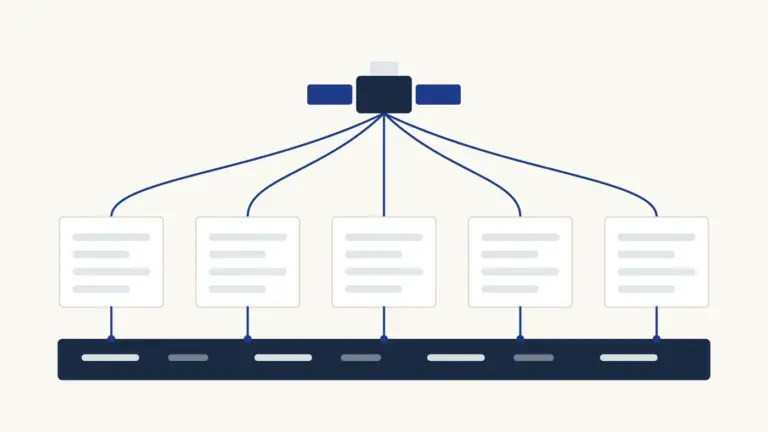
ICAR runs a system of over 100 research institutes of its own, works with more than 70 agricultural universities, and oversees a countrywide chain of Krishi Vigyan Kendras (KVKs) that now numbers over 730. The institutes do the deep science; the universities train the scientists and extension workers; the KVKs carry the science to the farmer’s field. It is a three-tier arrangement, and understanding the tiers is more useful than memorising exact totals that shift year to year.
At the top are the ICAR research institutes, many of them famous in their own right. The Indian Agricultural Research Institute (IARI), known as Pusa Institute in New Delhi, is the flagship, and it is where much of the Green Revolution wheat work happened. Others include the Indian Veterinary Research Institute (IVRI) at Izatnagar, the National Dairy Research Institute (NDRI) at Karnal, and the Central Rice Research Institute at Cuttack, among more than a hundred specialised bodies covering crops, horticulture, fisheries, animal sciences, and natural resources. There are national bureaus too, quiet but vital, that conserve the country’s genetic wealth: the National Bureau of Plant Genetic Resources holds a gene bank of seeds, and parallel bureaus safeguard animal, fish, and microbial genetic material. This conservation work is easy to overlook and hard to overstate, because the raw material for every future crop variety comes from exactly these collections.
The middle tier is the State Agricultural Universities (SAUs) and the Central Agricultural Universities, which run degree programmes and their own research and extension. ICAR maintains academic standards across them and funds them partly, and it conducts the national entrance examinations that feed students into agricultural higher education.
The ground tier is the Krishi Vigyan Kendra, literally “farm science centre.” The first KVK was set up in 1974 at Puducherry (Pondicherry), and the model spread until almost every rural district has one. A KVK is the point where a new seed variety, a soil test, or a pest-control method actually reaches farmers, through demonstrations, training, and advisories. Most KVKs are hosted by agricultural universities, some by ICAR institutes, and others by NGOs and government departments. When you read that “an ICAR advisory reached farmers,” the KVK is usually the pipe it flowed through.
| Attribute | Detail |
|---|---|
| Full form | Indian Council of Agricultural Research |
| Established | 16 July 1929 (as Imperial Council of Agricultural Research) |
| Renamed | 1946 (Indian Council of Agricultural Research) |
| Legal status | Autonomous society under Societies Registration Act, 1860 |
| Parent department | Department of Agricultural Research and Education (DARE) |
| Ministry | Ministry of Agriculture and Farmers Welfare |
| Headquarters | Krishi Bhavan, New Delhi |
| President of Society | Union Minister of Agriculture |
| Chief executive | Director-General (also Secretary, DARE) |
| Flagship institute | Indian Agricultural Research Institute (IARI), Pusa, New Delhi |
| First KVK | 1974, Puducherry |
How ICAR is organised internally
Below the Director-General, ICAR is arranged into subject-matter divisions, and knowing the shape of them explains how such a large system stays coherent. Each division is headed by a Deputy Director-General and owns a slice of agriculture: crop science, horticulture, natural resource management, agricultural engineering, animal science, fisheries science, agricultural education, and agricultural extension. Every ICAR institute reports up through the division that matches its work, so a rice institute answers to crop science and a dairy institute to animal science. This is the machinery that keeps a hundred-plus institutes from drifting into a hundred-plus separate agendas.
A second useful feature is the All India Coordinated Research Projects (AICRPs). These are national research programmes on a single crop or theme, wheat, maize, pulses, cotton, and many more, run simultaneously across dozens of centres in different agro-climatic zones. The idea is elegant: test a new variety not in one lab but across the whole spread of Indian soils and climates at once, so what reaches the farmer has already been proven from Punjab to Tamil Nadu. Much of the seed-variety pipeline that fed the Green Revolution and everything after has moved through this coordinated-project system.
ICAR also carries academic weight directly. Several of its institutes, including IARI, IVRI, and NDRI, are deemed-to-be universities, meaning they award their own postgraduate and doctoral degrees. So ICAR is not only a research funder but, in places, a degree-granting teacher in its own right, which is why its scientists and its graduate students are often the same people.
What ICAR actually does: its functions
Strip away the organisation charts and ICAR does five things, and naming them cleanly is what turns a memorised abbreviation into a usable answer.
First, it coordinates and funds agricultural research across crops, horticulture, animal husbandry, fisheries, and agricultural engineering, so the country’s farm science pulls in one direction instead of being scattered across unconnected labs.
Second, it develops and improves technology: high-yielding and disease-resistant seed varieties, better breeds of livestock, fertiliser and irrigation practices, and farm machinery. The improved seeds and crop varieties an Indian farmer plants very often trace back to an ICAR institute or an ICAR-linked university.
Third, it manages agricultural education, maintaining standards across the agricultural universities, running national admission tests, and helping shape the curriculum that trains the next generation of scientists and extension staff.
Fourth, it runs extension and transfer of technology, mainly through the KVK network, so that a breakthrough in a laboratory does not stay in the laboratory. This bridge between research and the field is one of ICAR’s defining contributions.
Fifth, it serves as the country’s repository and adviser on agriculture, generating data, advising the government on farm policy, and representing India in international agricultural research forums.
ICAR and the Green Revolution
ICAR was one of the institutional engines of the Green Revolution, the transformation from the late 1960s that turned India from a food-deficit country living on imports into one that could feed itself. This is the single most important thing to be able to say about ICAR’s impact, so give it a real explanation, not a slogan.
In the mid-1960s India was importing wheat under humiliating conditions and living, as the phrase went, a “ship-to-mouth” existence. The breakthrough came from combining high-yielding varieties (HYV) of wheat, developed from the dwarf strains bred by Norman Borlaug in Mexico, with heavy inputs of fertiliser, assured irrigation, and price support. ICAR institutes, above all IARI at Pusa, adapted and multiplied these varieties for Indian conditions, and the agricultural universities and extension system pushed them into the fields of Punjab, Haryana, and western Uttar Pradesh.
The scientist most associated with this effort in India is M.S. Swaminathan, often called the architect or father of the Indian Green Revolution, who worked within the ICAR and IARI system and later served as Director-General of ICAR. His work, and that of colleagues across the ICAR network, took the imported science and made it Indian. Wheat production roughly doubled within a few years, and the fear of famine that had shadowed the 1960s receded. You can go deeper into that story through the broader account of the Green Revolution in India and its architect, but the point to lock in is that ICAR was not a bystander; its institutes and its people were central to the effort.
It is fair, and expected in a good answer, to add the honest footnote. The Green Revolution was uneven: it favoured wheat and rice over coarse grains and pulses, favoured the well-irrigated north-west over rain-fed regions, and left a long tail of problems, groundwater depletion, soil degradation, and monoculture. This is one of the running tensions in Indian agriculture today. ICAR’s research agenda has since had to pivot toward exactly these problems, and much of its current work is about sustainability, diversification, and climate resilience rather than raw yield.
What ICAR is working on now
ICAR today is not living on Green Revolution glory; its research priorities have shifted to the pressures Indian agriculture faces in this decade, and knowing a few of them makes your answer current.
A large share of effort now goes into climate-resilient agriculture: varieties that tolerate heat, drought, and flooding, and practices that cut water and chemical use. There is a strong push on nutritional security, including the revival of millets and coarse grains, which connects to the wider promotion of nutri-cereals and millets as climate-smart and health-friendly crops. ICAR institutes have contributed to the biofortification of staples, breeding higher iron, zinc, and protein into ordinary crops.
The council is also central to newer input technologies, including work around nano-fertilisers such as nano urea, aimed at cutting the heavy fertiliser use that the first Green Revolution left behind. And it feeds the scientific base behind national missions on pulses and oilseeds self-sufficiency, an area where India still imports heavily. Read alongside the country’s evolving food security framework and the machinery of agricultural marketing and MSP, ICAR is the research half of a much larger policy system: it makes the science, other agencies handle the price, the procurement, and the credit through bodies like NABARD.
Two more strands round out the modern picture. ICAR’s remit runs well beyond crops: its animal science and fisheries institutes drive livestock breeding, dairy, and aquaculture, which together contribute a large and growing share of farm-sector income and matter enormously for the nutrition and cash flow of small farmers. And ICAR increasingly works in digital agriculture, feeding scientific advisories into the government’s data platforms, weather-based crop guidance, and precision-farming tools that push tailored recommendations to individual farmers rather than blanket ones. The through-line across all of it is the same as it was in 1929: take the best available science, adapt it to Indian conditions, and get it to the field, only the science is now genetics, sensors, and data rather than only seeds and fertiliser.
How to study ICAR for the exam
ICAR is a factual, fetch-the-details topic, so study it as a compact fact-sheet rather than a long essay, and anchor everything to the table above.
Lock the non-negotiables first: full form (Indian Council of Agricultural Research), year and original name (1929, Imperial Council), legal status (autonomous society, Societies Registration Act 1860), parent (DARE, Ministry of Agriculture and Farmers Welfare), and the leadership pair (President is the Agriculture Minister, DG is also Secretary DARE). Those five points answer the overwhelming majority of direct questions.
Next, learn the three-tier network as a concept, not a number: institutes, agricultural universities, KVKs, with IARI as the flagship and the first KVK in 1974 at Puducherry. Do not obsess over the exact count of institutes or universities, because those figures drift; state them as “over a hundred” and “over seventy” and you will be right and safe.
Finally, keep one linked story ready: ICAR and the Green Revolution, through IARI, HYV wheat, and Swaminathan, with the honest caveat about its uneven and unsustainable side. If a question opens up the analytical space, that is where the marks are. The rest is recall, and recall rewards a clean table more than long paragraphs, so build the table, revise it, and move on.
Frequently Asked Questions
What is the full form of ICAR?
ICAR stands for the Indian Council of Agricultural Research. It is the apex body that coordinates and manages agricultural research and education across India.
Under which ministry does ICAR function?
ICAR functions under the Department of Agricultural Research and Education (DARE), which is a department of the Ministry of Agriculture and Farmers Welfare. Its headquarters are at Krishi Bhavan, New Delhi.
When was ICAR established?
It was established on 16 July 1929 as the Imperial Council of Agricultural Research, on the recommendation of the Royal Commission on Agriculture (1928). It was renamed the Indian Council of Agricultural Research in 1946.
Is ICAR a government department?
No. ICAR is an autonomous body registered as a society under the Societies Registration Act, 1860. It is funded and overseen by the government through DARE but is not itself a department or ministry.
Who heads ICAR?
The Director-General (DG) is the chief executive of ICAR and is also the Secretary of DARE. The Union Minister of Agriculture is the President of the ICAR Society.
What is the role of ICAR in the Green Revolution?
ICAR institutes, especially the Indian Agricultural Research Institute (IARI) at Pusa, adapted and multiplied high-yielding wheat varieties and, with the extension system and scientists like M.S. Swaminathan, drove the Green Revolution that made India self-sufficient in foodgrains.
What is a Krishi Vigyan Kendra (KVK)?
A KVK is a district-level farm science centre that transfers agricultural technology from research institutes to farmers through training, demonstrations, and advisories. The first KVK was set up in 1974 at Puducherry, and there are now over 730 across the country.
How many institutes and universities does ICAR have?
ICAR runs a network of over 100 research institutes and works with more than 70 agricultural universities, along with over 730 Krishi Vigyan Kendras, making it one of the largest agricultural research systems in the world.
Practice Questions
1. The full form of ICAR is:
a) Indian Centre for Agricultural Reform
b) Indian Council of Agricultural Research
c) International Council of Agrarian Research
d) Indian Commission on Agriculture and Rural affairs
Answer: b) Indian Council of Agricultural Research
2. ICAR was established in 1929 on the recommendation of the:
a) Famine Commission
b) Hunter Commission
c) Royal Commission on Agriculture
d) Fazl Ali Commission
Answer: c) Royal Commission on Agriculture
3. ICAR functions as an autonomous body under which department?
a) Department of Agriculture and Farmers Welfare
b) Department of Rural Development
c) Department of Science and Technology
d) Department of Agricultural Research and Education (DARE)
Answer: d) Department of Agricultural Research and Education (DARE)
4. The flagship institute of ICAR, closely associated with Green Revolution wheat research, is:
a) National Dairy Research Institute, Karnal
b) Indian Agricultural Research Institute (IARI), Pusa
c) Indian Veterinary Research Institute, Izatnagar
d) Central Rice Research Institute, Cuttack
Answer: b) Indian Agricultural Research Institute (IARI), Pusa
5. The first Krishi Vigyan Kendra was established in:
a) 1966 at Ludhiana
b) 1974 at Puducherry
c) 1980 at Hyderabad
d) 1929 at New Delhi
Answer: b) 1974 at Puducherry
- Trace the evolution of ICAR from its establishment in 1929 to the present, and evaluate its role in transforming Indian agriculture.
- “ICAR was central to the Green Revolution, but the same revolution created problems its research must now solve.” Discuss.
- Examine the three-tier structure of agricultural research, education, and extension in India, and assess how effectively it transfers technology to farmers.
- Discuss the importance of the Krishi Vigyan Kendra network in bridging the gap between agricultural research and the farmer’s field.
- In the context of climate change and nutritional security, analyse how the research priorities of ICAR have shifted away from the yield-maximising focus of the Green Revolution era.
Tell Google you want more of this.
Add Anantam IAS as a preferred sourceOne tap, and this site shows up more often in your own Top Stories, AI Overviews and AI Mode. Remove it any time.