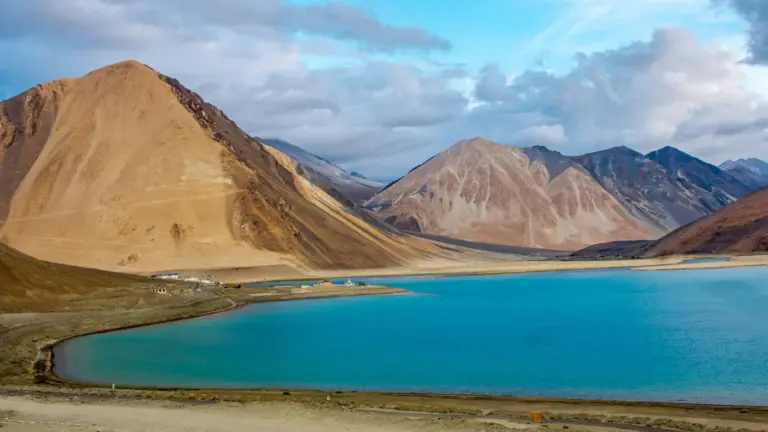

Katchatheevu is a small uninhabited island in the Palk Strait, approximately 285 acres (1.15 sq km) in size, located between India and Sri Lanka. The island was ceded to Sri Lanka by India in 1974 through a maritime boundary agreement signed by the Indira Gandhi government — a decision that remains politically controversial in Tamil Nadu, particularly because of its impact on Tamil fishermen.
For UPSC, Katchatheevu connects International Relations (India-Sri Lanka), Geography (Palk Strait region), and Polity (Centre-State relations on foreign policy).
| Katchatheevu at a glance | Detail |
|---|---|
| What | Small uninhabited island in the Palk Strait |
| Size | ~285 acres (~1.15 sq km) |
| Between | India (Rameswaram, ~33 km) and Sri Lanka (~24 km to nearest coast) |
| Ceded to Sri Lanka | 1974, via the Indira Gandhi–Sirimavo Bandaranaike Maritime Boundary Agreement |
| 1976 supplementary pact | Withdrew Indian fishermen's traditional fishing rights |
| Only structure | St. Anthony's Church (annual Catholic festival) |
| Dispute | Tamil Nadu seeks its return; Centre treats the matter as closed |
Location and Geographical Features
| Feature | Detail |
|---|---|
| Location | Palk Strait, between India (Tamil Nadu) and Sri Lanka |
| Size | ~285 acres (~1.15 sq km) |
| Distance from India (Rameswaram) | ~33 km |
| Distance from Sri Lanka (Delft Island) | ~62 km |
| Distance from nearest Sri Lankan mainland | ~24 km (Neduntheevu) |
| Inhabitation | Uninhabited (no permanent residents) |
| Vegetation | Sparse; some shrubs and brush |
| Notable structure | St. Anthony's Church (Catholic; centuries-old) |
The island is essentially a flat, sandy strip of land with limited natural resources but strategic location in the rich fishing waters of the Palk Strait.
History
Pre-Colonial Period
The island was historically part of the Ramnad Zamindari (the principality of the Sethupathi rulers of Ramnad in Tamil Nadu). Tamil and Sinhalese fishermen used the island for:
- Resting and drying nets
- Sheltering from storms
- Religious gatherings at St. Anthony's Church
The Roman Catholic Church built St. Anthony's Church on the island, which became a pilgrimage site visited annually by Tamil and Sinhalese Catholics.
Colonial Period
During British rule:
- The island was administered as part of the Madras Presidency
- Some maps showed it as Indian territory; others as Sri Lankan
- The British kept the issue ambiguous to avoid jurisdictional complications
Post-Independence (1947 onwards)
Both India and Sri Lanka claimed Katchatheevu after independence. Negotiations continued for over two decades:
- India's claim was based on:
- Historical Ramnad Zamindari ownership
- Customary use by Tamil fishermen
- Geographic proximity to India
- Sri Lanka's claim was based on:
- Portuguese colonial maps showing it as Sri Lankan
- The Dutch and British era practices that treated it as Sri Lankan
- Customary administrative practice
The 1974 Agreement
The Indira Gandhi-Sirimavo Bandaranaike Agreement
In June 1974, Prime Minister Indira Gandhi of India and Prime Minister Sirimavo Bandaranaike of Sri Lanka signed a Maritime Boundary Agreement that:
- Ceded Katchatheevu to Sri Lanka
- Settled the maritime boundary in the Palk Strait
- Granted Indian fishermen traditional fishing rights in the area around Katchatheevu (this provision later became disputed)
Why Did India Cede the Island?
Several factors influenced the Indian decision:
| Factor | Explanation |
|---|---|
| Strategic considerations | India wanted Sri Lanka to maintain a friendly relationship; ceding a small uninhabited island was seen as low cost |
| Historical evidence | Sri Lankan claims were arguably stronger based on colonial-era documents |
| Tamil-Sinhalese tensions | India did not want to inflame ethnic tensions that could affect Indian Tamils in Sri Lanka |
| Practical fishing arrangements | The agreement was supposed to protect Indian fishermen's rights |
| Maritime boundary clarity | India needed a clear boundary for various purposes (oil/gas exploration, fisheries management) |
The 1976 Supplementary Agreement
In March 1976, India and Sri Lanka signed a supplementary agreement that:
- Defined the maritime boundaries in the Gulf of Mannar and Bay of Bengal
- Removed Indian fishermen's traditional fishing rights around Katchatheevu
- Required Indian fishermen to obtain Sri Lankan permission to fish in Sri Lankan waters
This 1976 amendment effectively eliminated the safeguards for Indian fishermen included in the 1974 agreement — making the cession even more controversial in Tamil Nadu.
The Tamil Nadu Fishermen Issue
Why Tamil Nadu Cares
The Tamil Nadu fishermen issue is the most politically sensitive aspect of Katchatheevu:
| Issue | Detail |
|---|---|
| Traditional fishing grounds | Tamil fishermen had fished in the waters around Katchatheevu for generations |
| Best fishing area | The Palk Strait has rich fishing grounds; Katchatheevu's surroundings particularly productive |
| Drying ground | Fishermen used the island to dry their nets and rest |
| Religious practice | Annual St. Anthony's Festival was a major Tamil-Sinhalese gathering |
| Lost livelihood | After cession, Tamil fishermen lost access to these grounds |
Recurring Crises
Since 1974, Sri Lankan navy has repeatedly:
- Detained Tamil fishermen crossing into Sri Lankan waters
- Seized boats and equipment
- Killed several Tamil fishermen in "shoot at sight" incidents (over the decades, dozens have died)
- Imprisoned others for extended periods
The Tamil Nadu government has consistently demanded:
- Return of Katchatheevu to India
- Restoration of traditional fishing rights
- Release of detained fishermen
- Diplomatic intervention by the Centre
Centre's Response
Successive central governments — including those that publicly sympathised with Tamil Nadu — have not pursued the return of Katchatheevu, citing:
- Difficulty of reopening a 50-year-old international agreement
- Strategic relationship with Sri Lanka
- Constitutional/legal complications
Constitutional and Legal Aspects
Whose Authority?
A key UPSC question: Did the Centre have the constitutional right to cede Katchatheevu without Tamil Nadu's consent?
Article 1 of the Constitution states India is a "Union of States" and lists the territory of India. Many argue:
- Cession of territory requires constitutional amendment
- Berubari Union case (1960) held that cession of territory requires constitutional amendment, not just executive action
- The 9th Constitutional Amendment (1960) was passed to cede the Berubari Union to East Pakistan
For Katchatheevu, however:
- The 1974 agreement was signed by the executive
- No constitutional amendment was passed
- The argument was that Katchatheevu's status was disputed (not clearly Indian), so cession was just a settlement of a boundary dispute, not transfer of Indian territory
This argument remains legally controversial.
Supreme Court Cases
Multiple petitions have been filed in the Supreme Court demanding the return of Katchatheevu. As of early 2026:
- The Court has not ordered the return of the island
- The Court has acknowledged the historical and political dimensions
- The Centre has consistently maintained that the matter is closed
Recent Political Developments (2024)
In March 2024, the issue resurfaced as a political controversy:
- Government officials and BJP leaders released documents showing how the Congress (Indira Gandhi) had ceded the island
- Prime Minister Modi criticised the decision as one that "weakened India"
- DMK and Tamil Nadu government continued to demand the return of the island
- Congress defended the historical decision as based on existing diplomatic and legal realities
The political controversy revealed that Katchatheevu remains a live issue, capable of being mobilised in elections — particularly in Tamil Nadu.
India-Sri Lanka Relations
The Strategic Context
India and Sri Lanka have complex bilateral relations:
- Strategic partnership — Sri Lanka is India's southern maritime neighbour
- Economic relations — India is a major trading partner
- Tamil ethnic issue — historically tense (LTTE conflict, Indian intervention 1987-90)
- Chinese involvement — China's growing presence in Sri Lanka (Hambantota Port) is a strategic concern
Why India Has Not Pushed for Katchatheevu's Return
| Reason | Explanation |
|---|---|
| Strategic partnership | India needs Sri Lankan cooperation against Chinese influence |
| Tamil ethnic sensitivities | Reopening the issue could affect Sri Lankan Tamil situation |
| Legal complications | Reversing a 50-year-old agreement is diplomatically very difficult |
| Practical limits | Even returning the island would not necessarily resolve fishermen issues |
UPSC Relevance
GS1 (Geography): Indian Ocean, Palk Strait, India-Sri Lanka boundary.
GS2 (IR): India-Sri Lanka relations, maritime boundaries, federal-foreign policy issues.
GS2 (Polity): Centre-State relations, federal issues in foreign policy, Berubari Union precedent.
Key Prelims facts:
- Location: Palk Strait, between India and Sri Lanka
- Size: ~285 acres (~1.15 sq km)
- Status: Uninhabited; only St. Anthony's Church
- Distance from Indian coast (Rameswaram): ~33 km
- Distance from Sri Lankan coast: ~24 km (nearest)
- Pre-colonial owner: Ramnad Zamindari (Sethupathi rulers of Tamil Nadu)
- Ceded: 1974 (Indira Gandhi – Sirimavo Bandaranaike Agreement)
- Supplementary agreement: 1976 (removed fishermen's traditional rights)
- Annual event: St. Anthony's Festival (Catholic)
- Centre's position: Cession was settlement of disputed claim, not territorial transfer
- Tamil Nadu's position: Demand for return of the island
- Political controversy: Major resurgence in 2024
Tell Google you want more of this.
Add Anantam IAS as a preferred sourceOne tap, and this site shows up more often in your own Top Stories, AI Overviews and AI Mode. Remove it any time.