Rabi crops are winter crops — sown in October–November and harvested in March–April (wheat, gram, mustard, barley) — while Kharif crops are monsoon crops sown in June–July and harvested in September–October (rice, maize, cotton, tur). The core difference is the season and water source: Rabi depends on irrigation and winter Western-Disturbance rain, whereas Kharif depends on the southwest monsoon. A short Zaid season (March–June) fills the gap between the two.
Rabi crops are sown in the winter season (October–November) and harvested in spring (March–April). The word "Rabi" comes from the Arabic word for spring, referring to the harvest time. These crops grow during the cool, dry months and depend primarily on irrigation and winter rainfall (including Western Disturbances in north India) rather than the monsoon.
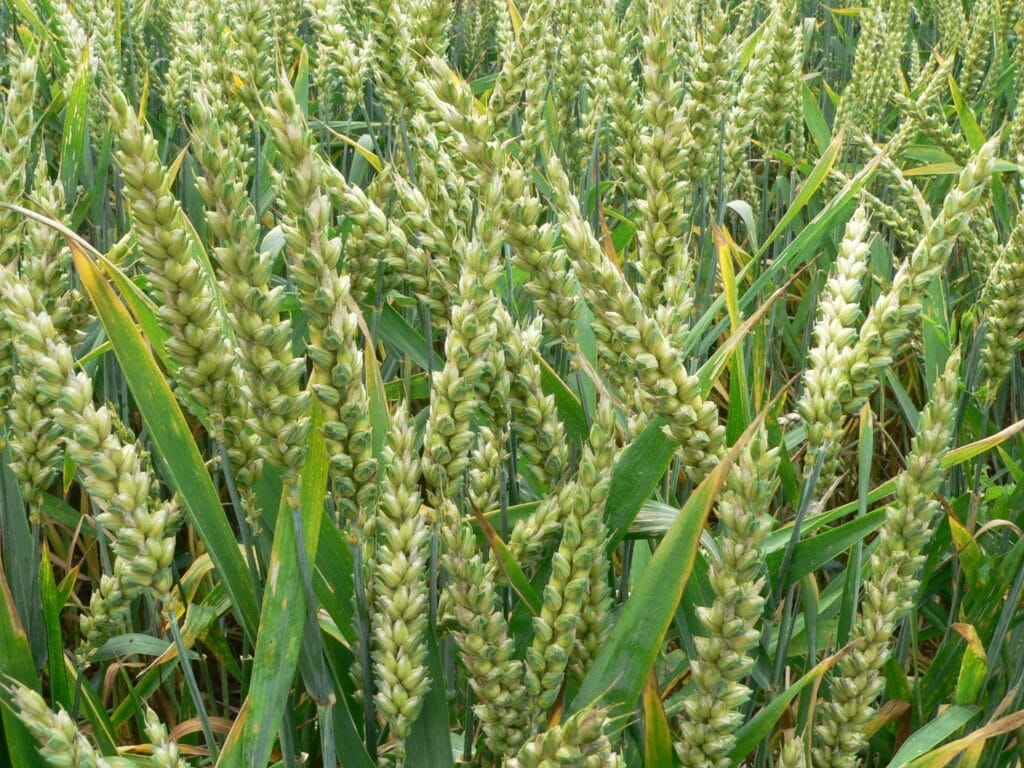
Wheat — India's second most important food grain after rice — is the flagship Rabi crop. For UPSC, the Rabi-Kharif-Zaid classification is essential for Agriculture (GS3) and Geography (GS1).
What Are Rabi Crops?
Growing season:
- Sowing: October–November (after the monsoon retreats and temperatures cool)
- Growing: November–February (cool, dry winter months)
- Harvesting: March–April (before the summer heat intensifies)
Water requirement: Lower than Kharif crops. Rabi crops need moderate moisture, supplied through irrigation (canal, tubewell, sprinkler) and winter rain. The Western Disturbances — weather systems originating from the Mediterranean — bring crucial winter rainfall to north and northwest India.
Temperature: Cool growing conditions (10–25°C). Frost can damage certain Rabi crops, particularly at the flowering stage.
Major Rabi Crops
| Crop | Type | Major Producing States | Soil/Climate Needs |
|---|---|---|---|
| Wheat | Cereal | UP, Punjab, Haryana, MP, Rajasthan | Loamy/clay loam soil; 10–15°C (growing), 25°C (ripening); 50–75 cm rainfall/irrigation |
| Barley | Cereal | Rajasthan, UP, MP, Haryana | Light loamy soil; tolerates drought and salinity; cooler conditions than wheat |
| Gram (Chana) | Pulse | MP, Rajasthan, Maharashtra, UP, Karnataka | Light/medium black soil; cool dry climate; 60–90 cm rainfall |
| Masur (Lentil) | Pulse | UP, MP, Bihar, West Bengal | Loamy soil; cool climate; 25–50 cm rainfall |
| Peas | Pulse | UP, MP, Punjab, Rajasthan | Well-drained loamy soil; cool temperature (10–18°C) |
| Mustard | Oilseed | Rajasthan, MP, Haryana, UP, Gujarat | Sandy loam soil; dry climate; 25–40 cm rainfall; leading Rabi oilseed |
| Linseed | Oilseed | MP, UP, Maharashtra, Chhattisgarh | Black/alluvial soil; moderate rainfall |
| Safflower | Oilseed | Maharashtra, Karnataka, AP | Black soil; dry conditions; drought-resistant |
| Coriander | Spice | Rajasthan, MP, Gujarat, AP | Well-drained soil; cool climate |
| Potato | Tuber/Vegetable | UP, West Bengal, Bihar, Gujarat | Sandy loam soil; cool temperature; frost-sensitive at flowering |
Wheat: India's Key Rabi Crop
Wheat is India's most important Rabi crop and second most important food grain (after rice):
- India is the world's second largest wheat producer (after China)
- The Green Revolution (1960s–70s) dramatically increased wheat yields, particularly in Punjab, Haryana, and western UP
- The Indo-Gangetic Plain is the wheat belt of India
- Key varieties: HD-2967, PBW-343, DBW-187 (high-yield, disease-resistant)
- MSP for wheat is announced annually before the sowing season
Rabi vs. Kharif: Key Differences
| Parameter | Rabi | Kharif |
|---|---|---|
| Season | Winter (Oct–Mar) | Monsoon (Jun–Oct) |
| Sowing | October–November | June–July |
| Harvesting | March–April | September–October |
| Primary water source | Irrigation + winter rain | Monsoon rainfall |
| Temperature | Cool (10–25°C) | Warm (25–35°C) |
| Key cereal | Wheat | Rice |
| Key pulse | Gram (chana), masur | Tur (arhar), moong, urad |
| Key oilseed | Mustard, linseed | Groundnut, soybean |
| Dominant region | Northwest India (Punjab, Haryana, UP) | Eastern India, Deccan |
| Monsoon dependency | Low (irrigation-dependent) | High |
| Risk | Frost, unseasonal rain at harvest, heat waves | Monsoon variability, floods |
Climatic Requirements
Temperature: Rabi crops require:
- Cool conditions (10–15°C) during the vegetative stage (growth of stems and leaves)
- Warmer conditions (20–25°C) during the ripening/maturation stage
- Frost is damaging, particularly for wheat and gram at the flowering stage
Rainfall/Irrigation: Most Rabi areas receive 25–75 cm of total water (rainfall + irrigation). The dependence on irrigation is much higher than Kharif:
- Punjab and Haryana: Canal irrigation (Bhakra system) + tubewell irrigation
- UP and Bihar: Tubewell irrigation (groundwater)
- MP and Rajasthan: Combination of canal, tubewell, and rainfed
Western Disturbances: These are extratropical storms originating from the Mediterranean that bring winter rainfall (called Mahawat) to north India (December–February). This rainfall is crucial for Rabi crops, particularly in rain-fed areas of Rajasthan and western UP.
Challenges Facing Rabi Crops
| Challenge | Impact |
|---|---|
| Unseasonal rain and hailstorms | Rain during March–April (harvest time) damages standing wheat and gram crops; increasingly frequent due to climate change |
| Terminal heat stress | Rising temperatures in March cause wheat grains to shrivel (reduced yield); a growing climate change concern |
| Groundwater depletion | Over-reliance on tubewell irrigation in Punjab, Haryana, and western UP is depleting groundwater at alarming rates |
| Frost damage | Severe cold waves damage gram, mustard, and potato crops in north India |
| Post-harvest losses | Inadequate storage — wheat stored in open mandis is damaged by rain and pests |
| MSP procurement gaps | Effective procurement at MSP is concentrated in Punjab and Haryana; farmers in MP, UP, and Rajasthan often sell below MSP |
MSP for Rabi Crops (2026–27)
| Crop | MSP 2026–27 (Rs/quintal) | MSP 2025–26 (Rs/quintal) | Increase |
|---|---|---|---|
| Wheat | 2,585 | 2,425 | +160 |
| Barley | 2,150 | 1,980 | +170 |
| Gram (Chana) | 5,875 | 5,650 | +225 |
| Masur (Lentil) | 7,000 | 6,700 | +300 |
| Mustard | 6,200 | 5,950 | +250 |
| Safflower | 6,540 | 5,940 | +600 |
Note: MSP for Rabi Marketing Season 2026–27, approved by the CCEA in October 2025 on CACP recommendations. Figures in ₹/quintal.
UPSC point: MSP is recommended by the Commission for Agricultural Costs and Prices (CACP) and announced by the Cabinet Committee on Economic Affairs (CCEA).
Green Revolution and Rabi Crops
The Green Revolution (1960s–70s) was primarily a wheat revolution in India:
- Introduction of High Yielding Variety (HYV) seeds — particularly the Mexican dwarf varieties developed by Norman Borlaug and adapted by M.S. Swaminathan for Indian conditions
- Concentrated in Punjab, Haryana, and western UP
- Transformed India from a food-deficit country (dependent on PL-480 imports from the US) to a food-surplus country
- India became self-sufficient in wheat by the early 1970s
However, the Green Revolution also created problems:
- Monoculture (wheat-rice cycle) depleted soil nutrients
- Excessive chemical fertiliser and pesticide use
- Groundwater depletion from tubewell irrigation
- Regional inequality — the revolution bypassed eastern and southern India
Zaid Crops: The Third Season
Between Rabi harvest (March–April) and Kharif sowing (June–July), there is a short Zaid season:
- Duration: March–June
- Water source: Irrigation (primarily)
- Crops: Watermelon, muskmelon, cucumber, moong dal, urad dal, fodder crops
- Region: Irrigated areas of UP, Bihar, West Bengal
Zaid crops take advantage of the long daylight hours and high temperatures of late spring/early summer.
UPSC Relevance
GS1 (Geography): Cropping patterns, climate and agriculture, irrigation.
GS3 (Agriculture): Food security, MSP, Green Revolution, climate change impacts.
Key Prelims facts:
- Rabi = winter crops (October–March)
- Key crops: Wheat, barley, gram, mustard, masur, linseed
- Water source: Irrigation + Western Disturbance rainfall
- Wheat belt: Punjab, Haryana, UP (Indo-Gangetic Plain)
- India: 2nd largest wheat producer (after China)
- Green Revolution: Primarily a wheat revolution in India
- MSP recommended by: CACP; announced by CCEA
- Western Disturbances: Bring winter rainfall (Mahawat) to north India
- Compare with Kharif (monsoon crops) and Zaid (summer crops)
Tell Google you want more of this.
Add Anantam IAS as a preferred sourceOne tap, and this site shows up more often in your own Top Stories, AI Overviews and AI Mode. Remove it any time.