Of the four classical factors of production — land, labour, capital and enterprise — land is the foundation of Indian agriculture. How land is owned, leased, recorded and transacted decides farm productivity, tenant security, credit access and rural poverty outcomes. Despite three waves of land reform since Independence, India still struggles with fragmented holdings, informal tenancy, weak records and restrictive leasing laws. This guide unpacks the landscape and the reform agenda.
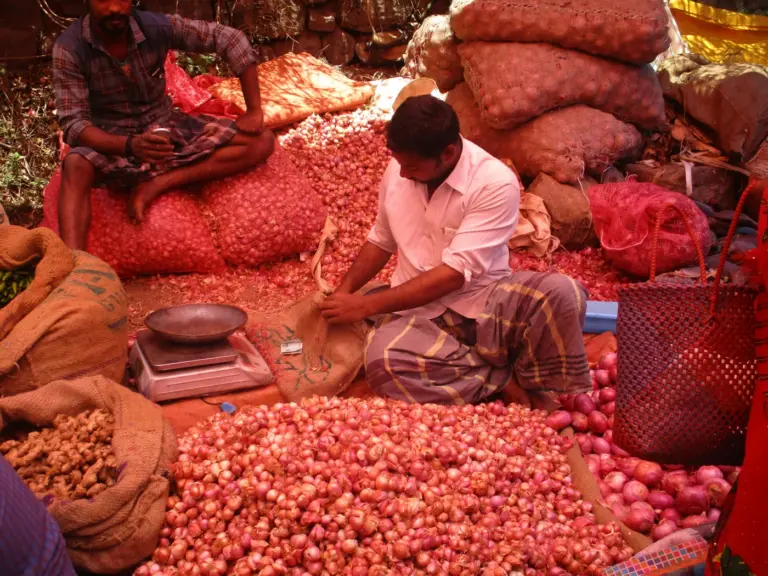
Present Status of Agricultural Land
- Net sown area: around 141 million hectares (mha) out of a total geographical area of 328 mha.
- Operated holdings: around 146 million (Agriculture Census 2015-16 projection).
- Average size of holding: dropped to 1.08 ha in 2015-16 Agriculture Census, down from 2.28 ha in 1970-71.
- Small and marginal farmers (holdings below 2 ha): 86% of all farmers, owning around 47% of agricultural land.
- Large farmers (>10 ha): less than 1% of farmers, owning about 9% of land.
| Holding Category | Size | % of Farmers | % of Area |
|---|---|---|---|
| Marginal | <1 ha | ~68% | ~24% |
| Small | 1-2 ha | ~18% | ~24% |
| Semi-medium | 2-4 ha | ~10% | ~24% |
| Medium | 4-10 ha | ~4% | ~20% |
| Large | >10 ha | <1% | ~9% |
The striking pattern: high fragmentation with the average holding close to the size of a small town plot. This creates several structural problems:
- Low economies of scale for mechanisation.
- Weak bargaining power in markets.
- High dependence on credit.
- Inefficient land use.
Tenancy in Agricultural Land
Concept of Tenancy
Land leasing allows farmers to lease out agricultural land to other farmers, landless workers, sharecroppers or tenants. Done well, it enhances agricultural efficiency, equity and poverty reduction by matching land with those who can farm it best.
Background of Land Reforms
India's post-Independence land reforms had three thrusts:
- Abolition of intermediaries (zamindars, jagirdars, inamdars).
- Abolition or regulation of tenancy.
- Imposition of ceilings on landholdings and redistribution of ceiling-surplus land.
The first and third thrusts were partly successful; the second — tenancy regulation — largely backfired.
Present Status of Tenancy
- Most state governments have legally banned or heavily restricted agricultural land leasing.
- Restrictive clauses include: fixed period of lease, regulation of rent, strict conditions for termination, and automatic conferment of ownership on tenants after certain years.
- Result: formal tenancy vanished, informal oral tenancy flourished.
- NSS data indicates actual informal tenancy may be 3-4 times the reported formal figures.
The Case for Legalising Land Tenancy
Restrictive laws have proved anti-growth and anti-poor.
- Informal and oral tenancy — tenants cannot access institutional credit, crop insurance, MSP procurement, or subsidies. They face exploitation and insecurity.
- No incentive to invest — oral tenants do not invest in land improvement, irrigation, soil conservation.
- Reduced occupational mobility — landowners interested in non-farm employment stay in agriculture for fear of losing land rights.
- Fallow land — many owners keep land fallow rather than lease out, to avoid legal risk. Lifting restrictions would improve land utilisation and farm output.
- Higher equity — legal leasing lets the landless access land and improve incomes.
NITI Aayog has observed: “Lease farming is an economic necessity, not a symbol of feudalism.” With strong panchayati raj institutions, tenants now have political agency. Formal tenancy would improve bargaining power, not exploit it.
Model Agricultural Land Leasing Act, 2016
NITI Aayog drafted the Model Agricultural Land Leasing Act, 2016 to guide states. Key features:
- Legal recognition of agricultural land leasing without fear of ownership loss.
- Automatic resumption of possession by owner at end of lease period.
- Access to institutional credit, insurance, disaster relief for tenants.
- Mutually agreed terms on rent, duration and conditions.
- No compulsory registration with government; a simple written agreement suffices.
Several states — Madhya Pradesh, Andhra Pradesh, Uttarakhand, Maharashtra — have adopted variants. Wider adoption remains uneven.
What Must Be Done?
- Incentivise states to adopt the Model Agricultural Land Leasing Act, 2016 through performance-linked grants.
- Modernise land records — digital, verified, spatially accurate records reduce leasing risks. DILRMP (Digital India Land Records Modernisation Programme) is the main vehicle.
- Promote contract farming by organising tenant farmers into Farmer Producer Organisations (FPOs) under the 10,000 FPO Scheme.
- Extend scheme benefits to tenants — currently tenants are excluded from PM-KISAN, crop insurance, KCC. A digital database of tenants at state level would allow inclusion.
- Set up Land Banks at village level — aggregating fragmented parcels for productive leasing, with clear ownership records.
- SVAMITVA scheme — survey of village abadi areas providing property cards; as of 2024, property cards issued for over 2 crore beneficiaries.
Related Programmes and Schemes
| Scheme/Law | Purpose |
|---|---|
| DILRMP | Digitisation and modernisation of land records |
| SVAMITVA | Property cards for inhabited village (abadi) areas |
| Model Agricultural Land Leasing Act, 2016 | Legal framework for agricultural land leasing |
| Forest Rights Act, 2006 | Recognition of forest-dwelling community rights over forest land |
| Land Acquisition, Rehabilitation and Resettlement Act, 2013 (RFCTLARR) | Consent, SIA, R&R for compulsory acquisition |
| PM Kisan Samman Nidhi | Rs 6,000 per year to landowning farmers (excludes tenants) |
Latest Developments (2024-26)
- SVAMITVA scheme — as of 2025, property cards issued for 2.42 crore+ beneficiaries across 3.15 lakh villages; saturation target by 2026.
- DILRMP — integration of land records with Aadhaar and registration records progressing; Bhoomi portal (Karnataka), Dharani (Telangana), Bhulekh (Odisha/UP) models leading.
- Digital India Bhumi Samman — annual awards for top-performing districts on land-record digitisation.
- Budget 2025-26 announced a land digitisation and reform incentive tied to the Rs 1.5 lakh crore interest-free capex loans to states.
- PM-KISAN 19th instalment released in 2025; debate over extending direct income support to tenant farmers continues.
- FPO scheme — over 8,875 FPOs registered against the 10,000 target by FY 2027-28; tenant-farmer FPOs gaining traction in Andhra Pradesh, Madhya Pradesh.
- NITI Aayog working paper (2024) on agricultural land leasing reiterated need for states to adopt Model Act.
- Agriculture Census 2021-22 fieldwork progressing; results awaited 2025-26.
UPSC Relevance
GS-III Mapping
- Agriculture — land reforms, tenancy, cropping pattern.
- Indian Economy — factor markets, rural credit, FPO ecosystem.
- Inclusive Growth — tenant farmers, landless, equity.
GS-II Mapping
- Governance — land record digitisation, SVAMITVA, panchayati raj.
Prelims Bullets
- Average size of holding (2015-16 Agriculture Census): ~1.08 ha.
- Small and marginal farmers — 86% of farmers; ~47% of land.
- Model Agricultural Land Leasing Act — drafted by NITI Aayog, 2016.
- SVAMITVA — surveys village abadi (inhabited) areas; Ministry of Panchayati Raj.
- DILRMP — Digital India Land Records Modernisation Programme.
- RFCTLARR Act, 2013 — replaced the 1894 Land Acquisition Act.
- FPO scheme — 10,000 FPOs target; implemented by MoA&FW, NABARD, SFAC, NCDC.
- PM-KISAN — Rs 6,000 p.a. to landholding farmer families (tenants excluded).
Mains Angles
- "Indian agriculture cannot be modernised without legalising tenancy." Discuss with reference to the Model Act.
- "Digitisation of land records is not merely an administrative reform; it is a structural economic intervention." Examine.
Tell Google you want more of this.
Add Anantam IAS as a preferred sourceOne tap, and this site shows up more often in your own Top Stories, AI Overviews and AI Mode. Remove it any time.