The Maurya Empire was the first empire to unify most of the Indian subcontinent under a single political authority. At its height under Ashoka (c. 268–232 BCE), it stretched from present-day Afghanistan in the northwest to Bangladesh in the east, and from the Himalayas in the north to the Deccan plateau in the south. It was one of the largest empires of the ancient world by area and population.
The Maurya period is foundational for UPSC Ancient History. Expect direct questions on Chandragupta’s rise, Kautilya‘s Arthashastra, Ashoka’s edicts, the Kalinga War, Maurya administration, and the causes of decline.
Chandragupta Maurya: Founder (321–297 BCE)
Rise to Power
Chandragupta Maurya founded the Maurya dynasty around 321 BCE by overthrowing the Nanda dynasty of Magadha. The Nandas, despite their vast wealth and large army, were reportedly unpopular — particularly with Brahmins — and Chandragupta, guided by his mentor Kautilya (also known as Chanakya or Vishnugupta), exploited this resentment.
The ancient sources on Chandragupta come from several directions: the Brahmanical tradition (Vishakhadatta's Mudrarakshasa), Buddhist texts, Jain texts, and Greek accounts from ambassadors who visited the Maurya court. Greek sources refer to him as Sandrocottus, and the identification of Sandrocottus with Chandragupta is one of the anchoring dates in ancient Indian chronology — established by William Jones in the 18th century.
Confrontation with Seleucus Nicator
After Alexander the Great's death in 323 BCE, his empire fragmented. Seleucus I Nicator inherited the eastern portions and attempted to reconquer the Punjab and Northwest India around 305 BCE. He met Chandragupta's forces and was decisively defeated.
The resulting Treaty of the Indus (c. 303 BCE) was significant:
- Seleucus ceded territories in present-day Afghanistan and Balochistan to Chandragupta
- Chandragupta gave Seleucus 500 war elephants
- The two established a marriage alliance (Seleucus reportedly gave his daughter to Chandragupta)
- Seleucus sent Megasthenes as ambassador to the Maurya court at Pataliputra
Megasthenes' account (Indica, surviving only in fragments) is one of the most important primary sources for Maurya India.
Kautilya and the Arthashastra
No account of Chandragupta is complete without Kautilya — the strategist, philosopher, and political theorist who shaped the Maurya state.
The Arthashastra (literally "the science of material gain" or "science of statecraft") attributed to Kautilya is one of the most important texts in the history of political thought — anywhere in the world. Written in Sanskrit, it covers:
- Statecraft and sovereignty — how to acquire, consolidate, and expand power
- Administration — the structure of government, duties of officials, spy networks
- Economics — agriculture, trade, taxation, wages
- Law — civil and criminal procedures
- War and diplomacy — the famous saptanga theory (seven elements of the state: king, minister, territory, fort, treasury, army, and ally)
- Foreign policy — the mandala theory: your neighbour is your enemy, your neighbour's neighbour is your friend
The Arthashastra was lost for centuries and rediscovered in 1905 by R. Shamasastry, who published the first translation in 1915. Its sophisticated analysis of power, bureaucracy, and economic management puts it alongside Machiavelli's The Prince as a seminal work on political realism.
Chandragupta's Abdication
Chandragupta abdicated around 297 BCE and, according to Jain tradition, became a Jain monk. He followed the Jain saint Bhadrabahu to Shravanabelagola in present-day Karnataka, where he died by sallekhana (ritual fasting unto death). This narrative is recorded in Jain texts and is widely accepted by historians, though the details are debated.
Bindusara (297–272 BCE)
Chandragupta's son Bindusara extended Maurya power into the Deccan. Greek sources call him Amitrochates (from the Sanskrit Amitraghata, "slayer of enemies"). He maintained diplomatic contact with the Seleucid court — Antiochus I reportedly sent Deimachus as ambassador to Pataliputra during his reign.
Bindusara reportedly requested Greek wines, figs, and a philosopher from Antiochus, who replied he could send the wines and figs but philosophers were not for sale.
His reign is relatively less documented than his father's or son's. But the administrative consolidation he maintained meant that Ashoka inherited a stable, functioning empire.
Ashoka the Great (268–232 BCE)
Ashoka is arguably the most significant ruler in Indian history. His transformation from a conventional empire-builder to a ruler guided by Buddhist ethics — and his use of the state apparatus to propagate that ethics — is unique in world history.
Accession and Early Reign
Ashoka was not Bindusara's eldest son. Ancient texts mention a war of succession lasting about four years before he consolidated the throne around 268 BCE. Buddhist sources describe him as "Chandashoka" (fierce Ashoka) in his early years — cruel and tyrannical. These accounts are likely exaggerated for narrative contrast with his later transformation, but there is reasonable historical consensus that he was a competent and aggressive ruler before Kalinga.
The Kalinga War (261 BCE)
The Kalinga War is the turning point of Ashoka's life and one of the most discussed events in Indian history.
Kalinga — roughly modern Odisha — was independent and resisted Maurya expansion. Ashoka invaded and conquered it around 261 BCE. The aftermath, as described in Ashoka's own Rock Edict XIII (the longest and most emotional of his edicts), was devastating:
> "A hundred and fifty thousand persons were carried away captive, one hundred thousand were slain, and many times that number perished."
Ashoka describes his own grief and remorse at this destruction. Whether this was genuine emotional transformation, political messaging, or both, historians debate. But the behavioural changes that followed were real and lasting.
Ashoka's Dhamma
After Kalinga, Ashoka adopted Dhamma (Prakrit for Sanskrit Dharma) as the guiding principle of his rule. This Dhamma was not identical to Buddhism — it was a broad ethical code:
- Non-violence (ahimsa) toward all living beings
- Respect for parents, elders, and teachers
- Generosity toward Brahmins and shramanas (monks of various sects)
- Tolerance of all religious sects
- Truth-telling
- Concern for the welfare of all subjects, including animals
Ashoka built a welfare state around this Dhamma: he planted trees along roads, dug wells, established rest houses, created hospitals for humans and animals, and appointed Dhamma Mahamattas — officials specifically tasked with promoting ethical behaviour among the population.
Ashoka's Edicts
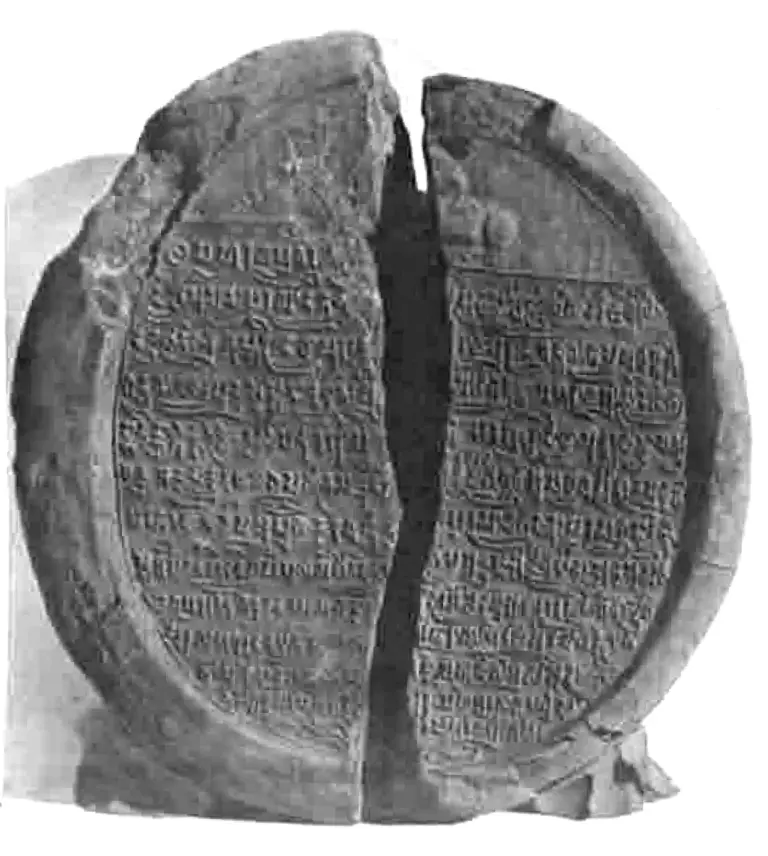
Ashoka communicated his policies through inscriptions on rocks and pillars — the first extensive royal inscriptions in India. They are among the most important primary sources in ancient Indian history.
| Edict Type | Examples | Content |
|---|---|---|
| Major Rock Edicts | Shahbazgarhi, Girnar, Dhauli, Jaugada | Ethics, tolerance, Kalinga remorse, welfare |
| Minor Rock Edicts | Brahmagiri, Maski, Gavimath | Ashoka's personal conversion, Dhamma |
| Pillar Edicts | Delhi-Topra, Delhi-Meerut, Lauriya-Nandangarh | Policy statements, Dhamma |
| Separate Rock Edicts | Dhauli, Jaugada | Instructions to officials on Kalinga |
| Cave Inscriptions | Barabar Hills | Donations to Ajivika monks |
The edicts were written in Brahmi script (most), Kharoshthi (northwest), and Aramaic and Greek (Kandahar). James Prinsep deciphered the Brahmi inscriptions in 1837.
Ashoka and Buddhism
Ashoka personally converted to Buddhism, reportedly under the influence of the monk Nigrodha or Upagupta (sources vary). He is said to have visited Buddhist sites — Lumbini (birthplace of the Buddha), Bodh Gaya, Sarnath, Kusinara — and erected pillars and stupas at them.
The Third Buddhist Council was held at Pataliputra during his reign, chaired by Moggaliputta Tissa, to purify Buddhism and compile the Abhidhamma Pitaka. After this council, Buddhist missionaries were reportedly sent to various regions:
- Mahendra (Ashoka's son) and Sanghamitta (his daughter) to Sri Lanka
- Missionaries to Central Asia, the Hellenistic kingdoms, and Southeast Asia
This missionary activity is a major reason Buddhism became a world religion rather than a regional Indian sect.
Maurya Administration
The Maurya state was the most sophisticated administrative apparatus ancient India had seen. The Arthashastra and Megasthenes' account together provide a detailed picture.
Central Administration
The king stood at the apex. Below him was the Mantri Parishad (council of ministers). Key officials included:
- Amatyas — senior ministers and officials
- Mantrin — chief minister/councillor
- Senapati — commander of the army
- Samaharta — chief revenue collector
- Sannidhata — treasurer
- Pradeshta — magistrate
The Arthashastra describes an elaborate spy network (guptacharas) operating across the empire — one of the most detailed ancient accounts of state intelligence.
Provincial Administration
The empire was divided into provinces (janapadas or chakras). Major provinces included:
- Uttarapatha (northwest) — capital Taxila
- Avantirashtra (west) — capital Ujjain
- Kalinga — capital Tosali (after conquest)
- Dakshinapatha (south) — capital Suvarnagiri
- Prachya (east) — centred on Pataliputra
Provinces were governed by Kumaras (princes of royal blood) or Mahamattas (senior officials). Below provinces were districts (ahara or vishaya), then villages.
Municipal Administration
Megasthenes describes the administration of Pataliputra in detail. A board of 30 officials divided into six committees of five managed the city:
- Industrial arts and crafts
- Foreigners
- Registration of births and deaths
- Trade and weights
- Supervision of manufactured goods
- Collection of taxes on sales
This level of municipal organisation was remarkable for its time.
Military
The Maurya army was enormous. Pliny cites figures of 600,000 infantry, 30,000 cavalry, 9,000 war elephants, and 8,000 chariots — almost certainly exaggerated but indicative of scale. The Senapati commanded the army, and a board of six committees (similar to the municipal structure) administered military affairs.
Economy
Agriculture was the foundation. The Samaharta supervised land revenue — the primary state income. The Arthashastra specifies different tax rates for different types of land and crops.
Trade flourished. The Uttarapatha (northern highway) and Dakshinapatha (southern route) were major arteries. State-controlled industries included mines, forests, and textile production. The empire maintained standardised weights and measures.
Decline of the Maurya Empire
After Ashoka's death in 232 BCE, the empire fragmented within 50 years.
Reasons for decline:
- Weak successors — Ashoka's immediate successors (Dasharatha, Samprati, and others) could not maintain central authority over such a vast territory
- Financial strain — Ashoka's welfare expenditure and Buddhist monastic patronage reportedly strained the treasury; the Brahmanical tradition suggests Ashoka diverted state resources to religion
- Brahmin reaction — Ashoka's favour toward Buddhism and shramanas at the expense of Brahmanical institutions created resentment; the last Maurya ruler, Brihadratha, was killed by his general Pushyamitra Shunga around 185 BCE, who then founded the Shunga dynasty
- Centrifugal forces — the empire was too large and diverse to be administered without a strong centre; regional governors and subject peoples broke away
- Northwest pressure — the Bactrian Greeks (Indo-Greeks) invaded and occupied parts of the northwest around 180 BCE, filling the vacuum left by Maurya collapse
The fall of the Maurya Empire ended India’s first experiment with centralised imperial administration. The next comparable unification would come only with the Guptas — and even then, the Gupta empire was less centralised.
Key Dates: Maurya Empire at a Glance
| Event | Date |
|---|---|
| Chandragupta overthrows Nandas | c. 321 BCE |
| Treaty with Seleucus Nicator | c. 303 BCE |
| Megasthenes at Pataliputra | c. 302–298 BCE |
| Chandragupta abdicates | c. 297 BCE |
| Bindusara's reign | 297–272 BCE |
| Ashoka's accession | c. 268 BCE |
| Kalinga War | c. 261 BCE |
| Third Buddhist Council | c. 250 BCE |
| Ashoka's death | 232 BCE |
| Pushyamitra Shunga kills Brihadratha | c. 185 BCE |
Frequently Asked Questions About the Maurya Empire
Who founded the Maurya Empire and when?
Chandragupta Maurya founded the Maurya Empire around 321 BCE by defeating the Nanda dynasty of Magadha. He was guided by his strategist Kautilya (Chanakya), whose political treatise the Arthashastra shaped the empire's administrative structure.
What was the significance of the Kalinga War?
The Kalinga War (c. 261 BCE) was Ashoka's conquest of the independent kingdom of Kalinga (present-day Odisha). The massive casualties — described in his own Rock Edict XIII — caused Ashoka such remorse that he abandoned aggressive expansion and adopted a policy of Dhamma (ethical governance). It is one of history's rare cases of a ruler publicly acknowledging the horror of his own conquest.
What is the Arthashastra and who wrote it?
The Arthashastra is a treatise on statecraft, economic policy, military strategy, and governance attributed to Kautilya (also known as Chanakya or Vishnugupta), who served as advisor to Chandragupta Maurya. Written in Sanskrit, it covers everything from taxation and administration to espionage and diplomacy. It was rediscovered and published in 1915 by R. Shamasastry.
What was Ashoka's Dhamma?
Ashoka's Dhamma was not strictly Buddhist doctrine but a broad ethical code he promulgated through his edicts. It emphasised non-violence, respect for elders, religious tolerance, generosity, and truth-telling. He appointed Dhamma Mahamattas — state officials — to propagate these values across the empire.
Why did the Maurya Empire decline?
The Maurya Empire declined due to a combination of weak successors after Ashoka, financial strain from welfare expenditure, growing Brahmin resentment of Buddhist patronage, the empire's sheer size making central control difficult, and external pressure from the Bactrian Greeks in the northwest. The last Maurya ruler, Brihadratha, was killed by general Pushyamitra Shunga around 185 BCE.
Tell Google you want more of this.
Add Anantam IAS as a preferred sourceOne tap, and this site shows up more often in your own Top Stories, AI Overviews and AI Mode. Remove it any time.