The National Agricultural Market, better known as e-NAM, is India's pan-India electronic trading platform that networks physical APMC mandis into a single virtual marketplace. Launched in April 2016 and operated by the Small Farmers' Agribusiness Consortium (SFAC), e-NAM was conceived as the digital backbone of a "one nation, one agricultural market". A decade later, it has integrated around 1,400 mandis across 25 states and UTs, and is now expanding through new modules under the Digital Agriculture Mission and Budget 2025-26.
What is e-NAM?
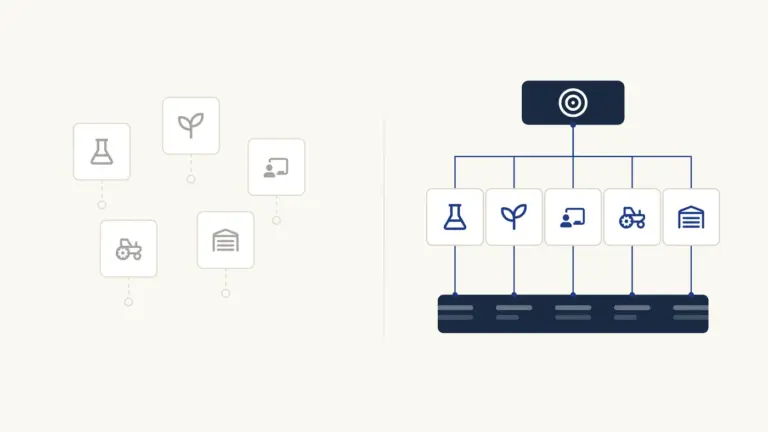
e-NAM creates a unified online marketplace for agricultural commodities by:
- Integrating existing APMCs into a single digital platform.
- Enabling transparent, competitive online auctions.
- Providing single registration, single trading licence and a single point of market-fee levy per trade.
- Offering quality assaying, weighbridge services, and electronic payment directly to farmers' bank accounts.
It is operated by SFAC under the Ministry of Agriculture and Farmers Welfare.
Key modules and recent additions
FPO Module
Farmer Producer Organisations can upload photos and details of their produce directly from collection centres, without physically travelling to a mandi. Buyers can bid remotely.
Warehousing-based Trading Module
Farmers can sell produce from warehouses registered with the Warehousing Development and Regulatory Authority (WDRA) – unlocking e-Negotiable Warehouse Receipts and deferred sales.
Logistics Module
Links large logistics aggregators with traders for seamless transport of agri-produce across mandis.
Kisan Rath
A mobile app for farmers and traders to hire vehicles for inter-state and intra-state movement of produce.
Platform interoperability
e-NAM has integrated with state-level platforms like Karnataka's ReMS (Rashtriya e-Market Services), enabling cross-state trade.
Agri-Infrastructure Fund (AIF)
A Rs 1 lakh crore financing facility (launched 2020, extended in 2024) supports PACS, FPOs, start-ups and APMCs in building collection centres, cold chains, warehousing, assaying, grading and packaging units.
Benefits of e-NAM
- Better price realisation: competitive bidding across mandis reduces the influence of local cartels.
- Transparency: electronic auctions end opaque price-fixing.
- Direct payments: proceeds credited to farmers' bank accounts within 24-48 hours.
- FPO empowerment: FPOs can bypass arhatiyas and deal directly with bulk buyers.
- Quality assurance: 6-8 parameter assaying improves trust among distant buyers.
- Food processing linkage: processors and exporters source standardised raw material.
- Supply-chain efficiency: integrated logistics reduce post-harvest loss.
- Inflation control: broader geographic price discovery smooths commodity inflation.
Challenges
Shallow penetration
Only around 1,400 APMCs – about 20% of the country's APMCs – are integrated, with many large mandis still outside.
Political economy
States fear loss of mandi revenue from single-point market fees and are slow to amend APMC Acts to meet e-NAM preconditions. Karnataka, Maharashtra and Tamil Nadu retain parallel state platforms.
Infrastructure gaps
Electronic gate passes, quality assaying labs, electronic weighbridges, reliable internet and IT staff are missing in many mandis.
Farmer participation
Surveys indicate that roughly one-third of farmers are unaware of e-NAM. Many continue to sell at the village level to local traders because of:
- Immediate cash needs.
- Informal credit from commission agents.
- Distance to APMCs.
- Low digital literacy.
Middleman resistance
Arhatiyas and commission agents resist e-NAM because it makes transactions transparent and taxable.
Limited commodity coverage
Though 200+ commodities are notified, active trading is concentrated in a handful of crops – wheat, paddy, maize, soybean, mustard, tur, chana.
Latest developments (2024-26)
Digital Agriculture Mission (2024-26): a Rs 2,817 crore scheme building Agristack – a digital public infrastructure comprising farmer IDs, digital crop surveys and soil health maps – which will plug directly into e-NAM to match produce with demand.
Budget 2025-26: announced integration of e-NAM with Agristack and National Mission on Vegetables and Fruits to reduce perishables price volatility. The Budget also promised Unified Lending Interface-linked farm credit through e-NAM transactions.
Unified Market Platform 2.0: ongoing work to integrate e-NAM with state platforms (Karnataka's ReMS 2.0, Telangana Agri-Market) for seamless inter-state trade.
PACS integration: about 10,000 PACS are being digitised under the Ministry of Cooperation; a significant share will be e-NAM-linked for grain procurement.
PLI food processing: beneficiaries increasingly sourcing raw material through e-NAM for traceability.
16th Finance Commission: state-level demands for tied grants to build mandi infrastructure – gate passes, assaying labs, weighbridges – under e-NAM Phase 2.
GST Council: 2024 clarifications on GST applicability for e-NAM services have reduced disputes.
MPI 2024: highlights the link between rural market access and nutritional outcomes, reinforcing the case for e-NAM expansion to remote districts.
Way forward
- Accelerate APMC integration: target 3,000+ mandis by 2027 with state incentives.
- Fund mandi infrastructure: raise per-mandi grant from Rs 75 lakh to Rs 2 crore to close infrastructure gaps.
- Awareness and training: institutional partnerships with KVKs, FPOs and SHGs.
- Direct farmer registration: enable farmers to list produce without mandi intermediation.
- PACS-FPO-e-NAM triad: leverage 1 lakh PACS as last-mile aggregators.
- Inter-state trade push: harmonise APMC Acts through the Agriculture Marketing Council proposal (echoing the SC-appointed committee's recommendation).
- Apex regulator: set up an apex body for e-NAM governance and grievance redress.
UPSC Relevance
- GS III (Agriculture): agricultural marketing reform, APMC, e-NAM, FPOs.
- GS III (Economy): Digital Public Infrastructure, price discovery, supply chains.
- GS II (Governance): cooperative federalism in agricultural markets.
- Prelims pointers: SFAC (operator), 2016 launch, 1,400+ mandis, FPO Module, Warehousing Module, Kisan Rath, Agri-Infrastructure Fund, WDRA.
Likely question: "Assess the progress of e-NAM in creating a 'one nation, one agricultural market'. What role does the Digital Agriculture Mission play in deepening its reach?" (GS III, 250 words)
Tell Google you want more of this.
Add Anantam IAS as a preferred sourceOne tap, and this site shows up more often in your own Top Stories, AI Overviews and AI Mode. Remove it any time.