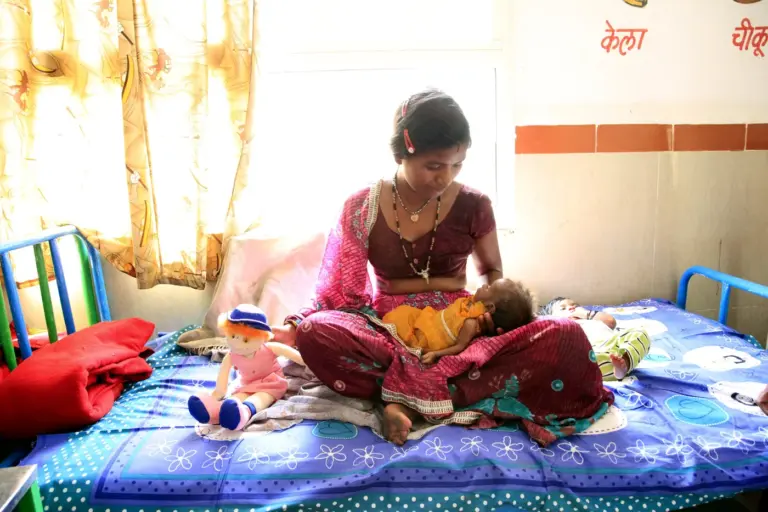
Most aspirants can name a dozen welfare schemes and still freeze when asked what the state actually owes a destitute 70-year-old widow with no son, no land, and no savings. The answer has a name, and it predates almost every scheme you have memorized. The National Social Assistance Programme (NSAP), running since 1995, is India’s constitutional promise of a minimum income to the elderly poor, widows, the severely disabled, and families that lose their breadwinner. It is small money, honestly. But it is the closest thing India has to a legally grounded floor below which the poorest are not supposed to fall.
Get NSAP right and a whole cluster of the syllabus clicks into place: the Directive Principles, the idea of social security as a right rather than charity, the poverty-targeting debate, and the shift to direct cash transfers. This is one scheme that pays back the study time many times over.
What is the National Social Assistance Programme?
NSAP is a centrally sponsored scheme run by the Ministry of Rural Development that gives monthly pensions and one-time grants to specific categories of the poor: old people, widows, the severely disabled, and bereaved families. It began on 15 August 1995, and it was the first time the Union government took direct financial responsibility for social security of the destitute, rather than leaving it entirely to states.
Think of it as the government keeping a constitutional promise it made to itself in 1950. The Constitution’s Article 41, a Directive Principle, says the state shall “within the limits of its economic capacity” secure public assistance in cases of old age, sickness, disablement, and undeserved want. For 45 years that promise sat mostly on paper. NSAP is the machinery built to honor it, at least partially, for the people with the weakest claim on any other income.
Here is the part the scheme lists skip. NSAP is not a poverty-reduction programme in the way that a jobs scheme or a housing scheme is. It does not try to lift you out of poverty. It provides social assistance, a bare subsistence transfer to people who by definition cannot work their way up: someone too old, too disabled, or too suddenly widowed to earn. Confusing social assistance (unconditional support for those who cannot earn) with social insurance (contributory schemes you pay into while working) is the single most common mistake here, so anchor it now.
The constitutional and policy basis: why NSAP exists
NSAP draws its legitimacy from the Directive Principles of State Policy, chiefly Article 41, supported by Article 39(a) on adequate means of livelihood and Article 42 on just conditions of work. These principles are not enforceable in court, which is exactly why a scheme like NSAP matters: it converts a non-justiciable ideal into an actual budget line and a bank transfer.
If you have studied the Directive Principles of State Policy, you already know the tension. DPSPs tell the state what to aim for but give the citizen no right to sue if the state falls short. NSAP is what “operationalizing a DPSP” looks like in practice. It is worth reading alongside the Fundamental Rights vs Directive Principles debate, because social-security schemes are precisely where the two chapters of the Constitution meet: a right to life under Article 21 that increasingly gets read to include a dignified minimum, delivered through the machinery of Part IV.
The design logic also flows from India’s poverty-measurement history. NSAP targets households below the poverty line (BPL), so the scheme is only as good as the list that identifies who is poor. That link to the poverty line estimates in India is not academic. When BPL lists are outdated or capped by a Planning Commission quota, genuinely poor families get excluded from NSAP on paper, no matter how destitute they are in fact.
The five components of NSAP
NSAP has five components: three pension schemes, one death-benefit grant, and one food-security scheme. The three pensions cover the elderly, widows, and the severely disabled. This five-part structure is the highest-yield fact in the whole topic, so learn it as a set, not as scattered names.
The pensions carry the name of Indira Gandhi, and each has an age-graded structure: a base amount from the qualifying age, then a higher amount once the beneficiary turns 80. The figures below are the Central contribution. Most states add a top-up on top, which is why the pension an actual beneficiary receives varies enormously by state.
| Component | Who it covers | Central benefit |
|---|---|---|
| IGNOAPS (Indira Gandhi National Old Age Pension Scheme) | BPL persons aged 60 and above | Rs 200/month (60-79 yrs); Rs 500/month (80+) |
| IGNWPS (Indira Gandhi National Widow Pension Scheme) | BPL widows aged 40 and above | Rs 300/month (40-79 yrs); Rs 500/month (80+) |
| IGNDPS (Indira Gandhi National Disability Pension Scheme) | BPL persons aged 18+ with 80% or more disability | Rs 300/month (18-79 yrs); Rs 500/month (80+) |
| NFBS (National Family Benefit Scheme) | BPL family on death of primary breadwinner (aged 18-59) | Rs 20,000 one-time lump sum |
| Annapurna | Eligible senior citizens not covered by IGNOAPS | 10 kg foodgrains/month, free |
The three pension schemes
IGNOAPS is the flagship and the one you should be able to explain cold. A person aged 60 or above from a BPL household gets a Central pension of Rs 200 a month up to age 79, rising to Rs 500 at 80. When the scheme was widened in 2007, the qualifying age was lowered from 65 to 60, which is why “the age is 60, not 65” is a favorite trap. This scheme is the anchor of India’s non-contributory old-age support, and it sits at the base of the country’s wider pension architecture for the elderly.
IGNWPS covers widows aged 40 and above from BPL households, at Rs 300 a month until 79 and Rs 500 thereafter. The age floor of 40 matters: a younger widow is presumed able to remarry or earn, so the scheme steps in at middle age, when a widow’s economic vulnerability in rural India tends to sharpen.
IGNDPS supports persons aged 18 and above with severe or multiple disability of 80 percent or more, again from BPL households, at Rs 300 a month up to 79 and Rs 500 at 80. Note the tight eligibility. It is not for any disability, only the most severe, which is why coverage under this component has always been thin. It reads best alongside the broader rights framework for persons with disabilities in India.
NFBS and Annapurna
NFBS is not a pension. It is a one-time grant of Rs 20,000 paid to a BPL household when its primary breadwinner dies, where the breadwinner was aged between 18 and 59. The logic is a shock absorber: the sudden loss of the earning member is the moment a poor family slides from managing to destitute, and this grant is meant to cushion that single blow.
Annapurna is the odd one out, a food-security scheme rather than a cash scheme. It gives 10 kg of foodgrains a month, free, to senior citizens who are eligible for an old-age pension but have not actually been covered by IGNOAPS. In effect it catches some of the people the pension list misses.
How NSAP has evolved
NSAP did not start with five components. At launch in 1995 it had three: the old-age pension (then NOAPS), the family benefit (NFBS), and a National Maternity Benefit Scheme (NMBS). That evolution is the story worth knowing.
The maternity component was later moved out to the Health and Family Welfare ministry, where its logic eventually flowed into maternity-benefit programmes for pregnant and lactating women. If you have studied the PM Matru Vandana Yojana, you are looking at the descendant of that original NSAP maternity idea, now run as a separate cash-incentive scheme rather than a social-assistance grant.
Annapurna was added in 2000. In 2007 the old-age pension was recast as IGNOAPS with a lower qualifying age and wider reach. In 2009 the two remaining pensions, IGNWPS for widows and IGNDPS for the disabled, were added, completing the five-component structure you study today. So the tidy list is actually the product of 14 years of layering, which is why the names and the launch dates get muddled if you memorize them cold instead of understanding the sequence.
Eligibility, delivery, and the move to DBT
Eligibility across NSAP turns on two gates: the BPL status of the household and the category-specific condition (age for pensions, disability percentage for IGNDPS, breadwinner’s death for NFBS). A beneficiary must clear both. There is no income test beyond the BPL list itself, which keeps the paperwork lighter but ties the whole scheme to the quality of that list.
Delivery has shifted decisively toward Direct Benefit Transfer (DBT). Pensions increasingly land straight in an Aadhaar-seeded bank or post-office account, which cuts out the leakage that plagued cash handed over a counter. This is the same plumbing that runs under most of India’s welfare state now, and it is worth pairing with the wider case for direct benefit transfers: fewer ghost beneficiaries, faster payment, and an audit trail. The National Social Assistance Programme portal run by the Ministry of Rural Development tracks sanctions and payments down to the beneficiary level.
The financing follows a shared pattern. The Centre provides its fixed contribution per beneficiary (the Rs 200, Rs 300, or Rs 500 in the table above), and states are expected to match or top it up from their own budgets. This is why two widows of the same age, one in a state that adds Rs 1,500 and one in a state that adds nothing, can receive wildly different pensions under the same national scheme. The Central grant is a floor the states are free to raise, and the political appetite to raise it varies enormously.
But DBT is not a clean win for everyone. For an 82-year-old with severe disability living far from a bank branch, Aadhaar authentication and biometric mismatches can turn a right into an obstacle course. The technology that reduces leakage can also produce exclusion errors, and NSAP’s beneficiaries are precisely the people least able to navigate a failed fingerprint scan.
The criticisms you must be able to argue
The sharpest criticism of NSAP is simple: the money is too little and has stood still too long. The Central old-age pension of Rs 200 a month has not been revised since 2007. Set against nearly two decades of food and medicine inflation, that figure has quietly collapsed in real terms. Rs 200 a month is roughly Rs 7 a day, which does not buy a meaningful floor of dignity for anyone.
States paper over this by adding top-ups, and some pay several times the Central share. But that creates a second problem: a destitute widow’s pension depends heavily on which state she happens to live in, so a supposedly national floor is deeply uneven in practice.
Coverage is the third gap. NSAP is bounded by BPL lists that are often outdated, and by historical caps on the number of beneficiaries a state could enroll. Genuinely poor households get left out not because they fail the test but because the list is stale or full. This links straight back to how India even defines and counts the poor, whether by the old expenditure-based poverty line or the newer Multidimensional Poverty Index that captures deprivation in health, education, and living standards. A pension scheme is only as inclusive as the poverty map it is bolted onto.
The reform direction most experts converge on follows from those gaps. Index the pension to inflation so it does not silently decay again, raise the Central floor to something closer to a real subsistence figure, and move targeting off stale BPL lists toward the more recent socio-economic data used elsewhere in welfare delivery. A bolder version of the argument questions poverty-targeting itself for the very old: a near-universal old-age pension, the argument runs, would cost less in exclusion errors and administrative friction than the current means-tested design, which spends effort deciding who is poor enough while missing many who plainly are. Whether India can afford that is a fiscal judgement, but the direction of the criticism is consistent.
The fourth, more structural point: NSAP is non-contributory social assistance, and it sits awkwardly beside newer contributory schemes like the Atal Pension Yojana, where workers pay in during their earning years. The policy question India has not fully answered is where the line should sit between assistance for those who never could contribute and insurance for those who can. That tension is the live edge of the whole social-security debate.
Where NSAP fits in India’s social-security architecture
NSAP is the tax-funded, non-contributory pillar of a social-security system that has three broad layers, and placing it correctly is what lets you compare schemes intelligently instead of listing them. The bottom layer is social assistance for those who cannot contribute, and that is NSAP’s home. The middle layer is contributory insurance for workers, and the top layer is voluntary savings and private pensions for those who can afford them.
The Code on Social Security, 2020, which consolidated nine older labour laws, tried to widen the middle layer to gig, platform, and unorganised workers who had fallen through the cracks between assistance and insurance. But that code does not replace NSAP. The two do different jobs. A destitute widow with no work history cannot pay into a contributory fund, so no amount of labour-law reform reaches her. Only a tax-funded transfer like NSAP can, which is precisely why India cannot let the assistance pillar wither even as it builds out the contributory one.
This is also where the fiscal argument gets sharp. India spends a small share of GDP on non-contributory social assistance compared with the demographic reality of a rapidly ageing population. As the share of Indians above 60 climbs past the current tenth of the population toward roughly a fifth by mid-century, the pressure on the NSAP pillar will only grow. A scheme frozen at 2007 amounts is not built for the demographic wave that is already visible in the data. Strengthening the assistance floor is not generosity, it is preparation.
How to study NSAP for the exam
Lock the five-component list first, then hang the numbers on it. The pension amounts, the age bands, and the NFBS grant are the details that show up again and again, so build a single mental table: IGNOAPS 60+/Rs 200/Rs 500, IGNWPS 40+/Rs 300/Rs 500, IGNDPS 80% disability/18+/Rs 300/Rs 500, NFBS Rs 20,000, Annapurna 10 kg. That grid alone answers most factual questions.
For the analytical side, connect three threads. One, the constitutional basis in Article 41 and the DPSP-to-scheme logic. Two, the DBT delivery story with its leakage-versus-exclusion trade-off. Three, the criticism cluster: low and stagnant amounts, state-level unevenness, and coverage gaps tied to BPL identification. If you can move between the fact grid and these three threads, you can handle both a one-mark date question and a full analytical answer on the adequacy of India’s social safety net.
The stance worth taking, and defending, is that NSAP is architecturally sound but fiscally starved. The idea of a national, rights-based floor for those who cannot earn is exactly right. The Rs 200 that funds it is not. An answer that praises the design and then names the funding gap, with the 2007-unchanged figure as evidence, reads as informed rather than generic.
Frequently Asked Questions
What is the National Social Assistance Programme (NSAP)?
NSAP is a centrally sponsored scheme launched on 15 August 1995 and run by the Ministry of Rural Development. It provides monthly pensions and one-time grants to the elderly poor, widows, the severely disabled, and BPL families that lose their primary breadwinner, giving effect to Article 41 of the Constitution.
What are the five components of NSAP?
IGNOAPS (old-age pension), IGNWPS (widow pension), IGNDPS (disability pension), NFBS (National Family Benefit Scheme, a lump-sum death benefit), and the Annapurna scheme (free foodgrains for uncovered senior citizens).
What is the pension amount under IGNOAPS?
The Central contribution is Rs 200 a month for beneficiaries aged 60 to 79, and Rs 500 a month for those aged 80 and above. Most states add a top-up, so the actual pension received varies by state.
Who is eligible for NSAP benefits?
The household must be below the poverty line (BPL), and the beneficiary must meet the category condition: age 60+ for old-age pension, widow aged 40+ for widow pension, 80% or more disability and age 18+ for disability pension, or death of the primary breadwinner aged 18-59 for NFBS.
Which ministry implements NSAP?
The Ministry of Rural Development at the Centre. Implementation on the ground is done by states and union territories, which identify beneficiaries and often add their own top-up on the Central pension.
How much is the National Family Benefit Scheme grant?
NFBS provides a one-time payment of Rs 20,000 to a BPL family on the death of its primary breadwinner, where the breadwinner was aged between 18 and 59.
How are NSAP benefits paid?
Increasingly through Direct Benefit Transfer (DBT) into Aadhaar-seeded bank or post-office accounts, tracked on the Ministry of Rural Development’s NSAP portal, which reduces leakage but can create authentication-based exclusion for the very old and disabled.
Why is NSAP criticized?
The Central pension amounts are very low and have not been revised since 2007, benefits vary sharply across states because of top-ups, and coverage is limited by outdated BPL lists and historical enrollment caps, leaving many genuinely poor households out.
Practice Questions
1. The National Social Assistance Programme (NSAP) gives effect primarily to which provision of the Constitution?
a) Article 21
b) Article 41
c) Article 44
d) Article 51A
Answer: b) Article 41
2. Which of the following is NOT a component of NSAP?
a) Indira Gandhi National Old Age Pension Scheme
b) Indira Gandhi National Widow Pension Scheme
c) National Family Benefit Scheme
d) Pradhan Mantri Shram Yogi Maandhan
Answer: d) Pradhan Mantri Shram Yogi Maandhan
3. Under IGNOAPS, the Central pension for a beneficiary aged 80 or above is:
a) Rs 200 per month
b) Rs 300 per month
c) Rs 500 per month
d) Rs 1,000 per month
Answer: c) Rs 500 per month
4. The National Family Benefit Scheme (NFBS) provides:
a) A monthly pension of Rs 300
b) A one-time grant of Rs 20,000
c) 10 kg of free foodgrains a month
d) A maternity benefit of Rs 6,000
Answer: b) A one-time grant of Rs 20,000
5. Which ministry administers the National Social Assistance Programme?
a) Ministry of Women and Child Development
b) Ministry of Social Justice and Empowerment
c) Ministry of Rural Development
d) Ministry of Labour and Employment
Answer: c) Ministry of Rural Development
Mains-style questions
- “The National Social Assistance Programme converts a non-justiciable Directive Principle into a working entitlement, yet remains fiscally starved.” Critically examine.
- Discuss the shift to Direct Benefit Transfer in delivering social-assistance pensions. What does it gain, and whom does it risk excluding?
- Distinguish between social assistance and social insurance in India’s welfare architecture, using NSAP and contributory pension schemes as illustrations.
- NSAP’s reach is only as good as the poverty lists it is built on. Analyze how BPL identification affects the inclusiveness of India’s social safety net.
- Evaluate the adequacy of NSAP’s benefit amounts in securing a dignified minimum for India’s elderly poor, and suggest reforms.
NSAP is the scheme that tells you what India believes it owes the people who can no longer earn. The architecture is right: a national floor, grounded in the Constitution, delivered through modern payment rails. The amount is where the belief runs thin. A pension frozen at Rs 200 since 2007 is not a floor so much as a symbol of one, and closing that gap between the design and the disbursement is the reform the topic keeps pointing toward.
Tell Google you want more of this.
Add Anantam IAS as a preferred sourceOne tap, and this site shows up more often in your own Top Stories, AI Overviews and AI Mode. Remove it any time.