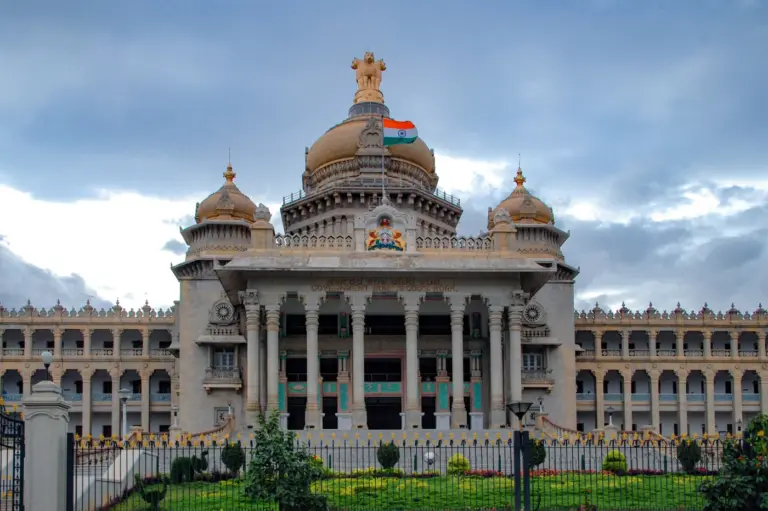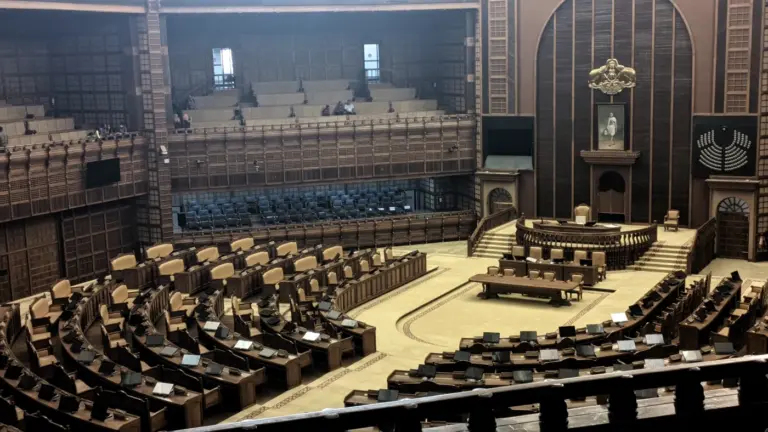
The ordinance-making power is one of the most controversial features of the Indian Constitution. It empowers the President (Article 123) and Governors (Article 213) to legislate when the legislatures are not in session. Meant as an emergency lawmaking tool, it has often been used — and misused — as a shortcut around legislative scrutiny. For UPSC Polity, ordinances sit at the intersection of executive power, separation of powers, and parliamentary democracy.
Why Ordinances Exist
In India, three organs share lawmaking:
- Central and state legislatures enact laws.
- Central and state governments implement laws.
- The judiciary interprets them.
But the constitutional scheme is not watertight. There are overlaps — the President has some legislative and judicial functions, the legislature can delegate to the executive (subordinate legislation), and ordinances allow the executive to legislate under constrained circumstances. Ordinance-making diffuses the line between legislature and executive, designed for urgent action when the legislature cannot convene.
Constitutional Provisions
Article 123: President's Ordinance Power
The President can promulgate an ordinance when either of the two Houses of Parliament is not in session and circumstances require "immediate action." An ordinance has the same force and effect as an Act of Parliament but is a temporary legislative measure.
Article 213: Governor's Ordinance Power
The Governor can promulgate an ordinance under similar conditions when the State Legislature is not in session. Certain ordinances require presidential instructions before promulgation.
Constitutional Limitations
- Legislature not in session: The President can only promulgate when either House is not in session; the Governor when the state legislature is not in session.
- Immediate action required: There must be circumstances that require taking immediate action — the executive must be "satisfied" of this.
- Subject-matter scope: Ordinances may relate to any subject on which the legislature has the power to make law — and are subject to the same limitations.
- Parliamentary approval: Ordinances must be approved by Parliament within six weeks of reassembling, or they cease to operate.
- Disapproval: They also cease to operate if disapproved by resolution of both Houses.
Why Executives Resort to Ordinances
Reluctance to Face the Legislature
- On politically divisive issues, governments prefer ordinances to avoid debate.
- Ordinances bypass committee scrutiny and Opposition questioning.
Lack of Majority in Parliament
- A government may not command a majority in the Rajya Sabha or both Houses.
- Ordinances can buy time until the political situation changes.
Wilful Disruption by Opposition
- If a session is being consistently disrupted, governments argue that ordinances are the only way to get essential legislation done.
- Critics argue this is circular — governments can reconvene Parliament or hold special sessions.
Urgency
- Genuine urgency (e.g., post-disaster financial measures) can justify ordinances.
- But this accounts for a small share of actual usage.
The Famous "Bihar Case"
Nothing epitomises ordinance misuse better than the Bihar case:
- Between 1967 and 1981, Bihar promulgated 256 ordinances.
- 11 ordinances were kept alive for more than 10 years.
- This was famously dubbed "Ordinance Raj."
- The DC Wadhwa ruling (1987) struck at this practice.
Issues With Ordinance-Making
Violates the Philosophy of Separation of Powers
The executive's power to issue ordinances subverts the constitutional scheme where enacting laws is the function of the legislature. Ordinances let the executive circumvent Parliament — the primary lawgiver under the Constitution.
Bypasses Democratic Deliberation
Law-making in a democracy requires argument, deliberation, and compromise. Ordinances shortcut this process. The costs are:
- No parliamentary committee scrutiny.
- No Opposition cross-examination.
- No public consultation.
- No expert testimony.
Re-promulgation Defeats Constitutional Design
The Constitution limits ordinance duration. Re-promulgating an ordinance multiple times — without genuine effort at passing a bill — defeats this limit. It creates a parallel legislative track entirely in executive hands.
Threat to Parliamentary Sovereignty
Ordinances pose a threat to the sovereignty of Parliament and state legislatures, which have been constituted as primary lawgivers. The executive must show self-restraint and use ordinance-making only as per the spirit of the Constitution — not to evade legislative scrutiny.
Important Cases on Ordinances
R.C. Cooper v. Union of India (1970)
The Supreme Court held that the President's decision to promulgate an ordinance could be challenged on the grounds that the requirement of "immediate action" was not met — and the ordinance had been passed primarily to bypass debate and discussion in the legislature.
A.K. Roy v. Union of India (1982)
The Supreme Court argued that the President's ordinance-making power is not beyond judicial review. This established judicial review as a safeguard against ordinance misuse.
Venkata Reddy v. State of Andhra Pradesh (1985)
A subsequent ruling narrowed A.K. Roy by holding that the satisfaction of the President cannot be called into question — swinging the pendulum towards executive autonomy.
DC Wadhwa v. State of Bihar (1987)
A landmark decision:
- Struck at the Bihar ordinance raj.
- Held that the legislative power of the executive to promulgate ordinances is to be used in exceptional circumstances, not as a substitute for law-making power.
- Examined the Bihar case where 259 ordinances were re-promulgated, some for as long as 14 years.
- Warned that such practice is a "fraud on the Constitution."
Krishna Kumar Singh v. State of Bihar (2017)
A seven-judge bench ruled that:
- Failure to place an ordinance before the legislature constitutes an abuse of power and a fraud on the Constitution.
- Mandatory tabling before the legislature for approval.
- Rights and obligations created by ordinances survive or lapse based on whether the legislature approved — with a "enduring rights" doctrine that has continued to be debated.
Nagraj Judgment: A Balanced View
In Nagraj, the Supreme Court observed: "The power to issue an ordinance is not an executive power but the power of the executive to legislate on the grounds provided for in Article 123." This framing reminds us that ordinance-making is a conditional legislative power, not a parallel executive prerogative.
Trends in Ordinance Usage
| Period | Notable Feature |
|---|---|
| 1950s-70s | Moderate usage; largely procedural |
| 1970s-80s | Bihar Ordinance Raj — peak misuse at state level |
| 1980s-90s | Growing judicial review |
| 2000s-10s | Spikes during coalition governments |
| 2014-24 | Several high-profile ordinances (enemy property, GST-related, muslim women, banking, Delhi Services Act, etc.) |
Way Forward
Use Ordinance Power Sparingly
- Rare and exceptional circumstances only.
- Strict adherence to the "immediate action" requirement.
Mandate Early Tabling
- As Krishna Kumar Singh directed, mandatory tabling before the legislature at the earliest opportunity.
- Clear legislative effort must precede ordinance re-promulgation.
Strengthen Judicial Review
- Courts should scrutinise the satisfaction of the President/Governor where there is prima facie evidence of circumvention.
- Periodic misuse should invite stronger judicial pushback.
Legislative Session Reform
- Longer legislative sessions reduce the need for ordinances.
- Special sessions can be convened for urgent matters without resorting to ordinances.
Transparency
- Publish the reasons and urgency underlying each ordinance.
- Ensure parliamentary committees examine ordinances promptly after promulgation.
Latest Developments (2024-26)
- Delhi Services Act (2023) — enacted after an ordinance; challenge pending.
- GNCTD Amendment (2023) ordinance followed by legislation.
- 17th Lok Sabha saw a relatively moderate number of ordinances compared to peak coalition years.
- Supreme Court has continued to reiterate the Krishna Kumar Singh guidelines on ordinance tabling.
- State governments — particularly those at odds with Governors — have seen ordinances blocked or delayed by the Governor.
UPSC Relevance
GS-II mapping: Parliament and State legislatures — structure, functioning, conduct of business, powers, privileges; separation of powers; executive accountability.
Prelims bullets:
- Article 123 — President's ordinance.
- Article 213 — Governor's ordinance.
- Must be approved within 6 weeks of Parliament reassembling.
- DC Wadhwa (1987) — Bihar ordinance raj.
- Krishna Kumar Singh (2017) — mandatory tabling; fraud on the Constitution.
- R.C. Cooper (1970) — judicial review possible.
Mains angles:
- "Ordinance-making is a power to be exercised with extreme caution." Discuss.
- Critically examine the misuse of the ordinance-making power in India with reference to relevant case law.
- How has the Supreme Court shaped the scope of ordinance-making power? Evaluate.
- Suggest reforms to prevent the abuse of ordinance-making power while preserving its legitimate function.
Tell Google you want more of this.
Add Anantam IAS as a preferred sourceOne tap, and this site shows up more often in your own Top Stories, AI Overviews and AI Mode. Remove it any time.