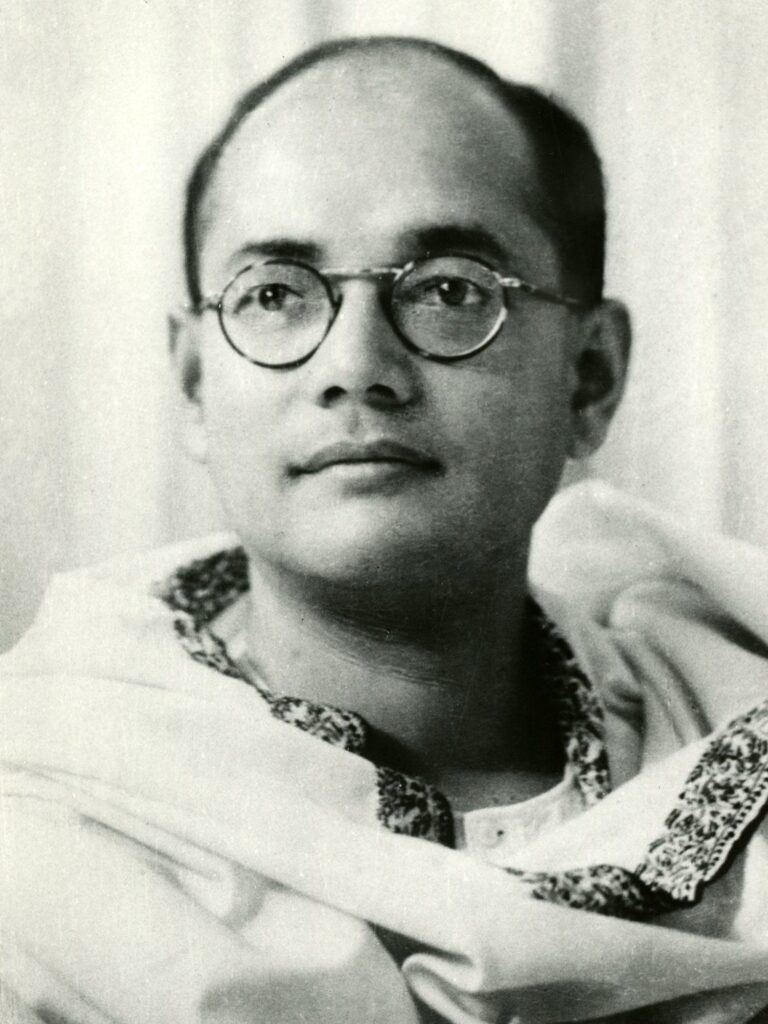
Subhas Chandra Bose (23 January 1897 – 18 August 1945) was the most militant nationalist leader of twentieth-century India. Twice elected president of the Indian National Congress, founder of the All India Forward Bloc, supreme commander of the Azad Hind Fauj or Indian National Army, and head of the Provisional Government of Free India, he is universally known as Netaji — the leader. His battle cry “Jai Hind” and his slogan “Give me blood and I shall give you freedom” survive in the official language of the Republic of India.
Subhas Chandra Bose’s career poses three enduring questions in modern Indian history. First, what did his break with Gandhi in 1939 tell us about the limits of the Congress consensus? Second, did his wartime alliance with Nazi Germany and Imperial Japan amount to ideological accommodation or strategic improvisation? Third, what was the effect of the INA campaign and the 1945-46 Red Fort trials on the British decision to quit India in 1947? UPSC GS-I treats him as one of the three central figures of the late freedom struggle, alongside Gandhi and Nehru.
Early Life and Civil Service
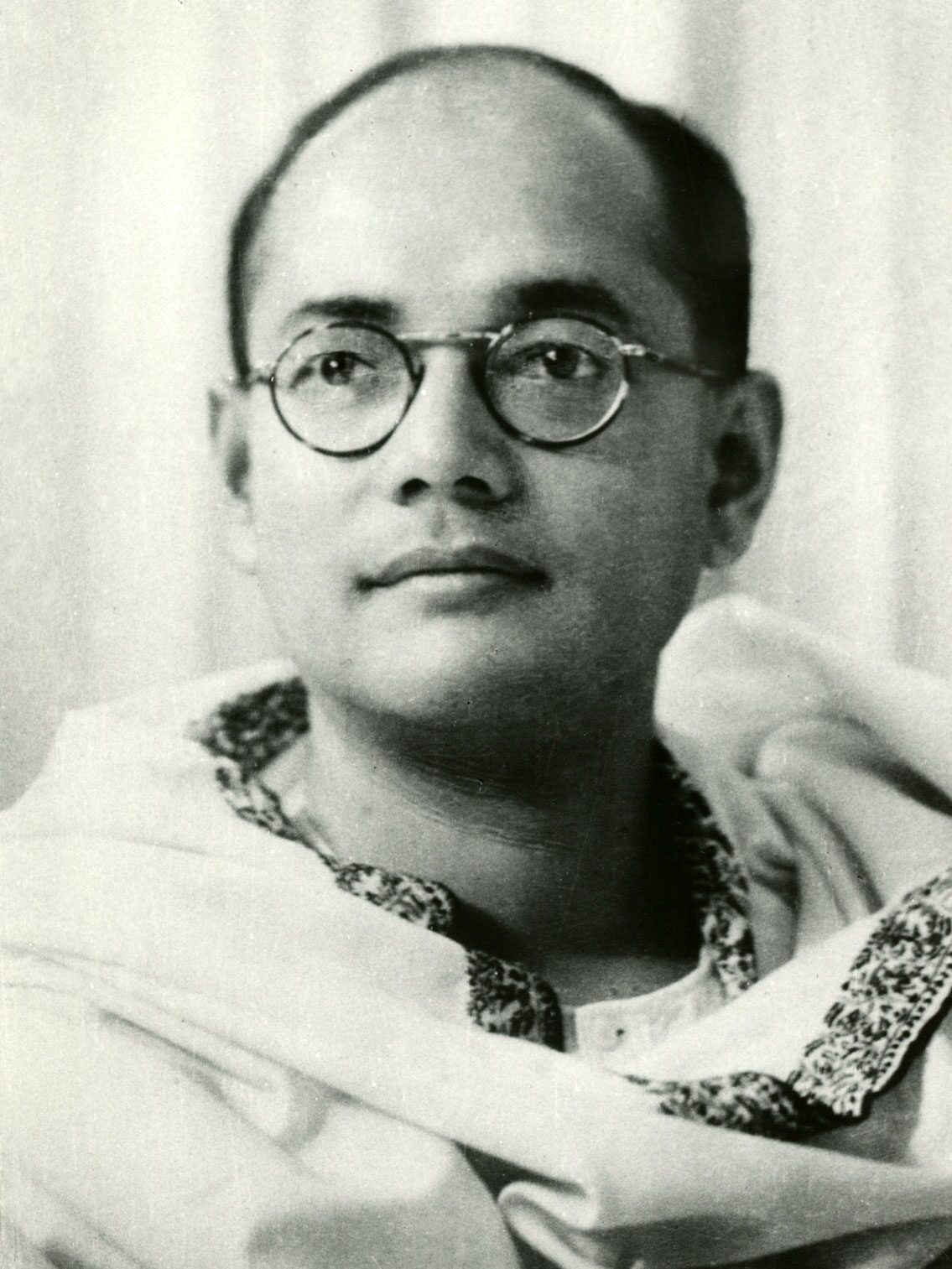
Born at Cuttack on 23 January 1897, the ninth child of Janakinath Bose, a wealthy Bengali Kayastha lawyer, Subhas studied at Ravenshaw Collegiate School, Presidency College Calcutta (where he was expelled in 1916 over a clash with a racist English professor) and Scottish Church College, graduating in philosophy in 1919.
He sailed to England in September 1919 to prepare for the Indian Civil Service. He sat the examination in 1920 and stood fourth in the order of merit. In April 1921, six months before his probationary appointment, he resigned. The decision — refusing the most coveted post available to an Indian — was made in correspondence with his elder brother Sarat: “I cannot accept the King’s service while my country is enslaved.”
He returned to India in July 1921 and joined the Non-Cooperation Movement under C. R. Das, the Bengal Congress leader and future founder of the Swaraj Party.
Apprenticeship under C. R. Das
Bose served as Das’s principal lieutenant for the next four years. He was successively commandant of the Bengal Provincial Congress volunteer corps, principal of the National College Calcutta, chief executive of the Calcutta Municipal Corporation (under Mayor Das in 1924), and editor of the daily Forward and later Liberty. After the Chauri Chaura incident and the suspension of Non-Cooperation, he supported Das’s Swaraj Party programme of council entry.
In October 1924 the Bengal government detained him under Regulation III of 1818 and deported him to Mandalay in Burma — the same prison that had held Tilak and Lajpat Rai. He spent two and a half years there before being released in May 1927.
Das died in 1925. Bose, still in his twenties, returned to find himself the senior figure of the Bengal Congress alongside J. M. Sengupta.
Congress Presidency: Haripura (1938) and Tripuri (1939)
Subhas Chandra Bose was elected president of the Indian National Congress twice. At Haripura in February 1938 his election was unanimous. He delivered a landmark presidential address calling for a planned industrial economy, scientific research, and complete independence as the minimum acceptable goal. He set up the National Planning Committee under Jawaharlal Nehru — the institutional ancestor of post-1947 economic planning.
For the 1939 Tripuri session he stood again. Gandhi backed Pattabhi Sitaramayya. Bose won by 1,580 votes to 1,377. Gandhi declared Sitaramayya’s defeat “my defeat” and the Congress Working Committee — fourteen of fifteen members loyal to Gandhi — resigned. Isolated and ill with fever during the Tripuri session itself, Bose resigned the presidency on 29 April 1939.
The Forward Bloc (May 1939)
On 3 May 1939, at Makur in Bengal, Bose founded the All India Forward Bloc as a left-wing pressure group inside the Congress. Its programme combined complete independence, socialist economic reconstruction, agrarian reform, women’s equality and rejection of imperialist concessions of any kind. The Bloc held its first all-India conference at Nagpur in June 1940.
When the Second World War broke out in September 1939, Bose demanded an immediate ultimatum to Britain — independence in six months or mass civil disobedience. The Congress Working Committee rejected the demand. Bose was disqualified from holding any Congress office for three years. In July 1940 he launched a satyagraha at the Holwell Monument in Calcutta. The Bengal government arrested him under the Defence of India Act and confined him at home awaiting trial.
The Great Escape (January 1941)
Bose’s escape from British surveillance is one of the legendary episodes of twentieth-century political history.
In November 1940 he went on hunger strike at home. The Bengal government, fearing a martyr’s death, transferred him to house arrest at his Elgin Road residence in Calcutta on 5 December 1940. The CID kept the house under round-the-clock watch.
On the night of 16-17 January 1941, disguised as Maulvi Ziauddin in long coat, beard and pyjama, Bose slipped out of the rear of the house in his nephew Sisir Bose’s Wanderer car (registration BLA 7169). They drove through the night to Gomoh railway station in Bihar (now Netaji Subhas Chandra Bose Junction, Jharkhand), where Bose boarded the Kalka Mail for Peshawar.
From Peshawar he travelled by car and on foot through the Khyber Pass into Afghanistan, posing as a deaf-mute Pathan called Ziauddin. From Kabul, after weeks of negotiation, the Italian and German legations issued him an Italian passport in the name of “Orlando Mazzotta.” He crossed Soviet Central Asia by rail and reached Berlin on 2 April 1941. The British did not learn he had left India until late March.
Years in Germany (1941-1943)
In Berlin, Bose set up the Free India Centre, raised the Free India Legion (Indische Legion) from Indian prisoners-of-war captured by the Wehrmacht in North Africa, and broadcast nightly to India on Azad Hind Radio. The Berlin years gave him the title Netaji — first used by his Legion soldiers in early 1942.
Bose’s German experience was politically uncomfortable. Hitler was uninterested in Indian independence and his racial theories were openly contemptuous of Asians. After a difficult meeting with Hitler on 29 May 1942, Bose concluded that Germany was the wrong base. The military reversal at Stalingrad in February 1943 made the decision urgent.
He left Kiel on 8 February 1943 aboard the German submarine U-180, transferred mid-Indian-Ocean on 28 April 1943 to the Japanese submarine I-29, and reached Sabang in northern Sumatra on 6 May 1943. From there he flew to Tokyo on 13 June 1943.
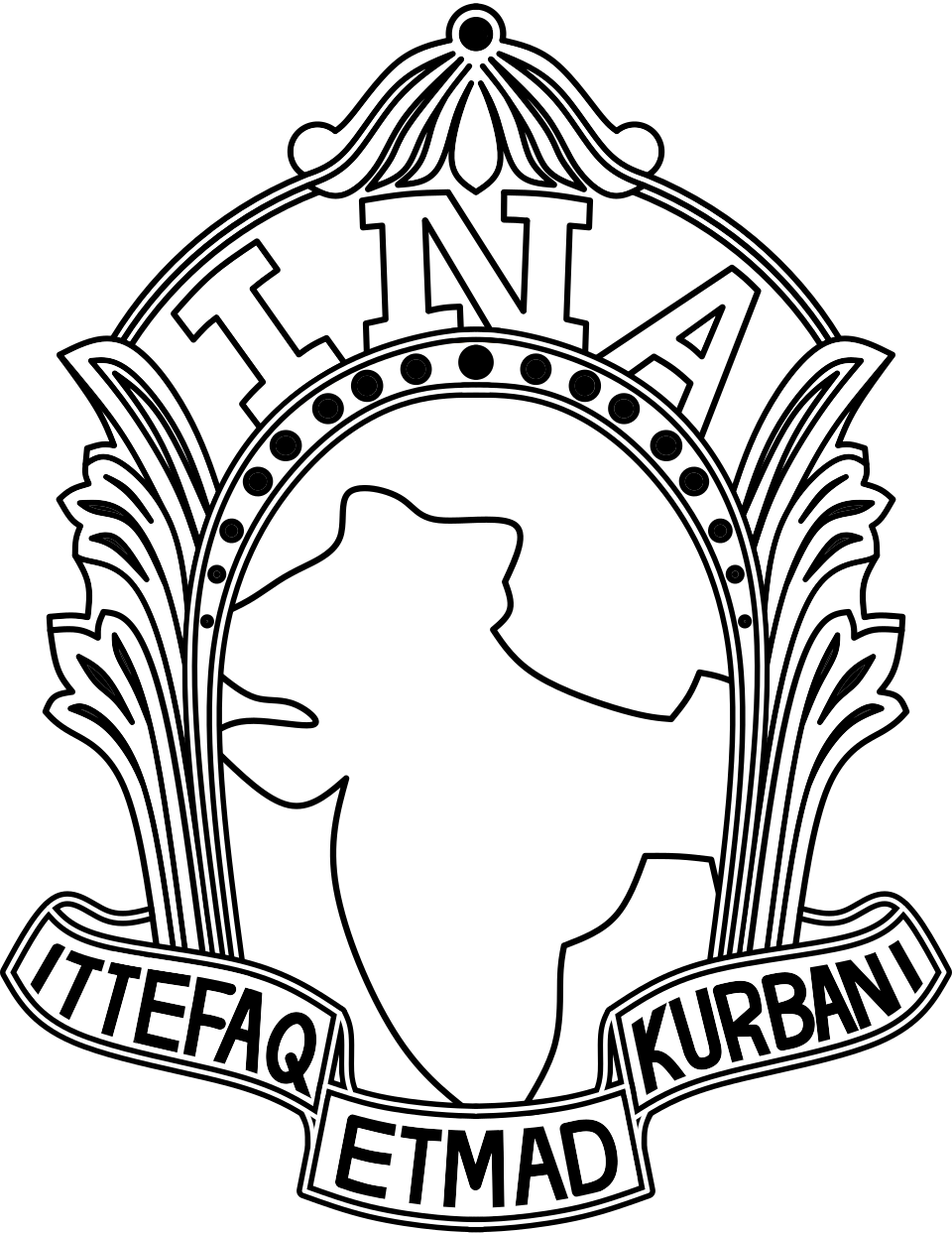
The Indian National Army and Azad Hind
The first Indian National Army (INA) had been raised in Singapore in September 1942 by Captain Mohan Singh from Indian prisoners-of-war taken at the fall of Singapore (February 1942). It collapsed in December 1942 after disputes with the Japanese over command authority.
Bose took charge of the revived INA at Singapore on 4 July 1943. Two days later he announced the Provisional Government of Free India (Arzi Hukumat-e-Azad Hind) on 21 October 1943, with himself as head of state, prime minister and minister of war. Nine countries recognised it — Germany, Japan, Italy, Croatia, Manchukuo, Wang Jingwei’s China, Thailand, Burma and the Philippines.
The Azad Hind Fauj reached a strength of around 50,000 troops drawn from Indian PoWs and from civilian volunteers in Malaya, Singapore and Burma. It contained the Rani of Jhansi Regiment, an all-women combat unit commanded by Captain Lakshmi Sahgal — among the first such regiments anywhere in the world. Bose’s tricolour was the saffron-white-green flag with a leaping tiger at its centre.
The Imphal-Kohima Campaign (March-July 1944)
In March 1944 the INA crossed into Indian territory alongside Japanese forces in Operation U-Go. They captured Moirang in Manipur on 14 April 1944 and Bose hoisted the INA flag on Indian soil for the first time. The advance stalled at Imphal and Kohima against the British 14th Army under Slim. By July the monsoon, supply collapse and Allied air superiority forced retreat. The INA fought a rearguard action through Burma until May 1945. Of the 50,000 INA soldiers, around 26,000 died or surrendered.
Death at Taihoku, 18 August 1945
After Japan’s surrender on 15 August 1945, Bose decided to seek refuge in the Soviet Union. He flew out of Bangkok on 17 August. On the afternoon of 18 August 1945, his overloaded Japanese bomber crashed on take-off from Taihoku airfield (Taipei) in Japanese-occupied Taiwan. Bose, severely burned, died in the Nanmon military hospital that evening. He was 48.
The body was cremated at Taihoku on 22 August 1945; the ashes are preserved at the Renkoji temple in Tokyo. The Government of India has appointed three commissions — the Shah Nawaz Committee (1956), the Khosla Commission (1970-74) and the Mukherjee Commission (1999-2005) — to investigate the death. The first two accepted the crash account; the Mukherjee Commission concluded that the air crash had not occurred, but its findings were rejected by the Government of India.
The persistent doubt has made Bose’s death the central political mystery of independent India.
The INA Trials and the End of the Raj
Whatever the personal tragedy at Taihoku, the political effect of the INA in India was immediate. The Red Fort trials of three INA officers — Colonel Prem Sahgal, Colonel Gurbaksh Singh Dhillon and Major-General Shah Nawaz Khan — opened on 5 November 1945. They were charged with waging war against the King-Emperor. The choice of one Hindu, one Sikh and one Muslim was deliberate.
The Congress mounted the defence team — Bhulabhai Desai, Tej Bahadur Sapru, Asaf Ali and Jawaharlal Nehru (who returned to the Bar after twenty-six years to argue). The trials provoked the largest popular agitation since the Quit India Movement, the Royal Indian Navy mutiny of February 1946, and the Calcutta and Bombay general strikes.
The accused were convicted but the Commander-in-Chief, Auchinleck, commuted the sentences. British intelligence concluded that the Indian Army could no longer be relied upon for internal security. The Cabinet Mission was despatched in March 1946. Independence followed sixteen months later. Clement Attlee, in a 1956 conversation at Calcutta, listed the INA effect on the Indian Army as a major reason for the British decision to quit, alongside the financial cost of the Raj and the moral exhaustion of the wartime government.
Legacy
The Republic of India has institutionalised Netaji’s memory. His birthday, 23 January, is observed as Parakram Diwas (since 2021). The Andaman and Nicobar capital, Port Blair, was renamed by his Provisional Government as Shaheed and Swaraj Dweep on 30 December 1943 — and re-renamed in 2018. The Netaji Subhas Chandra Bose International Airport at Calcutta, the Netaji Subhas Open University, the INA Memorial at Moirang and the statue at India Gate (installed 2022) form the state’s iconography of the leader.
For UPSC, three points anchor the answer. First, Bose’s 1939 break with Gandhi defined the left limit of the Congress consensus — it showed that complete independence and a planned socialist economy could not coexist with Gandhian gradualism. Second, his 1941-45 international campaign demonstrated that Indian independence was negotiated under wartime pressure, not granted by transfer of power alone. Third, the INA trials of 1945-46 supplied the immediate trigger for British withdrawal by destroying the loyalty of the colonial army. Together with Lala Lajpat Rai, Bal Gangadhar Tilak and Bipin Chandra Pal, Bose completes the militant lineage of Indian nationalism.
Frequently Asked Questions
Who was Subhas Chandra Bose?
Subhas Chandra Bose (1897-1945) was an Indian nationalist leader, twice president of the Indian National Congress (1938, 1939), founder of the All India Forward Bloc (1939) and supreme commander of the Azad Hind Fauj. He is universally known as Netaji and led the Provisional Government of Free India from 1943 to 1945.
Why is Bose called Netaji?
The title Netaji — meaning u0022respected leaderu0022 — was first conferred on Subhas Chandra Bose by Indian soldiers of the Free India Legion in Berlin in early 1942. It was formalised when he took command of the Indian National Army at Singapore on 4 July 1943.
How did Subhas Chandra Bose escape from British custody in 1941?
On the night of 16-17 January 1941 Bose escaped his house arrest at Elgin Road, Calcutta, disguised as Maulvi Ziauddin. He drove with his nephew Sisir Bose to Gomoh station, took the Kalka Mail to Peshawar, crossed the Khyber Pass into Afghanistan, and reached Berlin via Kabul and Moscow on an Italian passport in the name u0022Orlando Mazzottau0022 on 2 April 1941.
What was the Azad Hind Fauj?
Azad Hind Fauj is the Hindi name for the Indian National Army, the armed force raised from Indian prisoners-of-war and civilian volunteers in Southeast Asia to fight for Indian independence alongside Japan during the Second World War. Under Bose’s command from July 1943 it grew to about 50,000 troops and fought in the Imphal-Kohima campaign of 1944.
When was the Forward Bloc founded?
The All India Forward Bloc was founded by Subhas Chandra Bose at Makur in Bengal on 3 May 1939, after his resignation from the Congress presidency. It was a left-wing pressure group inside the Congress demanding immediate independence, socialist economic reconstruction and uncompromising opposition to imperialist concessions.
Why did Bose ally with Germany and Japan?
Bose followed the principle that u0022the enemy of my enemy is my friend.u0022 He sought arms and political recognition from the Axis powers because they were militarily engaged with Britain. He had no ideological sympathy with Nazi racism — his meetings with Hitler in 1941-42 were tense — and he insisted that the Provisional Government of Free India remain independent of Axis political direction.
How did Subhas Chandra Bose die?
The official account, accepted by two of three Indian commissions of inquiry, is that Bose died on 18 August 1945 in the Nanmon military hospital at Taihoku (Taipei) in Japanese-occupied Taiwan, of burns sustained when his overloaded Japanese bomber crashed on take-off. His ashes are preserved at the Renkoji temple in Tokyo. The 1999-2005 Mukherjee Commission disputed this; its findings were not accepted by the Government of India.
What were the INA trials and why did they matter?
The Red Fort trials of November 1945 to May 1946 tried INA officers Shah Nawaz Khan, Prem Sahgal and Gurbaksh Singh Dhillon for waging war against the King-Emperor. The Congress mounted a high-profile defence and the trials provoked mass agitation, the 1946 Royal Indian Navy mutiny and the loss of British confidence in the Indian Army — accelerating the decision to quit India in 1947.
Tell Google you want more of this.
Add Anantam IAS as a preferred sourceOne tap, and this site shows up more often in your own Top Stories, AI Overviews and AI Mode. Remove it any time.