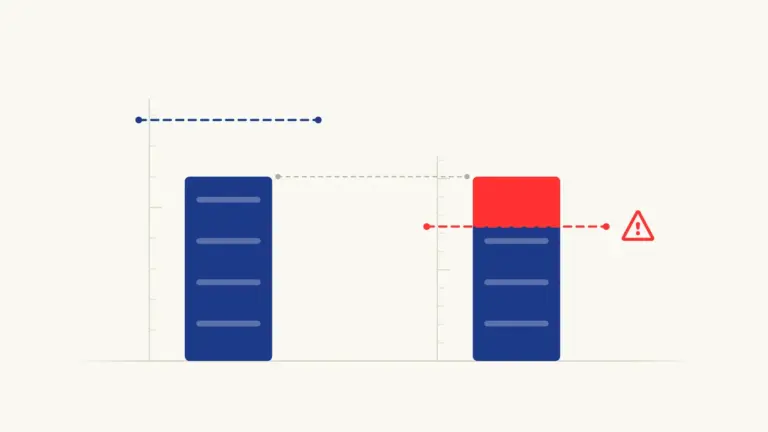
Agricultural commodity markets in India are shaped by a tug-of-war between supply-side realities (soil, climate, technology, fragmentation) and demand-side forces (income growth, dietary shifts, exports, procurement policy). When either side moves too quickly – monsoon failure, MSP revisions, export bans, consumer shifts – inflation spikes, farmer incomes fall, and policy scrambles to respond. Understanding the determinants of agricultural supply and demand is foundational for UPSC GS Paper III topics on cropping patterns, food inflation, MSP and farm-sector reforms.
Framing the problem
Indian agriculture has three defining characteristics that keep supply-demand dynamics complicated:
- Small and marginal farms: over 86% of landholdings are below 2 hectares, limiting economies of scale.
- Rainfall dependence: nearly 55% of net sown area is rainfed, making supply monsoon-sensitive.
- Price-inelastic demand for staples: short-term demand for rice, wheat, pulses and edible oils barely moves with price, amplifying inflation when supply falls.
Factors shaping demand for agricultural commodities
Income-led dietary shifts
As per capita income rises, diets transition from cereals to proteins, fruits and vegetables (Bennett's Law). In India:
- Per capita rice and wheat consumption has plateaued.
- Demand for pulses, eggs, milk, fish and meat has risen sharply.
- Fresh fruits and vegetables demand is growing at 5-6% a year.
This has pushed cropping patterns towards horticulture – India is now the world's second-largest producer of fruits and vegetables.
Millet substitution
Millet area declined for decades as PDS-subsidised rice and wheat crowded out traditional coarse cereals. The 2023 International Year of Millets and the Shri Anna Yojana are reversing part of this trend, with Odisha, Karnataka and Maharashtra expanding millet acreage.
Organic and premium segments
Net area under organic farming rose from 0.9% in 2016 to about 4% in 2023. Urban consumers are driving demand for certified organic fruits and vegetables, though the price premium limits mass adoption.
Export demand
After the 1991 reforms, commercial crop area expanded on the back of export opportunities. The area under food grains as a share of gross cropped area fell by 11% over three decades, replaced by oilseeds, fruits, vegetables and non-food crops. Basmati rice, marine products and spices are now leading agri-exports.
Processing demand
The rise of food processing – frozen vegetables, ready-to-eat meals, branded dairy – has created a derived demand for standardised, graded raw materials.
Factors shaping supply of agricultural commodities
MSP and procurement
MSP-backed open-ended procurement of rice and wheat has locked Punjab, Haryana and western UP into a paddy-wheat monoculture despite groundwater exhaustion. The 2025 Atmanirbharta in Pulses Mission attempts to correct this by extending assured procurement to tur, urad and masoor.
Input subsidies
Fertiliser subsidies (urea in particular) bias crop choice toward nitrogen-responsive crops like paddy and sugarcane, discouraging pulses and millets. The 2024 fertiliser subsidy bill touched Rs 1.75 lakh crore.
Sugarcane FRP
Fair and Remunerative Price (FRP) support combined with state advised prices (SAP) has almost doubled sugarcane area between 1990-91 and 2020-21, contributing to water stress in Maharashtra and Karnataka.
Contract farming and new marketing arrangements
Contract farming – chicory in Punjab, gherkins in Andhra Pradesh, potatoes in Gujarat for processors – diversifies cropping. The repealed 2020 Farm Laws attempted to institutionalise contract farming at the national level; the debate on its revival under a new consensus continues in 2025.
Climate change
Erratic monsoons, heat waves and unseasonal rains have made yields increasingly volatile. Wheat yields fell in 2022 due to a March heatwave; tur suffered from unseasonal October rains in 2023.
Technology and seeds
High-yielding varieties, GM crops (cotton, and debated in mustard), precision irrigation and farm mechanisation drive productivity. SRR remains low – around 35% for wheat and below 30% for most oilseeds – limiting gains.
Latest developments (2024-26)
Budget 2025-26:
- Six-year Atmanirbharta in Pulses Mission with unconstrained MSP procurement of tur, urad and masoor by NAFED and NCCF.
- National Mission on High-Yielding Seeds.
- Mission for Cotton Productivity to revive the sector.
- Makhana Board in Bihar; Urea production push under PM Dhan-Dhaanya Krishi Yojana.
- National Mission on Vegetables and Fruits to stabilise horticulture supply.
PLI: continues to strengthen demand-side pull for processed food – ready-to-eat meals, marine products and fruits & vegetables.
GST Council: rationalisation decisions in 2024 reduced GST on millet flour to 0-5% and kept fresh fruits/vegetables exempt, aligning tax with dietary transitions.
16th Finance Commission: draft terms of reference emphasise climate-resilient agriculture and water-use efficiency; tied grants likely for rainfed farming.
MPI 2024: NITI Aayog reported nutritional deprivation has halved, but dietary diversity remains skewed – arguing for supply-side support to pulses, millets and horticulture.
Export policy volatility: the 2023 ban on non-basmati rice exports and 40% duty on onions (relaxed in 2024) underscore how supply shocks trigger abrupt export restrictions.
The demand-supply mismatch: inflation and farmer incomes
When supply lags demand, retail inflation spikes – tomatoes, onions and tur dal have all seen 30-80% price jumps in recent years. Conversely, bumper harvests collapse prices, forcing distress sales. Both outcomes hurt farmers and consumers, so policy must:
- Stabilise prices through buffer stocks (NAFED, FCI), PSF interventions and calibrated import-export policy.
- Diversify cropping away from water-guzzling paddy-wheat towards pulses, millets, oilseeds and horticulture.
- Invest in cold chain to smooth perishable supply, a gap partly addressed by the Agri-Infrastructure Fund.
- Enable price discovery through e-NAM, unified national markets and futures trading (currently restricted).
UPSC Relevance
- GS III (Agriculture): cropping patterns, MSP, procurement, contract farming, e-NAM, PLI food processing.
- GS III (Economy): inflation management, trade policy, budget announcements.
- GS II (Governance): cooperative federalism in agriculture; GST Council decisions.
- Prelims pointers: Bennett's Law, Engel's Law, cobweb theorem, MSP crops, Shri Anna Yojana, NMEO-Oilseeds, Atmanirbharta in Pulses.
Likely question: "Analyse the factors shaping supply and demand for agricultural commodities in India. How do Budget 2025-26 initiatives address the persistent mismatch?" (GS III, 250 words)
Tell Google you want more of this.
Add Anantam IAS as a preferred sourceOne tap, and this site shows up more often in your own Top Stories, AI Overviews and AI Mode. Remove it any time.