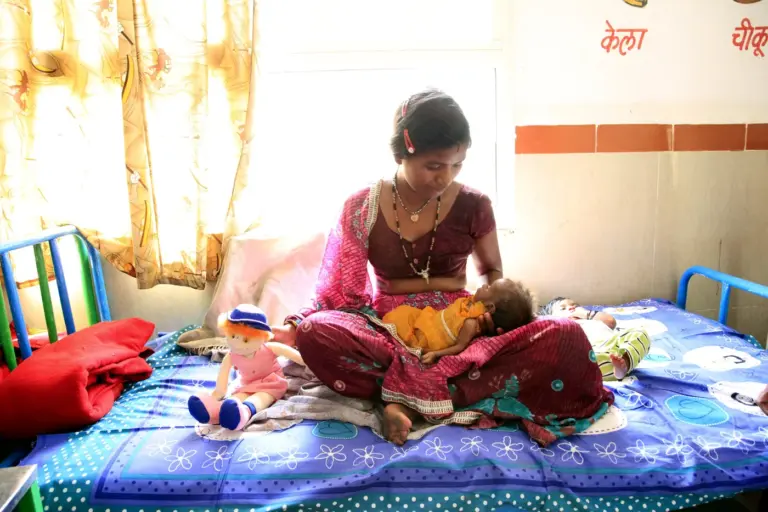
Gender inequality in India is not only about wages and representation — it is structurally embedded in unpaid care work, health access, menstrual taboos, and everyday labour invisibility. According to McKinsey, women perform 75% of the world's total unpaid care work, most of which never enters GDP calculations. For UPSC GS-I (women), GS-II (welfare), and Essay aspirants, the four-dimensional story of unpaid care, gender gap, health, and menstrual policy is essential.
The Conceptual Framework
Unpaid care work, per OECD, refers to all unpaid services provided within households — care of children, elderly, the sick, and disabled, plus housework and voluntary community work. It is "work" because a third party could be paid to do it.
Why Unpaid Care Work Matters
- Mis-estimation of GDP: Excluding unpaid care work undercounts economic activity.
- FLFPR suppression: Care burden limits women's skill-building and paid employment.
- Wage gap: Domestic work is deemed unproductive, depressing female market wages.
- Intergenerational transmission: Girl children inherit care burdens, losing schooling time.
India's Time Use Survey (2019)
NSSO's Time Use Survey found:
| Activity | Women | Men |
|---|---|---|
| Unpaid domestic services (daily) | 299 min | 97 min |
| Unpaid caregiving services (daily) | 134 min | 76 min |
| Employment and related activities | 165 min | 379 min |
Women spend 5 hours/day on unpaid domestic work; men spend 1.5 hours. The gender care gap is 3.3x globally; India's is even wider.
India's Situation: The Gender Gap
Global Gender Gap Index 2024 (WEF)
India ranked 129th of 146 countries — 18th from the bottom. India closed 64.1% of its gender gap.
| Sub-Index | India's Position |
|---|---|
| Economic Participation & Opportunity | 142nd |
| Educational Attainment | 112th |
| Health & Survival | 142nd |
| Political Empowerment | 65th |
Southern Asia ranks 7th of 8 regions; India is the 3rd lowest in South Asia (after Pakistan, Maldives). Bangladesh ranked 99th — the first South Asian country in the top 100.
Economic Dimension
- Female Labour Force Participation Rate (FLFPR) improved to 37% (PLFS 2022-23, usual status) from 23% in 2017-18.
- Still among world's lowest; women earn 19-26% less than men in similar roles (Monster Salary Index 2019).
Health Dimension
- Sex ratio at birth: 929 females per 1,000 males — skewed due to sex-selective practices.
- Maternal Mortality Ratio (MMR): 97 per 100,000 live births (2018-20) — improved but still above SDG target.
- Life expectancy: Women outlive men by 3 years globally, but Indian women's "healthy life years" lag due to unpaid care, malnutrition.
Educational Dimension
- One-third of women are illiterate vs. 17.6% of men.
- Enrolment parity achieved at primary level; attrition higher for girls at secondary and tertiary levels.
Women and Health
Reproductive Health
Defined as complete physical, mental, and social wellbeing in matters relating to the reproductive system. Reproductive rights include:
- Right to be informed and access safe, effective, affordable family planning.
- Right to appropriate healthcare for safe pregnancy and childbirth.
- Right to bodily autonomy.
Barriers
- Patriarchal decision-making: Women often lack agency over fertility.
- Menstrual taboos: Restrict access to sanitation, nutrition, education.
- Maternal mortality: High in Bihar, UP, Rajasthan.
- Gender-based violence: PTSD, depression, reproductive tract infections.
Menstrual Leave: The Policy Debate
Article 42
Provides for just and humane conditions of work and maternity relief. Menstrual leave is a sister concept.
Corporate Adoption
- Zomato (2020): First major Indian company to introduce 10-day annual period leave.
- Swiggy, Byjus, Magzter: Followed suit.
- Bihar and Kerala: State government menstrual leave policies for women employees and students.
Arguments in Support
- Medical reality: Cramps can be as debilitating as illness.
- Reduce stigma: Normalises conversation about periods.
- Equal protection: Treating differently situated workers equally requires difference.
- Global precedent: Japan (since 1947), South Korea, Taiwan, Indonesia, Spain (2023 — first European country).
Arguments Against
- Gender stereotyping: Reinforces "weak woman" tropes.
- Employment discrimination: May justify lower wages or hiring bias.
- Privacy violation: Requires disclosure to employer.
- Misuse potential: Pain intensity varies individually.
Way Forward
- Menstruation Benefit Bill (Introduced in 2018 by Ninong Ering, not passed).
- Period-friendly workspaces: Medicine, sick rooms, sanitary pads, clean toilets.
- Menstrual health awareness campaigns.
- Subsidised sanitary products: Suvidha, Asmita schemes.
Measures to Address Gender Inequality
- Investment in time-saving technologies and infrastructure: Electrification, piped water, public transport.
- Public care services: Creches, elderly care, disability care.
- Maternity benefits extension to informal sector workers.
- Equal maternity and paternity leaves: Defeminising caregiving.
- Tackling gender stereotypes through media, curriculum, workplace culture.
- Mandatory workplace equality audits.
- Gender budgeting: India's GB allocation grew from 2.5% of total expenditure (2005-06) to 6.5% (2024-25) — Rs 3.1 lakh crore.
Government Schemes and Institutional Framework
| Instrument | Purpose |
|---|---|
| Mission Shakti (2021) | Integrated Samarthya + Sambal |
| Beti Bachao Beti Padhao | Girl child survival, education |
| Ujjwala Yojana | LPG access reduces care time |
| Swachh Bharat Mission | Household toilets reduce care burden |
| PM Matru Vandana Yojana | Maternity benefit |
| Maternity Benefit (Amendment) Act, 2017 | 26 weeks paid leave |
| POSH Act, 2013 | Workplace sexual harassment |
| Suvidha, Asmita | Sanitary napkin schemes |
| Period Room initiatives | School menstrual hygiene |
Challenges in Calculating Unpaid Care Work
- Reporting bias: Women don't consider care "work".
- Seasonality: Variation in agricultural care work over year.
- Double-counting or undercounting: Multi-tasking problem.
- Cultural invisibility: "Service" vs. "labour" framing.
Latest Developments (2024-26)
- Global Gender Gap Index 2024 (WEF): India 129th of 146 — marginal decline from 127th in 2023.
- Women's Reservation Act, 2023 (Nari Shakti Vandan Adhiniyam): 33% reservation for women in Lok Sabha and State Assemblies; implementation post-delimitation, expected 2029 elections.
- 18th Lok Sabha (2024): 74 women MPs (13.6%) — slight decline from 17th LS; women's turnout (65.8%) exceeded men's (65.5%).
- Caste census (Bihar 2023): Gender-caste intersection revealed higher unpaid care burden on EBC, SC women.
- MPI 2024 (NITI Aayog): Gender-specific poverty measures; women’s multidimensional poverty improved but gap persists.
- SDG India Index 2023-24: SDG 5 (Gender Equality) composite score improved slightly.
- Maternity Benefit Act amendments (ongoing): Proposals to extend coverage to gig workers.
- Council of Ministers (2024): Only 7 women in 72-member cabinet — lowest in a decade.
- Time Use Survey 2024 data collection underway; updated picture of care work expected 2025.
- Spain's menstrual leave law (2023): Renewed policy discussions in India.
- Supreme Court on menstrual leave (2024): Dismissed PIL seeking uniform menstrual leave law, leaving it to legislatures.
- Kerala's menstrual leave (2023): Implemented in state government schools, colleges.
- Gender Budget 2024-25: Rs 3.1 lakh crore — 6.5% of total union budget.
UPSC Relevance
- Prelims: Time Use Survey, Gender Gap Index 2024, Women's Reservation Act 2023, Article 42.
- GS-I: Role of women; women's issues.
- GS-II: Welfare schemes, gender-sensitive policy.
- GS-III: Human resource development, inclusive growth.
- Essay: "What India owes her women."
Your answer should:
- Quantify unpaid care using Time Use Survey data.
- Benchmark against Global Gender Gap Index 2024.
- Connect economic, political, health, education dimensions.
- Analyse menstrual leave as both opportunity and risk.
- Propose infrastructural investments + cultural change as the dual strategy.
Until India monetises, redistributes, and reduces unpaid care work — the 3R framework — gender equality will remain partial. Women do more than they are paid for and less than they could. Closing that asymmetry is not just justice; it is unlocking a third of GDP trapped inside homes.
Tell Google you want more of this.
Add Anantam IAS as a preferred sourceOne tap, and this site shows up more often in your own Top Stories, AI Overviews and AI Mode. Remove it any time.