Most aspirants can recite that Adi Shankaracharya founded four mathas and preached Advaita, then freeze when asked what Advaita actually claims or why a monk who lived barely thirty-two years still anchors Hinduism twelve centuries later. That gap is the whole point of studying him. Shankara is not a name to memorise for a one-mark question; he is the figure who took a scattered, ritual-heavy tradition losing ground to Buddhism and Jainism, gave it a single rigorous philosophy, and stitched a subcontinent together with four monastic seats. Get his core idea and the rest, the texts, the debates, the institutions, falls into place.
Who Adi Shankaracharya was
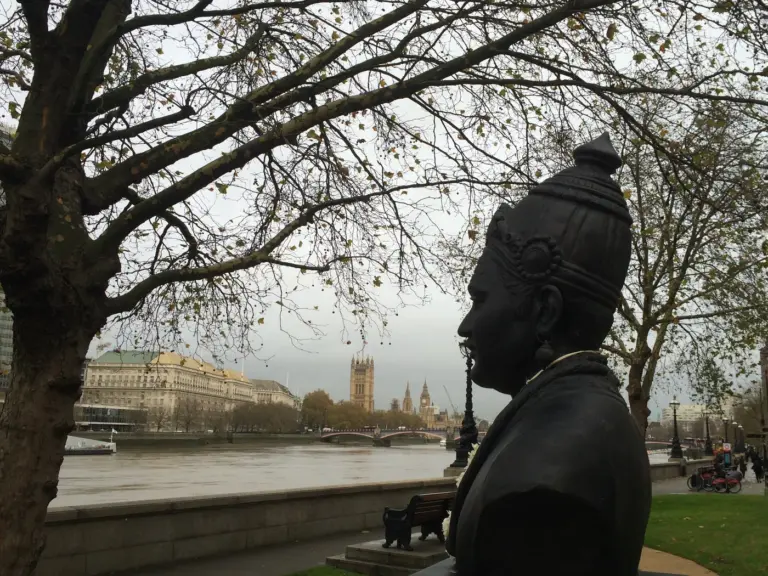
Adi Shankara was an 8th-century Indian philosopher and theologian, traditionally dated to 788-820 CE, who consolidated the doctrine of Advaita Vedanta and reorganised Hindu monasticism. “Adi” means the first or foremost, distinguishing him from the many later Shankaracharyas who head his mathas to this day.
He was born at Kaladi, a village on the banks of the Periyar river in present-day Ernakulam district, Kerala, into a Nambudiri Brahmin family. The traditional biographies, the *Shankara Digvijayas*, tell a compressed, almost improbable life: a child prodigy who mastered the Vedas young, took *sannyasa* (renunciation) as a teenager against his widowed mother’s initial wish, studied under the teacher Govinda Bhagavatpada, and then travelled the length of India debating, writing, and founding institutions before dying at thirty-two, by tradition at Kedarnath in the Himalayas.
Treat the exact dates with care. The 788-820 CE span is the traditional and most widely cited one, and it is what an aspirant should reproduce, but scholars have proposed earlier windows, some placing him in the 6th or 7th century. What is not disputed is the century-defining scale of his impact, which is why he matters far more than his short life would suggest.
What Advaita Vedanta actually claims
Advaita Vedanta is the philosophy of non-dualism: the teaching that ultimate reality is one, not two. *A-dvaita* literally means “not-two.” Its single boldest claim is compressed in one line Shankara is famous for: Brahman is real, the world is illusory, and the individual self is nothing other than Brahman (*brahma satyam jagan mithya, jivo brahmaiva na aparah*).
Unpack that slowly, because it trips up everyone the first time. Brahman is the one, formless, changeless, infinite reality underlying everything. Atman is your innermost self, the pure awareness that is aware even when every thought and sensation drops away. Shankara’s radical move is to say Atman and Brahman are not two things that resemble each other; they are *identical*. The sense that you are a separate individual, walled off from the rest of existence, is a case of mistaken identity.
The everyday analogy the tradition uses, and it is a genuinely good one, is the rope and the snake. You see a coiled rope in dim light and recoil, certain it is a snake. The fear is real, the racing heart is real, but the snake was never there; only the rope was. Switch on the light and the snake vanishes without anything actually being destroyed, because it never existed. For Shankara, the world of separate objects and separate selves is the snake, superimposed by ignorance (*avidya*) on the single reality of Brahman, which is the rope. This superimposition he calls adhyasa, and *moksha* (liberation) is simply the dawning knowledge that removes the error. Nothing is created or annihilated; you just stop mistaking the rope.
A fair objection surfaces here: if Brahman is formless and beyond all attributes, where does that leave the worshipper who prays to a personal deity? Shankara’s answer is one of his most elegant, and it is worth carrying into an answer. He distinguishes nirguna Brahman, the absolute without qualities, from saguna Brahman, the same reality conceived with form and attributes as a personal God (Ishvara). The personal God is not a falsehood; it is Brahman as approached at the empirical level, the highest and truest form devotion can take while ignorance persists. Worship and ritual are therefore genuinely valuable rungs on the ladder, purifying the mind and readying it for the final knowledge, even though the topmost rung, liberating insight, transcends form altogether. This is how Shankara honours the devotional life without abandoning strict non-dualism, and it is why he could compose hymns to deities while teaching that the absolute has no attributes at all.
This is where maya enters, the most misread word in the system. Maya does not mean the world is a hallucination that a serious person should ignore. It means the world is real at one level and unreal at another. Shankara works with three levels of reality. The wholly real (*paramarthika*) is Brahman alone. The empirically real (*vyavaharika*) is the everyday world of tables, taxes, and people, which behaves consistently and cannot be wished away while you live in it. The merely apparent (*pratibhasika*) is the snake, the dream, the mirage, which collapses on closer inspection. The world is *vyavaharika*: fully valid for practical life, yet not the final truth. That layered answer is Shankara’s escape from the obvious objection that if the world is illusory, why not walk off a cliff.
The texts that carry his thought
Shankara’s authority rests on commentaries, not on inventing scripture. His central contribution was to interpret the Prasthanatrayi, the “three foundations” of Vedanta, and read a single non-dualist meaning into all three.
The three are the principal Upanishads, the Bhagavad Gita, and the Brahma Sutras of Badarayana. His commentary on the last, the Brahma Sutra Bhashya, is his masterwork and the definitive statement of Advaita; a serious student of Indian philosophy still starts there. He also wrote *bhashyas* (commentaries) on around ten major Upanishads and on the Gita, so that the three pillars spoke with one voice.
Alongside the commentaries sits his most important independent work, the Upadesasahasri, “A Thousand Teachings,” a prose-and-verse manual of how a teacher leads a student to the recognition of Atman-Brahman identity. Scholars regard it as the one non-commentarial work almost certainly by Shankara himself, which makes it valuable for pinning down what he actually taught rather than what later tradition attributed to him. A cluster of devotional hymns and shorter treatises, including the *Vivekachudamani* (“Crest-Jewel of Discrimination”) and *Bhaja Govindam*, are traditionally ascribed to him, though modern scholarship debates several attributions. For the exam, name the Brahma Sutra Bhashya and the Upadesasahasri as his securest works and treat the popular hymns as “attributed.”
The digvijaya and the great debates
The story that defines Shankara’s public life is his digvijaya, literally “conquest of the four quarters.” This was not a military campaign but an intellectual one: a series of journeys across the subcontinent in which he defended Advaita in open, formal debate (*shastrartha*) against rival schools, Buddhists, Jains, ritualists, and other Vedantins, and won followers by argument.
The most celebrated encounter was with Mandana Mishra, the leading champion of the Mimamsa school, which held that Vedic ritual, not renunciatory knowledge, was the path to the highest good. Tradition says Mandana Mishra’s own wife, Ubhaya Bharati (also called Sharada), an accomplished scholar, was appointed as judge, and that after Shankara defeated Mandana she challenged him herself on questions of worldly life, forcing an equally famous exchange. Whatever the historical kernel, the story encodes a real doctrinal turn: Shankara shifted the centre of gravity in Hindu thought from ritual action (*karma-kanda*) toward liberating knowledge (*jnana-kanda*).
That living tradition of structured, respectful debate is not a museum piece. Institutions today still stage *shastrartha* to keep the argumentative culture alive, and if you follow the way older debate formats are revived at seats of learning, the practice is a direct descendant of Shankara’s method. The intellectual confidence India brought to countering Buddhist and Jain philosophy in this period is inseparable from how he argued.
The four cardinal mathas
Shankara’s most durable institutional achievement was founding four mathas (monastic centres) at the four corners of India, a structure meant to bind a vast, plural land into one spiritual geography and to preserve and propagate Advaita after his death. The scheme is called the Chaturamnaya, the four *amnayas* or cardinal seats, and each was placed in a compass direction, entrusted to one of his chief disciples, associated with one of the four Vedas, and given one mahavakya, a “great saying” from the Upanishads that distils the non-dual truth.
| Matha | Location (direction) | Veda | Mahavakya | Chief disciple |
|---|---|---|---|---|
| Sringeri Sharada Peetham | Karnataka (South) | Yajurveda | Aham Brahmasmi (“I am Brahman”) | Sureshvara |
| Dwaraka Sharada Peetham | Gujarat (West) | Samaveda | Tattvamasi (“That thou art”) | Hastamalaka |
| Govardhana Matha, Puri | Odisha (East) | Rigveda | Prajnanam Brahma (“Consciousness is Brahman”) | Padmapada |
| Jyotirmath (Joshimath) | Uttarakhand (North) | Atharvaveda | Ayam Atma Brahma (“This Self is Brahman”) | Totakacharya |
Two things to note. First, the geography is the message: a monk from a Kerala village planted seats in Karnataka, Gujarat, Odisha, and the Himalayas, physically enacting the idea that one truth underlies the whole land. Second, these are living institutions. Each is still headed by a Shankaracharya, a title of enormous religious authority in contemporary India, which is why the mathas surface in current affairs and why the founding structure is worth memorising exactly rather than approximately. Get the four locations and directions right and you have the frame; the Veda and mahavakya pairings are the details that separate a strong answer from a passable one.
Why he reshaped Hinduism
Shankara arrived when classical Hinduism was on the back foot. Buddhism and Jainism had drawn away followers with disciplined ethics and a clear path, and Vedic religion looked like a tangle of competing rituals and sects without a unifying philosophy. Shankara’s achievement was to give it one intellectual spine, Advaita, robust enough to hold its own against the sharpest Buddhist logicians, and one institutional spine, the four mathas, to carry it forward.
He also standardised monastic life by organising ascetics into the Dashanami (“ten-named”) orders attached to the mathas, giving Hindu renunciation the kind of durable structure that Buddhist and Jain monastic communities already had. Critics, then and now, note the irony that his rigorous non-dualism drew on Buddhist analytical tools so heavily that opponents nicknamed him a “crypto-Buddhist” (*pracchanna-Bauddha*). He would have rejected the label, but it captures a truth: he beat the rival philosophies partly by absorbing their rigour.
The reorganisation of ascetics into the Dashanami orders had a lasting institutional afterlife. It is from this monastic structure that the major akharas, the militant-ascetic orders that later took shape, trace part of their lineage, and it is these orders that give the great bathing festivals their processions and their hierarchy. So a pilgrim watching the Shankaracharyas and the akhara mahants lead the sacred bath at a river confluence is watching, at one remove, the organisational logic Shankara imposed on Hindu renunciation twelve centuries earlier. Few philosophers anywhere have left a structure so visible on the ground so long after their death.
His long shadow reaches the modern age. When Swami Vivekananda carried Vedanta to the West at the 1893 Parliament of Religions, it was Advaita he preached, in a lineage he traced straight back to Shankara. Reformers and philosophers, including figures you study among India’s moral and philosophical thinkers, return again and again to his framework. Even the mass gatherings that punctuate the Hindu calendar, and the monastic orders that anchor them, run on the institutional scaffolding he built. Not every Hindu is an Advaitin; the later *bhakti* and devotional currents pushed hard in the opposite direction toward a personal, loving God. But the argument they were pushing against was largely his, which is the surest sign of how central he became.
How his rivals answered back
You understand Shankara best through the philosophers who disagreed with him, because Vedanta after him is largely a long argument with his non-dualism. The examiner loves this contrast, and holding all three schools together turns a single-name question into a comparative one you can answer with confidence.
The first great challenge came from Ramanuja (11th-12th century), who founded Vishishtadvaita, “qualified non-dualism.” Ramanuja accepted that reality is ultimately one, but insisted it is one *with* internal distinctions: the individual souls and the material world are real parts of Brahman, not illusory appearances, related to it as a body is to a soul. His objection to Shankara was practical as much as logical. If the self is simply identical to a formless absolute, what room is left for love and devotion to a personal God? Vishishtadvaita made space for bhakti, and it became the philosophical backbone of much of the devotional tradition.
Madhva (13th century) went further, founding Dvaita, outright “dualism,” which held that Brahman (identified with Vishnu) and individual souls are eternally and really distinct, never to merge. Where Shankara said the soul *is* God, Madhva said the soul forever *belongs to* God. Lining the three up, from Shankara’s pure non-dualism to Ramanuja’s qualified version to Madhva’s frank dualism, traces the entire spectrum of Vedantic thought on the single question of how the self relates to the absolute. Shankara sits at one end, and the whole tradition is measured against him. That is the surest proof of his centrality: to define your position in Vedanta, you first have to say where you stand relative to Advaita.
How to study and apply this
Build Shankara around four pegs and you can answer almost anything on him: the person (8th century, born Kaladi in Kerala, died around thirty-two), the philosophy (Advaita Vedanta, non-dualism, Atman equals Brahman, world as vyavaharika reality), the texts (Brahma Sutra Bhashya and Upadesasahasri as the secure works, commentaries on the Prasthanatrayi), and the institutions (four mathas by direction, plus the digvijaya).
Memorise the four-matha table cold, including directions and at least the locations, because that is the single most tested factual block, and current-affairs items about a sitting Shankaracharya routinely draw on it. For the philosophy, do not try to memorise definitions; hold the rope-and-snake image and the three levels of reality, and you can reconstruct maya, adhyasa, and moksha from first principles under exam pressure.
For placement, situate him against his rivals and his successors. He is the counterweight to the ritualism of Mimamsa and the challenge of Buddhism in India and the Jain tradition; he is the philosophical ancestor of Swami Vivekananda and a recurring reference among Indian moral and philosophical thinkers; and he is the foil against which the later Bhakti movement defined its devotional path. His institutional legacy runs through the Kumbh Mela and the temple culture you study under temple architecture in India, from the Meenakshi temple in the south to the Brihadeeswara temple. See him as a hinge rather than an isolated name and a whole slice of the History and Culture syllabus locks into place around him.
Frequently Asked Questions
Who was Adi Shankaracharya?
Adi Shankaracharya was an 8th-century Indian philosopher, traditionally dated to 788-820 CE, who consolidated the philosophy of Advaita Vedanta (non-dualism) and founded four monastic mathas across India. Born at Kaladi in Kerala, he is regarded as one of the most influential figures in the history of Hinduism.
What is Advaita Vedanta in simple terms?
Advaita means “not-two.” It teaches that ultimate reality (Brahman) is one and formless, that the individual self (Atman) is identical to Brahman, and that the sense of separateness is due to ignorance. Liberation comes from the knowledge that dissolves this mistaken perception, illustrated by the analogy of mistaking a rope for a snake.
Which are the four mathas established by Adi Shankaracharya?
He founded Sringeri (South, Karnataka), Dwaraka (West, Gujarat), Govardhana at Puri (East, Odisha), and Jyotirmath or Joshimath (North, Uttarakhand). Each is linked to one Veda, one mahavakya, and one chief disciple, and each is still headed by a Shankaracharya today.
What are Adi Shankaracharya’s most important works?
His masterwork is the Brahma Sutra Bhashya, a commentary on Badarayana’s Brahma Sutras. He also wrote commentaries on the principal Upanishads and the Bhagavad Gita, together forming the Prasthanatrayi. His most important independent work is the Upadesasahasri, “A Thousand Teachings.”
What was Shankara’s digvijaya?
The digvijaya, “conquest of the four quarters,” was his series of journeys across India defending Advaita in formal debates against rival schools. His most famous debate was with Mandana Mishra of the Mimamsa school, which shifted the emphasis in Hindu thought from ritual action toward liberating knowledge.
What does maya mean in Advaita?
Maya is the cosmic principle by which the one Brahman appears as the many objects and selves of the world. It does not mean the world is a mere hallucination; the world is empirically real (vyavaharika) and fully valid for practical life, yet it is not the final, absolute reality, which is Brahman alone.
Why is Adi Shankaracharya considered so important to Hinduism?
At a time when Hinduism was losing ground to Buddhism and Jainism, he gave it a single rigorous philosophy in Advaita and a durable institutional structure in the four mathas and the Dashanami monastic orders. His framework shaped later thinkers from Vivekananda onward and unified diverse strands of Hindu thought.
Practice Questions
1. With reference to Adi Shankaracharya, consider the following statements:
a) He propounded the philosophy of Dvaita (dualism).
b) He was born at Kaladi in present-day Kerala.
c) He established four mathas in the four cardinal directions of India.
d) His central work is the Brahma Sutra Bhashya.
Which of the above are correct?
a) 1, 2 and 3 only
b) 2, 3 and 4 only
c) 1, 3 and 4 only
d) 1, 2 and 4 only
Answer: b
2. The mahavakya “Tattvamasi” is associated with which of the mathas founded by Adi Shankaracharya?
a) Sringeri
b) Jyotirmath
c) Dwaraka Sharada Peetham
d) Govardhana, Puri
Answer: c
3. The Prasthanatrayi, on which Adi Shankaracharya wrote his commentaries, comprises:
a) The Vedas, Puranas and Brahmanas
b) The principal Upanishads, the Bhagavad Gita and the Brahma Sutras
c) The Ramayana, Mahabharata and Bhagavad Gita
d) The four Vedas
Answer: b
4. In Advaita Vedanta, the empirically real level of existence, valid for practical life but not ultimately real, is termed:
a) Paramarthika
b) Pratibhasika
c) Vyavaharika
d) Adhyasa
Answer: c
5. Adi Shankaracharya’s most celebrated philosophical debate is traditionally said to have been with:
a) Ramanuja
b) Mandana Mishra
c) Madhvacharya
d) Basavanna
Answer: b
Mains Questions
- Explain the central tenets of Advaita Vedanta as propounded by Adi Shankaracharya, and assess why his philosophy is regarded as a turning point in the history of Indian thought.
- “Adi Shankaracharya reunified a fragmented religious landscape through both philosophy and institution-building.” Discuss with reference to his doctrine and the four mathas.
- Examine the role of the digvijaya and the tradition of shastrartha (formal debate) in the spread of Advaita Vedanta and in India’s intellectual response to Buddhism and Jainism.
- Distinguish between the concept of maya in Advaita Vedanta and the popular notion of the world as an illusion. Why is this distinction important for understanding Shankara’s philosophy?
- Trace the influence of Adi Shankaracharya on later Indian thought, from the Bhakti movement’s response to his ideas to the modern revival of Vedanta by figures such as Swami Vivekananda.
Tell Google you want more of this.
Add Anantam IAS as a preferred sourceOne tap, and this site shows up more often in your own Top Stories, AI Overviews and AI Mode. Remove it any time.