Most aspirants meet the Bargi Dam as a one-line fact, the first dam built on the Narmada, and stop there. That is a mistake, because Bargi is the dam that taught India, painfully and in advance, what the far more famous Sardar Sarovar would later be fought over. It was finished first, it filled its reservoir first, and it displaced people first, and it did all of that before anyone had figured out how to resettle them or even build the canals that were supposed to justify the flooding. If you want to understand why big dams became India’s most contested infrastructure, Bargi is where the argument actually starts. Here is the dam, the numbers, and the lesson, in the order they unfolded.
What the Bargi Dam is and where it sits
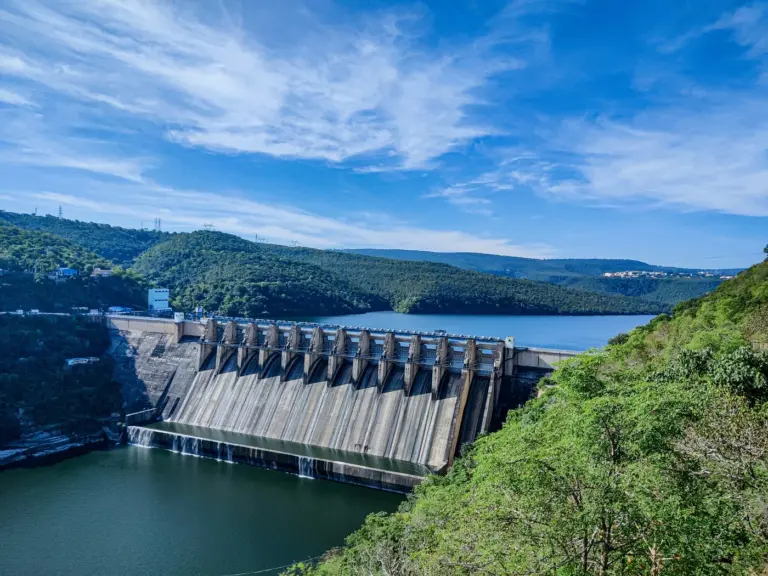
The Bargi Dam, officially the Rani Avanti Bai Sagar Project, is a gravity dam on the Narmada river at Bargi in Jabalpur district, Madhya Pradesh, about 40 km from Jabalpur city. It was one of the very first of the roughly 30 major dams planned under the Narmada Valley Development Project, and its reservoir first filled to capacity in 1990.
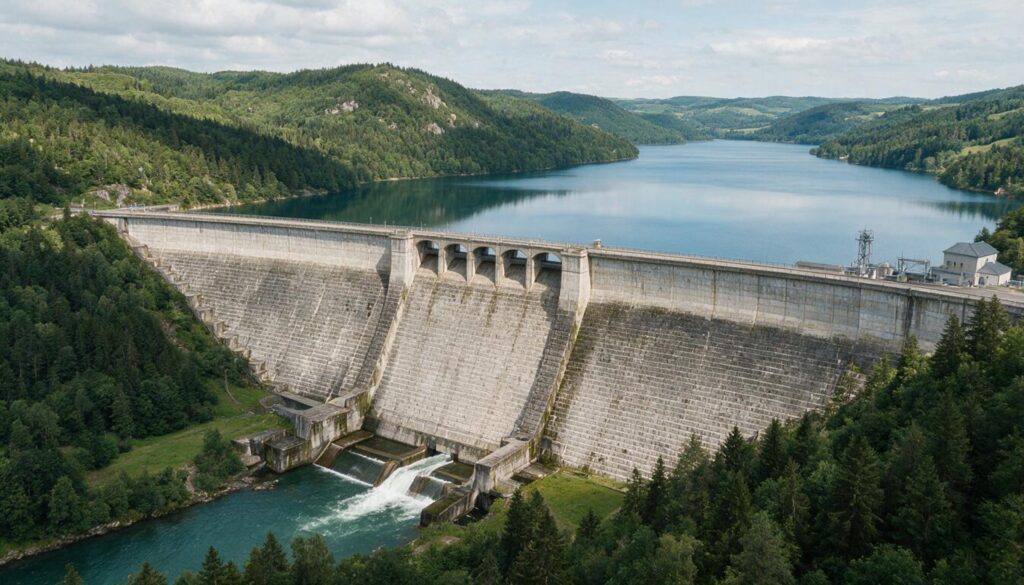
The official name matters and is worth remembering. Rani Avanti Bai was the queen of Ramgarh who led an armed revolt against the British in 1857, and naming the reservoir after her is why you will see “Rani Avanti Bai Sagar” in government records where a careless note just says “Bargi.” In physical terms the dam is a long, low masonry-and-earth gravity structure stretching more than 5 km across the valley, standing around 69 metres high, with a set of radial gates on its spillway. The Narmada itself is one of peninsular India’s great west-flowing rivers, running through a rift valley toward the Arabian Sea, and placing Bargi correctly inside India’s river systems is the first thing to get right: this is a Deccan-plateau dam on a rift-valley river, not a Himalayan project.
Get the river right and the dam makes more sense. The Narmada rises at Amarkantak in eastern Madhya Pradesh and flows roughly 1,312 km westward, making it the longest of India’s west-flowing rivers and one of only two big peninsular rivers, along with the Tapti, that run east to west instead of draining into the Bay of Bengal. It flows through a rift valley, a trough dropped between two parallel fault lines, hemmed by the Vindhya Range to the north and the Satpura Range to the south. That geology is not trivia; it is why the Narmada valley is long, narrow, and steep-sided, which is exactly the shape that makes for good dam sites but also means a reservoir spreads far up a confined valley and drowns a lot of riverside settlement for its volume. The rift setting also shapes the river’s drainage pattern, which runs unusually straight between the two ranges rather than branching like a typical plateau river. Bargi sits in the upper Narmada, so it was the natural place to plant the first dam of the cascade.
Why Bargi mattered: the first stone of the Narmada Valley Project
Bargi’s real significance is that it was the pilot, the dam that went up while the giant Narmada scheme was still being argued about. The Narmada Valley Development Project was one of the largest river-development plans in the world, envisioning around 30 major dams, more than 100 medium dams, and thousands of minor ones along the Narmada and its tributaries to irrigate a vast command area across Madhya Pradesh, Gujarat, and Maharashtra. Bargi was built at the upstream end of that cascade, in Madhya Pradesh, and it was completed and filled long before the downstream Sardar Sarovar in Gujarat became the flashpoint of the anti-dam movement.
Because it came first, Bargi was meant to be the proof of concept, a demonstration that a big Narmada dam could deliver irrigation and power and manage its human cost. Construction began in the mid-1970s and the reservoir was impounded by 1990. What happened next is the reason Bargi is taught with a warning label rather than a ribbon. The dam worked as a piece of engineering. It failed, for a long time, as a piece of planning, and the gap between those two facts is the entire lesson. To see how differently a big dam’s early promises can play out, it helps to hold Bargi against another pioneer project of the same era, the Hirakud Dam on the Mahanadi, which is often studied as the template Bargi was supposed to follow.
It also helps to see the company Bargi keeps on its own river. The Narmada cascade planned downstream of it grew into a chain of major reservoirs, including Indira Sagar and Omkareshwar in Madhya Pradesh, the controversial Maheshwar hydel project, and, at the Gujarat end, the Sardar Sarovar that became the national lightning rod for the anti-dam movement. Sardar Sarovar drew the marches, the Supreme Court cases, and the international attention, so it is the name most aspirants attach to the Narmada. But Bargi filled its reservoir years before Sardar Sarovar reached its full height, which means the first hard evidence of how the Narmada plan treated the people in its path came from Bargi, not from the famous dam downstream. That chronology is the reason to study Bargi carefully: it is the earliest data point in a debate that later swallowed a much bigger project.
The displacement and rehabilitation failure
Bargi’s defining controversy is that it submerged far more than its planners had told people it would, and then left the displaced with almost nothing. This is the single most important thing to know about the dam, and it is documented in specifics.
The reservoir eventually submerged 162 villages across the districts of Jabalpur, Seoni, and Mandla, and displaced roughly 5,500 families, or tens of thousands of people. The scandal is in the comparison: the project had originally projected the submergence of only around a hundred villages, so the actual flooding overran the estimate by a wide margin and swept away homes that families had been told would stay dry. Many of those displaced were tribal and small farming households with weak land titles, which made compensation slow and often nonexistent. People who had owned riverbank farmland were pushed onto marginal land or into towns, and a number of the “oustees,” in the language of the resettlement debate, ended up as fishing labourers on the very reservoir that had drowned their fields.
Here is the part that turns a resettlement failure into a policy indictment. The dam displaced these families in 1990, but the irrigation canals meant to carry Bargi’s water to farms, the entire justification for flooding the valley, were not completed for years afterward. For a long stretch the dam therefore delivered the loss without the benefit: the people upstream had been displaced, while the farmland downstream that was supposed to be irrigated in exchange stayed dry because the canal network did not yet exist. That sequence, submerge first and deliver later, became the Bargi warning that activists carried into the Sardar Sarovar fight, arguing that the same institutions that had failed the Bargi oustees could not be trusted with a larger dam. When you study interstate and intrastate water projects, Bargi is the case that shows why rehabilitation, not construction, is the hard part, a theme that runs through India’s wider record on river-water disputes and shared-basin planning.
How the oustees fought back on the water
The Bargi story does not end in defeat, and the second half is what makes it a genuinely instructive case rather than just a sad one. Many of the displaced families, having lost their farmland to the reservoir, organised themselves and demanded the one resource the dam had actually created: the fishing rights on the new lake. Through sustained collective pressure they won access to fish the reservoir, formed cooperatives, and built a modest fishing-based livelihood on the very water that had drowned their homes. It is a bittersweet outcome. It shows that displaced communities can claw back a share of a project’s benefits when they organise, and it also shows how little the state offered to begin with, since people had to fight for fishing rights on a reservoir that would not exist without their sacrifice. For a Mains answer on rehabilitation, this is a powerful specific: the fix was not a generous resettlement package handed down by the project, it was a right won from below. It is the kind of ground-level detail that lifts an answer on displacement above a list of grievances into a story about agency.
Irrigation, power and what the dam does deliver
Once its canals were built, Bargi did begin doing the productive work it was designed for, and a fair account has to hold the benefits alongside the failures. The dam serves three functions: irrigation, hydropower, and water supply.
Its irrigation command was the main economic case: the reservoir and its canal system were planned to water a large agricultural area of several lakh hectares in the Narmada basin, spread across the districts of Jabalpur, Katni, Narsinghpur, and beyond. On paper that command area was the whole point, the promised return that was supposed to make the submergence worthwhile. In practice the left-bank and right-bank canals were built and extended only slowly across the 1990s and 2000s, so for the first years after the reservoir filled the dam irrigated a small fraction of its design command while the displaced were already gone. After the long delay the canals did eventually reach farmland around Jabalpur and lifted cropping intensity where they arrived, and the command has widened over time, which is why the honest verdict on Bargi’s irrigation is “delivered late, not never.” Its hydropower comes from a powerhouse with an installed capacity of about 100 MW, generated mainly by turbines at the dam plus smaller units on the canal, feeding the Madhya Pradesh grid. The reservoir also supplies drinking and industrial water, including to Jabalpur, and helps regulate the river’s flow. In this sense Bargi is a genuine multipurpose project, combining irrigation, power, and supply behind a single wall, which is the standard logic of the multipurpose dams India built through the second half of the twentieth century.
| Feature | Detail |
|---|---|
| Official name | Rani Avanti Bai Sagar Project |
| River | Narmada |
| Location | Bargi, Jabalpur district, Madhya Pradesh |
| Type | Gravity dam with radial spillway gates |
| Height / length | About 69 m high, over 5 km long |
| Reservoir filled | 1990 |
| Installed power | About 100 MW |
| Villages submerged | 162 (across Jabalpur, Seoni, Mandla) |
| Place in Narmada project | One of the first of about 30 major dams |
The point is not that the dam was worthless. It is that the same project delivered real irrigation and power years after it had already imposed the full human cost, so the ledger came out badly ordered even where it eventually came out positive. That timing problem, benefits deferred and costs front-loaded, is the specific thing Bargi teaches.
Tourism and the reservoir’s second life
Today the Bargi reservoir has a quieter second identity as a tourism spot, and it is worth a line because it shows how a contested dam eventually becomes an ordinary, even scenic, part of the everyday landscape. The wide backwaters near Bargi have become a destination for boat cruises, a floating restaurant, sunset viewing, and water sports, promoted by the Madhya Pradesh tourism department and drawing visitors from Jabalpur, which is also the gateway to the marble gorges of Bhedaghat on the Narmada.
There is a real irony worth naming rather than dressing up. The same still water that tourists now cruise for an evening is the water that stands over 162 drowned villages, and some of the boatmen ferrying visitors are from families the reservoir displaced. Tourism has given the reservoir an economy, and that is genuinely useful for the region, but it does not settle the older account. For an exam answer, the tourism angle is a small, humane detail that shows you see the dam as a lived landscape and not just a set of specifications, and it pairs naturally with the way many Indian reservoirs, shaped by the monsoon cycle of filling and drawdown, have grown recreational and ecological roles alongside their engineering ones.
How to study the Bargi Dam for the exam
Study Bargi as a case study first and a fact card second, because its value in an answer is the lesson, not the trivia. Lock down a clean identity line, then attach the argument.
The identity line is: Bargi Dam, officially the Rani Avanti Bai Sagar project, a gravity dam on the Narmada near Jabalpur in Madhya Pradesh, one of the first major dams of the Narmada Valley Development Project, reservoir filled in 1990, providing irrigation, about 100 MW of hydropower, and water supply. If you can say that without notes, you own the Geography and infrastructure facts. Then attach the case study: it submerged 162 villages and displaced thousands, overran its own submergence estimate, resettled people poorly, and delivered its irrigation canals only years after the flooding, which is why it became the cautionary tale the Narmada Bachao Andolan invoked against Sardar Sarovar.
For value addition, keep two comparisons ready. Set Bargi beside other big early dams to discuss the general costs and benefits of multipurpose dams, and use the Narmada itself to talk about west-flowing peninsular rivers and rift-valley drainage. In Mains, Bargi is a versatile example for the ethics of development-induced displacement, for the gap between planned and actual command areas, for tribal land rights and rehabilitation policy, and for why the sequencing of costs and benefits, not just their totals, decides whether a project is just. When a question asks about the human cost of large dams, or about resettlement policy, or about the Narmada movement, Bargi is the concrete, dated, specific example that lifts a generic answer into a grounded one, in the same way the Mahanadi and Hirakud story anchors answers on eastern-India dam politics. Learn it as an argument with numbers attached and it will serve you across the paper.
Frequently Asked Questions
On which river is the Bargi Dam built?
The Bargi Dam is built on the Narmada river at Bargi in Jabalpur district, Madhya Pradesh, about 40 km from Jabalpur city. The Narmada is a west-flowing peninsular river that drains into the Arabian Sea.
What is the official name of the Bargi Dam?
Its official name is the Rani Avanti Bai Sagar Project, after Rani Avanti Bai, the queen of Ramgarh who led a revolt against the British in 1857. Government records use the Rani Avanti Bai Sagar name.
Why is the Bargi Dam significant in the Narmada Valley Project?
It was one of the first of roughly 30 major dams planned under the Narmada Valley Development Project. Because it was completed and filled early, its displacement and rehabilitation problems became an advance warning about the larger dams that followed, especially the Sardar Sarovar.
How many villages were submerged by the Bargi Dam?
The reservoir submerged 162 villages across the Jabalpur, Seoni, and Mandla districts and displaced roughly 5,500 families. The actual submergence was far larger than the project had originally estimated.
What are the main uses of the Bargi Dam?
It is a multipurpose project providing irrigation to farmland in the Narmada basin, about 100 MW of hydropower, and drinking and industrial water supply, including to Jabalpur. Its backwaters are also a tourism destination.
Why is the Bargi Dam considered a cautionary tale?
Because it displaced people in 1990 but completed the irrigation canals meant to justify the project only years later. The human cost came first and the promised benefit came much later, and resettlement of the mostly tribal and small-farmer oustees was inadequate.
When was the Bargi Dam completed?
Construction began in the mid-1970s and the reservoir was impounded to full capacity for the first time in 1990.
Practice Questions
1. The Bargi Dam is built on which river?
a) Tapti
b) Mahi
c) Narmada
d) Chambal
Answer: c
2. The official name of the Bargi Dam is:
a) Indira Sagar Project
b) Rani Avanti Bai Sagar Project
c) Sardar Sarovar Project
d) Gandhi Sagar Project
Answer: b
3. The Bargi Dam is significant because it was:
a) The tallest dam on the Narmada
b) One of the first major dams of the Narmada Valley Development Project
c) The only hydropower dam in Madhya Pradesh
d) A dam built entirely for flood control
Answer: b
4. Which of the following best describes the main criticism of the Bargi Dam?
a) It generated no electricity
b) Its irrigation canals were completed years after the reservoir displaced people
c) It was built without any reservoir
d) It caused an interstate water dispute with Gujarat
Answer: b
5. The Narmada river, on which the Bargi Dam is built, is:
a) An east-flowing river draining into the Bay of Bengal
b) A Himalayan river
c) A west-flowing peninsular river draining into the Arabian Sea
d) A tributary of the Ganga
Answer: c
Mains-style questions
- “Bargi displaced people before it could deliver a drop of irrigation.” Using the Bargi Dam, examine the problem of sequencing costs and benefits in large dam projects.
- Discuss the challenges of rehabilitation and resettlement in India’s large dam projects with reference to the Narmada Valley Development Project.
- Evaluate the multipurpose benefits of the Bargi Dam against its social and environmental costs.
- How did early projects like the Bargi Dam shape the anti-dam movement in India? Discuss.
- Development-induced displacement disproportionately affects tribal communities. Analyse this in the context of dam-building on the Narmada.
Bargi deserves better than its one-line reputation, because its whole worth as an exam example is in the second and third lines. It is the dam that delivered its engineering and botched its planning, that flooded 162 villages ahead of schedule and irrigated its farms behind it, and that handed the Narmada movement its opening argument. Learn it with the numbers and the sequence intact, and you will not just recall a fact about the first dam on the Narmada, you will be able to explain why India’s dams became so hard to build, which is the question the examiner is really asking.
Tell Google you want more of this.
Add Anantam IAS as a preferred sourceOne tap, and this site shows up more often in your own Top Stories, AI Overviews and AI Mode. Remove it any time.