9 current affairs published on Monday, 11 August 2025
11 August 2025 Current Affairs for UPSC — every
Why-in-News article AnantamIAS published on Monday, 11 August 2025, broken down with
Why in News?, the exact GS paper it feeds, sub-topic mapping, MCQ-ready facts and a
UPSC-style practice question. 9 articles in total, covering Polity, Economy, Environment, S&T, IR, Geography, History, Society and Internal
Security — the same Why-in-News + GS-paper-mapping + practice-question format the Compass uses across
every daily digest on the site.
Daily current affairs for UPSC is where new material enters your prep stream. Read this
11 August 2025 digest end-to-end in 25–35 minutes, attempt the practice question
at the foot of each article (it's MCQ for some, 10/15-marker for others), then bookmark the entries
that fall inside your active revision window. Everything stays cross-linked: tap any subject pill to jump
to that subject's hub, or use the table of contents above to skip straight to a specific story.
Use this page three ways. Read sequentially for a one-sitting scan of everything that
mattered on 11 August 2025. Download the
11 August 2025 PDF below for offline study or print revision. Or use
the August 2025 Current Affairs compilation
to see this day in the month's full context. For the previous day's reading, see
10 August 2025 Current Affairs;
the next day's is 12 August 2025 Current Affairs.
Why we publish daily current affairs separately from the monthly compilation: daily is learning,
monthly is revision. Use the daily page to add fresh material to your notes the day it breaks;
come back to the August 2025 compilation 60 days before Prelims when the
noise has settled and only the lasting takeaway is worth re-reading.
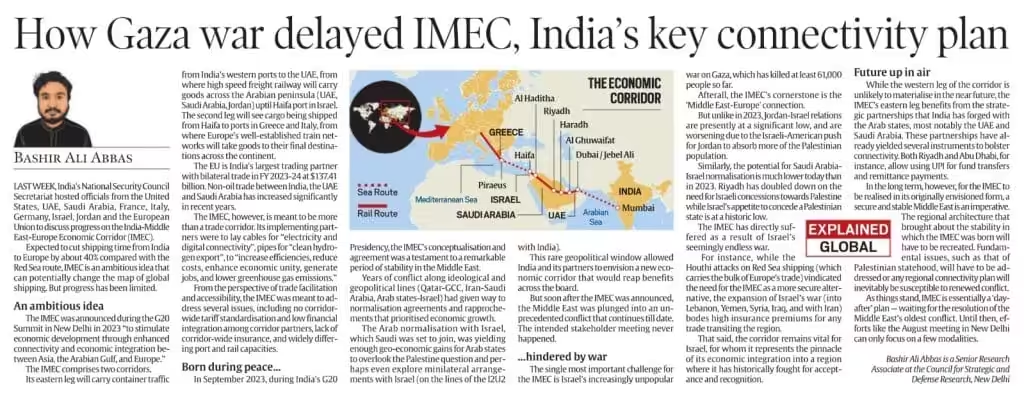
India’s National Security Council Secretariat (NSCS) hosted delegations of Member countries to discuss the future of the long-delayed India-Middle East-Europe Economic Corridor (IMEC).
UPSC Relevance:
Connectivity Projects have been in focus in UPSC Prelims.
Prelims PYQ 2025:
Question: India is one of the founding members of the International North-South Transport Corridor (INSTC), a multimodal transportation corridor, which will connect
(a) India to Central Asia to Europe via Iran
(b) India to Central Asia via China
(c) India to South-East Asia through Bangladesh and Myanmar
(d) India to Europe through Azerbaijan
Prelims PYQ 2023:
With reference to India’s projects on connectivity, consider the following Statements:
1. East-West Corridor under Golden Quadrilateral Project connects Dibrugarh and Surat.
2. The Trilateral Highway connects Moreh in Manipur and Chiang Mai in Thailand via Myanmar.
3. Bangladesh – China – India – Myanmar Economic Corridor connects Varanasi in Uttar Pradesh with Kunming in China.
How many of the above statements are correct?
a) Only one
b) Only two
c) All three
d) None
About IMEC:
Launched on the sidelines of the G20 Leaders’ Summit held in New Delhi in September 2023.
MoU signed by:-
Germany
India
USA
Saudi Arabia
UAE
European Union
Italy
France
The IMEC’s conceptualisation and agreement was a testament to a remarkable period of stability in the Middle East.
Years of conflict along ideological and geopolitical lines (Qatar-GCC, Iran-Saudi Arabia, Arab states-Israel) had given way to normalisation agreements and rapprochements that prioritised regional economic growth. The Arab normalisation with Israel, which Saudi Arabia was set to join, was yielding enough geo-economic gains for Arab states to overlook the Palestine question and perhaps even explore minilateral arrangements with Israel (on the lines of the I2U2 with India).
This rare geopolitical window allowed India and its Middle Eastern, American, and European partners to envision a new corridor between India and Europe.
Note : MoU was signed by 8 countries but the IMEC will pass through many other countries like Greece, Jordan, Israel and so on. Please refer to the map.
2 Segments:
The Eastern Corridor: This is a sea corridor connecting India to the Arabian Gulf. It will involve ports in India and the United Arab Emirates (UAE) and Saudi Arabia. Some specific ports mentioned in plans include Mundra and Jawaharlal Nehru Port Trust (JNPT) in India and Fujairah and Jebel Ali in the UAE.
The Northern Corridor: This segment connects the Arabian Gulf to Europe, primarily by a new railway network. This rail line is planned to traverse the Arabian Peninsula, passing through Saudi Arabia, Jordan, and Israel. From the port of Haifa in Israel on the Mediterranean Sea, goods would then be shipped to ports in Europe.
The European end of the corridor is a sea route to several European countries. The primary destinations and participating countries include: Italy, France,Germany, Greece (the port of Piraeus has been mentioned as a possible entry point).
The project is a comprehensive network that includes not only a railway but also infrastructure for:
Electricity and digital connectivity: This involves laying cables for electricity and high-speed data.
Clean hydrogen export: The plan includes a pipeline for clean hydrogen.
An Intergovernmental Framework Agreement (IGFA) was signed between India and the UAE in February 2024 to facilitate cooperation on the corridor’s operation, particularly on the development of a joint logistics platform and a digital ecosystem.
Goals and Benefits:
Trade and Logistics: The primary goal is to create a seamless, efficient, and cost-effective trade route. It is projected to reduce logistics costs by up to 30% and transportation time by as much as 40% compared to traditional maritime routes like the Suez Canal.
Economic Integration: The corridor is designed to enhance economic unity, generate jobs, and attract foreign direct investment into infrastructure, logistics, green energy, and digital technologies. It aims for a “transformative integration” of Asia, Europe, and the Middle East.
For India, it provides a crucial link to its two largest trading blocs, the EU and the Gulf Cooperation Council (GCC).
Geopolitical and Strategic Importance:
Counter to China’s BRI: The IMEC is widely seen as a strategic alternative to China’s Belt and Road Initiative, offering a debt-free and transparent model for infrastructure development.
Supply Chain Security: It aims to secure regional supply chains and reduce reliance on critical maritime chokepoints, such as the Suez Canal.
Challenges and Status:
Initial Challenges: The project faced “benign modality and sustainability challenges” such as an under-developed cross-Saudi/UAE railway and a lack of a clear financialroadmap. These were considered manageable through commitment and investment from participating nations.
Geopolitical instability, particularly the conflict in the Middle East, has been cited as a major hindrance to the corridor’s momentum.
The “Middle East-Europe” connection, vital for the corridor, is now imperiled. Relations between Jordan and Israel are at a low point, and the prospect of Saudi-Israel normalization has diminished significantly due to Israel’s policies toward Palestine.
Regional Competition: The eastern leg still faces internal hurdles, such as economic competition between Saudi Arabia and the UAE, which complicates the push for a common vision.
Weakened Economic Benefits:Israel’s expanding conflict throughout the region increases insurance premiums for trade, undermining the corridor’s initial promise as a more secure alternative to the Red Sea route.
Way Ahead:
Despite the challenges, diplomatic engagement continues, and participating countries have reiterated their commitment to the project, with a call for a credible roadmap for the next 36 months being made at the G7 Summit in June 2024. The recent meeting is a step in the same direction.
Split Corridor: The western leg of the corridor (involving Israel) is unlikely to proceed soon. However, the eastern leg (connecting India with Arab states) can still move forward due to strong existing partnerships with the UAE and Saudi Arabia.
The IMEC has effectively become a “day-after” plan, waiting for a resolution to the Israeli-Palestinian conflict. Current efforts can only focus on preliminary aspects like trade facilitation until a lasting peace is achieved. The full realization of IMEC in its original form is contingent on a secure and stable Middle East.
The Vizhinjam seaport is set to begin its Phase Two expansion next month, with a target completion date of 2028. This phase aims to increase the port’s annual container capacity to 4.5 million TEUs and will add a break-bulk berth, a tanker berth, and a bunkering facility.
UPSC Relevance:
Ports and Connectivity have been one of the favorite areas for UPSC in Prelims examination.
Prelims PYQ 2023:
Consider the following pairs:
Port : Well known as
1. Kamarajar Port: First major port in India registered as a company
2. Mundra Port: Largest privately owned port in India
3. Vishakhapatnam Port: Largest container port in India
How many of the above pairs are correctly matched?
a) Only one pair
b) Only two pairs
c) All three pairs
d) None of the pairs
Prelims PYQ 2024:
Consider the following airports:
1. Donyi Polo Airport
2. Kushinagar International Airport
3. Vijayawada International Airport
In the recent past, which of the above have been constructed as Greenfield projects?
a) 1 and 2 only
b) 2 and 3 only
c) 1 and 3 only
d) 1, 2 and 3
About Vizjinjam Deep Sea Port:
It is India’s first deep-water container trans-shipment port. A trans-shipment port is a hub where cargo is transferred from one large vessel to smaller ships for distribution to various regional ports.
The port’s natural deep draft of 20 meters near the shore minimizes the need for dredging.
This allows it to accommodate some of the world’s largest cargo and container ships, also known as “mother vessels,” which many other Indian ports cannot handle.
It currently has an 800-meter-long container jetty that can handle one container mother ship and two feeder vessels at a time.
The port is owned by the Government of Kerala. It was developed under a Public-Private Partnership (PPP) model on a Design, Build, Finance, Operate, and Transfer (DBFOT) basis. The Adani Group, through Adani Vizhinjam Port Private Ltd (AVPPL), holds the concession to operate the port for 40 years, which is extendable by 20 more years.
It started commercial operations in December 2024, and has already handled nearly 1 million TEUs.
So far, all containers handled by the port have been transshipment cargo, with 60% being international and 40% Indian.
Previously, 75% of India’s transshipment operations occurred at foreign ports, leading to revenue loss. Vizhinjam is designed to redirect this traffic and keep revenue within India.
Exim cargo has not yet been handled, but port officials expect it to grow to account for 20% of total cargo as the Phase Two expansion progresses and new inland connections are completed.
The port is expected to reduce logistics costs for Indian manufacturers by 30-40%, improving the country’s export competitiveness.
Vizhinjam’s strategic location on the East-West sea route makes it a potential hub for crew changes. Port officials are working with the government to establish an international crew change facility, which could boost the local economy through services for seafarers.
The port is a high-tech facility with automated handling systems.The port uses sensor, radar, and AI technology to track and manage large container ships during arrival and departure.
Ports in India:
India has a vast coastline and a large number of ports, which are categorized into major and non-major ports.
India has 13 major ports and over 200 non-major (minor and intermediate) ports.
The management of ports in India is divided based on their category:
Major Ports: These ports are under the direct administrative control of the Ministry of Ports, Shipping and Waterways of the central government. They are governed by the Major Port Authorities Act, 2021. This act gives the major ports more autonomy and a more corporate structure compared to the previous system under the Major Port Trusts Act, 1963.
Each major port is managed by a Port Authority, which functions as a board of directors.
While the ownership of the land and waterfront remains with the central government, private sector participation is encouraged through PPP models. This allows for the development and operation of berths and terminals by private companies for a fixed period.
Non-Major Ports: These ports are managed by the respective state governments or their maritime boards. The development and regulation of these ports fall under the jurisdiction of the state authorities. They also utilize PPP models to attract private investment for port development and operations.
12 Major Ports:
West Coast Ports
Deendayal Port (Kandla), Gujarat
Originally known as Kandla Port, it was renamed in 2017. It is one of the busiest and largest ports in India by volume of cargo handled. It is a tidal port and was developed to serve as the principal seaport for western India after the partition. It is also a Special Economic Zone (SEZ).
Mumbai Port, Maharashtra
As one of India’s oldest ports, it is a natural deep-water harbor. It primarily handles general cargo and petroleum products. The port is also a major hub for cruise tourism.
Also known as Nhava Sheva, it is India’s largest container port and handles over half of the country’s total container traffic. It is a modern, artificial port with state-of-the-art facilities.
Mormugao Port, Goa
Located at the mouth of the Zuari River, this is a natural harbor. It is a major port for exporting iron ore. It is also a key port for handling bulk cargo.
New Mangalore Port, Karnataka
Situated at Panambur in Mangalore, it is a deep-water, all-weather port. It is a primary port for iron ore exports and also handles petroleum products, fertilizers, and other cargo.
Cochin Port, Kerala
Situated on two islands in the Vembanad Lake, this port is a natural gateway to the industrial and agricultural markets of southwestern India. It is a key trans-shipment hub and home to the Kochi International Container Transshipment Terminal (ICTT), which is India’s first trans-shipment terminal.
East Coast Ports:
V. O. Chidambaranar Port (Tuticorin), Tamil Nadu
It is an artificial deep-sea harbor. It is a major port in South India and handles a wide range of cargo, including coal, salt, and fertilizers.
Chennai Port, Tamil Nadu
Formerly known as Madras Port, it is one of the oldest and second-largest container ports in India. It is an artificial port and a key hub for automobiles, general cargo, and containers.
Kamarajar Port (Ennore), Tamil Nadu
Formerly known as Ennore Port, it is the first corporatized major port in India. It was developed to handle coal, especially for the thermal power plants in Tamil Nadu, and also handles automobiles.
Visakhapatnam Port, Andhra Pradesh
This is the deepest port in India, with a natural harbor. It is a major port for iron ore exports to Japan and handles a wide variety of cargo, including coal, alumina, and petroleum products.
Paradip Port, Odisha
A deep-water, all-weather port, it is crucial for the export of iron ore and aluminum. The port is a vital link for India’s trade with East Asian and Pacific regions.
Paradip Port Authority (PPA) is the largest cargo handling port among Indian Major Ports
Syama Prasad Mookerjee Port (Kolkata), West Bengal
It is the oldest operating port in India and the only major riverine port. It has two distinct dock systems: the Kolkata Dock System (KDS) and the Haldia Dock Complex (HDC). It is a key port for Eastern India, handling cargo like jute, iron ore, and containers.
Major Ports Under development:
International Container Transshipment Port (ICTP), Great Nicobar Island:
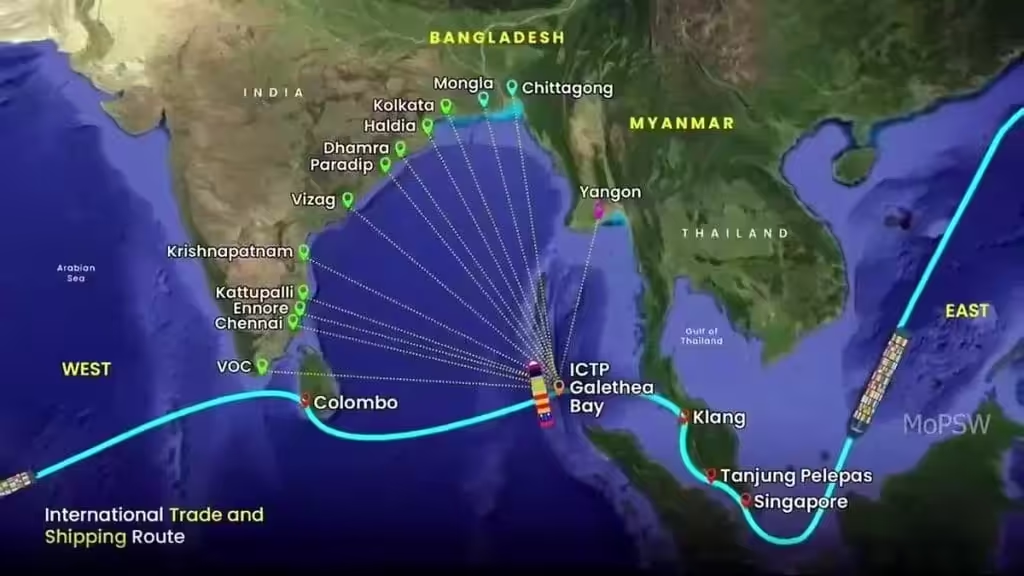
This port, located at Galathea Bay, is India’s 13th major port. Its primary purpose is to function as a trans-shipment hub for cargo, strategically located near major international shipping routes to attract trans-shipment business away from foreign ports like Colombo and Singapore. It is a key part of the larger Great Nicobar Holistic Development Project.
Vadhavan Major Port:
Vadhavan is a proposed deep seaport in the Palghar district of Maharashtra, near Dahanu.
The Union Cabinet has approved the development of this port. It is being developed on a “landlord model” through a Public-Private Partnership (PPP).
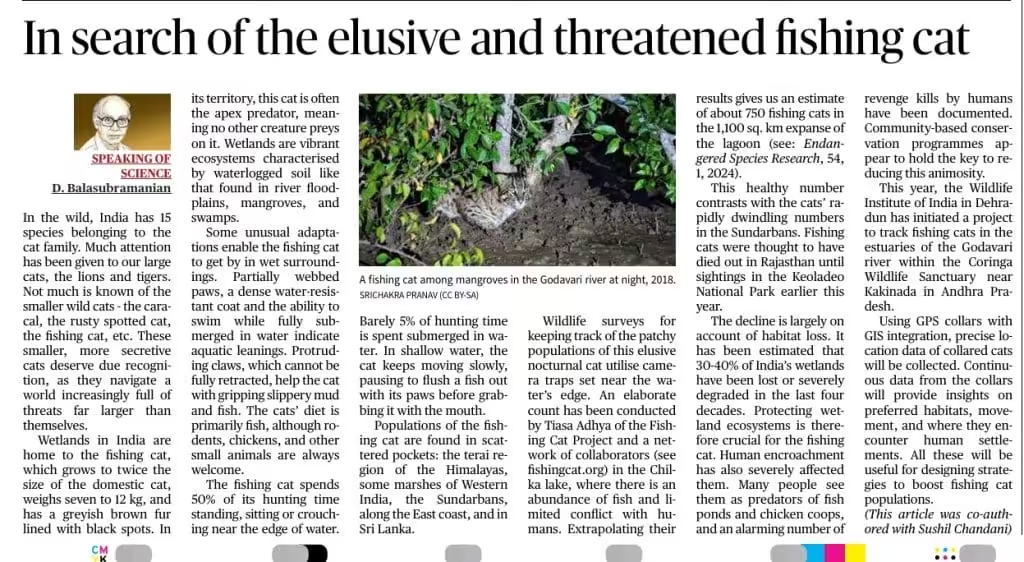
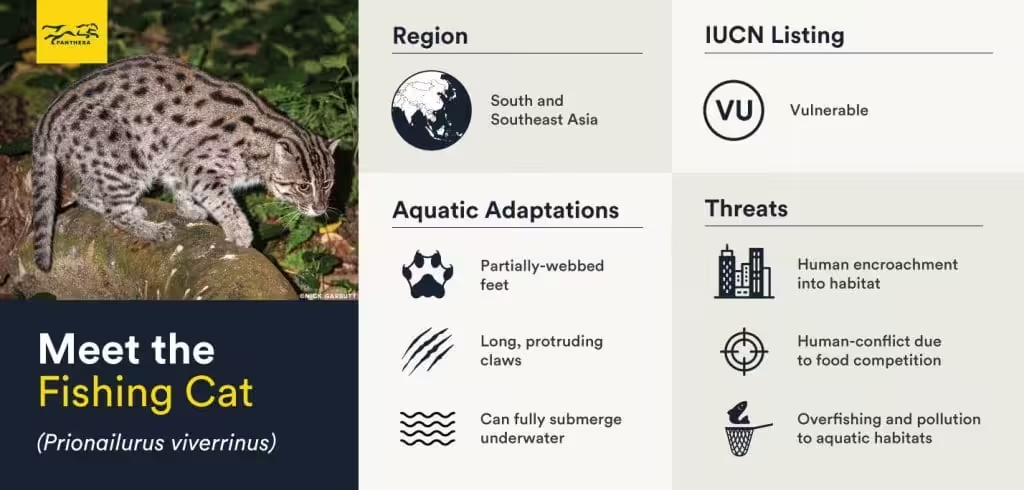
India ishome to 15 species of wild cats, but most of the attention is focused on larger species like lions and tigers. Smaller, more secretive species like the caracal, rusty-spotted cat, and fishing cat are often overlooked despite facing significant threats.
UPSC Relevance:
Species and species behaviors have been asked in Prelims time and again.
UPSC PYQ 2023:
Which one of the following makes a tool with a stick to scrape insects from a hole in a tree or a log of wood?
(a) Fishing cat
(b) Orangutan
(c) Otter
(d) Sloth bear
The Fishing Cat: A Wetland Specialist:
IUCN Status : Vulnerable (Latest update)
The fishing cat is a medium-sized feline, about twice the size of a domestic cat, weighing between 7 and 12 kg.
It has a greyish-brown coat with black spots and is often the apex predator in its territory.
It thrives in wetlands, which are ecosystems characterized by waterlogged soil, such as river floodplains, mangroves, and swamps.
The fishing cat has several adaptations for its environment: partially webbed paws, a dense water-resistant coat, and the ability to swim submerged.
Its claws cannot be fully retracted, which helps it grip slippery surfaces and catch fish.
While its primary diet is fish, it also preys on rodents, chickens, and other small animals.
This cat spends about 50% of its hunting time near the water’s edge, but only about 5% of its time is spent submerged.
Populations are found in scattered locations across India, including the Himalayan terai region,Western India, the Sundarbans, the East coast, and Sri Lanka.
Researchers use camera traps and GPS collars to survey and track these elusive, nocturnal cats.
A recent survey in Chilka lake estimated a healthy population of around 750 fishing cats.
This contrasts with the cats’ declining numbers in the Sundarbans, though they have been sighted again in Rajasthan’s Keoladeo National Park after being thought to be locally extinct.
The main threats to the fishing cat are habitat loss (30-40% of India’s wetlands have been degraded) and human conflict, as they are often killed for preying on fish ponds and chickens.
New projects, like one in the Godavari river estuaries, use GPS collars to understand the cats’ movements and interactions with humans to develop better conservation strategies.
Few Small Cat Species Found in India:
Feature
Malabar Civet
Rusty-spotted Cat
Caracal
Geographic Range
Endemic to the Western Ghats of southwest India.
Found in India (northern, central, Western Ghats), Sri Lanka, and Nepal. India holds about 80% of the total population.
Widespread across Africa, the Middle East, Central Asia, and northwestern India.
Habitat
Tropical evergreen and moist deciduous forests, as well as cashew and rubber plantations. Prefers wooded lowlands and adjoining hill slopes.
Dry forests, bamboo forests, wooded grasslands, scrublands, and rocky hills. Also adapts to agricultural landscapes.
Arid woodlands, savannas, scrublands, and hilly steppes. Avoids tropical forests and open sandy deserts.
Diet
Omnivorous, feeding on small mammals, birds, reptiles, insects, and fruits like jackfruit and figs.
Primarily feeds on rodents, small birds, frogs, insects, and small reptiles.
Strictly carnivorous, preying on small to medium-sized mammals (like rodents, hares, and antelopes) and birds.
IUCN Status
Critically Endangered The population is estimated to be fewer than 250 mature individuals. It is one of the world’s rarest mammals.
Near Threatened Faces threats from habitat loss and fragmentation.
Least Concern However, the Indian population is considered locally endangered and is declining.
Distinguishing Features
Dog-like appearance with a long body, short legs, and a black dorsal crest (a mane of hair) running from its neck to the tail. It is a member of the civet family, not the cat family. Nocturnal and Elusive Behaviour.
The world’s smallest wild cat. It has a reddish-gray coat with distinctive rusty-colored spots. It’s often mistaken for a baby leopard.Nocturnal and Elusive Behaviour.True Cat
A robust build with a short face, long legs, and a short tail. Its most notable features are the long, black tufts of hair on its ears.Nocturnal and Elusive Behaviour.True Cat
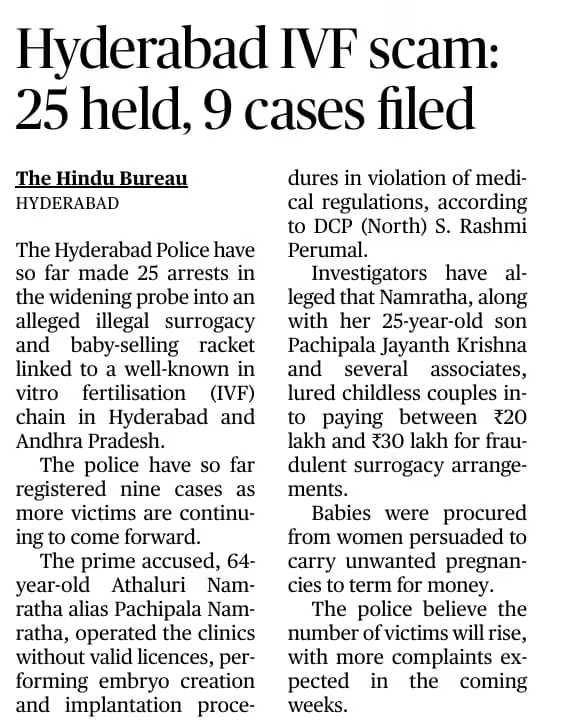
The Hyderabad Police have so far made 25 arrests in the widening probe into an alleged illegal surrogacy and baby-selling racket linked to a well-known in vitro fertilisation (IVF) chain in Hyderabad and Andhra Pradesh.
UPSC Relevance:
Topic: Science and Technology- developments and their applications and effects in everyday life.
UPSC Prelims PYQ 2020:
Q. Consider the following statements:
Genetic changes can be introduced in the cells that produce eggs or sperms of a prospective parent.
A person’s genome can be edited before birth at the early embryonic stage.
Human induced pluripotent stem cells can be injected into the embryo of a pig.
Which of the statements given above is/are correct?
(a) 1 only
(b) 2 and 3 only
(c) 2 only
(d) 1, 2 and 3
What is Surrogacy:
Definition:
Surrogacy (Regulation) Act, 2021 defines surrogacy as a practice where a woman gives birth to a child for an intending couple with the intention to hand over the child after the birth to the intending couple.
Note: “couple” means the legally married Indian man and woman above the age of 21 years and 18 years respectively.
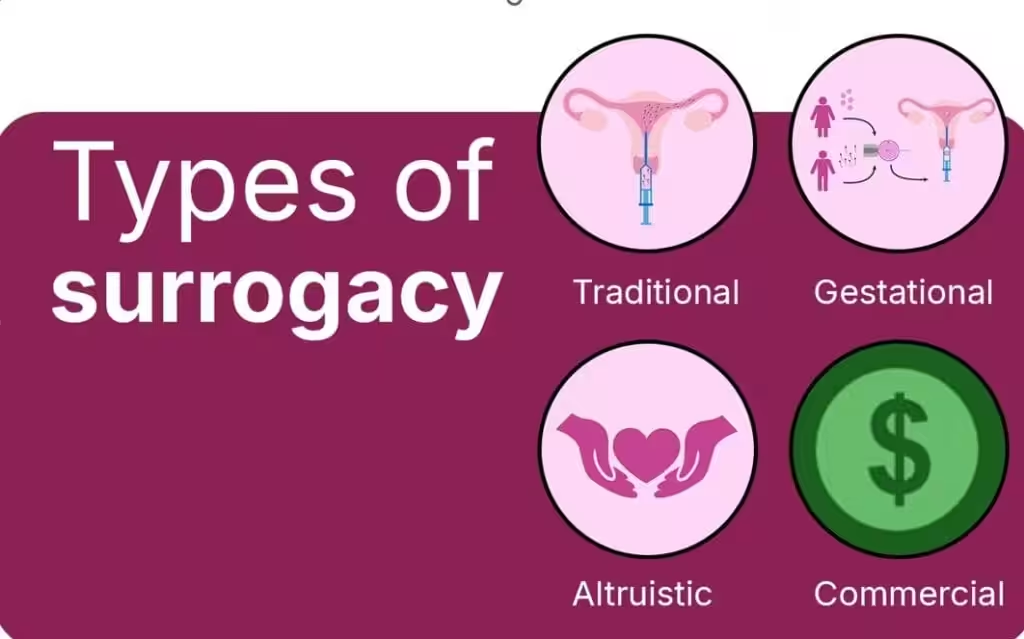
Types of surrogacy:
THE SURROGACY (REGULATION) ACT, 2021
Altruistic surrogacy:
It means the surrogacy in which no charges, expenses, fees, remuneration or monetary incentive of whatever nature, except the medical expenses and such other prescribed expenses incurred on surrogate mother and the insurance coverage for the surrogate mother, are given to the surrogate mother or her dependents or her representative.
Commercial surrogacy: Totally Prohibited in India
It means commercialization of surrogacy services or procedures or its component services or component procedures including selling or buying of human embryo or trading in the sale or purchase of human embryo or gametes or selling or buying or trading the services of surrogate motherhood by way of giving payment, reward, benefit, fees, remuneration or monetary incentive in cash or kind, to the surrogate mother or her dependents or her representative, except the medical expenses and such other prescribed expenses incurred on the surrogate mother and the insurance coverage for the surrogate mother.
Criteria for surrogate mother:
A willing & married woman between the ages of 25 to 35 years having a child of her own.
No woman shall be a surrogate mother more than once in her lifetime.
Should possess a certificate of medical and psychological fitness for surrogacy from a registered medical practitioner.
THE SURROGACY (REGULATION) ACT, 2021:
Prohibition and regulation of surrogacy clinics- No surrogacy clinic, unless registered under this Act, shall conduct or associate with, or help in any manner, in conducting activities relating to surrogacy and surrogacy procedures.
No person including a relative or husband of a surrogate mother or intending couple or intending woman shall seek or encourage to conduct any surrogacy or surrogacy procedures.
Written informed consent of surrogate mother obtained in the prescribed form, the written informed consent of the surrogate mother to undergo such procedures in the language she understands.
The intending couple or intending woman shall not abandon the child, born out of a surrogacy procedure, whether within India or utside.
No person, organisation, surrogacy clinic, laboratory or clinical establishment of any kind shall force the surrogate mother to abort at any stage of surrogacy except in such conditions as may be prescribed.
An Indian woman who is a widow or divorcee between the ages of 35 to 45 years can also avail the surrogacy.
Child born out of surrogacy is deemed to be a biological child of the intending couple or intending woman with entitlement to all the rights and privileges available to a natural child.
Constitution of National Assisted Reproductive Technology and Surrogacy Board:
The Central Government shall, by notification, constitute a Board to be known as the National Assisted Reproductive Technology and Surrogacy Board to exercise the powers and perform the functions conferred on the Board under this Act.
the Minister in-charge of the Ministry of Health and Family Welfare, the Chairperson, (ex officio)
Functions:
to advise the Central Government on policy matters relating to surrogacy.
to review and monitor the implementation of the Act, and the rules and regulations made thereunder and recommend to the Central Government, changes therein.
to lay down the code of conduct to be observed by persons working at surrogacy clinics
to set the minimum standards of physical infrastructure, laboratory and diagnostic equipment and expert manpower to be employed by the surrogacy clinic.
to oversee the performance of various bodies constituted under the Act and take appropriate steps to ensure their effective performance.
to supervise the functioning of State Assisted Reproductive Technology and Surrogacy Boards.
Note: State Assisted Reproductive Technology and Surrogacy Boards constituted at the State level and Union territory having Legislature.
Changes:
Surrogacy (Regulation) Rules, 2022 allow surrogacy using a donor gamete after supreme court Judgement (Arun Muthuvel vs. Union of Indiacase) where SC allowed women undergo surrogacy with a donor egg.
If District Medical Board certifies that intending couples suffers from a medical condition necessary to use of a donor gamete.
Issues:
The act has not defined close relatives not define close relatives.
Surrogacy act 2021 exclusionary in nature because it does not include LGBTQ+ persons, live-in couples, unmarried women and single parents.
It undermines women’s bodily autonomy – By transitioning from a rights-based to a needs-based framework, it takes away a woman’s ability to make decisions regarding her reproductive choices. Additionally, it infringes upon her fundamental rights as outlined in Articles 14 (right to equality) and 21 (right to life) of the Constitution.
Hyderabad Case: commercial surrogacy may lead to creation of unregulated, exploitative underground/black markets.
SC’s role in ensuring judicial discipline and correcting errors.
Incident Trigger –
Recently, a Supreme Court Bench of Justices J.B. Pardiwala and R. Mahadevan publicly censured Justice Prashant Kumar of the Allahabad High Court.
The reason: An “absurd” and “erroneous” order passed in a criminal matter.
As a corrective step, the SC ordered that he:
Be paired with a senior judge for all future work.
Not be assigned the criminal roster till retirement.
Reaction –
Allahabad HC Chief Justice Arun Bhansali and HC lawyers objected, saying this interfered with the Chief Justice’s exclusive administrative power to allocate cases – the “Master of the Roster”.
Subsequent Development –
Chief Justice of India B.R. Gavai wrote to the Bench clarifying SC’s position. The SC modified its order, stating it did not intend to undermine the HC CJ’s powers. This incident reignited debate on the balance between:
Judicial independence of High Courts
SC’s role in ensuring judicial discipline and correcting errors.
Master of the Roster – Concept
Purpose – Administrative control to ensure efficient case management and judicial discipline.
Meaning – Exclusive authority of the Chief Justice (SC or HC) to:
Constitute benches on his or her own discretion
Allocate cases and decide which judge hears which matter.
this is done to ensure the efficient case management and judicial discipline.
Constitutional Provisions
Article 124 & 217 – Appointment and tenure of judges (relevant for independence context).
Article 141 – Law declared by the Supreme Court is binding on all courts in India.
Article 142 – SC can pass any order necessary for “complete justice” in any case.
Article 227 – High Courts’ power of superintendence over subordinate courts (not over each other or SC).
Landmark Judgments on Master of Roster
Mayavaram Financial Corporation Case (Madras HC, 1991) – CJ has inherent power for allocation of judicial business.
State of Rajasthan v. Prakash Chand (1998) – CJ of HC has exclusive prerogative to:
Assign judicial work
Decide composition of benches.
State of Rajasthan v. Devi Dayal (1959) – Only CJ decides single or division bench composition.
SC’s Role in Judicial Administration
Can intervene in rare cases to uphold rule of law.
Tirupati Balaji Developers Case (2004) – SC is “elder brother” in judicial family, but has no power of superintendence over High Courts.
Judicial Independence vs. Oversight
SC intervention in HC internal matters is exceptional → to correct gross judicial errors or safeguard institutional integrity.
High Courts are independent constitutional bodies (Art. 214).
Integrated judiciary means SC judgments bind HCs (Art. 141).
Prelims Angle – Possible Traps
Distinct from allocation of cases in subordinate judiciary, where HC has superintendence (Art. 227).
Master of Roster is not defined in the Constitution → it is a judicially evolved principle.
SC has no administrative control over High Court rosters – only advisory or exceptional intervention via Article 142.
Power is exclusive to Chief Justice, not shared with collegium or senior-most judges.
Context: On June 24, the Election Commission of India (ECI) announced the commencement of the Special Intensive Revision (SIR) of electoral rolls of Bihar, entailing the verification of nearly 8 crore voters. The ECI also declared that the SIR exercise would be extended to the entire country. Lack of transparency has continued to characterise the exercise on the ground, raising concerns about the credibility of the process.
UPSC Relevance:
GS 2, Appointment to various Constitutional Posts, Powers, Functions and Responsibilities of various Constitutional Bodies.
PYQ:
Mains 2022: Discuss the role of the Election Commission of India in light of the evolution of the Model Code of Conduct.
Mains 2017: To enhance the quality of democracy in India the Election Commission of India has proposed electoral reforms in 2016. What are the suggested reforms and how far are they significant to make democracy successful?
Election Commission of India
Why?
India, being a vast and diverse democratic republic, requires an independent and autonomous body to ensure that the electoral process is free, fair, and transparent. The Election Commission of India (ECI) was envisaged to play this crucial role, preventing the electoral system from being influenced by the executive branch of the government or political parties.
Constitutional Provisions
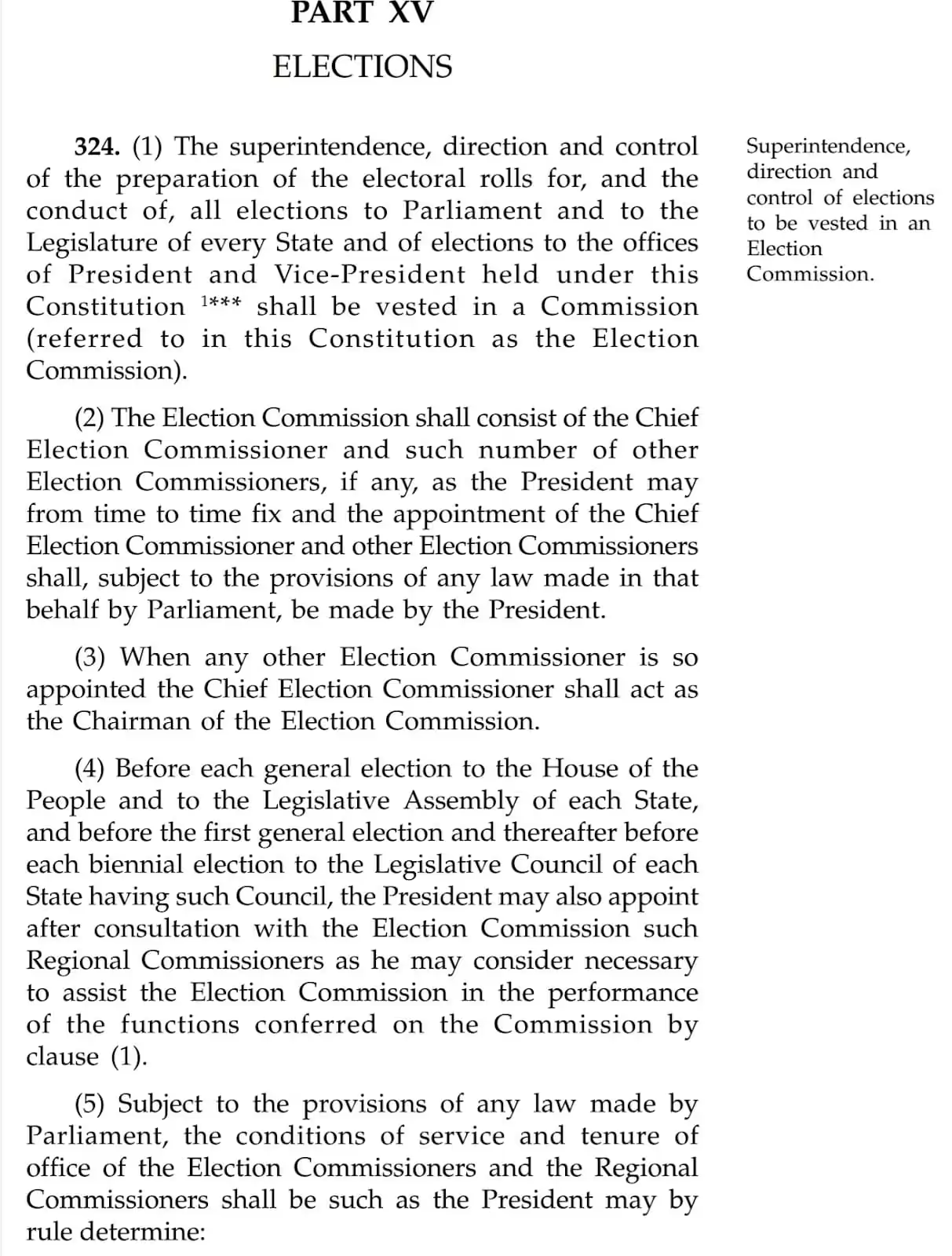
Article 324 grants the Election Commission the “superintendence, direction, and control” of the preparation of electoral rolls and the conduct of all elections to Parliament, State Legislatures, and the offices of the President and Vice-President.
Composition [1+2]
The Election Commission of India is a multi-member body.
Chief Election Commissioner (CEC): The ECI is headed by a Chief Election Commissioner.
Other Election Commissioners (ECs): The President can appoint a number of other Election Commissioners as deemed necessary. Since 1993, the commission has consisted of one Chief Election Commissioner and two Election Commissioners.
Chairman: When other Election Commissioners are appointed, the Chief Election Commissioner acts as the Chairman of the Election Commission.
Decision-Making: The CEC does not have overruling powers. All decisions are taken by a majority vote among the three members.
Appointment Process
Constitutional Mandate: The Constitution of India specifies that the President shall appoint the CEC and other ECs, subject to the provisions of any law made by Parliament.
The Chief Election Commissioner and Other Election Commissioners (Appointment, Conditions of Service and Term of Office) Act, 2023 now governs the appointment process.
Selection Committee: According to the 2023 Act, the President appoints the commissioners based on the recommendation of a Selection Committee consisting of:
The Prime Minister (as Chairperson)
The Leader of the Opposition in the Lok Sabha (or the leader of the single largest opposition party)
A Union Cabinet Minister nominated by the Prime Minister
Search Committee: A Search Committee, headed by the Law Minister, suggests a panel of names to the Selection Committee.
Tenure and Removal:
The conditions of service and tenure of the CEC and other Election Commissioners are determined by the President,subject to any law made by Parliament.
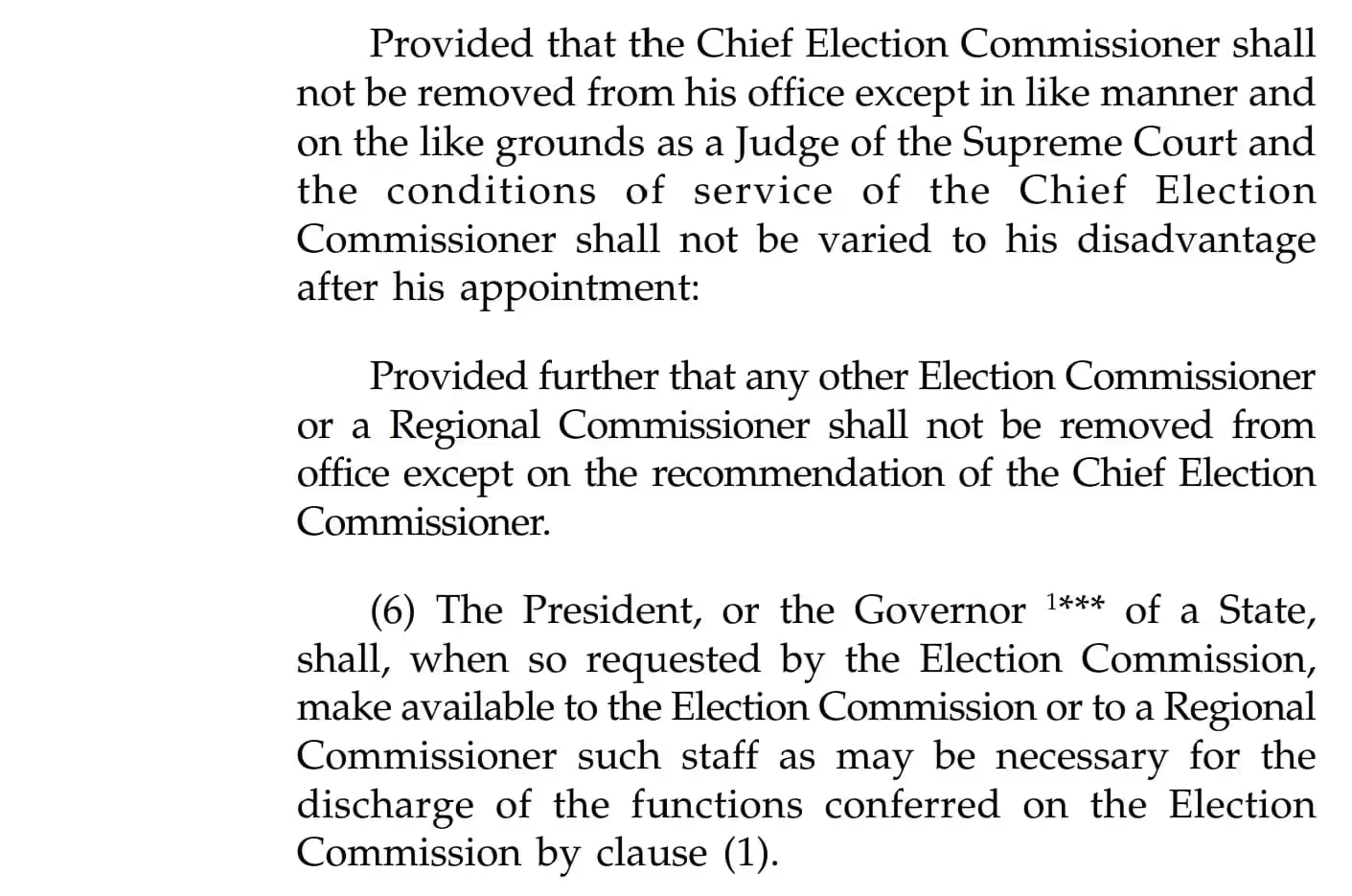
The CEC cannot be removed from office except in the same manner and on the same grounds as a judge of the Supreme Court.
Other EC’s cannot be removed from office except on the recommendation of the CEC.
Staff: The President and the Governor of a state are required to make available to the Election Commission any staff that is necessary for the discharge of its functions, when requested by the Commission.
Salary: As per the 2023 Act, the salary and other conditions of service of the CEC and ECs are now equivalent to that of the Cabinet Secretary of the Government of India.
Eligibility: The Constitution of India does not explicitly prescribe any specific qualifications. The 2023 Act specifies that a person must be holding or have held a post equivalent to the Secretary to the Government of India. They must also possess integrity and experience in managing and conducting elections.
Powers and Functions
The ECI has wide-ranging powers to ensure free and fair elections. These include:
Conducting Elections: The ECI has the superintendence, direction, and control of the entire process for conducting elections to the Parliament, state legislatures, and the offices of the President and Vice-President.
Insulation from Executive Interference: The Constitution has designed the ECI to be insulated from political pressure. It sets election schedules, determines polling locations, and manages all related logistics.
Voter Management: The ECI is responsible for preparing and updating electoral rolls, ensuring all eligible citizens are registered, and issuing voter identification cards (EPIC).
Political Party Regulation: It registers and recognizes political parties and ensures they maintain internal party democracy by holding periodic organizational elections. It also allots election symbols to them and solve disputes related to symbols.
Code of Conduct: The ECI enforces a Model Code of Conduct to ensure a level playing field for all political parties and candidates during elections, preventing unfair practices.
Advisory and Quasi-Judicial Functions: The ECI provides opinions to the President or Governor on matters of post-election disqualification of sitting members of Parliament or state legislatures. It also has the power to disqualify candidates for failing to lodge election expense accounts.
Measures ensuring independence of ECI
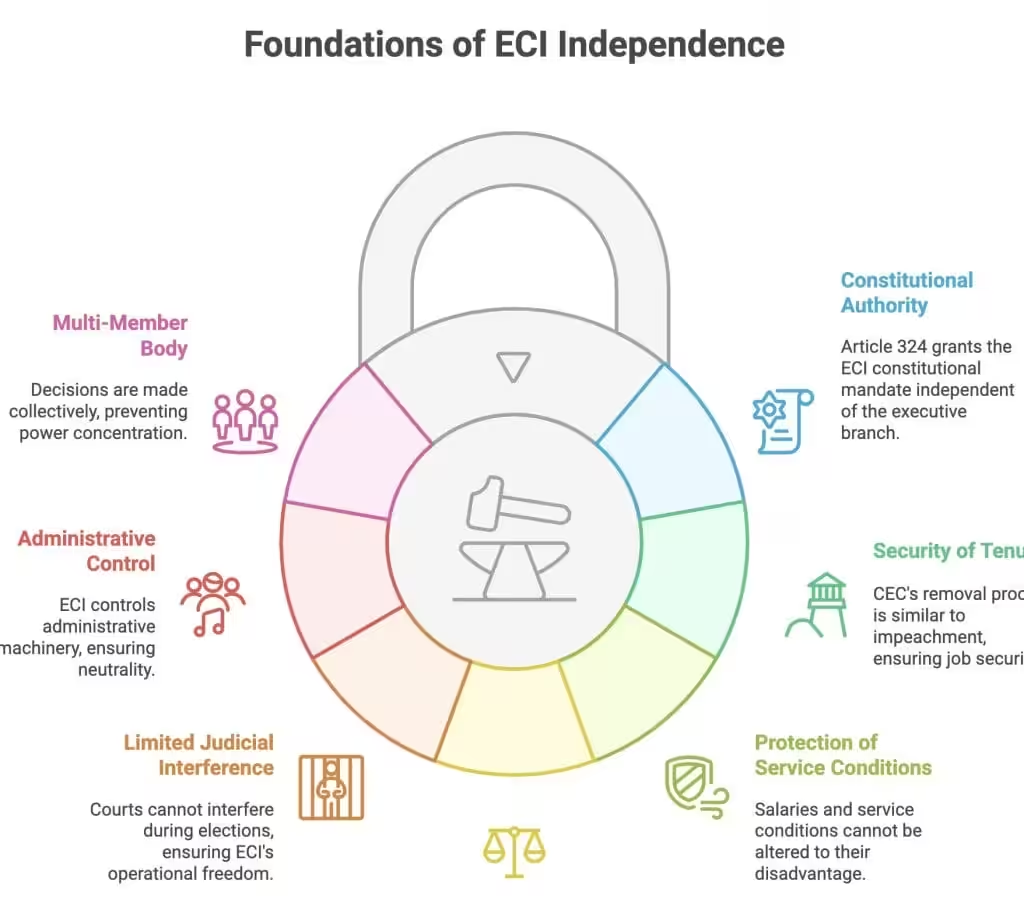
Constitutional Authority: Article 324 of the Constitution explicitly vests the “superintendence, direction, and control” of elections in the ECI, giving it a constitutional mandate independent of the executive branch.
Security of Tenure: The Chief Election Commissioner (CEC) has a secure tenure and can only be removed from office through a process similar to the impeachment of a Supreme Court judge. This requires a special majority in both Houses of Parliament on the grounds of “proved misbehaviour or incapacity.” This provision prevents the government from removing the CEC at will.
Other EC’s can only be removed from office on the recommendation of the CEC. This acts as a safeguard against the government unilaterally removing ECs.
Protection of Service Conditions: The salary and service conditions of the CEC and other Election Commissioners (ECs) cannot be altered to their disadvantage after their appointment. This protects them from financial pressure.
Quasi-Judicial Role: The ECI acts as a quasi-judicial body for resolving disputes related to political party symbols and other election matters, further strengthening its autonomy.
Limited Judicial Interference: Article 329 bars courts from interfering in electoral matters during the election process, except through an election petition filed after the election is over. This ensures the ECI can carry out its functions without constant judicial interruption.
Administrative Control: The ECI has extensive control over the administrative machinery during elections. It can transfer, suspend, or take disciplinary action against government officers assigned to election duties, ensuring they act in a neutral and non-partisan manner.
Multi-Member Body: The ECI has been a multi-member body since 1993, with decisions made by a majority vote of the CEC and two ECs. This prevents power from being concentrated in a single individual and ensures collective decision-making.
Challenges
Appointment Process: A significant challenge lies in the appointment of the Election Commissioners. The Chief Election Commissioner and Other Election Commissioners (Appointment, Conditions of Service and Term of Office) Act, 2023 grants the executive a significant role in the appointment process. The Selection Committee is chaired by the Prime Minister and includes a Union Cabinet Minister, giving the government a majority. This has raised concerns about the potential for executive influence in the appointments, undermining the ECI’s autonomy.
Lack of autonomy for other EC’s: There is no clarity on distribution of power among the EC’s. The tenure of the other EC’s is subject to CEC’s discretion, threatening their independence in decision making.
Funding and Financial Autonomy: The ECI is not a “charged expenditure” body like the Comptroller and Auditor General (CAG) or the Supreme Court. Its budget is subject to parliamentary approval, which can lead to concerns about its financial independence.
Enforcement of the Model Code of Conduct (MCC): While the MCC is a powerful tool, it does not have statutory backing. The ECI’s power to enforce it is based on its constitutional authority, but without a specific law, its actions can be challenged and sometimes seen as lacking the necessary legal teeth.
Influence of Money and Media: The increasing influence of money in politics, including illegal campaign funding and voter bribery, remains a major challenge. ECI has no effective control over it. Additionally, biased media coverage and the spread of misinformation and fake news, particularly on social media, can create an uneven playing field.
Role of Criminality: The ECI struggles to curb the entry of candidates with criminal backgrounds into politics. Despite various directives from the Supreme Court and the ECI, political parties continue to give tickets to candidates with pending criminal cases.
Logistical Challenges: The sheer size and diversity of the Indian electorate present enormous logistical challenges. Maintaining accurate voter lists, managing the voting process in remote and difficult-to-reach areas, and ensuring the safety of election officials and voters are ongoing tasks.
Demands for Transparency: The ECI has faced criticism and legal challenges over its transparency, particularly regarding the deletion of voter names from electoral rolls and the lack of detailed public disclosure about the reasons for such deletions. This can erode public trust in the electoral system.
Recent concerns on Transparency – raised by the author
Massive voter deletion: The draft voter list for Bihar shows that 65 lakh voter names were deleted, which is an average of about 27,000 per constituency. This number exceeds the winning margin in two-thirds of the seats from the 2020 elections.
Failure to disclose information: The ECI has not provided a full list of the deleted namesor the reasons for their removal. The booth-level lists shared with political parties also lack this crucial information. This lack of transparency makes it difficult for political parties and citizens to verify if the deletions are justified, violating the public’s right to information.
Unclear Rationale for the SIR : It is unclear what prompted the ECI to suddenly undertake a nationwide Special Intensive Revision (SIR) involving nearly 100 crore voters. The author questions if there was a sudden discovery of large-scale inaccuracies that necessitated such a massive and hurried exercise.
Debate Over Citizenship Proof Requirements : This decision of proving citizenship has caused a debate, as many people, including former Election Commissioners, say the ECI has never before asked every voter to prove their citizenship by producing documents like passports and birth certificates. This has led to suspicion that the SIR is a back-door attempt to implement a National Register of Citizens (NRC).
Far reaching consequences : Failing to prove citizenship could lead to more serious repercussions than just losing voting rights. Election officers have the power to refer cases of suspected foreign nationals to authorities under the Citizenship Act, 1955.
Undermining democracy: The lack of transparency and potential disenfranchisement of eligible voters erodes trust in the democratic process and the institutions meant to safeguard it.
Suggested Reforms
1. Reforms to ensure Autonomy from Executive
Establish an independent collegium: The Supreme Court, in its Anoop Baranwal judgment (2023), recommended the formation of a collegium for appointments, comprising the Prime Minister, the Leader of the Opposition, and the Chief Justice of India. This would ensure a more balanced and non-partisan selection process.
Security of Tenure :The 255th Law Commission Report and other expert bodies have recommended that all Election Commissioners should be given the same constitutional protection.
2. Reforms to Tackle Money and Muscle Power
Strengthen Disqualification Laws: The Dinesh Goswami Committee and the 255th Law Commission Report have recommended that a person should be disqualified from contesting elections even if a court frames charges against them for a serious offense, rather than waiting for a conviction.
State Funding of Elections: The Indrajit Gupta Committee on State Funding of Elections (1998) recommended partial state funding of elections for recognized political parties. This would reduce the reliance on private and often unaccounted-for donations. The government could provide certain in-kind facilities like airtime on state-owned media (Doordarshan, All India Radio), fuel for vehicles, and electoral rolls to recognized parties.
3. Legal Reforms
Give the MCC Statutory Backing: There have been long-standing demands to give the MCC a statutory basis. This would empower the ECI with stronger legal teeth to enforce its provisions and impose stricter penalties on violators.
Power to deregister Party :The ECI should have the power to de-register political parties for serious violations of the law or for failing to submit their financial accounts and to hold internal democratic elections.
4. Reforms to Improve Transparency and Accountability
Transparent Electoral Roll Management: The ECI should have a more transparent and systematic process for voter deletion. The full list of deleted names, along with the specific reasons for deletion, should be made public and easily accessible.
5. Reforms to Strengthen ECI’s Administrative and Financial Autonomy
Financial Autonomy: The ECI’s budget should be a “charged expenditure” on the Consolidated Fund of India, similar to the Supreme Court. This would ensure its financial independence.
Dedicated Secretariat: The ECI should have a permanent and dedicated secretariat with its own staff, reducing its reliance on temporary staff from various government departments. This would enhance its administrative control and impartiality.
A separate civil service cadre for the ECI, similar to the Indian Foreign Service (IFS) or Indian Police Service (IPS), would ensure a dedicated and trained workforce for election management.
6. Technological Integration
The ECI should leverage technology, including Artificial Intelligence and data analytics, to effectively monitor and combat the spread of fake news, hate speech, and misinformation on social media platforms during elections.
The introduction of technologies like Remote Electronic Voting Machines (RVMs) could be a reform to address the issue of voter migration and improve voter turnout. Totaliser Machines can be used to ensure secrecy.
A credible and autonomous ECI is essential to ensure that elections are not just a ritual, but a genuine expression of the will of the people and safeguarding procedural as well as substantive democracy. It prevents the manipulation of the electoral process by those in power and provides a level playing field for all political parties and candidates. The reforms suggested, particularly in the appointment process, enforcement powers and financial autonomy, are crucial steps towards safeguarding this independence.
Context: Union Environment Minister Bhupender Yadav on Sunday said the rise in the Asiatic lion population in Gujarat reflected India’s intimate relationship with nature and wildlife.
UPSC Relevance
Questions have been asked about species, their behaviors and conservation efforts in UPSC Prelims.
PYQ: 2024 Prelims
Consider the following statements:
1. Lions do not have a particular breeding season.
2. Unlike most other big cats, cheetahs do not roar.
3. Unlike male lions, male leopards do not proclaim their territory by scent marking.
Which of the statements given above are correct?
A. 1 and 2 only
B. 2 and 3 only
C. 1 and 3 only
D. 1, 2 and 3
2019 Prelims
Consider the following statements:
1. Asiatic lion is naturally found in India only.
2. Double-humped camel is naturally found in India only.
3. One-horned rhinoceros is naturally found in India only.
Which of the statements given above is/are correct?
(a) 1 only
(b) 2 only
(c) 1 and 3 only
(d) 1, 2 and 3
Lion Population Growth in Gujarat
The population of the Asiatic lion in Gujarat has seen a significant increase, with an estimated count of 891 lions, up from 674 five years ago. This represents a growth of 32% since 2020.
This success is credited to conservation efforts and the Prime Minister’s resolution to boost the lion population and develop the Barda Wildlife Sanctuary in Barda Hills as a new habitat.
India’s Commitment to Conservation
International Big Cat Alliance: Established to work on the conservation of the seven big cat species, with five of them found in India.
Project Lion: A comprehensive initiative covering habitat management, human-animal conflict mitigation, and scientific research.
Mr. Yadav also praised the Maldhari community for their unique coexistence with lions, which serves as a model for conservation.
Broader Conservation Efforts
The Minister also shared information on other conservation successes in India:
Tiger population: The number of tiger reserves in India has increased to 58, hosting 70% of the global tiger population.
Snow leopard population: The population of snow leopards in India is currently at 714, with conservation efforts continuing.
Cheetah reintroduction: African cheetahs have been successfully reintroduced into India.
Other projects: Ongoing projects include Project Tiger, Project Elephant, Project Dolphin, and Project Great Indian Bustard, which reinforce India’s leadership in conservation.
Facts about Lions
Category
Details
Physical Characteristics
– Well-muscled, broad-chested body; large head and short legs- Male weight: (150-250kg); female: (120-180kg)- Coat: tawny, yellow-gold, sometimes buff yellow, orange-brown, white-gray, dark brown; adult males have manes (varies in color and length)- Cubs have rosette spots; fades with maturity- Eyes: —the largest among carnivores
Social Behaviour
– Most social of all wild felids; live in prides- Pride consists of related females, cubs, and 1-4 adult male.- Females are the stable unit; males disperse- Mostly females hunt. – Social bonding through grooming, head rubbing, nuzzling; mutual grooming helps keep clean- Roaring, growling
Breeding Habit
– Females polygamous but mate within the pride- Breed year-round; wild lions usually breed once every two years
Conservation Status
– Listed as “Vulnerable” on IUCN Red List- 90% population decline in last century; – Extinct in 26 African countries; extinct in North Africa and Southwest Asia
Distribution Range
– Historically ranged across Africa, Asia, parts of Europe- Now found mainly in scattered populations across sub-Saharan Africa and a small population in Gir Forest, India- Habitats: grassy plains, open woods, savannahs, dry brush forests; rarely in closed forests- Asiatic lion now survives only in India
Context: V. Narayanan, Chairman of the Indian Space Research Organisa-tion (ISRO), has said that Group Captain Shubhanshu Shukla’s experience aboard the International Space Station (ISS) during Axiom 4 Mission will prove valuable for Gaganyaan, India’s upcoming human spaceflight programme.
UPSC Relevance:
Space Missions and their aims and objectives have been frequently asked in Prelims Examination.
PYQ: 2020 Prelims
“The experiment will employ a trio of spacecraft flying in formation in the shape of an equilateral triangle that has sides one million kilometres long, with lasers shining between the craft.” The experiment in question refers to
A Voyager-2
B New Horizons
C LISA Pathfinder
D Evolved LISA
2025 Prelims
GPS-Aided Geo Augmented Navigation (GAGAN) uses a system of ground stations to provide necessary augmentation. Which of the following statements is/are correct in respect of GAGAN?
I. It is designed to provide additional accuracy and integrity.
II. It will allow more uniform and high quality air traffic management.
III. It will provide benefits only in aviation but not in other modes of transportation.
Select the correct answer using the code given below.
(a) I, II and III
(b) I only
(c) II and III only
(d) I and II only
AXIOM-4 Mission
Mission Type and Operator
Fourth private spaceflight mission to the International Space Station (ISS), organized by Axiom Space.
Uses SpaceX’s Crew Dragon spacecraft, launched from Kennedy Space Center, Florida.
Key Objectives
Demonstrate viability of commercial activities in Low Earth Orbit (LEO), including space tourism.
Develop commercial platforms for scientific research and innovation; support business in space.
Diverse crew from the US, India, Poland, and Hungary; coordination between ISRO, NASA, ESA, and other national agencies.
Live interactions and curriculum development for STEM engagement worldwide; promote science and cooperation especially among schoolchildren.
Conduct cutting-edge biological, materials science, Earth observation, and technological experiments in microgravity.
Mission Crew
Featured astronauts include Peggy Whitson (US), Sławosz Uznanski (Poland), Tibor Kapu (Hungary), and Group Captain Shubhanshu Shukla (India).
Operational Insights
India’s ISRO developed operational experience for future indigenous missions (such as Gaganyaan), through direct participation in Axiom-4 mission operations at NASA centers.
Emphasized learning in crewed mission management, emergency protocols, payload handling, and international mission coordination.
Duration and Activities
Approximately 14 days on the ISS, involving extensive research and collaboration.
Legacy and Significance
Bridges private and public space exploration.
Sets benchmarks for commercial stations, international goodwill, and everyday technological benefits.
Catalyzes India’s efforts toward autonomous spaceflight infrastructure and human capital ahead of future missions like Gaganyaan.
■ The Chairman also highlighted the recent success of the NISAR Mission.
Context: Tamil Nadu and Karnataka are planning to implement a two-language formula for school education, as opposed to the push for a three-language policy in the National Education Policy (NEP) 2020. Both States are inclined towards primacy for local languages, Tamil and Kannada, respectively, and then English in school education. Tamil Nadu has already unveiled its State Education Policy (SEP) while a commission has submitted its recommendations for Karnataka’s SEP.
UPSC Relevance:
General Studies- II: Governance, Constitution, Polity, Social Justice and International relations: Issues relating to development and management of Social Sector/Services relating to Health, Education, Human Resources.
UPSC MAINS 2020:
How have digital initiatives in India contributed to the functioning of the education system in the country? Elaborate your answer.
The first new education policy of the country in 34 years, NEP 2020, overflowed with vision and aspiration, wanting to transform India into a “global knowledge superpower” with “equitable and high quality” education for every citizen. The policy came into effect in July 2020 and further aims to “power” the country and “foster” global talent. On a domestic scale, NEP 2020 plans to make the entire education spectrum, right from pre-school to higher education, to re-orient and evolve the outdated Indian education system.
The primary principles of the policy include access, equity, quality, affordability, and responsibility. NEP 2020 complements the spirit of the National Policy of 2016, which emphasized transforming the Indian society with 21st Century Skills and emphasized placing education as a top priority. The overall vision under NEP 2020 is far more nationalistic and wanting to encourage international mobility.
Significantly, both the federal government and the state government have an education role in India as it is a subject of the Concurrent List. Even though the NEP is a national vision, it requires the states to collaborate for its implementation. Reactions to this have been mixed; while many states have embraced the changes, others are worried about issues such as the entrance examinations and regional languages. For instance, Tamil Nadu has strongly opposed NEP’s centralised testing and the implementation of a three-language policy. In its place, the state has introduced its own State Education Policy, SEP 2025, which prioritizes linguistic identity and inclusive access to education.
Key Features of NEP 2020
Early Childhood Care and Education (ECCE): Formal education is extended to start from age 3 rather than 6, integrating preschool (Anganwadi/balvatika) into the school framework. A new curricular structure of 5+3+3+4 years replaces the old 10+2 system, corresponding to foundational, preparatory, middle, and secondary stages (covering ages 3–18).
Curriculum and Pedagogy Reform: The policy calls for reducing rote content. It envisions a shift from textbook-heavy learning to fostering critical thinking, creativity, and problem-solving.
Students will have increased flexibility in choosing subjects and can pursue multidisciplinary combinations (e.g. studying physics with fashion design, or bakery with chemistry) – for example breaking the rigid silos of “science”, “arts” or “commerce” streams.
Vocational education (including skills like coding, AI, etc.) will be integrated from Class 6 onwards, and coding is to be introduced at the middle-school level.
There is also a huge emphasis on co-curricular development: arts, sports, and life skills are given equal importance as academics. Overall, the aim is a more engaging and experiential learning experience that nurtures well-rounded individuals.
Language and Medium of Instruction: The policy recommends instructions in the mother tongue or local language up to at least Grade 5 (and preferably till Grade 8) to strengthen foundational learning. It advocates a “three-language formula“, wherein students learn three languages (with at least two being native Indian languages). Sanskrit and other classical or regional languages are encouraged as options at all levels. However, the policy also clearly indicates that no language will be imposed – implementation of the language formula is left to states and schools.
Assessment and Exams: NEP 2020 proposes transformative exam reforms.
Instead of yearly final exams for every grade, school students would take only key assessments in Classes 3, 5, and 8 to track learning outcomes.
The stressful board exams for Classes 10 and 12 will remain (Sadly), but will be redesigned to test core competencies rather than rote memorization.
A new national assessment center, PARAKH (Performance Assessment, Review and Analysis of Knowledge for Holistic Development), will be established to set standards for these exams.
The policy emphasises on board exams to be made easier: conducted twice a year in a semester system, with students allowed multiple attempts and a combination of objective and descriptive questions.
Report cards will be holistic, including self and peer assessment, and highlighting skills and dispositions rather than just marks. These changes aim to move the focus from high-stakes testing to continuous and competency-based evaluation.
Equity and Inclusion Measures: The policy places strong focus on inclusive education. It recognizes Socio-Economically Disadvantaged Groups (SEDGs) – such as girls, underprivileged castes/tribes, rural and urban poor, differently-abled, etc. – and stresses targeted interventions for their education.
A Gender Inclusion Fund is proposed to support education of female and transgender students nationwide.
Special Education Zones will be set up in regions with large populations from disadvantaged groups to focus resources and attention there.
The NEP also underscores training teachers in inclusive and special education to address the needs of children with disabilities.
Another equity measure is the extension of the Right to Education – previously covering ages 6–14 – to now include ages 3–18, thereby legally recognizing early childhood and secondary education as well.
Welfare provisions like the mid-day meal scheme are to be expanded to provide breakfast besides lunch, to enhance student nutrition and learning capacity.
Teacher Development and Training: Acknowledging that teacher quality is central to educational outcomes, NEP 2020 calls for a revamp of teacher education and continuous professional development.
It recommends a new and improved 4-year integrated B.Ed. degree as the minimum qualification for schoolteachers by 2030. Teachers will undergo regular training in pedagogy, technological tools, and inclusion.
Career progression for teachers will be linked to merit, and a National Professional Standards for Teachers (NPST) will be developed.
Additionally, the policy proposes a National Mission for Mentoring, which will recruit outstanding senior/retired teachers to provide mentorship to others. These steps aim to elevate the status of teaching, equip educators with modern skills, and improve classroom practice.
Higher Education Reforms: The NEP envisions bold changes in higher education structure and governance.
It proposes multidisciplinary universities and colleges on a grand scale. Rigid separations between streams will be eliminated – students can choose combinations across science, arts, vocational subjects, etc.
The undergraduate degree will be flexible, with multiple exit options: for example, after 1 year a student can get a certificate, after 2 years a diploma, a 3-year degree, or an optional 4-year Bachelor’s with research. This allows learners to pause and resume education as needed without losing progress.
A target is set to increase Gross Enrolment Ratio (GER) in higher education to 50% by 2035 – a massive expansion intended to make college education accessible to more youth.
Regulatory Overhaul: To improve quality and governance in higher education, NEP 2020 calls for consolidating the myriad regulatory bodies into a single umbrella body, the Higher Education Commission of India (HECI). Under HECI, four independent verticals will handle regulation, accreditation, funding, and academic standards: namely,
National Higher Education Regulatory Council (NHERC) for regulation,
National Accreditation Council (NAC) for accreditation,
Higher Education Grants Council (HEGC) to allocate funding (replacing UGC),
General Education Council (GEC) to frame academic standards.
This separation of functions is meant to eliminate conflicts of interest and “lighten but tighten” the regulatory environment. Autonomous academic institutions will be encouraged; colleges are to be gradually granted autonomy or merged into universities – moving away from the affiliation system over time. A new National Research Foundation (NRF) will be established to foster a culture of research and innovation across disciplines with competitive funding.
Use of Technology: The policy places strong emphasis on leveraging educational technology. It advocates for digital infrastructure in schools, e-learning platforms, and online teaching tools to improve access and quality. A National Educational Technology Forum (NETF) is proposed as a platform for exchanging ideas on tech-driven learning. At the same time, the NEP cautions about the digital divide and urges steps to ensure that socio-economically disadvantaged students are not left behind in the push for digital learning.
Values, Culture and Knowledge Systems: The NEP aspires to root education in Indian ethos and values. It recommends the inclusion of ethical and moral reasoning, constitutional values, and life skills in the curriculum. There is emphasis on Indian arts and culture, indigenous knowledge, and teaching of India’s rich history and traditions to instill pride and identity. The policy mentions setting up new language institutes for classical languages like Pali, Persian, Prakrit, as well as translation institutes to make knowledge accessible in Indian languages.
Challenges in Implementation
Attempting to execute sweeping reforms such as NEP 2020 comes with extensive obstacles. This intricacy stems from a multitude of challenges that may arise in the implementation of policy ideals:
Funding Contraints: Attempting to achieve the policy directive of raising public expenditure to 6% of GDP remains elusive. Meeting the targets set for public expenditure on Education far exceeds the current spending capabilities. Without consistent government spending in the long term, the hiring of trained faculty members, construction of new educational institutions, provision of digital infrastructure, and scholarships remains unattainable. Currently, the spending on education is only 50% of the targeted expenditure. Filling the funding void through private entities may compromise control, which comes with the danger of putting the funding before the focus of education. This constrains achieving the target long term, which adds further to the concern of whether an economic downturn is on the horizon.
Federal and Policy Alignment: The education sector is jointly overseen which implies that all states would need to be in agreement to implement changes from a singular hub that would affect the whole nation. Some states exercising their political freedom have chosen to delay or alter the implementation of NEP.
A classical example of this is Tamil Nadu that approached the Supreme Court claiming that the center was discriminating against them for not adopting NEP by slashing their education fund. The resulting delay from inter-state conflict adds an additional burden on the extensiveness of the policy, as the need to implement changes swiftly becomes the focus rather than the need to implement changes carefully.
Such Centre-State friction can slow implementation. Balancing integration of the NEP’s recommendations with regional contexts, especially concerning social issues like the language of instruction and entrance examinations, requires careful balancing. States also face challenges related to planning their implementation roadmaps. The framework is focused on achieving cooperative federalism, where all states and UTs are brought to work towards common objectives while respecting their spheres of self-governance. A one-size-fits-all model is impossible to apply in a nation like India, and therefore, the challenge is offering flexibility without compromising on critical pillars.
Digital Divide: As explained previously, the promotion of online learning and teaching may exclude entire segments of the student population with no means of accessing a device or the internet.
The rural-urban and rich-poor divides are stark with regard to accessing the internet. Many rural and tribal areas lack reliable internet and electricity. As witnessed during the pandemic, numerous students lacked the necessary smartphones or network to participate in online classes, and this challenge persists. The issues termed the ‘digital divide’ are infrastructure, as well as the associated literacy skills. A large proportion of the educators, students, and even the teachers are not proficient with technology. In the absence of adequate investment in rural broadband, school computers, electricity, and teacher training, the technology-centered reforms may only help the already privileged.
Availability and Training of Teachers: One of the most pressing and practical issues is the lack of trained teachers. With the introduction and coding and special education classes, as well as the offer of vocational skills in teaching, the new proposed NEP changes clearly indicate the need to reduce the extremely high pupil to teacher ratio in the early years and subsequently upskill existing teachers. Many of the training colleges lack qualified trainers, leading to poorly developed curricula of the teaching programs, and teachers are only given limited professional training opportunities.
Adapting to new teaching and curriculum guidelines shifts from years of rote learning traditions to activity-based learning approaches, and proper mentorship to facilitate this change is unlikely to be well received. Furthermore, the multilingual framework will call for the incorporation of technology and assessment shifts, thus requiring open-minded, paradigmatic shifts. With regards to bringing teachers from well developed regions and remote villages up to the new standard, this presents an enormous undertaking.
Policies that attempt to change the status quo must be grounded in solid, adaptable, and coherent implementation strategies, and this framework is extremely variable. While the government intentions toward the change of curricula and implementation of professional development classes is vital, they need to put more investment into resources and time.
Mindset and cultural change: NEP 2020 expects a shift in the culture of learning away from exam-centricity, rote learning, and narrow streams to holistic and flexible learning, but students, parents, and even employers are set in their ways (marks-oriented competition, only valuing particular degrees). It will be a social challenge to convince parents that engaging in a skills course or an arts subject combination is valued just as much as one of the traditional courses.
The success of the multi-disciplinary and vocational focus for NEP 2020 depends on social acceptance. Shifting from high stakes board exams to low stakes board exams will also require coordination of high school expectations and college admissions (which still depend heavily upon what is recorded on board exam grades or entrance exams) – if the college systems downstream do not change in concert with modifying exam expectations, schools will be slow to reduce the importance of exams.
The exam prep industry and emphasis on rote learning have long been entrenched in Indian culture, and they will undoubtedly find ways to either resist the reforms or continue on as before (for example, modified forms of coaching will emerge for aptitude tests). Changing mindsets about the aims and modalities of education - among administrators, teachers, parents, students, - is an invisible but necessary challenge. If stakeholders do not buy in and hesitate in a paradigm shift in their attitudes, we will see a lack of engagement or half-hearted adoption of the intended reforms.
Monitoring and Phased Implementation: The NEP spans everything. All changes cannot occur simultaneously. However, there will be an issue with a clear implementation roadmap with short, medium, and long-term targets, and following that through will be a complex task. Monitoring and implementing progress in real time and scale across millions of students and institutions is equally complex. There is a risk that certain initiatives may fall through the cracks.
While the government has established some committees and project management units, sustaining momentum once the first wave is done poses a significant challenge (particularly if political leadership and/or emphasis changes). In some cases, the phased approach is also contingent on other reforms – e.g., you can only implement new curriculum if teachers are trained; you cannot carry out technology-based assessments unless you have devices and connectivity. Therefore, operationally managing potential dependencies in tandem will require strong project management at both the central and state levels. Any setbacks or poorly phased implementation (e.g., starting an online exam while the infrastructure is not yet ready) could lead to failures and backlash, and further erode trust in the overall education policy.
Resistance to Changes: Lastly, all reforms face pushback in some form or another by institution invdividuals comfortable with their position or who might stand to lose something, or by the individuals tied to older processes.
Examples are plentiful here – faculty might resist working longer as teachers by having more instructional hours or adopting a new evaluation process; coaches might lobby against less respiration for board-based testing; state education governance might complain about central oversight; students might lament traditional disappearances with the new reforms, e.g. not all students might welcome internships or compulsory training instead of studying for board-based assessments.
Political opposition might simply stall any reforms to support innovation in specific states, or nationally, with a new governing political party. There will be pushback and strategies such as consulting and collaboration, pilot approaches and revisiting decisions from a reflective assessment perspective will need to be used to respond effectively to resistance. The NEP is also intended as a living document, meaning it can be changed or adapted whenever needed — and to implement reforms authorities will need to ensure that they are flexible, while taking on board real concerns, to get on with it.
Way Forward
Monitoring & Feedback: Establish robust mechanisms for evaluation and mid-course corrections.
Consensus-Building: Engage with states to address concerns and adapt NEP flexibly to regional needs.
Phased Implementation: Prioritize foundational literacy, teacher training, and infrastructure upgrades before full rollout.
Increased Investment: Commit to achieving 6% GDP education spending with efficient allocation.
Bridging Digital Divide: Expand affordable internet, devices, and digital literacy programs.
Capacity Building: Invest in teacher training, leadership development, and institutional autonomy.