Why in News?
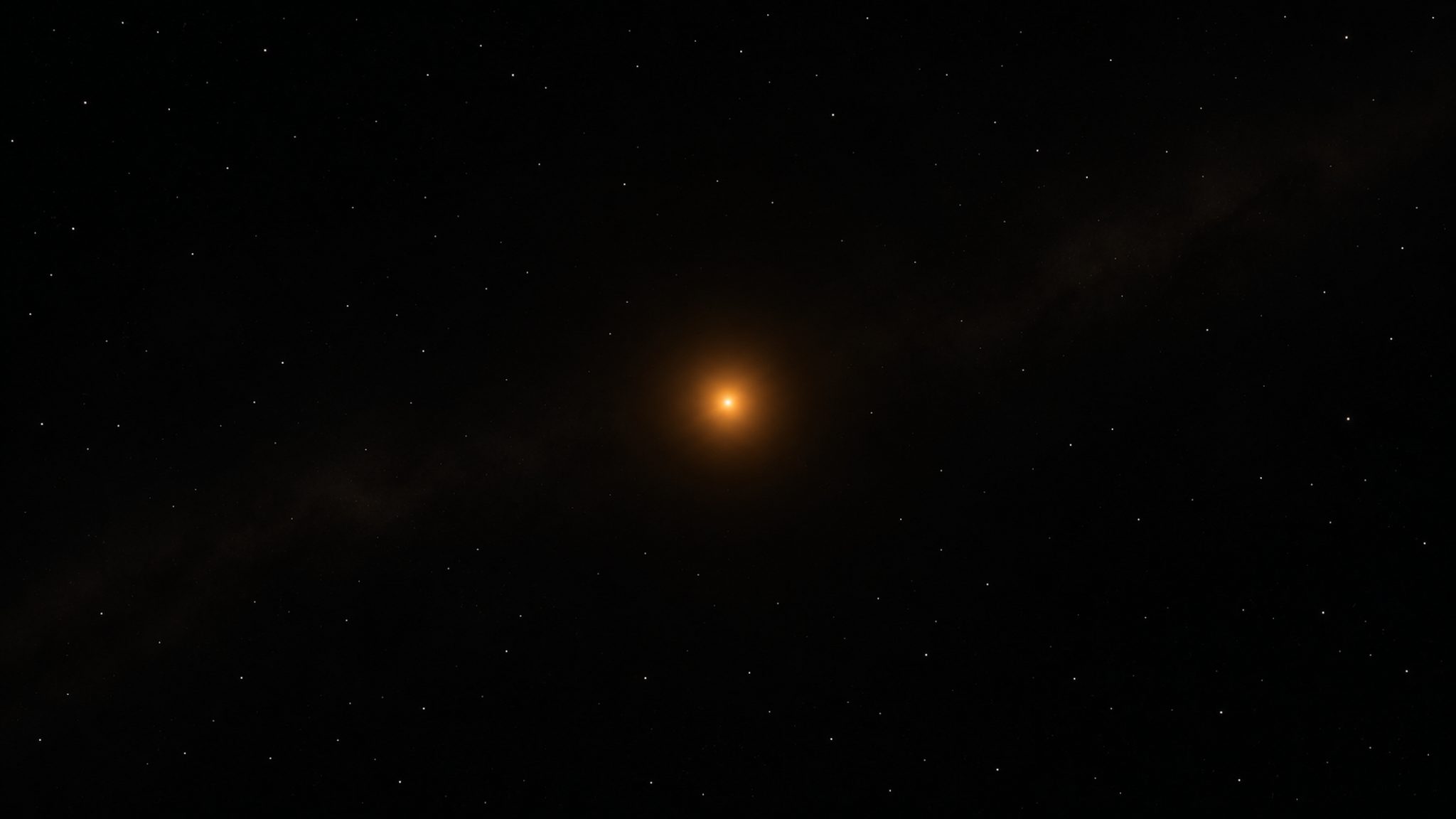
On November 23, 2026, the Department of Science and Technology highlighted research on HE 1153−0518, a carbon-rich, metal-poor star that preserves clues to early chemical enrichment.
- The research used high-resolution spectra from the Subaru telescope, alongside astrometric and photometric information, to investigate the star’s chemical composition.
- The paper’s preprint was submitted on June 3, 2026. The November release brings the work into current discussion and does not establish a new observation date.
- HE 1153−0518 is a newly identified member of the existing CEMP-no group. Its iron abundance is approximately one-thousandth of the Sun’s, alongside enhanced carbon.
- Stellar archaeology uses surviving stars to investigate the chemical conditions in which earlier generations formed.
- A measured abundance pattern can narrow the range of possible nucleosynthesis histories, while several physical processes can influence the final pattern.
UPSC Relevance
Prelims Relevance
- Spectroscopy and elemental absorption features.
- Metallicity in astronomical usage.
- Carbon-enhanced metal-poor stars and the CEMP-no group.
- Nucleosynthesis, supernova enrichment and internal mixing.
Mains Relevance
GS Paper 3
- How advanced instruments and theoretical models reconstruct inaccessible physical processes.
- The role of Indian research institutions in observational astronomy and collaborative science.
Background and Context
How Stars Preserve Chemical History
A star can retain information about the gas cloud from which it formed.
- Early chemical enrichment began as successive stellar generations produced elements and released material into surrounding gas. Stars forming later inherited part of that altered composition, preserving evidence of earlier processes.
- In astronomy, metals include elements heavier than helium. A low iron abundance is a useful metallicity indicator, but it does not imply that every heavier element has the same relative abundance.
- Carbon enhancement describes an abundance pattern relative to iron. HE 1153−0518 combines very low iron with comparatively abundant carbon, making the combination more informative than either measurement in isolation.
- The CEMP-no classification identifies carbon-enhanced metal-poor stars without the strong neutron-capture-element enhancement characteristic of some other CEMP groups. The newly studied object extends an established category.
- Chemical ancestry connects a surviving star to earlier enrichment. The age of the enrichment process and the exact age of an individual observed star require separate evidence and should be distinguished.
How Spectra Reveal Elemental Abundances
Starlight carries wavelength-dependent features that researchers interpret using models of stellar atmospheres.
- Absorption features occur where atoms or molecules absorb particular wavelengths. Their locations help identify species, while feature strengths contribute to estimates of abundances under suitable atmospheric assumptions.
- High spectral resolution helps separate nearby features. Researchers must also account for temperature and other atmospheric properties because these affect how a given chemical abundance appears in the spectrum.
- The study combines spectroscopy, photometry and astrometry. These observations describe different aspects of the star and help constrain the interpretation rather than allowing one measurement to answer every question.
- Abundance patterns are compared with predicted yields from nuclear processes. Agreement helps assess a proposed history, while discrepancies can expose missing physics, uncertain measurements or an unsuitable model.
- Recent star-cluster research used stellar motions to reconstruct encounters. Chemical-abundance research instead examines the material record carried by the stars themselves.
What the Evidence Can Establish
The measured pattern supports several tests of early enrichment while leaving parts of the history open.
- Mixing and fallback in a faint supernova is one possible enrichment pathway considered by the authors. Material that falls back changes which newly produced elements escape into surrounding gas.
- Internal mixing can alter surface composition during stellar evolution. The reported low carbon isotopic ratio provides a reason to examine these later changes when reconstructing the initial chemical conditions.
- Binary interaction also remains a possible influence. Material exchanged between stars can complicate the relationship between present surface abundances and the gas cloud in which an object originally formed.
- Infrared excess is consistent with a possible circumstellar dust contribution. Establishing the origin of that emission requires further interpretation, so the observation should retain its stated evidential limits.
- As with X-ray source interpretation, observations constrain models. A useful explanation identifies what was measured, which model explains it and which alternatives remain plausible.
Way Forward
Strengthen the Chemical Reconstruction
- Obtain additional observations that can test possible binary motion and check whether the inferred abundance pattern remains stable across independent analyses.
- Compare multiple enrichment models and report uncertainty in atmospheric parameters, abundances and predicted yields.
- Expand studies of similar stars so that population patterns can test explanations developed from a single unusual object.
Conclusion
- HE 1153−0518 links present-day spectroscopy with early chemical enrichment. Its value lies in the combination of elemental signatures and the physical histories those signatures help test.
- For a science answer, connect instrument, measurement and inference. Preserve the distinction between an observed chemical pattern and the model-dependent reconstruction of the processes that produced it.
UPSC Practice Questions
Prelims MCQ 1
With reference to stellar chemical studies, consider the following statements:
- Astronomers use the term metals for elements heavier than helium.
- Low iron abundance requires every element heavier than helium to have an equally low relative abundance.
- Stellar spectra can help estimate elemental abundances.
How many of the above statements are correct?
(a) Only one (b) Only two (c) All three (d) None
Answer: (b) Only two
Explanation:
Statements 1 and 3 are correct. Abundance ratios vary, and a star can have very little iron alongside enhanced carbon relative to iron.
Prelims MCQ 2
Why must internal mixing be considered when reconstructing a star’s chemical ancestry?
(a) It can alter the surface composition during stellar evolution. (b) It removes the need to observe stellar spectra. (c) It proves that all observed elements formed inside the present star. (d) It directly fixes the exact age of every metal-poor star.
Answer: (a) It can alter the surface composition during stellar evolution.
Explanation:
Internal mixing can bring processed material into regions contributing to the observed surface spectrum. Present abundances may reflect both inherited material and later changes.
UPSC Mains Questions
- Explain how stellar spectroscopy helps reconstruct the chemical evolution of the Universe. Discuss the limits of inference from an individual metal-poor star.
- How do observational instruments and theoretical models complement each other in astronomy? Illustrate with the study of chemical abundances.
Source: PIB, Department of Science and Technology.
Frequently Asked Questions
What is a stellar fossil?
A stellar fossil is a surviving star whose chemical composition retains clues to earlier enrichment. Astronomers examine its elemental abundances to investigate the material and stellar processes that preceded its formation.
What does CEMP-no mean?
CEMP refers to carbon-enhanced metal-poor stars. The CEMP-no group lacks the strong neutron-capture-element enhancement seen in some other carbon-enhanced groups. HE 1153−0518 adds a newly identified member to this established category.
Was this research first released on November 23?
The official account appeared on November 23, 2026. The research preprint was submitted on June 3, 2026, and its record states acceptance for publication in Monthly Notices of the Royal Astronomical Society.
Does the abundance pattern prove one supernova history?
The pattern helps test enrichment models. The authors consider faint supernova enrichment with mixing and fallback, while possible binary interaction and internal mixing leave additional explanations that require assessment.
Tell Google you want more of this.
Add Anantam IAS as a preferred sourceOne tap, and this site shows up more often in your own Top Stories, AI Overviews and AI Mode. Remove it any time.