7 current affairs published on Friday, 31 October 2025
31 October 2025 Current Affairs for UPSC — every
Why-in-News article AnantamIAS published on Friday, 31 October 2025, broken down with
Why in News?, the exact GS paper it feeds, sub-topic mapping, MCQ-ready facts and a
UPSC-style practice question. 7 articles in total, covering Polity, Economy, Environment, S&T, IR, Geography, History, Society and Internal
Security — the same Why-in-News + GS-paper-mapping + practice-question format the Compass uses across
every daily digest on the site.
Daily current affairs for UPSC is where new material enters your prep stream. Read this
31 October 2025 digest end-to-end in 25–35 minutes, attempt the practice question
at the foot of each article (it's MCQ for some, 10/15-marker for others), then bookmark the entries
that fall inside your active revision window. Everything stays cross-linked: tap any subject pill to jump
to that subject's hub, or use the table of contents above to skip straight to a specific story.
Why we publish daily current affairs separately from the monthly compilation: daily is learning,
monthly is revision. Use the daily page to add fresh material to your notes the day it breaks;
come back to the October 2025 compilation 60 days before Prelims when the
noise has settled and only the lasting takeaway is worth re-reading.
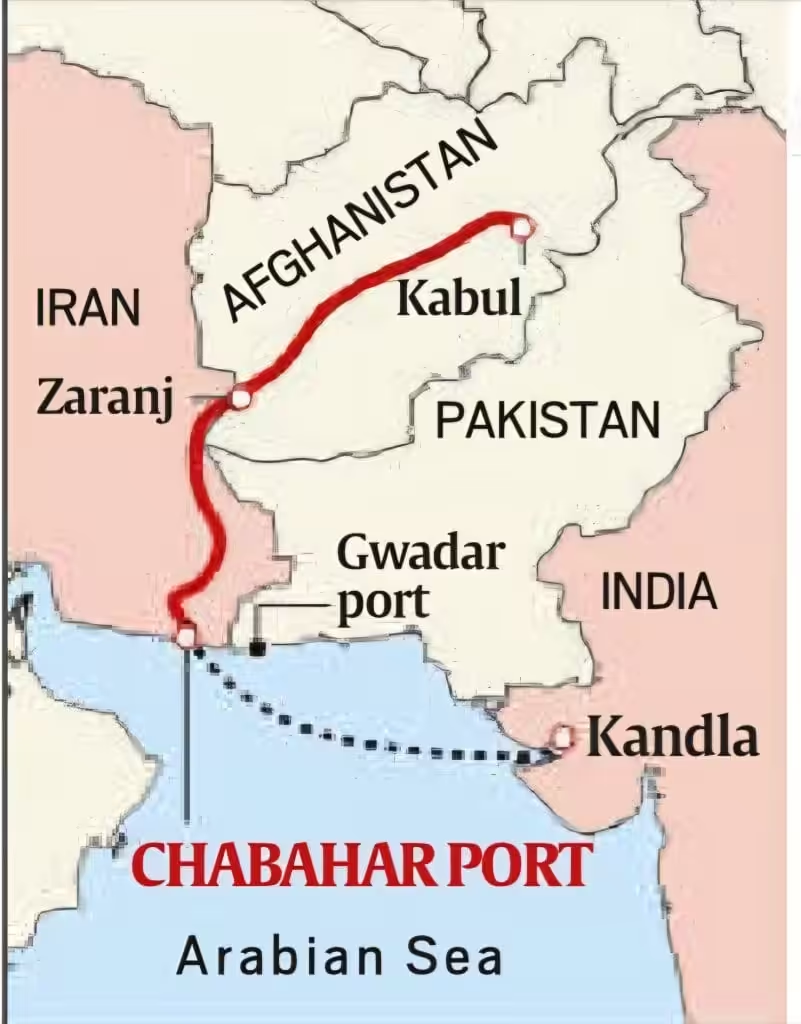
The United States has granted India a six-month sanctions waiver on operations at Iran’s Chabahar Port.
This waiver came into effect on October 29.
The exemption is a turnaround from the U.S. State Department’s decision in September to revoke the previous waiver.
The waiver allows the supply of essential items like food grains and medical products to Afghanistan to continue through the port.
India’s Strategic Interest and History with Chabahar
India has been associated with the Chabahar port since 2005, when it first agreed with Iran to develop it.
In 2015, both sides signed an MoU to jointly develop the Shahid Beheshti Port at Chabahar.
Chabahar is a deep-water port in Iran’s Sistan-Baluchestan province, offering easy and secure access for large cargo ships. It is the closest Iranian port to India.
The port is a major commercial hub intended to help India access markets in Afghanistan, Central Asian states, and Russia.
Chabahar is strategically located near the Chinese-developed Gwadar port in Pakistan.
In May 2016, India, Iran, and Afghanistan signed a trilateral agreement (the Chabahar Agreement) to establish the International Transport and Transit Corridor.
An Indian company, India Ports Global Ltd., took over operations of the port from December 24, 2018.
India has supplied equipment, including six mobile harbour cranes, worth $25 million.
Since taking over, the port has handled over 90,000 TEUs (container traffic) and over 8.4 million metric tons of cargo.
The port has been crucial for humanitarian assistance, facilitating the transfer of 2.5 million tons of wheat and 2,000 tons of pulses from India to Afghanistan.
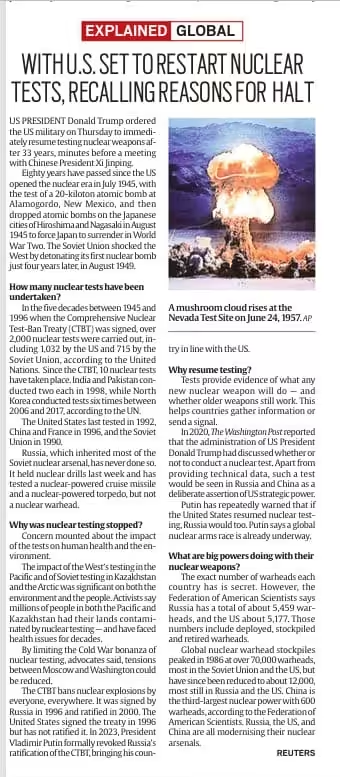
United States under President Donald Trump had ordered preparations to restart nuclear weapons testing after a gap of 33 years, a move that could end the long-standing moratorium on nuclear tests observed since the Comprehensive Nuclear-Test-Ban Treaty (CTBT) of 1996.
UPSC Relevance:
International treaties
UPSC PYQ:
Q. What is/are the consequence/consequences of a country becoming the member of the ‘Nuclear Suppliers Group’? (2018)
It will have access to the latest and most efficient nuclear technologies.
It automatically becomes a member of “The Treaty on the Non-Proliferation of Nuclear Weapons (NPT)”.
Which of the statements given above is/are correct?
(a) 1 only (b) 2 only (c) Both 1 and 2 (d) Neither 1 nor 2
About CTBT:
The Comprehensive Nuclear-Test-Ban Treaty (CTBT) bans all nuclear test explosions, whether for military or civilian purposes.
The CTBT was negotiated at the Conference on Disarmament in Geneva in 1994.
The Treaty was opened for signature in 1996 to stop the development of new nuclear weapons and prevent upgrades to existing ones, supporting global efforts in non-proliferation and disarmament.
Status of the Treaty:
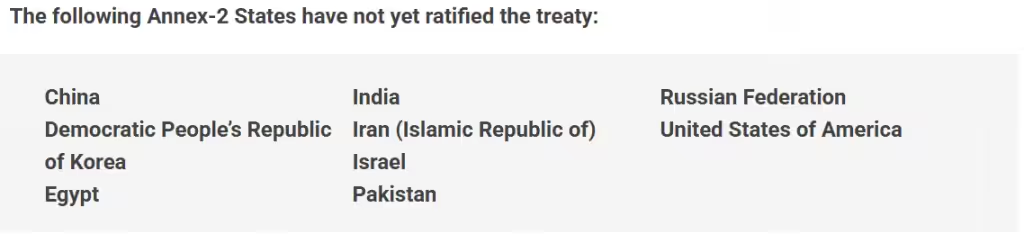
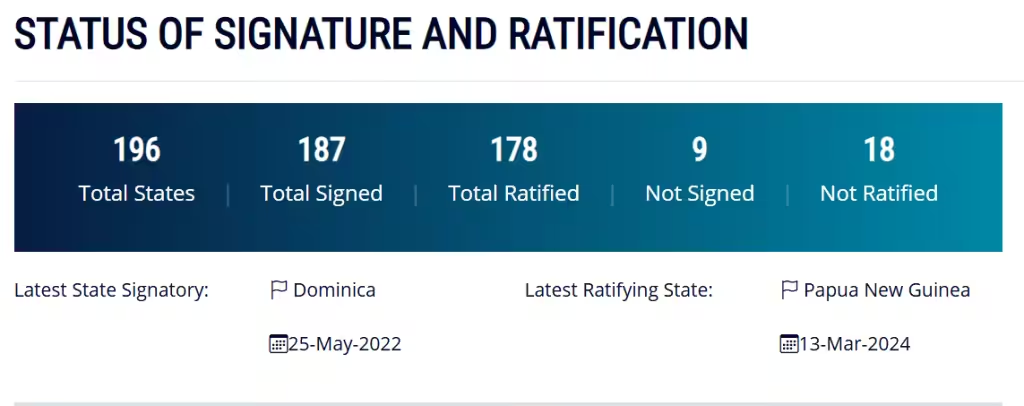
In accordance with Article XIV of the Treaty, it will enter into force after all 44 States listed in Annex 2 to the Treaty have ratified it.
Although the Treaty has not yet entered into force, it has made a significant contribution to international peace and security. It has helped to establish a strong global norm against nuclear testing and built confidence that any nuclear test explosion would be reliably detected.-https://www.ctbto.org/our-mission/the-treaty
why?
The treaty cannot formally enter into force until it is ratified by 44 specific nations.Eight of these nations have yet to ratify the treaty: China, India, Pakistan, North Korea, Israel, Iran, Egypt, United States.
Why USA again resuming Nuclear Test:
Scientific Reason:
To verify the reliability of existing nuclear arsenals and understand the effects of aging warheads.
Strategic Signalling:
To pressure rivals like Russia and China, both accused by U.S. intelligence of conducting low-yield nuclear tests.
Political Context:
Occurred amid strained U.S.–China relations and growing geopolitical competition.
Demand Drivers: Data center growth in India is fueled by the government’s Digital India and data localization policies, increased data consumption, and the 5G rollout enabling data-intensive technologies like IoT and AI.
Capacity Lag: India has twice the number of internet users as Europe but significantly lags in data center capacity (1.4 GW vs. Europe’s 10 GW).
Projected Growth: India’s data center capacity is expected to grow two to three times by 2027 and over five-fold by 2030 (including large AI infrastructure).
Power Intensity: AI data centers are computational powerhouses utilizing Graphic Processing Units (GPUs), with individual racks consuming 80-150 KW, significantly more than traditional servers (15-20 KW).
Global Impact: Global data center electricity generation is projected to surge from 460 TWh in 2024 to over 1,000 TWh by 2030, with some regions seeing peak demand growth exceeding 25% due to GW-scale data centers.
Locations in India:Visakhapatnam and Jamnagar have been chosen for GW-scale AI data center ambitions by Google and Reliance, respectively. Other plans are underway in Mumbai, Chennai, Bangalore, and Hyderabad.
Small Modular Reactors (SMRs) as a Low-Carbon Power Source
Decarbonization Push: AI data centers are urgently seeking reliable, low-carbon baseload power due to corporate decarbonization targets and soaring energy demands.
Current Power Mixes: Rely on a mix of intermittent renewables, natural gas, developing storage, and emerging alternatives like geothermal and Small Modular Reactors (SMRs).
SMR Advantages: SMRs have caught the attention of Big Tech for their:
Flexible sizing (1 MW to 300 MW).
Factory manufacturing capability for cost savings.
Passive safety enhancements.
24/7 stable baseload power production, eliminating the need for expensive, centralized transmission infrastructure.
SMR Safety: Modern SMR designs use inherent and passive safety systems (like natural convection) to provide secure, reliable energy with a reduced likelihood of core-damaging accidents and smaller emergency planning zones.
Nuclear Mission: India’s budget initiated a Nuclear Energy Mission (₹120,000 crore outlay) aiming for 100 GW of nuclear capacity by 2047 and at least five indigenously manufactured SMRs in operation by 2033. Read more on Nuclear Energy in India
Indigenous Development: Bhabha Atomic Research Centre is developing the BSMR-200 pressurized heavy water reactor and a 55 MW variant for remote areas.
Reforms for Private Investment: The government is planning amendments to the Atomic Energy Act, 1962 and the Civil Liability for Nuclear Damage Act, 2010 to attract an estimated $26 billion in private investment.
Recommendations: India should leverage SMR technology transfer agreements, pre-approve existing coal sites and green hydrogen hubs for nuclear projects, and facilitate collaboration between SMR vendors, AI data center players, and renewable energy companies.
Regulatory and Logistical Challenges
Regulatory Hurdles: Licensing processes, originally designed for large reactors, are time-consuming, expensive, and opaque and often don’t apply to advanced SMR technologies.
Global Regulatory Reforms: Focus on six areas, including a technology-neutral framework, streamlined licensing (fleet approvals), and international harmonization (IAEA standards). Most jurisdictions aim for framework completion by 2026.
Transportation and Waste: Regulations are needed for the security and radiation leakage risks associated with transporting factory-fabricated, fuel-loaded SMRs. New forms of radioactive waste from advanced fuels (like HALEU) require new disposal and storage plans.
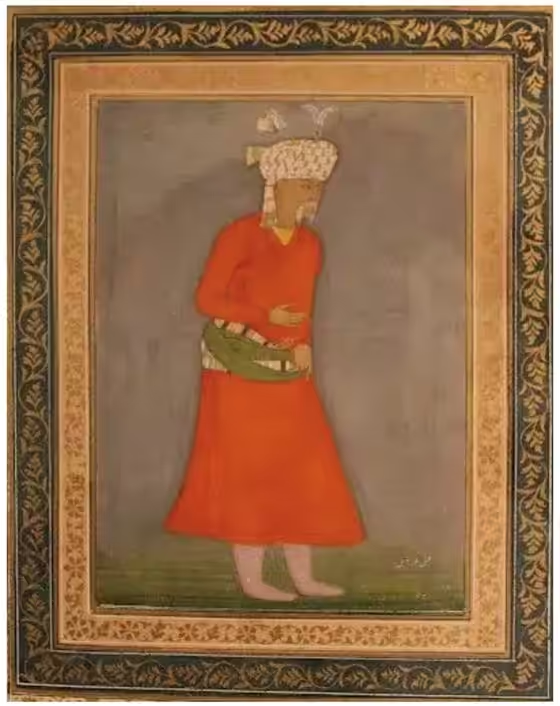
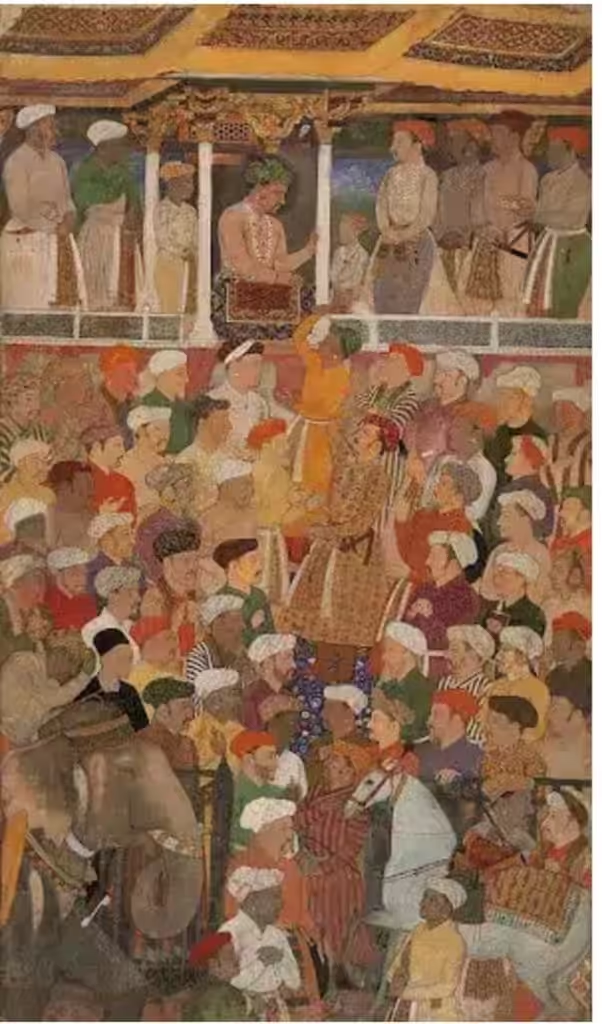
Context: Recently, a Mughal miniature painting attributed to emperor Akbar’s master artist Basawan has fetched a record price for a “classical Indian or Islamic painting”.
Q) Who among the following Mughal emperors shifted emphasis from illustrated manuscripts to album and individual portrait?
(a) Humayun
(b) Akbar
(c) Jahangir
(d) Shah Jahan
About Mughal Paintings:
Mughal paintings are a distinguished Indian painting form that flourished during the Mughal Empire, particularly between the 16th and mid-19th centuries. Renowned for its intricate Persian miniature style, Mughal painting was primarily created on paper for book illustrations or as standalone pieces in albums known as muraqqa.
Mughal paintings emphasise realistic portraiture and detailed, lifelike depictions of animals and plants. Over time, Mughal paintings gave rise to regional styles often described as “post-Mughal” or “provincial Mughal,” leaving a lasting impact on South Asia.
Mughal Paintings Origin:
Mughal painting, a distinctive art form of the Indian subcontinent, emerged during the 16th century under the patronage of the Mughal Empire. Its origins trace back to the fusion of Persian miniature painting with indigenous Indian styles, influenced by the cultural exchanges facilitated by the Mughal court.
The foundation for Mughal painting was laid by the early Mughal emperors, especially Humayun, who, during his exile in Persia, invited Persian artists Mir Sayyid Ali and Abd al-Samad to India.
These Persian artists, following Humayun’s guidance, produced several remarkable artworks, including the famed Khamsa of Nizami.
Unlike conventional Persian art, these creations marked the beginning of a distinct style known as Mughal painting.
Under Mughal Emperor Akbar’s reign (1556–1605), these influences amalgamated, leading to the establishment of a royal atelier that produced richly illustrated manuscripts such as the Hamzanama.
Emperor Jahangir (1605–1627) further refined this art form by emphasising naturalistic elements and incorporating European artistic techniques, resulting in lifelike portraits and studies of flora and fauna.
Over time, the Mughal school incorporated elements from Indian, Persian, and European art, resulting in a rich, syncretic visual culture that influenced later regional painting traditions across India.
Mughal Paintings Features:
Mughal paintings are a distinctive form of Indian miniature art that flourished under the Mughal Empire, known for their intricate details, vibrant colours, and a unique blend of Persian, Indian, and European artistic styles. Major Mughal Paintings features are:
Miniature Paintings: Mughal paintings were characterised by their compact size, which is why they are commonly referred to as “miniature paintings.
Emphasis on Realism and Naturalism: A hallmark of Mughal painting is its commitment to realism. Artists meticulously depicted flora, fauna, and human figures with lifelike precision, reflecting a keen observation of the natural world.
Diverse Subject Matter: The thematic range of Mughal paintings is vast, encompassing royal portraits, court scenes, battles, hunting expeditions, and depictions of nature.
Use of Rich Materials: Artists employed high-quality materials, including fine paper, gold, and vibrant pigments derived from minerals and plants.
Method of Foreshortening: They introduced the method of foreshortening to Indian artists, a technique where objects are depicted in a manner that makes them appear nearer and smaller than their actual size.
Mughal Painting Process:
The artist followed these steps:
Initial Composition (Tarh): The artist created a rough sketch of the overall layout.
Portraits (Chiharanama): The artist then focused on developing detailed portraits.
Colouring Stage (Rangamizi): Finally, the artist added colours to bring the artwork to life.
Colours and Techniques Used in Mughal Paintings:
Natural Pigments for Vibrant Colours: Mughal painters meticulously sourced their colours from natural materials. Bright red came from cinnabar (vermilion), blue from lapis lazuli (ultramarine), yellow from orpiment, while white was created by grinding shells. Lampblack, derived from charcoal, provided rich black tones, and precious metals like gold and silver were either mixed with colours or dusted for a shimmering effect.
Handmade Paper Preparation: The paintings were created on specially prepared handmade paper. This surface was treated to achieve a smooth, durable texture suitable for detailed artwork, ensuring longevity and brilliance.
Brushes of Animal Hair: Painters used brushes crafted from the fine hair of squirrels or kittens, providing precise control for intricate details, essential for the delicate and refined style of Mughal miniatures.
Collaborative Workshop Model: Artwork creation was often a team effort. One artist sketched the initial outline, another prepared pigments, a third filled in colours, and a fourth added intricate details.
Burnishing with Agate Stone: Once completed, the painting was polished using an agate stone, which not only set the colours but also enhanced their radiance, giving the artwork a luminous finish.
Mughal Paintings Under Mughal Emperors:
Mughal Paintings Under Babur
After a series of battles, Babur founded the Mughal dynasty. Although his reign was brief, limiting his ability to extensively commission artwork, he is believed to have supported the Persian artist Bihzad, who created illustrations depicting the Mughal family lineage.
Mughal Paintings Under Humayun
Mughal paintings under Humayun were influenced by his exposure to Persian miniature art while in exile at the Safavid court. Humayun commissioned a large painting titled Princes of the House of Timur, originally a group portrait featuring his sons. This work was later expanded by Jahangir to include deceased ancestors.
Persian Artists: Upon returning to India, Humayun brought two accomplished Persian artists, Abd al-Samad and Mir Sayyid Ali, to establish a studio in his royal court.
Khamsa of Nizami: His major commission, a Khamsa of Nizami, featured 36 illuminated pages showcasing diverse artistic styles.
Mughal Paintings Under Akbar
Mughal Paintings Under Akbar flourished as a distinctive art form, blending Persian, Indian, and Central Asian styles. Akbar’s patronage transformed painting into a royal enterprise, with a vibrant atelier of skilled artists.
Tasvir Khana: Mughal Emperor Akbar set up a specialised department focused on painting and manuscript preparation. Known as the Tasvir Khana, this formal art studio employed artists on a salary basis, allowing them to develop unique artistic styles under royal patronage.
Characteristics of Akbar-Era Art: Paintings from Akbar’s reign are recognised for their use of three-dimensional figures and the technique of foreshortening, which added depth and perspective to the artwork.
Integration of Calligraphy: Artists during Akbar’s period frequently incorporated calligraphy into their works, blending visual art with literary beauty, making the artworks more refined.
Shift from Popular to Court Art: This era marked a transition from popular folk art to sophisticated court art, with a focus on depicting royal scenes, courtly life, and imperial grandeur rather than the lives of common people.
Notable Artists: Prominent painters of Akbar’s time included Daswanth, Basawan, and Kesu, who gained recognition for their exceptional skills and contributions.
Mughal Paintings Under Jahangir:
Mughal Paintings Under Jahangir saw a significant evolution, marked by intricate detail, vibrant colours, and a blend of Persian and Indian influences. Mughal paintings reached their peak during the reign of Jahangir.
Shift to Albums: Jahangir had a strong affinity for nature, favouring paintings that depicted flora and fauna, such as birds, animals, trees, and flowers. His preference shifted from illustrated manuscripts to creating albums, with a focus on infusing naturalism into portraiture.
Ornate Margins: A distinctive feature of this period was the development of ornate margins surrounding paintings, which often rivalled the intricacy of the artwork itself.
Muraqqas: The practice of mounting individual paintings into albums, known as Muraqqas, gained popularity during his reign.
Blending of European Themes: Jahangir’s exposure to European artworks and decorative objects sparked his interest in European themes. This led to a vibrant blend of these influences with the Indo-Iranian style in the Jahangir school of art.
Notable Paintings: Jahangir’s Dream was created by painter Abul Hasan. Further, the painting of Jahangir in Darbar from the Jahangirnama was attributed to Abul Hasan and Manohar.
Mughal Paintings Under Shah Jahan:
Mughal paintings under Shah Jahan emphasised a blend of imagination and documentation, with artists encouraged to create magnificent works. Idealisation and stylisation were more important than realistic depiction, highlighting beauty with bright colours and detailed designs.
Features: During this period, Mughal paintings featured multiple perspectives, a rich colour palette, and sophisticated compositions.
They depicted royal, historical, and mystical themes.
Shah Jahan’s admiration for sparkling jewels and monumental architecture was evident in the paintings created during Shah Jahan’s reign.
Moreover, during his period, the Mughal School of Painting inspired European artists, including Rembrandt, who studied Indian drawings to master delicate lines.
The Padshahnama stands out as one of the most significant painting projects of his court, highlighting the peak of Indian miniature painting.
Mughal Paintings Under Aurangzeb:
Mughal Paintings under Aurangzeb saw a decline in artistic patronage, as Aurangzeb himself did not support painting. Consequently, many Mughal court painters left for provincial courts in places like Rajasthan, leading to a significant decrease in painting activities during his reign.
Mughal Paintings Under Muhammad Shah:
Mughal Paintings under Muhammad Shah witnessed a short-lived revival, thanks to the emperor’s strong patronage of the arts. He brought in two of the era’s finest artists, Nidha Mal and Chitarman. Their works frequently depicted royal court scenes, grand feasts, celebrations, the king’s hunting adventures, and daring activities like hawking.
Famous Painters During Mughal Period
Persian Influence: Early Persian painters, such as Mir Sayyid Ali and Abd al-Samad, played a vital role in shaping the Mughal art style.
Key Mughal Artists: Artists like Daswanth, Basawan, Miskin, and Lal were instrumental in sustaining Mughal painting in the 16th and 17th centuries.
Govardhan’s Legacy: The renowned painter Govardhan worked under the reigns of Akbar, Jahangir, and Shah Jahan, contributing significantly to Mughal art.
Other Notable Artists: Artists like Kamal, Mushfiq, and Fazl made significant contributions to the development of Mughal paintings.
Artists in Rajput Courts: With the decline of the Mughal Empire, artists such as Bhawanidas and Dalchand found employment in Rajput courts, continuing their artistic endeavours.
Mughal Paintings Decline:
The decline of Mughal paintings can be attributed to several factors, primarily the weakening of the Mughal empire in the 18th century. As imperial patronage diminished, so did the funding and support for artists.
The later Mughal emperors, particularly after Aurangzeb, were less interested in the arts, leading to a reduced focus on courtly painting.
Additionally, external pressures, such as invasions and the rise of regional powers, disrupted the traditional Mughal art workshops.
The growing influence of British rule in India further marginalised Mughal painting, as Western styles and techniques began to dominate.
While Mughal painting saw a brief revival during the reign of Emperor Muhammad Shah, it never fully regained its former prominence.
Over time, the unique Mughal style blended with other regional and European influences, leading to a gradual transformation rather than a complete continuation of its original form.
Launch: March 8, 2018, on International Women’s Day, from Jhunjhunu, Rajasthan.
Nodal Ministry:Ministry of Women and Child Development (MWCD).
Nature: A multi-ministerial convergence mission to address malnutrition in a mission-mode.
It is also known as the National Nutrition Mission (NNM)
Target Beneficiaries:
Children (0-6 years)
Adolescent Girls
Pregnant Women
Lactating Mothers
Specific Annual Reduction Targets: (To be achieved by 2022 initially)
Reduce Stunting (Low height-for-age) by 2% per annum.
Reduce Under-nutrition/Underweight (Low weight-for-age) by 2% per annum.
Reduce Anemia (among young children, women, and adolescent girls) by 3% per annum.
Reduce Low Birth Weight by 2% per annum.
Note: The overall goal was to reduce stunting from 38.4% (NFHS-4) to 25% by 2022.
Strategic Pillars and Components
The Abhiyaan’s strategy rests on four key pillars and components:
Technology:
Poshan Tracker: An ICT-enabled platform for real-time monitoring of nutritional status, service delivery, and tracking of beneficiaries, thereby improving transparency and accountability.
ICDS-Common Application Software (ICDS-CAS): Used to digitize the work of Anganwadi Workers (AWWs).
Convergence:
Ensuring synergy and alignment among various schemes of different Ministries/Departments (e.g., Health, Water & Sanitation, PDS, MGNREGS, etc.) to achieve holistic nutritional outcomes.
Jan Andolan (People’s Movement) & Behavioural Change Communication (BCC):
Promoting community mobilization and awareness about appropriate nutrition, hygiene, and health practices.
Key awareness events include Rashtriya Poshan Maah (observed in September every year) and Poshan Pakhwada.
Focus on themes like Antenatal Care, Optimal Breastfeeding (Early and Exclusive), Anaemia, Growth Monitoring, Hygiene, etc.
Capacity Building:
Training and incentivizing frontline workers (AWWs, ASHA) for better service delivery and use of technology.
Mission POSHAN 2.0
POSHAN Abhiyaan has been restructured and subsumed into Mission Saksham Anganwadi and Poshan 2.0 (announced in 2021-22) along with Anganwadi Services and Scheme for Adolescent Girls.
Key Focus Areas of Poshan 2.0:
Maternal Nutrition, Infant and Young Child Feeding Norms, and treatment protocols for SAM (Severe Acute Malnutrition) / MAM (Moderate Acute Malnutrition).
Wellness through AYUSH practices.
Emphasis on Diet Diversity, Food Fortification, and popularizing the use of Millets.
Infrastructure: Focus on upgrading Anganwadi Centres into Saksham Anganwadis.
Achievements and Progress (as per NFHS-5, 2019-21)
The scheme has shown a positive trend, though challenges persist:
Indicator (Children under 5 years)
NFHS-4 (2015-16)
NFHS-5 (2019-21)
Improvement
Stunting (Low height-for-age)
38.4%
35.5%
– 2.9 %
Wasting (Low weight-for-height)
21.0%
19.3%
– 1.7%
Underweight (Low weight-for-age)
35.8%
32.1%
-3.7%
Exclusive Breastfeeding
54.9%
64.9%
+ 10.0%
Other Achievements:
Improved real-time monitoring of service delivery through the Poshan Tracker App.
High participation in Jan Andolan activities like Poshan Maah, leading to increased community awareness.
Better Convergence between different health, sanitation, and social welfare schemes.
States’ Demand for Extended PM-POSHAN Scheme
Several states and Union Territories have proposed extending the PM-POSHAN (midday-meal scheme) to include a breakfast provision in government and government-aided schools.
Demand for Extension to Higher Classes: 11 other states, including Kerala, Karnataka, Goa, and Meghalaya, have asked for the scheme to be extended to students up to Class XII.
Rationale for Introducing Breakfast
Educational Benefits: The National Education Policy (NEP) 2020 recognizes that “the morning hours after a nutritious breakfast can be particularly productive for the study of cognitively more demanding subjects.”
Improved Outcomes: A morning meal boosts the continuity of nutrition, which leads to an increase in attendance, attention, and equity in classrooms.
Simple Logic:Nourished children learn better, making this an investment in education and inclusive growth.
Precedent/Example:Tamil Nadu’s breakfast programme, launched in 2022, has shown commensurate improvements in attendance and health outcomes, reaching about 24 lakh students.
Overcoming Past Rejection: The Centre previously turned down a similar proposal by the Education Ministry in 2021-22, but embracing this state-led proposal would signify a welcome alignment with nutritional and educational realities.
Cost and Investment Perspective
Estimated Cost: The Centre estimates the additional cost of a nationwide breakfast rollout at around Rs 6,000 crore annually.
Investment vs. Burden: This cost is considered outweighed by the benefits when compared with the downstream burdens of remedial education, healthcare, and lost productivity.
Framing: The initiative must be recognized as an investment in education, health, and inclusive growth, not merely an add-on.
Implementation Requirements and Fairness
Core Principle: Welcoming the states’ proposal must be accompanied by a commitment to fairness and feasibility in implementation.
Logistical Challenges: Effective implementation requires careful attention to:
Kitchen infrastructure and supply chains.
Hygiene and adherence to nutritional guidelines (balanced meals).
Robust monitoring and meaningful community engagement.
Support for Frontline Workers (Fairness): The Centre must address the strain already felt by those who sustain the midday-meal network.
Repeated strikes by Anganwadi and ASHA (Accredited Social Health Activists) workers highlight issues of low pay and excessive workloads.
Adding a breakfast layer without scaling up staff, infrastructure, and funds would simply shift the burden.
Chhath Puja was recently celebrated across India and abroad. Prime Minister Narendra Modi extended greetings, highlighting its message of purity, gratitude, and harmony with nature.
Overview:
Chhath Puja is one of India’s oldest sun-worship festivals, rooted in the Vedic tradition. People in Bihar, Jharkhand, eastern Uttar Pradesh, and the Terai belt of Nepal come together to honour Surya, the Sun God, and Chhathi Maiya (also called Usha or Shashthi Devi). What makes it special is its sheer simplicity and respect for nature – no idols, no pandals, just the open sky, a river bank, and offerings made from the season’s harvest.
Duration: 4 days
Timing: Begins on the sixth day of Kartika month (Shukla Paksha), shortly after Diwali.
Purpose: To thank the Sun for sustaining life on earth and to request blessings for health, prosperity, and progress.
Historical Context
Vedic Roots: Traces to Rigvedic hymns where the Sun is invoked as the source of energy and healing.
Epic Mention: In the Mahabharata, Draupadi and the Pandavas observed similar sun worship rituals for prosperity during exile. In the Ramayana, Sita observed fast on banks of Ganga in Gaya before Rama’s return (folk tradition).
Evolution: Became a community celebration in Mithila and Magadh regions, symbolizing agrarian gratitude and ecological balance.
Cultural and Artistic Aspects
Chhath comes alive through songs (Chhath Geet) sung in Bhojpuri, Maithili, and Magahi. Women gather on rooftops or riverbanks at dusk, singing about the Sun’s journey and the river’s generosity.
Use of traditional bamboo baskets(soop and daura), earthen lamps, and fruits reflects sustainable cultural practices.
Women play a central role, symbolizing matriarchal devotion and social cohesion. It includes Vows (mannat) for child’s health, family prosperity signifies women’s decision-making role.
Contrast: Unlike most Hindu fasts (Karva Chauth – husband-centric), Chhath is for progeny & community.
Geographical Distribution
Mainly celebrated in PrimarilyBihar, Uttar Pradesh, Jharkhand, West Bengal, and parts of Delhi due to migration.
Diaspora communities celebrate in Mauritius, Fiji, Trinidad, and Suriname—making it a global cultural identity marker.
Governance and Administration:
State governments treat Chhath like a mega public event.
In Bihar, temporary ghats are cleaned, floodlights installed, and medical teams posted.
Railways run dozens of special trains so that people working in far-off cities can reach home in time.
Delhi and Jharkhand follow suit with extra buses and security.
Role in Social Integration
Chhath Puja is an example of participatory governance, where community groups, volunteers, and civic bodies collaborate to manage religious events.
Promotes social inclusion: Muslims participate in Bihar villages (help in logistics), aligning with the ideals of “Sabka Saath, Sabka Vikas, Sabka Vishwas.”
Strengthens inter-regional bonds—important for “Ek Bharat Shreshtha Bharat”.
Environmental Significance
It is one of the most eco-sustainable festivals:
Use of biodegradable materials.
Worship at natural water bodies.
Promotes river conservation awareness.
Economic Aspects
Generates seasonal rural employment in bamboo, pottery, and sweet-making industries.
Boosts local tourism and transport sectors.
Rural and Local Economy
Thekua Sweet Industry:
Traditional sweet made of wheat flour, jaggery, and ghee — an essential offering during Chhath. Generates a ₹500 + crore seasonal market across Bihar and eastern Uttar Pradesh.
Encourages women-led microenterprises, cottage industries, and self-help group (SHG) participation.
Bamboo Craft and Local Artisans:
Surge in demand for bamboo baskets (soop, daura) during Chhath supports traditional artisans. Promotes sustainable livelihoods and eco-friendly handicrafts aligned with the One District One Product (ODOP) initiative.
Tourism and Regional Development – “Chhath Tourism” Potential:
Increasing number of domestic visitors during the festival. Emergence of homestays in rural Bihar offering authentic cultural experiences.
Opportunity for community-based tourism under the Swadesh Darshan 2.0 (Spiritual & Cultural Circuits) scheme.
Policy Suggestion:
Promote “Chhath Cultural Corridors” along river ghats in Patna, Dehri, and Sonepur.
Integrate with rural crafts and eco-tourism under the Dekho Apna Desh campaign.
Science & Technology Context
Scientific basis: Recognition of solar energy’s role in ecological balance.
Promotes traditional solar health beliefs aligned with modern heliotherapy.
Ethics & Human Values
Chhath Puja represents “Dharmic environmentalism” — a fusion of spiritual devotion and ecological consciousness, reinforcing values of simplicity, purity, gratitude, and sustainability.
Value Dimension
Associated Ethical Principle
Gratitude to Nature
Environmental ethics and stewardship
Fasting & Discipline
Self-control and spiritual purity
Community Participation
Social harmony and empathy
Gender Role
Women-led rituals emphasizing care and devotion
Simplicity
Minimalism and austerity promoting equality
Current Affairs Relevance (2023–25):
2023: Bihar declared Chhath Ghats as Eco-Sensitive Zones (temporary).
2024: UNESCO Recognition Proposal: India has been considering Chhath Puja for nomination under Intangible Cultural Heritage of Humanity.
Why in News? Kerala Cabinet hiked the support price for natural rubber from ₹180/kg to ₹200/kg, aiming to provide immediate relief and revive cultivation amid farmer protests.
Context & background
The state of Kerala is India’s leading producer of natural rubber (more than ~80 % of Indian rubber production).
Rubber cultivation in Kerala is concentrated in central districts (for example the “rubber heartland” of Kottayam, Idukki etc). The sector has faced fluctuations: earlier years of low prices, yield challenges (e.g., due to weather) and farmer distress.
The government of Kerala recently raised the minimum support price (MSP) / support price for rubber from ₹ 180/kg to ₹ 200/kg.
There is hope among farmers that the price rise will improve incomes, but also lingering doubts about sustainability, reach and structural issues.
Key issues:
The increase in support price is intended to provide relief to rubber farmers in a difficult production environment.
Many farmers did not renew registrations under incentive/ support schemes because the support price was lower than market price, or the scheme was perceived as less beneficial.
There are concerns that even though prices are up, the underlying cost structure (inputs, labour, weather risks) remains challenging. The sustainability of the current price increase is uncertain farmers will only benefit if the price remains stable for at least a month.
The timing of the price hike is politically relevant (ahead of local body elections). Some farmers felt the rise was modest compared to election manifesto promises (₹ 250/kg promised) and may be more of a short-term relief than a structural fix.
Challenges
Volatility of market price: If market price falls below support price, or if the support price is not guaranteed or well-implemented, farmers bear risk.
Implementation and scheme registration: Renewal of registration under incentive schemes is low if farmers don’t see benefit. This reduces scheme effectiveness.
Production constraints: Yield of rubber trees in Kerala has been hit by abnormal weather (e.g., increased rainy days followed by heat) which affects tapping and supply.
Cost vs price: Even if price rises, unless input costs (labour, maintenance of rubber plantations) are managed, net income may not improve significantly.
Sustainability: Will the higher support price be maintained? Will it translate into consistent farm income, or will it be reversed when political urgency fades?
Structural dependency: Heavy reliance on one crop (rubber) can make farming households vulnerable. Diversification may be required.
Awareness/participation: If farmers don’t sign up for the support schemes because of past disappointment or because market price is higher, the policy’s reach is limited.
UPSC Prelims Pointers: Natural Rubber in India
1. Production & Distribution
Largest Producer State: Kerala (~75-80% of India’s natural rubber). Kerala is known as India’s Rubber Heartland.
Other Key States: Tamil Nadu, Karnataka, Tripura, Assam (North-East emerging).
Plantation Type: Perennial crop; tapping starts after 5-7 years.
India’s Position: India ranks 5th in the world in natural rubber production (after Thailand, Indonesia, Vietnam, Malaysia). Also among top 3 consumers — due to tyre and automobile industries.
2. Ideal Growing Conditions
Factor
Requirement
Explanation
Temperature
Above 25°C (optimum: 27–35°C)
Sensitive to frost and low temperatures
Rainfall
> 200 cm annually, well-distributed
Needs constant moisture, but no waterlogging
Humidity
High humidity (around 80%)
Helps latex flow
Soil
Deep, well-drained lateritic or alluvial soil
Sensitive to water stagnation
Topography
Gentle slopes (undulating terrain)
For easy drainage and tapping
3. Types & Grades
Natural Rubber (NR): From Hevea brasiliensis (Para rubber tree).
RSS (Ribbed Smoked Sheet): Main traded form.
RSS-1 (highest quality) → RSS-5 (lowest).
Support Price (2025): ₹200/kg (Kerala govt hike for RSS-4/5).
4. Rubber Board (Statutory Body)
Established: 1947 (Rubber Act, 1947).
HQ: Kottayam, Kerala.
Under: Ministry of Commerce & Industry.
Functions: Promotion, development, regulation of rubber industry; fixes support price for RSS grades.