Opens in a new tab
Join Anantam IAS Channel on Telegram

Daily Digest · Tuesday

19 May 2026 Current Affairs for UPSC

11 current affairs published on Tuesday, 19 May 2026

19 May 2026 Current Affairs for UPSC — every Why-in-News article AnantamIAS published on Tuesday, 19 May 2026, broken down with Why in News?, the exact GS paper it feeds, sub-topic mapping, MCQ-ready facts and a UPSC-style practice question. 11 articles in total, covering Polity, Economy, Environment, S&T, IR, Geography, History, Society and Internal Security — the same Why-in-News + GS-paper-mapping + practice-question format the Compass uses across every daily digest on the site.

Daily current affairs for UPSC is where new material enters your prep stream. Read this 19 May 2026 digest end-to-end in 25–35 minutes, attempt the practice question at the foot of each article (it's MCQ for some, 10/15-marker for others), then bookmark the entries that fall inside your active revision window. Everything stays cross-linked: tap any subject pill to jump to that subject's hub, or use the table of contents above to skip straight to a specific story.

Use this page three ways. Read sequentially for a one-sitting scan of everything that mattered on 19 May 2026. Download the 19 May 2026 PDF below for offline study or print revision. Or use the May 2026 Current Affairs compilation to see this day in the month's full context. For the previous day's reading, see 18 May 2026 Current Affairs; the next day's is 20 May 2026 Current Affairs.

Why we publish daily current affairs separately from the monthly compilation: daily is learning, monthly is revision. Use the daily page to add fresh material to your notes the day it breaks; come back to the May 2026 compilation 60 days before Prelims when the noise has settled and only the lasting takeaway is worth re-reading.

Strengthening Domestic Energy Security through Decentralised Bioenergy Systems 

Open article →Download PDF

Why in News?

India’s energy security concerns are intensifying as the country grapples with record import dependence on fossil fuels. India’s crude oil import dependence for FY 2024-25 has touched a new high of 88.2%, while dependence on imported natural gas has also risen to 50.8%, the highest in four years. 

Technologies such as gasification and anaerobic digestion are emerging as important pathways for transforming waste into clean energy and reducing dependence on imported fossil fuels.

UPSC Relevance: GS-3 Economy: Energy; GS-3 Environment  

Prelims: Gasification, Anaerobic Digestion, Syngas, Biochar, Compressed Biogas, SATAT Scheme 
Mains: Decentralised Bioenergy Systems: Process, Need, Schemes, Challenges 

Basic Concepts: 

Basic Concepts: 
Gasification: Thermochemical conversion of dry biomass at 800-1,000°C into syngas (CO, H₂, CO₂, CH₄). 
Anaerobic Digestion: Biological breakdown of wet organic waste in oxygen-free conditions to produce biogas (mainly CH₄ + CO₂). 
Syngas: Versatile fuel and chemical building block primarily composed of carbon monoxide and hydrogen (CO and H₂). It is an intermediate gas created by gasifying carbon-rich materials (like coal, biomass, or waste) or reforming natural gas. It can be upgraded into liquid fuels (synthetic diesel, jet fuel, or gasoline), alcohols (methanol and ethanol) and gases (Hydrogen gas or methane). 
Biochar: Carbon-rich solid by-product of gasification; used for soil amendment and carbon sequestration. 
CBG (Compressed Biogas): Purified and compressed biomethane; chemically similar to CNG; renewable alternative to fossil natural gas. 

India’s Energy Vulnerability: 

  • As the world’s third-largest consumer of crude oil, India relies on imports to meet approximately 85% of its needs. This dependence carries severe economic consequences. The FY 2024-25 crude import bill touched roughly USD 137 billion. 
  • Over 60% of Indian crude oil imports come from countries in the Persian Gulf, mainly Iraq, Saudi Arabia, Kuwait, and the UAE, and must cross the Strait of Hormuz to reach India. Such geographic concentration poses a direct threat to supply continuity whenever regional tensions escalate. 
  • Fossil fuels account for around 75% of India’s primary energy needs, and imports play a significant role in meeting them. 

In this context, domestically available bioenergy resources represent an underutilised hedge against these systemic vulnerabilities. 

India’s Biomass Resource Base: 

  • India generates an estimated 750 million tonnes of agricultural biomass every year, of which approximately 230 million tonnes is classified as surplus (residue remaining after meeting livestock, household energy, and other end uses) and potentially available for modern energy conversion. 
  • India’s circular economy plan aims to turn agricultural waste into a projected $2 trillion market by 2050, creating up to 10 million jobs. 
  • However, conversion has remained limited. In FY 2024-25, actual biomass consumption at thermal power plants was around 1.62 million metric tonnes (around 4% of the mandated requirement). 

Biomass-to-Energy Problem: Why Raw Biomass Falls Short?

Despite an abundant resource base, converting biomass into usable energy is not straightforward. Unlike conventional fuels, biomass is highly inconsistent in nature. Moisture levels vary, density differs across feedstocks, and ash content can fluctuate significantly.

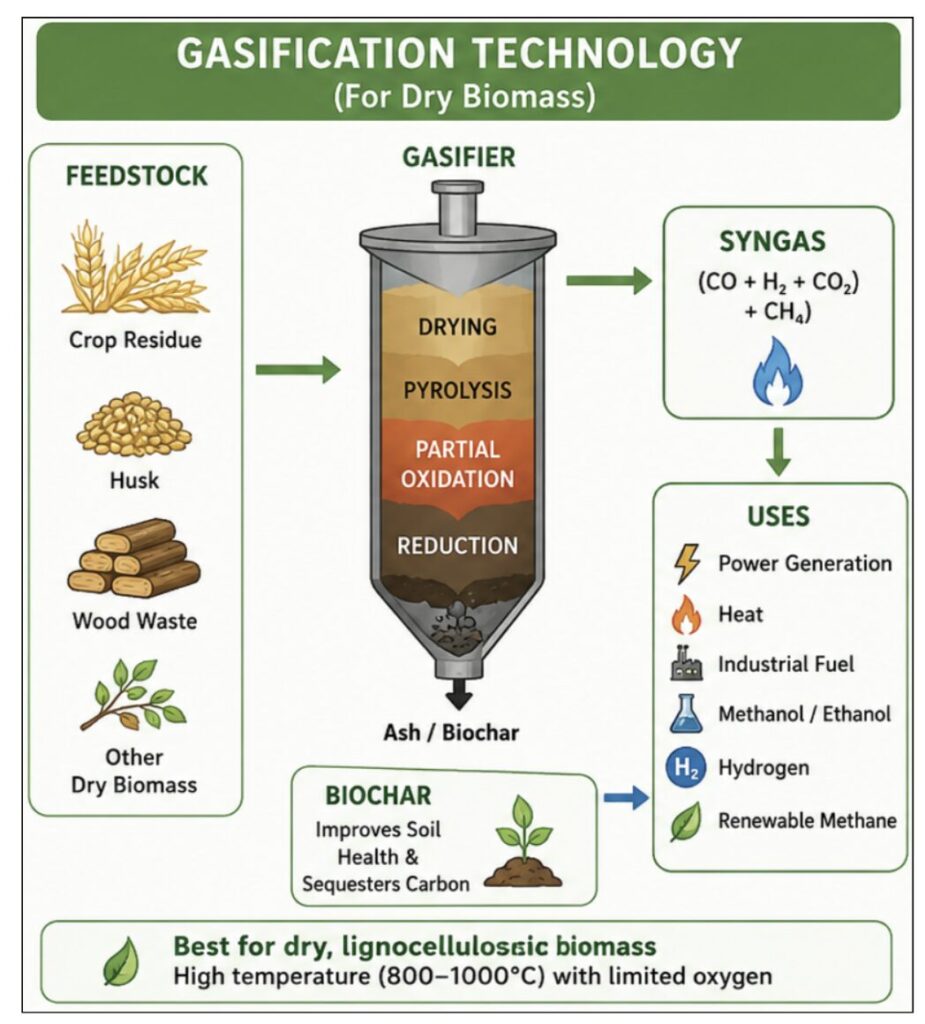
Technology Pathway 1: Gasification (For Dry Biomass)

  • Gasification is particularly effective for dry biomass such as crop residue, husk, woody waste, and other solid organic materials.
  • Inside a gasifier, feedstock is dried, pyrolised (broken down by heat), partially oxidised, and then reduced. 
  • A limited amount of oxygen is introduced, not enough for complete combustion but sufficient to sustain reactions between carbon, steam, and carbon dioxide at 800-1,000°C. 
  • The outcome is syngas, a combustible mixture of carbon monoxide, hydrogen, carbon dioxide, and smaller amounts of methane.
  • Syngas is valuable because of its versatility. It can be used directly to generate heat or power, or can be upgraded into renewable methane, methanol, ethanol, and even hydrogen, depending on downstream applications. This flexibility makes gasification an increasingly central pathway within advanced bioenergy systems.
  • Beyond energy, gasification produces biochar, a carbon-rich material that can improve soil quality, help sequester carbon, and open opportunities within emerging carbon credit markets. 
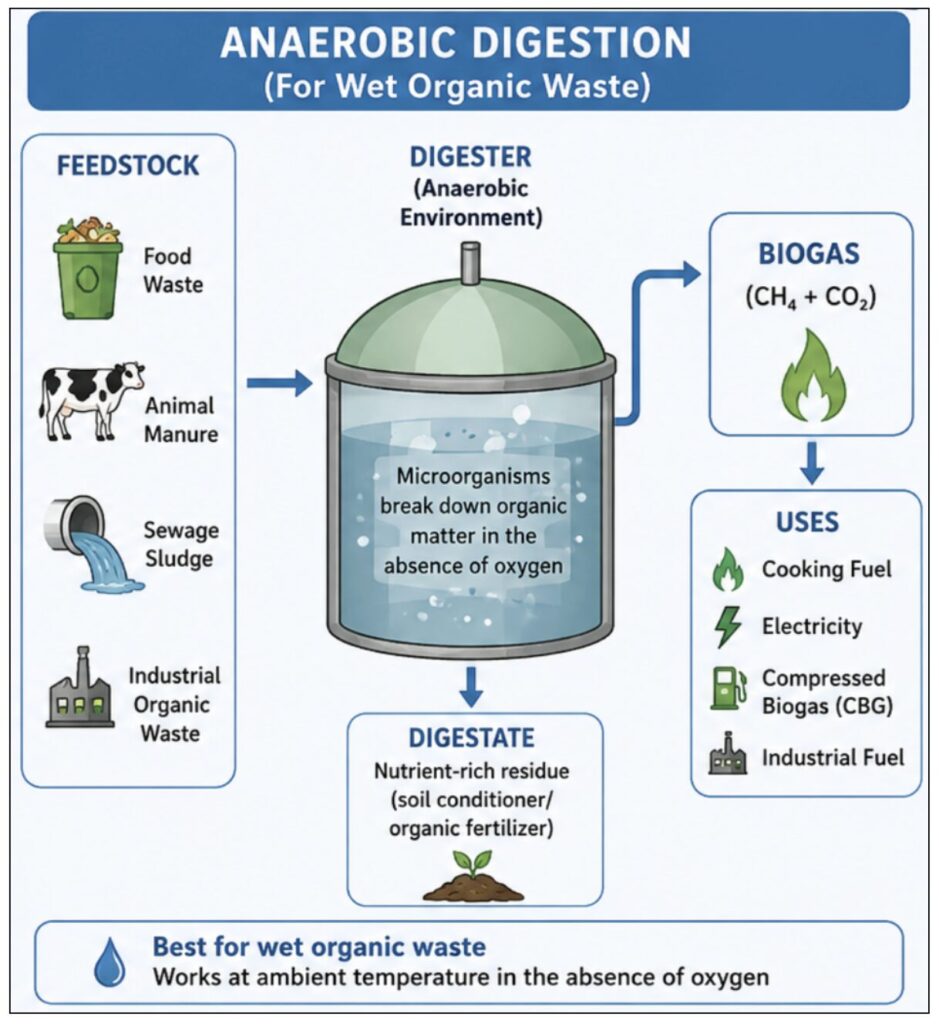
Technology Pathway 2: Anaerobic Digestion (For Wet Organic Waste)

  • Anaerobic digestion is suited for wet organic waste such as sewage, food waste, animal manure, and industrial organic streams. 
  • In this process, microorganisms break down waste in the absence of oxygen to produce biogas (consisting mainly of methane and carbon dioxide) along with nutrient-rich digestate usable as a soil amendment.
    • Agricultural residue alone can produce about 20 million metric tonnes of compressed biogas in India. When all key feedstock categories (agricultural waste, livestock waste, municipal solid waste, and press mud) are accounted for, the total estimated CBG potential rises to 40-60 million metric tonnes. 
  • However, unlike thermal systems, Anaerobic digestion depends on a continuous biological process, meaning feedstock must be available in sufficient and consistent quantities to ensure operational efficiency and reliable round-the-clock output.
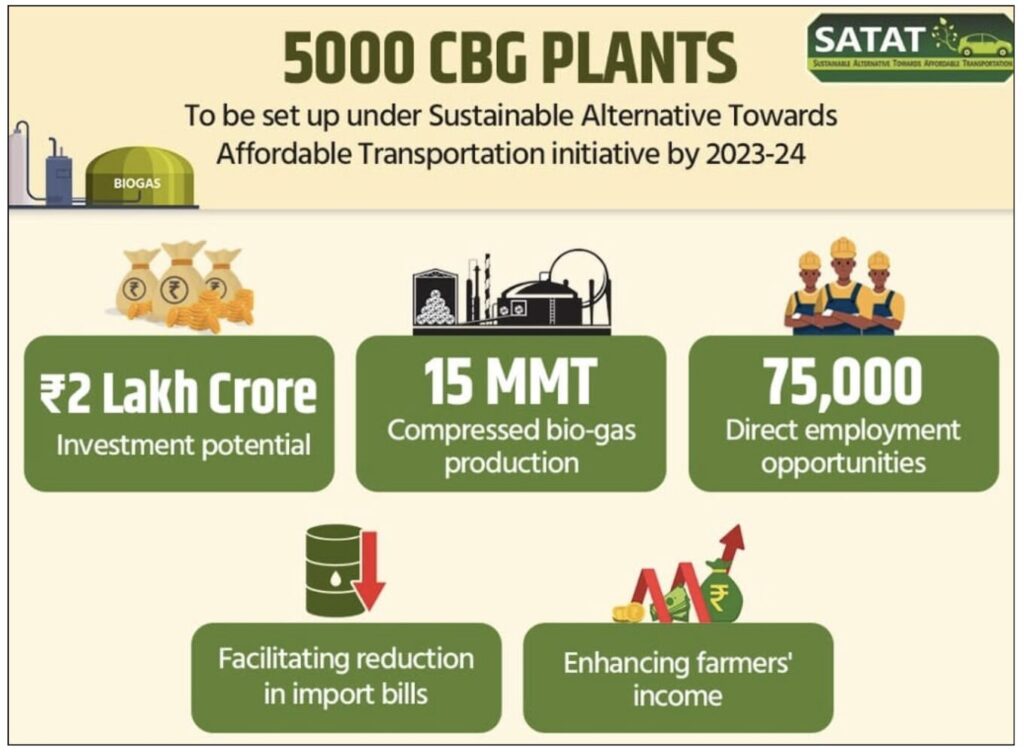
The Government of India’s SATAT (Sustainable Alternative Towards Affordable Transportation) scheme is one of the principal vehicles for scaling this transition. 

SATAT Scheme: Policy Anchor for Bioenergy Scaling

  • Initiative of: Ministry of Petroleum and Natural Gas.
  • Launched in 2018 to build an ecosystem for producing Compressed Bio-Gas (CBG) from various waste/biomass sources and promote its use alongside natural gas. 
  • Aim: To reduce dependence on imported fossil fuels, tackle pollution, and create economic opportunities.
  • As per the SATAT portal, 108 CBG plants have been commissioned as of mid-2025, with 1,094 active Letters of Intent issued (far below the initial target of 5,000 plants by 2023-24). CBG sales grew from negligible levels to 42,800 metric tonnes in 2024-25 alone.
  • A key policy accelerator is the Compressed Biogas Obligation (CBO): Mandatory blending of CBG with CNG and PNG started from FY 2025-26, with obligations set at 1% in FY26, 3% in FY27, 4% in FY28, and 5% from FY 2028-29 onwards. The blending mandate could attract around ₹37,500 crore in investments, leading to the establishment of 750 CBG projects by 2028-29. 
  • Additional support mechanisms include the Biomass Aggregation Machinery (BAM) Scheme (with an outlay of ₹5.64 billion for FY 2023-24 to 2026-27) and the Market Development Assistance (MDA) scheme providing ₹1500 per metric tonne to support marketing of organic fertilisers produced as CBG plant by-products.
The Case for Decentralised Systems: 

  • India does not only need large centralised energy plants. It also requires smaller distributed systems that can support rural industries, agro-processing clusters, MSMEs, and waste-heavy regions where transporting biomass over long distances is economically inefficient.
  • States with state-level bioenergy policies: Uttar Pradesh (32 operational plants), Gujarat (20), and Haryana (17) lead in CBG capacity, demonstrating that localised policy support is a key driver of adoption. 
  • Localised energy systems can convert local waste into local energy, lowering fuel costs while simultaneously improving energy access and waste management outcomes.

Key Challenges: 

  • Feedstock Inconsistency: Variable moisture, density, and ash content in biomass affect combustion and digestion efficiency.
  • Waste Segregation Deficit: Significant biogas potential is lost due to practices such as the burning of agricultural residues and the limited segregation of municipal solid waste.
  • Implementation Gap: Of 1,083 GOBARdhan-registered projects, 690 are yet to begin construction, and only 147 are currently operational
  • Capital Hesitation: Without policy certainty and long-term regulatory clarity, investors hesitate to commit capital at scale.
  • State Unevenness: States such as Andhra Pradesh, Karnataka, Rajasthan, and Telangana reported negligible biomass co-firing uptake despite substantial coal capacity and biomass availability. 

Way Forward: 

  • Mandatory Waste Segregation at Source: Neither gasification nor anaerobic digestion can achieve full potential without proper feedstock segregation at origin.
  • Strengthen Decentralised Infrastructure: Investment support to village-level biogas systems, cluster-based biomass plants, and municipal bioenergy projects.
  • Strengthening Carbon Markets: Biochar from gasification and methane capture from digesters are natural entry points into emerging carbon credit frameworks.
  • Long-Term Regulatory Clarity: Sustained investor confidence requires stable offtake agreements, transparent pricing mechanisms, and consistent CBO enforcement.
  • Technology Integration: Combining gasification (for dry feedstocks) and anaerobic digestion (for wet streams) into complementary decentralised systems will maximise resource utilisation across India’s diverse waste landscape.

India’s long-term energy transition cannot depend solely on imported fossil fuels. Harnessing domestic waste streams through decentralised bioenergy systems can become a major pillar of a sustainable and self-reliant energy future.  
Privilege Motion in Parliament

Open article →Download PDF

Why in News?

Congress’s Chief Whip in Rajya Sabha filed a privilege notice against Union Education Minister under Rule 187 of the Rules of Procedure of the Council of States, alleging his remarks were derogatory towards a Parliamentary Standing Committee examining reforms in the National Testing Agency (NTA) following the NEET-UG 2026 controversy.

UPSC Relevance: GS-2 Polity and Governance: Parliamentary Procedures  

Prelims:  Privilege Motion, Parliamentary Privilege

What is Parliamentary Privilege?

  • Parliamentary privilege refers to the special rights, immunities, and exemptions enjoyed by the two Houses of Parliament, their committees, and their members. 
  • These privileges are necessary to:
    • secure the independence and effectiveness of parliamentary functioning;
    • maintain the authority, dignity, and honour of Parliament; and
    • protect members from obstruction in the discharge of their parliamentary duties.
  • Extension of Privileges: Parliamentary privileges also extend to persons who are entitled to speak and participate in the proceedings of a House or its committees, such as the Attorney General for India, and Union Ministers who may participate in either House. However, such persons cannot vote unless they are members of the House.
  • Exception: Parliamentary privileges do not extend to the President of India, even though the President is an integral part of Parliament under Article 79 of the Constitution.

Breach of Privilege and Privilege Motion: 

  • When any of these rights are disregarded or attacked, the offence is called a breach of privilege and is punishable by the House.
  • Privilege Motion is moved by a member when they believe that a minister (or any individual) has committed a breach of privilege of the House or its members.

Constitutional and Procedural Basis: 

  • Article 105: Defines the powers, privileges, and immunities of Parliament and its members.
  • Article 194: Grants similar privileges to State Legislatures and their members. 
  • Rules of both the Houses: Rajya Sabha Rule 187 and Lok Sabha Rule 222
  • Nature: Quasi-judicial proceedings of the House. 

Who can commit a Breach of Privilege?

  • Any member of Parliament
  • A minister (even if not a member of that House)
  • An ordinary citizen or an external body

What constitutes Breach of Privilege?

  • Speeches, writings, or actions that cast reflections on the character, proceedings, or authority of a House of Parliament, its committees, or members. E.g., Publishing false or defamatory allegations against Parliament or MPs in relation to their parliamentary functions.
  • Casting aspersions on the character or impartiality of the Speaker/Chairman in the discharge of official duties. E.g., Alleging bias or mala fide conduct against the Speaker without substantive grounds.
  • Publication of false, distorted, or misleading reports of parliamentary proceedings. E.g., deliberately misreporting debates or decisions of Parliament.
  • Premature publication of proceedings, evidence, or reports of a parliamentary committee before they are officially tabled in the House. E.g., Leaking confidential committee reports to the media before submission to Parliament.
  • Obstructing, threatening, intimidating, or assaulting an MP in the discharge of parliamentary duties.

Contempt of the House is a broader concept; it is any act that obstructs or tends to obstruct the functioning of Parliament, even if it does not fall under a specific privilege, and can be treated as contempt.

Procedure for Privilege Motion:

  • A member gives a written notice of breach of privilege to: the Speaker in the Lok Sabha, or the Chairman in the Rajya Sabha.
  • The presiding officer examines whether a prima facie case of breach of privilege or contempt of the House exists.
  • If admitted, the matter may be taken up directly by the House or referred to the Committee of Privileges for detailed examination.
  • The Committee of Privileges investigates the matter and submits its report and recommendations to the House.
  • The House takes the final decision regarding action or punishment (censure, reprimand, suspension, or, in rare cases, imprisonment).

Practice MCQ: 

Q. With reference to Parliamentary Privileges in India, consider the following statements:

1. Parliamentary privileges are available to both Houses of Parliament, their committees, and members.

2. A privilege motion can be initiated only against a Member of Parliament.

3. Premature publication of a Parliamentary Committee’s report may constitute a breach of privilege.

4. The President of India enjoys parliamentary privileges as an integral part of Parliament.

Which of the statements given above are correct?

(a) 1 and 3 only

(b) 2 and 4 only

(c) 1, 2 and 3 only

(d) 1, 3 and 4 only 

Answer: (a) 

Improving Efficiency of Fertiliser Use in India

Open article →Download PDF

Why in News?

Rising global geopolitical instability (E.g., tensions in West Asia, Russia-Ukraine War) has disrupted fertiliser and energy markets. This has exposed India’s heavy import dependence and inefficiencies in fertiliser subsidies. This necessitates urgent reforms to ensure food security and fiscal sustainability.

UPSC Relevance: GS-3 Economy: Agriculture sector

Prelims: Dalhan Aatmanirbharta Mission
Mains: Fertiliser sector: Issues & solutions

India’s Fertiliser Scenario: 

  • India is one of the world’s largest consumers of fertilisers. Total fertiliser consumption has increased from ~1.1 million tonnes (FY67) to about ~32-33 million tonnes (FY24). 
Fertiliser TypeMain NutrientIndia’s Status
NitrogenousNitrogen (N)Mostly urea-based; ~85% domestically produced. Even 85% of domestic urea production depends on imported gas.  
PhosphaticPhosphorus (P)Largely import-dependent (DAP & raw materials) ~60-70%
PotassicPotassium (K)~100% /entirely imported (mainly from Russia, Belarus, Canada)

Global supply disruptions directly affect India’s subsidy burden and food security. It is estimated that the government’s fertiliser subsidy bill for 2026-27 may surge by ₹70,000 crore to ₹2.41 lakh crore, driven by rising import costs of urea and other fertilisers amid the ongoing West Asia crisis.

What is Fertiliser Use Efficiency?

  • Fertiliser Use Efficiency (FUE) refers to producing a higher crop yield per kilogram of fertiliser used, or maintaining crop yield while reducing fertiliser application.
  • Low efficiency means a substantial portion of fertilisers is lost through:
    • Air pollution
    • Water contamination
    • Soil degradation
    • Greenhouse gas emissions

Major Challenges in Fertiliser Use in India: 

  • Excessive and Imbalanced Fertiliser Use: India has witnessed disproportionate use of urea compared to phosphorus and potassium. The reasons include heavily subsidised urea, a distorted pricing structure and procurement incentives favouring cereal crops.
  • The Fertiliser Trap: The overuse of chemical fertilisers creates a vicious cycle:
    • Excess fertiliser degrades soil quality
    • Soil loses its nutrient retention capacity
    • Farmers apply more fertiliser to maintain yields
    • Fertiliser demand keeps rising
  • Inefficiencies in the Subsidy Regime: The Nutrient-Based Subsidy (NBS) Scheme was introduced to encourage balanced fertiliser use. However, Urea was excluded from NBS, and urea prices remained artificially low. The scheme failed to substantially improve fertiliser-use efficiency.
  • Limited Success of Neem-Coated Urea: Neem-coated urea was introduced to reduce the diversion of urea and improve nitrogen-use efficiency. However, substantial nitrogen losses still occur through ammonia volatilisation.
  • Crop Procurement Bias: Although MSP is announced for more than 20 crops, effective procurement is concentrated mainly in rice, wheat and sugarcane. These crops consume over two-thirds of India’s urea. As a result, it discourages crop diversification, weakens pulse-based crop rotations and intensifies fertiliser dependence. 
  • Environmental and Health Impacts: 
    • Air Pollution: Large quantities of urea volatilise as ammonia. Nitrogen fertilisers also contribute to nitrous oxide emissions, a potent greenhouse gas.
    • Water Pollution: Runoff from phosphatic fertilisers causes eutrophication of water bodies. Groundwater contamination increases health risks.

Dalhan Aatmanirbharta Mission:

  • The government launched the Dalhan Aatmanirbharta Mission in 2025.
  • Target production: ₹11,440 crore allocated to scale production to 350 lakh tonnes/year within five years. 
  • Assured procurement: MSP procurement of Tur, Urad, and Masoor for four years 
  • Concerns: Despite the initiative, the Pulse cultivation area increased only marginally (1.26% in 2026). This remains inadequate compared to the decline witnessed during previous years.

The Policy Disconnect & Need for Inter-Ministerial Convergence:

One major issue is the lack of coordination and siloed approach among the Agriculture Ministry, the Fertiliser Ministry, the Food Ministry and the Rural Development agencies. E.g., 

  • Food Policy (MSP): MSP schemes historically guarantee procurement for water-intensive cereals like paddy and wheat. This drives farmers to grow these crops regardless of regional soil suitability.
  • Fertiliser Policy: Urea is heavily subsidised at Rs. 242 per 45 kg bag. This pricing disparity encourages excessive and imbalanced nitrogen application over phosphorus and potassium.
  • Soil Health Policy: The Agriculture Ministry promotes balanced nutrition and organic farming through the Soil Health Card Programme. In practice, its impact is limited because farmers continue to rely on subsidised urea-driven incentives. Advisory recommendations are not strongly linked to subsidy or procurement policy. 

Way Forward: 

  • Promote pulse-legume crop rotations: Legumes fix atmospheric nitrogen and require zero to 10% of the urea used by cereals. Pulse-cereal rotations sustained agriculture for millennia before synthetic fertilisers.
  • Expand Organics: Triple recycling of manure, compost, and biochar to replace fertilisers as a basal dose; synthetic inputs used only as a top-up. Trials show up to 50% reduction with no yield loss.
  • Revise fertiliser recommendations: Prioritise locally available organic sources before chemical inputs.
  • Invest in better varieties: India’s rice germplasm can double nitrogen-use efficiency (grain yield per unit urea). Focus on the adoption of improved existing varieties over capital-intensive technologies.
  • Strengthen MSP procurement for Pulses: Better implementation of the Dalhan Aatmanirbharta Mission (2025); pulse area grew only 1.26% in 2026 vs a 10% decline from 2021-22 to 2024-25. Pulses naturally fix atmospheric nitrogen through symbiotic bacteria in their root nodules. 
  • Revive the Nitrogen Steering Committee: To ensure the inter-sectoral coordination required for integrated farming system reforms.

Also Read: https://anantamias.com/current-affairs/need-to-reform-fertiliser-policy/ 

India’s fertiliser inefficiency is not merely a pricing issue but a coordination failure across input (fertiliser), output (MSP), and ecological (soil health) policies. This necessitates a shift towards an integrated nutrient governance framework.

How scientists are using ‘DNA maps’ to expose Pangolin Trafficking Hubs?

Open article →Download PDF

Why in News?

Recent advances in biotechnology are transforming wildlife crime investigations. A recent study published shows how population genomics and DNA mapping can identify the geographic origin of trafficked pangolins.

UPSC Relevance: GS-3 Science and Technology: Biology and Biotechnology; GS-3 Environment: Species in News 

Prelims: Pangolin, Single Nucleotide Polymorphisms (SNP) 

Pan­golins are one of the world’s most traf­ficked mam­mals, even as their exist­ence is threatened by shrink­ing hab­it­ats. So to pro­tect them, con­ser­va­tion­ists are keen to know where they are being poached.

Using DNA Maps to Trace Pangolin Trafficking Hubs: 

The Challenge: 

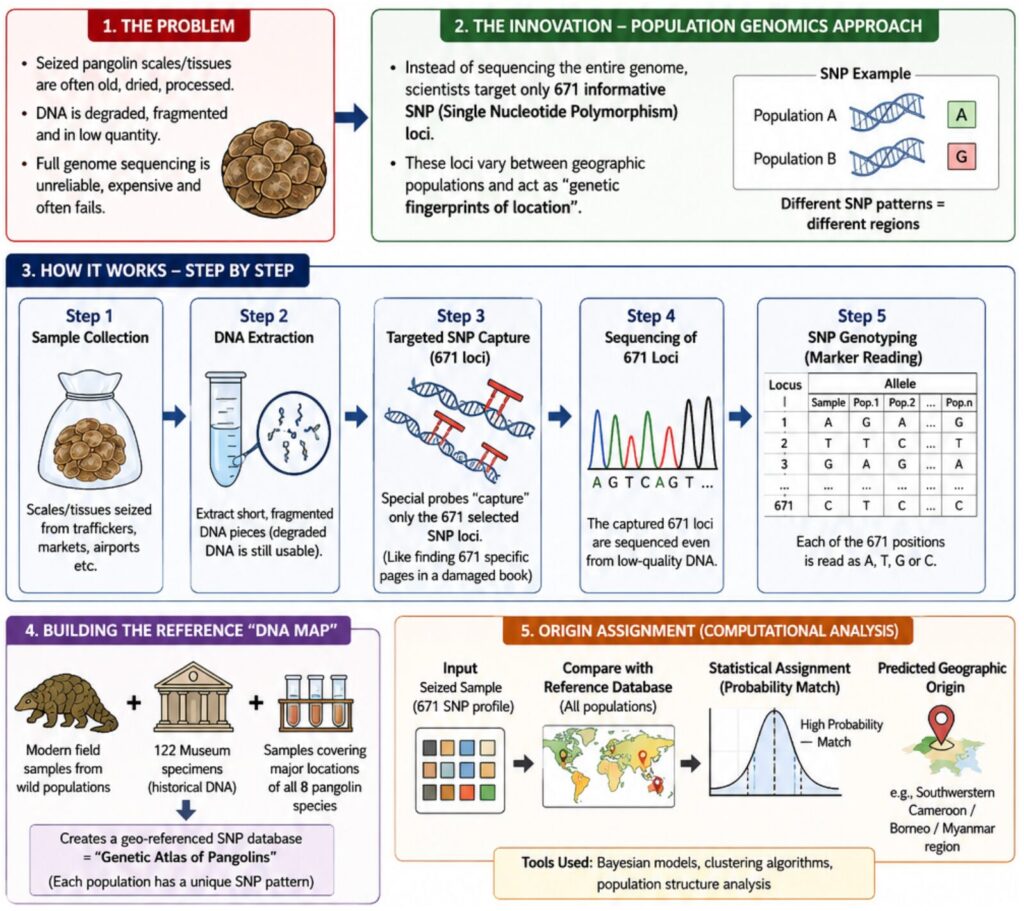
  • Pangolin scales seized at airports or markets are often old, dried, and heavily degraded, making traditional DNA sequencing ineffective. Moreover, whole-genome sequencing is costly and impractical for forensic use. 

Targeted Population Genomics: 

  • Researchers adopted a targeted population genomics approach instead of whole-genome sequencing. They focused on 671 highly informative SNP (Single Nucleotide Polymorphism) loci, i.e., 671 specific positions in DNA that vary between populations.
  • These SNPs act as genetic markers of geography, enabling scientists to distinguish between pangolin populations across different regions, even from degraded samples. The SNP method is typically useful when the DNA to be analysed is highly degraded. 

Methodology: 

  • DNA from seized scales is extracted and screened only at these 671 loci using targeted sequencing. The resulting SNP profile is then compared with a reference genetic database created using modern field samples, museum specimens and data from multiple pangolin species across Asia and Africa. This creates a “genetic atlas” of pangolin populations. 

How is the Origin Determined?

  • The SNP pattern from seized samples is matched with reference populations using statistical models. This allows researchers to assign a probable geographic origin, even identifying regional trafficking hubs.

Key Findings: 

The study identified major trafficking hotspots such as:

  • Southwestern Cameroon (White-bellied pangolin)
  • Southwestern Borneo (Sunda pangolin)
  • Myanmar region (Chinese pangolin)

It also revealed that domestic and international trafficking networks are interconnected, with overlapping supply zones.

Significance:

This approach enables forensic wildlife tracking even from degraded DNA, strengthens enforcement, and helps target poaching hotspots rather than only intercepting shipments.

About Pangolin:

  • The pangolin, often called the “scaly anteater,” is the only mammal in the world completely covered in tough, overlapping scales.  
  • Physical characteristics and behaviour:
    • Have large, protective keratin scales covering their skin. 
    • Lve in hollow trees or burrows. 
    • Nocturnal and solitary animals; meet only to mate.
    • Insectivorous; their diet consists mainly of ants and termites
    • Long tongue; does not have teeth; uses the muscular stomach to grind food.
  • Nature’s Pest Control: A single adult pangolin can eat up to 70 million insects a year, keeping forest ecosystems healthy and naturally aerating soil through digging.
  • India has two species:
    • Indian Pangolin 
    • Chinese Pangolin
  • Distribution:
    • Indian Pangolin: widespread across central, southern, and northern India
    • Chinese Pangolin: Northeast India and Himalayan foothills
  • Threats: Poaching (for their meat and scales, which are used in traditional medicine) and heavy deforestation of their natural habitats. 

Conservation status of Pangolin:

  • CITES: Appendix I 
  • IUCN status: 
    • Chinese Pangolin: Critically Endangered
    • Sunda Pangolin: Critically Endangered
    • Indian Pangolin: Endangered
    • Philippine Pangolin: Critically Endangered
  • Schedule I of the Wildlife Protection Act, 1972.

UPSC PYQ 2023:

Q. Aerial metagenomics’ best refers to which one of the following situations?

(a)    Collecting DNA samples from air in a habitat at one go

(b)    Understanding the genetic makeup of avian species of a habitat

(c)    Using air-borne devices to collect blood samples from moving animals

(d)    Sending drones to inaccessible areas to collect plant and animal samples from land surfaces and water bodies

Answer: (a)

Q. ‘Microsatellite DNA’ is used in the case of which one of the following?

(a)    Studying the evolutionary relationships among various species of fauna

(b)    Stimulating ‘stem cells’ to transform into diverse functional tissues

(c)    Promoting clonal propagation of horticultural plants

(d)    Assessing the efficacy of drugs by conducting series of drug trials in a population

Answer: (a)

India’s Growing Fungal Disease Burden

Open article →Download PDF

Why in News?

India is facing a rising burden of fungal diseases, with estimates suggesting that over 5 crore Indians suffer from fungal infections. Researchers are now working to identify priority fungal pathogens and map antifungal resistance.

The issue has gained global attention after the WHO released its first-ever priority fungal pathogens list in 2022.

UPSC Relevance: GS-3 Science and Technology: Biology and Biotechnology

Prelims: Fungal Diseases, Fungi 
Mains: One Health Approach, Antimicrobial Resistance. 

Key facts about Fungi: 

  • Fungi are eukaryotic organisms, i.e., their cells contain a well-defined nucleus and membrane-bound organelles. 
  • Fungi constitute a separate biological kingdom distinct from plants, animals, and bacteria. Unlike plants, fungi do not contain chlorophyll.
  • The fungal kingdom includes a wide range of organisms such as mushrooms, yeasts, and moulds. Lichens are also closely associated with fungi, as they represent a symbiotic relationship between fungi and algae or cyanobacteria.
  • Fungi are heterotrophic organisms that obtain nutrients from external sources. Many fungi feed on dead and decaying organic matter, while others survive as parasites. 
  • The cell walls of fungi are primarily composed of chitin, a strong structural material that is also present in the exoskeletons of insects and crustaceans.
  • Fungi are highly adaptable organisms and are found in almost every habitat on Earth, ranging from tropical forests to Arctic regions, including acidic and alkaline habitats.
  • Fungi reproduce through both asexual and sexual methods.
  • Ecologically, fungi play a crucial role in the decomposition of organic matter. By breaking down dead plants and animals, they help recycle essential nutrients back into the environment and contribute significantly to soil formation and nutrient cycling.
  • Fungi are used in various industries, including food (yeast for baking and brewing), medicine (antibiotics like penicillin), bioremediation and production of biofuels.

What are Fungal Diseases?

  • Fungal diseases (mycoses) are infections caused by fungi that affect the skin, eyes, lungs, bloodstream, brain and reproductive organs. 
  • Fungi thrive in hot and humid conditions, in poor sanitation environments and in immunocompromised populations. 

Major Fungal Diseases in India: 

  • Aspergillosis is caused by Aspergillus fungi, primarily affecting the lungs. Often mistaken for tuberculosis. Aspergillus can also grow on various food crops and agricultural commodities such as peanuts, corn, cottonseed, and tree nuts. They produce Aflatoxins, which are a group of poisonous carcinogens and mutagens. 
  • Mucormycosis, commonly known as “black fungus,” is a rare but highly aggressive fungal infection caused by a group of moulds. It primarily affects the sinuses, lungs, skin, and brain in people with weakened immune systems. The infection is not contagious and cannot spread between humans.
  • Candida Infections: Candidiasis (a yeast infection) is caused by an overgrowth of Candida fungi, which naturally live on our bodies. When the balance of healthy bacteria and yeast is disrupted, it can cause localised infections in the mouth, skin, or vagina. 
  • Athlete’s foot is a contagious fungal infection that causes an itchy, stinging, or burning rash on the feet, particularly between the toes.
  • Ringworm is a highly contagious fungal infection. It typically causes an itchy, red, scaly, or raised circular rash.

Why is India Highly Vulnerable?

  • Climatic Factors: Heat and humidity favour fungal growth, monsoon conditions increase exposure.
  • High burden of Diabetes: Diabetes Mellitus weakens immunity.
  • Antifungal Resistance: Overuse of antifungal medicines. Large-scale agricultural fungicide usage. 
  • Weak Awareness: Delay in fungal diagnosis. Fungal diseases are often ignored compared to Tuberculosis, Viral diseases and other Bacterial infections.  

Associated Challenges: 

  • Limited Treatment Options: Unlike bacteria, fungi are biologically closer to humans because both are eukaryotic organisms. Thus, antifungal drugs can also damage human cells, and drug development becomes difficult. 
  • Inadequate Advanced Diagnostics: 
    • PCR-based tests require breaking tough fungal cell walls; not yet standardised for clinical use. 
    • MALDI-TOF mass spectrometry can identify fungi in ~30 min but costs ₹1.5 Cr+ per unit. MALDI-TOF databases lack many tropical fungal pathogens prevalent in India
  • Research focus has been on Candida (yeast); filamentous moulds like Aspergillus and Fusarium are understudied in India. 
  • Large-scale agricultural use of antifungals drives environmental resistance. 

Way Forward: 

  • National Mycology Institute: Establish a dedicated apex body for fungal disease surveillance, research, and outbreak response.
  • Mandatory Co-testing Protocol: Mandate simultaneous bacterial and fungal testing in all public-sector microbiology labs, especially for respiratory and eye infections.
  • Diagnostic Indigenisation: Fund development of cost-effective PCR kits and India-specific MALDI-TOF databases covering tropical fungal pathogens.
  • Antifungal Drugs Regulation: Regulate Over-the-counter (OTC) sales of antifungals, review agricultural fungicide use, and integrate antifungal resistance (AFR) into the AMR National Action Plan.
  • Promote the One Health Approach by integrating human, animal, and environmental health. 

UPSC PYQ 2021

Q. Consider the following:

1. Bacteria

2. Fungi

3. Virus

Which of the above can be cultured in an artificial/ synthetic medium?

(a) 1 and 2 only

(b) 2 and 3 only

(c) 1 and 3 only

(d) 1,2 and 3

Answer: (a) 

UPSC PYQ 2013

Q. Improper handling and storage of cereal grains and oilseeds result in the production of toxins known as aflatoxins, which are not generally destroyed by normal cooking process. Affetoxins are produced by
(a) bacteria
(b) protozoa
(c) moulds
(d) viruses

Answer: (c) 

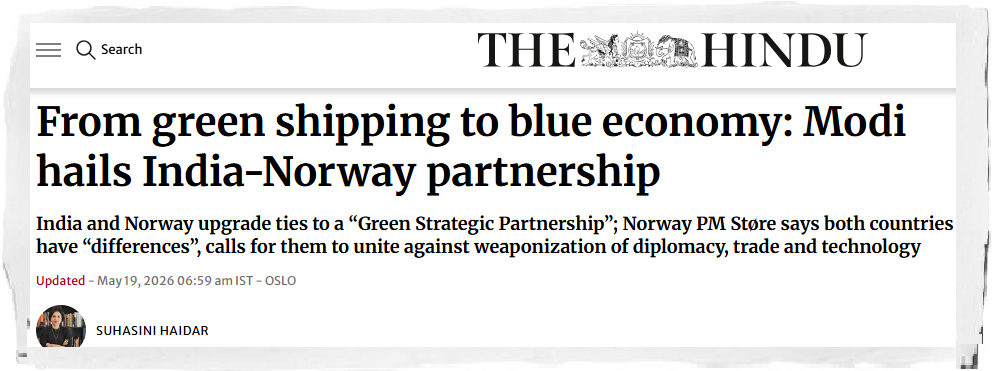
India, Netherlands upgrade ties; sign 17 MoUs on water, renewable energy, and semiconductors

Open article →Download PDF

India–Netherlands Strategic Partnership: Expanding Cooperation in Technology, Water and Geoeconomic Security

Why in News?

India and the Netherlands elevated their bilateral relationship to a Strategic Partnership during Prime Minister Narendra Modi’s visit in May 2026. Both countries signed 17 agreements and MoUs covering water management, renewable energy, semiconductors, agriculture, health, critical minerals and technology cooperation, reflecting the growing depth of India–Europe engagement.

UPSC Relevance

Prelims: India–Netherlands relations, semiconductors, critical minerals, Strait of Hormuz, strategic partnerships, renewable energy initiatives.

Mains:

GS II: – Bilateral relations, international groupings, India and Europe relations;

GS III: – Science and Technology, semiconductor ecosystem, energy security, critical minerals, economic diplomacy.

Background/Context

India and the Netherlands have maintained diplomatic relations since India’s independence. The relationship initially focused on trade and development cooperation but has gradually evolved into a multidimensional partnership involving economic, technological, environmental and strategic sectors.

The Netherlands occupies a unique position in Europe because of:

  • One of the world’s most technologically advanced agricultural systems.
  • Major expertise in water management and flood-control technologies.
  • Strategic maritime connectivity through Rotterdam Port.
  • Advanced semiconductor manufacturing capabilities.
  • Strong renewable energy and innovation ecosystems.

India’s growing economic size and technological ambitions have increased the importance of this relationship.

The elevation to a Strategic Partnership indicates a transition from issue-specific cooperation to a broader long-term framework involving strategic, technological and geopolitical coordination.

Understanding Strategic Partnership

A Strategic Partnership generally refers to an institutionalised framework of cooperation extending beyond routine diplomatic engagement.

It usually includes cooperation in:

  • Defence and security
  • Technology and innovation
  • Trade and investments
  • Energy security
  • Geopolitical coordination
  • People-to-people ties

For India, strategic partnerships constitute an important element of its policy of multi-alignment and strategic autonomy.

Examples include India’s strategic partnerships with:

  • United States, France, Japan, Russia, Australia

Areas of Cooperation Under the New Partnership

Water Cooperation

Water cooperation has historically been one of the strongest pillars of India–Netherlands relations.

The Netherlands possesses globally recognised expertise in:

  • Flood management, Delta management, River basin planning, Water recycling, Climate-resilient urban systems

This assumes significance for India because of: Increasing water stress, Urban flooding, River pollution, Climate-related vulnerabilities

    Examples include collaboration under:

    • Indo-Dutch Water Alliance, River rejuvenation projects, Urban water management initiatives

    The partnership also aligns with India’s objectives under:

    • Jal Jeevan Mission, Namami Gange Programme, Sustainable Development Goals

    Semiconductor Cooperation

    Semiconductors have emerged as a major strategic component of modern economies.

    The agreement involving Tata Electronics and ASML is particularly important.

    ASML is globally significant because:

    • It is the dominant producer of Extreme Ultraviolet (EUV) lithography machines.
    • EUV technology is essential for advanced semiconductor fabrication.
    • Only a few countries possess capabilities in high-end semiconductor manufacturing.

    Importance for India:

    • Reducing dependence on imports.
    • Supporting electronics manufacturing.
    • Enhancing technological sovereignty.
    • Supporting programmes like:
      • India Semiconductor Mission
      • Make in India
      • Digital India

    Renewable Energy and Critical Minerals

    Energy transition requires reliable access to critical minerals such as:

    • Lithium, Cobalt, Nickel. Rare earth elements

    These minerals are essential for:

    • Electric vehicles, Solar panels, Battery storage systems, Wind energy infrastructure

    India’s growing clean energy ambitions make supply-chain diversification essential.

    This cooperation aligns with:

    • National Green Hydrogen Mission
    • India’s Net Zero target by 2070
    • International Solar Alliance

    Agriculture and Health Cooperation (WAH Framework)

    The “WAH” framework focuses on:

    Water

    Sustainable management of water resources and climate resilience.

    Agriculture

    The Netherlands is among the world’s largest agricultural exporters despite limited land area because of:

    • Precision farming, Greenhouse technologies, Efficient irrigation systems

    India could benefit from Agri-technology transfer, Sustainable farming techniques,Food processing innovations

      Health

      Cooperation may include:

      • Medical technologies, Research collaboration, Digital health infrastructure, Healthcare innovation

      Strategic Significance for India

      Strengthening India–Europe Relations

      India increasingly views Europe as an important strategic and economic partner.

      Recent developments include:

      • India–EU Free Trade negotiations
      • Enhanced ties with France
      • Nordic cooperation
      • Technology partnerships

      The Netherlands partnership broadens India’s engagement beyond traditional major powers.

      Supply Chain Diversification

      Recent global disruptions exposed vulnerabilities in concentrated supply chains.

      Examples include:

      • COVID-19 disruptions
      • Russia–Ukraine conflict
      • West Asian instability
      • Semiconductor shortages

      Diversified partnerships help India improve resilience.

      Supporting Strategic Autonomy

      India follows an approach of maintaining relations with multiple centres of power while preserving policy independence.

      Technology and economic partnerships with European countries provide India greater flexibility in pursuing strategic autonomy.

      Maritime and Geoeconomic Importance

      The Netherlands possesses major maritime significance because Rotterdam Port is among the world’s busiest ports.

      Closer cooperation can support:

      • Trade connectivity
      • Logistics
      • Maritime technology
      • Blue economy initiatives

      Geopolitical Dimensions

      Energy Security Concerns

      Discussions during the visit reportedly included concerns over possible disruptions around the Strait of Hormuz.

      The Strait of Hormuz is strategically important because:

      • Around one-fifth of global oil trade passes through it.
      • India imports a substantial share of energy requirements through this route.

      Disruptions could lead to:

      • Higher energy prices
      • Inflationary pressures
      • Trade disruptions

      India and Rules-Based International Order

      Both countries emphasised:

      • Democracy
      • Rule of law
      • Good governance
      • International norms

      India generally supports a multipolar and rules-based order while retaining strategic flexibility.

      Economic Dimensions

      India and the Netherlands already maintain substantial economic relations.

      The Netherlands has consistently remained among the largest foreign investors in India.

      Major sectors attracting investments include:

      • Logistics, Renewable energy Technology, Agriculture, Manufacturing, Services

      The partnership can improve:

      • FDI inflows
      • Employment generation
      • Technology transfer
      • Industrial competitiveness

      Challenges and Concerns

      Technology Dependence Risks

      High-end technologies often come with concerns relating to:

      • Intellectual property restrictions
      • Limited transfer of core technology
      • External control over supply chains

      Technology partnerships may not always translate into complete domestic capability development.

      Regulatory and Trade Barriers

      Differences in:

      • Standards
      • Data regulations
      • Market access
      • Sustainability requirements

      may slow implementation of agreements.

      Geopolitical Uncertainty

      Global geopolitical tensions can affect:

      • Energy markets
      • Technology supply chains
      • Trade flows

      India must maintain balance among competing powers.

      Human Rights and Political Sensitivities

      Differences occasionally emerge regarding:

      • Human rights discourse
      • democratic practices
      • domestic political issues

      Managing these differences while preserving broader cooperation remains important.

      Way Forward

      Strengthening Technology Partnerships

      India should move beyond buyer-seller relationships and seek:

      • Joint research initiatives
      • Co-development projects
      • Technology transfer mechanisms
      • Domestic manufacturing capabilities

      Building Semiconductor Ecosystems

      India must complement international cooperation with:

      • Skilled workforce development
      • R&D investments
      • Supply-chain integration
      • Domestic fabrication capacity

      Expanding Water and Climate Cooperation

      India can leverage Dutch expertise for:

      • Urban flood management
      • River basin planning
      • Climate adaptation
      • Sustainable agriculture

      Diversifying Critical Mineral Sources

      Long-term agreements for critical mineral supply chains should be strengthened to reduce strategic vulnerabilities.

      Deepening People-to-People Engagement

      Academic exchanges, innovation partnerships and cultural engagement can strengthen long-term bilateral trust.

      Conclusion

      The India–Netherlands Strategic Partnership reflects India’s growing focus on technology, geoeconomic resilience and diversified global engagement. Cooperation in semiconductors, water, renewable energy and critical minerals goes beyond traditional diplomacy and addresses emerging strategic challenges.

      The success of this partnership, however, will depend on whether India can convert agreements into concrete technological capabilities, stronger supply chains and sustainable long-term cooperation.

      Prelims Practice Questions

      Consider the following statements regarding semiconductors:

      1. Semiconductor chips are essential components in electronic devices.
      2. Extreme Ultraviolet (EUV) lithography is used in advanced chip manufacturing.
      3. India currently dominates global semiconductor fabrication.

      Which of the statements given above are correct?

      (a) 1 and 2 only
      (b) 2 and 3 only
      (c) 1 and 3 only
      (d) 1, 2 and 3

      Correct Answer: (a) 1 and 2 only

      Explanation: Semiconductor chips are essential for modern electronics and EUV lithography is critical for advanced manufacturing. India is expanding semiconductor capabilities but does not currently dominate global fabrication.

      Consider the following statements regarding the Strait of Hormuz:

      1. It connects the Persian Gulf with the Gulf of Oman.
      2. A substantial proportion of global oil trade passes through it.
      3. It lies entirely within the territorial waters of India.

      Which of the statements given above are correct?

      (a) 1 and 2 only
      (b) 2 and 3 only
      (c) 1 and 3 only
      (d) 1, 2 and 3

      Correct Answer: (a) 1 and 2 only

      Explanation: The Strait of Hormuz connects the Persian Gulf to the Gulf of Oman and is a vital global energy chokepoint.

      Mains Practice Questions

      1. Examine the role of semiconductor ecosystems and critical mineral supply chains in strengthening India’s technological and economic security.
      2. Discuss the strategic significance of India’s growing engagement with European countries in the context of emerging geopolitical and geoeconomic challenges.

      Return of Leiden copper plates should spark efforts for further repatriations, say Indian archaeologists

      Open article →Download PDF

      Why in News?

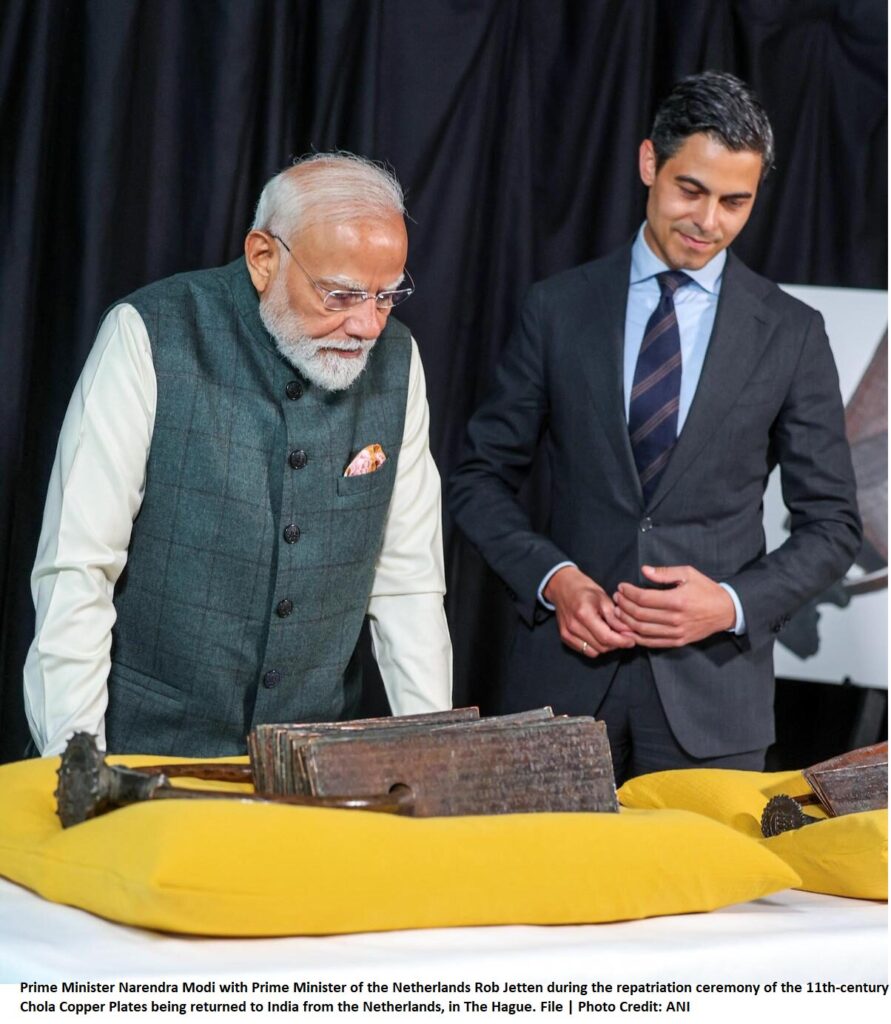
      The Netherlands has returned the 11th-century Chola-era Anaimangalam Copper Plates, popularly known as the Leiden Copper Plates, to India during Prime Minister Narendra Modi’s visit. The development marks an important milestone in India’s efforts to recover cultural artefacts removed during the colonial period and has renewed discussions on broader heritage repatriation initiatives.

      UPSC Relevance

      Prelims: Chola administration, Copper plate inscriptions, Cultural heritage, UNESCO and heritage protection, Ancient Indian history;

      Mains:

      GS I: (Indian culture and history, Conservation and management of heritage),

      GS II: (International relations and cultural diplomacy),

      Background

      Copper plate inscriptions constituted one of the most important administrative instruments in ancient and medieval India. Kings used them to record land grants, tax exemptions, religious donations, and administrative decisions.

      The Leiden Copper Plates belong to the Chola period and are among the most significant surviving documentary records of South Indian history. The collection consists of 21 large plates and three smaller plates carrying inscriptions in Sanskrit and Tamil. They were preserved in Leiden University in the Netherlands for nearly two centuries before their return.

      Historical Significance of the Leiden Copper Plates

      Record of Chola Administration

      The inscriptions provide detailed information regarding royal administration, land grants, taxation systems, and governance structures under the Chola Empire.

      Evidence of Maritime Networks

      The plates reveal links between the Chola Empire and Southeast Asian kingdoms, highlighting India’s historical maritime and commercial engagement.

      Religious Pluralism

      The inscriptions document land grants made to the Chudamanivarma Vihara at Nagapattinam, a Buddhist institution. They illustrate how Chola rulers patronised institutions beyond their own religious traditions.

      Source of Tamil Historical Studies

      The plates serve as primary evidence for reconstructing political and social history of South India.

      Chola Empire and Copper Plate Tradition

      Chola Dynasty

      The Cholas emerged as one of the most powerful dynasties in South India between the ninth and thirteenth centuries CE.

      Major rulers included:

      • Rajaraja Chola I
      • Rajendra Chola I
      • Kulottunga Chola I

      Important features of Chola administration included:

      • Strong local self-government through village assemblies
      • Extensive maritime trade networks
      • Efficient revenue administration
      • Large temple-based socio-economic systems

      Cultural Repatriation and its Importance

      Restoration of Historical Ownership

      Returning cultural objects recognises the historical connection between communities and their heritage.

      Correcting Colonial-Era Dispossession

      Many artefacts were transferred during colonial rule without meaningful consent of local communities.

      Strengthening Cultural Identity

      Recovered artefacts help preserve collective memory and reinforce cultural continuity.

      Enhancing Research and Public Access

      Repatriated artefacts can support academic studies and improve public engagement through museums and educational institutions.

      India’s Efforts Towards Repatriation

      India has intensified diplomatic and legal efforts to recover antiquities and cultural objects from foreign institutions and private collections.

      Major measures include:

      • Antiquities and Art Treasures Act, 1972
      • Bilateral cooperation agreements with several countries
      • Collaboration through international organisations such as UNESCO
      • Greater use of digital databases and provenance tracking

      India has successfully recovered several idols, sculptures and manuscripts in recent years.

      Challenges in Repatriation

      Legal and Ownership Complexities

      Establishing historical ownership often becomes difficult because of incomplete records and unclear acquisition histories.

      Provenance Documentation Issues

      Many artefacts moved across multiple institutions over centuries, making documentary evidence difficult to establish.

      International Legal Differences

      Countries differ in their heritage laws and restitution frameworks.

      Museum and Academic Resistance

      Some institutions argue that globally shared collections ensure wider preservation and access.

      Way Forward

      Strengthen Provenance Research

      Systematic documentation and digitisation of archaeological records can help establish stronger ownership claims.

      Expand Cultural Diplomacy

      India can integrate heritage recovery into broader diplomatic engagements.

      Develop World-Class Preservation Infrastructure

      Museums and conservation institutions should be strengthened for proper storage, restoration and display.

      Build International Cooperation Mechanisms

      Greater cooperation under international conventions can facilitate transparent restitution processes.

      Conclusion

      The return of the Leiden Copper Plates represents more than the transfer of historical artefacts. It reflects the restoration of cultural memory and historical continuity. It also highlights the growing importance of cultural diplomacy in international relations. As India pursues further repatriation efforts, balancing heritage conservation with global collaboration will remain essential.

      Practice Questions

      1. Consider the following statements regarding copper plate inscriptions in ancient India:

      1. They were commonly used to record royal grants and administrative decisions.
      2. They served as important primary sources for reconstructing historical events.
      3. They were exclusively written in Sanskrit.

      Which of the statements given above is/are correct?

      (a) 1 and 2 only
      (b) 2 and 3 only
      (c) 1 only
      (d) 1, 2 and 3

      Correct Answer: (a)

      Explanation: Copper plate inscriptions recorded grants and administrative decisions and serve as important historical sources. They were written in various languages, including Tamil and Sanskrit.

      2. With reference to the Chola Empire, consider the following statements:

      1. The Cholas maintained extensive maritime links with Southeast Asia.
      2. Village self-government institutions formed part of Chola administration.
      3. Rajendra Chola I established the Chola Empire before Rajaraja Chola I.

      Which of the statements given above are correct?

      (a) 1 and 2 only
      (b) 2 and 3 only
      (c) 1 only
      (d) 1, 2 and 3

      Correct Answer: (a)

      Explanation: Rajaraja Chola I preceded Rajendra Chola I. The Cholas had strong maritime engagement and village-level institutions.

      Mains Questions

      1. Examine the historical importance of copper plate inscriptions as sources for reconstructing ancient and medieval Indian history.
      2. Discuss the significance of cultural repatriation in strengthening national identity and preserving civilisational heritage.

      A bridge too far? India’s only ape species gets a helping hand, but needs bigger steps

      Open article →Download PDF

      Why in News?

      The first documented instance globally of a Western Hoolock Gibbon using an artificial canopy bridge over a railway line was recorded in Hollongapar Gibbon Sanctuary. The event is considered a significant step in mitigating habitat fragmentation and improving conservation prospects for India’s only ape species.

      UPSC Relevance

      Prelims: Hoolock Gibbon, Wildlife Protection Act, IUCN Red List, habitat fragmentation, protected areas;

      Mains:

      GS III (Environment and biodiversity conservation, conservation challenges, human-wildlife interface, infrastructure and ecological sustainability).

      Background

      Habitat fragmentation caused by roads, railway lines, power transmission networks and other linear infrastructure projects has emerged as one of the major threats to biodiversity conservation worldwide. Fragmentation disrupts ecological connectivity and isolates wildlife populations into smaller patches.

      Arboreal species, particularly primates and tree-dwelling mammals, depend upon uninterrupted forest canopies for movement, foraging and reproduction. Any break in canopy continuity creates barriers to their survival.

      The recent use of an artificial canopy bridge by a Western Hoolock Gibbon in Assam has demonstrated how innovative conservation interventions may partially mitigate such challenges.

      About the Western Hoolock Gibbon

      Taxonomic Significance

      The Western Hoolock Gibbon is India’s only ape species and belongs to the family Hylobatidae.

      Distribution

      The species is found mainly in northeastern India and adjoining regions of Bangladesh and Myanmar.

      Important habitats in India include:

      • Assam, Arunachal Pradesh, Meghalaya, Nagaland, Mizoram, Tripura

      Characteristics

      • Highly arboreal and spends almost its entire life on trees
      • Uses a specialised movement called brachiation (swinging hand-over-hand across branches)
      • Lives in small family groups
      • Plays a major ecological role in seed dispersal and forest regeneration

      Conservation Status

      Western Hoolock Gibbon

      • IUCN Red List: Endangered
      • Wildlife Protection Act, 1972: Schedule I protection

      Habitat Fragmentation and Ecological Consequences

      Habitat fragmentation occurs when continuous ecosystems are divided into smaller isolated patches due to human activities.

      Major drivers include:

      • Roads and railway lines
      • Hydroelectric projects
      • Urban expansion
      • Agriculture and mining
      • Power transmission corridors

      Ecological impacts include:

      • Restricted movement of species
      • Reduced access to food and mates
      • Increased competition for resources
      • Decline in genetic diversity
      • Greater vulnerability to local extinction

      Artificial Canopy Bridges as a Conservation Tool

      Artificial canopy bridges are structures designed to reconnect fragmented forest canopies and allow arboreal animals to cross human-made barriers safely.

      Materials commonly used include nylon ropes, steel cables, bamboo, coir and mesh structures.

      The Hollongapar project evolved in multiple stages:

      Initial Intervention

      The first rigid iron bridge installed in 2015 failed because it did not accommodate brachiation behaviour.

      Improved Design

      Following consultations with the Wildlife Institute of India, five double-rope canopy bridges with safety nets were installed in 2022.

      These structures successfully facilitated movement across the railway corridor.

      Global and Indian Examples

      Artificial canopy crossings have been adopted in multiple countries and landscapes:

      International Examples

      Costa Rica uses canopy bridges for sloths and monkeys, Australia for possums and gliders, Madagascar for lemurs, and Indonesia recently documented orangutan use of such structures.

      Indian Examples

      Tamil Nadu’s Valparai landscape introduced canopy bridges for lion-tailed macaques, Kerala installed sky bridges for arboreal mammals, Uttarakhand created organic-material air bridges, and Assam has also used such interventions for golden langurs.

      Challenges and Limitations

      Limited Ecological Effectiveness

      Artificial structures may facilitate movement but may not ensure sufficient breeding interactions needed for long-term population viability.

      Increased Predation Risk

      Open bridge structures can expose smaller animals to predators, especially birds of prey.

      Behavioural Constraints

      Social hierarchies within animal groups may restrict access to bridges for subordinate individuals.

      Disease Transmission

      Artificial concentration of wildlife movement can increase transmission of pathogens and parasites.

      Risk of Normalising Ecological Damage

      Artificial mitigation structures can sometimes be used to justify continued infrastructure expansion through sensitive ecosystems.

      Way Forward

      Restore Natural Habitat Connectivity

      Artificial structures should complement, rather than replace, efforts to restore natural forest corridors and landscape connectivity.

      Strengthen Ecological Impact Assessments

      Infrastructure projects in ecologically sensitive zones should undergo rigorous environmental assessments.

      Promote Wildlife-Friendly Infrastructure Design

      Railways, roads and transmission projects should incorporate wildlife passages and mitigation structures at the planning stage itself.

      Enhance Scientific Monitoring

      Long-term monitoring through telemetry, satellite tracking and genetic studies is necessary to assess actual conservation outcomes.

      Adopt Landscape-Level Conservation

      Conservation planning should move beyond isolated protected areas and focus on larger ecological landscapes.

      Conclusion

      The successful use of an artificial canopy bridge by the Western Hoolock Gibbon provides an encouraging example of adaptive conservation measures. However, technological interventions alone cannot substitute intact ecosystems. Sustainable conservation of India’s only ape species ultimately depends upon maintaining continuous habitats, ecological connectivity and scientifically informed infrastructure planning.

      Practice Questions

      1. Consider the following statements regarding the Western Hoolock Gibbon:

      1. It is India’s only ape species.
      2. It is classified as Critically Endangered in the IUCN Red List.
      3. It primarily moves through trees using brachiation.

      Which of the statements given above is/are correct?

      (a) 1 and 3 only
      (b) 2 and 3 only
      (c) 1 only
      (d) 1, 2 and 3

      Correct Answer: (a)

      Explanation: Western Hoolock Gibbon is India’s only ape species and uses brachiation for movement. It is listed as Endangered, not Critically Endangered.

      2. With reference to habitat fragmentation, consider the following statements:

      1. Habitat fragmentation can reduce genetic diversity in wildlife populations.
      2. Linear infrastructure projects can contribute to habitat fragmentation.
      3. Artificial canopy bridges completely eliminate the ecological effects of fragmentation.

      Which of the statements given above are correct?

      (a) 1 and 2 only
      (b) 1 and 3 only
      (c) 2 and 3 only
      (d) 1, 2 and 3

      Correct Answer: (a)

      Explanation: Artificial canopy bridges help mitigate fragmentation impacts but cannot fully replace intact ecosystems.

      Mains Questions

      1. Examine the challenges associated with balancing infrastructure development and wildlife conservation in India.
      2. Discuss the ecological impacts of habitat fragmentation and evaluate the role of technological interventions in mitigating biodiversity loss.

      The chal­lenge for India’s renew­ables surge: Stor­age

      Open article →Download PDF

      Why in News?

      India’s rapid expansion of renewable energy capacity has brought attention to a major challenge: energy storage. Since solar and wind energy generation is intermittent and does not always match electricity demand patterns, concerns are growing about grid stability and the ability of India’s power system to absorb increasing renewable energy. Recent assessments by the Central Electricity Authority (CEA) have highlighted storage requirements for India’s future energy transition.

      UPSC Relevance

      Prelims:

      Renewable energy, Energy storage technologies, Pumped Hydro Storage, Battery Energy Storage Systems, CEA, Non-fossil fuel targets.

      Mains:

      GS III: Energy sector, Infrastructure, Renewable energy transition, Energy security, Sustainable development.

      Background/Context

      India is pursuing an ambitious clean energy transition to reduce dependence on fossil fuels and meet climate commitments. Renewable energy sources now account for around 53% of India’s installed power generation capacity, with solar power contributing more than 150 GW.

      However, renewable energy generation faces an inherent challenge: intermittency. Solar generation ceases after sunset, while wind generation fluctuates according to weather conditions. Electricity demand, meanwhile, continues throughout the day and often peaks during evening hours when solar output declines.

      This creates a mismatch between electricity generation and consumption, making energy storage a critical requirement for maintaining grid reliability and ensuring efficient renewable integration.

      Energy Storage: Meaning and Importance

      Energy storage systems capture excess electricity generated during periods of high renewable output and release it when demand rises or generation declines.

      The major objectives of energy storage include:

      Grid stability

      Storage systems help maintain continuous electricity supply despite fluctuations in renewable generation.

      Peak demand management

      Stored electricity can be supplied during periods of high demand, reducing stress on the grid.

      Renewable energy integration

      Storage enables larger quantities of renewable power to be absorbed into the system.

      Energy security

      It reduces dependence on conventional thermal power and improves resilience against supply disruptions.

      Major Energy Storage Technologies

      Pumped Hydro Storage (PHS)

      Pumped hydro storage uses surplus electricity to pump water from a lower reservoir to a higher reservoir. During peak demand periods, stored water flows downward through turbines to generate electricity.

      Advantages include long operational life, large storage capacity, and relatively low operational costs.

      Battery Energy Storage Systems (BESS)

      Battery systems chemically store electricity and discharge it when needed. Lithium-ion batteries, especially Lithium Iron Phosphate (LFP) batteries, currently dominate due to improving efficiency and declining costs.

      Advantages include rapid response capability and flexibility in deployment.

      Concentrated Solar Thermal Storage

      This technology uses mirrors to concentrate sunlight and heat materials such as molten salts. The stored heat later generates steam and electricity.

      Compressed Air Energy Storage

      Excess electricity compresses air into underground reservoirs or tanks. The compressed air is later released to operate turbines and produce power.

      Flywheel Energy Storage

      Flywheels store electricity as rotational kinetic energy through rapidly spinning rotors and are useful for managing short-term grid fluctuations.

      Gravity Energy Storage

      Heavy weights are lifted using surplus electricity and later lowered to convert gravitational potential energy into electricity.

      India’s Energy Storage Status

      India’s renewable energy expansion has significantly outpaced storage deployment.

      Current installed capacity includes:

      • Battery Energy Storage Systems: Around 0.27 GW
      • Pumped Hydro Storage: Around 7.2 GW

      The CEA projects that by 2035–36 India will require:

      • Total storage capacity: 174 GW/888 GWh
      • Battery Energy Storage: 80 GW/321 GWh
      • Pumped Hydro Storage: 94 GW/567 GWh

      The CEA has also noted that storage systems with four-to-six-hour duration will become increasingly important as renewable energy penetration rises.

      Project Pipeline and Expansion Plans

      Pumped Hydro Projects

      India currently has substantial projects under various stages:

      Under construction: Around 13,120 MW

      Approved and awaiting construction: Around 9,580 MW

      Under survey and investigation: Nearly 75,000 MW

      Battery Storage Projects

      Battery storage deployment is also increasing:

      Under construction: Approximately 10,659 MW

      Tendering stage: Approximately 22,347 MW

      Challenges

      Import Dependence

      India imports nearly 75–80% of lithium-ion battery cells, which constitute a large share of total battery costs. Such dependence creates vulnerabilities relating to geopolitical tensions, trade restrictions, and price volatility.

      Intermittent Renewable Generation

      The mismatch between generation and consumption patterns creates pressure on grid management and increases balancing requirements.

      High Initial Costs

      Battery systems and pumped hydro projects require significant capital investment, affecting large-scale deployment.

      Land and Environmental Constraints

      Pumped hydro projects require suitable topography and may create ecological and rehabilitation concerns.

      Technology and Supply Chain Risks

      Concentration of battery manufacturing among a few countries creates strategic vulnerabilities and supply chain uncertainty.

      Global Scenario

      Globally, Pumped Hydro Storage and Battery Energy Storage Systems dominate energy storage deployment.

      Pumped Hydro Storage currently stands at around 160 GW globally, with:

      • China: Nearly 66 GW
      • Japan: Around 21.8 GW
      • United States: Around 18.9 GW
      • Europe: Around 28 GW collectively

      Battery storage deployment is expanding rapidly, with approximately 270 GW installed globally. China contributes nearly 60% of recent global battery additions, followed by the United States and Europe.

      Countries such as Australia and several Middle Eastern nations are also increasingly viewing storage as essential for energy security and renewable integration.

      Challenges in India’s Renewable Transition

      Storage-Gap Challenge

      Rapid renewable energy additions without corresponding storage expansion may affect grid reliability and create balancing difficulties.

      Manufacturing Capacity Deficit

      India lacks sufficient domestic manufacturing capability for advanced battery technologies.

      Financing Constraints

      Large investments are required to scale up storage infrastructure and attract private participation.

      Policy and Regulatory Issues

      Clear market structures and pricing mechanisms for storage services are still evolving.

      Way Forward

      Strengthen Domestic Manufacturing

      India should expand domestic battery manufacturing under schemes such as Production Linked Incentive (PLI) initiatives to reduce import dependence and build supply chain resilience.

      Diversify Storage Technologies

      Excessive reliance on a single technology should be avoided. India should simultaneously promote pumped hydro, batteries, compressed air systems and emerging storage technologies.

      Develop Long-Duration Storage

      Future renewable expansion will require storage systems capable of supporting electricity supply over longer periods rather than only short-duration balancing.

      Improve Policy Framework

      Stable regulations, viability gap funding and market-based incentives can encourage investment in storage infrastructure.

      Promote Research and Innovation

      Greater investment in advanced battery chemistry, recycling technologies and alternative storage solutions can strengthen long-term energy security.

      Conclusion

      India’s renewable energy transition has reached a stage where expanding generation capacity alone is insufficient. The success of the clean energy transition increasingly depends on the development of reliable storage infrastructure. Moving from a renewable-energy expansion strategy to an integrated renewable-plus-storage approach will be essential for ensuring energy security, grid stability and sustainable economic growth.

      Practice Questions

      Prelims Question 1

      With reference to Pumped Hydro Storage (PHS), consider the following statements:

      1. It stores energy by pumping water from a lower reservoir to a higher reservoir.
      2. It can generate electricity during peak demand periods.
      3. It depends on chemical reactions for energy storage.

      Which of the statements given above is/are correct?

      (a) 1 and 2 only
      (b) 2 and 3 only
      (c) 1 only
      (d) 1, 2 and 3

      Correct Answer: (a)

      Explanation: Statements 1 and 2 are correct. Pumped Hydro Storage uses gravitational potential energy and does not rely on chemical reactions.

      Prelims Question 2

      Consider the following statements regarding Battery Energy Storage Systems (BESS):

      1. Lithium-ion batteries are among the most widely used battery technologies.
      2. Battery systems help manage fluctuations in renewable power generation.
      3. India currently manufactures all of its lithium-ion battery requirements domestically.

      Which of the statements given above is/are correct?

      (a) 1 and 2 only
      (b) 1 and 3 only
      (c) 2 and 3 only
      (d) 1, 2 and 3

      Correct Answer: (a)

      Explanation: Statements 1 and 2 are correct. India still imports a substantial portion of its lithium-ion battery requirements.

      Mains Question

      1. India’s renewable energy transition increasingly depends on energy storage systems. Examine the challenges and opportunities associated with scaling up energy storage infrastructure in India.
      2. Discuss the role of energy storage technologies in ensuring energy security and grid stability in India’s transition towards a low-carbon economy.

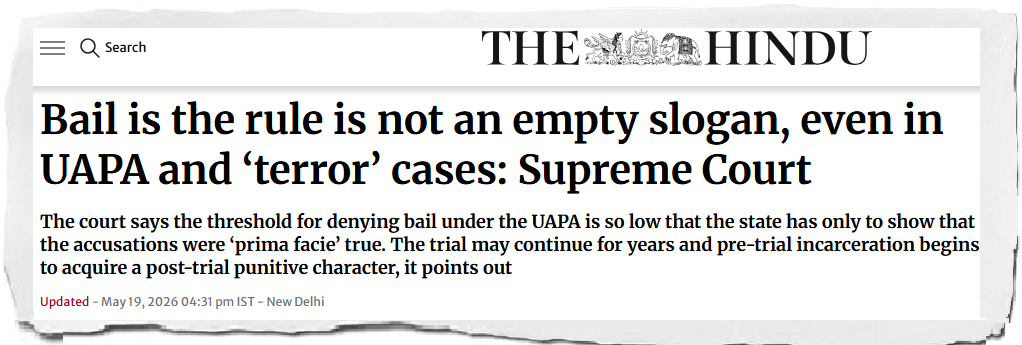
      Bail is the rule is not an empty slogan, even in UAPA and ‘terror’ cases: Supreme Court

      Open article →Download PDF

      Why in News?

      The Supreme Court recently reiterated that the principle of “bail is the rule and jail is the exception” applies even in cases under the Unlawful Activities (Prevention) Act (UAPA). While granting bail to an accused in a narco-terrorism case after prolonged incarceration, the Court raised concerns regarding earlier judicial approaches that restricted bail and emphasised that constitutional protections under Article 21 cannot be subordinated to statutory restrictions.

      UPSC Relevance

      Prelims:

      UAPA, Article 21, Fundamental Rights, K.A. Najeeb case, Bail provisions under criminal law.

      Mains:

      GS II: Judiciary, Fundamental Rights, Criminal justice system, Constitutional safeguards, Rule of law.

      Background/Context

      The Unlawful Activities (Prevention) Act (UAPA), 1967 was enacted to deal with unlawful activities threatening India’s sovereignty and integrity. Over time, amendments expanded its scope to include terrorism-related offences and strengthened state powers in investigation and detention.

      Unlike ordinary criminal laws, UAPA contains stricter provisions relating to arrest and bail. Section 43D(5) creates a high threshold for bail by stating that courts should deny bail if accusations appear “prima facie true”.

      The present observations arose while hearing a bail matter involving prolonged incarceration of an undertrial prisoner under UAPA provisions.

      Understanding UAPA Bail Provisions

      Section 43D(5) of UAPA

      The provision places restrictions on courts in granting bail to accused persons.

      Under this provision:

      • Bail can be denied if the court finds accusations against the accused to be prima facie true.
      • The burden on the prosecution is comparatively lower.
      • The accused may remain incarcerated for long periods because of lengthy trials.

      The intention behind such restrictions is to prevent serious threats involving terrorism and national security.

      Constitutional Principles Involved

      Article 21: Right to Life and Personal Liberty

      Article 21 guarantees that no person shall be deprived of life or personal liberty except according to procedure established by law.

      Judicial interpretation has expanded Article 21 to include:

      • Right to speedy trial
      • Protection against arbitrary detention
      • Right to fair procedure
      • Human dignity

      Presumption of Innocence

      The criminal justice system is based on the principle that a person remains innocent until proven guilty.

      Prolonged pre-trial detention may undermine this principle if imprisonment itself effectively becomes punishment before conviction.

      Supreme Court’s Key Observations

      Bail is a Constitutional Principle

      The Court observed that the principle “bail is the rule and jail is the exception” is not merely a slogan but emerges from constitutional guarantees relating to liberty and fair process.

      Article 21 Prevails Over Statutory Restrictions

      The Court stated that statutory restrictions under Section 43D(5) cannot override constitutional protections under Article 21.

      Long Incarceration Cannot Become Punishment

      The Court noted that delayed trials may convert pre-trial detention into a form of punishment, defeating principles of justice.

      Constitutional Courts Retain Wider Powers

      The judgment clarified that constitutional courts can intervene and grant bail in situations involving prolonged incarceration even when the prima facie threshold under UAPA appears satisfied.

      Important Judicial Developments

      K.A. Najeeb Case

      The Supreme Court had earlier held that prolonged incarceration and delay in trial can justify granting bail despite statutory restrictions under UAPA.

      The judgment recognised that constitutional courts have a duty to protect personal liberty.

      Earlier Judicial Concerns

      The Court also expressed concern that certain later decisions had diluted broader constitutional protections recognised in earlier judgments.

      Challenges

      Balancing National Security and Individual Liberty

      Anti-terror laws are designed to protect national security interests, but excessively restrictive provisions may create tensions with individual rights and due process guarantees.

      Prolonged Undertrial Detention

      Terror-related cases often involve complex investigations and lengthy trials, leading to extended detention periods without conviction.

      Low Threshold for Bail Refusal

      The “prima facie true” standard under UAPA provides substantial discretion to investigating agencies and may limit judicial flexibility.

      Judicial Delays

      Backlogs and slow disposal of cases can convert detention into de facto punishment before guilt is established.

      Potential Misuse Concerns

      Stringent anti-terror provisions occasionally raise concerns regarding their use against activists, dissenters, or individuals later acquitted after lengthy incarceration.

      Way Forward

      Ensure Time-bound Trials

      Special courts handling UAPA cases should follow stricter timelines so that undertrial incarceration does not become disproportionately long.

      Strengthen Judicial Oversight

      Courts should periodically review continued detention in prolonged cases and assess whether further incarceration remains justified.

      Balance Security with Civil Liberties

      While addressing genuine security threats, legal safeguards should ensure that anti-terror laws remain consistent with constitutional values.

      Improve Investigation Capacity

      Better forensic capability, evidence collection and efficient prosecution mechanisms can reduce delays in trial completion.

      Revisit Bail Framework

      Parliament may consider reviewing bail provisions to ensure that statutory restrictions do not undermine the presumption of innocence and constitutional protections.

      Conclusion

      The Supreme Court’s observations reaffirm a foundational constitutional principle: individual liberty remains central even in cases involving serious offences. While anti-terror laws serve critical security objectives, democratic governance requires that national security concerns coexist with constitutional guarantees of fairness, dignity and personal liberty.

      Practice Questions

      Prelims Question 1

      With reference to the Unlawful Activities (Prevention) Act (UAPA), consider the following statements:

      1. UAPA contains specific provisions restricting the grant of bail.
      2. Section 43D(5) requires courts to deny bail if accusations appear prima facie true.
      3. UAPA completely removes the jurisdiction of constitutional courts to grant bail.

      Which of the statements given above is/are correct?

      (a) 1 and 2 only
      (b) 2 and 3 only
      (c) 1 only
      (d) 1, 2 and 3

      Correct Answer: (a)

      Explanation: Statements 1 and 2 are correct. Constitutional courts retain powers to grant bail under appropriate circumstances, particularly where Article 21 protections are implicated.

      Prelims Question 2

      Consider the following rights associated with Article 21 of the Constitution:

      1. Right to speedy trial
      2. Protection against arbitrary detention
      3. Presumption of innocence

      Which of the above have been recognised through judicial interpretation under Article 21?

      (a) 1 and 2 only
      (b) 2 and 3 only
      (c) 1 only
      (d) 1, 2 and 3

      Correct Answer: (d)

      Explanation: Judicial interpretation has significantly expanded Article 21 and connected it with fair trial principles, protection from arbitrary detention and safeguards underpinning presumption of innocence.

      Mains Question

      1. Examine the challenges involved in balancing national security considerations with protection of fundamental rights under anti-terror legislation in India.
      2. “The principle that bail is the rule and jail is the exception is central to constitutional democracy.” Discuss in the context of India’s criminal justice system.

      From green shipping to blue economy: Modi hails India-Norway partnership

      Open article →Download PDF

      Why in News?

      India and Norway upgraded bilateral relations to a Green Strategic Partnership during Prime Minister Narendra Modi’s visit to Oslo in May 2026. The two countries signed agreements in areas such as health, space, digital public infrastructure, and triangular development cooperation, while reaffirming support for a rules-based international order and peaceful resolution of conflicts.

      UPSC Relevance

      Prelims:

      EFTA, Blue Economy, Arctic region, Green Shipping, Digital Public Infrastructure (DPI), Nordic countries.

      Mains:
      GS II
      (India and bilateral relations, international groupings),
      GS III (Blue Economy, renewable energy, energy security, technology partnerships, economic development).

      Background/Context

      India and Norway have maintained cordial relations through cooperation in maritime industries, renewable energy, fisheries, and climate initiatives. Norway is among the world’s leading maritime economies and a major exporter of oil and natural gas. India, with its growing economy and renewable energy ambitions, seeks technology partnerships and investments to support sustainable growth.

      The bilateral relationship received a further push after the Trade and Economic Partnership Agreement (TEPA) signed between India and the European Free Trade Association (EFTA) countries.

      India–Norway Green Strategic Partnership

      Expanding Areas of Cooperation

      The Green Strategic Partnership seeks to deepen collaboration in sectors related to sustainable development and future technologies. Cooperation spans renewable energy, maritime technologies, food security, digital innovation, and climate action.

      The partnership combines India’s large market, demographic advantages and technological capacity with Norway’s expertise in green technologies and capital investments.

      Green Shipping Cooperation

      Green shipping refers to reducing carbon emissions and environmental impacts from maritime transport through cleaner fuels and technologies.

      Cooperation may include:

      • Development of cleaner maritime technologies.
      • Adoption of alternative fuels such as green hydrogen and ammonia.
      • Sustainable port infrastructure and logistics systems.
      • Decarbonisation of shipping routes.

      Blue Economy Cooperation

      The Blue Economy promotes sustainable use of ocean resources for economic growth while ensuring ecological protection.

      Potential areas include fisheries management, marine biotechnology, offshore renewable energy, marine conservation and sustainable coastal development.

      Technology and Innovation Partnerships

      Both countries agreed to strengthen cooperation in:

      • Digital Public Infrastructure (DPI).
      • Space technologies.
      • Health systems and biotechnology.
      • Research and innovation ecosystems.

      Triangular Development Cooperation

      India and Norway signed an agreement to jointly assist countries of the Global South.

      Such cooperation aims to:

      • Support sustainable development projects.
      • Promote capacity building.
      • Share technical expertise.
      • Enhance South-South cooperation.

      Significance for India

      Diversification of Strategic Partnerships

      As geopolitical tensions reshape global politics, India seeks to diversify partnerships beyond traditional powers. Norway offers opportunities in technology, green industries and maritime sectors.

      Energy Security and Green Transition

      Norway’s expertise in energy systems and offshore technologies can support India’s transition toward cleaner energy sources and energy security goals.

      Strengthening India’s Blue Economy Vision

      India has increasingly prioritised maritime development through initiatives such as:

      • Sagarmala Programme.
      • Deep Ocean Mission.
      • Maritime India Vision 2030.

      Partnership with Norway can strengthen these efforts.

      Support for India–Europe Relations

      The agreement demonstrates broader engagement between India and Europe amid changing global supply chains and geopolitical uncertainties.

      Challenges

      Geopolitical Differences

      India and Norway do not always share identical positions on international issues such as the Russia–Ukraine conflict. Such differences may occasionally create diplomatic friction.

      Balancing Strategic Autonomy

      India aims to maintain relations with multiple powers simultaneously. Deepening partnerships should not constrain India’s broader strategic flexibility.

      Technology Access and Dependence

      While technology cooperation brings opportunities, long-term dependence on external technologies could affect domestic capacity building.

      Trade and Regulatory Differences

      Differences in standards, environmental regulations and market access policies may pose implementation challenges.

      Way Forward

      Strengthen Maritime and Green Technology Collaboration

      India and Norway should expand cooperation in green shipping, offshore renewable energy and sustainable maritime infrastructure to achieve long-term climate objectives.

      Promote Joint Research and Innovation

      Greater collaboration between universities, industries and research institutions can support technology development and knowledge transfer.

      Expand Blue Economy Initiatives

      Joint projects in fisheries, marine conservation and coastal development can create sustainable economic opportunities.

      Enhance Global South Cooperation

      The triangular development framework can be used to jointly support developing countries through capacity building and sustainable development programmes.

      Maintain Strategic Dialogue

      Regular consultations on geopolitical developments can help both countries manage differences and strengthen mutual trust.

      Conclusion

      The India–Norway Green Strategic Partnership represents an evolving dimension of India’s foreign policy that combines economic cooperation with sustainability goals. While geopolitical complexities persist, expanding collaboration in green technologies, maritime sectors and global development initiatives can create long-term strategic benefits for both countries.

      Practice Questions

      1. With reference to the Blue Economy, consider the following statements:

      1. It focuses exclusively on offshore energy production.
      2. It promotes sustainable use of ocean resources for economic growth.
      3. Marine biodiversity conservation forms part of the Blue Economy approach.

      Which of the statements given above is/are correct?

      (a) 1 only
      (b) 2 only
      (c) 2 and 3 only
      (d) 1, 2 and 3

      Correct Answer: (c)

      Explanation: Blue Economy seeks sustainable use of ocean resources while balancing economic development and ecological protection. It includes fisheries, marine conservation, shipping, tourism and renewable energy.

      2. Consider the following countries:

      1. Norway
      2. Switzerland
      3. Iceland
      4. Liechtenstein

      Which of the above are members of EFTA?

      (a) 1 and 2 only
      (b) 2, 3 and 4 only
      (c) 1, 2, 3 and 4
      (d) 1, 3 and 4 only

      Correct Answer: (c)

      Explanation: The European Free Trade Association (EFTA) consists of Norway, Switzerland, Iceland and Liechtenstein.

      Mains Questions

      1. “India’s strategic partnerships increasingly combine economic cooperation with geopolitical balancing.” Discuss with reference to India’s relations with European countries.
      2. Examine the significance of India’s Green Strategic Partnership with Norway in strengthening India’s blue economy and sustainable development goals.