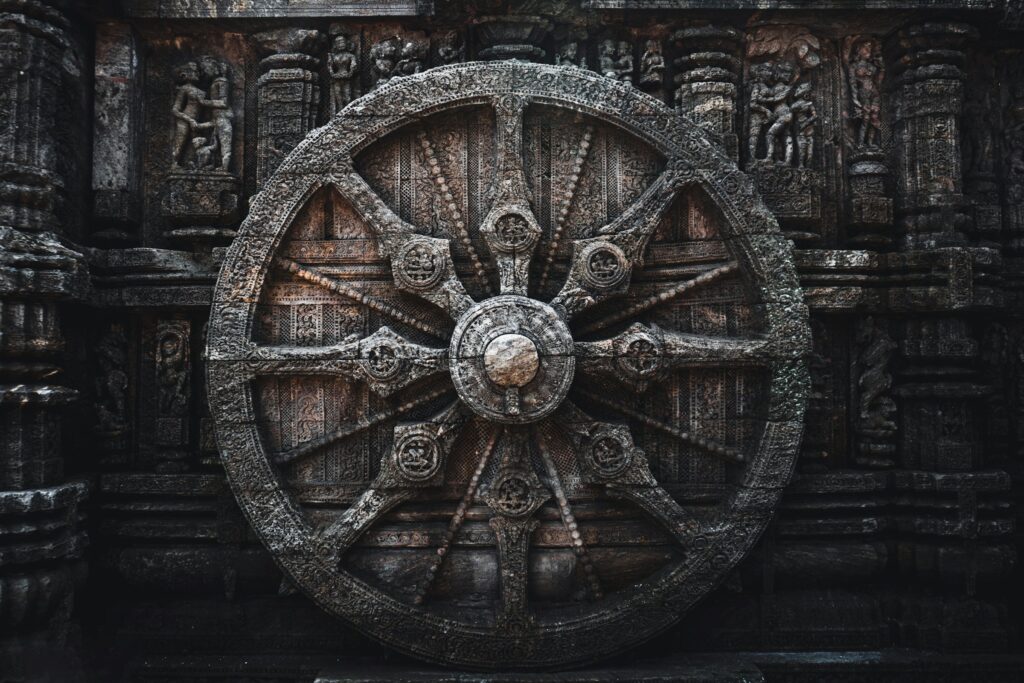
Stand before the great stone wheel at Konark and two people see two different things. One sees the spokes catch the morning light and reads beauty into the curve of every carved hub. The other notices that the wheel is a working sundial, its shadow falling true to the hour, and reads ingenuity into the same stone. The sculptor and the surveyor look at one object and walk away convinced of opposite virtues. Yet the wheel is one thing, cut by one hand, and it is both beautiful and useful at once. This guide unpacks how to argue, in 1,500 examination seconds, that the artist and the engineer are not rivals but two witnesses to a single, larger truth.
Why UPSC could set this in 2026 — and what it would really test
This quote sits squarely in the kind of abstract, aphoristic prompt the UPSC Essay paper has favoured since 2020 — a single sentence, three clauses, no policy hook, no current-affairs anchor. If it appears in UPSC CSE Mains 2026, Essay paper, Section A, expect three hours and two essays of roughly 1,000 to 1,200 words each, 125 marks apiece. The page is empty by design; how you fill it is the test.
The examiner is checking four things at once. One, can you resist the lazy reading that art and use are enemies and instead see that the quote unites them under “truth.” Two, can you organise unfamiliar material — aesthetics, engineering, philosophy, Indian heritage — around one thesis instead of writing three mini-essays. Three, can you move across domains without sounding like a textbook. Four, can you write 1,100 disciplined words that examine the claim rather than 1,500 that decorate it. The aspirant who handles all four scores in the 130s; the one who writes only lovely sentences scores in the 90s.
Four angles that unlock “the artist finds beauty; the engineer finds use; both find truth”
The trap is to spend 1,100 words proving that art and engineering are secretly the same — a claim that is both obvious and thin. The mark-pulling answer names several lenses, keeps them distinct, and weaves them toward the third clause, “both find truth.” Here are the four most defensible readings. You do not need all four; three, handled well, is the sweet spot.
- Two faculties, one mind — beauty and use are not opposite values but complementary instincts in the same human being. The Renaissance polymath, the Vishwakarma craftsman, the modern designer: each holds both. This angle reads the semicolons as joints, not walls.
- Truth as the common destination — the literal core. The artist’s beauty and the engineer’s utility are both ways of getting something right: a true line, a true load, a true note. “Truth” here means correspondence with reality, and both vocations submit to it. This angle gives the essay its spine.
- The danger of divorce — what happens when beauty and use are split. Ornament without function decays into kitsch; function without beauty produces the soulless tenement and the alienated worker. This is the counter-current that keeps the essay from sounding like a greeting card.
- The Indian synthesis — a civilisation that rarely separated the two. The temple that is also an observatory, the stepwell that is also a sculpture gallery, Tagore’s insistence that science and art share one root. This angle supplies the anchor that lifts the essay above Western examples.
A strong essay takes angles 1, 2 and 4 as its backbone — complementary faculties, truth as shared goal, the Indian synthesis — and uses 3 as the counter-current that complicates the picture before the resolution. That gives the essay rhythm: claim, complication, reconciliation.
A time map for the 1,500-second window
One essay deserves about 75 to 90 minutes inside the three-hour paper. Overspending on Essay 1 starves Essay 2, and the single biggest cause of below-100 scores is poor time discipline — luxurious openings, panicked conclusions. Use a rough breakdown like this:
| Minutes | Activity | What it earns you |
|---|---|---|
| 0 — 10 | Decode the quote. Write the thesis in one line. List 4 angles. Pick 3. | Direction. The most important investment of the 90 minutes. |
| 10 — 18 | Brainstorm examples — Konark, Brihadeeswarar, Tagore, a bridge, a sonata, an algorithm. | The substance the body paragraphs will run on. |
| 18 — 22 | Draft a paragraph-level outline — 12 to 13 bullets, in sequence. | Prevents the mid-essay drift that kills most attempts. |
| 22 — 80 | Write the essay — opening, body, conclusion — without re-planning. | The actual marks come from this window. Protect it. |
| 80 — 85 | Read the conclusion. Tighten the last two sentences. Fix slips. | Conclusions are over-weighted by examiners. A clean ending saves marks. |
Notice what is missing: rewriting the introduction halfway, hunting for the perfect quotation, decorative underlining. None of that earns marks. Discipline does.
What to add — and what to avoid at all costs
The essay paper rewards what most aspirants under-do and punishes what most aspirants over-do. Memorise this list before you walk into the hall.
Add liberally
- One precise thesis, stated by the end of paragraph two and never abandoned. “Beauty and use are not competing values but two faces of a single discipline — getting reality right — which is why the artist and the engineer, working differently, arrive at the same truth.”
- Concrete examples across three or four domains — one from art (a cathedral, a raga, a Rembrandt), one from engineering or science (a suspension bridge, the equations of a dome, an elegant proof), one Indian (Konark, Brihadeeswarar, the Vishwakarma tradition, M. Visvesvaraya’s dams), one personal or literary (a craftsman finishing a joint, Tagore’s Santiniketan).
- Two or three short, named quotes — Keats on beauty and truth, Tagore on the unity of knowledge, Buckminster Fuller on solving rightly and beautifully. One per major section is enough.
- One Indian philosophical anchor. The Vishwakarma ideal of the divine craftsman, Tagore’s fusion of art and science at Santiniketan, the temple-as-cosmos in the Shilpa Shastras. An Indian anchor in an essay full of Western examples stands out.
- A counter-argument handled briefly. “It might be argued that beauty and use frequently collide — that the elegant bridge costs lives in delay…” — then resolved in two lines. Acknowledging the tension earns more than ignoring it.
- A clean conclusion that returns to the opening image — the Konark wheel — not a fresh argument, not a new example.
Avoid — even when tempted
- Restating the quote in the first sentence. “The artist finds beauty and the engineer finds use is a profound statement…” — this signals you have nothing to add. Open with an image.
- Drifting into a single domain. A 1,100-word essay only on architecture, or only on aesthetics, reads like a GS answer. Range matters.
- Unsourced statistics. “90% of users prefer beautiful products” — if you cannot name the source, do not write the number. Examiners cross-mark this.
- Naming living figures for effect. The essay is graded by humans across the spectrum. Reach for historical craftsmen and engineers, not present-day celebrities.
- Decorative scholar-dropping. Citing Kant, Heidegger and Vitruvius in one paragraph to look serious. One thinker, used well, beats four named in passing.
- Moralising. “We must all appreciate both beauty and use” reads like a school speech. The essay paper rewards examination, not exhortation.
A paragraph-by-paragraph blueprint
Twelve paragraphs at roughly 95 words each gets you to 1,140. Thirteen at 88 each gets you to 1,140 as well. What follows is a 13-paragraph plan that maps cleanly onto the model essay below. Each line is what that paragraph is doing, not what it is saying.
- Opening image — the Konark wheel as both sculpture and sundial, seen by two observers. No mention of the quote yet.
- The pivot to thesis — name the quote, then state the thesis in one sentence: beauty and use converge on truth.
- Define the terms — what “beauty,” “use” and “truth” each mean, and why all three are forms of correspondence with reality.
- Angle 1 — the artist’s truth — beauty as honesty: Keats, the portrait that reveals character, the raga that names an emotion exactly.
- Angle 2 — the engineer’s truth — use as honesty too: the bridge that must obey physics, the proof that must be valid, elegance as a sign of correctness.
- The convergence — where beauty and use meet: the suspension cable’s curve, the dome, the aircraft wing. Form following truth.
- Indian anchor — the Vishwakarma craftsman, the temple as observatory and scripture in stone, Konark and Brihadeeswarar.
- Indian anchor deepened — Tagore’s Santiniketan and Visvesvaraya’s engineering as craft; the refusal to split head from hand.
- The complication — the divorce of beauty and use: kitsch on one side, the soulless tenement on the other.
- Counter-argument handled — yes, beauty and use sometimes collide; no, that does not make them enemies, only disciplines to be balanced.
- Contemporary relevance — design, the climate-era brief, the danger of optimising use while ignoring beauty and meaning.
- Way forward — education that joins the arts and sciences; the citizen and the policymaker who refuse the false choice.
- Closing image — return to the Konark wheel, close with one resonant line on the shared truth.
How to make an examiner stop and read
An essay examiner reads several hundred scripts in a sitting. The first paragraph decides whether the second is read with attention or on autopilot. Four small habits separate the essays that get read from the ones that get skimmed.
- Open with a scene, not a statement. A stone wheel that tells the time, a draughtsman’s elegant line, a violin-maker holding wood to the light. Concrete images cost no marks and earn attention.
- Use the topic’s key words two or three times across the essay. “Beauty,” “use” and “truth” — once in the thesis, once at the turn, once at the close. It signals discipline and prevents drift.
- Vary sentence length. A short sentence after three long ones lands. Examiners feel rhythm before they parse meaning.
- End paragraphs with the takeaway, not with examples. Place the example mid-paragraph. Let the last sentence be the thought, so the reader carries it forward.
The complete essay — “The artist finds beauty; the engineer finds use; both find truth”
What follows is a model essay built on the blueprint above. Read it twice — once for the argument, once for the moves.
At dawn the great wheel at Konark begins to work. Carved from stone eight centuries ago, one of twenty-four wheels of a chariot pulled by stone horses, its spokes throw a shadow that moves with the sun. A pilgrim sees a god’s chariot and weeps at its beauty. A student of dials sees a clock of astonishing accuracy and marvels at its use. They stand side by side and each believes the wheel was made for the thing he values. Neither is wrong. It is at once a sculpture and an instrument, cut by hands that did not think the two were different.
The proposition that “the artist finds beauty; the engineer finds use; both find truth” begins from that wheel. Its first two clauses describe a division of labour we take for granted; its third clause quietly dissolves it. The thesis worth defending is this: beauty and use are not competing values but two faces of a single discipline — fidelity to reality, which we call truth. The artist and the engineer set out by different roads, but they walk toward the same place.
Some care with words is needed first. “Beauty” is not mere prettiness; it is the rightness we feel when form answers to its purpose and nothing is wasted. “Use” is not crude utility; it is the capacity of a made thing to do faithfully what reality demands of it. And “truth” here is wider than the factual — it is correspondence with how things actually are. The painter who gets a human face exactly right and the engineer who gets a load exactly right are doing the same kind of thing: refusing to lie about reality.
Consider the artist first. Keats ended his ode with the claim that “beauty is truth, truth beauty,” easy to dismiss as a flourish. But the great portrait does not flatter; it tells the truth about a face, including its sorrow. A raga is admired not because it is pleasant but because it names a particular emotion and time of day with uncanny exactness. The artist’s beauty, at its highest, is honesty made visible. When art lies — when it merely decorates or propagandises — we feel the falseness as ugliness.
The engineer’s road looks more austere, yet it arrives at the same honesty. A bridge cannot pretend; if its calculations lie about the forces in its cables, it falls. A proof is judged valid or invalid, never merely charming. And here something striking appears: engineers and scientists routinely call a correct solution “beautiful” and a clumsy one “ugly.” Paul Dirac thought equations should be beautiful as a test of their truth. The aircraft wing and the suspension cable take their shapes not for ornament but because those curves are the truthful answer to the forces acting on them. Use, pursued without compromise, becomes beautiful on its own.
This is where the two roads visibly meet. The dome of a great cathedral and the dome of a granary obey the same geometry; the cathedral simply lets us see it. Form, when it follows truth rather than fashion, is beautiful and useful in one stroke. Buckminster Fuller said he never thought about beauty while solving a problem, but if the solution was not beautiful he knew it was wrong. The engineer’s instinct and the artist’s instinct are checking for the same thing from opposite ends.
India rarely split these two instincts at all. The temple at Konark is an observatory and a scripture in stone. The Brihadeeswarar temple at Thanjavur, a thousand years old, is a feat of engineering — its towering vimana raised without modern machinery — and a masterpiece of sculpture in the same breath. The artisan who built it belonged to the Vishwakarma tradition, in which the craftsman is heir to the divine architect of the cosmos, and in which the engineer and the artist were never separate to begin with.
That older unity found a modern voice in Rabindranath Tagore, who built Santiniketan on the conviction that science and art draw from one root and that an education dividing them maims the mind. M. Visvesvaraya, who designed the automatic sluice gates of the Krishnaraja Sagar dam, treated engineering as a craft demanding both precision and grace. The lesson is the same: the head and the hand, the calculation and the curve, were never meant to be strangers.
And yet the divorce is real, and worth facing honestly. When beauty is pursued without use, it decays into kitsch — ornament glued onto things that do nothing, prettiness that conceals rather than reveals. When use is pursued without beauty, it produces the soulless tower block, the dead industrial sprawl, the alienated worker who never sees grace in what his hands make. Both halves, severed from the other, lose the truth that justified them. The split is not merely an aesthetic loss; it is a loss of integrity.
It might be objected that beauty and use frequently collide — that the most elegant design is often the most expensive, that the beautiful bridge delays the village that needed any bridge at all. The objection is partly right and entirely survivable. Beauty and use are disciplines to be balanced, not enemies to be chosen between. When we sacrifice either one permanently we drift away from truth — the cheap-but-ugly and the lovely-but-useless are both, in the end, kinds of lie.
The question is not academic in an age of design and climate. A smartphone, a clean-energy grid, a flood-resilient city — each is an engineering brief that fails its users if it ignores beauty and meaning, because human beings do not live by function alone. The modern temptation is to optimise relentlessly for use and treat beauty as a luxury added later. The Konark wheel rebukes that temptation: it was never going to be only a clock.
The way forward is less a policy than a habit of mind, and it begins in education. A schooling that walls the arts off from the sciences produces engineers who cannot see and artists who cannot count. Joining them again — letting the student of bridges read poetry and the student of poetry meet mathematics — is how a civilisation keeps beauty and use in conversation. The citizen, the architect and the policymaker each face the choice the Konark sculptor faced: to treat the beautiful and the useful as one task or as two.
Return to the wheel at dawn. The pilgrim and the student of dials are still standing before it, still convinced of different things. But the wheel does not argue. It simply tells the time and stops the heart, in the same turn of stone. The artist finds beauty there and the engineer finds use, and if they would only listen to each other they would discover that they have found the same thing by different names. Truth, in the end, does not care whether we reach it through the curve or the calculation. It only asks that we reach it honestly.
Word count: approximately 1,200.
How to use this model essay
Do not memorise it. Memorised essays read like memorised essays, and examiners spot them in two paragraphs. Use the model the way a chess student uses a master game: study the opening image, the pivot to thesis, the way each paragraph hands the reader to the next, the placement of the Indian anchor, the way the counter-argument is raised and then closed. Then take a related abstract topic — try “Beauty lies in the eyes of the beholder” or “Technology as the silent factor in international relations” — and write your own essay using the same blueprint. Repeat the exercise eight to ten times and the structure becomes muscle memory.
Tell Google you want more of this.
Add Anantam IAS as a preferred sourceOne tap, and this site shows up more often in your own Top Stories, AI Overviews and AI Mode. Remove it any time.