Disclosure: this guide contains Amazon affiliate links. As an Amazon Associate, Anantam IAS earns from qualifying purchases — at no extra cost to you.
“India’s strength lies in its plurality, not its uniformity” is exactly the kind of prompt the UPSC Essay paper has been drifting towards as the country crosses seventy-five years of the Republic — an abstract claim about the nation that demands argument, not celebration. There is no policy hook to lean on and no GS overlap to recycle; the page is yours to fill with history, the Constitution, culture and society. This guide breaks the topic down the way it should be tackled in the hall — first what the examiner is really testing, then the angles, the time map, a paragraph-by-paragraph plan, and finally a complete model essay you can study, dissect and adapt.
Why UPSC could set this in 2026 — and what it would really test
This is a predicted 2026 Essay topic, not a past question — the sort of nation-themed, current-events prompt that fits an India@75-plus moment when debates about diversity, federalism, language and a “common” national identity are live in public life. Expect it in Section A or B of the Essay paper: three hours, two essays, roughly 1,000 to 1,200 words each, 125 marks per essay. The phrasing is a thesis statement with a built-in contrast — plurality set against uniformity — which is the tell. UPSC is not asking you to praise diversity; it is asking whether you can argue a contested claim, concede what uniformity legitimately offers, and still defend plurality as the deeper source of national strength. The aspirant who only garlands diversity scores in the 90s. The one who handles the contrast with evidence and balance scores in the 130s.
Four angles that unlock “India’s strength lies in its plurality”
The trap with a thesis-style topic is to agree with it for 1,100 words and call that an essay. The mark-pulling answer instead identifies several lenses, names them clearly, and weaves them — including the one that pushes back. Here are the four most defensible readings. You do not need all four; three, treated well, is the sweet spot. But you should know all four so your choice is conscious.
- Plurality as history’s verdict — India was a civilisation of many languages, faiths and kingdoms long before it was a state. Ashoka’s edicts, the syncretism of Akbar’s court, the bhakti and Sufi traditions show that absorption, not erasure, has been the subcontinent’s default. This angle anchors the essay in the long view.
- Plurality as constitutional design — the framers chose a federal, multi-religious, multi-lingual republic on purpose. The Eighth Schedule, linguistic states, Articles 29 and 30, asymmetric federalism — these are deliberate machines for holding difference together. This angle gives you concrete institutions so the essay does not float.
- Plurality as cultural and economic resource — many cuisines, scripts, art forms and regional industries make a richer, more resilient whole. Diversity is not merely tolerated; it generates soft power, innovation and a larger talent pool. The angle reframes difference as an asset, not a liability.
- The counter-current — when does plurality become fragmentation? Without a unifying thread, difference can curdle into separatism, communal conflict or paralysis. This is the angle that earns marks, because it forces you to name what binds the plural — a shared Constitution, a common citizenship, an idea of India — and argue that unity and uniformity are not the same thing.
A strong essay leans on angles 1, 2 and 3 as its backbone (history, Constitution, culture), uses 4 as the counter-current that it then resolves. That gives the essay rhythm — claim, complication, resolution — instead of a single straight line of praise.
A time map for the 1,500-second window
One essay deserves about 75 to 90 minutes inside the three-hour paper. Spending more on Essay 1 starves Essay 2. The single biggest source of below-100 essay scores is poor time discipline — beautiful introductions, panicked conclusions. Use a rough breakdown like this:
| Minutes | Activity | What it earns you |
|---|---|---|
| 0 — 10 | Decode the topic. Write the thesis in one line. List 4 angles. Pick 3 plus the counter. | Direction. The single most important investment of the 90 minutes. |
| 10 — 18 | Brainstorm examples — history, Constitution, culture, society — and one Indian anchor. | The substance the body paragraphs will run on. |
| 18 — 22 | Draft a paragraph-level outline — 12 to 15 bullets, in sequence. | Prevents the mid-essay drift that kills 60% of attempts. |
| 22 — 80 | Write the essay — opening, body, conclusion — without re-planning. | The actual marks come from this window. Protect it. |
| 80 — 85 | Read the conclusion. Tighten the last two sentences. Fix factual errors. | Conclusions are over-weighted by examiners. A clean ending saves 5 marks. |
Notice what is not on the list: rewriting the introduction halfway, hunting for the perfect quote, fancy diagrams, decorative underlining. None of that earns marks. Discipline does.
What to add — and what to avoid at all costs
The essay paper rewards what most aspirants under-do and punishes what most aspirants over-do. Memorise this list before you walk into the hall.
Add liberally
- One precise thesis, stated by the end of paragraph two and not abandoned. “India’s strength is not the sameness of its people but the architecture that lets a thousand differences live as one republic; plurality is the source, unity the binding, and uniformity neither necessary nor desirable.”
- Concrete examples across three or four domains — one historical (Ashoka’s edicts, Akbar’s sulh-i-kul, the bhakti–Sufi confluence), one constitutional (the Eighth Schedule, linguistic reorganisation, Articles 29–30), one cultural (cuisine, cinema, classical and folk forms) and one social or contemporary (migration, federal cooperation, the idea of India).
- Two or three short, named quotes — Tagore on the mind without fear and narrow walls, Nehru’s “unity in diversity,” Ambedkar on fraternity. One per major section is enough.
- One Indian philosophical anchor. Vasudhaiva kutumbakam — the world is one family — or the Rig Vedic ekam sat vipra bahudha vadanti, “truth is one, the wise call it by many names.” Examiners read 300 essays a day; a substantive Indian anchor stands out.
- The counter-argument handled head-on. “Does plurality risk fragmentation without a unifying thread?” — raise it, then resolve it by distinguishing unity from uniformity.
- A clean conclusion that returns to the opening image — not a fresh argument, not a new example.
Avoid — even when tempted
- Restating the topic in the first sentence. “India’s strength lies in its plurality is a profound statement…” signals you have nothing to add. Open with a scene.
- Turning the essay into a tourism brochure. Listing festivals, languages and dishes for 1,100 words is description, not argument. Range must serve a thesis.
- Unsourced statistics. “India has 19,500 languages” — if you cannot name the source, do not write the number. Examiners cross-mark this.
- Hot-button political examples. The Essay paper is graded by humans across the ideological spectrum. Naming current parties, leaders or recent laws by name introduces avoidable risk. Use the institution, not the personality.
- Ignoring the counter. An essay that never asks whether plurality can fragment a nation reads like a slogan. The concession is what makes the defence credible.
- Moralising. “We must all respect each other’s culture” reads like a school speech. The essay paper rewards examination, not exhortation.
A paragraph-by-paragraph blueprint
Twelve paragraphs at roughly 90 words each gets you to 1,080. Fifteen at 75 each gets you to 1,125. Either works. What follows is a 13-paragraph plan that maps cleanly onto the model essay below. Each line is what that paragraph is doing, not what it is saying.
- Opening image — a railway platform or a temple courtyard where a dozen languages, dresses and faiths share one space. No mention of the topic yet.
- The pivot to thesis — name the topic, then state the thesis: plurality is the source of strength, unity the binding, uniformity neither necessary nor desirable.
- Define the terms — distinguish plurality (many co-existing) from uniformity (all made same) from unity (held together as one).
- Angle 1 — history’s verdict — Ashoka’s edicts of toleration, Akbar’s sulh-i-kul, the bhakti–Sufi confluence; absorption as the subcontinent’s default.
- Indian anchor — ekam sat vipra bahudha vadanti and vasudhaiva kutumbakam; plurality as an old civilisational instinct.
- Angle 2 — constitutional design — the Eighth Schedule, linguistic states, Articles 29 and 30, asymmetric federalism; deliberate machines for holding difference.
- Angle 3 — culture and economy — cuisine, cinema, classical and folk forms, regional industries; difference as resource and resilience.
- The case for uniformity, fairly stated — a common language, common law, single market do reduce friction and cost.
- The counter-argument — fragmentation — does plurality without a thread risk separatism and conflict? Name the danger honestly.
- The resolution — unity is not uniformity; the binding thread is a shared Constitution and common citizenship, not sameness.
- Way forward — institutional — federalism that listens, language policy that includes, a citizenship that does not rank.
- Way forward — civic — the everyday habits of living with difference; constitutional morality over majoritarian instinct.
- Closing image — return to the platform or courtyard, close with one resonant line.
How to make an examiner stop and read
An essay examiner reads several hundred scripts in a sitting. The first paragraph decides whether they read the second with attention or with autopilot. Four small habits separate the essays that get attention from the ones that get skimmed.
- Open with a scene, not a statement. A railway platform at dawn, a temple courtyard, a wedding where two regions meet, a polling queue. Concrete images cost no marks and earn attention.
- Use the topic phrase itself two or three times across the essay. Once in the thesis, once at the turn, once at the close. It signals discipline and prevents drift.
- Vary sentence length. A short sentence after three long ones lands. Examiners feel rhythm before they parse meaning.
- End paragraphs with the takeaway, not with examples. Place the example mid-paragraph. Let the last sentence be the thought, so the reader carries it into the next paragraph.
The complete essay — “India’s strength lies in its plurality, not its uniformity”
What follows is a model essay built on the blueprint above. Read it twice — once for the argument, once for the moves. The moves are what you carry into your own essay.
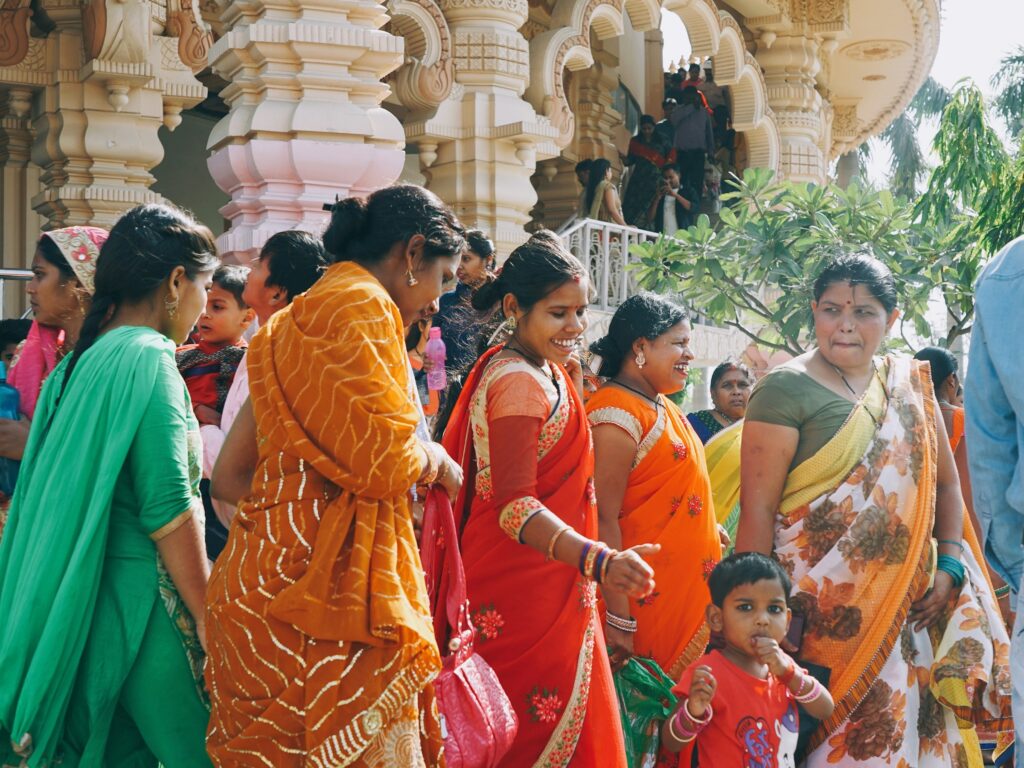
On a single platform of any large Indian junction at dawn, the announcements come in three languages and the travellers carry a dozen more. A Bengali family sits beside a Tamil pilgrim and a Punjabi trader; the tea-seller calls out in Hindi, the timetable is printed in the regional script and in English, and a child asks her grandmother why the man across the aisle prays differently. Nobody finds the scene remarkable. That ordinariness is the achievement. Long before it was a state, the subcontinent was a crowded room of languages, gods and grammars, and it had learned to keep that room from emptying into a single voice.
“India’s strength lies in its plurality, not its uniformity” begins from that room, but it does not end there. The claim is at once obvious and disputed. It is obvious because the country’s vitality — its cinema, its cuisines, its scientists drawn from every region — visibly draws on difference. It is disputed because difference, left without a binding thread, has elsewhere torn nations apart. The honest thesis holds both truths: plurality is the deeper source of India’s strength, unity the thread that keeps it from fraying, and uniformity — the project of making everyone the same — neither necessary for unity nor, on this soil, desirable.
Some careful definitions help. Plurality is the fact of many things co-existing — many faiths, many tongues, many ways of being Indian. Uniformity is the project of pressing those many into one mould. Unity is something else: the condition of being held together as one, which a plural society can achieve without becoming uniform. Confusing unity with uniformity is the oldest error in this debate. A choir is one thing; a single sustained note is another.
History supplies the first evidence. Ashoka’s rock and pillar edicts, in the third century before the common era, did not command a single creed; they urged respect for all sects and honour to ascetics of every persuasion. The Mughal court at its most secure practised sulh-i-kul, peace with all, drawing Rajput, Persian and Brahmin into one administration. The bhakti poets and the Sufi saints sang across the lines of caste and faith until those lines blurred in the songs themselves. The subcontinent’s instinct, when confident, was absorption rather than erasure; its periods of forced uniformity were its periods of revolt.
India anchored that instinct in its oldest texts. The Rig Veda’s ekam sat vipra bahudha vadanti — truth is one, the wise call it by many names — is not a plea for tolerance but a claim about reality: the many names are not errors to be corrected but legitimate faces of one truth. Vasudhaiva kutumbakam, the world is one family, extends the logic to kinship. A civilisation that begins from these premises does not experience plurality as a problem. It experiences uniformity as an impoverishment.
The framers of the Republic translated that inheritance into architecture. They could have imposed one language and one civil identity on a wounded, newly partitioned nation; many new states did exactly that. Instead they built deliberate machines for holding difference. The Eighth Schedule recognised a family of languages rather than one official tongue. The reorganisation of states on linguistic lines, far from breaking the country, defused the very tensions that uniformity would have inflamed. Articles 29 and 30 let minorities conserve their culture and run their institutions; asymmetric federalism let distinct regions keep distinct arrangements. The Constitution treats plurality not as a threat to be contained but as a fact to be governed well.
The dividend is visible far beyond the statute book. A national cinema that speaks a dozen languages reaches audiences a monolingual industry never could. A cuisine that changes every two hundred kilometres has become one of the country’s most recognisable exports. Classical traditions from Bharatanatyam to Hindustani music, folk forms from every district, engineers and entrepreneurs drawn from regions with sharply different schooling — the talent pool is larger precisely because it is not cut from one cloth. Resilience, too, is plural: a shock that flattens one region rarely flattens all at once.
It would be dishonest to pretend uniformity offers nothing. A single link language lowers the cost of doing business across a continent; a common commercial law and a single market let goods and people move without friction; shared standards in administration make a vast bureaucracy navigable. These are real goods, and the case for plurality is stronger for admitting them. The question is never whether some common framework is useful. It is whether sameness must be purchased at the price of difference.
Here the hardest objection must be faced squarely. Does plurality, without a unifying thread, simply invite fragmentation — the separatist movement, the communal riot, the politics that turns every difference into a grievance? The danger is not imaginary; the subcontinent’s own twentieth century is written partly in that ink. A society that celebrates difference while neglecting what binds it builds a house of many rooms and no walls. Plurality without a common loyalty is not strength; it is the prelude to drift.
The resolution lies in naming the thread correctly. What holds India together is not a shared language, religion or cuisine — it never has been — but a shared Constitution and a common citizenship that ranks no Indian above another. Tagore prayed for a country where the mind is without fear and the world has not been broken into fragments by narrow domestic walls; Ambedkar warned that political democracy could not survive without fraternity. That fraternity, not uniformity, is the binding thread. Unity is a belonging that survives disagreement; uniformity is the abolition of the disagreement itself. India has chosen, and must keep choosing, the first.
For institutions, this points to a familiar discipline: a federalism that listens to the states rather than merely instructing them, a language policy that adds tongues instead of replacing them, a citizenship that confers identity without demanding sameness. The centre’s strength lies in restraint as much as reach.
For citizens, it points to smaller habits — the willingness to be governed alongside people who pray, eat and vote differently; the instinct to read a neighbour’s difference as ordinary rather than threatening; the preference for constitutional morality over the louder pull of majority sentiment. These are not grand gestures. They are the daily maintenance of the crowded room, renewed in every generation, because the temptation to flatten difference into sameness never quite disappears.
Return for a moment to the platform at dawn. The train arrives, and the Bengali family, the Tamil pilgrim and the Punjabi trader board the same carriage to the same destination, still speaking their own tongues, still carrying their own gods. That carriage is the country in miniature: one journey, many travellers, no demand that any become the other. India’s strength has never lain in making its people the same. It has lain in the rarer art of letting them remain different and travel together — plurality the source, the Constitution the thread, uniformity left, wisely, on the platform.
Word count: approximately 1,200.
How to use this model essay
Do not memorise it. Memorised essays read like memorised essays, and examiners spot them in two paragraphs. Use the model the way a chess student uses a master game: study the opening scene, the pivot to thesis, the way the counter-argument is raised and then resolved by distinguishing unity from uniformity, and the placement of the Indian anchor. Then take a related topic — “Unity in diversity is India’s greatest asset” or “Federalism is the genius of the Indian Constitution” — and write your own essay using the same blueprint. Repeat the exercise eight to ten times and the structure becomes muscle memory. On exam day, the only thing you should have to think about is the topic itself.
Books quoted in this essay
The Idea of India, Sunil Khilnani.
Tell Google you want more of this.
Add Anantam IAS as a preferred sourceOne tap, and this site shows up more often in your own Top Stories, AI Overviews and AI Mode. Remove it any time.