The Rainbow Revolution is India's strategy to move beyond the cereal-focused Green Revolution by simultaneously developing every colour-coded farm sector — horticulture (Golden), dairy (White), fisheries (Blue), poultry and meat (Pink), eggs (Silver), oilseeds (Yellow), and beekeeping (Sweet) — so that agriculture diversifies and farmers' incomes rise. The idea was crystallised by the Ashok Dalwai Committee on Doubling Farmers' Income (2018), and it now frames how horticulture, allied sectors, and secondary agriculture are read together for UPSC GS-III.
India's Green Revolution delivered food self-sufficiency but locked vast tracts of Punjab, Haryana, and Western UP into water-intensive rice-wheat monoculture. The pathway forward — articulated by the Ashok Dalwai Committee on Doubling Farmers' Income (2018) and subsequent agricultural policy — is a Rainbow Revolution that combines horticulture, animal husbandry, fisheries, poultry, beekeeping, and secondary agriculture with conventional cereal farming. UPSC tests this under GS-III — Major crops, allied sectors, doubling farmers' income, food processing.
Rainbow Revolution: The Framework
The Rainbow Revolution is a policy idea championed by the Dalwai Committee to replace the narrow Green Revolution with a multi-colour, multi-sector diversification strategy:
| Revolution | Sector |
|---|---|
| Green | Foodgrains (rice, wheat) |
| Yellow | Oilseeds (mustard, soybean, groundnut) |
| White | Milk and dairy |
| Golden | Horticulture (fruits, vegetables, flowers, spices) |
| Blue | Fisheries and aquaculture |
| Pink | Poultry, shrimp, and meat |
| Silver | Eggs |
| Sweet | Beekeeping and honey |
| Grey | Fertilisers and nutrient management |
| Red | Tomato, meat |
| Black | Petroleum and mineral oils (indirect) |
Together, these sectors double farmer income, improve nutrition, and cut groundwater stress. The Dalwai Committee found that a 1-hectare shift from staples to high-value crops raises income by about Rs 1 lakh.
Horticulture Plus: Going Beyond MIDH
India's horticulture output rose to about 369 million tonnes in 2024-25 (Third Advance Estimates, up roughly 4% on the previous year's 355 million tonnes), contributing around a third of agricultural GVA from just about 14% of cropped area. Rice, wheat, and foodgrains still dominate area but horticulture dominates value.
Horticulture Structure
- Fruits — mango, banana, papaya, citrus, grape, apple.
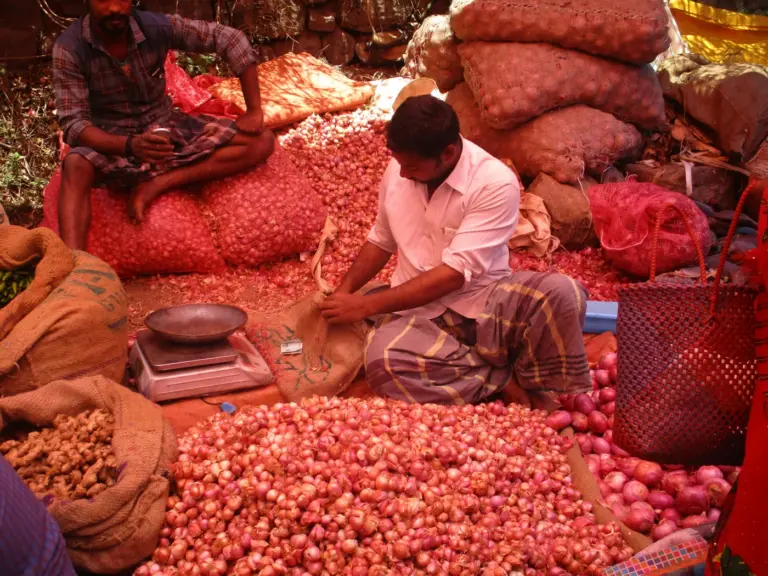
- Vegetables — onion, potato, tomato, brinjal, cabbage.
- Spices — chilli, turmeric, cardamom, pepper, ginger (India is largest producer and exporter).
- Floriculture — cut flowers, ornamentals.
- Plantation crops — coconut, cashew, cocoa, arecanut.
- Aromatics and medicinal herbs — mint, lemongrass, ashwagandha.
Key Schemes
- Mission for Integrated Development of Horticulture (MIDH) — flagship; subsumes NHM, HMNEH, NHB, CDB, NBM.
- Operation Greens — TOP (tomato, onion, potato) expanded to TOTAL (22 perishables).
- Cluster Development Programme (CDP) — export-oriented horticulture clusters (Nashik grapes, Lucknow mango, Shopian apple).
- Agri-Export Policy — GI-tagged horticulture exports like Basmati, Alphonso, Bhagalpur Zardalu.
Challenges in Horticulture
- High capital and gestation cost (apples take 3-5 years).
- Old and senile orchards drag productivity.
- Only ~15% of nurseries accredited by NHB.
- Rainfed cultivation in many areas.
- Post-harvest losses of 10-16% (NABCONS) worth over Rs 1.5 lakh crore annually.
Secondary Agriculture: Adding Value at Farmgate
Secondary agriculture refers to value addition and processing activities closely linked to primary farming — often on or near the farm. Components include:
- Post-harvest management — grading, sorting, packaging, cold-chain, cleaning.
- Food processing — primary (milling, cleaning) and secondary (jams, pickles, dairy, juices).
- Agri-based cottage industries — honey, silk, coir, cashew, mushroom, essential oils.
- Animal husbandry allied industries — feed, fodder, vaccines, leather, wool.
- Waste-to-wealth — crop residue, cattle dung to CBG, compost, briquettes.
- Agri-logistics — aggregation, warehousing, cold chain.
Why Secondary Agriculture Matters
- Higher returns — processed produce fetches 2-4x unprocessed prices.
- Employment — labour-intensive, supports rural non-farm jobs.
- Cuts post-harvest losses — preserves perishable produce.
- Doubles farmers' income — Dalwai Committee listed secondary agriculture as one of seven income growth sources.
- Export competitiveness — branded GI products.
- Rural industrialisation — reduces urban-bound migration.
Policy Push
- Pradhan Mantri Kisan Sampada Yojana (PMKSY) — mega food parks, cold chains, agro-processing clusters.
- PMFME (Formalisation of Micro Food Processing Enterprises) — Rs 10,000 crore scheme launched 2020 supporting One District One Product (ODOP)-linked micro-food units.
- Agriculture Infrastructure Fund (AIF) — Rs 1 lakh crore corpus for post-harvest infrastructure at farm gate.
- Operation Greens (TOTAL) — 50% subsidy for transport and storage of 22 perishables.
- FPO promotion — 10,000 new FPOs by 2027-28, enabling scale.
Sweet Revolution: Beekeeping and Honey
The Sweet Revolution targets beekeeping, honey production, and allied hive products — wax, royal jelly, pollen, propolis. India is the world's 8th largest honey producer with annual output around 1.33 lakh tonnes.
National Beekeeping and Honey Mission (NBHM)
Launched in 2020 under the Ministry of Agriculture with outlay of about Rs 500 crore for three years, NBHM supports:
- Setting up Integrated Beekeeping Development Centres (IBDC) in each state.
- World-class honey testing labs for quality and export.
- Modular packaging, processing, and value-addition units.
- Capacity building and scientific beekeeping training.
Benefits
- Pollinator services increase agricultural yield (20-25% for many horticulture crops).
- Honey exports — India exported ~USD 115 million worth of honey in 2022-23; rising demand.
- Livelihood for landless and marginal farmers — requires minimal land.
- Biodiversity conservation — bees support wild flora.
Pink Revolution: Meat and Poultry
- India is the largest exporter of buffalo meat (carabeef) — over USD 3 billion exports.
- Poultry is the fastest-growing livestock sub-sector — 8-10% CAGR.
- Broiler production crossed 5 million tonnes; layer production provides over 130 billion eggs annually.
Blue Revolution: Fisheries and Aquaculture
- Pradhan Mantri Matsya Sampada Yojana (PMMSY) — Rs 20,050 crore outlay launched 2020 for five years.
- India is the 3rd largest fish producer and 2nd largest inland fish producer.
- Inland aquaculture — Andhra Pradesh dominates shrimp exports; Blue Revolution 2.0 focuses on marine capture, aquaculture, and processing.
Challenges for Rainbow Revolution
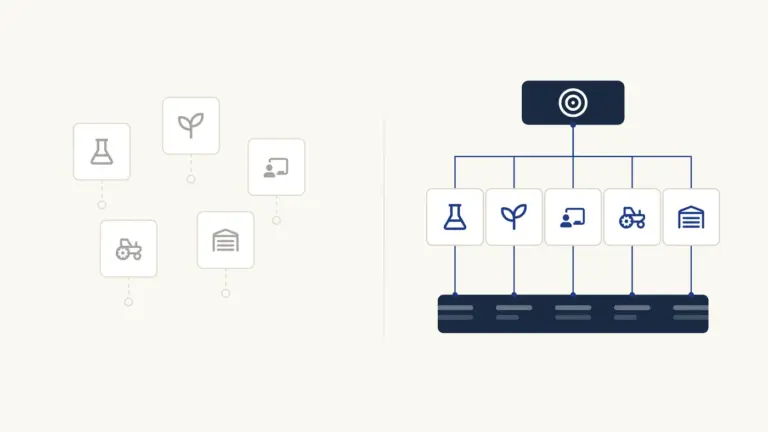
- Scheme fragmentation — many ministries and state departments.
- Cold-chain gap — India has about 38 million tonnes of cold storage capacity; demand estimated at 60 million tonnes.
- FPO capacity — many newly formed FPOs are weak financially and managerially.
- Quality and traceability — for exports, gaps in residue testing, GI certification.
- Export uncertainties — non-tariff barriers in major markets.
- Climate change — erratic monsoon, heat stress, and pests affect allied sectors too.
Latest developments (2024-26)
- Budget 2024-25 — comprehensive review of agricultural research for climate-resilient varieties; enhanced support for Mission for Aatmanirbharta in Oilseeds.
- Budget 2025-26 — Mission for Aatmanirbharta in Pulses (6-year); Comprehensive Programme for Vegetables & Fruits; enhanced Rural Prosperity and Resilience programme with focus on allied agriculture, FPOs, and women-led collectives.
- Cluster Development Programme expanded — 55 horticulture clusters targeted, up from initial 12.
- Namo Drone Didi — 15,000 drones to women SHGs for spraying and precision — relevant for horticulture too.
- PMMSY and Blue Revolution 2.0 — sustained through 2024-25; shrimp, seaweed, and ornamental fisheries push.
- Operation Greens — covered 22 perishables with 50% transport/storage subsidy continued through 2024-25.
- AIF (Agriculture Infrastructure Fund) — crossed Rs 40,000 crore sanctioned as of 2024; cold chain and warehouse projects on the ground.
- PM Formalisation of Micro Food Processing Enterprises (PMFME) — scaled significantly; over 1 lakh beneficiaries assisted.
- White Revolution 2.0 — milk production target of 330 MT by 2033-34.
- Updated context: Expect further sector-specific missions and FPO-led aggregation in 2025-26 as the government targets doubling farmers' income and diversifying away from water-intensive cereals.
UPSC Relevance
GS-III Mapping
- Major crops, cropping patterns, diversification, allied sectors.
- Food processing and related industries.
- Doubling farmers' income and inclusive growth.
- Agricultural marketing, storage, supply chain.
Prelims Pointers
- Dalwai Committee (2018) — Doubling Farmers' Income framework.
- MIDH — umbrella scheme combining NHM, HMNEH, CDB, NHB, NBM.
- Sweet Revolution — National Beekeeping and Honey Mission (2020).
- PMKSY (food processing) — mega food parks, cold chains, agro-processing clusters.
- AIF = Agriculture Infrastructure Fund, Rs 1 lakh crore.
- PMMSY = Pradhan Mantri Matsya Sampada Yojana, Rs 20,050 crore.
- PMFME = scheme for micro food processing enterprises, ODOP-linked.
Mains Angles
- "Rainbow Revolution is essential to address the second-generation problems of the Green Revolution. Discuss." (GS-III)
- "Evaluate the role of horticulture, animal husbandry, and secondary agriculture in doubling farmers' income."
- "Discuss the National Beekeeping and Honey Mission and its contribution to the Sweet Revolution."
- "Analyse the challenges in scaling up secondary agriculture and suggest a policy roadmap."
India's farm future runs through diversification, value addition, and allied sectors — not more rice and wheat. The Rainbow Revolution is not a single programme but a portfolio strategy stitching together horticulture, animal husbandry, fisheries, beekeeping, and secondary agriculture. For UPSC, anchor your answers in the Dalwai Committee framework, add the 2024 mission architecture, and you'll handle almost any diversification question.
Tell Google you want more of this.
Add Anantam IAS as a preferred sourceOne tap, and this site shows up more often in your own Top Stories, AI Overviews and AI Mode. Remove it any time.