When people picture air defence, they picture something enormous: a radar the size of a house, a launcher trailer, the S-400 system that grabs headlines. So a weapon a single soldier carries on his shoulder feels almost too modest to matter. That instinct is exactly backwards, and the war in Ukraine and the drone incursions along India’s own borders have made the point in blood. The threat that actually reaches a forward post, a convoy, or an airfield is rarely a high-flying jet a distant radar can catch. It is a helicopter hugging a ridge, a cruise missile skimming the treetops, or a cheap drone. Catching those is the job of the Igla-S, and understanding why a shoulder-fired missile has become one of the most sought-after weapons of the decade is the whole point of this topic.
Start with what the thing is, then see where it sits, and the reason India is racing to build it at home becomes obvious.
What is the Igla-S missile?
The Igla-S is a Russian man-portable air-defence system, a shoulder-fired missile that a single soldier or a two-man crew uses to shoot down low-flying aircraft. The short label for this class of weapon is MANPADS, for man-portable air-defence system, and in Indian usage it also falls under VSHORAD, very short range air defence. Its formal Russian designation is the 9K338 Igla-S, and its NATO reporting name is SA-24 Grinch. It was developed by the Kolomna-based design bureau KBM and entered Russian service in 2004 as the most advanced member of the long-running Igla family.
The word to hold onto is portable. The whole system, missile sealed in its launch tube plus the reusable gripstock the operator aims and fires with, weighs little more than a heavy backpack. There is no radar trailer, no crew of six, no cabin. A trained soldier shoulders it, tracks the target by eye, waits for a tone that says the seeker has locked on, and fires. That portability is not a limitation, it is the entire design philosophy: put a lethal anti-aircraft weapon exactly where the low-altitude threat appears, in the hands of the infantry, at the front edge of a formation, without waiting for a distant battery to notice.
One clarification saves confusion later. “Missile” here means the complete weapon system, launcher and round together, not just the flying part. The Igla-S is fire-and-forget: once the missile leaves the tube, it homes on its own, and the operator does not have to keep guiding it. That frees the soldier to take cover or reload rather than staying exposed to steer the shot. It is the difference between throwing a dart and flying a kite, and it is why one person can operate it.
What VSHORAD means, and where Igla-S fits in India’s layered air defence
VSHORAD stands for very short range air defence, and it is the innermost, last-chance layer of a system built in concentric rings. The cleanest way to understand the Igla-S is to see that no single weapon can defend a country’s airspace, so India, like every serious military, stacks several with overlapping reach. A threat that slips past the outer ring should meet the next one, and the one after that, until something kills it or it runs out of sky.
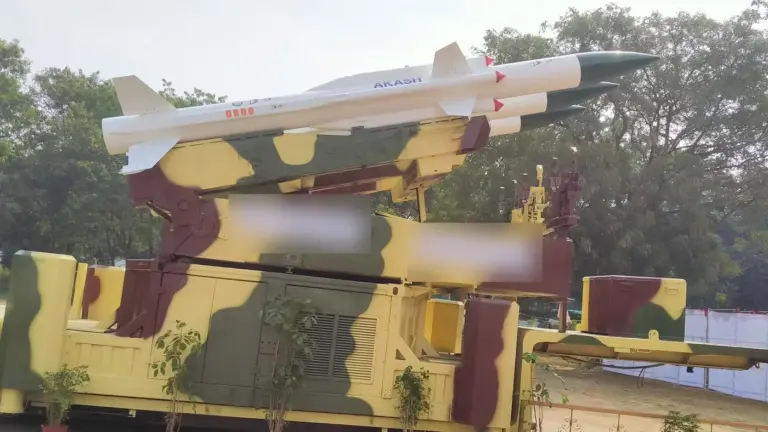
Picture the rings from the outside in. The outermost is long-range air defence, the job of the S-400 Triumf, which can engage aircraft and missiles out to around 400 kilometres and is India’s strategic shield; the deep dive on the S-400 air defence system explains that top layer. Inside it sits medium-range cover, provided by systems like the MRSAM and the indigenous Akash, whose newer variants are covered in the note on Akash-NG and India’s layered air defence. And at the very centre, guarding the individual soldier, the vehicle, the bridge, the forward airstrip, is VSHORAD, where the Igla-S lives. It is the terminal layer, the one that catches whatever has leaked through everything else, typically within about 6 kilometres and at low altitude.
Read the rings as a division of labour, not a ranking. The S-400 is useless against a drone that pops up two kilometres away over a ridgeline, because by the time such a target is even visible it is already inside the big system’s minimum engagement envelope and moving. The Igla-S is useless against a bomber at 30,000 feet a hundred kilometres out. Each layer exists precisely because the others cannot do its job. India’s push toward a fully integrated, multi-layered shield, the ambition behind Mission Sudarshan Chakra, is really an effort to make these rings talk to one another so a target handed off from an outer layer is caught cleanly by the inner one. The Igla-S is the sharp inner edge of that design.
How the Igla-S actually works
The Igla-S kills its target by homing on the target’s own heat, using a passive infrared seeker in the missile’s nose. This is the mechanism worth understanding, because it explains both what the weapon can hit and how it is meant to be defeated. Anything with a running engine, a jet, a turboprop, a helicopter rotor’s exhaust, glows in the infrared against the cooler sky. The seeker sees that glow, and the missile flies toward it. Because the missile emits nothing itself and simply follows heat, the target often gets no warning that it has been locked, unlike a radar-guided weapon that announces itself.
Older heat-seekers had a fatal weakness: they would chase any bright hot source, including the decoy flares aircraft dump to spoof them. The Igla-S was built specifically to beat that trick. Its seeker works across a dual waveband, meaning it compares the target in two different infrared bands at once, so it can tell the steady signature of a real engine from the brief, differently coloured burn of a flare and ignore the decoy. That resistance to countermeasures is the single biggest advance of the Igla-S over the earlier Igla, and it is why reported hit probabilities for the newer weapon are dramatically higher than for its predecessors.
The performance numbers give the weapon its boundaries. The Igla-S engages targets out to about 6 kilometres in range and up to roughly 3.5 kilometres in altitude, carrying a warhead of about 2.5 kilograms with a contact-and-proximity fuze so it can destroy a target it passes close to even without a direct hit. Its intended prey is the full menu of low-altitude threats: attack helicopters, low-flying fixed-wing aircraft, cruise missiles, and increasingly unmanned aerial vehicles. In practice the firing drill is quick. The operator acquires the target visually, the system confirms lock with an audio tone, an identification-friend-or-foe check helps avoid shooting a friendly, and the soldier fires; the missile ejects softly from the tube before its main motor ignites a safe distance away, so the launch does not roast the operator. Simple to state, hard to master, which is why crews train extensively before they are trusted with live rounds.
It also helps to see the Igla-S as the latest step in a long line, because examiners sometimes test the family rather than the single weapon. The Soviet and Russian MANPADS lineage runs from the Strela series of the 1960s and 70s through the Igla-1 (NATO SA-16) and the Igla (SA-18) in the 1980s, to the Igla-S (SA-24) in 2004. Each generation kept the same basic idea, a shoulder-launched infrared missile, and improved the two things that decide a MANPADS fight: how far and high it can reach, and how well its seeker resists being fooled by flares. The Igla-S is the one built explicitly for the flare-heavy, countermeasure-rich battlefield of the twenty-first century, which is why it, and not the older variants, is the weapon militaries now scramble to buy. Its gripstock is reusable across many rounds, so a unit stocks cheap sealed missile tubes and a smaller number of the more expensive sighting-and-firing units, an arrangement that keeps a large ready inventory affordable.
India’s Igla-S story: from emergency import to Make in India
India’s route to the Igla-S is a small case study in how the country buys weapons under pressure and then tries to build them at home, and it is the part of this topic most likely to be tested. The demand was urgent. After the 2019 Balakot episode and the 2020 standoff with China in eastern Ladakh, the Army needed modern short-range air defence fast, and its ageing MANPADS stock could not wait for a slow tender.
So India used its emergency procurement powers. In December 2020 the Army signed a contract with Russia’s Rosoboronexport for a batch of Igla-S systems, and deliveries of launchers, missiles, and test equipment followed over the next year or two, letting units on the Line of Actual Control and elsewhere replace their oldest hand-held missiles quickly. Emergency procurement is a deliberate shortcut, capped in value and time, meant to plug an immediate operational gap while a larger, slower programme runs in the background. The Igla-S import did exactly that.
The more strategically interesting step came next, and it belongs to the Make in India story in defence. In 2023 Russia and an Indian private firm agreed to co-produce the missile on Indian soil, and by 2024 Adani Defence Systems and Technologies began assembling the Igla-S in India under a transfer-of-technology agreement with Rosoboronexport. A follow-on Army contract, reported at around 260 crore rupees, covered 48 launchers, 100 missiles, night sights, and a testing station, with a locally assembled variant marketed under the name Arka. This matters beyond the numbers: moving from buying finished missiles to assembling them at home, and eventually making more of the components here, is how import dependence slowly turns into industrial capability. The broader logic is the same one that runs through the Make in India programme across sectors, that a country which can only buy a weapon is hostage to the seller, while a country that can build it sets its own terms.
Alongside the imported and locally assembled Igla-S runs a parallel indigenous effort. The DRDO has developed its own laser-beam-riding VSHORAD missile, and its development was reported complete in 2024, with production planned through Indian firms and a large projected requirement running into hundreds of launchers and thousands of missiles for the armed forces. The honest way to read the two tracks together: the Igla-S, imported and now assembled locally, fills the gap today, while the home-grown system is meant to reduce dependence on Russian supply for tomorrow. Both serve the same forward units that hold India’s frontiers, the subject of the wider note on border management, where the low-altitude threat is most acute and where the Indian Army’s corps deploy their air-defence assets.
Why a shoulder-fired missile matters in the drone age
The most important thing to grasp about the Igla-S is why a weapon this old in concept has become urgently relevant again, and the answer is the drone. For decades, VSHORAD was a quiet, unglamorous branch of air defence, useful mainly against helicopters and the odd low pass by a jet. Then cheap unmanned aircraft rewrote the low-altitude battlefield. Recent conflicts have shown swarms of small drones and loitering munitions attacking troops, armour, and infrastructure from just a few hundred metres up, exactly the slice of sky the big long-range systems struggle to cover economically. Firing a multi-crore interceptor at a hobby-grade drone is a losing trade; catching that threat close in, cheaply, is now a frontline necessity.
India has felt this shift directly. The western border has seen repeated drone incursions ferrying weapons and narcotics, and a drone attack on the Jammu air force station in 2021 was an early warning that unmanned platforms could strike military infrastructure from low altitude. The lesson from these incidents is not that VSHORAD alone answers the drone problem, since dedicated anti-drone jammers and guns matter too, but that the low-altitude ring which once seemed a backwater is now where a great deal of the fighting happens. A missile like the Igla-S gives that ring teeth against the faster, tougher threats, the helicopters and cruise missiles, that a jammer cannot stop.
That is the gap the Igla-S and its successors fill, and it is why demand for MANPADS has surged worldwide. A shoulder-fired missile puts a real kill option in the hands of the soldier who first sees the threat, without tying up a strategic battery. For India, with contested borders where helicopters, cruise missiles, and drones all crowd the low airspace, a plentiful, portable, hard-to-spoof missile at the innermost ring is not a minor accessory. It is what makes the outer layers, the S-400 and the medium-range systems, worth having, because a shield with a hole in its innermost ring is not a shield at all. The same reasoning explains why a deep-strike aircraft like the Jaguar fighter or any low-flying platform is exactly the kind of target VSHORAD exists to deny to an adversary.
How to study the Igla-S for the exam
Do not memorize the Igla-S as a spec sheet. Fix its class and its layer first, then hang the India-specific facts on that frame, because questions almost always test either what kind of weapon it is or how India acquired it. Here is the efficient way to hold it.
Lock the identity: the Igla-S is a Russian MANPADS/VSHORAD missile, designation 9K338, NATO name SA-24 Grinch, with a passive infrared seeker, fire-and-forget guidance, a range of about 6 kilometres, and targets that include helicopters, low-flying aircraft, cruise missiles, and drones. Those facts answer most direct questions.
Then place it in the layered-defence picture, because the highest-value understanding is relational, not factual. Long range is the S-400, medium range is the MRSAM and Akash family, and the innermost terminal layer is VSHORAD, where the Igla-S sits. If you can draw those three rings and say why each is needed, you have the analytical part that separates a good answer from a list.
Finally, nail the procurement story, since this is where the current-affairs marks live: emergency procurement from Rosoboronexport in 2020, followed by Adani Defence assembling the missile in India under a transfer-of-technology deal by 2024, alongside a parallel indigenous DRDO VSHORAD now developed. That arc, buy under pressure, then build at home, is a theme the syllabus rewards far beyond this one weapon, because it captures the whole logic of self-reliance in defence. Learn the Igla-S well and you have a ready example for any question on air defence, MANPADS, or Make in India in the military.
Frequently Asked Questions
What is the Igla-S missile?
It is a Russian man-portable air-defence missile, a shoulder-fired weapon in the MANPADS/VSHORAD class used to shoot down low-flying aircraft, helicopters, cruise missiles, and drones. Its designation is the 9K338 Igla-S and its NATO name is SA-24 Grinch.
What does the Igla-S target and how far can it reach?
It engages low-altitude threats such as attack helicopters, low-flying jets, cruise missiles, and UAVs out to about 6 kilometres in range and up to roughly 3.5 kilometres in altitude.
How does the Igla-S guide itself to the target?
It uses a passive infrared seeker that homes on the heat of the target’s engine. It is fire-and-forget, so the operator does not steer it after launch, and its dual-waveband seeker resists decoy flares far better than older heat-seeking missiles.
What is the difference between MANPADS and VSHORAD?
MANPADS describes the weapon, a man-portable, shoulder-fired air-defence missile. VSHORAD, very short range air defence, describes the role or layer it fills, the innermost, short-range ring of an air-defence system. The Igla-S is both.
Does India make the Igla-S, or only import it?
Both, in sequence. India first imported the Igla-S from Russia under emergency procurement in 2020. By 2024, Adani Defence Systems and Technologies began assembling it in India under a transfer-of-technology deal with Rosoboronexport.
How does the Igla-S fit into India’s air defence?
It is the innermost, terminal layer. Longer-range threats are handled by the S-400 and medium-range systems like the Akash, while the Igla-S catches low-flying targets that reach the immediate area, typically within a few kilometres.
Is there an Indian alternative to the Igla-S?
Yes. The DRDO has developed an indigenous laser-beam-riding VSHORAD missile, reported complete in 2024, intended to reduce dependence on imported systems and meet a large projected requirement for the armed forces.
Why has the Igla-S become so important recently?
Because cheap drones and loitering munitions now attack from low altitude, exactly the airspace the large long-range systems cover poorly. A portable, affordable, hard-to-spoof missile at the innermost ring is essential to counter this fast-growing threat.
Practice Questions
1. The Igla-S is best described as a:
a) Long-range surface-to-air missile system
b) Man-portable very short range air-defence (VSHORAD) missile
c) Intercontinental ballistic missile
d) Anti-tank guided missile
Answer: b) The Igla-S is a shoulder-fired MANPADS/VSHORAD weapon for low-altitude threats.
2. Which guidance system does the Igla-S use?
a) Active radar homing
b) Semi-active laser homing
c) Passive infrared homing
d) Command-line-of-sight only
Answer: c) It homes passively on the infrared heat signature of the target, and is fire-and-forget.
3. In India’s layered air defence, arrange the systems from longest to shortest range.
a) Igla-S, Akash, S-400
b) S-400, Akash, Igla-S
c) Akash, S-400, Igla-S
d) S-400, Igla-S, Akash
Answer: b) The S-400 is the long-range layer, Akash the medium, and the Igla-S the innermost short-range layer.
4. India first inducted the Igla-S primarily through:
a) A long-term licensed-production tender
b) Emergency procurement from Russia
c) A grant from a foreign government
d) Capture during a conflict
Answer: b) The Army used emergency procurement powers to import the Igla-S from Rosoboronexport around 2020.
5. The domestic assembly of the Igla-S in India has been undertaken by:
a) Hindustan Aeronautics Limited
b) Bharat Dynamics Limited
c) Adani Defence Systems and Technologies
d) Ordnance Factory Board
Answer: c) Adani Defence began assembling the Igla-S in India under a transfer-of-technology deal with Rosoboronexport.
Mains-style questions
- “A national air-defence shield is only as strong as its innermost ring.” Examine the role of VSHORAD systems like the Igla-S within India’s layered air-defence architecture.
- The proliferation of low-cost drones and loitering munitions has revived the importance of short-range air defence. Discuss, with reference to recent conflicts and India’s procurement choices.
- Trace India’s acquisition of the Igla-S from emergency import to domestic assembly, and analyse what this trajectory reveals about the challenges of self-reliance in defence manufacturing.
- Critically evaluate India’s dependence on Russian-origin air-defence systems, and assess the steps being taken to indigenise very short range air defence.
- Air defence must balance cost against threat. Discuss why engaging low-altitude targets with man-portable missiles rather than long-range interceptors is both a tactical and an economic choice.
The Igla-S will never make the headlines the S-400 makes, and that is precisely why it repays attention. Modern air defence is not one grand weapon but a set of nested rings, and the ring that most often decides whether a soldier, a bridge, or a forward airstrip survives is the innermost one a single infantryman carries. India understood the urgency enough to import the Igla-S under emergency powers, and it understood the deeper lesson enough to start building the missile at home. For the exam, and for reading India’s defence choices honestly, treat the Igla-S not as a gadget but as the sharp inner edge of a shield, the layer that catches what everything else lets through.
Tell Google you want more of this.
Add Anantam IAS as a preferred sourceOne tap, and this site shows up more often in your own Top Stories, AI Overviews and AI Mode. Remove it any time.