UPSC tested India-neighbourhood relations in PSIR Paper II in 2023 (India-Bangladesh), 2022 (SAARC relevance), 2021 (India as net security provider), and 2019 (India-Nepal). This is not a "maybe" topic. It appears every year, sometimes twice. Students who treat South Asia as a low-priority area are gambling with 20-40 marks.
The core tension in India’s neighbourhood policy has remained constant since 1947: India is the regional giant (75% of South Asia’s GDP, 70% of landmass, 75% of population), and every smaller neighbour simultaneously depends on India and resents that dependence. Every policy framework from the Gujral Doctrine to Neighbourhood First tries to manage this asymmetry. None has fully succeeded because the structural problem is permanent.
From Gujral Doctrine to Neighbourhood First
The Gujral Doctrine (1996-97), articulated by PM I.K. Gujral, established five principles:
- India does not ask for reciprocity from smaller neighbours — it gives and accommodates
- No South Asian country will allow its territory to be used against another
- No country will interfere in another's internal affairs
- All disputes will be settled bilaterally and peacefully
- All South Asian countries will respect each other's sovereignty
The doctrine was revolutionary in principle but limited in practice. It led to the Ganges water-sharing treaty with Bangladesh (1996) and improved ties with Nepal. But it could not survive the India-Pakistan dynamic — the 1999 Kargil War effectively ended the doctrine's operational life.
Neighbourhood First (2014 onwards) is the current framework. PM Modi invited all SAARC leaders to his inauguration, signaling intent. The policy emphasizes:
- Connectivity: road, rail, waterway, and digital links (India-Bangladesh Protocol Routes, BBIN Motor Vehicle Agreement)
- Development partnership: $14 billion+ in Lines of Credit to neighbours since 2014
- First responder: disaster relief (Nepal earthquake 2015, Sri Lanka floods, Maldives water crisis 2014)
- Vaccine and health diplomacy: 100 million+ COVID vaccine doses shared with neighbours in 2021
- SAGAR (Security and Growth for All in the Region): maritime security doctrine for the Indian Ocean
The difference from Gujral Doctrine: Neighbourhood First is more transactional, more infrastructure-heavy, and more explicitly positioned against China's expanding presence.
Common student mistake: Treating the Gujral Doctrine and Neighbourhood First as identical. They share the spirit of accommodation but differ fundamentally in approach. Gujral was about non-reciprocal generosity. Neighbourhood First is about strategic connectivity and countering China. The shift reflects India's changed threat perception. Name this evolution explicitly in your answers.
SAARC: Why It Failed
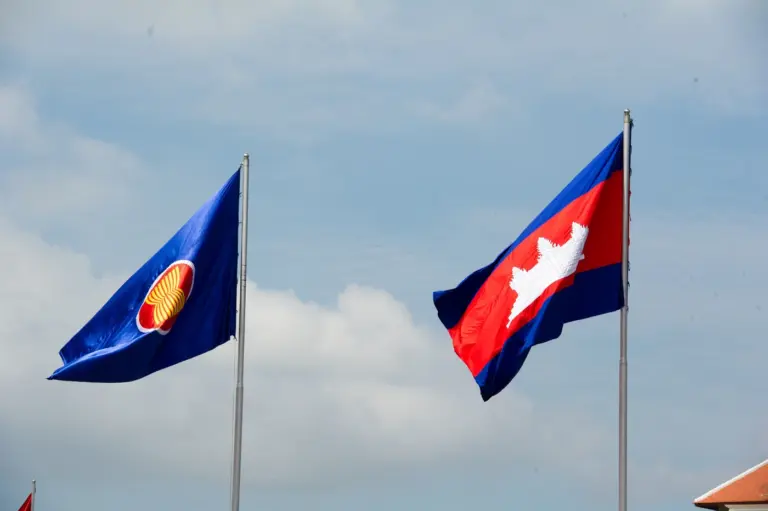
The South Asian Association for Regional Cooperation (SAARC), established in 1985, was supposed to be South Asia's answer to ASEAN or the EU. It has been effectively defunct since the 2016 summit was cancelled (Pakistan refused to attend after the Uri attack).
Three structural reasons for failure:
India-Pakistan bilateral conflict poisons every multilateral initiative. SAARC operates on unanimity — Pakistan can (and does) veto any proposal India supports. The SAARC satellite project was blocked by Pakistan. The South Asian University in Delhi has been hobbled by political disputes. No regional organization can function when its two largest members are adversaries.
The asymmetry problem. India is 75% of SAARC's combined GDP. Smaller members fear Indian dominance in any deepened integration. But without India, SAARC has no economic substance. This is a structural impossibility: integration requires India's participation, but India's size makes integration threatening.
Institutional weakness. The SAARC Secretariat in Kathmandu has no autonomous authority. Compare with the ASEAN Secretariat, which at least coordinates ministerial meetings and produces binding agreements. SAARC has no dispute resolution mechanism, no enforcement capacity, and no track record of deliverables.
The Pivot to BIMSTEC
India has systematically shifted its regional engagement from SAARC to BIMSTEC (Bay of Bengal Initiative for Multi-Sectoral Technical and Economic Cooperation): Bangladesh, India, Myanmar, Sri Lanka, Thailand, Bhutan, and Nepal.
Why BIMSTEC works better for India:
- No Pakistan. The single biggest advantage. India can pursue connectivity, trade, and security cooperation without Pakistani vetoes
- Bay of Bengal focus. Connects South Asia to Southeast Asia, aligning with India's Act East Policy and Indo-Pacific strategy
- Practical deliverables. The BIMSTEC Free Trade Area is under negotiation. Grid connectivity (India-Bangladesh-Nepal) is advancing. Counter-terrorism cooperation is more substantive than SAARC ever achieved
The limitation: Myanmar's military coup (2021) and ongoing civil war have complicated BIMSTEC's eastern flank. Thailand's engagement has been sporadic. BIMSTEC remains more promise than achievement, but it has institutional momentum SAARC lacks.
Sub-Regional Cooperation: BBIN
The BBIN (Bangladesh-Bhutan-India-Nepal) sub-regional grouping focuses on connectivity. The BBIN Motor Vehicle Agreement (2015) aimed to allow seamless cargo and passenger vehicle movement. Bhutan's parliament has not ratified it, but the remaining three countries have proceeded.
BBIN represents India's strategy of sub-regional pragmatism: when multilateral groupings stall, work with willing partners on specific projects. The India-Bangladesh-Nepal power grid connectivity, the multimodal transport corridor through Bangladeshi ports, and waterway development are all BBIN initiatives.
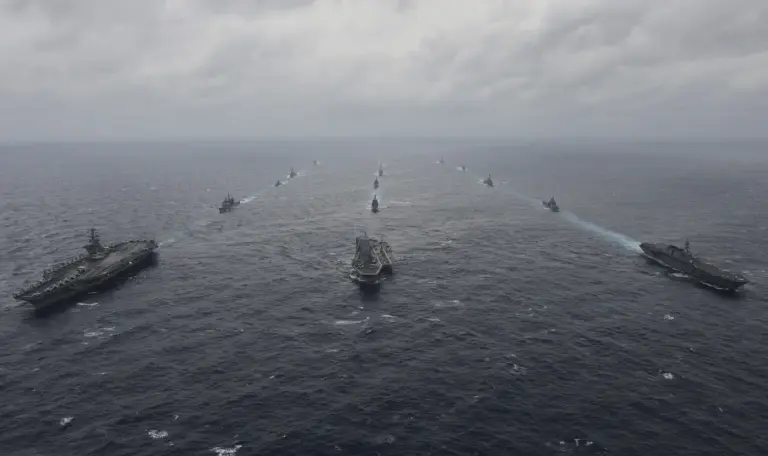
India as net security provider is the military dimension. India conducts bilateral naval exercises with Sri Lanka, Maldives, and Bangladesh. The 2018 Maldives crisis (when President Yameen’s crackdown threatened Indian interests) and India’s rapid deployment capability in the Indian Ocean demonstrate this role. UPSC 2021 tested this concept directly.
Common student mistake: Dismissing SAARC entirely. The question "Is SAARC relevant?" does not want a one-word answer. Acknowledge the structural problems, but note that SAARC's normative framework (non-interference, peaceful resolution) still shapes regional discourse. The SAARC COVID-19 Emergency Fund ($21.8 million) was activated in 2020. SAARC is moribund, not dead. The distinction matters for a balanced answer.
Key Bilateral Irritants
Water Disputes
Teesta River: India and Bangladesh have failed to sign a water-sharing agreement since 2011, when West Bengal CM Mamata Banerjee withdrew support. The Teesta issue poisons the broader relationship because Bangladesh sees it as a test of Indian sincerity on Neighbourhood First. The India-Bangladesh relationship has otherwise been the Neighbourhood First success story — $10 billion in Indian LOC, excellent connectivity progress, and counter-terrorism cooperation. Teesta remains the single biggest obstacle.
Mahakali Treaty (1996) with Nepal governs the Pancheshwar Dam project. Thirty years later, construction has not begun. Nepal accuses India of delaying implementation while benefiting from existing upstream control. Water disputes with Nepal are intertwined with broader sovereignty anxieties — the 2015 "blockade" (India denies it was official) traumatized India-Nepal relations and pushed Nepal toward China.
Border Management
India shares borders with all SAARC members except Afghanistan and Maldives. The India-Bangladesh border (4,096 km) has seen significant improvement — the Land Boundary Agreement (2015) resolved 68-year-old enclave issues. The India-Nepal open border is both an asset (cultural ties, labor mobility) and a vulnerability (smuggling, counterfeit currency, terrorism transit).
The India-Myanmar border (1,643 km) is the most volatile, with ethnic insurgencies, the Manipur crisis, and the Myanmar civil war creating cross-border instability. India's decision to fence this border and end the Free Movement Regime reflects security concerns overriding India-Myanmar relations goodwill.
Illegal Migration
The Assam NRC (2019) and the CAA (2019) have regional reverberations. Bangladesh officially denies that significant illegal migration occurs, but India's domestic politics around migration directly affect the bilateral relationship. The Rohingya crisis adds complexity — over 1 million refugees in Bangladesh, with India refusing to accept significant numbers citing security concerns.
China's Growing Footprint in South Asia
This is the strategic game-changer that makes Neighbourhood First urgent rather than optional.
Belt and Road Initiative (BRI) projects across South Asia:
- Sri Lanka: Hambantota Port (99-year lease to China Merchants Port Holdings after Sri Lanka could not repay $1.4 billion in loans) is the poster case for debt-trap diplomacy. Colombo Port City is a $1.4 billion Chinese-built special economic zone
- Nepal: Trans-Himalayan railway (Kathmandu to Kerung/Gyirong) would give Nepal an alternative to dependence on Indian transit routes. China has invested heavily in Nepali infrastructure since the 2015 India-Nepal tensions
- Maldives: The Sinamale Bridge (China-Maldives Friendship Bridge) and multiple island development projects under President Yameen (2013-2018) pulled Maldives sharply toward Beijing. The Solih government (2018-2023) rebalanced toward India, but the Muizzu government has again tilted toward China
- Bangladesh: China is Bangladesh's largest trading partner and arms supplier. The Padma Bridge was ultimately self-funded after World Bank withdrawal, but China built the Karnaphuli Tunnel and Payra Port
- Pakistan: CPEC ($62 billion committed) is BRI's flagship. Gwadar Port gives China Indian Ocean access. India opposes CPEC because it passes through Pakistan-occupied Kashmir
India's response has been multi-pronged:
- Matching infrastructure investment: $14 billion+ in LOC since 2014 across the neighbourhood
- Maritime security: SAGAR doctrine, information fusion centres, regular naval deployments
- Digital and health connectivity: e-VBAB (e-Vidya Bharati and e-Arogya Bharati) networks, vaccine supply
- Institutional alternatives: International Solar Alliance, Coalition for Disaster Resilient Infrastructure
- Strategic signaling: India-Sri Lanka relationship recovery post-2022 economic crisis, Adani investments in Sri Lanka ports
Common student mistake: Framing India-China competition in South Asia as purely zero-sum. While strategic competition is real, smaller neighbours benefit from having two suitors. Nepal, Sri Lanka, and Bangladesh have all leveraged the India-China dynamic to extract better terms from both. Your PSIR answer should show this nuance — smaller states have agency, not just victimhood.
India's Neighbourhood Relationship Snapshot
| Country | Relationship Status | Key Bilateral Issue | China Factor |
|---|---|---|---|
| Bangladesh | Strong but strained post-2024 political change | Teesta water sharing, Rohingya crisis | Largest trading partner and arms supplier to Bangladesh |
| Nepal | Recovering from 2015 tensions, politically volatile | Border disputes (Kalapani-Lipulekh), Mahakali Treaty | Trans-Himalayan railway, growing infrastructure investment |
| Sri Lanka | Rebuilding after 2022 economic crisis; India provided $4B support | Fishermen issue, Tamil political rights | Hambantota Port lease, Colombo Port City |
| Maldives | Turbulent; oscillates between India-first and China-leaning governments | Indian military presence, sovereignty rhetoric | Infrastructure projects, Sinamale Bridge |
| Bhutan | Closest ally; India’s only “special relationship” in the region | Doklam/tri-junction border, hydropower pricing | China claims parts of Bhutanese territory (Doklam, Sakteng) |
| Myanmar | Complicated by 2021 coup and civil war | Border security, insurgent groups, Kaladan project delays | China dominates Myanmar’s economy and backs some ethnic militias |
| Pakistan | Frozen; no bilateral dialogue since 2016 | Kashmir, cross-border terrorism | CPEC ($62B), Gwadar Port, all-weather alliance |
| Afghanistan | Disrupted by Taliban takeover (2021); India maintains limited engagement | Development investment ($3B at risk), connectivity via Chabahar | China engaging Taliban for mineral access |
Writing Neighbourhood First Answers That Score
For a 20-mark question on India's Neighbourhood First Policy:
Paragraph 1: Define the policy and its evolution (Gujral Doctrine to present). State the core tension: asymmetry management.
Paragraph 2-3: Successes. Be specific: India-Bangladesh connectivity, disaster diplomacy, vaccine diplomacy, LOC numbers.
Paragraph 4-5: Challenges. Be honest: Teesta deadlock, Maldives oscillation, Nepal distrust, SAARC paralysis.
Paragraph 6: The China factor. Name specific BRI projects. Show awareness of the strategic competition driving urgency.
Paragraph 7: Assessment and conclusion. The policy has achieved tactical wins (Bangladesh, Bhutan) but faces a structural limitation: India cannot match China's investment pace and must rely on democratic legitimacy, cultural ties, and strategic geography as comparative advantages.
Cite specific numbers. "$14 billion in Lines of Credit" is better than "significant financial support." "Hambantota's 99-year lease" is better than "Chinese debt traps." UPSC rewards precision.
Frequently Asked Questions
What is the difference between Gujral Doctrine and Neighbourhood First?
The Gujral Doctrine (1996-97) emphasized non-reciprocal generosity — India gives without expecting returns from smaller neighbours. Neighbourhood First (2014 onwards) is more strategic, emphasizing connectivity infrastructure, development partnerships, and countering China's presence. The Gujral Doctrine was driven by goodwill. Neighbourhood First is driven by strategic necessity.
Why did India shift from SAARC to BIMSTEC?
Pakistan's consistent blocking of SAARC initiatives (unanimity requirement), combined with the cancelled 2016 Islamabad summit after the Uri attack, made SAARC operationally useless. BIMSTEC excludes Pakistan, includes Southeast Asian members (Thailand, Myanmar) aligning with Act East Policy, and has shown more institutional momentum on connectivity and trade.
How does the Teesta issue affect India-Bangladesh relations?
The Teesta water-sharing agreement has been pending since 2011 because India's federal structure gives states a voice in transboundary water agreements. West Bengal's refusal to cooperate has blocked the deal despite central government willingness. Bangladesh sees Teesta as a litmus test for Indian sincerity. It remains the single biggest bilateral irritant in an otherwise strong relationship.
What is India’s position on BRI?
India is the only major country to formally boycott BRI, primarily because CPEC passes through Pakistan-occupied Kashmir, violating Indian sovereignty claims. India also objects to the lack of transparency, environmental concerns, and debt sustainability issues in BRI projects. India promotes alternative frameworks: the International North-South Transport Corridor, India-Middle East-Europe Economic Corridor (IMEC), and bilateral connectivity projects.
Is India actually a u0022net security provideru0022 in the Indian Ocean?
India acts as first responder for humanitarian crises and conducts regular naval exercises with all Indian Ocean neighbours. It provided $4 billion in emergency support to Sri Lanka in 2022, delivered COVID vaccines across the region, and maintains surveillance and maritime domain awareness capabilities. The limitation: India's naval capacity still does not match China's in the Indian Ocean. India is a willing net security provider with constrained capabilities.
How should I handle India-Pakistan in a Neighbourhood First answer?
Briefly but honestly. Acknowledge that Pakistan is the biggest obstacle to regional integration (SAARC paralysis), that bilateral dialogue has been frozen since 2016, and that CPEC represents the deepest strategic challenge. Do not spend more than 15-20% of your answer on Pakistan — the question is about India's policy toward the neighbourhood, not about the India-Pakistan conflict specifically.
What role does domestic politics play in India’s neighbourhood policy?
Significantly. The Teesta deadlock is a product of Indian federalism. The CAA/NRC affects Bangladesh ties. Tamil Nadu politics influence India-Sri Lanka relations (fishermen issue, ethnic solidarity). Manipur's instability affects India-Myanmar border management. UPSC expects you to connect foreign policy to domestic political constraints. This is a sophisticated analytical move that earns high marks.
Can smaller South Asian countries play India and China against each other?
They already do. Nepal signed a BRI framework agreement when India-Nepal ties deteriorated in 2015. Sri Lanka leased Hambantota to China while accepting Indian emergency loans. The Maldives has swung between pro-India and pro-China governments in successive elections. Smaller states have agency and use the India-China rivalry to maximize their leverage. Framing them as passive victims is analytically incorrect and costs marks.
Tell Google you want more of this.
Add Anantam IAS as a preferred sourceOne tap, and this site shows up more often in your own Top Stories, AI Overviews and AI Mode. Remove it any time.