India and Nepal share a 1,770 km open border — one of the most unique arrangements in international relations. Citizens of both countries can cross freely without passports or visas, live and work in each other’s territory without permits. Yet this closeness has also bred friction. Nepal’s domestic politics increasingly frames the relationship as one of an asymmetric dependency that Kathmandu wants to rebalance.
UPSC tests India-Nepal relations regularly. GS-2 2020 Mains asked about the Kalapani dispute. Prelims covers the 1950 Treaty, Gurkha recruitment, and hydropower projects. This is a high-value topic because it intersects with India’s neighbourhood policy, territorial disputes, and China’s expanding footprint.
The 1950 Treaty: Foundation and Friction
The Treaty of Peace and Friendship (1950) is the bedrock of India-Nepal relations — and its biggest irritant.
Key provisions:
- Open border with free movement of people
- Citizens of one country can own property and conduct business in the other
- Nepali citizens can work in India without permits (and vice versa)
- Nepal must consult India before purchasing arms and ammunition from third countries
Nepal has demanded a revision of the 1950 Treaty for decades, arguing it is unequal and infringes on sovereignty. The arms procurement clause particularly rankles Kathmandu. India has been reluctant to renegotiate, fearing it might lose the open border arrangement and special privileges.
The Eminent Persons Group (EPG) was constituted in 2016 to recommend revisions. It submitted a report in 2018 recommending a revised framework, but India has not officially accepted the recommendations.
Common student mistake: Students assume the open border benefits only Nepali workers coming to India. In reality, Indian traders and businesses dominate Nepal's economy. The open border is strategically valuable for India's security and intelligence operations along the northern frontier.
The Open Border and Gurkha Recruitment
The open border enables approximately 8 million Nepali citizens to live and work in India, and a significant Indian community in Nepal. This creates deep people-to-people bonds but also security concerns — the porous border is exploited for smuggling, counterfeit currency, and movement of criminal elements.
Gurkha Recruitment in the Indian Army: Nepali Gurkhas have served in the Indian (and previously British Indian) Army since the 1815 Sugauli Treaty. India currently recruits Gurkhas into 7 Gorkha Rifles regiments and the Assam Rifles. Approximately 30,000-35,000 Gurkhas serve in the Indian Army.
The Agnipath scheme (2022) created diplomatic friction. Nepal expressed concern about the short-term recruitment model replacing the traditional Gurkha recruitment system that guaranteed pensions and long-term service.
Hydropower: Enormous Potential, Minimal Progress
Nepal sits on an estimated 83,000 MW of hydropower potential, of which only about 3,000 MW has been developed. India is the natural buyer for Nepali hydroelectric power, but cooperation has been frustratingly slow.
Pancheshwar Multipurpose Project: The flagship India-Nepal hydropower project on the Mahakali River, with a proposed capacity of 6,480 MW. The Mahakali Treaty was signed in 1996, but the project has been stalled for nearly 30 years due to disagreements over cost-sharing, displacement, and environmental concerns. This is one of the most frequently cited examples of India-Nepal cooperation failure.
Arun III Hydroelectric Project: 900 MW, being developed by India's SJVN Limited. Construction is underway and this project represents a more positive trajectory in hydropower cooperation.
Upper Karnali Hydroelectric Project: 900 MW, awarded to India's GMR Group. Has faced delays and political opposition in Nepal.
Power Trade: India has emerged as both an exporter and importer of electricity from Nepal. As of 2024, India purchases approximately 452 MW from Nepal and also exports power during Nepal's dry season when hydropower generation drops.
| Hydropower Project | Capacity | Developer | Status |
|---|---|---|---|
| Pancheshwar Multipurpose | 6,480 MW | Joint India-Nepal | Stalled since 1996 |
| Arun III | 900 MW | SJVN (India) | Under construction |
| Upper Karnali | 900 MW | GMR Group (India) | Delayed |
| Power trade (India imports) | ~452 MW | Various | Operational |
| Nepal's total potential | 83,000 MW | – | ~3,000 MW developed |
Territorial Disputes: Kalapani-Lipulekh-Limpiyadhura
The Kalapani-Lipulekh-Limpiyadhura territorial dispute erupted into a full diplomatic crisis in 2020.
The trigger: India inaugurated an 80 km road to Lipulekh Pass (connecting Dharchula to the India-China border) in May 2020. Nepal protested, claiming the road passes through Nepali territory. In response, Nepal's Parliament unanimously approved a new political map that claimed Kalapani, Lipulekh, and Limpiyadhura as Nepali territory — approximately 335 sq km controlled by India.
India rejected Nepal's map, calling it a "unilateral act" that was "not based on historical fact or evidence." India maintains that the boundary follows the Kali River, with Kalapani on the Indian side. Nepal argues the river's true source is at Limpiyadhura, which would place the territory within Nepal.
The dispute remains unresolved. It was the most serious bilateral territorial disagreement in decades and significantly damaged relations.
The 2015 Blockade: A Watershed Moment
The 2015 Nepal Constitution crisis was a turning point in India-Nepal relations.
When Nepal promulgated its new constitution in September 2015, India expressed displeasure because the document did not adequately address the concerns of the Madhesi community (ethnic Indians living in Nepal's southern Terai region). India issued a rare public statement noting the constitution was adopted without the Madhesis' support.
What followed was an unofficial economic blockade at the India-Nepal border that lasted approximately five months (September 2015 – February 2016). Nepal faced severe shortages of fuel, cooking gas, medicines, and essential supplies. Nepal officially blamed India for the blockade; India claimed the disruption was caused by Madhesi protesters blocking border points.
The blockade had three lasting consequences:
- Anti-India sentiment surged across Nepal's political spectrum
- Nepal accelerated outreach to China as an alternative partner
- Nepal signed a transit and transport agreement with China in 2016, reducing dependence on Indian supply routes
Common student mistake: Students describe the 2015 blockade as an isolated incident. It was a structural shift. Before 2015, Nepal's China engagement was limited. After the blockade, Nepal actively cultivated Beijing as a counterweight to Delhi.
The China Factor
China's footprint in Nepal has expanded dramatically since 2015.
BRI Membership: Nepal signed a Belt and Road Initiative framework agreement with China in 2017. While concrete BRI projects in Nepal remain limited, the symbolic significance is substantial.
Kerung-Kathmandu Railway: China has proposed a railway connecting Kerung (Tibet) to Kathmandu. If built, this would be an engineering marvel through the Himalayas — and a strategic game-changer that ends Nepal's near-total dependence on Indian land routes.
Chinese Aid and Investment: China has funded the Pokhara International Airport, Kathmandu Ring Road expansion, and various other infrastructure projects. Chinese tourists (before COVID) became Nepal's second-largest tourist segment.
India watches this with concern. Nepal sits between India and China, and any significant Chinese military or intelligence presence in Nepal would compromise India's northern security buffer.
For understanding India's broader Indo-Pacific calculus, see Indo-Pacific Strategy.
Positive Developments and Cooperation
Despite friction, the relationship has positive dimensions:
- PM Modi's visit to Lumbini (2022) — the birthplace of Buddha — carried cultural and religious significance
- Integrated Check Posts (ICPs) at Birgunj and Biratnagar have modernized border management
- India's development assistance to Nepal exceeds $3 billion in grants and concessional loans, covering roads, schools, hospitals, and post-earthquake reconstruction
- 2015 Earthquake response: India launched Operation Maitri within hours, deploying the largest relief operation by any country
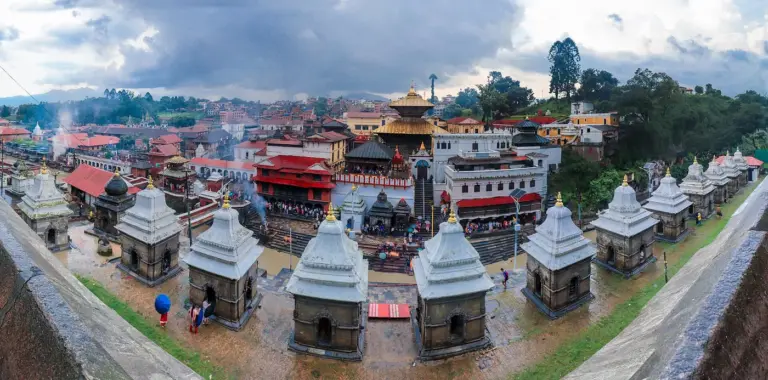
- Cultural ties: Pashupatinath Temple in Kathmandu and shared Hindu-Buddhist heritage maintain deep civilizational bonds
For context on how India's federal structure affects neighbourhood policy, see Cooperative and Competitive Federalism.
Tell Google you want more of this.
Add Anantam IAS as a preferred sourceOne tap, and this site shows up more often in your own Top Stories, AI Overviews and AI Mode. Remove it any time.