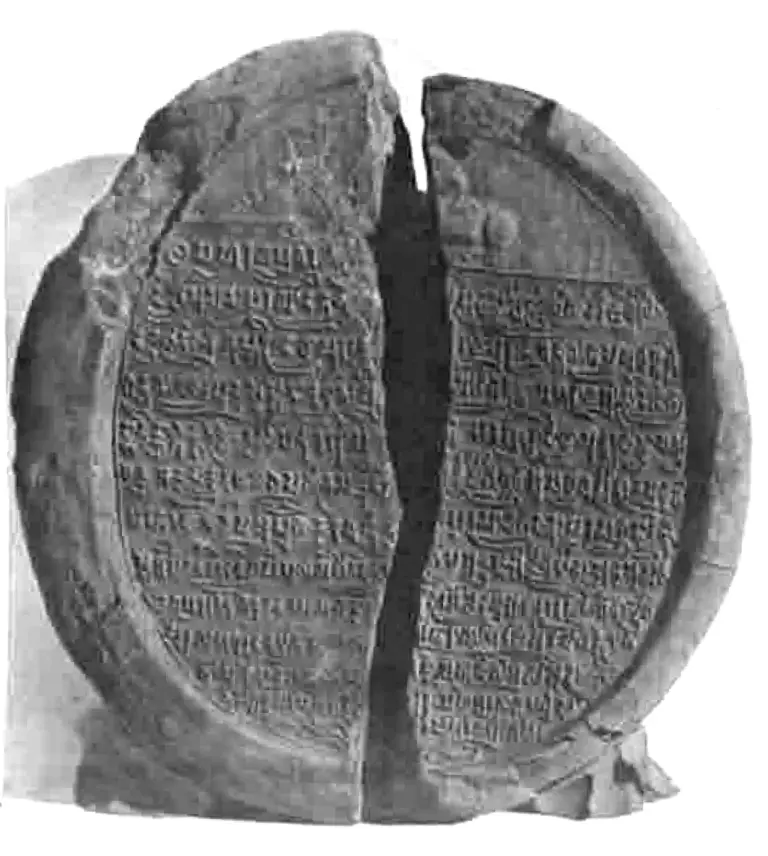
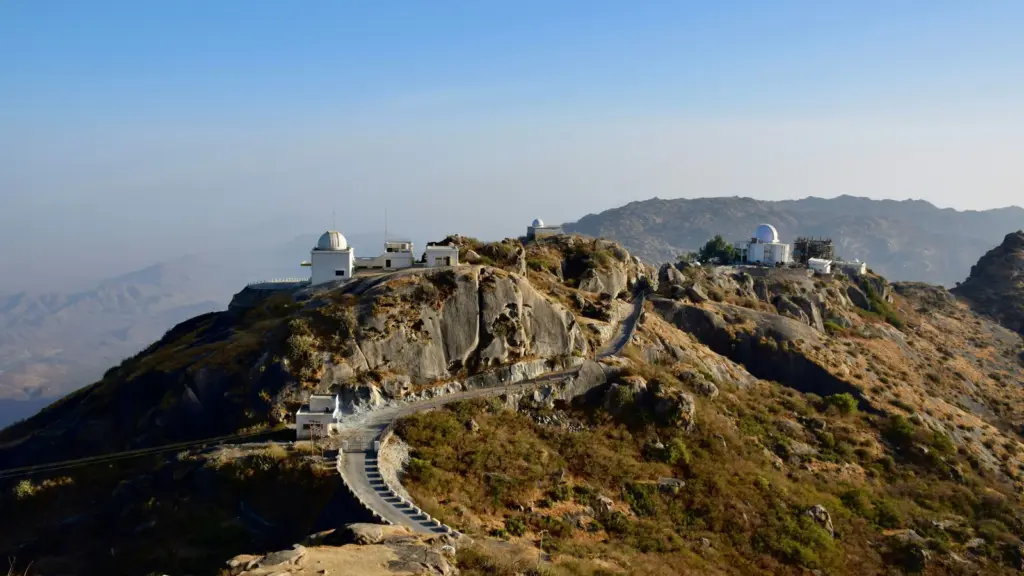
You have probably met this hill three times over and never noticed it was the same place. Once as Parasnath, the highest point in Jharkhand, a green dome rising off the Chota Nagpur plateau. Once as Shikharji, or Sammed Shikhar, the single most sacred pilgrimage in Jainism. And once as Marang Buru, the great mountain the Santhal people call the seat of their supreme deity. The confusion is not yours to fix by picking one name. The whole point of Parasnath is that three living traditions and one fragile ecology all claim the same 1,365 metres of rock, and the interesting questions start exactly where those claims meet.
That overlap is why the hill keeps returning to the news, usually framed as a fight over tourism, and why a topic that looks like simple geography quietly touches culture, tribal rights, and environmental law all at once. Learn Parasnath as one of these things and you have a postcard. Learn it as the junction, and a cluster of the syllabus lights up together.
Where Parasnath Hill is, and why the height matters
Parasnath is the highest mountain peak in Jharkhand, standing at 1,365 metres (about 4,478 feet), near the eastern edge of the Chota Nagpur plateau in Giridih district. That single fact carries more weight than a trivia answer, so hold onto why.
The plateau around it averages only a few hundred metres. Parasnath rises abruptly above that plain as a residual hill, a lump of hard rock left standing while the softer land around it wore away over millions of years. Geographers call this kind of isolated survivor a monadnock, and the rest of India’s map is dotted with the same story: a resistant core outlasting the erosion that lowered its neighbours. So Parasnath is not part of a range you can trace on a map. It stands alone, which is exactly what made it visible from a distance, reachable by a hard climb, and therefore attractive to people who wanted a place set apart from ordinary life.
Pilgrims and trekkers usually begin the ascent from Madhuban, the small temple town at the foot of the hill that serves as the base for the climb, so if you ever see Madhuban named in a report, it is this same site seen from below.
Height also shapes the climate on the slopes. The lower reaches carry dry deciduous forest typical of the plateau, but the upper slopes, cooler and wetter, hold denser, moister vegetation than the surrounding lowland. That gradient, dry foot to green crown, is what turned the hill into both a wildlife refuge and a sacred forest, and it is the reason the ecological argument and the religious argument are tangled rather than separate.
Shikharji: why 20 of 24 tirthankaras matter here
Shikharji is the holiest pilgrimage site in Jainism because, by tradition, 20 of the 24 tirthankaras attained moksha on this hill. That is the fact to anchor everything else to, so start by unpacking the vocabulary rather than reciting the number.
A tirthankara is, in Jain belief, a supreme teacher who has conquered the cycle of birth and death and shows others the way across, literally a “ford-maker” who builds a crossing over the river of worldly existence. There are 24 in the present cosmic age. Moksha is the final liberation of the soul from that cycle, the end goal of the entire Jain path. To say that 20 of the 24 reached moksha on Parasnath is to say that this one hill is where most of Jainism’s supreme teachers completed the journey the whole religion is built around. No other site comes close, which is why pilgrims call it the king of tirthas.
The hill takes its common name, Parasnath, from Parshvanatha, the 23rd tirthankara, who by tradition attained liberation here. Parshvanatha is a historically shadowed figure usually placed around the 8th to 9th century BCE, which puts him a couple of centuries before Mahavira, the 24th and last tirthankara and the contemporary of the Buddha. That timing matters for the bigger picture. Jainism and Buddhism both grew out of the same shramana current, the renouncer traditions that challenged Vedic ritual in the eastern Gangetic plain, and studying them side by side is far more useful than in isolation, as the notes on Jainism, Buddhism and the shramana movement lay out.
The pilgrimage itself is an act of endurance. Devout Jains climb the roughly nine-kilometre path barefoot, visiting a chain of small shrines called tonks, each marking where a tirthankara is believed to have attained liberation, before descending, a circuit that can run to 27 kilometres in a day. The physical difficulty is not incidental. It is the point, a bodily enactment of the austerity that sits at the centre of Jain practice. Jainism’s long institutional memory of protecting such sites also runs through figures like the emperor Samprati, a grandson of Ashoka remembered as a great patron of the faith, whose legacy the Samrat Samprati museum at Koba now marks.
One more layer is worth adding, because it explains why disputes over the hill run so deep. Shikharji is revered by both major sects of Jainism, the Digambara and the Svetambara, and that shared devotion has, over the years, produced its own recurring quarrels over who owns and manages the shrines and the sacred land. When two branches of the same faith each hold a site as their most sacred, questions of control, of who may build what and who administers the trust that runs the temples, become unusually charged, and courts have had to weigh in on the site’s ownership more than once. So the “Jain claim” over Parasnath is not one voice but several, and any policy that treats the community as a single bloc misreads it. That internal plurality, layered on top of the Jain-Santhal overlap, is what makes the hill so hard to govern by decree.
Marang Buru: the Santhal claim to the same hill
Long before it drew Jain pilgrims and just as strongly today, Parasnath is sacred to the Santhal people, one of India’s largest Adivasi communities, who know it as Marang Buru, meaning “the great mountain.” This is not a footnote to the Jain story. It is a parallel, older, and equally living claim, and missing it is how most summaries of Parasnath go wrong.
In the Santhal worldview, shaped by the nature-centred Sarna faith, Marang Buru is the abode of the supreme deity, and the hill’s forests and sacred groves are places of worship in their own right. The community’s connection to the mountain is expressed most visibly through the Sendra, an annual ritual hunt held around the full moon of the month of Baisakh, when men from surrounding villages gather on the slopes. To the Santhals, the hill is ancestral land and living shrine at once, not scenery and not a monument, and their rights over it are bound up with the wider question of tribal self-governance and the sacred-grove tradition that runs through the region’s heritage, from its megaliths and archaeo-astronomy to the reach of laws like PESA in Jharkhand.
Here is the tension in one line. Two devout communities, Jain and Santhal, revere the same peak in incompatible ways: one as a place of absolute non-violence toward all life, where even inadvertent harm to an insect is a serious lapse, the other as a place whose ritual calendar has historically included a hunt. That is not a problem to be solved by declaring one side right. It is the reality any policy on Parasnath has to hold, and it is why the government’s own committees on the hill have been careful to seat both communities at the table.
The ecology: a wildlife sanctuary on a sacred hill
Parasnath is also a legally protected wildlife sanctuary, roughly 49 square kilometres of forest wrapped around the peak in Giridih district, and that status is the third claimant that turns every dispute here into a three-way one. The green cover is not just backdrop, it is the reason the hill has been fought over.
The sanctuary carries mixed dry deciduous forest on its lower slopes, grading into moister, denser growth higher up, rich in climbers, ferns, mosses, and lichens. It shelters leopards, sloth bears, sambhar and barking deer, nilgai, wild boar, langurs, and a spread of birds and reptiles, the kind of plateau-and-hill assemblage that makes the site matter for conservation quite apart from its shrines, and that connects it to the wider story of India’s forest habitats told in the notes on biodiversity in India. A wildlife sanctuary is a protected area declared under the Wild Life (Protection) Act, 1972, where habitat and animals are safeguarded but certain regulated human activities and rights can continue, a lighter protection than a national park. If the distinction between the two is fuzzy, the explainer on wildlife sanctuary status is the cleanest place to fix it, and it matters here because the sanctuary’s rules are exactly what the tourism debate turned on.
There is a real puzzle folded into this. The Santhal Sendra hunt and the strict Jain principle of ahimsa, non-violence toward every living thing, cannot both be honoured on the same slopes without friction, and the sanctuary’s own rules under wildlife law prohibit hunting outright. So the forest that both faiths hold sacred is also a legal space where one community’s ritual and another’s core doctrine collide with the statute. This is not a reason to dismiss either tradition. It is a reminder that a “protected sacred forest” is never a single, harmonious thing, and that the state ends up mediating not just between people and nature but between two devout communities whose ideas of the sacred pull in opposite directions.
For all that, the ecological value and the religious value point the same way on the decisive question: both the pilgrims and the conservationists want the hill left quiet, undeveloped, and undisturbed. That rare alignment is worth noticing, because it is what gave the recent protests their unusual strength.
The eco-sensitive zone and the 2023 tourism controversy
The controversy that made national headlines was, at its core, a fight over whether Parasnath should be developed as a tourist destination, and it turned on a piece of environmental law called an eco-sensitive zone. Handled carefully, the sequence of facts is straightforward, and getting the sequence right is what separates understanding from noise.
An eco-sensitive zone (ESZ) is a buffer of regulated land that the Environment Ministry notifies around a protected area, meant to act as a shock absorber where high-impact activity is restricted so the core habitat is not disturbed. In August 2019, the Centre issued an ESZ notification, S.O. 2795(E) dated 2 August 2019, for the area around Parasnath. Separately, the Jharkhand government had moved to promote the area as a tourism and eco-tourism site. To the Jain community, promoting tourism on a hill where the founders of their faith attained liberation read as a threat of desecration: crowds, commerce, meat and liquor, and the loss of the austere silence the site demands.
Through late 2022 and into January 2023, that alarm turned into large, sustained, and largely peaceful protests by Jains across several cities, one of the widest mobilisations the community had mounted in years. The Centre responded quickly. In January 2023, the Ministry of Environment, Forest and Climate Change issued an office memorandum staying the implementation of the relevant clause of the 2019 ESZ notification, including, in its words, all tourism and eco-tourism activities at the site, and directed the state to enforce prohibitions on activities that would disturb its sanctity, such as the sale of liquor and meat and public intoxication within the protected zone.
Crucially, the government also set up a monitoring committee to oversee the site, and its composition is the detail worth remembering because it captures the whole three-way problem in one design.
| Element | What it says |
|---|---|
| Trigger notification | ESZ notification S.O. 2795(E) dated 2 August 2019, buffer around Parasnath |
| Grievance | Proposed tourism / eco-tourism seen as desecrating a sacred Jain and Santhal site |
| Central action (Jan 2023) | Stay on tourism and eco-tourism clauses; ban on liquor, meat, intoxicants in the zone |
| Oversight body | Monitoring committee with two members of the Jain community and one member of the local Adivasi (Santhal) community as permanent invitees |
Notice what that committee does. By seating two Jain representatives and one local tribal representative as permanent invitees, the government formally acknowledged that Parasnath belongs, in a real sense, to both the pilgrim and the Adivasi, and that neither the state’s tourism plans nor one community alone should decide its future. That is a rare piece of governance that tries to hold a genuinely plural claim rather than flatten it, and it is the part of the story most worth carrying into an answer.
How to study and remember Parasnath
The way to lock Parasnath in is to stop treating it as one fact and start treating it as a four-cornered case, because the exam value lies in the corners fitting together, not in any single number. Build the topic around four anchors and you can reconstruct the whole thing under pressure.
First, the geography anchor: highest peak in Jharkhand at 1,365 metres, a residual monadnock on the Chota Nagpur plateau in Giridih district. Second, the Jain anchor: Shikharji or Sammed Shikhar, holiest Jain tirtha, 20 of 24 tirthankaras attained moksha, named after Parshvanatha the 23rd tirthankara. Third, the tribal anchor: Marang Buru to the Santhal, seat of their supreme deity in the Sarna tradition, site of the Sendra ritual. Fourth, the ecology-and-law anchor: a wildlife sanctuary of about 49 square kilometres, an eco-sensitive zone notified in 2019, and the 2023 stay on tourism with its two-Jain-one-tribal monitoring committee.
Now connect them. The height and forest explain why it became sacred and why it became a sanctuary. The two religious claims explain why the tourism plan detonated. The ESZ law is the instrument through which the conflict was fought and paused. A strong answer does not list these, it shows how each one leads to the next. When a question asks about Parasnath, it is really asking whether you can hold competing legitimate claims, faith, tribal rights, and ecology, over a single piece of land, which is one of the most transferable skills the syllabus rewards, usable on the Western Ghats, on tiger reserves, and on temple towns alike.
The stance worth taking, if a question invites one, is that the 2023 resolution got the balance broadly right: it protected the sanctity of the site and its ecology together, and it built a plural committee rather than handing the hill to any single stakeholder or to the tourism economy. The open question it leaves, which is the honest thing to flag, is livelihoods, because a stay on development still has to be squared with the incomes of the communities living around the hill. That is the tension a mature answer names rather than hides.
Frequently Asked Questions
What is the height of Parasnath Hill and where is it?
Parasnath is the highest peak in Jharkhand, at about 1,365 metres (roughly 4,478 feet). It stands near the eastern edge of the Chota Nagpur plateau in Giridih district, rising as an isolated residual hill above the surrounding plateau.
Why is Shikharji so important in Jainism?
Shikharji, on Parasnath Hill, is the holiest Jain pilgrimage site because, by tradition, 20 of the 24 tirthankaras attained moksha (final liberation) there. No other site is associated with so many of Jainism’s supreme teachers, which is why it is called the king of tirthas.
Who was Parshvanatha and how is the hill named after him?
Parshvanatha was the 23rd tirthankara, usually placed around the 8th to 9th century BCE, who by tradition attained liberation on this hill. The name Parasnath derives from Parshvanatha, while Jains also call the site Sammed Shikhar or Shikharji.
What does Marang Buru mean and why does it matter?
Marang Buru means “the great mountain” in the Santhali language, and it is the name the Santhal Adivasi community gives Parasnath. In their nature-centred Sarna faith, the hill is the abode of their supreme deity, so it is a sacred site for the Santhals just as it is for Jains.
What was the 2023 Parasnath / Sammed Shikharji controversy about?
It was a dispute over a plan to develop Parasnath as a tourism and eco-tourism destination, which the Jain community protested as a threat to the sanctity of the site. In January 2023, the Centre stayed the tourism-related provisions of the 2019 eco-sensitive zone notification and banned liquor, meat, and intoxicants within the zone.
What is an eco-sensitive zone?
An eco-sensitive zone (ESZ) is a buffer of regulated land notified by the Environment Ministry around a protected area, such as a wildlife sanctuary. High-impact activities inside it are restricted so that the core habitat is not disturbed. Parasnath’s ESZ was notified in August 2019.
Is Parasnath a wildlife sanctuary?
Yes. Parasnath Hill is surrounded by a wildlife sanctuary of about 49 square kilometres in Giridih district, holding mixed deciduous forest and animals such as leopards and sloth bears, and it is protected under the Wild Life (Protection) Act, 1972.
Who oversees the site after the 2023 order?
The government constituted a monitoring committee to oversee Parasnath, with two members of the Jain community and one member of the local tribal (Santhal) community as permanent invitees, so that both communities have a formal say in decisions about the hill.
Practice Questions
1. Parasnath Hill, the highest peak of Jharkhand, is located on which physiographic feature?
a) The Aravalli Range
b) The Chota Nagpur plateau
c) The Satpura Range
d) The Eastern Ghats
Answer: b) Parasnath is a residual hill on the eastern part of the Chota Nagpur plateau, rising to about 1,365 metres.
2. With reference to Shikharji (Sammed Shikhar), consider the following statements:
- It is regarded as the holiest pilgrimage site in Jainism.
- Twenty of the twenty-four tirthankaras are believed to have attained moksha here.
- The hill is named after Mahavira, the 24th tirthankara.
Which of the statements is/are correct?
a) 1 and 2 only
b) 2 and 3 only
c) 1 and 3 only
d) 1, 2 and 3
Answer: a) The hill is named after Parshvanatha, the 23rd tirthankara, not Mahavira, so statement 3 is wrong.
3. The name “Marang Buru” is associated with Parasnath Hill primarily because:
a) It is the local name for the wildlife sanctuary
b) The Santhal community reveres the hill as the abode of their supreme deity
c) It marks the site of a Buddhist monastery
d) It is the administrative name of the eco-sensitive zone
Answer: b) Marang Buru means “the great mountain,” and the Santhals revere it as sacred in their Sarna tradition.
4. The 2023 Central Government order concerning Sammed Shikharji did which of the following?
a) Declared Parasnath a national park
b) Stayed tourism and eco-tourism activities under the 2019 eco-sensitive zone notification
c) Transferred the hill to the Archaeological Survey of India
d) Removed the wildlife sanctuary status of the area
Answer: b) The Environment Ministry stayed the tourism-related provisions of the 2019 ESZ notification and restricted liquor, meat, and intoxicants in the zone.
5. An eco-sensitive zone (ESZ) is best described as:
a) The core area of a national park where no human activity is allowed
b) A regulated buffer around a protected area where high-impact activities are restricted
c) A tribal self-governance area under PESA
d) A zone reserved exclusively for religious tourism
Answer: b) An ESZ is a buffer around a protected area, notified by the Environment Ministry, where damaging activities are restricted to shield the core habitat.
Mains-style questions
- Parasnath Hill is claimed at once by Jain pilgrims, the Santhal community, and conservation law. Examine how a single site can carry religious, tribal, and ecological significance, and the challenges this poses for governance.
- Discuss the concept of eco-sensitive zones as an instrument of environmental protection, using the 2023 Sammed Shikharji episode to illustrate the tension between conservation, faith, and development.
- “The sacred geography of India is also its ecological geography.” Analyse this statement with reference to sacred hills, groves, and forests, drawing on the example of Parasnath.
- The monitoring committee for Parasnath includes representatives of both the Jain and the local tribal communities. Evaluate participatory, multi-stakeholder mechanisms as a tool for resolving disputes over sacred natural sites.
- Compare and contrast the significance of Parasnath Hill for the Jain and Santhal communities, and assess how the state can respect plural claims over a shared sacred landscape.
The examiner who sets a question on Parasnath is rarely testing whether you can recall its height, though you should. The real test is whether you can hold three legitimate claims over one hill without collapsing them into a single storyline. Faith wants silence, the Adivasi wants ancestral ground, and ecology wants an undisturbed forest, and for once those three point the same way, which is precisely why the 2023 resolution could protect all of them at once. Carry Parasnath as that lesson in plural stewardship, and it stops being a name on a map and becomes a model for how a crowded country can share its most contested ground.
Tell Google you want more of this.
Add Anantam IAS as a preferred sourceOne tap, and this site shows up more often in your own Top Stories, AI Overviews and AI Mode. Remove it any time.