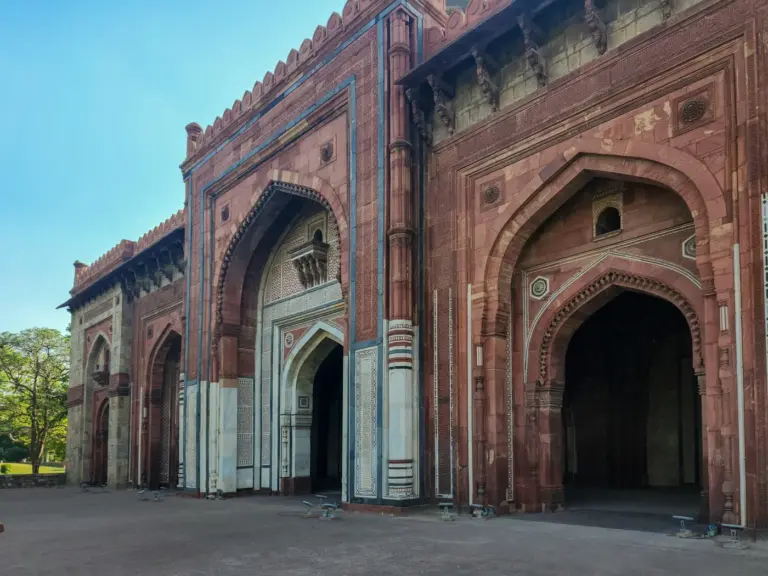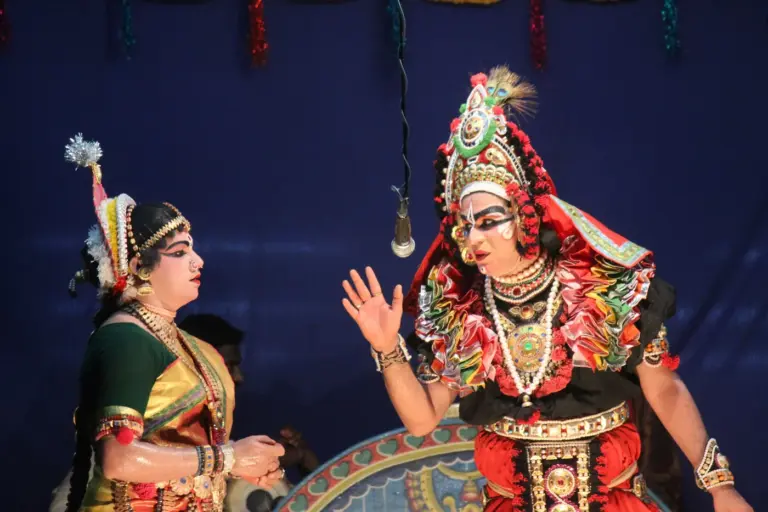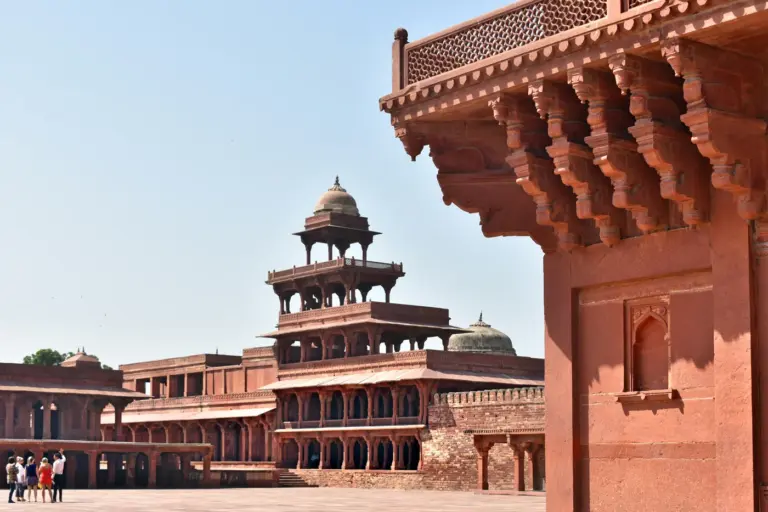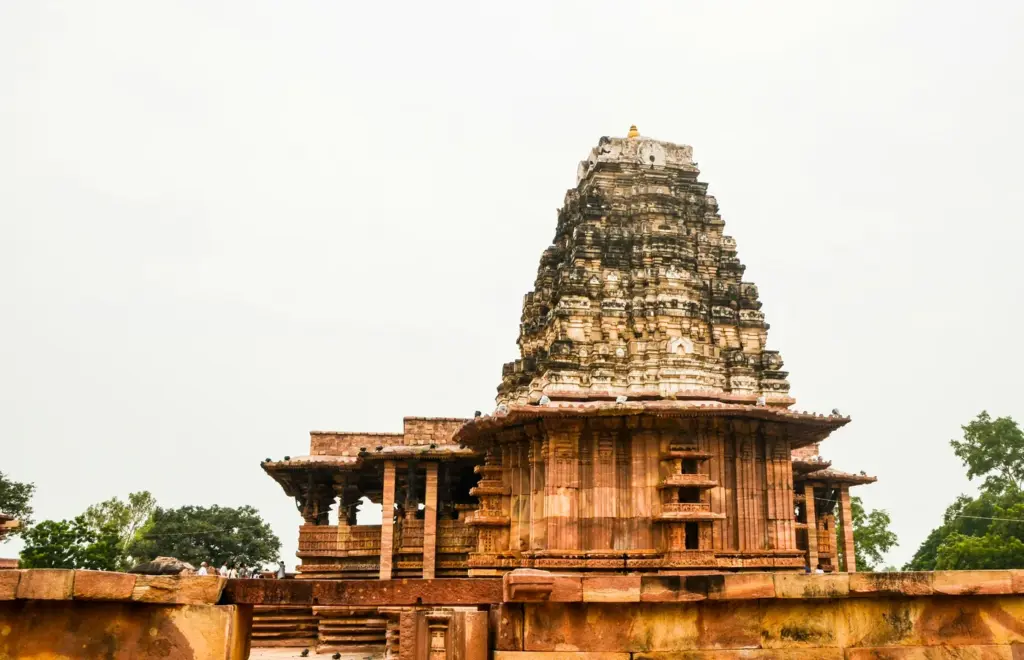
The Ramappa temple, officially the Rudreswara temple, is a Kakatiya-era Shiva temple at Palampet village in Mulugu district, Telangana, about 200 km north-east of Hyderabad. Work on it began in 1213 CE under Recherla Rudra, a general of the Kakatiya king Ganapatideva, and UNESCO inscribed it on the World Heritage List in July 2021 as the Kakatiya Rudreshwara (Ramappa) Temple. It’s the only Kakatiya monument on that list, and it earned the place as much for its engineering as for its art, from a tower of lightweight bricks to dancing figures cut in hard, dark dolerite.
Most of what circulates about the temple is half right. The name Ramappa belongs, by tradition, to its chief sculptor, yet the 1213 inscription never mentions him and names the god Rudreswara after the general who paid for it. Marco Polo did write about the Kakatiya kingdom, but not about this temple. And the floating bricks are real, but UNESCO’s record makes a point about weight, not buoyancy. This note settles each of these from the inscription and the UNESCO file.
What the Ramappa temple is and where it stands
The Ramappa temple is the main Shiva shrine inside a walled complex at Palampet, set among fields at the foot of a forested area, close to a reservoir called Ramappa Cheruvu that UNESCO describes as Kakatiya-built. UNESCO dates the Kakatiya period to 1123-1323 CE and says work here is believed to have gone on for some 40 years. These are the facts worth fixing first.
| Fact | Detail |
|---|---|
| Official UNESCO name | Kakatiya Rudreshwara (Ramappa) Temple, Telangana |
| Other names | Rudreswara or Rudreshwara temple; the presiding deity is worshipped as Ramalingeswara Swamy |
| Location | Palampet village, Mulugu district, Telangana; about 200 km north-east of Hyderabad |
| Built | Begun in 1213 CE; the inscription’s grant date works out to Sunday, 31 March 1213 |
| Patron | Recherla Rudra (UNESCO spells it Recharla), a general of the Kakatiya king Ganapatideva |
| Materials | Sandstone temple with granite and dolerite pillars, beams and sculpture; a tower of lightweight “floating bricks” |
| UNESCO status | Inscribed on 25 July 2021 at the extended 44th session, under criteria (i) and (iii); India’s 39th World Heritage Site |
| Protection | A protected monument since 1914; in the care of the ASI’s Hyderabad Circle under the AMASR Act, 1958 |
| Area | A 7.84 ha property inside a 66.27 ha buffer zone, after a 2025 boundary change |
One point needs care. The inscription records a grant to the god in 1213, and UNESCO takes that year as the start of work. A temple can receive its deity and its endowment while the carving goes on around it, so the two readings don’t clash.
Who built the Ramappa temple, and when
The Ramappa temple was built by Recherla Rudra, a general in the service of the Kakatiya king Ganapatideva, and the proof is a long Sanskrit inscription on a pillar at the site.
The Palampet pillar inscription
In December 1916 the archaeologist Ghulam Yazdani took ink impressions of the Palampet inscriptions. L. D. Barnett of the British Museum edited them, and the Nizam’s government published them in 1919 as No. 3 of the Hyderabad Archaeological Series. Barnett’s summary of the pillar inscription reads like a family history with a building program attached:
- It praises king Ganapati of the Kakatiya dynasty and calls Rudra his loyal general.
- It traces Rudra’s family of generals: Brahma, Kataya I, Kama and Kataya II, whose son by Kamamba was Rudra.
- It says Rudra consecrated a god Rudresvara at Orugallu, modern Warangal, the Kakatiya capital.
- It describes a new city he built, a pond he made for it and a temple to Rudresvara inside it.
- It records a grant of two villages to the god in Saka 1135, the year Srimukha, on the eighth day of the bright half of Chaitra, a Sunday.
Barnett worked that date out as Sunday, 31 March 1213, with R. Sewell checking the calculation. That’s the source behind the 1213 you’ll see everywhere, and the 1919 volume reads the verses on the city and temple as referring to old Palampet.
Why Rudreswara, and why Ramappa
The official name is a signature. Barnett’s note says Rudresvara commemorates Rudra himself, while two companion shrines in the same record honored his forebears: Katesvara his father and great-grandfather, both called Kataya, and Kamesvara his grandfather Kama. The god carries the general’s name, much as a donor’s name goes on a hospital wing.
The popular name is a tradition. PIB’s 2021 release and India’s nomination both say the temple is called Ramappa after its chief sculptor, and PIB adds that he worked on it for 40 years. Barnett’s edition of the inscription doesn’t mention a Ramappa at all. The official name remembers the patron and the popular one remembers the craftsman.
India’s nomination describes the Kakatiyas as the political successors of the Chalukyas of Kalyani in the Telugu-speaking Deccan and traces their temple style to that inheritance. The note on the Kakatiya dynasty sets out the rulers and the Chalukya dynasty note covers the Kalyani line. The kingdom ended about 1323, when forces of the Delhi Sultanate took the last Kakatiya king, Prataparudra, prisoner.
Kakatiya architecture at Ramappa, from the lake to the tower
Kakatiya architecture at Ramappa takes a Deccan temple plan inherited from the Chalukyas, builds it in carefully chosen local materials and sets it beside a reservoir that watered the fields. The clearest way to learn it is to walk it in the order a visitor meets it.
The setting: tank, town and temple
Start at the water. UNESCO says the choice of site, near the Ramappa Cheruvu and at the foot of forested hills, followed dharmic texts that want a temple to form part of its natural setting. The UNESCO World Heritage Volunteers camps held at Palampet in October 2024 and October 2025 teach the same idea as “Tank, Township and Temple”: a reservoir feeding the farms of a settlement, with the temple at its center.
The inscription fits. Its poet spends several verses on Rudra’s pond, which “stands like an ocean” and serves as a mirror for the city. If the 1919 reading of those verses as Palampet is right, that pond is most likely today’s Ramappa Cheruvu. That’s an inference, not a statement in the inscription, but it explains why UNESCO keeps asking for the lake and its channels to be protected along with the temple.
The platform and the hall
Inside the compound wall the temple rises on a star-shaped platform about 6 feet high, as PIB describes it, and India’s nomination says this stellate plan came to the Kakatiyas from Chalukya architects. On the platform, the molded base, the adhisthana, is about 10 feet wide and serves as the pradakshinapatha, the path for walking clockwise around the shrine.
The first room is the sabha mandapa, the central covered hall. UNESCO’s 2021 decision lists its uses:
- ritual worship;
- political and cultural discussion;
- hearing disputes, as a hall of justice;
- swearing treaties before the god;
- dance and music.
Along the hall’s edge runs a kakshasana, a stone bench with a sloping backrest whose carved motifs UNESCO singles out. The famous bracket figures sit on the outside of this hall.
The sanctum and the brick tower
From the hall you pass through the ardha mandapa, a smaller half-hall, into the garbhagriha, the sanctum or “womb chamber” of Ramalingeswara. Above it rises the vimana, the tower, pyramidal and horizontally stepped; the nomination says its Vesara form, the Deccan blend of northern and southern tower types, came from the Chalukyas. The overview of temple architecture in India explains these terms, and the note on Dravidian temple architecture shows the southern stepped tower that Vesara borrows from.
UNESCO’s record lists five local materials, each given a job:
- sand, for the foundation;
- clay, for the bricks of the tower;
- dolerite, for sculpture;
- sandstone, the main building stone, also used for sculpture;
- granite, for columns and beams.
That division of labor is the real lesson of Kakatiya architecture here. Hard stone goes where the load and the fine carving are, and light brick goes where height would otherwise add weight.
Floating bricks and the sandbox foundation: what the record says
UNESCO’s statement makes two claims. The vimana is built of lightweight porous bricks, “so-called floating bricks”, which reduced the weight of the roof structures, and the temple rests on a sandbox foundation, a foundation filled with sand. Its criterion (i) credits the two, with careful choice of materials, for reducing the load and making the temple earthquake resistant.
Why does a lighter tower matter? Lighter bricks work like a lighter school bag on the same shoulders: the structure underneath has less to hold up, every day for 800 years. The comparison stops at weight, though. A bag doesn’t have to ride out the ground shaking, and that’s the job the nomination gives the sand below.
So separate the record from the add-ons. UNESCO confirms light porous bricks in the tower and sand in the foundation. The earthquake resistance is the nomination’s engineering claim, which UNESCO’s statement adopts without publishing a test. Bricks that float in a bucket of water and exact recipes for the sand mix aren’t in UNESCO’s statement at all. It is wise to write “so-called floating bricks” and “a sand-filled foundation” and stop there.
Conservation has touched both features. UNESCO records that some missing floating bricks were remade after an extensive study, using the Kakatiya builders’ own 13th-century techniques. The nomination adds that support pillars were inserted about a century ago to stop the cornice, the projecting eave, from falling, a later repair that isn’t Kakatiya work.
The madanikas and the dancing stone
The temple’s most admired sculptures are its bracket figures, above all the madanikas, graceful female figures set as brackets on the outer face of the hall. UNESCO’s 2021 decision counts about 40 six-foot bracket figures, madanikas and gaja-vyalas together, and about 600 relief sculptures around six inches high. A gaja-vyala is a rearing mythical beast, the vyala, shown with an elephant, the gaja.
The stone is what makes them unusual. They’re carved in dolerite, which UNESCO calls one of the hardest rocks, and polished to a metal-like finish that’s still intact. The Hoysala carvers of Karnataka worked mostly in chloritic schist, a soapstone that’s soft when freshly quarried, as the note on the Hoysala temple explains. At Ramappa the same kind of detail was won from a far harder rock.
The figures also record performance. UNESCO says they illustrate regional dance customs, and India’s nomination says the Nritta Ratnavali, a dance treatise it dates to 1253 and credits to the commander Jaya Senapati, drew on the dancers carved here. That link is the nomination’s reading. The inscription shows performance mattered to the patron too, since Rudra granted a village to his Warangal Rudresvara for “theatrical performances”, in Barnett’s translation.
The same inscription describes the new city by its sounds, in verses 37 and 38:
- the roar of elephants and the clatter of horses’ hooves;
- soldiers at their drills;
- gamblers arguing;
- women’s songs with lute and pipe;
- Vedic recitation by Brahmans and debates among students.
Put those lines beside the dancers in stone and you have a dated written portrait of a Kakatiya town next to its carved one.
Did Marco Polo praise the Ramappa temple?
No surviving text shows that he did. Marco Polo’s chapter “Concerning the Kingdom of Mutfili” is about the Kakatiya kingdom, which Henry Yule, his standard English editor, identified through its port of Motupalli. It praises a queen who ruled well for about 40 years after her husband’s death, whom Yule identifies as Rudramadevi. The rest is about the kingdom’s diamonds, told through an old tale of eagles, and its fine cloth. It mentions no temple.
The line usually pinned on him, calling Ramappa the “brightest star in the galaxy of medieval temples of the Deccan”, appears in PIB’s 2021 release, credited only to an unnamed European traveler. Use it, if at all, as a later description, never as Marco Polo’s words. Marco Polo belongs in your notes on Rudramadevi, not on this temple.
Ramappa temple UNESCO status and conservation today
The Ramappa temple has been a World Heritage Site since 25 July 2021, when the World Heritage Committee inscribed it at its extended 44th session. PIB notes that the pandemic pushed the 2020 and 2021 nominations into online meetings, with China in the chair, and that Ramappa became India’s 39th World Heritage Site. The UNESCO listing names two criteria, which in plain words mean:
- Criterion (i): a masterpiece of human creative genius, here the Kakatiya style with its engineering experiments and polished dolerite carving.
- Criterion (iii): exceptional evidence of a cultural tradition, here Kakatiya art and dance customs kept in carvings such as the madanikas and gaja-vyalas.
For the full roster, see the roundup of UNESCO World Heritage Sites in India.
Protection works at two levels. UNESCO records that the temple was declared a protected monument in 1914 and has been conserved by the Archaeological Survey of India since, now through its Hyderabad Circle and Warangal sub-circle. Under the Ancient Monuments and Archaeological Sites and Remains Act, 1958, it has a 100 m prohibited area and a further 200 m regulated area. For the wider zone, Telangana set up the Palampet Special Area Development Authority.
Since inscription, the argument has been about how much of the setting to protect:
- 2021: The inscription decision asked India to widen the boundaries, extend conservation to the lake bund, irrigation channels and smaller temples, and schedule the reassembly of the dismantled Kameshwara temple by anastylosis, rebuilding a structure from its own original pieces.
- 2023: India replied that no boundary change was needed because the Gollalagudi and Shivalayam temples lie inside the 100 m prohibited area; UNESCO’s review found key recommendations still insufficiently addressed.
- 2024: At its New Delhi session the Committee welcomed the new authority and the Kameshwara documentation, repeated the boundary request and asked India to redo the heritage impact assessment for two PRASHAD tourism projects, of 10 and 27 acres, at a site the nomination says draws about 200,000 visitors a year.
- 2025: The Committee approved a minor change to the property’s boundary but sent the buffer zone back, asking India to consider taking in the canals and Ramappa lake. The same 47th session inscribed the Maratha Military Landscapes.
- 2026: The Union government declared a Shiva temple at Palampet a monument of national importance, as reported on 7 July 2026, and the Ministry of Culture announced the same status for the Gollala Gudi temple near Ramappa on 2 September 2026.
Those notifications bring two neighboring Kakatiya temples under the same central law as Ramappa; whether they’ll enter a future UNESCO boundary is still open. Five years on, the temple is secure and the unfinished question is its setting.
How to study the Ramappa temple for exams
The Ramappa temple sits in three parts of the syllabus:
- GS Paper I art and culture: temple architecture, sculpture and the regional styles of the Deccan.
- Medieval history: the Kakatiyas, their generals and their end at the hands of the Delhi Sultanate.
- Heritage current affairs: UNESCO inscriptions, criteria and the conservation decisions that follow them.
Mains 2022 GS Paper I asked “How will you explain that medieval Indian temple sculptures represent the social life of those days?” Ramappa gives you both halves of that answer: dancers and musicians in stone, and a dated inscription describing the town around them.
Regional styles get direct questions too. History Optional 2026 Paper I asked candidates to illustrate the claim that “Hoysala temple architecture marks a distinctive and innovative phase in the evolution of South Indian art and architecture”, and Ramappa is its natural Kakatiya counterpart. On the Prelims side, 94 of the 1,403 questions in the Prelims question bank are tagged Art and Culture.
Revise these until they’re automatic:
- 1213 CE: the pillar inscription’s grant date, Sunday, 31 March 1213 (Saka 1135).
- Recherla Rudra: the general who built it, serving the Kakatiya king Ganapatideva.
- Two names: Rudreswara after the patron Rudra; Ramappa after the chief sculptor, by tradition.
- Engineering: a brick vimana of floating bricks over a sandbox foundation.
- Madanikas: dolerite bracket figures, about 40 large brackets in all with the gaja-vyalas.
- UNESCO: 25 July 2021, extended 44th session, criteria (i) and (iii), India’s 39th site.
- 2025: a minor boundary change approved; the buffer zone sent back to take in the lake and canals.
These confusions cost marks, so keep them apart:
- Two Rudresvaras. Rudra’s inscription mentions one he consecrated at Warangal and one he built at Palampet; only the Palampet temple is the World Heritage Site.
- The nomination and the listing. India’s nomination carried the title “The Glorious Kakatiya Temples and Gateways” and praised the Thousand Pillar Temple at Hanamkonda and the Warangal gateways, but only the Ramappa temple was inscribed.
- Floating and light. The bricks are in the tower only, and UNESCO’s point is lower weight, not buoyancy.
- Dolerite and soapstone. Ramappa’s brackets are dolerite; the Hoysala carvers worked mostly in chloritic schist.
It also helps to set Ramappa beside other heritage sites of the Deccan:
| Site | Dynasty and period | What to remember | UNESCO status |
|---|---|---|---|
| Ramappa (Rudreswara) temple, Telangana | Kakatiya; begun 1213 | Brick vimana, sandbox foundation, dolerite madanikas | World Heritage, 2021; criteria (i) and (iii) |
| Sacred Ensembles of the Hoysalas, Karnataka | Hoysala; 12th to 13th century | Star-shaped plans on raised platforms, soapstone carving | World Heritage, 2023; criteria (i), (ii) and (iv) |
| Pattadakal, Karnataka | Badami Chalukya; 8th century | Nagara and Dravida temples side by side | World Heritage, 1987 |
| Golconda Fort, Telangana | Kakatiya-era mud fort, rebuilt by the Qutb Shahis | Granite citadel above a walled town | Tentative List only |
The Ramappa temple rewards the aspirant who keeps its names straight. Ganapatideva was the king and Rudra the general who paid for it, while Ramappa is the sculptor whose name stuck. Add the floating bricks in UNESCO’s own careful words and one temple becomes a compact answer on Kakatiya art and engineering, and on what World Heritage status asks of a country after the inscription.
Frequently Asked Questions
Who built the Ramappa temple?
The Ramappa temple was built by Recherla Rudra, a general of the Kakatiya king Ganapatideva. A pillar inscription at the site records his foundations and a grant to the god Rudresvara dated Saka 1135, which works out to 31 March 1213. UNESCO takes 1213 as the year construction began.
Why is it called the Ramappa temple?
By tradition the temple is named after Ramappa, its chief sculptor, and both PIB and India’s UNESCO nomination repeat that account. The 1213 inscription doesn’t name him. Its official name, Rudreswara, comes from the god, whose name commemorates the patron Rudra.
When did the Ramappa temple become a UNESCO World Heritage Site?
It was inscribed on 25 July 2021 at the extended 44th session of the World Heritage Committee, under criteria (i) and (iii). It became India’s 39th World Heritage Site. UNESCO lists it as the Kakatiya Rudreshwara (Ramappa) Temple, Telangana.
What are the floating bricks of the Ramappa temple?
They’re lightweight, porous bricks used to build the temple’s pyramidal tower, which reduced the weight bearing on the structure below. UNESCO calls them so-called floating bricks and credits them, along with a sand-filled foundation, with helping make the temple earthquake resistant. The popular claim that they float in water isn’t part of UNESCO’s statement.
Where is the Ramappa temple located?
The temple stands in Palampet village in Mulugu district, Telangana, about 200 km north-east of Hyderabad. It sits among fields near the Ramappa Cheruvu, a reservoir UNESCO describes as Kakatiya-built. Older documents, including India’s nomination file, place Palampet in Jayashankar Bhupalpally district.
What are the madanikas at the Ramappa temple?
Madanikas are graceful female figures carved as brackets on the outside of the temple’s hall. At Ramappa they’re cut in hard dolerite and polished to a metal-like finish, and many show dance postures. UNESCO names them among the carvings that meet its criterion (iii).
Did Marco Polo visit the Ramappa temple?
There’s no evidence that he did. His chapter on the kingdom of Mutfili, which his editor Henry Yule identified with the Kakatiya kingdom, praises its queen and describes its diamonds and cloth but mentions no temple. The line calling Ramappa the brightest star among Deccan temples is credited by PIB only to an unnamed traveler.
Is the Thousand Pillar Temple part of the UNESCO site?
No. India’s nomination praised the Thousand Pillar Temple at Hanamkonda and the gateways at Warangal as Kakatiya masterpieces, but only the Ramappa temple was inscribed. The other Kakatiya monuments aren’t World Heritage Sites.
Practice Questions
Prelims
1. Consider the following statements about the Ramappa temple:
1. Its pillar inscription records a grant dated Saka 1135, which works out to 1213 CE.
2. It was built by the Kakatiya king Rudradeva.
3. It was inscribed on the World Heritage List under criteria (i) and (iii).
Which of the statements given above is/are correct?
- (a) 1 and 2 only
- (b) 1 and 3 only
- (c) 2 and 3 only
- (d) 1, 2 and 3
Answer: (b) The builder was Recherla Rudra, a general of the Kakatiya king Ganapatideva, not a king himself.
2. Consider the following statements:
1. The lightweight floating bricks of the Ramappa temple were used in its vimana.
2. The bracket figures of the Ramappa temple are carved in chloritic schist.
Which of the statements given above is/are correct?
- (a) 1 only
- (b) 2 only
- (c) Both 1 and 2
- (d) Neither 1 nor 2
Answer: (a) The brackets are carved in dolerite; chloritic schist is the stone of the Hoysala carvers.
3. The name ‘Ramappa’ commonly used for the Rudreswara temple at Palampet refers to:
- (a) the Kakatiya king who ordered it
- (b) the general who paid for it
- (c) its chief sculptor, according to tradition
- (d) the reservoir beside it
Answer: (c) The popular name records the sculptor, while the official name Rudreswara commemorates the patron Rudra.
4. Which one of the following Kakatiya monuments is a UNESCO World Heritage Site?
- (a) Thousand Pillar Temple, Hanamkonda
- (b) The gateways of Warangal Fort
- (c) Rudreswara (Ramappa) temple, Palampet
- (d) All of the above
Answer: (c) Only the Ramappa temple was inscribed, in 2021, although the nomination praised the other two.
5. Consider the following statements about Marco Polo’s account of the kingdom of Mutfili:
1. Henry Yule identified Mutfili with the Kakatiya kingdom.
2. The account praises a queen who ruled after her husband’s death.
3. The account describes the Ramappa temple as the brightest star among Deccan temples.
Which of the statements given above is/are correct?
- (a) 1 and 2 only
- (b) 2 and 3 only
- (c) 1 and 3 only
- (d) 1, 2 and 3
Answer: (a) The chapter mentions the queen, diamonds and cloth, but no temple.
Mains
- Safeguarding the Indian art heritage is the need of the moment. Discuss. (10 marks, 150 words) Previous year: Mains 2018, GS Paper I.
- The Ramappa temple was recognized as much for its engineering as for its art. Examine this with reference to its foundation, materials and tower. (15 marks, 250 words)
- How do the inscription and sculptures of the Ramappa temple help historians reconstruct Kakatiya society? (15 marks, 250 words)
- World Heritage status brings both protection and tourism pressure. Discuss with reference to the Ramappa temple and its setting. (10 marks, 150 words)
- Compare the bracket figures of the Ramappa temple with those of the Hoysala temples in material, technique and theme. (10 marks, 150 words)
Tell Google you want more of this.
Add Anantam IAS as a preferred sourceOne tap, and this site shows up more often in your own Top Stories, AI Overviews and AI Mode. Remove it any time.