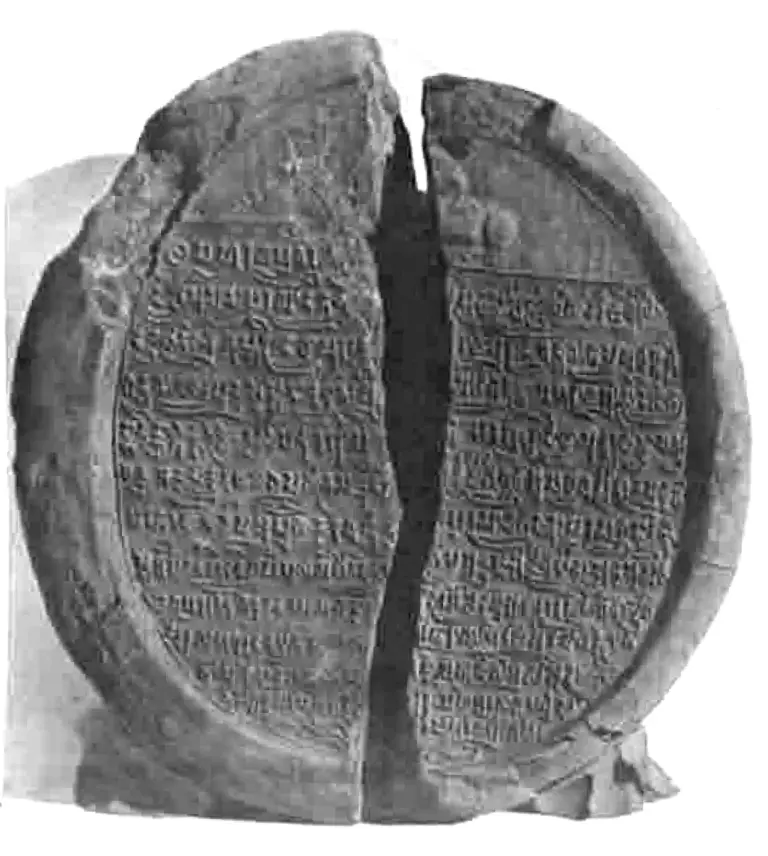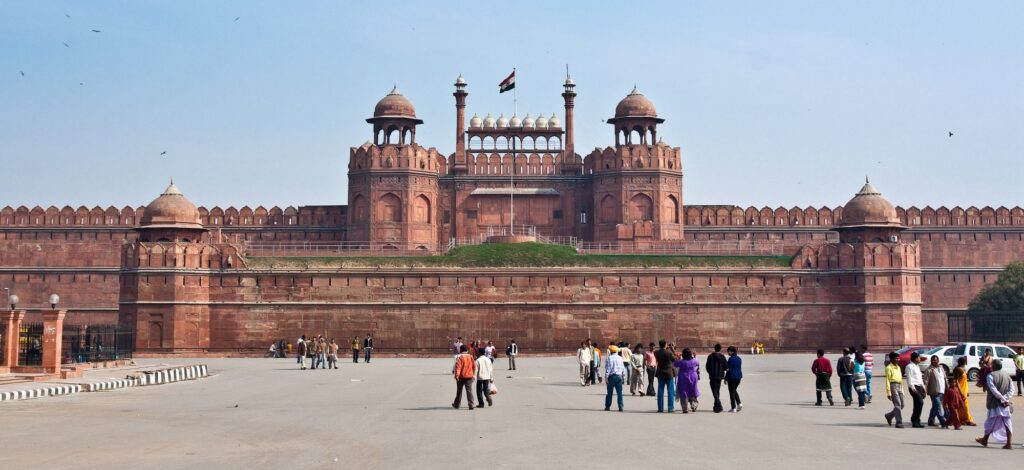
The Red Fort Delhi is the most politically loaded monument in the country. Shah Jahan ordered its construction in 1638, the year he shifted the Mughal capital from Agra to the new city of Shahjahanabad, and the fort was complete enough to host his court by 1648. For the next two centuries it was the residence of the Mughal emperors. In 1857 it was the headquarters of the last rebellion against the East India Company. In August 1947 it became the spot where the Prime Minister of independent India would, every year thereafter, unfurl the tricolour and address the country. UNESCO inscribed the Red Fort Delhi on the World Heritage List in 2007, recognising its place in both Mughal architectural history and the modern political imagination of India.
The fort itself is a walled enclosure of roughly 254 acres on the western bank of the Yamuna. Its red sandstone walls, from which the popular name Lal Qila derives, rise between eighteen and thirty-three metres above the surrounding ground, depending on the side. Within those walls Shah Jahan and his architect Ustad Ahmad Lahori laid out a planned palace-city: audience halls, private apartments, gardens, baths, a mosque, and barracks for the imperial guard. Much of that interior was stripped after 1857, but the surviving structures still convey the scale of late-Mughal court architecture.
Construction: Shah Jahan and Ustad Ahmad Lahori
Shah Jahan was already an experienced patron of architecture when he began the Red Fort Delhi. The Taj Mahal at Agra had been under construction since 1632, the Jama Masjid at Agra was complete, and the emperor had a clear idea of what he wanted in a new imperial capital. The shift from Agra to Delhi was strategic as well as personal: Delhi sat on the older imperial axis from the Sultanate period, the Yamuna offered both water and a defensive flank, and the new city would distinguish the reign of Shah Jahan from those of his predecessors.
The chief architect was Ustad Ahmad Lahori, the same man credited with the principal design of the Taj Mahal. He worked with a team that included Ustad Hamid, and the project drew masons, calligraphers, and decorators from across the empire and from Persia. The foundation stone was laid on 29 April 1638. Construction ran for ten years, and Shah Jahan made his ceremonial entry on 18 April 1648, the date inscribed in chronograms in the fort’s calligraphy.
The plan is an irregular octagon, longer on the east and west sides, with the long axis running north-south parallel to the Yamuna. The eastern wall originally rose directly from the river, so that the imperial apartments overlooked the water. The river has since shifted east, but the asymmetry of the plan still records the original riverside placement.
The Two Gateways
The fort has two principal gates. The Lahori Gate on the west, named for its orientation towards Lahore, is the ceremonial entrance and the one used today for the Independence Day flag-hoisting. The Delhi Gate on the south, oriented towards the older Mughal city of Delhi, was the secondary entrance and is flanked by two large stone elephants that were destroyed under Aurangzeb and restored under Curzon. Aurangzeb added the barbican in front of the Lahori Gate, a defensive screen that Shah Jahan would never have approved: the older emperor reportedly remarked that his son had veiled the face of his father.
Inside the Lahori Gate is the Chatta Chowk, a covered bazaar of thirty-two arched shops on either side of a long passage. It was built to serve the imperial household and the nobles of the court, and it is the only surviving roofed Mughal bazaar in India. The passage opens onto an interior court that once housed the Naubat Khana, the drum house where ceremonial music announced the comings and goings of the emperor.
The Diwan-i-Aam and the Public Court
Beyond the Naubat Khana lies the Diwan-i-Aam, the hall of public audience. It is a rectangular pillared pavilion of red sandstone, originally plastered white and gilded, with a deep portico opening onto a large quadrangle. The emperor sat on a marble throne set in an inlaid alcove on the rear wall, and petitioners and lesser nobles stood in the court below. The acoustics of the hall and the proportions of the pillared arcades were designed to project the emperor’s voice across the assembly and to give his throne the visual focus of the entire space.
The throne alcove is decorated with pietra dura panels of birds and foliage that include a panel of Orpheus playing the lute, almost certainly imported from Italy and attributed to Austin de Bordeaux. The presence of an Italian Renaissance panel behind the Mughal throne tells you something about the cosmopolitan character of Shah Jahan’s court. Petitions submitted at the Diwan-i-Aam were the formal mechanism by which the emperor exercised what we would now call administrative justice, and the daily darshan from the alcove was a ritual of imperial visibility.
The Diwan-i-Khas and the Peacock Throne
North of the Diwan-i-Aam, behind a screen wall, is the Diwan-i-Khas, the hall of private audience. Where the Diwan-i-Aam is sandstone, the Diwan-i-Khas is white marble, inlaid with semi-precious stones in pietra dura work, with a flat ceiling that was originally silver and later replaced with painted wood. The walls bear the famous couplet attributed to Amir Khusrau, ordered inscribed by Shah Jahan: if there is a paradise on earth, it is this, it is this, it is this.
The Peacock Throne stood here. Commissioned by Shah Jahan and completed around 1635, the throne was a gem-encrusted structure of solid gold and silver that took seven years to make. Nadir Shah carried it off to Persia after his sack of Delhi in 1739. The throne was broken up after Nadir Shah’s assassination, and the surviving pieces were dispersed across the courts of West Asia. The Koh-i-Noor diamond, which had been mounted in the throne, eventually entered the British crown jewels through the Lahore Treaty of 1849.
The Palace Quarter and the Stream of Paradise
The line of palace pavilions along the river front is the most refined part of the Red Fort Delhi. Six pavilions remain. From south to north they are the Mumtaz Mahal, the Rang Mahal, the Khas Mahal, the Diwan-i-Khas, the Hammam, and the Shah Burj. All were linked by the Nahr-i-Bihisht, the Stream of Paradise, a marble channel that ran the length of the river front, fed by water raised from the Yamuna and cooled with concealed cascades and fountains.
The Rang Mahal, the Palace of Colours, was the principal residence of the imperial harem. Its ceiling was originally a mirror-inlay work of extraordinary complexity, now reduced to fragments. A central marble basin shaped like a lotus carries the water of the Nahr-i-Bihisht, and the floors and walls retain traces of the painted decoration that gave the palace its name. The Khas Mahal to the north was the emperor’s private apartment, divided into a sleeping chamber, a sitting chamber, and a small mosque-like recess for personal prayer.
The Moti Masjid: Aurangzeb’s Private Mosque
The Moti Masjid, the Pearl Mosque, is the most important addition to the Red Fort Delhi after Shah Jahan’s reign. Aurangzeb built it between 1659 and 1660 as his private place of prayer, completing it in his second regnal year. It is small, three-bayed, with three bulbous domes of white marble, set within a courtyard that is also paved in marble. The walls of the mosque are slightly canted relative to the surrounding palace because the mosque had to be aligned to Mecca rather than to the Mughal axis of the fort, and Aurangzeb’s architects resolved the awkwardness by enclosing the canted prayer hall inside an outer rectangular enclosure aligned with the fort.
The Moti Masjid is austere by Shah Jahan’s standards. Aurangzeb’s religious temperament shows in the restraint of the decoration and the absence of the inlay work and gilding that distinguishes his father’s pavilions. The mosque is nevertheless a significant building, and it is the only large religious structure inside the fort.
1857: Bahadur Shah Zafar and the End of the Mughals
By the nineteenth century the Red Fort Delhi had become a shadow of its earlier self. The Mughal emperor was a pensioner of the East India Company, his authority limited to the walls of the fort and a few surrounding lands. In May 1857, when sepoys of the Bengal Army mutinied at Meerut and marched on Delhi, they came to the Red Fort and demanded that the eighty-two-year-old Bahadur Shah Zafar accept the leadership of the rebellion. He agreed, reluctantly by most accounts, and for the next four months the fort was the political headquarters of the revolt.
The Company recaptured Delhi in September 1857 after a siege that lasted from June to September. Bahadur Shah Zafar was captured at Humayun’s Tomb, tried inside the Red Fort in a chamber of the Diwan-i-Khas in January 1858, and exiled to Rangoon, where he died in 1862. His sons and grandsons were shot at the Khooni Darwaza near the fort by Captain William Hodson. The Mughal dynasty ended at the Red Fort that it had built.
British Demolitions
After 1857 the British army demolished a significant portion of the fort. The barracks of the Mughal army inside the eastern walls were levelled, and ugly red brick army quarters were built in their place. The Mehtab Bagh, the moonlight garden on the riverside, was destroyed. Several palace pavilions were stripped of their marble fixtures, and the fort served as a military cantonment until 1947, with much of the original Mughal interior either gone or in poor repair. The Indian National Army trials of 1945-46 were held in the Red Fort, and the courtroom was a former British barracks built on the demolished Mughal foundations.
Independence Day and the Modern Symbol
On 16 August 1947, the day after the formal transfer of power, Jawaharlal Nehru hoisted the tricolour at the Lahori Gate of the Red Fort Delhi and addressed the nation from the ramparts above. The ceremony has been repeated every Independence Day since, and the Prime Minister’s speech from the Red Fort is now the single most important political address of the Indian calendar. The choice of site was deliberate. The Mughal capital had passed to a republican government, and the building that had stood as a symbol of empire would now stand as a symbol of independence.
The Red Fort Delhi was inscribed as a UNESCO World Heritage Site in 2007, listed for its representation of the planned palace architecture of the late Mughal period and for its role in the political history of South Asia. The Archaeological Survey of India manages the site, and the Mehtab Bagh and other gardens have been partially restored. The fort sits in a continuum with other Mughal sites covered on the site, including Shah Jahan himself, Aurangzeb the son who completed the dynasty’s late phase, and the founder Humayun whose tomb is a sister UNESCO site in the same city.
Conservation Challenges
The conservation of the Red Fort Delhi is complicated by its political function. Security restrictions around the Independence Day ceremony shape access for most of August, and the surrounding road network and the high-density Old Delhi neighbourhood put constant pressure on the perimeter walls. Pollution has darkened the red sandstone, and groundwater changes have affected the foundations of the riverside pavilions. The ASI has undertaken phased conservation since the UNESCO inscription, including restoration of the Naubat Khana and the Lahori Gate, but the fort remains a working political monument as much as an archaeological site.
A visit to the Red Fort Delhi is best paired with a visit to the Qutub Minar, which records the earlier Sultanate phase of Delhi’s monument history, and with the city’s other Mughal sites. Together they trace the architectural arc from the thirteenth century to the nineteenth, and the Red Fort sits near the end of that arc, the last great imperial gesture of a dynasty that had governed the subcontinent for three hundred years.
Frequently Asked Questions
Who built the Red Fort in Delhi and when?
Shah Jahan ordered the construction of the Red Fort in Delhi in 1638 as part of his new capital of Shahjahanabad. The chief architect was Ustad Ahmad Lahori, who had also designed the Taj Mahal. Construction took ten years, and Shah Jahan made his ceremonial entry on 18 April 1648.
Why is it called the Red Fort?
The fort takes its popular name, Lal Qila, from the colour of the red sandstone used for its outer walls and most of its public buildings. The interior pavilions of the imperial apartments are largely white marble, but the dominant impression from outside is of red sandstone, which is why both the Hindi name Lal Qila and the English name Red Fort refer to colour.
What happened to the Peacock Throne?
Shah Jahan commissioned the Peacock Throne for the Diwan-i-Khas around 1635. It was carried off by Nadir Shah of Persia after his sack of Delhi in 1739 and was broken up after his assassination. The Koh-i-Noor diamond, which had been mounted in the throne, eventually entered the British crown jewels through the Lahore Treaty of 1849.
What is the Diwan-i-Aam used for?
The Diwan-i-Aam was the hall of public audience. The emperor sat on a marble throne set in an inlaid alcove on the rear wall and received petitions, dispensed administrative justice, and conducted the daily ritual of imperial visibility. The Diwan-i-Khas, the hall of private audience, was reserved for nobles and matters of state.
What is the link between the Red Fort and 1857?
When the sepoys of the Bengal Army mutinied at Meerut in May 1857, they marched on Delhi and persuaded the elderly Bahadur Shah Zafar to accept the symbolic leadership of the rebellion. The Red Fort served as the political headquarters of the revolt for four months. After the British recaptured Delhi in September 1857, Bahadur Shah Zafar was tried inside the Red Fort and exiled to Rangoon, ending the Mughal dynasty.
Who built the Moti Masjid inside the Red Fort?
Aurangzeb built the Moti Masjid, the Pearl Mosque, between 1659 and 1660 as his private place of prayer. It is a small three-bayed marble mosque with three bulbous domes, set in a marble courtyard. It is the only large religious structure inside the fort and is more austere in decoration than Shah Jahan’s pavilions.
When was the Red Fort designated a UNESCO World Heritage Site?
UNESCO inscribed the Red Fort Complex on the World Heritage List in 2007. The listing recognises the planned palace architecture of the late Mughal period and the role of the fort in the political history of South Asia, including the events of 1857 and the modern Independence Day ceremony.
Why does the Prime Minister hoist the flag at the Red Fort on Independence Day?
On 16 August 1947, the day after the formal transfer of power, Jawaharlal Nehru hoisted the tricolour at the Lahori Gate of the Red Fort and addressed the nation from the ramparts. The choice of site was symbolic: the former seat of Mughal imperial authority would now stand for the new republic. The ceremony has been repeated every Independence Day since.
Tell Google you want more of this.
Add Anantam IAS as a preferred sourceOne tap, and this site shows up more often in your own Top Stories, AI Overviews and AI Mode. Remove it any time.