

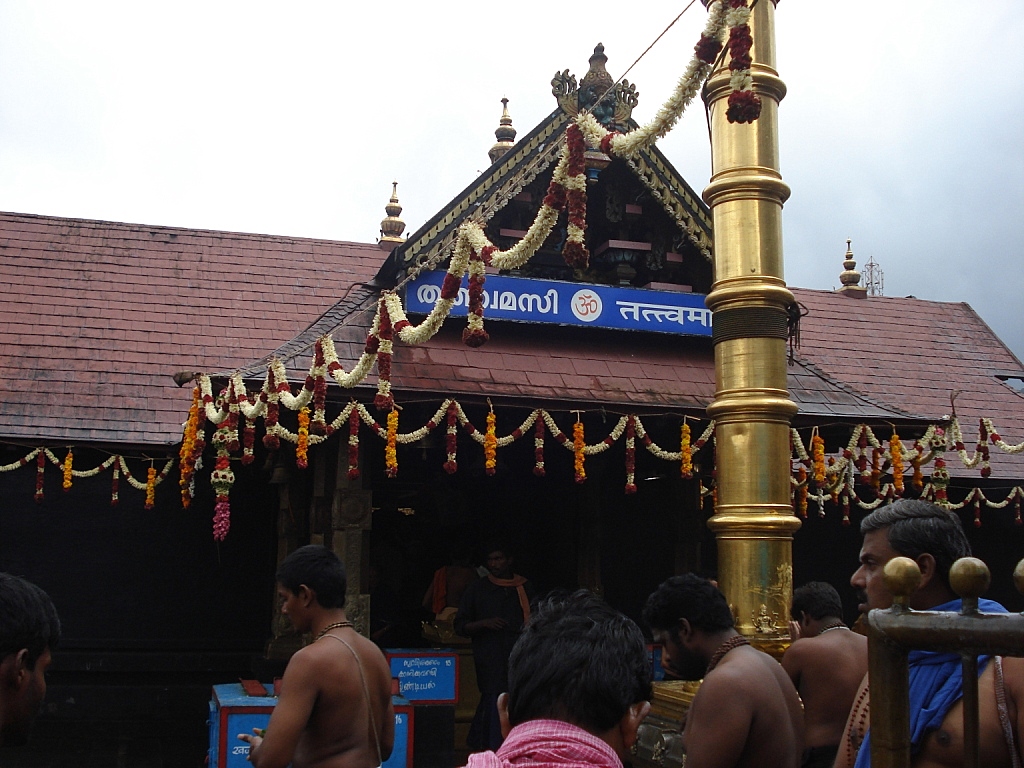
The Sabarimala Judgment is one of the most consequential Supreme Court decisions of the twenty-first century on the relationship between religious freedom and the equality guarantees of the Indian Constitution. On 28 September 2018, a Constitution Bench of five judges ruled 4:1 that the prohibition on the entry of women aged 10 to 50 years into the Sabarimala temple in Kerala was unconstitutional. The Sabarimala Judgment held that the practice violated Articles 14, 15, 17, and 25 and could not be saved as an “essential religious practice” under Article 25.
The decision in Indian Young Lawyers Association v. State of Kerala (2018) opened a wider constitutional debate that is still being resolved. A nine-judge bench is now examining a reference framed in 2019 that asks the Court to reconsider the very meaning of constitutional morality, the essential religious practices test, and the relationship between fundamental rights and group religious autonomy.
This explainer walks through the factual background of the Sabarimala temple, the 1991 Kerala High Court judgment that the Supreme Court overturned, the reasoning of each of the five 2018 opinions, Justice Indu Malhotra’s lone dissent, the political and social aftermath, and the still-pending nine-judge reference that has reframed the issue.
Quick Facts on the Sabarimala Judgment
- Case name. Indian Young Lawyers Association v. State of Kerala (2018) 11 SCC 1.
- Date. 28 September 2018.
- Bench. Five judges — CJI Dipak Misra, Justices A.M. Khanwilkar, R.F. Nariman, D.Y. Chandrachud, and Indu Malhotra.
- Verdict. 4:1 majority allowing women of all ages to enter the Sabarimala temple.
- Petitioners. Indian Young Lawyers Association and five women lawyers.
- Amicus curiae. Senior Advocate Indira Jaising and K. Ramamoorthy.
- Provisions challenged. Rule 3(b) of the Kerala Hindu Places of Public Worship (Authorisation of Entry) Rules, 1965.
- Aftermath. 9-judge bench reference (November 2019) is currently pending.
What is Sabarimala and Why the Restriction
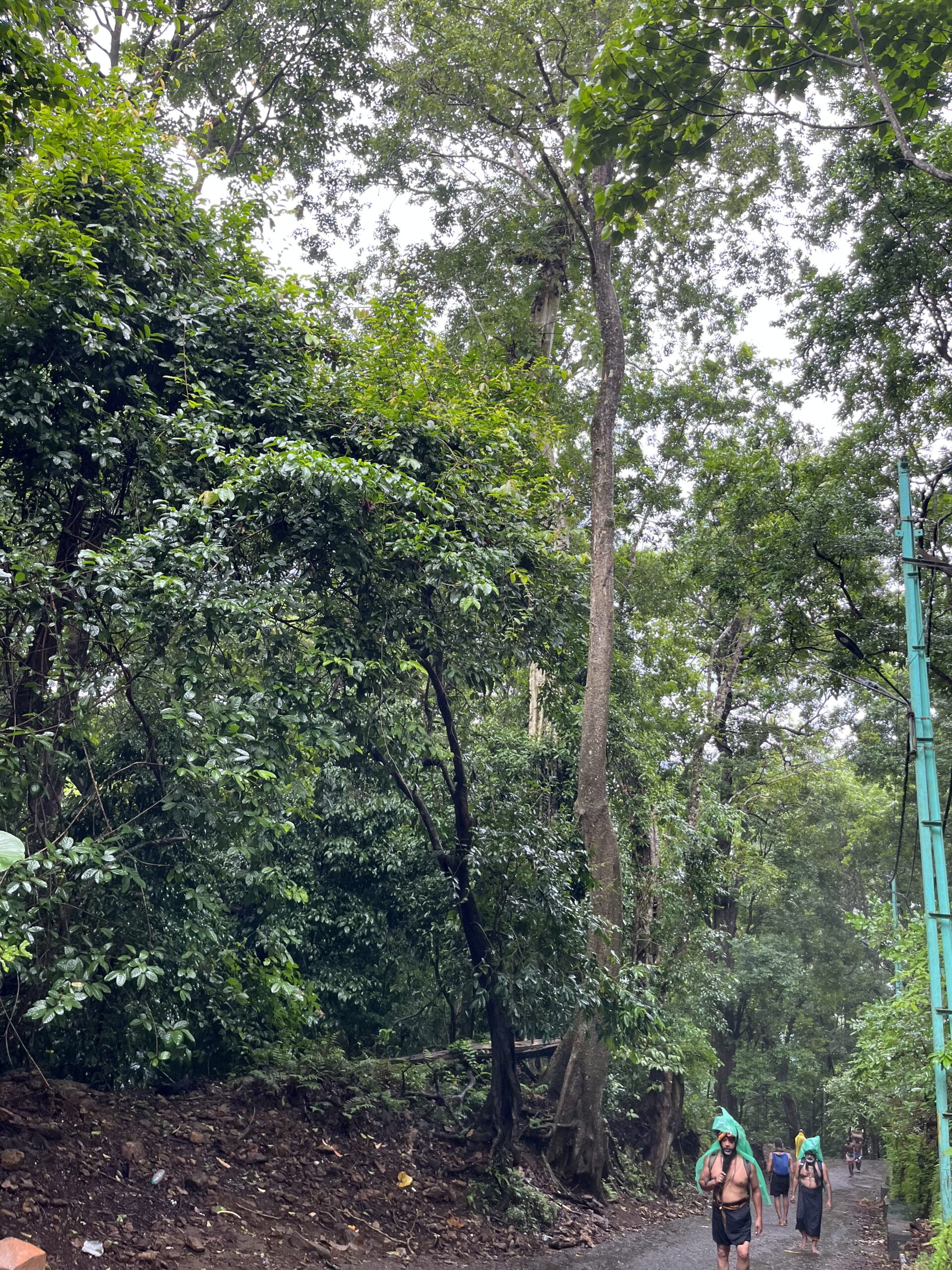
The Sabarimala temple in the Periyar Tiger Reserve of Pathanamthitta district, Kerala, is dedicated to Lord Ayyappa. It draws over four crore pilgrims annually, making it one of the largest pilgrimage centres in the world. The temple’s central deity, Ayyappa, is regarded as a Naishtika Brahmachari, a celibate deity in eternal vow of celibacy.
For centuries, women between the ages of 10 and 50, broadly the reproductive-age band, were not permitted to enter the temple. The practice was framed by temple authorities as protecting the celibate vow of Lord Ayyappa and as connected to the 41-day Vratham (austerity) that pilgrims must undertake.
In 1991, the Kerala High Court in S. Mahendran v. Secretary, Travancore Devaswom Board upheld the restriction, holding it to be a long-standing custom and an essential religious practice.
The 1965 Rules and the Constitutional Challenge
The Kerala Hindu Places of Public Worship (Authorisation of Entry) Act, 1965 was meant to ensure entry of all classes and sections of Hindus to public temples. But Rule 3(b) of the rules framed under the Act allowed exclusion of “women at such time during which they are not by custom and usage allowed to enter a place of public worship.”
The Indian Young Lawyers Association filed a public interest litigation in 2006, arguing that Rule 3(b) violated:
- Article 14. Equal protection of laws.
- Article 15(1). Prohibition of discrimination on grounds of religion, race, caste, sex.
- Article 17. Abolition of untouchability.
- Article 25(1). Freedom of conscience and right to freely profess religion.
The case was referred to a Constitution Bench in 2017 and heard in 2018.
The Sabarimala Judgment: The Four Majority Opinions
The Sabarimala Judgment produced four separate concurring opinions from CJI Dipak Misra, Justice A.M. Khanwilkar agreeing with the CJI, Justice R.F. Nariman, and Justice D.Y. Chandrachud, plus a dissent from Justice Indu Malhotra.
CJI Dipak Misra and Justice Khanwilkar
The Chief Justice held that devotees of Ayyappa do not constitute a separate religious denomination under Article 26 because the Sabarimala temple is open to Hindus generally. Hence the temple cannot claim denominational autonomy to exclude women.
Crucially, the CJI invoked constitutional morality, holding that “any rule based on discrimination or segregation of women pertaining to biological characteristics is not only unfounded, indefensible and implausible but can also never pass the muster of constitutional morality.”
Justice R.F. Nariman
Justice Nariman wrote a sharp concurring opinion holding that exclusion based on physiological factors specific to one gender amounts to a form of discrimination under Article 15(1). He held the practice could not be saved as an essential religious practice because the exclusion was based on menstruation, not on any doctrinal element of Ayyappa worship.
Justice D.Y. Chandrachud
The most expansive opinion came from Justice Chandrachud. He framed the case as a contest between “individual dignity and group autonomy” and held that group rights cannot override individual constitutional rights. He went further than any other judge by holding that the exclusion practice violated Article 17 on untouchability, treating menstrual stigma as a form of untouchability that the Constitution had abolished.
Justice Chandrachud also reframed constitutional morality as “the morality embedded in the Constitution itself,” not majority sentiment or traditional custom.
Justice Indu Malhotra’s Dissent
Justice Indu Malhotra, the only woman on the bench, wrote a powerful 90-page dissent. Her core arguments:
- Maintainability. She held that the petitioners, none of whom were Ayyappa devotees, lacked standing to bring the PIL. Religious questions should be raised by aggrieved devotees of the religion.
- Pluralism. “Notions of rationality cannot be invoked in matters of religion by courts.”
- Equality with religion. She held that Article 14 cannot override Article 25 protection of essential religious practice without crystal-clear discrimination.
- Denomination status. She accepted that Ayyappa devotees form a religious denomination protected under Article 26.
Justice Malhotra’s dissent has become a touchstone for the school of thought that judicial intervention in religious matters must be strictly limited.
Constitutional Morality vs Religious Freedom
The Sabarimala Judgment crystallised a constitutional concept that B.R. Ambedkar had used in the Constituent Assembly. CJI Dipak Misra and Justice Chandrachud both held that constitutional morality, derived from the equality, dignity, and liberty clauses of the Constitution, must prevail over popular morality or customary practice.
Critics, including Justice Malhotra in her dissent and later scholars, argued that “constitutional morality” is open-ended and gives judges discretion to override religious autonomy. The debate remains the central unresolved theoretical question in the case.
Aftermath: Protests, Review, and the Nine-Judge Reference
The implementation of the Sabarimala Judgment was met with widespread protests in Kerala. Multiple attempts by women to enter the temple were physically blocked by devotees. The first two women to actually enter the shrine, Bindu Ammini and Kanaka Durga, did so in the early hours of 2 January 2019 under police protection.
Sixty-five review petitions were filed against the Sabarimala Judgment. On 14 November 2019, a five-judge bench led by CJI Ranjan Gogoi, by a 3:2 majority, did not strike down the 2018 verdict but referred a wider set of questions to a nine-judge bench. The reference covered:
- The interplay between freedom of religion under Articles 25, 26 and other fundamental rights including Article 14, 15, 17, and 21.
- The scope of the term “morality” used in Articles 25 and 26.
- The judicially developed essential religious practice doctrine.
- The standard of proof for claims of essential religious practice.
- Parallel issues including the entry of Muslim women into mosques and the bar on Parsi women married outside the faith from entering the fire temple.
The nine-judge bench was constituted in early 2020. As of 2026 the larger reference has heard preliminary arguments but no final judgment has been delivered. The 2018 Sabarimala Judgment formally stands, but its operation has been overtaken by the political and social outcomes on the ground.
Indira Jaising as Amicus
Senior Advocate Indira Jaising appeared as amicus curiae for the petitioners. She argued that the exclusion of menstruating women was rooted in untouchability and patriarchy, and that the Constitution required a court to act against gender stigma even when masked as religion. Her arguments were largely accepted by Justices Chandrachud and Nariman.
Comparative Constitutional Significance
The Sabarimala Judgment sits in a line of decisions where the Indian Supreme Court has applied Article 14 equality to religious practice. Key precedents include:
- Shah Bano (1985). Maintenance to divorced Muslim woman under secular Section 125 CrPC. See the full Shah Bano case analysis.
- Shayara Bano (2017). Triple talaq struck down.
- Joseph Shine (2018). Adultery decriminalised under Section 497 IPC.
- Navtej Singh Johar (2018). Section 377 struck down for consensual same-sex relations.
- Puttaswamy (2017). Privacy as a fundamental right.
Together these mark a shift from group rights toward individual constitutional rights. The Sabarimala Judgment is the high-water mark of that shift, which is precisely why it has been contested.
How the Sabarimala Judgment Affects UPSC Polity Preparation
For prelims, candidates should remember the 4:1 majority, the 28 September 2018 date, the five judges, the Rule 3(b) challenge, and the November 2019 nine-judge reference. For mains, the Sabarimala Judgment is a high-yield topic for GS-II questions on judicial review and religious freedom and GS-IV ethics questions on constitutional morality versus traditional morality.
The decision links naturally to the broader equality framework in Article 14, the criminal-procedure protections of Article 20 which Justice Chandrachud has helped expand, the discussion of personal law in the Uniform Civil Code in India, and the gender-equality reasoning of the Women’s Reservation Bill. The connecting thread is whether constitutional morality can be applied uniformly across personal laws and religious practices.
Key Doctrines from the Sabarimala Judgment
- Constitutional morality. Morality embedded in the Constitution prevails over popular or customary morality.
- Essential religious practice test. A practice claimed as religious must be doctrinally essential, not merely customary, to attract Article 25 protection.
- Denomination test. Article 26 protection requires a distinct religious community with a common faith and organisation, separate from the broader religion.
- Individual versus group rights. Group autonomy under Article 26 cannot defeat individual rights under Articles 14 and 21.
- Article 17 expansion. Justice Chandrachud read untouchability to include menstrual-based exclusion.
Frequently Asked Questions
What is the Sabarimala Judgment?
The Sabarimala Judgment is the 2018 Supreme Court decision in Indian Young Lawyers Association v. State of Kerala that allowed women aged 10 to 50 to enter the Sabarimala temple in Kerala. The 5-judge bench ruled 4:1 that the restriction violated Articles 14, 15, 17, and 25.
Who wrote the dissent in the Sabarimala Judgment?
Justice Indu Malhotra, the only woman on the bench, wrote the dissent. She held that courts should not test religious practices on the touchstone of rationality and that Ayyappa devotees form a religious denomination protected under Article 26.
What is constitutional morality in the Sabarimala context?
Constitutional morality refers to the values of equality, dignity, and liberty embedded in the Constitution itself. CJI Misra and Justice Chandrachud held that constitutional morality must prevail over customary or popular morality in cases of conflict.
Has the Sabarimala Judgment been overturned?
No. The 2018 verdict formally stands. In November 2019, a 5-judge bench referred wider questions to a 9-judge bench, which has heard preliminary arguments but not yet delivered a final judgment.
What was Rule 3(b) of the 1965 Kerala Rules?
Rule 3(b) of the Kerala Hindu Places of Public Worship (Authorisation of Entry) Rules permitted exclusion of women during periods custom did not allow them entry. The Sabarimala Judgment held it ultra vires the parent Act and the Constitution.
Why was Article 17 invoked in the Sabarimala case?
Justice D.Y. Chandrachud held that excluding menstruating women treats them as impure and amounts to a form of untouchability prohibited under Article 17.
What does the 9-judge reference cover?
The 9-judge reference covers the interplay of Articles 25, 26, and 14, the meaning of morality in religious freedom, the essential religious practice doctrine, and parallel exclusions of Muslim and Parsi women.
Who were the petitioners in the Sabarimala case?
The petitioners were the Indian Young Lawyers Association and five women lawyers. Senior Advocate Indira Jaising assisted as amicus curiae for the petitioners.
Tell Google you want more of this.
Add Anantam IAS as a preferred sourceOne tap, and this site shows up more often in your own Top Stories, AI Overviews and AI Mode. Remove it any time.






