Subhadra Yojana is Odisha's flagship direct benefit transfer scheme for women, providing ₹10,000 per year in two equal instalments directly into beneficiaries' bank accounts. Launched in September 2024 by the BJP government under Chief Minister Mohan Charan Majhi, it's one of India's largest state-level women's welfare schemes — and a textbook example of how state governments use DBT frameworks inherited from central policy infrastructure.
For UPSC, this scheme matters not just as a factual question but as a live case study in welfare delivery, DBT architecture, and federalism.
What Is Subhadra Yojana? Scheme Overview
Subhadra Yojana was announced in the BJP election manifesto for Odisha ahead of the 2024 state elections. The scheme is named after Subhadra, the sister of Lord Jagannath — a deliberate cultural reference that signals the state government's intent to position women's welfare at the centre of Odia identity and governance.
The core idea is simple: put cash directly into women’s hands, without intermediaries. This follows the Pradhan Mantri Jan Dhan Yojana–Aadhaar–Mobile (JAM) trinity framework that the central government has used since 2015 for direct benefit transfers.
Key Features at a Glance
| Feature | Detail |
|---|---|
| Annual benefit | ₹10,000 |
| Per instalment | ₹5,000 |
| Instalment dates | Rakhi Purnima (August) and International Women's Day (March 8) |
| Delivery mode | Direct Bank Transfer (DBT) |
| Total beneficiaries targeted | ~1 crore women |
| Total outlay (5 years) | ~₹55,000 crore |
| Launch date | September 17, 2024 |
| Administering department | Women and Child Development, Odisha |
The instalment timing carries symbolic weight. Rakhi Purnima celebrates the bond between siblings; International Women's Day is a global marker for gender equity. The government tied financial transfers to cultural moments — which is worth noting from a policy communication standpoint.
Subhadra Yojana Eligibility Criteria
Not every woman in Odisha qualifies. The scheme targets economically vulnerable households, and the eligibility filters are designed to exclude relatively affluent sections.
Who Is Eligible?
- Age: Women aged 21 to 60 years
- Domicile: Permanent resident of Odisha
- Bank account: Must have an Aadhaar-linked bank account
- Aadhaar: Mandatory for enrollment
Who Is Excluded?
The exclusion criteria are important for understanding targeting efficiency — a recurring UPSC theme in welfare scheme analysis.
| Exclusion Category | Rationale |
|---|---|
| Women with a family member who is a current or former MP, MLA, Minister | Political families presumed non-poor |
| Family member is a Class I or Class II government officer | Income threshold |
| Family member pays income tax | Income threshold |
| Receives ₹1,500 or more per month from other state/central scheme | Avoid duplication |
| Family member is an elected local body representative (Sarpanch and above in certain categories) | Political office |
| Professional tax payers | Income proxy |
The exclusion of income-tax-paying families is a clean, verifiable filter — consistent with how schemes like PM-KISAN exclude taxpayers. But the exclusion of women receiving ₹1,500+ from other schemes creates potential overlap complications, especially with central schemes like PM Matru Vandana Yojana.
Beneficiary Identification
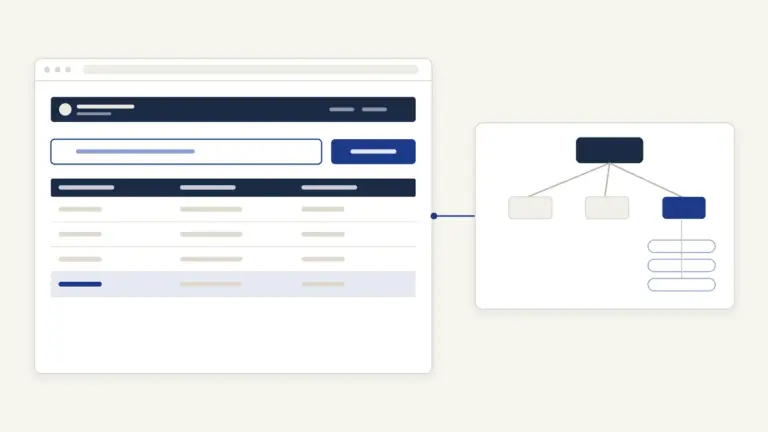
Odisha uses its Subhadra portal (subhadra.odisha.gov.in) and gram panchayat-level verification for identification. The state cross-references data from:
- Aadhaar database
- National Food Security Act (NFSA) lists
- State DBT records
- Income tax department data
This multi-source verification model is called convergence-based targeting in policy literature.
Benefits Under Subhadra Yojana
Cash Transfer Structure
The ₹10,000 annual benefit is split into two tranches of ₹5,000 each. The money goes directly to the beneficiary's bank account — not to a household account, not to a male family member. This design choice reflects evidence from conditional cash transfer programmes globally: cash given to women has higher welfare impact per rupee than cash given to households.
Additional Debit Card Benefit
Beyond the cash transfer, Subhadra Yojana includes a Subhadra Debit Card component. Women who use their debit card for at least five transactions during an instalment period become eligible for additional incentives. This nudges financial inclusion — moving women from passive account-holders to active digital transaction users.
This is significant. The scheme isn't just about transferring money; it's trying to build a habit of formal financial participation. From a UPSC perspective, this connects to:
- Pradhan Mantri Jan Dhan Yojana (financial inclusion architecture)
- Digital India (cashless transaction promotion)
- Mission for Financial Literacy under RBI
Cumulative Benefit Over Five Years
A woman enrolled from the scheme's launch and retaining eligibility for five years would receive ₹50,000 in total. For a household near the poverty line, this represents meaningful supplemental income — roughly equivalent to 3–4 months of unskilled wage earnings at current MGNREGA rates.
How to Apply for Subhadra Yojana
Application Channels
Odisha has made enrollment accessible through multiple touchpoints to reach women in rural areas:
- Online portal: subhadra.odisha.gov.in — direct registration with Aadhaar OTP verification
- Mo Seva Kendra: State's citizen service centres at block and panchayat level
- Anganwadi centres: ICDS workers assist eligible women in rural areas
- Common Service Centres (CSC): Central government's CSC network handles enrollments
- Camp-based enrollment: Government-organised camps at gram panchayat level, especially in the first phase
Documents Required
- Aadhaar card (mandatory)
- Aadhaar-linked bank account details (account number + IFSC code)
- Proof of age (if date of birth not on Aadhaar)
- Proof of Odisha domicile (ration card, voter ID, or birth certificate)
- Mobile number (linked to Aadhaar for OTP)
Step-by-Step Registration Process
- Visit subhadra.odisha.gov.in or a Mo Seva Kendra
- Enter Aadhaar number and verify via OTP
- Fill in personal details, bank account number, and IFSC code
- Upload or submit supporting documents
- Submit the form — an acknowledgement slip is issued
- Verification happens at block level within 15–30 days
- Approval status is visible on the portal using your Aadhaar number
Common Application Errors
Many first-time applicants face rejection due to:
- Aadhaar not linked to bank account (fix: visit bank branch)
- Name mismatch between Aadhaar and bank records
- Existing NFSA exclusion wrongly flagging household as above threshold
- Mobile number not linked to Aadhaar
Subhadra Yojana vs Similar Schemes
Comparing welfare schemes is a high-value UPSC task. Here's how Subhadra stacks up against comparable programmes.
| Scheme | State | Beneficiary | Annual Amount | Instalment |
|---|---|---|---|---|
| Subhadra Yojana | Odisha | Women 21–60 | ₹10,000 | 2 |
| Ladli Behna Yojana | Madhya Pradesh | Women 23–60 | ₹15,000 | 12 (monthly) |
| Ladki Bahin Yojana | Maharashtra | Women 21–65 | ₹18,000 | 12 (monthly) |
| Mukhyamantri Mahila Samman | Delhi | Women 18+ | ₹12,000 | 12 (monthly) |
| Orunodoi | Assam | Household (women-led) | ₹15,600 | 12 (monthly) |
Key analytical differences:
- Frequency: Monthly transfers (Ladli Behna, Ladki Bahin) create more predictable consumption smoothing vs. Subhadra's semi-annual model
- Amount: Subhadra's ₹10,000/year is lower than most comparable schemes but covers more beneficiaries
- Targeting precision: Exclusion criteria vary significantly — Subhadra's income-tax exclusion is stricter than some states
The proliferation of state-level cash transfer schemes for women raises genuine fiscal federalism questions. Critics argue these schemes strain state finances without sufficient revenue buoyancy; proponents argue they correct historical gender gaps in asset and income distribution.
UPSC Relevance: What to Remember
GS Paper II Connections
- Welfare schemes for vulnerable sections: Direct question fodder
- DBT and JAM trinity: Subhadra as a state-level application
- Federalism: State scheme design autonomy vs. national programme alignment
- Gender budgeting: Cash transfers as a tool for women's economic empowerment
GS Paper III Connections
- Fiscal management: State fiscal burden from welfare expenditure
- Financial inclusion: Debit card usage incentive as a last-mile strategy
- Targeting efficiency: Exclusion criteria analysis
Previous Year Question Pattern
UPSC has asked about schemes like MGNREGA, PM-KISAN, and Ayushman Bharat in terms of implementation challenges and targeting. Subhadra Yojana fits the same analytical template. Expect questions like: “Evaluate the effectiveness of state-level cash transfer schemes for women with reference to any one scheme.”
Implementation Status and Challenges
Rollout Progress
The first instalment under Subhadra Yojana was transferred on September 17, 2024 — coinciding with PM Narendra Modi's birthday, which the government observed as a flagship launch day. Approximately 1 crore women received the first ₹5,000 instalment in the initial phase.
Challenges Identified
Database accuracy: Cross-referencing multiple government databases (Aadhaar, NFSA, income tax) creates mismatches. Some eligible women are incorrectly excluded; some ineligible women slip through.
Last-mile connectivity: Rural women without smartphones or consistent internet access depend entirely on Anganwadi workers and Mo Seva Kendras. The quality of these touchpoints varies by block.
Aadhaar-bank linking gap: Not all women — especially older beneficiaries — have bank accounts linked to Aadhaar. The enrollment process becomes a two-step exercise.
Political economy of expansion: There is pressure in every election cycle to expand eligibility and raise amounts. Fiscal sustainability requires resisting this pressure — which is politically difficult.
Related: MGNREGA: Mahatma Gandhi Employment Guarantee Act Related: Poshan Abhiyaan: National Nutrition Mission
Frequently Asked Questions
What is the Subhadra Yojana amount per year?
Subhadra Yojana provides ₹10,000 per year, paid as two instalments of ₹5,000 each — one on Rakhi Purnima (August) and one on International Women's Day (March 8).
Who is eligible for Subhadra Yojana?
Women aged 21 to 60 who are permanent residents of Odisha with an Aadhaar-linked bank account. Women from families with income tax payers, Class I/II government officers, or elected representatives above a certain level are excluded.
How do I apply for Subhadra Yojana?
You can apply online at subhadra.odisha.gov.in, at a Mo Seva Kendra, through Anganwadi centres, or at government enrollment camps. You need your Aadhaar card and a linked bank account.
Is Subhadra Yojana a central or state scheme?
It is a state government scheme launched and funded by the Odisha government. It is not a central government scheme, though it uses central infrastructure like Aadhaar and the JAM trinity for delivery.
How many women benefit from Subhadra Yojana?
The scheme targets approximately 1 crore (10 million) women in Odisha. The total projected expenditure over five years is around ₹55,000 crore.
Tell Google you want more of this.
Add Anantam IAS as a preferred sourceOne tap, and this site shows up more often in your own Top Stories, AI Overviews and AI Mode. Remove it any time.