
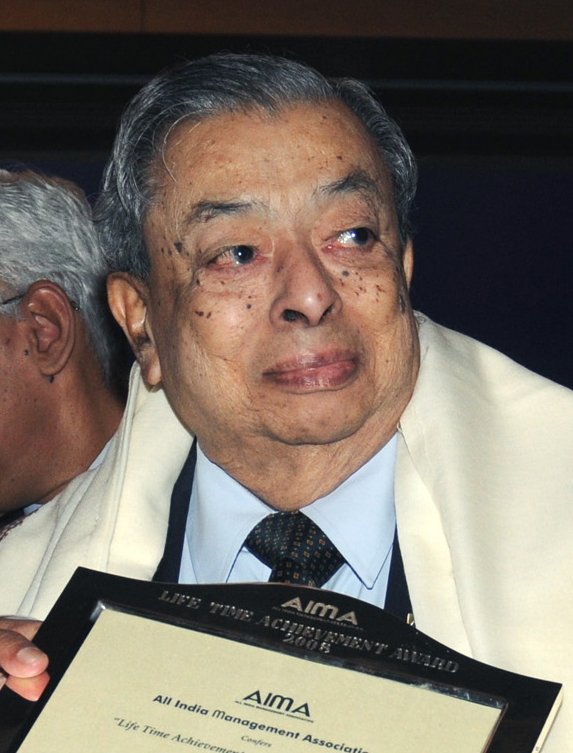
The White Revolution in India is the name for the dairy transformation that made the country the world’s largest milk producer. It was driven by Operation Flood, a programme launched by the National Dairy Development Board in 1970 and built on the cooperative model first proven at Anand in Gujarat. Where the Green Revolution was a state-led seed-and-fertilizer push, the White Revolution in India was a federation of farmer cooperatives that took milk procurement, processing, and marketing out of private trader hands and put them in the hands of producers.
The numbers tell the story. India produced about 17 million tonnes of milk a year at the time of independence. By 2022-23 production had crossed 230 million tonnes — over a quarter of global output. Per-capita availability rose from 124 grams a day in 1970 to over 460 grams today. None of the other revolutions in Indian agriculture changed both production and rural ownership structure as cleanly.
Verghese Kurien: the architect
The White Revolution in India is inseparable from one engineer. Verghese Kurien was a Kerala-born metallurgist trained at Michigan State University who was posted to the Kaira District Cooperative Milk Producers’ Union — Amul — at Anand in Gujarat in 1949. He stayed for the next half-century.
Kurien’s insight was that India did not have a production problem; it had an organizational problem. Milk was abundant in villages but the surplus was captured by traders and middlemen who fixed prices, adulterated the product, and pocketed the margin. If the farmers themselves owned the processing plant and the marketing brand, the entire chain would work for them.
In 1965 Prime Minister Lal Bahadur Shastri visited Anand, spent a night in a village, and was so struck by the cooperative model that he asked Kurien to set up a national institution to replicate it. The National Dairy Development Board (NDDB) was established that year, headquartered at Anand, with Kurien as chairman. The Anand pattern was about to go national.
The Anand pattern cooperative
The architecture of the White Revolution in India is the three-tier cooperative structure.
Village level
A primary milk producers’ cooperative society in each village. Any farmer with a milch animal can become a member. Milk is collected twice a day, tested for fat and SNF (solids-not-fat), and paid for on the spot at rates linked to quality.
District level
District cooperative milk producers’ unions own the chilling plants and the processing dairies. They aggregate milk from the village societies, pasteurise it, manufacture butter, ghee, cheese, and milk powder, and route the surplus to the federation.
State level
State cooperative dairy federations handle marketing under their flagship brands — Amul in Gujarat, Nandini in Karnataka, Aavin in Tamil Nadu, Mother Dairy in Delhi NCR via NDDB. The federation does national distribution, advertising, and price discovery.
This three-tier model means margins that would otherwise have gone to private traders flow back to producers. About 75 to 80 paise of every consumer rupee paid for Amul milk returns to the farmer. That single statistic is the engine of the White Revolution in India.
Operation Flood: the three phases
NDDB packaged the national rollout into a single time-bound programme called Operation Flood, run from 1970 to 1996. Funding came initially from the European Economic Community’s surplus skim milk powder and butter oil, sold in Indian cities and the proceeds invested in dairy infrastructure. World Bank loans were added later.
Phase I (1970-1980)
The first phase linked 18 of India’s best milksheds to the four major metropolitan markets — Bombay, Calcutta, Delhi, and Madras. The objective was simple: replace city milk supply from informal traders with cooperative-controlled supply chains. By 1980 the four metros were milk-cooperative-supplied, and the foundations of state federations in Gujarat, Maharashtra, and Karnataka were in place.
Phase II (1981-1985)
Phase II expanded the cooperative network to 136 milksheds across India and 290 urban markets. It built feeder-balancing dairies, mother dairies, and a national milk grid that could move milk powder from surplus to deficit regions. By the end of Phase II, India had stopped importing milk powder.
Phase III (1985-1996)
The final phase consolidated the institutional structure, strengthened cooperative governance, added breeding and animal-health services, and built productivity infrastructure. By 1996 the White Revolution in India had created a federation of 1,70,000 dairy cooperatives serving 11 million farmer-members across 285 districts.
Amul: the brand that anchored the system
Amul — short for Anand Milk Union Limited — is the cooperative federation whose success seeded the rest of the network. Started in 1946 as a producer protest against the Polson Dairy monopoly, it grew under Tribhuvandas Patel’s chairmanship and Kurien’s general managership into the largest food brand in India.
Amul demonstrated that a cooperative could produce branded consumer goods of competitive quality — butter, cheese, ice cream, chocolate, infant formula — and could market them through one of the longest-running advertising campaigns in Indian history. The Amul moppet, drawn by Eustace Fernandez and ASP and later by daCunha Associates, has been topical-commentary advertising in newspapers since 1966.
For UPSC purposes the relevant point is that Amul made cooperative business commercially credible. State federations across the country modelled themselves on it.
Achievements of the White Revolution in India
The White Revolution in India is regularly cited in UPSC GS-III answers as the most successful institutional intervention in Indian rural development.
- World’s largest milk producer — India crossed the United States in 1998 and has held the top position since. About 230 million tonnes in 2022-23, against the next-largest producer’s roughly 100 million tonnes.
- Self-sufficiency — milk powder imports ended in the early 1980s. India is now a net exporter of dairy products to West Asia and Southeast Asia.
- Rural income — over 90 million households earn a significant share of cash income from dairy. The share of women in cooperative membership is well over 30 percent and growing.
- Nutrition — per-capita milk availability has tripled since 1970. Milk is the single largest source of animal protein in Indian diets.
- Institutional template — the cooperative model has been adapted for oilseeds (Dhara), salt, fruits, vegetables, and fertilizer. The broader animal husbandry and dairy in India ecosystem rests on this template.
Current challenges
The White Revolution in India is now in a different phase. Most of the original problems — production, processing, marketing — are solved. The new problems are different.
Productivity gap
Indian average milk yield per animal is among the lowest in the world — around 5 kg a day for crossbred cattle, against 25-30 kg in developed dairy countries. Nutrition, breeding, and animal health are the next productivity frontier. The Rashtriya Gokul Mission and the National Animal Disease Control Programme are recent state interventions.
Feed and fodder
Green fodder availability is short by 35-40 percent of demand. Concentrate feed is expensive and increasingly imported. This is the binding constraint on per-animal yields.
Climate stress
Heat stress, drought, and unpredictable monsoon are reducing productivity in the Indo-Gangetic plain and central India. Crossbred animals — the Holstein-Friesian and Jersey crosses introduced during the White Revolution in India — are more heat-sensitive than indigenous breeds. Breeding policy is being recalibrated toward indigenous and crossbred-indigenous lines.
Market liberalisation
Private dairy companies — Hatsun, Heritage, Tirumala, Dodla — and multinationals like Nestlé and Danone now compete aggressively with cooperatives for procurement and for shelf space. The cooperative share in organised milk procurement has slipped to roughly 50 percent.
FTA pressure
Free trade agreement negotiations with Australia, New Zealand, and the European Union repeatedly run into the dairy issue. Indian cooperatives argue that imported milk powder and cheese at zero duty would devastate the producer share that the White Revolution in India built up. India has so far protected dairy in the Regional Comprehensive Economic Partnership and similar talks.
A2 milk and value addition
Premium positioning around A2 milk, organic dairy, and fermented products is driving margin growth in urban markets. Cooperatives have been slower than private players to capture this premium.
White Revolution in India: the policy lesson
The White Revolution in India was not a Green Revolution-style technology push. It was an organizational reform that fixed an institutional failure — the trader margin that was destroying producer incentives. The lesson is repeatable: where the market does not work for small producers, build a producer-owned institution to capture the margin.
This is why the Producer Company Act of 2002 and the current Farmer Producer Organisation push trace lineage back to Anand. The toolkit for solving the small-farmer income problem in pulses, oilseeds, horticulture, and fisheries is the Anand pattern adapted to each commodity. The blue revolution India and the broader fisheries India story is partly an attempt to do for fish what Operation Flood did for milk.
The broader story of M.S. Swaminathan and the Green Revolution in India explains the parallel transformation in grain. Together, the three revolutions account for most of what changed in independent India’s rural economy. See also food security and agricultural credit for the supporting policy architecture.
Frequently Asked Questions
What is the White Revolution in India?
The White Revolution in India is the dairy transformation between 1970 and 1996 that made India the world’s largest milk producer through Operation Flood, a programme run by the National Dairy Development Board on the cooperative Anand pattern.
Who is the Father of the White Revolution in India?
Verghese Kurien is the Father of the White Revolution in India. As founder-chairman of NDDB and architect of Amul, he designed Operation Flood and the three-tier cooperative structure that anchors Indian dairy.
What is the Anand pattern of cooperative?
The Anand pattern is a three-tier producer cooperative — village primary society, district union, state federation — in which farmers own the processing plant and the marketing brand. About 75-80 paise of every consumer rupee returns to the producer.
What are the three phases of Operation Flood?
Phase I (1970-1980) linked 18 milksheds to four metros. Phase II (1981-1985) expanded to 136 milksheds and 290 urban markets and built the national milk grid. Phase III (1985-1996) consolidated the institutional structure and added breeding and animal-health services.
When did India become the world’s largest milk producer?
India overtook the United States in 1998 and has remained the world’s largest milk producer since. Annual output crossed 230 million tonnes in 2022-23, roughly one-quarter of global production.
What was the role of NDDB?
The National Dairy Development Board, set up in 1965 with Verghese Kurien as chairman and headquartered at Anand, designed and ran Operation Flood. It mobilised funding from the European Economic Community and the World Bank, built dairy infrastructure, and seeded cooperative federations across states.
What are the current challenges to the White Revolution?
The main current challenges are low per-animal productivity, fodder shortage, climate stress on crossbred animals, competition from private dairy companies, free-trade-agreement pressure to open imports, and slower cooperative entry into premium A2 and organic segments.
What is the difference between the Green Revolution and the White Revolution in India?
The Green Revolution in India was a technology push centred on HYV seeds, irrigation, and fertilizers for wheat and rice, driven by the state. The White Revolution in India was an institutional reform built on producer cooperatives in dairy, driven by the NDDB on the Anand pattern. The first changed what farmers grew; the second changed who captured the value.
Tell Google you want more of this.
Add Anantam IAS as a preferred sourceOne tap, and this site shows up more often in your own Top Stories, AI Overviews and AI Mode. Remove it any time.





