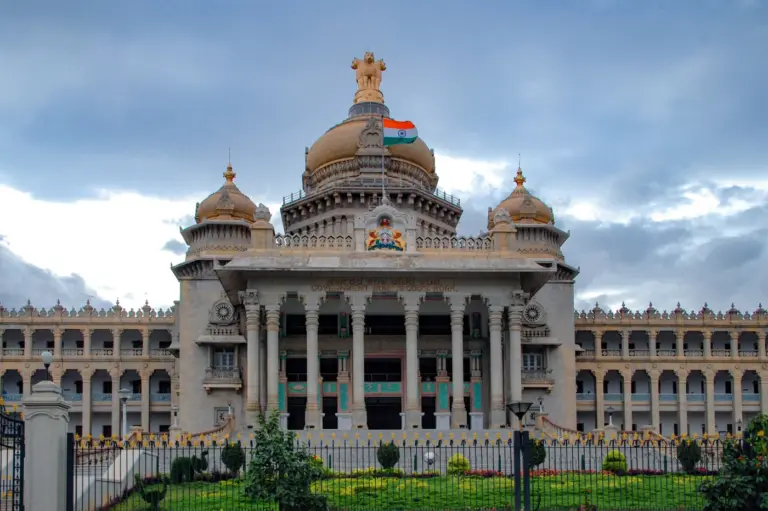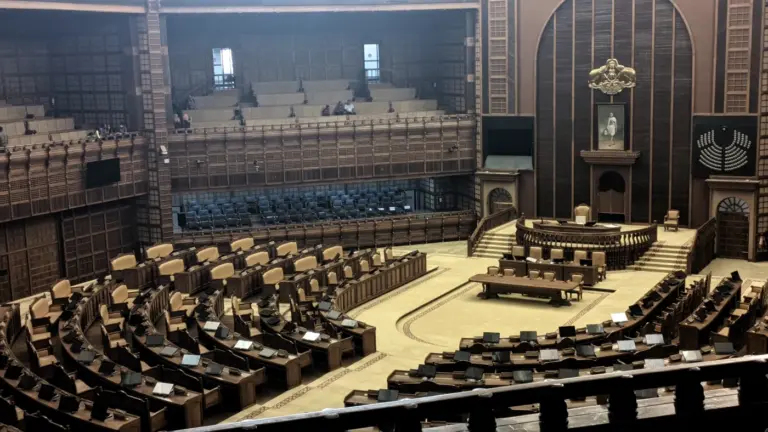
The Constitution (One Hundred and Sixth Amendment) Act, 2023, better known as the Nari Shakti Vandan Adhiniyam, reserves one-third (33%) of seats in the Lok Sabha, State Legislative Assemblies, and the Legislative Assembly of the NCT of Delhi for women. Passed in September 2023 after a 27-year journey — the first attempt dates to 1996 — the Act is the most significant legislative intervention for women's political representation in India's history. But its implementation is tied to the completion of the first Census after enactment and a subsequent delimitation exercise, making the effective year uncertain. For UPSC, the Bill sits at the intersection of GS-I (women's empowerment, social justice), GS-II (Parliament, Constitutional Amendments) and Essay (representation and democracy).
Why women's reservation
Women's reservation: representation at a glance
- 13.6% – Women in Lok Sabha (2024) — 74 of 543 seats
- ~9% – Women in state legislatures — below global average
- 33% – Women in Panchayats — constitutionally mandated since 73rd Amdt 1992
- 61%+ – Women in Rwanda Parliament — world's highest; constitutionally mandated 30% quota
- Gender gap in representation — despite 49% of the population, Indian women hold only a minority of seats. The 17th Lok Sabha had 14-15% women MPs, the highest ever; India ranks around 148 out of 193 nations on women's political participation.
- Article 15 prohibits gender discrimination but is not self-executing in electoral politics.
- CEDAW — Convention on the Elimination of All Forms of Discrimination Against Women — obligates signatories to eliminate discrimination in political life.
- Panchayat success — the 73rd and 74th Amendments (1992) reserved one-third of seats in local bodies for women; subsequent state laws raised this to 50% in many states.
- Research findings — a 2003 study showed women elected under reservation in panchayats invest more in public goods aligned with women's concerns (water, sanitation, health). The Standing Committee on Law and Justice (2009) found that concerns about women being "proxies" in local bodies were largely baseless. The Inter-Parliamentary Union (2022) identified legislated quotas as the decisive factor in women's representation globally.
Legislative history
| Year | Development |
|---|---|
| 1993-94 | 73rd & 74th Amendments — one-third seats for women in PRIs and ULBs |
| 1996 | First Women's Reservation Bill — 81st Amendment — lapsed with Lok Sabha dissolution |
| 1998, 1999, 2002, 2003 | Re-introduced; each lapsed |
| 2008 | UPA introduces in Rajya Sabha |
| 2010 | Rajya Sabha passes the Bill; Lok Sabha does not take it up |
| 2014 | Lapses with dissolution of 15th Lok Sabha |
| September 2023 | 128th Amendment Bill passed in both Houses; notified as 106th Amendment Act |
Nari Shakti Vandan Adhiniyam — key provisions
- Reservation of one-third seats — "as nearly as may be" — in the Lok Sabha, State Legislative Assemblies, and the Delhi Legislative Assembly.
- Reservation applies within seats reserved for SCs and STs — sub-reservation for women.
- New Article 330A — reservation in Lok Sabha.
- New Article 332A — reservation in State Legislative Assemblies.
- New Article 334A — commencement conditional on post-enactment census and delimitation.
- Article 239AA amended — brings Delhi Assembly within the reservation.
- Rotation of reserved seats after each delimitation, as determined by Parliament.
- Duration: 15 years from commencement; may continue as Parliament prescribes by law.
Status of reservation in existing seats (Lok Sabha)
| Category | Reserved seats |
|---|---|
| Scheduled Castes | 84 (Article 330) |
| Scheduled Tribes | 47 (Article 330) |
| After 106th Amendment — women | ~181 out of 543 (one-third), including sub-quotas in SC/ST seats |
When will it take effect
The reservation commences after delimitation following the first census taken after commencement of the Act. Given that:
- The next Census was due in 2021; postponed because of COVID; as of 2025-26 it had not been conducted.
- Delimitation is frozen till the first Census after 2026 (by the 84th Amendment Act, 2001 and Article 82).
- The Act's language ties commencement to both Census and delimitation.
Analysts expect the reservation to be effective from the general elections after 2029 at the earliest, though this could be earlier if Census and delimitation timelines accelerate.
Arguments in favour
- Gender justice and substantive equality — corrects under-representation.
- Constitutional mandate — aligns with Articles 14, 15, 39 and Preamble.
- Evidence from panchayats — women leaders deliver; "proxy" concerns overstated.
- International obligations — CEDAW, SDGs (especially SDG 5).
- National integration and policy enrichment — diverse perspectives in law-making.
- Role modelling — more women in Parliament encourages participation at all levels.
Arguments against / concerns
- Restricted voter choice — in reserved constituencies, voters can only elect women candidates.
- Rotation disincentive — sitting members ineligible in the next election may under-invest in their constituencies.
- Upper-caste skew concern — unless sub-quotas for OBC women are introduced, blanket 33% may disproportionately benefit upper-caste women.
- Delayed implementation — dependence on Census and delimitation erodes immediacy.
- No OBC sub-quota — a long-standing demand from several parties (RJD, SP, DMK) for an OBC sub-quota within women's reservation; Parliament rejected it in 2023.
- Tokenism risk — parties could still field weaker women candidates in reserved seats.
- Structural reforms neglected — reservation alone may divert from deeper reforms like state funding of elections, inner-party democracy, and criminalisation.
Measures to boost women's participation (beyond reservation)
- Reservation at all levels — Legislative Councils, Rajya Sabha, cabinets and decision-making bodies.
- Decriminalisation and inner-party democracy — mandatory party-level reservation for women candidates.
- State funding of elections — levels the financial playing field.
- Mahila Gram Sabha — institutionalised platform in panchayats.
- Training and capacity-building — for women legislators and candidates.
- Gender-sensitisation of political parties — nominations based on merit and women's-rights record.
Latest developments (2024-26)
Updated context: The 18th Lok Sabha convened in June 2024 without the reservation being operative. The Census and delimitation timelines remain uncertain.
- 18th Lok Sabha (2024) — elected with 74 women MPs (13.6%); women's reservation not yet operational.
- Census — plans announced in 2025 for enumeration with staggered schedule; digital census platform pilot-tested.
- Delimitation Commission — not yet constituted post-2026.
- OBC sub-quota debate — reignited after the 2024 election with several parties demanding constitutional amendment.
- Supreme Court petitions — PILs filed seeking direction to the government to notify and implement the reservation without further delay; the court has reiterated that Parliament's conditional scheme (post-Census delimitation) is constitutionally permissible.
- Panchayat data (2024) — Ministry of Panchayati Raj reported over 1.4 million women elected representatives in PRIs — the largest such cohort globally.
- Global comparison — Rwanda (61%), Mexico (50%), Sweden (45%) far ahead; India trails neighbours Pakistan (20.6%) and Afghanistan (27.7%) too.
Global comparison
| Country | Mechanism | Women's share in lower house |
|---|---|---|
| Rwanda | Constitutional quota (30%); proportional rep | ~61% |
| Mexico | Parity law 2018 | ~50% |
| Sweden | Party-level voluntary quotas | ~45% |
| South Africa | ANC voluntary quota | ~45% |
| Argentina | Ley de Cupos (1991) | ~44% |
| Bangladesh | Reserved seats (50 indirectly elected) | ~21% |
| Pakistan | Reserved seats (17%) | ~21% |
| India (pre-reservation) | No quota | ~14% |
The India-specific lesson: panchayat-level reservation works. Over 1.4 million elected women representatives in PRIs today — the world's largest cohort — have delivered measurable improvements in public goods closely linked to women's concerns (water, sanitation, nutrition, primary schooling). Scaling up this success to state and national legislatures is the rationale behind the 2023 Act.
Analysis: what next
The Nari Shakti Vandan Adhiniyam is historic but conditional. Its transformative potential depends on three factors: (a) early completion of the Census; (b) timely delimitation; and (c) honest implementation without diluting through party-ticket manipulation. A deeper reform agenda — OBC sub-quota, state funding, criminalisation control — would strengthen the reservation's democratic legitimacy.
UPSC Relevance
GS-II mapping: Indian Constitution — amendments, significant provisions; Parliament and State Legislatures — structure, functioning; Role of women in polity; Government policies and interventions.
Prelims pointers:
- Constitution (106th Amendment) Act, 2023 — Nari Shakti Vandan Adhiniyam.
- Reservation: one-third of seats in Lok Sabha, State Assemblies, Delhi Assembly.
- New Articles: 330A, 332A, 334A; amended Article 239AA.
- Commencement tied to first Census after enactment + delimitation.
- 73rd and 74th Amendments — one-third women reservation in PRIs/ULBs (1993).
- Duration: 15 years from commencement.
- 17th Lok Sabha — 14-15% women MPs; 18th LS — ~13.6%.
Mains angles:
- "The Nari Shakti Vandan Adhiniyam is a landmark, but its delayed operation undermines its transformative potential." Discuss.
- Evaluate the arguments for and against an OBC sub-quota within the women's reservation. Should Parliament enact it?
Related: Panchayati Raj Institutions, Fundamental Rights, Article 15.
Tell Google you want more of this.
Add Anantam IAS as a preferred sourceOne tap, and this site shows up more often in your own Top Stories, AI Overviews and AI Mode. Remove it any time.