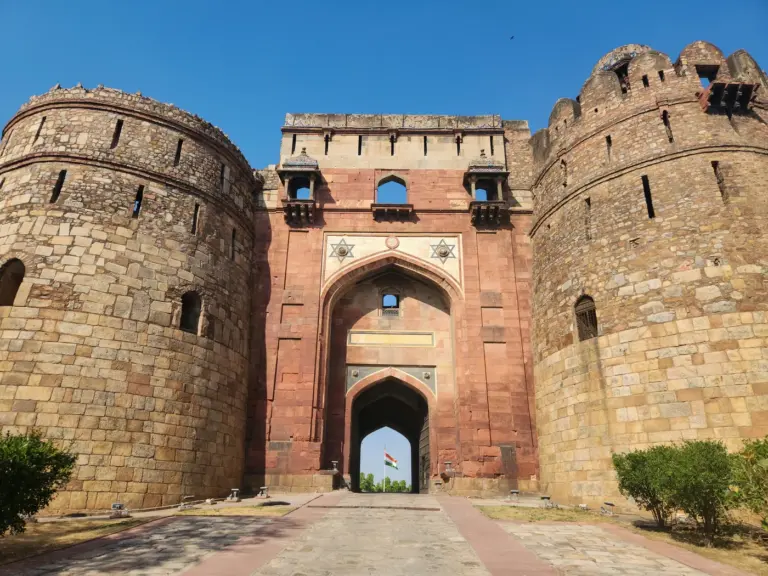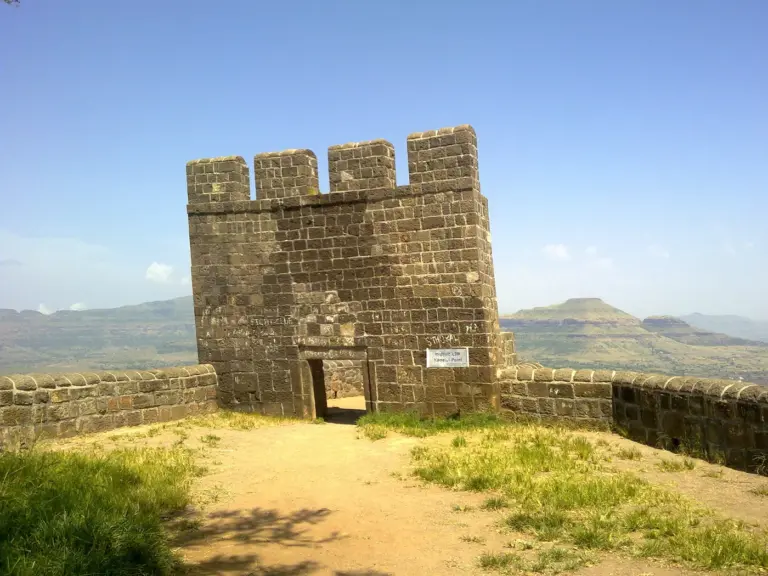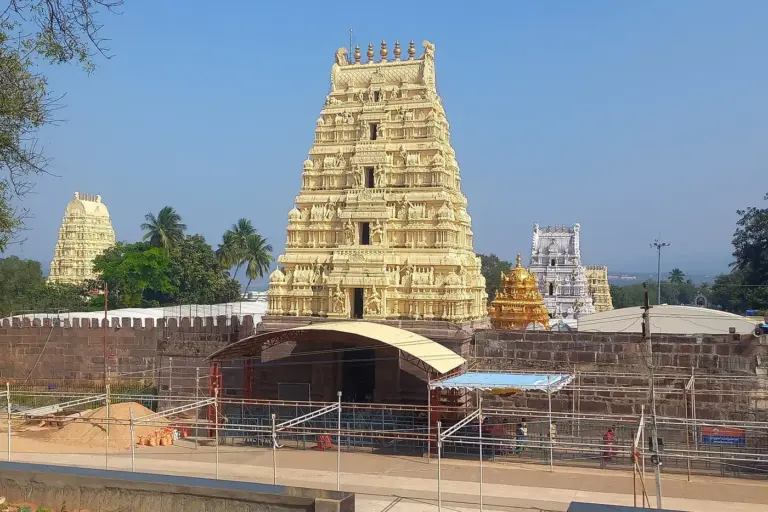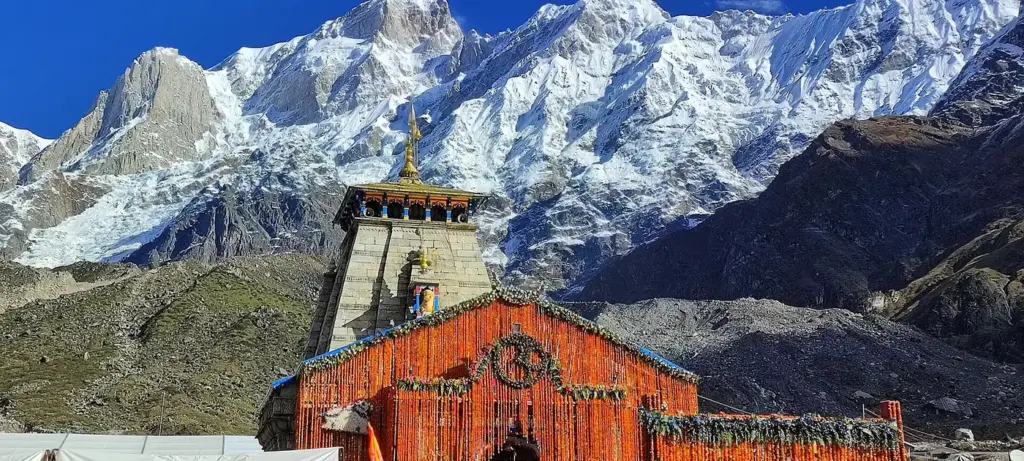
The 12 jyotirlinga temples are the twelve shrines where Shiva is worshipped as a jyotirlinga, literally a “linga of light”, and the standard list spreads them across eight states, from Somnath on the Gujarat coast to Rameswaram on an island off Tamil Nadu. Most aspirants can recite the names. The trouble starts with the map. Ask how many sit in Maharashtra and the honest answer is three or five, depending on which temple you accept for Vaidyanath and Nageshwar.
That ambiguity isn’t a gap in your notes. It comes from the source. The Sanskrit hymn that fixes the list names places the way a pilgrim would, “at Parali” or “in the Daruka forest”, not the way a surveyor would, so more than one living temple can claim the same verse. The twelve are best learned state-wise, each tied to a river or a hill, with the disputes marked rather than smoothed over.
What Makes a Shrine a Jyotirlinga
A jyotirlinga is a shrine where tradition holds that Shiva appeared as light, and where the linga is regarded as swayambhu, self-manifested rather than installed. The difference is easy to picture. Madhya Pradesh Tourism describes the Mahakaleshwar linga as drawing its power from within itself, as against a linga that priests consecrate and invest with mantras. One is believed to have arrived on its own. The other is placed.
- The list of twelve belongs to the Puranic tradition, and the Shiva Purana is the text most often cited for it.
- The version everyone memorizes is the Dwadasha Jyotirlinga Stotram, a four-verse Sanskrit hymn traditionally attributed to Adi Shankaracharya.
- Three verses name the twelve places. The fourth promises that reciting them morning and evening destroys the sins of seven births.
The Stotram, Decoded
Each jyotirlinga in the hymn comes with a place-word, and that place-word is where every later dispute begins. Read the middle column carefully.
| Stotram phrase | What the place-word says | Temple usually accepted |
|---|---|---|
| Saurashtre Somanatham | In Saurashtra | Somnath, Gujarat |
| Srishaile Mallikarjunam | On the Srishaila hill | Srisailam, Andhra Pradesh |
| Ujjayinyam Mahakalam | In Ujjayini | Mahakaleshwar, Ujjain, Madhya Pradesh |
| Omkaram Amaleshvaram | Omkara, with Amaleshwara | Omkareshwar and Mamaleshwar, Madhya Pradesh |
| Paralyam Vaidyanatham | At Parali | Disputed: Deoghar (Jharkhand) or Parli (Maharashtra) |
| Dakinyam Bhimashankaram | In Dakini | Disputed: Bhimashankar (Maharashtra) or Dakini hills (Assam) |
| Setubandhe Ramesham | At Setubandha, the bridge | Rameswaram, Tamil Nadu |
| Nagesham Darukavane | In the Daruka forest | Disputed: Dwarka, Aundha or Jageshwar |
| Varanasyam Vishvesham | In Varanasi | Kashi Vishwanath, Uttar Pradesh |
| Tryambakam Gautamitate | On the bank of the Gautami (Godavari) | Trimbakeshwar, Maharashtra |
| Himalaye Kedaram | In the Himalaya | Kedarnath, Uttarakhand |
| Ghushmesham Shivalaye | At Shivalaya | Grishneshwar, Verul, Maharashtra |
The middle column explains the disputes on its own. “In Saurashtra” can mean only one coast. “In the Daruka forest” can mean any forest a tradition decides was Daruka’s.
The 12 Jyotirlinga List, State-wise
The standard 12 jyotirlinga list puts three in Maharashtra, two each in Gujarat and Madhya Pradesh, and one each in Andhra Pradesh, Uttarakhand, Uttar Pradesh, Jharkhand and Tamil Nadu. The numbering below follows the order most temple boards and tourism departments use, which is why Assam’s 2023 advertisement called Bhimashankar the sixth and Maharashtra Tourism calls Grishneshwar the twelfth. The stotram itself runs in a different order, so the number is a convenience, not a fact to memorize.
| No. | Jyotirlinga | Place | State | River or setting | Key history |
|---|---|---|---|---|---|
| 1 | Somnath | Prabhas Patan, Gir Somnath | Gujarat | Arabian Sea shore | Present temple consecrated on 11 May 1951 by President Rajendra Prasad |
| 2 | Mallikarjuna | Srisailam, Nandyal | Andhra Pradesh | Nallamala hills above the Krishna | Jyotirlinga and Shakti Peetha (Bhramaramba) in one complex |
| 3 | Mahakaleshwar | Ujjain | Madhya Pradesh | Shipra river | South-facing (dakshinamukhi) linga; Shri Mahakal Lok Phase I opened in 2022 |
| 4 | Omkareshwar | Mandhata island, Khandwa | Madhya Pradesh | Om-shaped island in the Narmada | Paired with Mamaleshwar on the south bank; both treated as jyotirlingas |
| 5 | Kedarnath | Rudraprayag | Uttarakhand | Mandakini valley, about 3,583 m | Highest of the twelve; winter worship moves to Ukhimath |
| 6 | Bhimashankar | Sahyadri hills, Pune district | Maharashtra | Bhimashankar Wildlife Sanctuary | Nagara temple with later Maratha patronage; Assam claims the name |
| 7 | Kashi Vishwanath | Varanasi | Uttar Pradesh | Ganga | Renovated by Ahilyabai Holkar in 1780; Kashi Vishwanath Dham opened in 2021 |
| 8 | Trimbakeshwar | Trimbak, Nashik | Maharashtra | Brahmagiri hill, source of the Godavari | Built under Peshwa Balaji Bajirao (1740-1761); ASI-protected |
| 9 | Vaidyanath | Deoghar (claimant: Parli, Beed) | Jharkhand (claimant: Maharashtra) | Ganga water carried from Sultanganj | Site disputed between Deoghar and Parli Vaijnath |
| 10 | Nageshwar | Near Dwarka (claimants: Aundha, Jageshwar) | Gujarat (claimants: Maharashtra, Uttarakhand) | Saurashtra coast | Site disputed; Aundha Nagnath is a 13th-century Seuna temple |
| 11 | Rameshwaram (Ramanathaswamy) | Rameswaram, Ramanathapuram | Tamil Nadu | Island temple with 22 theerthams | Third corridor runs 197 m east-west and 133 m north-south |
| 12 | Grishneshwar | Verul, near Ellora, Chhatrapati Sambhajinagar | Maharashtra | Beside the Ellora caves | Rebuilt by Maloji Bhosale (16th century) and Ahilyabai Holkar (18th century) |
Count Parli and Aundha as well and Maharashtra’s total rises to five, while Jharkhand and Gujarat each lose one. That’s the whole reason two coaching notes can give you two different state counts and both be defensible.
Two of the twelve have detailed notes of their own: the Trimbakeshwar temple at the source of the Godavari and the Srisailam temple on the Nallamala hills. So do Somnath and Kashi Vishwanath, whose histories of destruction and rebuilding need more space than a table row.
Where Traditions Disagree
Three of the twelve have more than one living claimant: Vaidyanath, Nageshwar and Bhimashankar. A fourth, Omkareshwar, looks like a dispute but isn’t one. These are questions of tradition, not of record, so the accurate move in an answer is to name the accepted site and the claimant together.
Vaidyanath: Deoghar or Parli
Deoghar in Jharkhand is the site most national lists use. It’s the destination of the Shrawani Mela: in the month of Shravan, kanwariyas collect Ganga water at Sultanganj, 105 km from Babadham, and carry it on foot for 109 km to offer it to the jyotirlingam, according to the Deoghar district administration.
Parli Vaijnath in Beed district, Maharashtra, has the stotram’s wording on its side, since “Paralyam” literally names Parali. Maharashtra Tourism dates the temple to the Yadava period, around the 12th or 13th century, with an 18th-century renovation by Ahilyabai Holkar. Its legend is Ravana’s: carrying the linga to Lanka, he was tricked into setting it down, and it stayed. The temple also keeps an unusual custom of offering tulsi to Shiva and bilva to Vishnu, the reverse of the usual practice.
Nageshwar: Dwarka, Aundha or Jageshwar
Nageshwar has three claimants, and each has a real temple with a long history behind it.
- Gujarat Tourism places Nageshwar 18 km from Dwarka and tells the Daruka legend: the demon Daruka imprisons the devotee Supriya, whose chanting brings Shiva to destroy him.
- Aundha Nagnath in Hingoli district, Maharashtra, was reconstructed by the Seuna (Yadava) dynasty in the 13th century in the Hemadpanti style, heavy stone masonry laid without mortar. Its sanctum sits below ground level, and a legend of Sant Namdev singing outside the temple is attached to it.
- Jageshwar in Almora, Uttarakhand, is identified with “Darukavana” by a local tradition, but the Almora district administration describes it only as a group of 124 Shiva temples, so it’s the least official of the three claims.
Bhimashankar: Sahyadri or Assam
Bhimashankar in the Sahyadri hills of Pune district is the accepted site, set inside the Bhimashankar Wildlife Sanctuary, known for the Malabar giant squirrel, locally the shekaru. On 14 February 2023, an Assam government advertisement claimed the sixth jyotirlinga stood at the foot of the Dakini hills near Guwahati, reading “Dakinyam Bhimashankaram” literally.
The Maharashtra opposition objected. Assam Chief Minister Himanta Biswa Sarma replied that Assam was not shifting a temple and had not invented a new jyotirlinga, citing Shiva Purana references to Kamrupeshwar and the Dakini hills. Archaeological officials have found temple ruins at the Assam site, but no inscription that confirms it as the jyotirlinga.
Omkareshwar: A Pair, Not a Dispute
The stotram’s “Omkaram Amaleshvaram” names two shrines, and the Khandwa district administration treats both as jyotirlingas: Omkareshwar on the Om-shaped Mandhata island in the Narmada, and Mamaleshwar, anciently Amareshwar, on the south bank. Count them as one jyotirlinga with two temples.
It is wise to write the accepted site first and the claimant in the same clause: “Vaidyanath, Deoghar (Parli in Maharashtra also claims it)”. That’s accurate, it costs six words and it shows you know the list is a tradition, not a gazette.
Architecture: Twelve Temples, Several Styles
The twelve share a theology, not a building style. What you see at each site depends on the region and on who rebuilt it last, which makes the jyotirlingas a compact map of Indian temple architecture.
- Nagara: Maharashtra Tourism describes Bhimashankar as Nagara in style with later Maratha additions. Trimbakeshwar, in ASI’s description, is a bhumija temple, a form usually taught within the Nagara tradition, whose curvilinear tower is built of rising miniature shikharas.
- Hemadpanti: the Deccan tradition of heavy stone masonry without mortar appears at Aundha Nagnath, and Maharashtra Tourism describes Grishneshwar, built of red volcanic rock with a five-tiered shikhara, in the same terms.
- Dravidian: Rameswaram’s long pillared corridors and Srisailam’s gopurams and walled enclosure follow the southern idiom covered in the note on Dravidian temple architecture.
- Himalayan stone: Kedarnath is built of large, heavy, evenly cut grey slabs; the Badrinath-Kedarnath Temple Committee credits its original construction to Adi Shankaracharya in the 8th century.
- Post-independence rebuild: Somnath’s present temple was consecrated in 1951.
Between them, Trimbakeshwar, Rameswaram and Kedarnath cover the Deccan, the far south and the Himalaya. That’s one religious tradition giving you three regional styles for a single answer.
The Maratha Thread
A large share of what pilgrims see at the jyotirlingas today is 18th-century Maratha work. After centuries of damage, the rebuilders at several sites were Peshwas, Holkars and Bhosales, and the most prolific of them was Ahilyabai Holkar of Indore.
| Jyotirlinga | Maratha patron | What was done |
|---|---|---|
| Trimbakeshwar | Peshwa Balaji Bajirao; Ahilyabai Holkar | Temple built on an older site (1740-1761); renovated in 1779 |
| Kashi Vishwanath | Ahilyabai Holkar | Renovation and repair in 1780 |
| Grishneshwar | Maloji Bhosale; Ahilyabai Holkar | Rebuilt in the 16th century; given its present form in the 18th |
| Parli Vaijnath | Ahilyabai Holkar | 18th-century renovation of a Yadava-era temple |
| Bhimashankar | Peshwas | Named by Maharashtra Tourism among the temple’s patrons |
At Somnath too, PIB credits Ahilyabai with the Old (Juna) Somnath temple, popularly called the Ahilyabai temple, which was reconstructed and inaugurated on 20 August 2021. PIB also notes that her charity extended beyond her own territory to the rest of India. That’s the useful sentence for any answer on religious patronage after the Mughal decline: the rebuilders were regional powers, and their temple work reached far past the land they ruled.
Contemporary Relevance: The Corridor Decade
Since 2021, the jyotirlingas have been at the center of India’s largest pilgrimage infrastructure projects, most of them designed to move more people through small, old precincts. These are the numbers worth keeping:
- Kashi Vishwanath Dham (13 December 2021): the temple area grew from about 3,000 sq ft to about 5 lakh sq ft, and 50,000 to 75,000 devotees can now visit the premises, according to PIB.
- Shri Mahakal Lok, Phase I (11 October 2022): the temple precinct is to expand nearly seven times, the whole project costs around Rs 850 crore, the Mahakal Path carries 108 stambhs, and annual footfall of about 1.5 crore is expected to double.
- Srisailam (26 December 2022): a Rs 43.08 crore project under the Ministry of Tourism’s PRASHAD scheme, fully funded by the Union government.
- Omkareshwar (21 September 2023): a 108-ft multi-metal Statue of Oneness of Adi Shankaracharya, unveiled on Mandhata as part of the Ekatma Dham project.
- Kedarnath ropeway (approved 5 March 2025): a 12.9 km line from Sonprayag to Kedarnath costing Rs 4,081.28 crore, meant to cut a one-way journey of 8 to 9 hours to about 36 minutes. Kedarnath draws about 20 lakh pilgrims a season.
- Trimbakeshwar: the Nashik-Trimbakeshwar Simhastha Kumbh is scheduled to open with flag hoisting on 31 October 2026, with its main bathing dates in 2027.
There are three ways to read this building boom. One sees only access and safety, since an old temple lane was never designed for lakhs of pilgrims. Another sees only damage, since a Himalayan valley or a medieval precinct has limits that concrete doesn’t raise. Both extremes miss something. It is wise to judge each project by one test: does it manage the crowd a site already has, or does it invite a crowd the site can’t hold?
Quick Facts Worth Memorizing
Most one-line questions on the jyotirlingas test a superlative or a pairing. These are the ones that recur:
- Highest: Kedarnath, at about 3,583 m.
- Facing south: Mahakaleshwar, the dakshinamukhi linga on the Shipra.
- River source: Trimbakeshwar, where the Godavari rises on Brahmagiri.
- Island shrines: Omkareshwar on the Narmada, and Rameswaram.
- On the coast: Somnath, Nageshwar near Dwarka, and Rameswaram.
- Jyotirlinga and Shakti Peetha in one campus: Srisailam, where Bhramaramba is counted among the Shakti Peethas.
- First in the stotram: Somnath.
- A Centrally Protected Monument: Trimbakeshwar.
How the Topic Is Tested and How to Revise It
Prelims tests the 12 jyotirlinga temples through pairings and locations; Mains uses them as evidence for architecture, patronage and religious tourism. The revision plan follows from that split.
- Prelims pairs: temple with state, river or hill. Srisailam and Nallamala, Trimbakeshwar and Brahmagiri, Omkareshwar and the Narmada, Mahakaleshwar and the Shipra, Kedarnath and the Mandakini.
- Statement questions: superlatives (highest, south-facing, island), the stotram’s place-words, and recent projects with their dates.
- Mains culture answers: regional temple styles, Maratha patronage and Shaiva-Shakta overlap at Srisailam.
- Mains tourism and heritage answers: PRASHAD, corridor projects, carrying capacity and the ropeway debate.
Revise in three passes. First the states, as a count: 3, 2, 2, then five states with one each. Then attach one river or hill to every temple. Then the three disputes, with one recent project for each of the famous five. Three short passes beat one long read, because each pass hangs new facts on the last.
Final Remarks
If you’ve worked through the tables, the 12 jyotirlinga list should now sit on a map in your head rather than in a column of names. The one habit worth keeping from this note is how you write the disputed sites: the accepted temple first, the claimant beside it, in the same line.
After that, add the recent projects only as dates and numbers you can use as examples, not as the core of the topic. The temples are old. The corridors are new. Answers that keep that order read as informed rather than as a news summary. That is all from my side on the twelve. I hope it helps you.
Frequently Asked Questions
What are the 12 jyotirlingas?
They are Somnath, Mallikarjuna (Srisailam), Mahakaleshwar (Ujjain), Omkareshwar, Kedarnath, Bhimashankar, Kashi Vishwanath, Trimbakeshwar, Vaidyanath, Nageshwar, Rameshwaram and Grishneshwar. The list comes from the Puranic tradition and is best known through the Dwadasha Jyotirlinga Stotram, traditionally attributed to Adi Shankaracharya.
Which state has the most jyotirlingas?
Maharashtra. By the standard list it has three: Bhimashankar, Trimbakeshwar and Grishneshwar. If Parli Vaijnath and Aundha Nagnath are counted as the Vaidyanath and Nageshwar jyotirlingas, Maharashtra has five.
Which is the first jyotirlinga?
Somnath in Prabhas Patan, Gujarat, is named first in the stotram and is described by its trust as first among the twelve. The present temple was consecrated on 11 May 1951 by President Rajendra Prasad.
Which jyotirlinga is at the highest altitude?
Kedarnath in Rudraprayag district, Uttarakhand, at about 3,583 m on the Mandakini. It is open for roughly six to seven months a year, and in winter worship moves to Ukhimath.
Why is the Vaidyanath jyotirlinga disputed?
The stotram says Paralyam Vaidyanatham, which literally names Parali, and Parli Vaijnath in Beed district, Maharashtra, claims the jyotirlinga on that basis. Most national lists use Baba Baidyanath Dham in Deoghar, Jharkhand, the destination of the Shrawani Mela.
Which jyotirlinga is also a Shakti Peetha?
Srisailam in Andhra Pradesh. The same temple complex holds Mallikarjuna, the jyotirlinga, and Bhramaramba, who is counted among the eighteen Maha Shakti Peethas.
Which jyotirlinga faces south?
Mahakaleshwar in Ujjain, on the Shipra river. Its linga is described as dakshinamukhi, facing south, and the temple is known for its early morning bhasma aarti.
Is there a Bhimashankar jyotirlinga in Assam?
Assam claims one. A February 2023 Assam government advertisement placed the sixth jyotirlinga at the Dakini hills near Guwahati, reading the stotram’s Dakinyam literally. The accepted site remains Bhimashankar in the Sahyadri hills of Pune district, Maharashtra.
Practice Questions
Prelims MCQs
Q1. Which of the following pairs of jyotirlinga and river is correctly matched?
(a) Omkareshwar : Tapi
(b) Mahakaleshwar : Shipra
(c) Kedarnath : Alaknanda
(d) Trimbakeshwar : Krishna
Answer: (b) Mahakaleshwar stands on the Shipra at Ujjain; Omkareshwar is on the Narmada, Kedarnath on the Mandakini and Trimbakeshwar at the source of the Godavari.
Q2. Which jyotirlinga stands on an island shaped like the syllable Om?
(a) Mahakaleshwar
(b) Omkareshwar
(c) Bhimashankar
(d) Grishneshwar
Answer: (b) Omkareshwar is on Mandhata island in the Narmada, which is shaped like Om; Mamaleshwar on the south bank is treated as part of the same jyotirlinga.
Q3. The phrase ‘Paralyam Vaidyanatham’ in the Dwadasha Jyotirlinga Stotram lends support to the claim of which site?
(a) Deoghar
(b) Parli Vaijnath
(c) Aundha Nagnath
(d) Jageshwar
Answer: (b) Paralyam literally names Parali, which is why Parli Vaijnath in Beed, Maharashtra, claims the Vaidyanath jyotirlinga against Deoghar.
Q4. Ahilyabai Holkar is credited with the renovation and repair, in 1780, of which temple?
(a) Somnath
(b) Kashi Vishwanath
(c) Kedarnath
(d) Ramanathaswamy
Answer: (b) PIB records her renovation of Kashi Vishwanath in 1780; she is also credited with the Old (Juna) Somnath temple, but not the main Somnath temple.
Q5. Consider the following statements: 1. Kedarnath is the highest of the twelve jyotirlingas. 2. The Mahakaleshwar linga is described as dakshinamukhi. 3. Nageshwar jyotirlinga is in Tamil Nadu. Which of the statements given above are correct?
(a) 1 only
(b) 1 and 2 only
(c) 2 and 3 only
(d) 1, 2 and 3
Answer: (b) Nageshwar is usually placed near Dwarka in Gujarat, with claimants in Maharashtra and Uttarakhand; the Tamil Nadu jyotirlinga is Rameshwaram.
Mains Questions
- The twelve jyotirlingas share a single religious tradition but not a single architectural style. Illustrate with examples from different regions. (15 marks, 250 words)
- Assess the role of Maratha rulers in rebuilding Hindu temples in the eighteenth century, with reference to the jyotirlingas. (10 marks, 150 words)
- Pilgrimage corridors at Kashi Vishwanath and Mahakaleshwar promise better access but raise questions of heritage and carrying capacity. Critically examine. (15 marks, 250 words)
- Why are the sites of some jyotirlingas contested? What does this reveal about sacred geography in India? (10 marks, 150 words)
- Discuss the significance of the PRASHAD scheme for religious tourism, with examples from jyotirlinga sites. (10 marks, 150 words)
Tell Google you want more of this.
Add Anantam IAS as a preferred sourceOne tap, and this site shows up more often in your own Top Stories, AI Overviews and AI Mode. Remove it any time.