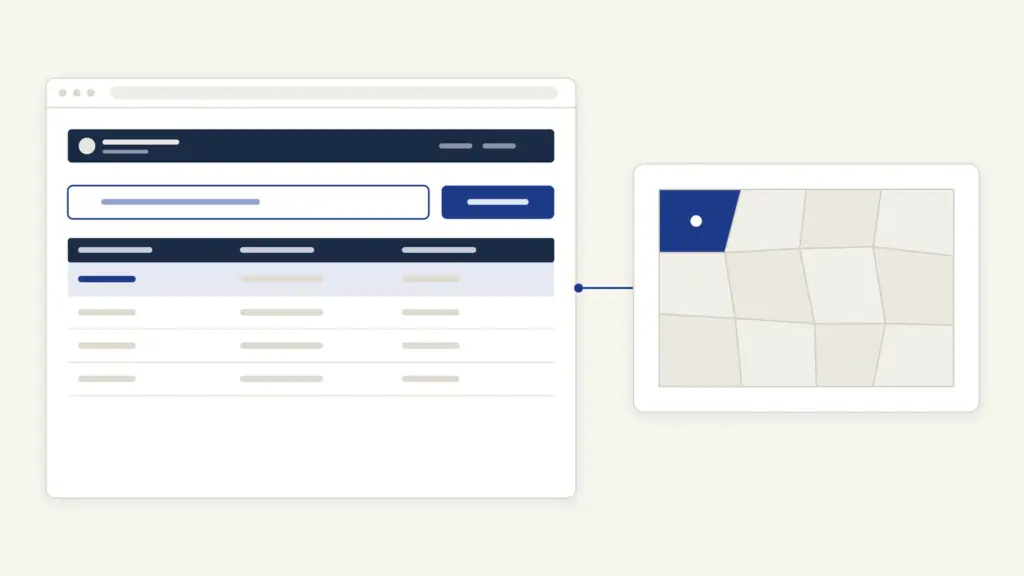
Apna Khata is the Rajasthan government’s land-record portal, and most people open it for one document: the jamabandi nakal of a khata they own, want to buy or have inherited. The portal is run by the Board of Revenue (Rajasv Mandal), Rajasthan, at apnakhata.rajasthan.gov.in, and it also takes online applications for mutation, consent partition and demarcation. Viewing a copy is free, but the copy screen now asks for your name, mobile number and a one-time password before it opens.
Two confusions cost people time. The first is legal: the jamabandi you download from Apna Khata is an information copy, and the portal itself says it cannot be used as a certified copy in any court or office. The second is geographic. Many searches for “apna khata” come from Bihar, but this portal holds only Rajasthan’s agricultural records, so a Bihar plot will never show up here. With those two points settled, the rest of Apna Khata is a short series of drop-downs.
What Apna Khata Rajasthan Covers
Apna Khata is the public window into e-Dharti, the land-record software Rajasthan runs under the Digital India Land Records Modernisation Programme (DILRMP). It shows the jamabandi and mutation copies for every revenue village and lets you file a handful of applications without visiting the tehsil.
| Fact | Detail |
|---|---|
| Portal | apnakhata.rajasthan.gov.in |
| Run by | Board of Revenue (Rajasv Mandal), Rajasthan, Ajmer |
| Software | e-Dharti, built by the National Informatics Centre under DILRMP |
| Main records | Jamabandi (annual register) and namantaran (mutation, P-21) copies |
| Online applications | Mutation (8 types), consent partition, seema gyan (demarcation) |
| Viewing fee | Free; the portal says all copies are available free of charge |
| Login | No account; name, mobile and a 6-digit OTP for each copy |
| Coverage | 41 districts on the portal’s district list |
| Board of Revenue phone | 0145-2627891 |
The 41 districts matter more than they look. The portal’s list already reflects Rajasthan’s redrawn map, with new names such as Kotputli-Behror, Khairthal-Tijara, Deeg, Didwana-Kuchaman, Phalodi, Beawar, Balotra and Salumbar. If your village moved into a new district, search under the new district first. The list of districts in Rajasthan helps when you are unsure which one a tehsil now falls in.
Rajasthan Land Record Terms You Will See
The portal’s records and most of its menus are in Hindi, and a few words carry the whole record. Each one is a register or a number the patwari maintains.
- Jamabandi: the annual register of rights for a village, under section 132 of the Rajasthan Land Revenue Act, 1956. It lists every khata, its khatedars (recorded holders), their shares and the khasra numbers in it.
- Khata: one holding. A khata can hold several fields and several co-owners.
- Khasra: the number of a single field or plot. It is the number a buyer usually knows.
- Namantaran (mutation): the change of an entry after a sale, inheritance, gift or court order. Mutations are recorded in the P-21 register, and the portal calls the mutation copy its P-21 report.
- Chausala jamabandi: the four-yearly jamabandi written under the older system. The portal lets you choose between it and the current online jamabandi.
- Patwar circle and ILR: the patwari’s circle and the Inspector Land Records circle above it. The village list shows both after the village name.
- Girdawari: the crop inspection record of what was sown in each field, issued as form 13 on the separate girdawari portal.
The law behind mutation sits in section 133 (report of succession and transfer of possession) and section 135 (procedure on the report) of the same Act. A sale deed registered at the sub-registrar’s office does not change the jamabandi by itself; the change happens only when the mutation is sanctioned and entered.
Which Record Proves What
Each document answers a different question, and people often ask the wrong one for the job in hand.
| Record | What it proves | Where on Apna Khata |
|---|---|---|
| Jamabandi nakal | Who is recorded as khatedar, shares, khasra numbers and area | Jamabandi nakal tile, then “jamabandi ki pratilipi” |
| Mutation copy (P-21) | That a specific transfer, inheritance or loan entry was reported and decided | Same screen, “namantaran ki pratilipi” |
| Bhu-naksha | Shape and position of the khasra on the village map | Bhu naksha link to bhunaksha.rajasthan.gov.in |
| Girdawari (form 13) | Crop sown in a season, used for crop loans and insurance | Girdawari vivran link |
| Khata/khasra milan report | Old and new khata and khasra numbers after survey and resurvey | Shown on the village screen |
That last row saves buyers real trouble. Where a village has been resurveyed, the khasra number on an old sale deed may not match the current jamabandi, and the milan report lists the old number with its area next to the new one.
How to See Jamabandi Nakal on Apna Khata
The free copy takes about five screens. Keep your phone nearby, because the copy opens only after an OTP.
- Open https://apnakhata.rajasthan.gov.in/ and click the “जमाबंदी नकल” tile.
- Select the district (jila), then the tehsil.
- Under “जमाबन्दी वर्ष”, keep “ऑनलाइन जमाबन्दी” for the current record, or choose “चौसाला पद्धति जमाबन्दी” for the older four-yearly register.
- Pick the first letter of the village name, then the village. Each entry reads village, patwar circle and ILR circle, which helps when two villages share a name.
- On the next screen choose “जमाबंदी की प्रतिलिपि” for the jamabandi or “नामांतरण की प्रतिलिपि” for a mutation copy, then find your khata or khasra in the list that follows.
- Click “आवेदन करें” and fill in your name, address and 10-digit mobile number, and choose the purpose (प्रयोजन) from the list: personal, legal, government, bank, property transaction, educational, business or agricultural.
- Click “Send OTP”, enter the 6-digit OTP and click “Verify OTP”. The resend button unlocks after 30 seconds.
- The copy opens in a new browser window. Allow pop-ups for the site, or nothing will appear.
The session expires after 10 minutes of inactivity and sends you back to the home page, so have your khata or khasra number ready before you start.
A printout of this copy is fine for your own checking before a deal. It is not a document to hand to a bank, and it is not one to accept from a seller as proof of title.
Free Copy Versus Certified Copy
The portal is direct about this. Its disclaimer says the jamabandi copy is for general information, that some mutations are not updated immediately and that it cannot be used as a certified or authorised copy in any court or office. For a certified copy it tells you to apply at a designated kiosk.
The certified route has existed since May 2012, when the Chief Minister inaugurated digitally signed jamabandi copies, first in Niwai tehsil of Tonk district. Under that setup the patwari digitally verifies the jamabandi and the mutation note, and signed copies are issued at e-Mitra and CSC centres as well as revenue offices.
- For your own checking: the free Apna Khata copy is enough.
- For a bank loan, registry or court: take the certified or digitally signed copy from an e-Mitra kiosk or the tehsil.
- Fees: the portal does not publish a fee for certified copies. The kiosk charges the amount set for the service at the counter, so ask for a receipt.
Banks lean on these records for farm lending; the note on agricultural credit in India explains why the land record sits at the centre of a crop loan.
How to Apply for Mutation Online
Apna Khata takes online mutation applications for eight situations. A sale is not one of them, so a buyer should ask the tehsil how a registered deed is being carried into the record.
The eight types on the form are:
- loan taken from a bank (to note the charge);
- loan release (rehan mukt);
- inheritance (virasat);
- relinquishment (haq tyag);
- gift;
- minor becoming major;
- allotment;
- court order.
The steps:
- Click “नामांतरण के लिये आवेदन करें” on the home page.
- Choose the type of mutation and click “आगे चले”.
- Fill in the details in Hindi. The form accepts only Hindi; typing in Roman letters and pressing space converts the word.
- Select the khata and at least one khasra the mutation concerns.
- Merge all supporting documents into one PDF, with each page no larger than 150 KB, and upload it. The portal warns that a missing document leads to rejection.
- Verify with the OTP, save and note the token number.
The documents depend on the type of mutation, and the upload screen lists the ones it expects for the type you chose. Read that list before you scan anything.
For mutation timelines, the portal’s own district-wise report is the best evidence available. As of 29 September 2026 it showed 72,49,840 mutations, of which 70,47,843 were sanctioned, with a mean of 12 days and a median of 8 days to decision statewide. District figures vary, so open the report for your district before you start counting days.
Partition and Demarcation Applications
Two more applications sit beside mutation on the home page.
Consent partition (सहमति विभाजन) is for co-khatedars who agree to divide a joint khata. It needs four documents, each as a separate PDF at 150 KB per page:
- the application letter;
- the partition agreement;
- a sketch map of the proposed division, drawn on a true copy of the original map;
- self-attested identity proof of the co-khatedars.
Seema gyan (सीमाज्ञान) is a request for demarcation, where revenue staff measure and mark a field’s boundaries. The form asks whether a crop is standing, which khasra numbers to measure, the state of the existing boundary marks and the mobile number linked to your Jan Aadhaar or Aadhaar. The Jan Aadhaar guide covers how to check and update that number. After the visit, the “सीमाज्ञान प्रतिक्रिया” tile lets you give feedback on it.
How to Track Your Application
Every application returns a token number in the format xxxx/xxxxx/xx.
- Click “आवेदन की वर्तमान स्थिति” on the home page.
- Enter the token number.
- Choose the application type: all mutations or seema gyan.
- Click “आगे चलें” to see where the file stands.
Once a mutation is sanctioned, check the P-21 copy for your village. That is the record a bank or buyer will read.
Common Errors and Fixes
Most Apna Khata problems come from the selection screens.
- Village not in the list. Check the district first. Villages in the new districts sit under their new district, not the old one.
- Khasra number does not match the deed. The village may have been resurveyed. Read the khata/khasra milan report for the old and new numbers.
- Nothing opens after OTP. The copy opens in a pop-up. Allow pop-ups for apnakhata.rajasthan.gov.in and try again.
- OTP not received. Wait 30 seconds and use “Resend OTP”. Check the mobile number you typed.
- Sent back to the home page. The 10-minute session timer ran out. Start again with your numbers ready.
- Recent transfer missing. The portal warns that some mutations are not updated immediately. Search the mutation copy, then ask the patwari whether the entry has been sanctioned.
- Name spelled wrongly in an old entry. The portal cannot correct records. A correction needs an application to the tehsildar and an order, after which the mutation register shows the change.
- Mutation application rejected. The usual reason is a missing document in the PDF. Reapply with every document merged into the single file.
Where to Complain
The office that owns your record is the tehsil, and the patwari and tehsildar are the officials who act on it. Above them, the SDM hears revenue matters; the SDM explainer sets out that office.
- Board of Revenue, Ajmer: Todarmal Marg, Civil Lines, Ajmer, phone 0145-2627891, the contact listed on Apna Khata.
- Nodal office: the Settlement Commissioner’s department, Viman Bhawan, Gopalbari, Jaipur, phone 0141-2373904.
- Rajasthan Sampark: the state grievance system, helpline 181, at sampark.rajasthan.gov.in.
- Village map: Bhu-Naksha Rajasthan for the plot’s position.
Apna Khata is one of several state portals built under the same national programme; the concept note on land records management in India explains DILRMP and why title guarantee is still the missing piece. Uttar Pradesh runs a similar service, covered in the UP Bhulekh khatauni guide.
What Apna Khata Can’t Do
Apna Khata shows and copies the record and takes a few applications. It does not decide anything.
- It does not issue a certified copy for court or bank use from the free screen.
- It does not correct names, shares or areas; that needs a revenue order.
- It does not hold sale deeds, which sit with the registration department.
- It does not settle title. A jamabandi records who is entered as khatedar, and a disputed entry is decided by revenue courts.
The sensible order is simple. Pull the jamabandi and the P-21 copy yourself before paying any advance on land, compare the khasra numbers with the milan report if the village was resurveyed and buy the certified copy only when a bank, registrar or court asks for it.
Frequently Asked Questions
Is the Apna Khata jamabandi copy legally valid?
The free copy is for information only. The portal’s disclaimer says it cannot be used as a certified or authorised copy in any court or office. For legal or bank use, get the digitally signed or certified copy from an e-Mitra kiosk or the tehsil.
Why does Apna Khata ask for my mobile number and OTP?
The copy screen now works as a short application. You enter your name, address, mobile number and purpose, and the copy opens only after you verify a 6-digit OTP. There is still no account to create.
Is viewing jamabandi on Apna Khata free?
Yes. The portal states that all copies are available free of charge. Certified copies from a kiosk carry a service charge, which the portal does not list.
Can I see Bihar land records on Apna Khata?
No. Apna Khata covers only Rajasthan’s agricultural land records across its 41 districts. Bihar’s khata and jamabandi records sit on the Bihar government’s own land-record portal.
How long does mutation take in Rajasthan?
The portal’s statewide report dated 29 September 2026 showed a mean of 12 days and a median of 8 days from application to decision. Individual cases take longer when documents are missing or an objection is filed.
What is the difference between jamabandi and khasra?
The jamabandi is the annual register of rights for a village, listing each khata, its holders and their fields. A khasra number identifies one field inside a khata. You usually search by khasra and read the jamabandi.
How do I check my mutation application status on Apna Khata?
Open ‘आवेदन की वर्तमान स्थिति’ on the home page, enter the token number in the format xxxx/xxxxx/xx, choose the application type and continue. The screen shows the current stage of the file.
Why can’t I find my village on Apna Khata?
Rajasthan’s district map has changed, and the portal lists villages under the current district and tehsil. Try the new district, then check the first letter of the village name, since spellings in Hindi can differ from the English name.
Tell Google you want more of this.
Add Anantam IAS as a preferred sourceOne tap, and this site shows up more often in your own Top Stories, AI Overviews and AI Mode. Remove it any time.