Join Anantam IAS Channel on Telegram

Daily Digest · Saturday

21 November 2026 Current Affairs for UPSC

10 current affairs published on Saturday, 21 November 2026

21 November 2026 Current Affairs for UPSC — every Why-in-News article AnantamIAS published on Saturday, 21 November 2026, broken down with Why in News?, the exact GS paper it feeds, sub-topic mapping, MCQ-ready facts and a UPSC-style practice question. 10 articles in total, covering Polity, Economy, Environment, S&T, IR, Geography, History, Society and Internal Security — the same Why-in-News + GS-paper-mapping + practice-question format the Compass uses across every daily digest on the site.

Daily current affairs for UPSC is where new material enters your prep stream. Read this 21 November 2026 digest end-to-end in 25–35 minutes, attempt the practice question at the foot of each article (it's MCQ for some, 10/15-marker for others), then bookmark the entries that fall inside your active revision window. Everything stays cross-linked: tap any subject pill to jump to that subject's hub, or use the table of contents above to skip straight to a specific story.

Use this page three ways. Read sequentially for a one-sitting scan of everything that mattered on 21 November 2026. Download the 21 November 2026 PDF below for offline study or print revision. Or use the November 2026 Current Affairs compilation to see this day in the month's full context. For the previous day's reading, see 20 November 2026 Current Affairs; the next day's is 22 November 2026 Current Affairs.

Why we publish daily current affairs separately from the monthly compilation: daily is learning, monthly is revision. Use the daily page to add fresh material to your notes the day it breaks; come back to the November 2026 compilation 60 days before Prelims when the noise has settled and only the lasting takeaway is worth re-reading.

IT Hardware Procurement and Domestic Value Addition

Open article →Download PDF

Why in News?

On November 20, 2026, MeitY announced a revised domestic value addition methodology for six IT hardware product groups under India’s public procurement preference framework.

  • The revision covers desktop and all-in-one computers, laptops, thin clients, servers, monitors and interactive flat-panel displays.
  • Eligible manufacturing processes, Indian research and development, product design and intellectual property receive recognition in the calculation.
  • A standard format supports calculation, supplier self-certification and verification of declarations.
  • The methodology takes effect six months after publication in the Official Gazette, replacing corresponding provisions of the earlier notification.
  • Public procurement can influence where firms assemble, source and design equipment because government demand creates an incentive to qualify under local-content rules.
  • The policy question is whether the declared domestic contribution can be traced to eligible work and inputs within India.

UPSC Relevance

Prelims Relevance

  • Domestic value addition and local-content calculation.
  • Bill of Materials as a record of product components.
  • Surface Mount Technology in motherboard assembly.
  • Self-certification and verification of supplier declarations.
  • Gazette publication as the trigger for the transition period.

Mains Relevance

GS Paper 3

  • Using public purchasing to develop domestic manufacturing and design capability.
  • Balancing measurable local content, supplier participation and procurement accountability.

GS Paper 2

  • Designing transparent certification and verification in government contracting.

Background and Context

What the Procurement Methodology Measures

Domestic value addition connects a hardware product’s eligible Indian contribution to its treatment under the procurement preference framework.

  • Public procurement preference gives domestic production a role in purchasing decisions. MeitY’s sector-specific methodology explains how local content is calculated for the covered hardware, within the wider procurement framework.
  • The official announcement describes a process-oriented calculation based on the Bill of Materials. This connects the declaration to identifiable components and manufacturing activities within the finished product.
  • A Bill of Materials lists the parts that make up a product. Its usefulness for verification depends on connecting those parts with the location and nature of eligible manufacturing work.
  • Think of a laptop supplied to a public institution. The relevant question is which eligible inputs and processes contribute domestically, alongside any recognised design or research contribution claimed by its manufacturer.
  • The revision applies to specified product groups. A supplier needs to identify the applicable product and methodology before making its declaration, rather than assume one calculation covers every electronic device.

Which Domestic Activities Receive Recognition

The revised approach recognises several stages of production and gives weight to eligible intellectual work performed in India.

  • Motherboard assembly through Surface Mount Technology is an eligible activity. It places electronic components onto circuit-board surfaces, providing a concrete manufacturing step that can be associated with production records.
  • The framework also recognises domestic bare circuit boards and assembly, testing and packaging of memory and storage. These activities connect the accounting exercise to work performed on identifiable parts.
  • Display assembly, domestic chassis and power modules, final assembly and testing also appear in the announced methodology. Each claim concerns a particular input or process within the finished hardware product.
  • Eligible in-house research and development in India receives weightage. Additional recognition for Indian product design and intellectual property extends the policy incentive to developing the product’s underlying technical capability.
  • This complements the broader electronics manufacturing chain. Here, the practical task is to establish which eligible contribution enters the procurement calculation and retain the evidence supporting it.

Why Verification and Timing Matter

A common calculation format helps buyers examine declarations and helps suppliers understand the evidence expected from them.

  • Self-certification means the manufacturer declares its domestic value addition. The standardised format makes declarations more comparable and provides a basis for objective verification whenever such checking is required.
  • A declaration and its supporting evidence perform different roles. The declaration states the claimed contribution, while production, sourcing and design records help a reviewer assess whether the claim follows the applicable methodology.
  • The central administrative challenge is consistent treatment. Similar eligible activities should be evaluated consistently across suppliers, while unsupported claims should be identified through examination of the underlying records.
  • The transition period begins from Gazette publication. The press announcement gives a six-month interval, so implementation planning must use the actual Gazette date to establish when the revised provisions apply.
  • The stated goals include manufacturing, indigenous capability and employment. Their achievement will depend on supplier responses and purchasing practice, including whether recognised activities expand and declarations remain credible over time.

Way Forward

Make Declarations Checkable

  • Suppliers should map each claimed activity to the applicable provision and retain consistent sourcing, production and design records.
  • Procuring agencies should apply the standard format consistently and seek clarification when a declaration cannot be reconciled with supporting evidence.
  • Implementation guidance should explain the Gazette-based commencement date and give worked examples using the notified methodology.

Conclusion

  • Domestic value addition is an accounting and verification question with industrial-policy consequences. The revised approach links procurement recognition to eligible manufacturing, research and design contributions within India.
  • A strong policy assessment should examine both capability creation and credible declarations. The announced method provides a structure for measurement, while its results depend on implementation after the prescribed transition.

UPSC Practice Questions

Prelims MCQ 1

Consider the following statements about MeitY’s revised IT hardware domestic value addition methodology.

  1. It recognises eligible in-house research and development undertaken in India.
  2. It introduces a standardised format for calculation and self-certification.
  3. It takes effect immediately on the date of the PIB press announcement.

How many of the above statements are correct?

(a) Only one (b) Only two (c) All three (d) None

Answer: (b) Only two

Explanation:

The first two statements are correct. The methodology takes effect six months after its publication in the Official Gazette.

Prelims MCQ 2

What is the main purpose of using a Bill of Materials in the announced domestic value addition methodology?

(a) To identify components and relate eligible domestic contributions to a product (b) To determine the country’s annual fiscal deficit (c) To certify every imported component as domestically manufactured (d) To replace all product testing requirements

Answer: (a) To identify components and relate eligible domestic contributions to a product

Explanation:

The revised framework uses a process-oriented, Bill of Materials-based mechanism to calculate domestic value addition for the covered products.

UPSC Mains Questions

  1. Explain how public procurement rules can encourage domestic manufacturing and design capability. Discuss the importance of verifiable local-content declarations.
  2. What administrative challenges arise when procurement preferences depend on domestic value addition? Suggest measures to improve consistent assessment.

Source: PIB, Ministry of Electronics and Information Technology.

Frequently Asked Questions

What is domestic value addition in this procurement context?

It measures the eligible domestic contribution to covered IT hardware under the procurement methodology. The revised framework recognises specified manufacturing activities and gives weight to eligible Indian research, design and intellectual property.

Which IT hardware products are covered?

The six groups are desktops and all-in-one computers, laptops, thin clients, servers, computer monitors and interactive flat-panel displays. Suppliers must use the provisions applicable to the relevant product.

Does self-certification remove the possibility of verification?

Manufacturers self-certify their calculations using the standardised format. The announcement expressly states that this structure supports objective verification of the domestic value addition they declare, wherever required.

When does the revised methodology take effect?

It takes effect six months after publication in the Official Gazette. The precise implementation date must be calculated from the Gazette publication date, rather than inferred from the press announcement.


Health Insurance Claims and the Right to Clear Reasons

Open article →Download PDF

Why in News?

IRDAI announced enforcement action against Star Health on November 20, 2026, over unjustified claim rejections, unsupported deductions and inadequate communication to policyholders.

  • The regulator imposed a ₹2 crore penalty and directed clearer settlement letters after identifying violations in the handling of health insurance claims, including COVID-19 claims.
  • The proceedings followed an inspection in 2022, a show-cause notice in December 2024 and a personal hearing in June 2025.
  • The order requires Board oversight and an Action Taken Report, connecting the findings on individual claims to the insurer’s responsibility for correcting its practices.
  • Insurance helps households pool medical risks, but claim handling determines whether the promised financial protection is available when treatment costs arise.
  • A decision with clear reasons gives the claimant a basis for checking the contract, identifying an error and using the available grievance process.

UPSC Relevance

Prelims Relevance

  • IRDAI regulates insurance and protects policyholders’ interests.
  • Repudiation means rejecting a claim, while a deduction reduces the amount admitted for payment.
  • Sum insured is the coverage amount specified under an insurance policy, subject to its terms.
  • An Insurance Ombudsman is a grievance-redress institution whose details must be communicated appropriately to complainants.

Mains Relevance

GS Paper 2

  • Regulatory accountability and reasoned decisions in essential financial services.
  • Health protection, information gaps and access to grievance redress.

GS Paper 3

  • Consumer confidence and supervision of insurance-market conduct.

Background and Context

What the Regulator Found

The findings concern the grounds for claim decisions and the information given to the person bearing the medical expense.

  • IRDAI’s findings identify claim repudiations on untenable grounds and deductions unsupported by policy terms. In many sampled cases, amounts were paid only after the regulator raised the issue.
  • Specific policy conditions were missing from communications explaining reduced or rejected claims. Without the relevant contractual reason, a policyholder could struggle to assess whether the decision followed the insurance cover purchased.
  • Hospital discounts created another transparency problem. Agreed discounts with network hospitals must appear in hospital bills and be disclosed to policyholders, allowing the financial effect of the arrangement to be checked.
  • Procedural chronology matters when reading the announcement. The inspection and hearing occurred before the November 2026 release, so the publication date does not establish when the underlying claims were processed.
  • Enforcement powers were exercised through a monetary penalty and corrective directions. The official IRDAI release identifies the applicable insurance and third-party-administrator regulations underlying the findings.

How an Itemised Settlement Helps

A settlement letter should make the journey from the claimed bill to the payable amount understandable.

  • Allowed amounts show which charges the insurer accepts. Separately identifying disallowed and non-payable amounts lets the policyholder see where the final payment differs from the hospital bill submitted for settlement.
  • Policy-based reasons connect each disputed decision to the contract. This creates a record that can be reviewed by the insurer’s grievance team and the relevant redress forum when a complaint arises.
  • Discount disclosure helps the patient understand the negotiated hospital charge and its treatment during settlement. A single unexplained deduction can conceal the distinction between a hospital concession and an insurance exclusion.
  • Remaining cover also matters after a claim. IRDAI directed disclosure of the reduction in sum insured so that policyholders can understand how the settlement affects the coverage available under their policy.
  • Financial protection depends on both coverage and payment practices. This complements the wider question of household out-of-pocket health spending, where direct medical expenses reveal the burden households continue to bear.

Grievance Redress and Board Responsibility

Clear explanations help complaints move through a usable process and give management evidence of recurring failures.

  • Ombudsman details give complainants information about an available redress route. The release records a caution over failure to provide these details and notes that corrective steps were taken on record.
  • Board review brings claim-handling defects into corporate oversight. Placing the order before the Board and submitting an Action Taken Report requires the insurer to account for its response to the regulator.
  • Regulatory penalties address breaches of applicable requirements. The announced penalty does not itself specify compensation for every policyholder or establish that every rejected claim must automatically be paid in full.
  • Contractual assessment still requires examining the policy and the claim. The durable lesson is that decisions must rest on supportable grounds and communicate enough information for those grounds to be challenged.
  • Reviewable records turn transparency into a practical safeguard. Itemised letters, disclosed discounts and stated reasons help distinguish an individual processing error from a recurring weakness in an insurer’s settlement practices.

Way Forward

Make Claim Decisions Reviewable

  • Insurers should audit settlement letters for itemised amounts and policy-linked explanations before treating payment as completion of the claim process.
  • Boards should track repeated deduction complaints and check whether corrective changes reach the teams and service providers handling claims.
  • Grievance teams should provide clear redress information and preserve the decision record so complaints can be examined without repeatedly reconstructing the same facts.

Conclusion

  • Fair claim settlement combines a supportable contractual decision with an explanation the policyholder can understand and challenge. Disclosure is part of the protection delivered by insurance.
  • IRDAI’s intervention connects individual claim decisions to broader market-conduct supervision through itemisation, grievance information and Board accountability.

UPSC Practice Questions

Prelims MCQ 1

With reference to the IRDAI action announced in November 2026, consider the following statements:

  1. Claim settlement letters were required to itemise allowed, disallowed, non-payable and discount amounts.
  2. The announced regulatory penalty automatically entitled every policyholder to full reimbursement of every rejected claim.
  3. The order was to be placed before the insurer’s Board, with an Action Taken Report to follow.

How many of the above statements are correct?

(a) Only one (b) Only two (c) All three (d) None

Answer: (b) Only two

Explanation:

Statements 1 and 3 reflect the directions in the release. Statement 2 is incorrect because the penalty does not establish blanket reimbursement for all claims.

Prelims MCQ 2

Why does identifying the specific policy condition matter when a health insurance claim is reduced?

(a) It eliminates every exclusion in the policy. (b) It converts the settlement letter into a new insurance policy. (c) It provides a contractual basis that the policyholder can examine and challenge. (d) It transfers all hospital charges to the regulator.

Answer: (c) It provides a contractual basis that the policyholder can examine and challenge.

Explanation:

A specific reason permits meaningful review of whether a claim decision follows the policy. It does not remove contractual conditions or transfer payment obligations to IRDAI.

UPSC Mains Questions

  1. Explain how reasoned claim decisions and itemised settlement letters strengthen policyholder protection in India’s health insurance market.
  2. Discuss the relationship between regulatory enforcement, corporate Board oversight and accessible grievance redress in financial services.

Source: Insurance Regulatory and Development Authority of India.

Frequently Asked Questions

What did IRDAI announce on November 20, 2026?

IRDAI announced a penalty and corrective directions against Star Health concerning unsupported claim decisions, inadequate explanations, hospital-discount transparency and grievance information. The case followed an earlier inspection, notice and hearing.

What must an itemised claim settlement letter disclose?

The direction covers allowed, disallowed, non-payable and discount amounts, together with the reduction in sum insured. This helps the policyholder understand how the hospital bill became the final insurance payment.

Does the penalty mean every rejected claim will be paid?

The regulatory penalty addresses identified violations. It does not create an automatic full-payment entitlement for every claimant. The policy terms, claim facts and applicable redress process remain relevant to individual disputes.

Why is the insurer’s Board involved?

The order is to be placed before the Board and followed by an Action Taken Report. This brings the regulator’s findings into senior oversight and requires an account of corrective action.

Scheduled Area Land Acquisition and Gram Sabha Consent

Open article →Download PDF

Why in News?

On November 18, 2026, the Supreme Court set aside an Odisha land acquisition in Bibol Toppo v State of Odisha for violating mandatory consent safeguards.

  • The dispute concerned land in Sundargarh district acquired for mining by a private company.
  • The Court held that prior Gram Sabha consent under Section 41(3) is mandatory for acquisition in Scheduled Areas.
  • The private-company acquisition also required prior consent of at least 80% of affected families through the legally prescribed procedure.
  • The acquisition and related notifications were set aside. A fresh lawful acquisition process remains possible.
  • Consent safeguards determine who participates in decisions affecting land, livelihoods and community interests before the government proceeds.
  • The case helps distinguish the collective Gram Sabha decision from consent obtained from individual affected families.

UPSC Relevance

Prelims Relevance

  • Scheduled Areas and the Fifth Schedule.
  • Section 41(3) and prior Gram Sabha consent.
  • Affected-family consent for private-company acquisition.
  • Social Impact Assessment and the sequence of acquisition decisions.

Mains Relevance

GS Paper 2

  • Protecting tribal land through local participation and enforceable procedural safeguards.
  • Judicial review of acquisition processes and the distinction between consultation and statutory consent.

GS Paper 3

  • Balancing industrial development with livelihood security and lawful land acquisition.

Background and Context

Land, Livelihoods and Scheduled Area Protection

Scheduled Area safeguards give communities a legally protected role when acquisition could change their relationship with land.

  • The case arose from villages in Sundargarh where land was sought for a private mining project. The Court examined the acquisition procedure chosen under the land acquisition law.
  • The Fifth Schedule provides a constitutional setting for enhanced protection of Scheduled Areas. The judgment reads the special acquisition safeguards in light of that protective purpose and the interests of affected communities.
  • Land can support cultivation, homes and shared community life. An acquisition decision can affect interests extending beyond the payment received by an individual owner for a particular parcel.
  • The Supreme Court judgment explains that acquisition in Scheduled Areas should be avoided where possible and undertaken only as a demonstrable last resort. These safeguards operate alongside the consent requirement.
  • Local self-government has several distinct functions. While Panchayat finances concern resources for public services, this case concerns the community institution’s legally required participation in a land decision.

Two Consent Requirements With Different Participants

The acquisition had to satisfy both the Scheduled Area safeguard and the consent requirement applicable to the private-company project.

  • Section 41(3) requires prior consent of the concerned Gram Sabha before the acquisition notification. The provision covers acquisition in Scheduled Areas, including urgency cases, subject to its institutional arrangements.
  • Where a Gram Sabha does not exist or has not been constituted, the provision specifies consent from the relevant Panchayat or autonomous district council. Authorities must identify the legally appropriate institution.
  • For this private-company acquisition, the separate affected-family requirement applied under Section 2(2). The required consent had to be obtained alongside the Social Impact Assessment before government examination of the proposal.
  • The participants and purpose differ. Gram Sabha consent protects collective participation in a Scheduled Area, while affected-family consent records the agreement required from families within the applicable statutory category.
  • The threshold discussed in this case belongs to private-company acquisition. Applying it to every government acquisition would erase distinctions in the statute. Each proposal must be checked against the provisions governing its purpose and location.

Why Timing and Records Decide Compliance

A safeguard works only when the correct institution or families consent at the required stage through the prescribed procedure.

  • Prior consent affects the sequence of decision-making. The Court rejected the argument that obtaining consent later could cure its absence when the government examined the proposal under the applicable law.
  • The government asserted that affected families had agreed, but the Court found insufficient supporting material showing compliance with the prescribed form and procedure. A bare assertion could not establish lawful consent.
  • The concerned Gram Sabhas had rejected the proposal. The absence of the legally required consent was a substantive defect in the acquisition process, with direct consequences for the validity of the notifications.
  • The language about avoiding acquisition where possible did not dilute the separate mandatory consent provision. Reading distinct safeguards together requires giving each its own effect within the statutory scheme.
  • The judgment left room for a fresh process conducted lawfully. Its remedy addresses the defective acquisition, requiring authorities to respect the relevant safeguards if they pursue another proposal.

Way Forward

Document Participation Before Proceeding

  • Identify the applicable acquisition category and Scheduled Area status before planning the consent process.
  • Provide affected people with usable information and complete the required consent and assessment stages before the statutory decision point.
  • Maintain accessible records of resolutions, prescribed forms and reasons so affected communities and reviewing authorities can examine compliance.

Conclusion

  • Gram Sabha consent and affected-family consent protect different forms of participation. The applicable requirements must each be satisfied at the legally prescribed stage.
  • The case connects tribal safeguards, local democracy and administrative legality. A development proposal must establish its lawfulness through the procedure governing the land and the purpose of acquisition.

UPSC Practice Questions

Prelims MCQ 1

Consider the following statements about the safeguards discussed in Bibol Toppo v State of Odisha.

  1. Section 41(3) requires prior consent of the concerned Gram Sabha for acquisition in Scheduled Areas, subject to its institutional arrangements.
  2. The affected-family consent threshold discussed for this private-company acquisition applies automatically to every government acquisition.
  3. The Court permitted the possibility of a fresh acquisition process conducted according to law.

How many of the above statements are correct?

(a) Only one (b) Only two (c) All three (d) None

Answer: (b) Only two

Explanation:

Statements one and three are correct. The affected-family threshold discussed in the judgment concerns the applicable private-company acquisition category and cannot be applied automatically to every acquisition.

Prelims MCQ 2

Why did the Supreme Court reject the argument that affected-family consent could be obtained at later stages?

(a) Consent could be replaced by an environmental clearance (b) The law required prior consent alongside Social Impact Assessment before government examination (c) A mining lease automatically extinguished all surface rights (d) Only compensation amounts could be reviewed by courts

Answer: (b) The law required prior consent alongside Social Impact Assessment before government examination

Explanation:

The judgment treated the timing of consent as part of the statutory safeguard. Later agreement could not cure the absence of prior consent at the required stage.

UPSC Mains Questions

  1. Explain the distinct purposes of Gram Sabha consent and affected-family consent in land acquisition. Discuss their significance for Scheduled Areas.
  2. How does the timing of public participation affect the legality and legitimacy of development decisions? Discuss with reference to land acquisition safeguards.

Source: Supreme Court of India.

Frequently Asked Questions

What did the Supreme Court decide in Bibol Toppo?

It set aside the challenged Odisha land acquisition and related notifications for failures in mandatory consent safeguards. The Court allowed the possibility of a fresh acquisition process conducted according to law.

Is Gram Sabha consent mandatory in Scheduled Areas?

Section 41(3) makes prior consent mandatory for acquisition in Scheduled Areas, including urgency cases. It also specifies alternative institutions where the Gram Sabha does not exist or has not been constituted.

Does the 80% affected-family requirement apply to every acquisition?

The judgment applied that requirement to acquisition for a private company under the relevant statutory provision. The applicable consent requirements must be checked against the acquisition category and location.

Can later consent repair an earlier failure to obtain prior consent?

The Court rejected that argument in this case. Affected-family consent had to accompany the Social Impact Assessment and be available before government examination of the proposal at the prescribed stage.

District Addiction Care and Coordinated Rehabilitation

Open article →Download PDF

Why in News?

On November 20, 2026, the Social Justice Ministry reported agreed actions linking local drug prevention with district addiction care after a Centre-State summit.

  • The summit held on November 18-19 discussed prevention and drug demand reduction alongside wider social justice priorities.
  • Agreed actions include a monthly prevention day from December 2026 and a standing drug-prevention agenda in Gram Sabhas and municipal wards.
  • The proposed coverage goal is at least one de-addiction centre per district by March 2029. It is a future target requiring implementation.
  • Local institutions can connect prevention messages with information about available services and referral routes.
  • Rehabilitation and social reintegration require coordination among health services, families, educational institutions and district administrations.

UPSC Relevance

Prelims Relevance

  • Drug demand reduction and community prevention
  • Gram Sabha and municipal ward participation
  • Centre-State coordination in social welfare
  • District treatment coverage and service accessibility

Mains Relevance

GS Paper 2

  • Public health and social justice dimensions of substance dependence
  • Coordination between local government, health services and rehabilitation providers

Background and Context

What the Agreed Actions Change

The summit proposes a recurring local role in prevention alongside an expansion of district treatment capacity.

  • The official account identifies agreed action points from Centre-State deliberations. Their publication establishes the policy direction, while subsequent administrative steps determine how they operate locally.
  • A standing agenda item gives Gram Sabhas and municipal wards a recurring opportunity to discuss prevention. This can help institutions review local needs and ask whether residents know where to seek assistance.
  • The proposed monthly observance creates a regular occasion for engagement by schools, families and community organisations. Its practical value depends on clear information and links to services that residents can actually reach.
  • The district-centre target concerns geographic coverage. Establishing a facility involves decisions about staff, infrastructure, service responsibilities and referral arrangements, which must follow the announcement before access can be assessed.
  • The Ministry stated that the summit outcomes would inform the national action plan. Readers should distinguish these agreed priorities from completed facilities or an individually enforceable entitlement created by the press release.

Connecting Prevention With Access to Care

A useful district response connects community contact with an identifiable service and continuing support.

  • Prevention works through families, schools and communities by sharing reliable information and supporting healthier choices. Local discussions should make available assistance understandable without publicly identifying people or families seeking help.
  • Referral connects someone seeking assistance with an appropriate provider. District planning should identify who receives referrals, how an appointment is arranged and how the referring service knows that contact was established.
  • Treatment capacity includes trained personnel and functioning services. A building listed as a centre provides limited evidence of access unless residents can obtain an assessment and the services the facility is intended to provide.
  • Travel, cost and opening hours shape whether residents can reach care. The district scale makes these practical access questions visible, particularly when a single centre serves settlements spread across a large area.
  • Family and community support can help people remain connected to care when participation respects their dignity and privacy. The summit explicitly emphasised rehabilitation and social reintegration as parts of the wider response.

From a Coverage Target to Continuing Support

Implementation should be assessed through the functioning of services and the experience of people who use them.

  • Rehabilitation extends the administrative focus to participation in everyday life, including education, work and supportive relationships. Coordination matters because these needs can fall across several departments and community institutions.
  • Follow-up arrangements help services maintain contact after an initial visit or referral. Responsibility should be assigned clearly so that a person is not left to navigate disconnected offices without guidance.
  • Coverage and quality answer different questions. A district may have a listed centre while still facing shortages of trained staff, difficult travel or weak referral coordination. Monitoring must examine how the service functions.
  • District administrations can bring health, social welfare and local-government teams together around identified gaps. Clear responsibilities make it easier to establish which department must address a staffing, transport or referral problem.
  • Public reporting should describe services, accessibility and implementation progress while protecting personal information. Publishing names of people seeking care would create an avoidable barrier to confidential engagement.

Way Forward

Make District Responsibilities Usable

  • Publish a verified directory of functioning services, their hours and referral contacts through local institutions.
  • Assign named departmental responsibilities for staffing, referral coordination and review of unresolved access problems.
  • Review service availability and continuity alongside the number of centres, using privacy-protecting information.

Conclusion

  • The summit connects local prevention and district care through agreed future actions. Its outcome should be judged by the availability and continuity of support as implementation proceeds.
  • An effective answer on drug demand reduction should connect community participation with trained services, clear referrals and rehabilitation, while preserving dignity and confidentiality.

UPSC Practice Questions

Prelims MCQ 1

With reference to the addiction-care action points reported in November 2026, consider the following statements:

  1. Drug prevention was proposed as a standing agenda item in Gram Sabhas and municipal wards.
  2. The announcement confirmed that every district already had an operational de-addiction centre.
  3. The summit emphasised rehabilitation and social reintegration.

How many of the above statements are correct?

(a) Only one (b) Only two (c) All three (d) None

Answer: (b) Only two

Explanation:

Statements 1 and 3 reflect the reported actions. District-wide centre coverage is a future target, so statement 2 is incorrect.

Prelims MCQ 2

Which indicator would most directly help distinguish a listed district treatment centre from a functioning service?

(a) The prominence of its inauguration ceremony (b) The number of posters printed for the campaign (c) Availability of trained personnel and a working referral route (d) The size of its signboard

Answer: (c) Availability of trained personnel and a working referral route

Explanation:

Staff availability and referral arrangements indicate whether people can access the intended service. Publicity measures alone do not establish functioning care.

UPSC Mains Questions

  1. Explain how local-government participation can connect drug prevention with district treatment and rehabilitation services.
  2. Assess the administrative challenges in translating district addiction-care coverage targets into accessible, continuous support.

Source: PIB, Ministry of Social Justice and Empowerment.

Frequently Asked Questions

What did the November summit propose for local institutions?

The reported action points make drug prevention a standing agenda item in Gram Sabhas and municipal wards, alongside a monthly prevention observance and a future district-centre coverage target.

Does the announcement mean every district already has a centre?

The release describes a future target for at least one de-addiction centre per district. Actual availability requires checking whether facilities are established, staffed and providing their intended services.

Why does referral matter in district addiction care?

Referral connects a person seeking assistance with an appropriate service. Clear responsibility for receiving the referral and arranging contact can reduce the difficulty of navigating disconnected institutions.

How should implementation be assessed?

Review functioning services, trained staff, practical access and follow-up arrangements alongside facility counts. Monitoring should protect personal information and examine whether residents can reach the support described in official plans.

Quantum Kinetic Magnetism and Network Connectivity

Open article →Download PDF

Why in News?

On November 20, 2026, Raman Research Institute highlighted a theoretical study showing how network connectivity can shape quantum kinetic magnetism.

  • The original study appeared in Physical Review B on July 22, 2026. The November development is its official public explanation.
  • The researchers combined numerical and analytical methods to study interacting quantum particles on networks.
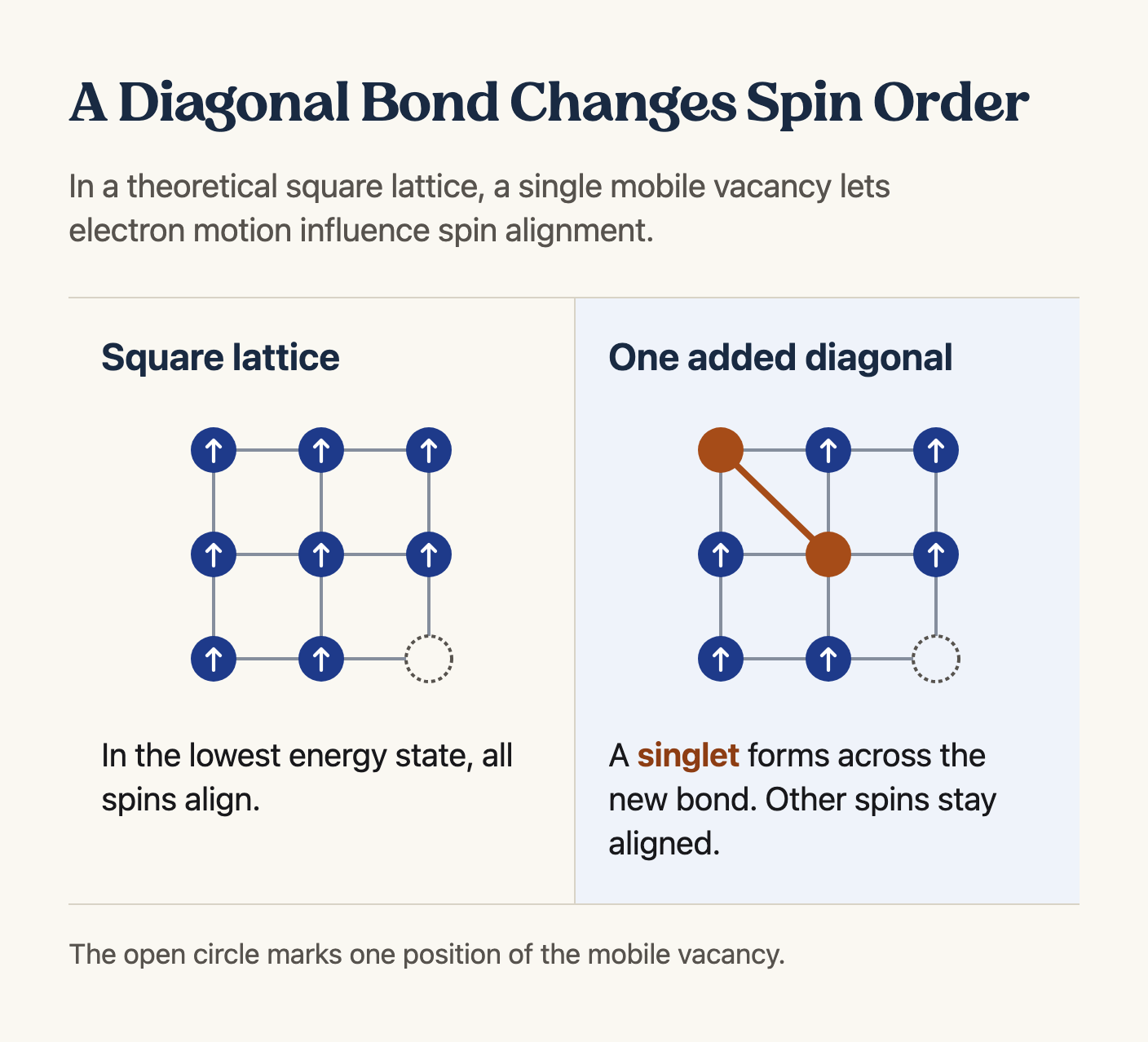
  • In a square-lattice example, adding a diagonal bond produces a singlet pair while other spins retain ferromagnetic alignment.
  • The work identifies a possible route to quantum-state control. Quantum information storage remains a potential application.
  • Connectivity describes which sites are linked. In this model, changing those links changes the magnetic ordering of the quantum system.
  • The study connects basic research on collective behavior with questions relevant to future quantum technologies.

UPSC Relevance

Prelims Relevance

  • Kinetic magnetism and quantum particle motion.
  • Ferromagnetic order and aligned spins.
  • Singlet pairs and quantum entanglement.
  • Raman Research Institute, an autonomous institute under the Department of Science and Technology.

Mains Relevance

GS Paper 3

  • How fundamental research can identify mechanisms relevant to emerging technologies.
  • Why experimental validation matters when assessing prospective quantum-device applications.

Background and Context

The Square Lattice and Its Mobile Vacancy

The model starts with interacting electrons arranged on connected sites and one vacant position.

  • A lattice is an ordered arrangement of sites. In the example explained by the institute, the sites form a square network, with one electron at each occupied site and one vacancy.
  • Electrons carry spin, an intrinsic quantum property associated with magnetic behavior. The way spins organize across many particles determines the collective magnetic order that the researchers seek to understand and control.
  • The vacancy is called a hole. As electrons move between allowed sites, the hole can move through the network. A diagram showing it at one location represents only one possible position.
  • In kinetic magnetism, quantum particle motion influences spin ordering. The research asks how the available routes through a network affect that collective behavior when the electrons interact strongly with one another.
  • For the square-lattice case described in the official explanation, the lowest-energy state has ferromagnetic order. The occupied sites have aligned spins, establishing the reference case for the connectivity change.

How a Diagonal Bond Changes Spin Order

Adding a diagonal changes the available connections and the ordering of a particular spin pair.

  • A diagonal bond connects two sites across a square. This alters the network locally and introduces triangular routes, giving the moving particles a different set of possible paths through the system.
  • The two connected spins can form a singlet, an entangled quantum state with zero total spin. Its quantum relationship requires more care than depicting two permanently fixed classical arrows pointing in opposite directions.
  • In the institute’s example, the remaining spins stay ferromagnetically aligned. The result shows that a local change can create a distinct paired state within a network whose other sites preserve their original ordering.
  • The hole remains delocalized across the network. The paired spins and the mobile vacancy belong to one interacting system, so the result concerns collective quantum behavior across connected sites.
  • The paper studies local frustration, where network geometry disrupts uniform magnetic alignment. Its analysis connects such locations with singlet formation and examines the relationship across rectangular grids and more general graphs.
Two square lattices with a mobile vacancy. In the first, all electron spin arrows align. In the second, an added diagonal joins two highlighted spins that form a singlet.
The added diagonal bond changes the order of the connected spin pair in the theoretical model.

What the Theoretical Result Establishes

The finding concerns a mechanism for shaping quantum states under the model’s assumptions.

  • The researchers used computation and mathematical analysis to uncover the ordering patterns. Studying many interacting particles is difficult because the number of possible quantum configurations grows rapidly as the system becomes larger.
  • The result identifies network connectivity as a control variable. Changing which sites connect can influence where singlet pairs form and how magnetization varies, offering a specific mechanism for further scientific investigation.
  • The paper outlines a possible route for examining key predictions in cold-atom setups. Such controlled experimental systems could help assess whether the predicted behavior can be produced and measured under suitable conditions.
  • Quantum information storage is a prospective application because singlets are entangled states. A useful device would require evidence that the relevant states can be prepared, maintained and accessed reliably during operation.
  • The July research paper and November explainer refer to the same study. Its current significance lies in explaining a theoretical mechanism clearly while leaving experimental performance and practical device capability to further investigation.

Way Forward

Test the Proposed Control Mechanism

  • Use suitable experimental platforms to compare measured spin correlations with the model’s predictions.
  • Examine how imperfections and operating conditions affect the formation and persistence of the predicted states.
  • Report device-relevant evidence before extending a theoretical storage possibility into a practical technology claim.

Conclusion

  • Network geometry can shape magnetic order in an interacting quantum model. The diagonal-bond example makes the link between connectivity and singlet formation concrete.
  • The study offers a theoretical direction for quantum control. Its value for technology depends on subsequent experimental evidence and reliable manipulation of the relevant states.

UPSC Practice Questions

Prelims MCQ 1

With reference to the RRI study on quantum kinetic magnetism, consider the following statements:

  1. The motion of a hole can influence the arrangement of electron spins.
  2. Adding a diagonal bond in the example can produce a singlet pair.
  3. The study reports a commercially operational quantum memory device.

How many of the above statements are correct?

(a) Only one (b) Only two (c) All three (d) None

Answer: (b) Only two

Explanation:

The first two statements describe the theoretical mechanism. Quantum information storage is a possible future application of the work.

Prelims MCQ 2

What changes when the researchers introduce a diagonal bond into the square network?

(a) The connectivity and available paths of the network (b) The chemical identity of every electron (c) The existence of quantum spin (d) The number of dimensions of physical space

Answer: (a) The connectivity and available paths of the network

Explanation:

The diagonal creates an additional connection. In the model this local change can alter spin ordering and bind a singlet pair.

UPSC Mains Questions

  1. Explain how network connectivity can influence collective quantum behavior, using the kinetic magnetism study as an example.
  2. Discuss the role of experimental validation in translating theoretical quantum research into useful technologies.

Sources: PIB, Department of Science and Technology and Raman Research Institute.

Frequently Asked Questions

What is kinetic magnetism?

Kinetic magnetism is magnetic ordering influenced by quantum particle motion. In the model discussed here, the movement of a vacancy through interacting electrons affects how their spins arrange across the network.

What does the diagonal bond do?

The added connection changes the network’s geometry. In the square-lattice example, it produces a singlet pair at the linked sites while the remaining spins retain ferromagnetic alignment.

Is a singlet the same as two classical arrows?

A singlet is an entangled quantum state of the pair with zero total spin. Fixed classical arrows are an incomplete representation of that relationship, even when used to introduce spin alignment.

Has the study produced a quantum memory?

The study develops a theoretical mechanism for shaping magnetic order. Storing quantum information is a prospective application that would require experimental validation and further work on controlled preparation, stability and access.

FEMA Trade Rules and Authorised Dealer Responsibilities

Open article →Download PDF

Why in News?

On November 20, 2026, the RBI announced amendments and published clarifications on its foreign exchange regulations governing exports and imports of goods and services.

  • The second amendment was notified on November 2 and took effect retrospectively from October 1, 2026.
  • The original framework was issued in January and became effective in October. The November announcement explains the amended rules and their application.
  • The amendment introduces deemed submission of export declarations for specified service exporters when they provide the required payment information to their authorised dealer.
  • The accompanying FAQs clarify transaction reporting, earlier transactions and bank responsibilities, including publication of trade policies.
  • Foreign exchange administration connects a cross-border trade transaction with its payment and supporting records.
  • Delegation to authorised dealers can shorten approval processes while requiring consistent decisions and adequate monitoring.

UPSC Relevance

Prelims Relevance

  • FEMA and foreign exchange administration.
  • Authorised dealers and delegated powers.
  • Export Declaration Form and deemed submission.
  • Export and Import Data Processing and Monitoring Systems.

Mains Relevance

GS Paper 3

  • Trade facilitation through proportionate compliance requirements.
  • Accountability when regulatory decisions are delegated to financial intermediaries.

Background and Context

Trade Declarations and Payment Records

The framework links the transaction, its documents and its payment.

  • FEMA trade regulations govern exports and imports of goods and services, as well as merchanting trade. The applicable framework depends on when the transaction was initiated or undertaken.
  • Goods trade creates records such as shipping bills and bills of entry. These identify the underlying movement of goods, while remittance records describe the associated receipt or payment through the financial system.
  • The Export Declaration Form records relevant export information. For goods with no realisable value, the RBI FAQ requires declaration of zero value in the appropriate field of the form.
  • The RBI has discontinued EDF waiver letters under the new framework. An exporter must accurately represent the transaction through the prescribed declaration route, including where exported goods have no realisable value.
  • This compliance function complements export support measures. Market assistance addresses commercial barriers, while foreign exchange administration connects the underlying transaction with its payment and reporting obligations.

Deemed Declarations for Service Exporters

The amendment adjusts how specified service exporters meet the declaration requirement.

  • For a resident individual exporting services, the EDF is deemed submitted when the exporter provides the authorised dealer with the required information for receiving payment and crediting the account.
  • For an exporter who is other than a resident individual, the same treatment applies where the value of the inward remittance for the service falls within the specified threshold.
  • The amendment sets that threshold at ₹10 lakh or its foreign-currency equivalent. The qualifying amount is the inward remittance for the service, so the exact transaction category matters when applying the rule.
  • The RBI clarifications retain remittance reporting by authorised dealers for these service transactions. Providing information through a simpler declaration route still leaves a record in the monitoring system.
  • The amendment separately narrows detailed service-import entry requirements to specified non-individual importers above the invoice or contract threshold. The FAQ explains that remittance reporting continues for the other covered service transactions.

Delegated Decisions and Regulatory Accountability

Banks receive greater responsibility for applying the framework to actual transactions.

  • Authorised dealers act within the regulatory framework when processing trade transactions. The FAQs explain that they may extend a service exporter’s declaration-submission period after assessing the reasonableness of the request.
  • Transactions begun before the October commencement date continue under the framework applicable when they started. The FAQs also give authorised dealers powers over earlier transactions that the RBI previously exercised.
  • The simplified reconciliation process depends on the original shipping-bill, bill-of-entry or invoice value. A larger transaction does not qualify merely because its remaining unpaid balance has fallen below the relevant threshold.
  • Published bank policies make delegated decisions more transparent. The RBI requires authorised dealers to place their trade-related policy and the main features of their standard operating procedure on their websites.
  • The administrative test is whether simpler compliance and reliable monitoring work together. Traders need clear requirements, while banks need records sufficient to reconcile payments and explain how their published policies apply.

Way Forward

Make Delegated Decisions Consistent

  • Publish clear procedures that distinguish goods, services, transaction dates and the relevant declaration requirements.
  • Align staff guidance with the amended regulations and FAQs so equivalent transactions receive consistent treatment.
  • Maintain reconciliation records and explain unresolved discrepancies through accessible communication with traders.

Conclusion

  • Deemed submission changes the route by which specified service exporters satisfy a declaration requirement. Authorised-dealer reporting remains part of the regulatory framework.
  • Delegation makes published bank procedures and consistent application central to trade facilitation. The transaction date, category and relevant value must be read together.

UPSC Practice Questions

Prelims MCQ 1

With reference to the RBI clarification on trade regulations, consider the following statements:

  1. A qualifying service exporter may be deemed to have submitted an EDF by providing required payment information to an authorised dealer.
  2. Authorised-dealer remittance reporting continues for such service transactions.
  3. Every transaction begun before October 2026 automatically shifts to the new framework.

How many of the above statements are correct?

(a) Only one (b) Only two (c) All three (d) None

Answer: (b) Only two

Explanation:

Statements one and two are correct. Earlier transactions continue under the framework applicable when they commenced, although authorised dealers receive specified delegated approval powers.

Prelims MCQ 2

What determines eligibility for simplified reconciliation under the RBI FAQ?

(a) Only the outstanding unpaid balance (b) Only the exporter’s annual turnover (c) The relevant shipping-bill, bill-of-entry or invoice value (d) The number of accounts used by the trader

Answer: (c) The relevant shipping-bill, bill-of-entry or invoice value

Explanation:

The FAQ applies the threshold to the transaction document value. A larger original bill does not qualify solely because the remaining balance falls below the threshold.

UPSC Mains Questions

  1. Explain how deemed export declarations can simplify service trade while preserving foreign exchange monitoring.
  2. Discuss the accountability requirements created by delegating trade-related decisions to authorised dealers.

Source: Reserve Bank of India.

Frequently Asked Questions

What did the RBI announce in November?

The RBI announced the second amendment to its trade regulations and provided FAQs. The amendment was notified on November 2, 2026, with retrospective effect from October 1.

What does deemed EDF submission mean?

For qualifying service exporters, providing the required payment information to an authorised dealer satisfies the declaration requirement through the deemed-submission provision. The applicable conditions depend on the exporter category and transaction value.

Does simpler declaration remove bank reporting?

Authorised dealers continue to report remittance details for the relevant service transactions in the monitoring systems. The FAQ distinguishes the exporter’s declaration route from the bank’s reporting responsibility.

Why must authorised dealers publish their policies?

The RBI requires publication of trade policies and the main features of operating procedures. These documents explain how the dealer handles transactions and support more transparent application of delegated responsibilities.

ICJ Myanmar Judgment and State Responsibility for Genocide

Open article →Download PDF

Why in News?

On November 20, 2026, the UN highlighted the ICJ’s judgment finding Myanmar responsible for genocide against the Rohingya during the 2017 operations.

  • The judgment was delivered on November 19 in the case brought by The Gambia under the Genocide Convention.
  • The Court ordered reparation for the Rohingya, including measures supporting safe, voluntary and dignified return.
  • The amount and arrangements for compensation are reserved for a subsequent phase of proceedings.
  • The case connects treaty obligations and state accountability with the protection of a displaced population.
  • For India and the wider region, it provides a framework for analysing refugee protection, diplomacy and compliance with international law.

UPSC Relevance

Prelims Relevance

  • ICJ as the principal judicial organ of the United Nations.
  • Genocide Convention and disputes concerning a state’s treaty obligations.
  • State responsibility and individual criminal responsibility.
  • Restitution and compensation as forms of reparation.

Mains Relevance

GS Paper 2

  • The relationship between international adjudication and compliance.
  • Regional diplomacy, refugee protection and accountability.

Background and Context

How the Case Reached the ICJ

The proceedings concern Myanmar’s obligations under a treaty that protects specified groups from destruction.

  • The Genocide Convention requires states to prevent and punish genocide. Its legal definition combines specified prohibited acts with intent to destroy a protected group, wholly or partly, as such.
  • The Gambia brought the case against Myanmar. The proceedings concern compliance with obligations owed under the Convention, illustrating how a treaty dispute can reach an international court.
  • The Court established its jurisdiction and the application’s admissibility at an earlier stage. The November judgment addresses the merits, meaning whether the alleged treaty violations were established.
  • The Rohingya are the protected group whose treatment the Court examined. The judicial findings concern the evidence and legal tests applied to the conduct at issue in these proceedings.
  • The UN’s November briefing links the judgment to accountability and reconciliation. It places implementation within the wider effort to secure an inclusive political solution in Myanmar.

State Responsibility and Individual Prosecution

The institution hearing a case determines whose responsibility is being examined and which remedies it can provide.

  • The ICJ adjudicates disputes between states. In this case, Myanmar’s responsibility arises from breaches of its obligations under the Genocide Convention, including conduct attributable to the state.
  • The International Criminal Court deals with the criminal responsibility of individuals within its jurisdiction. A finding against a state does not itself determine an individual’s guilt in separate criminal proceedings.
  • International law can address state conduct and individual conduct through different proceedings. Understanding their separate legal questions avoids treating every international judgment as a criminal conviction of political or military leaders.
  • The judgment also addresses duties concerning prevention, punishment and domestic legislation. These obligations require legal and administrative action, extending the analysis beyond a declaration that wrongful acts occurred.
  • The Court’s assessment required proof of prohibited conduct and genocidal intent. The legal category rests on its elements and the evidence, while other serious violations can raise their own distinct legal questions.

What Reparation and Compliance Require

A merits judgment establishes obligations, while practical implementation determines how affected people receive protection and redress.

  • Restitution seeks to remedy consequences of wrongful acts. The ordered measures include facilitating safe, voluntary and dignified return and family reunification for Rohingya displaced by the acts addressed in the judgment.
  • The Court also required measures concerning property, rehabilitation and protection from discrimination. These remedies connect the legal finding to conditions that influence whether affected communities can rebuild their lives.
  • Compensation addresses injury that restitution cannot fully remedy. The Court reserved its amount and arrangements for a later phase, so the judgment should not be described as a completed payment scheme.
  • Myanmar must submit a report within two years covering restitution and relevant compensation proposals. The Court will then determine further proceedings after hearing the parties, preserving judicial supervision of the remedies.
  • A binding judgment creates a legal obligation to comply. Implementation still requires state action and international follow-through, including monitoring whether the conditions for protected, voluntary return are actually established.

Way Forward

Assess Implementation Through Concrete Measures

  • Track restitution measures, protection from persecution and the conditions for voluntary return.
  • Keep evidence preservation and accountability central to diplomatic engagement.
  • Assess compensation proceedings using the Court’s subsequent orders and verified implementation records.

Conclusion

  • The judgment demonstrates how state responsibility under a treaty can lead to remedies for a protected group. Institutional jurisdiction, legal findings and implementation each perform a distinct role.
  • An assessment of compliance should follow actual protection and reparation measures. The ruling’s significance depends on whether legal obligations produce durable changes for the affected population.

UPSC Practice Questions

Prelims MCQ 1

With reference to the ICJ Myanmar judgment, consider the following statements:

  1. The case concerned Myanmar’s obligations under the Genocide Convention.
  2. The judgment itself determines every individual defendant’s criminal guilt before the ICC.
  3. The amount and arrangements for compensation were reserved for a subsequent phase.

How many of the above statements are correct?

(a) Only one (b) Only two (c) All three (d) None

Answer: (b) Only two

Explanation:

Statements 1 and 3 are correct. The ICJ determines state responsibility in this dispute; individual criminal responsibility is a separate legal question.

Prelims MCQ 2

Which description best explains restitution in the remedies ordered in this case?

(a) A finding that compensation has already been paid (b) A replacement for every future judicial proceeding (c) Measures addressing consequences such as displacement and loss of property (d) An automatic criminal sentence against all state officials

Answer: (c) Measures addressing consequences such as displacement and loss of property

Explanation:

Restitution includes measures such as facilitating protected return and restoring property. Compensation addresses injury that restitution cannot fully remedy.

UPSC Mains Questions

  1. Explain the distinction between state responsibility and individual criminal responsibility using the ICJ Myanmar judgment.
  2. How can international adjudication support refugee protection? Discuss the relationship between reparation orders and implementation.

Sources: United Nations Department of Political and Peacebuilding Affairs and ICJ judgment summary through UNHCR Refworld.

Frequently Asked Questions

What did the ICJ decide in the Myanmar case?

The Court found Myanmar responsible under the Genocide Convention and ordered reparation for the Rohingya. The judgment addresses state responsibility and specifies obligations whose implementation requires further action.

How does the ICJ differ from the ICC?

The ICJ settles legal disputes between states. The ICC deals with individual criminal responsibility within its jurisdiction. A judgment against a state does not itself establish individual guilt in separate proceedings.

Has the Court fixed the compensation amount?

The amount and arrangements for compensation or other appropriate reparation are reserved for a subsequent phase. Myanmar must report on restitution and relevant compensation proposals before the Court determines further proceedings.

Does the judgment order compulsory refugee return?

The restitution measures concern safe, voluntary and dignified return and family reunification. Assessing compliance requires attention to protection and conditions on the ground, including safeguards against discrimination and persecution.

After Shenzhen: Can India Forge a ‘Fourth Pole’ in the New World Order?

Open article →Download PDF

Why in news?

After the leaders of the U.S., China and Russia met for a first-ever trilateral summit in Shenzhen on November 19, a Chinese proposal suggested calling the new world order the “Shenzhen International System”. This has raised a basic question for India: if the big three see each other as the only powers that matter, where does India stand? A recent opinion piece argues that India should lead a ‘fourth pole’ – not a single country, but a collective of like-minded nations.

UPSC Relevance

Mains, GS2, Bilateral, Regional and Global Groupings and Agreements involving India and/or affecting India’s interests

GS2, Effect of Policies and Politics of Developed and Developing Countries on India’s interests

Understanding World Orders

A ‘world order’ is the way power is distributed among states and the rules by which they deal with each other. A ‘pole’ is a centre of power strong enough to shape outcomes on its own.

Type of OrderMeaningExample
BipolarTwo dominant powers with rival blocsCold War (USA vs USSR), 1947–1991
UnipolarOne unchallenged superpowerU.S. dominance after the collapse of the USSR
MultipolarSeveral centres of power, none fully dominantEurope before World War I; the order India has long called for
Tri-polar (emerging)Three powers treating each other as the only equalsU.S.–China–Russia after Shenzhen

Why India Cannot Take its ‘Pole’ Status for Granted

For decades, Indians spoke of a multipolar order assuming India would automatically be one of the poles. The Shenzhen meeting shows this is not guaranteed.

  • Economic constraints: India is a large economy, but low per capita income and rising inequality mean it will take long to be counted as a full economic power.
  • Defence dependence: India remains among the world’s largest arms importers. Until it becomes self-reliant in defence manufacturing, its military power stays incomplete.
  • Civilisational claims are not enough: Being one-sixth of humanity or the heir of an old civilisation does not automatically earn great power status. The idea of ‘Vishwaguru’ cannot be claimed – it has to be accepted by others.
  • Status must be earned: As the author puts it, India can be “the friend that others are willing to be led by”. Influence comes from trust, not size alone.

The Proposed Action Plan: India and the ‘Fourth Pole’

PillarWhat it meansSuggested steps
1. A collective poleA grouping of nations that values sovereignty, rejects expansionism and wants a say in decisionsBring together middle powers from Tokyo to Brasilia that share the quest for strategic autonomy
2. Diplomacy of consciencePutting civilian protection at the centre of foreign policyFirm stand against ethnic cleansing and mass civilian casualties; civilian-first mediation (e.g., Ukraine, Sudan, Yemen)
3. Strengthen multilateralismG20 and BRICS help build trust but cannot replace the legitimacy of the UN systemHost UN agencies; step back from the 2028-29 UNSC race in favour of Tajikistan; back the elected UNSC members on the next UN Secretary-General
4. Defend international lawPush back against transactional politics and the weakening of global rulesLead in signing and ratifying the Convention Against Torture and the Refugee Convention
5. Nuclear balancePrevent the three ‘foremost nuclear-armed powers’ from becoming sole arbiters of global securityCommon rules on arsenal growth among like-minded nuclear powers; possibly a joint nuclear umbrella

Not a new idea

The ‘fourth pole’ idea is not new in spirit. It builds on India’s long tradition of refusing to be part of any single power bloc.

  • Panchsheel (1954): Five principles of peaceful coexistence agreed between India and China – mutual respect for sovereignty, non-aggression, non-interference, equality and mutual benefit, and peaceful coexistence.
  • Bandung Conference (1955): Asian-African conference in Indonesia that laid the ground for solidarity among newly independent nations.
  • Non-Aligned Movement (1961): Formally founded at Belgrade. Key founders were Nehru (India), Tito (Yugoslavia), Nasser (Egypt), Sukarno (Indonesia) and Nkrumah (Ghana). It has 120 member states today.
  • Strategic autonomy / Multi-alignment: After the Cold War, India moved from staying away from blocs to engaging with all of them – Quad with the U.S., Japan and Australia; SCO and BRICS with Russia and China – while keeping its own freedom of decision.

The difference now is that India is being asked not just to stay independent, but to lead others who want the same.

Challenges in Building a ‘Fourth Pole’

  • Diverse interests: Countries like Japan, Saudi Arabia, Germany and Brazil have very different security ties and priorities. Many are formal U.S. allies and may not want to look like a rival bloc.
  • The China factor: Several Global South countries depend heavily on Chinese trade and investment, which limits how far they will go.
  • Credibility gap: Leading on human rights treaties is hard while India has not ratified UNCAT or joined the Refugee Convention. Critics will point to this.
  • Cost of sacrifice: Giving up a UNSC seat bid is a real loss of voice; the reputational gain is uncertain.
  • Nuclear umbrella risks: A joint nuclear umbrella would conflict with India’s No First Use doctrine and could fuel an arms race rather than curb it.
  • Capacity limits: India’s diplomatic corps is small for a country of its size, which limits how many fronts it can lead on at once.

Way Forward

  • Build issue-based coalitions: Start with shared concerns – supply chains, climate finance, debt relief, critical minerals – rather than a formal bloc.
  • Strengthen hard power at home: Push defence indigenisation and inclusive growth, since credibility abroad rests on strength at home.
  • Lead by example on norms: Bring in a domestic anti-torture law and a national refugee framework to match words with action.
  • Push UN reform steadily: Use the G4 and L.69 group to press for expansion of both permanent and non-permanent UNSC seats.
  • Use mediation wisely: Offer good offices where India has trust on both sides, keeping civilian protection at the core.
  • Voice of the Global South: Build on the Voice of Global South Summits and the African Union’s G20 entry to turn goodwill into durable partnerships.

A new world order is taking shape, but countries that were not at Shenzhen need not accept a role of only taking orders. India’s strength lies less in matching the big three and more in being a trusted partner for the many nations that want neither domination nor dependence.

UPSC Mains PYQ 2019 (GS 2)

‘The long-sustained image of India as a leader of the oppressed and marginalised nations has disappeared on account of its new found role in the emerging global order.’ Elaborate. (Answer in 250 words)

Practice Question

“A multipolar world does not automatically make India one of its poles.” In the light of the emerging great-power alignment, examine the case for India leading a ‘collective pole’ of middle powers. What challenges does such an approach face? (15 Marks)

India’s civilisational gambit in China’s backyard

Open article →Download PDF

Why in news?

India is hosting the first SCO Civilisational Dialogue Forum at Purana Qila, New Delhi, from November 20, 2026.

UPSC Relevance

Prelims – SCO, Purana Qila, Global Civilization Initiative

GS2, Bilateral, regional and global groupings involving India; India and its neighbourhood (China, Central Asia)

About the Civilisational Dialogue Forum

  • What: A meeting of SCO culture ministers along with dialogue partners from over 25 countries.
  • Origin: Proposed by PM Modi at the SCO Summit in Tianjin, China in 2025.
  • Organisers: Ministry of Culture along with the Ministry of External Affairs.
  • Venue: Purana Qila, Delhi – walls built by Sher Shah Suri in the 16th century; tradition and excavations link the site with ancient Indraprastha.

Why “civilisation” has become a contested idea

After the Cold War, the West set the global vocabulary – democracy, free markets and human rights were presented as universal values. Rising powers did not reject this language but began to argue that modernity can take many forms. The word “civilisation” is now a tool of diplomacy.

China has moved fastest to build this narrative:

  • Global Civilization Initiative (GCI) launched by Xi Jinping in 2023, along with the Global Development Initiative and Global Security Initiative.
  • UN General Assembly, on China’s initiative, declared June 10 as the International Day for Dialogue among Civilizations (2024).
  • Ministerial meeting of the Global Civilizations Dialogue (July 2025); Nishan Forum on World Civilizations, held at Confucius’ birthplace (12th edition, September 2026).

China’s message: ancient continuity justifies a centralised political order, and universal standards are a Western imposition.

India’s objectives behind the Forum

  • Soft connectivity: Highlighting shared links – Buddhist circuits, Sufi traditions and old trade routes from Taxila to Samarkand. This is the only openly stated aim.
  • Agenda-setting within SCO: India has never been fully comfortable in the SCO – it opposes the Belt and Road Initiative, faces Pakistan in every meeting and carries the memory of Galwan (2020). A flagship forum gives India a “brand” in a body headquartered in Beijing.
  • Civilisation and democracy can coexist: India argues that its continuity has been plural, argumentative and layered – unlike China’s use of history to justify centralised rule.
  • Multi-alignment: Fits India’s pattern of being in all relevant clubs – BRICS summit (September 2026), India–EU Strategic Partnership Review (November 2026), Quad Leaders’ Summit (November 2026).

India’s Soft Power Toolkit

ToolExample
Culture and heritageICCR, Festivals of India, Project Mausam, Buddhist circuit
Yoga and wellnessInternational Day of Yoga (June 21, UNGA 2014), AYUSH
KnowledgeNalanda University revival, ITEC training programme
DiasporaPravasi Bharatiya Divas, largest diaspora in the world
Development partnershipVaccine Maitri, lines of credit, HADR missions
Agenda-settingG20 presidency (2023), AI Impact Summit (2026), Voice of Global South Summit

Concerns and risks

  • Strengthening China’s narrative: Any forum that sees the world in civilisational terms supports China’s claim that universal norms are Western. A democracy hosting it can make this look like an Asian consensus.
  • Contest over Buddhism: China may use the platform to project its claim over Buddhism, which matters for the succession of the Dalai Lama.
  • Alibi for authoritarianism: Civilisational arguments are often used by authoritarian regimes to justify repression.
  • Rival claims of antiquity: Competing claims of being older or superior can breed conflict rather than dialogue (echoing Huntington’s “Clash of Civilizations”).
  • Resource gap: India cannot outspend China in Central Asia; soft power without connectivity and investment has limits.

Way Forward

  • Inclusive Asian identity: Build a forum where China can participate without dominating, and India becomes a bridge between the Global South, the West and Central Asia.
  • Back culture with connectivity: Chabahar port and INSTC to give substance to links with Central Asia.
  • Avoid the antiquity race: Stress pluralism and absorption rather than claims of being older or better.
  • Protect democratic credibility: India should not lend its name to a language used to justify repression.
  • Institutionalise the forum: Regular editions, scholar exchanges, joint heritage projects and digital archives of shared heritage.

Agenda-setting, not just attendance, is the real currency of soft power. If India uses the forum to show an inclusive model of civilisation, it offers something China cannot easily copy.

Practice MCQ

Q1. With reference to the Shanghai Cooperation Organisation (SCO), consider the following statements:

1. Its Secretariat is in Beijing, while its Regional Anti-Terrorist Structure is in Tashkent.

2. Russian and Chinese are its official languages.

3. Belarus was the first country admitted as a full member after India and Pakistan.

How many of the statements given above are correct?

(a) Only one

(b) Only two

(c) All three

(d) None

Answer: (b)

Explanation: Statement 3 is incorrect. Iran joined in 2023, before Belarus (2024).

Q2. Consider the following statements:

1. The UN General Assembly designated June 10 as the International Day for Dialogue among Civilizations on China’s initiative.

2. The Global Civilization Initiative was proposed by China in 2023.

3. Varanasi was named the first SCO Tourism and Cultural Capital.

Which of the statements given above are correct?

(a) 1 and 2 only

(b) 2 and 3 only

(c) 1 and 3 only

(d) 1, 2 and 3

Answer: (d)

Explanation: All statements are correct. Varanasi held the title for 2022–23, during India’s SCO chairmanship.

Practice Question

“Civilisation has become a contested idea in international politics.” In this context, examine the significance of India hosting the SCO Civilisational Dialogue Forum. What risks does this approach carry for India’s foreign policy? (15 Marks)

The Changing Dynamic of Nationalism in India

Open article →Download PDF

Why in news?

A recent opinion article argues that nationalism in India is shifting from the inclusive civic model of the freedom struggle towards an ethnic one.

UPSC Relevance

Mains, GS1, Modern Indian History – The Freedom Struggle; Indian Society – Communalism, Regionalism and Secularism

GS2, Indian Constitution – Historical Underpinnings, Evolution, Features and Basic Structure

PSIR Paper 1 – Nationalism

What is Nationalism?

Nationalism is the feeling of belonging to a nation and the belief that the nation should have its own political community, usually a state. Scholars do not agree on how nations come into being.

  • Benedict Anderson (Imagined Communities, 1983) called the nation an “imagined political community“. Members will never meet most of their fellow members, yet they share an image of their communion. Print capitalism helped create this shared imagination.
  • Eric Hobsbawm pointed to “invented traditions” — symbols, rituals and histories created to give a nation a sense of continuity.
  • Anthony D. Smith argued that modern nations rest on older ethnic cores (“ethnie”) with shared myths and memories.

The author adds that Anderson did not explore the possibility of many competing imaginations of a nation, where one imagination may dominate at a given time.

Two Forms of Nationalism

BasisCivic NationalismEthnic Nationalism
FoundationShared political values – liberty, equality, justice, fraternity and faith in the ConstitutionA single shared identity – religion, language, race or ethnicity
MembershipOpen; anyone who accepts the political values and citizenshipClosed; based on birth, descent or culture
Attitude to diversityAccommodates different religions, languages, food habits and culturesSeeks to assimilate or sideline those outside the dominant identity
Source of loyaltyThe Constitution and its institutionsThe community, its history and culture
Common examples citedFrance (post-Revolution), USA, India’s freedom struggleNazi Germany (Aryan supremacy); many 19th-century European movements

The line between the two is not always sharp. Most nations mix civic and cultural elements. Political theorists also speak of cultural nationalism, which grounds the nation in a shared civilisation or heritage without necessarily denying equal citizenship.

Nationalism During the Freedom Struggle

Indian nationalism grew as a response to colonial rule. It was largely civic and anti-imperialist in nature — it had to unite people divided by religion, caste, language and region.

  • It was linked to ideals of justice, equality, freedom and secularism, and to a scientific temper.
  • It was also a democratic project — it demanded rights for all, not only freedom from the British.
  • However, it was never one single voice. Several ideas of the nation competed with each other.
ThinkerIdea of the Nation
Mahatma GandhiNation as a moral community; Hindu-Muslim unity, Swaraj and Sarvodaya
Jawaharlal NehruComposite culture — “unity in diversity”; India as a palimpsest of many layers (The Discovery of India)
Rabindranath TagoreCritic of the aggressive Western idea of the nation-state; favoured universal humanism (Nationalism, 1917)
B.R. AmbedkarNo true nation without social equality; fraternity must end caste divisions
V.D. SavarkarCultural nationalism based on Hindutva — common fatherland and holy land (Essentials of Hindutva, 1923)
Muslim League (M.A. Jinnah)Two-nation theory — Hindus and Muslims as separate nations

The Constitution as Civic Nationalism

The Constitution was the product of reasoned debate. It turned the inclusive spirit of the freedom struggle into law. Its introduction of fundamental rights was a big shift in a society marked by deep hierarchies such as caste.

  • Preamble: Promises justice, liberty, equality and fraternity “assuring the dignity of the individual and the unity and integrity of the Nation”.
  • Citizenship: Mainly based on birth, descent and registration — not on religion or ethnicity (Articles 5–11 and the Citizenship Act, 1955).
  • Equality: Articles 14, 15 and 17 prohibit discrimination and abolish untouchability.
  • Freedom and diversity: Article 19 (expression and peaceful assembly), Articles 25–28 (religion), Articles 29–30 (minority cultural and educational rights).
  • Fundamental Duties: Article 51A(e) asks citizens to promote harmony and common brotherhood transcending religious, linguistic and regional diversities.
  • Basic structure: Secularism and federalism were held to be part of the basic structure in S.R. Bommai v. Union of India (1994).

Ambedkar warned in the Constituent Assembly that without fraternity, liberty and equality would not last. This idea is close to what Jürgen Habermas later called constitutional patriotism –  loyalty to constitutional values rather than to an ethnic identity.

The Author’s Argument : Changing Nationalism (PSIR)

  • Shift towards exclusion: In the last decade or so, an ethnic and exclusionary nationalism has gained ground. Religious minorities, Dalits, tribals and women are pushed to the margins of the national imagination.
  • Patriarchy and nationalism: Women are lectured on dress and conduct, and their public voice is seen as a “cultural shock” — showing a masculinised version of nationalism.
  • Shrinking space for dissent: Labels such as “anti-national” or “urban naxal” are used against critics. Peace bonds are used to stop peaceful protests.
  • Comparison with fascism: Citing philosopher Jason Stanley’s features of fascism (glorified mythical past, anti-intellectualism, victimhood, propaganda), the author argues some are visible today. Citing economist Prabhat Patnaik, he notes that Indian nationalism, unlike European nationalism, was anti-imperialist.
  • Link with corporate capitalism: In times of economic crisis, capital needs an ideology that diverts attention from class issues and prevents the marginalised from uniting.

The Other Side of the Debate

These views are contested. Supporters of cultural nationalism and other commentators argue:

  • Civilisational unity: India’s unity rests on a shared civilisational ethos that predates the modern state. Recognising this heritage does not by itself deny equal citizenship.
  • Nationalism as a unifying force: A strong national identity helps counter separatism, insurgency and external threats.
  • Constitutional framework intact: Elections, courts, a free press and federal institutions continue to work; minority rights remain constitutionally protected.
  • Welfare reach: Government schemes are delivered on the basis of need, not identity, which supporters see as inclusive governance.
  • Comparisons overstated: Many scholars caution against equating Indian politics with European fascism, since the historical contexts are very different.

For an aspirant, the key is to see the debate as one about which idea of the nation should guide India — and to anchor any answer in the Constitution.

Way Forward

  • Constitutional patriotism: Make loyalty to constitutional values the core of national identity.
  • Fraternity in practice: Build trust between communities through civic education, inter-community dialogue and local institutions.
  • Protect dissent: Use preventive laws like peace bonds and Section 152 BNS narrowly, with judicial oversight, as dissent is the safety valve of democracy.
  • Inclusive development: Reduce economic and social gaps so that marginalised groups feel an equal stake in the nation.
  • Balanced public debate: Allow different imaginations of the nation to compete openly, without labelling opponents.

Nationalism in India has always been plural and contested. Its strength has come from its ability to hold diversity together. Keeping that inclusive, constitutional spirit alive is the real test for Indian democracy.

Practice Question

“Indian nationalism was born as a civic and inclusive project, but it remains a contested idea.” Distinguish between civic and ethnic nationalism and examine how far the Indian Constitution has institutionalised civic nationalism. (15 Marks, 250 words)