Why in News?
On 17 November 2026, Singapore said it was seeking trusted access to advanced AI chips after new US restrictions, The Hindu reported citing AFP.
- The report says US licensing requirements cover large volumes of advanced-chip computing supplied by overseas data centres to companies headquartered in China, Macau or other arms-embargoed countries.
- It also reports licensing requirements for chip shipments to Singapore and several other destinations; these are distinct from restrictions on providing computing services.
- Singapore said it was studying the measure, consulting affected businesses and engaging US authorities about its scope and implementation.
- The statement seeks trusted access for legitimate companies; the report does not establish that an exemption or special access arrangement has been granted.
- AI chip export controls concern access to computing capability as well as the movement of hardware across borders.
- For India, cloud dependence and semiconductor supply security are connected policy concerns, but manufacturing capacity and dependable access to computing services require different responses.
UPSC Relevance
Prelims Relevance
- AI accelerators: processors designed to perform specialised computing workloads efficiently.
- Data centre: infrastructure housing servers, networking, power and cooling.
- Remote compute: processing performed on servers accessed over a network.
- End user: the ultimate user of the controlled item or capability.
- End use: the purpose for which an item or capability is employed.
Mains Relevance
GS Paper 3
- Technology security: regulating access to advanced computing without unnecessarily excluding legitimate research and enterprise.
- Digital infrastructure: supply diversification, cloud continuity and domestic capability.
GS Paper 2
- Economic diplomacy: trusted access negotiations and cross-border implementation of technology controls.
Essay
- Digital sovereignty: ownership of infrastructure and control over its use can lie in different jurisdictions.
Background and Context
A chip can stay put while its computing power travels
Physical delivery and network access are different ways to obtain the benefit of the same processor.
- Physical shipment moves a chip or server to a destination. A buyer can acquire hardware for installation, making the supplier, destination and ultimate recipient relevant to the transaction.
- Server location identifies where the machine operates. It does not, by itself, identify every customer using that machine or the country where each customer directs its business.
- Remote computing access lets customers send workloads to distant servers and receive results over a network. The customer can benefit from an accelerator without buying it or taking physical possession.
- Consider a hypothetical cloud customer running an AI training job abroad: the provider retains the server, while the customer rents processing capacity. No chip needs to cross the customer’s national border.
- This separates hardware ownership from effective access. Checking only the shipping destination may miss who benefits from the computing service, which explains the policy interest in overseas data centres.
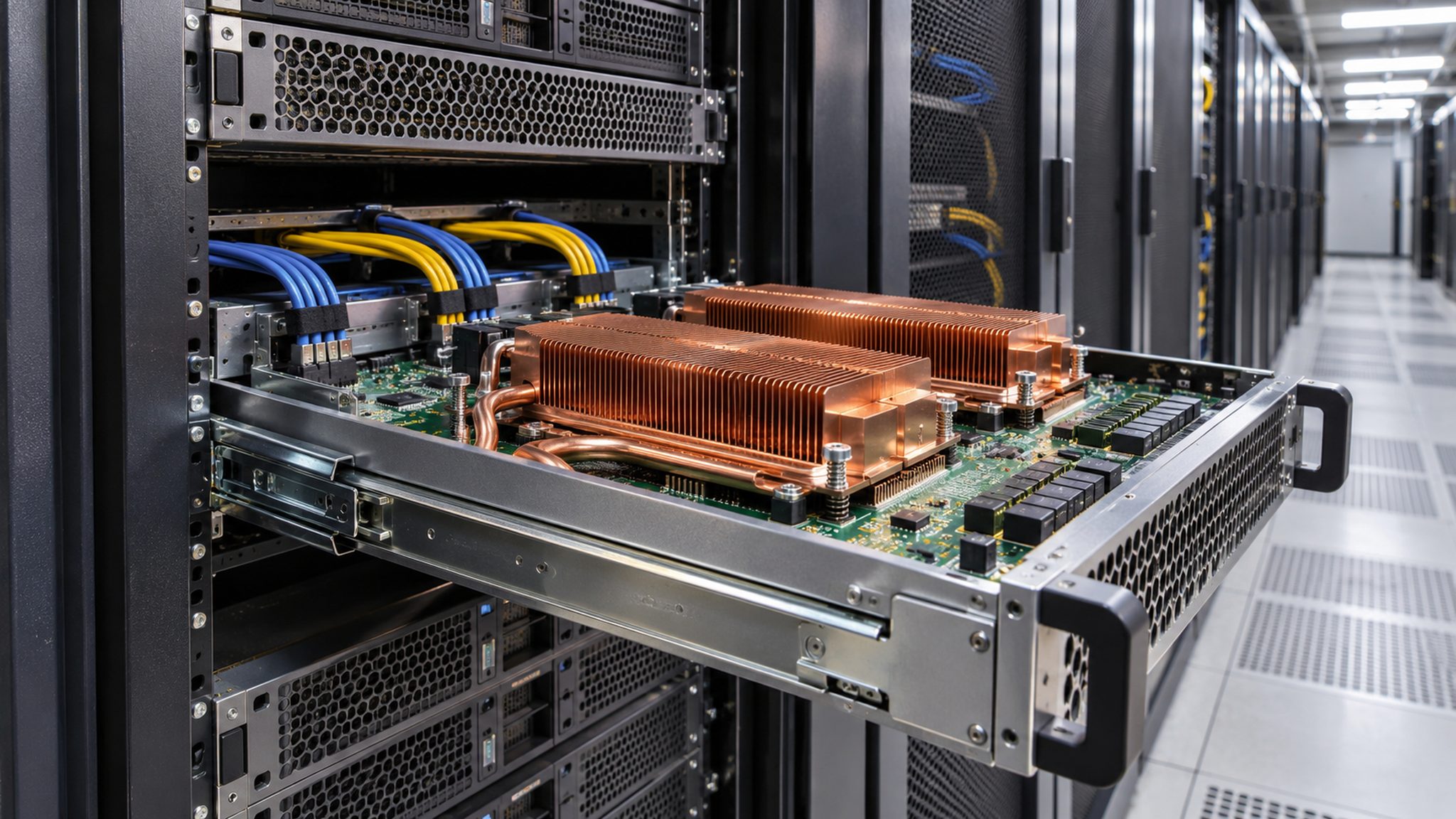
Why service access creates a different enforcement problem
The reported measures address a route to capability that a shipment-only restriction may leave open.
- Shipment controls focus on a hardware transfer; service-access controls focus on providing computing capability. They can apply to different transactions involving the same underlying server and should be analysed separately.
- A licensing requirement is not automatically a blanket ban. Permission depends on the applicable rules and decision; seeking clarification or approval does not establish that the proposed activity is authorised.
- Customer screening asks who receives access, while end-use checks ask what it supports. A local billing address alone cannot answer both questions when services involve intermediaries or corporate groups.
- As a policy challenge, resellers and shared infrastructure can complicate identifying the ultimate user. Provider records and contractual controls may help, but their existence alone does not prove effective enforcement.
- The reported rule should not be stretched into a claim that all cloud use is prohibited. The article describes targeted licensing; exact thresholds and exceptions require the governing instrument.
Trusted access: a request, with practical trade-offs
Singapore’s response illustrates the tension between preserving legitimate business access and addressing diversion concerns.
- Trusted access is the objective Singapore says it is exploring. Treat it as an ongoing diplomatic and regulatory discussion, not an established certification or a country-wide exemption from US controls.
- Commercial predictability matters because infrastructure operators plan equipment purchases and customer contracts together. Uncertainty about eligible users can affect the value of hardware even when a server remains physically available.
- Targeted compliance can protect legitimate customers only if eligibility and review procedures are clear. Excessively broad restrictions may burden research and enterprise; weak checks may undermine the intended security objective.
- For India, distinguish semiconductor manufacturing capability from service continuity: a domestic facility still needs suitable chips, software, power, cooling and dependable legal access to its inputs.
- Wafer-fabrication coordination concerns producing devices; cloud governance concerns their use. An answer should identify the relevant layer before recommending industrial subsidies, alternative providers or customer-verification requirements.
Way Forward
Make eligibility and accountability workable
- Authorities should publish clear eligibility criteria and review procedures so providers can distinguish permissible activity from transactions requiring approval.
- Providers should verify ultimate customers, document approved access and review reseller arrangements, with proportionate privacy safeguards.
- Indian users should assess provider concentration and workload portability alongside hardware procurement, rather than assuming an overseas server guarantees uninterrupted access.
Conclusion
- Control over AI capability depends on who can use a processor, not merely where it is installed. Analyse hardware movement, server location and service access as separate policy questions.
- Singapore’s request demonstrates the diplomatic stakes of that distinction. A balanced response should preserve legitimate computing access while making customer identification and licensing decisions credible and predictable.
UPSC Practice Questions
Prelims MCQ 1
With reference to access to advanced computing, consider the following statements:
- Remote users can obtain computing services without physically owning the server.
- The physical location of a server necessarily establishes the headquarters of every customer using it.
- A requirement to obtain a licence is conceptually distinct from an unconditional prohibition.
How many of the above statements are correct?
(a) Only one (b) Only two (c) All three (d) None
Answer: (b) Only two
Explanation:
Statements 1 and 3 are correct. Remote computing separates ownership from access; server location does not establish customer headquarters.
Prelims MCQ 2
Which situation best illustrates why overseas computing access matters for technology controls?
(a) A processor is stored unused in a warehouse. (b) A customer remotely rents processing capacity from a foreign data centre. (c) A manufacturer changes a server cabinet’s colour. (d) A retailer advertises an unpowered computer.
Answer: (b) A customer remotely rents processing capacity from a foreign data centre.
Explanation:
The customer obtains the benefit of computing capability without importing the processor. This is distinct from a physical chip shipment.
UPSC Mains Questions
- Explain why controls on physical semiconductor exports may not fully address access to advanced AI computing through overseas data centres.
- How can governments reconcile technology-security objectives with predictable access to computing services for legitimate businesses? Discuss with reference to Singapore’s reported response.
Source: The Hindu (AFP).
Frequently Asked Questions
What is remote computing access?
Remote computing access allows a customer to submit workloads to servers elsewhere and receive results through a network. The customer uses processing capacity without necessarily owning or importing the underlying hardware.
Has Singapore received an exemption?
The Hindu’s report describes Singapore seeking trusted access and engaging US authorities. It does not establish a granted exemption, approved special arrangement or completed agreement covering Singapore companies.
Is a licensing requirement the same as a ban?
A licensing requirement makes permission relevant to the covered activity; it is not inherently an unconditional prohibition. Whether a specific transaction can proceed depends on the applicable instrument and licensing decision.
Why does this matter for India?
Indian businesses and researchers can depend on hardware and computing services supplied through international networks. Assessing that dependence requires attention to supplier access, service continuity and customer eligibility alongside domestic infrastructure.
Tell Google you want more of this.
Add Anantam IAS as a preferred sourceOne tap, and this site shows up more often in your own Top Stories, AI Overviews and AI Mode. Remove it any time.